
Translated material
Loop
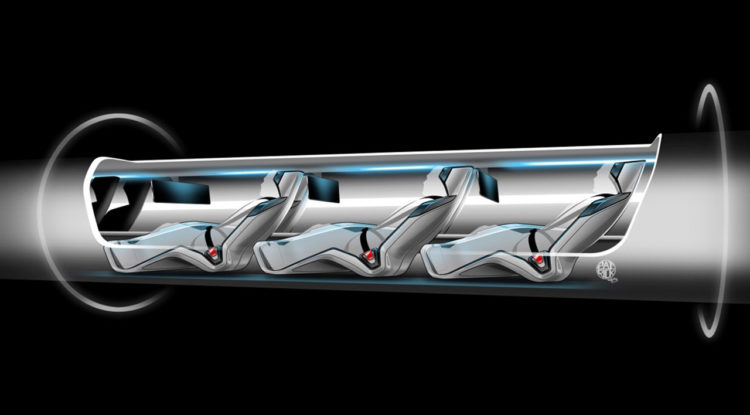
The futuristic megaproject of Ilona Mask went bankrupt. The revolution in the field of transport was expected from him, but could not even run
Hyperloop, the ambitious futuristic project of vacuum trains, which promised to revolution in passenger transportation and compete with airlines, closed. Over 12 years, the project engineers could not build a single full -fledged route, and all the company's tests did not reach the results of already existing transport systems. However, now Ilon Musk is conceived to pick up a dead business, although in the early 2010s he did not believe in it and offered this project as a joke to annoy politicians in California. The sad story of futurism in a vacuum is in the material of "Cold".
In order not to miss the main materials of the "cold", subscribe to our Instagram and telegram .
The international company Hyperloop One sells assets and dismisses employees, and one of the most ambitious projects in the field of transport is apparently postponed again. The owner of Tesla, SpaceX and social networks X (formerly Twitter), Ilon Musk, presented a megaproject 12 years ago, which was supposed to replace the trains and bankrupt most airlines. The project of vacuum shuttle, working on the principle of pneumatic posts familiar to some office employees, represented a billionaire as something revolutionary. He was supposed to change passenger transportation forever, allowing to move around the planet in a matter of hours, and sometimes minutes.
What kind of vacuum shuttles?
The idea that Musk presented as a new one was not at all. For the first time, the American scientist, Robert Godard, Pioneer of Robert Godard, spoke about “trains in vacuum” back in 1909. In addition to the fact that he first guessed to use liquid fuel in rockets, he developed prototypes of a high -speed transport system that would connect the largest cities in the United States.
The principle of operation of vacuum trains is this: from the pipes, inside of which there are trains, or transport capsules, all air is pumped up to subsequently “shoot” them. The high speed of such a transport system would be achieved due to the lack of air, which creates resistance and thereby slows down the train. In the concept of the mask, as in the Goddard concept, the movement of the train itself was supposed to provide a large turbine located in the nose of the head carriage of the train. Subsequently, she was abandoned in favor of a magnetic pillow: to put a turbine right in front of the passengers seemed not too safe.
Advertising his brainchild, Musk was pushing the speed of movement of the pods - the so -called platforms that would transport passengers and goods in hermetic pipes, as well as to the availability of the project. According to Mask, one Hyperloop between Los Angeles and San Francisco would cost almost 10 times cheaper than a similar railway. Environmental rhetoric was also an important part of the PR campaign-the hyperlup would receive all the energy from the solar panels with which Musk wanted to wrap the pipe.
The businessman insisted that he sincerely believes in the project, and said that he could realize him on his own. The reason why the billionaire, in principle, thought about passenger transportation, was the project of a high-speed railway (VSM) between Los Angeles and San Francisco, the cost of which was estimated at that time at the solid $ 68.4 billion. The mask was infuriated that the railway is fabulously expensive, and the maximum speed of the train would be almost twice as lower than French, Chinese and Japanese alternatives. Exactly for this reason, he threw the idea of the Hyperloop project, which, according to him, would cost only 6 to 10 billion dollars. A trip from Los Angeles to San Francisco (559 kilometers) at Hyperlup would only take half an hour.
In August 2013, Musk introduced a 58-page concept document in the public domain. According to it, 28 capsules on a magnetic pillow were supposed to accelerate in vacuum pipes to a speed of 760 miles (1223 kilometers) per hour. The first route was to be Interstate 5-a highway between Los Angeles and San Francisco.
Contrary to common sense
Even then, economists doubted the economic feasibility and opportunities in principle to implement the project. Critics could not withstand estimates at all: instead of the declared $ 6-10 billion, Hyperlup between the two cities, according to experts, would cost at least $ 100 billion. Years later it will become known that Elon Musk personally was not ready to invest in the implementation of the project, and he suggested a futuristic system as a joke-so he wanted to criticize the VSM Los Angeles-San Francisco project and achieve its cancellation.
However, in 2014, expert doubts did not sound convincing: on July 1, 2014 , Hyperloop Technologies Inc. Its founder was the close friend of Ilona Mask, Iranian-American businessman Shervin Pishevar-it was he who allegedly persuaded the mask to seriously engage in vacuum trains back in January 2012, during their humanitarian trip to Cuba. Pishevar invited the SpaceX engineer Bumban Bambrogan as a co -founder, and the board of directors included a large investor invested at the start on Facebook, Airbnb, Spacex and Uber, David O. Sax; The deputy head of the White House administration at Barack Obama Jim Messina and the technician and investor Joe Lonsdale.
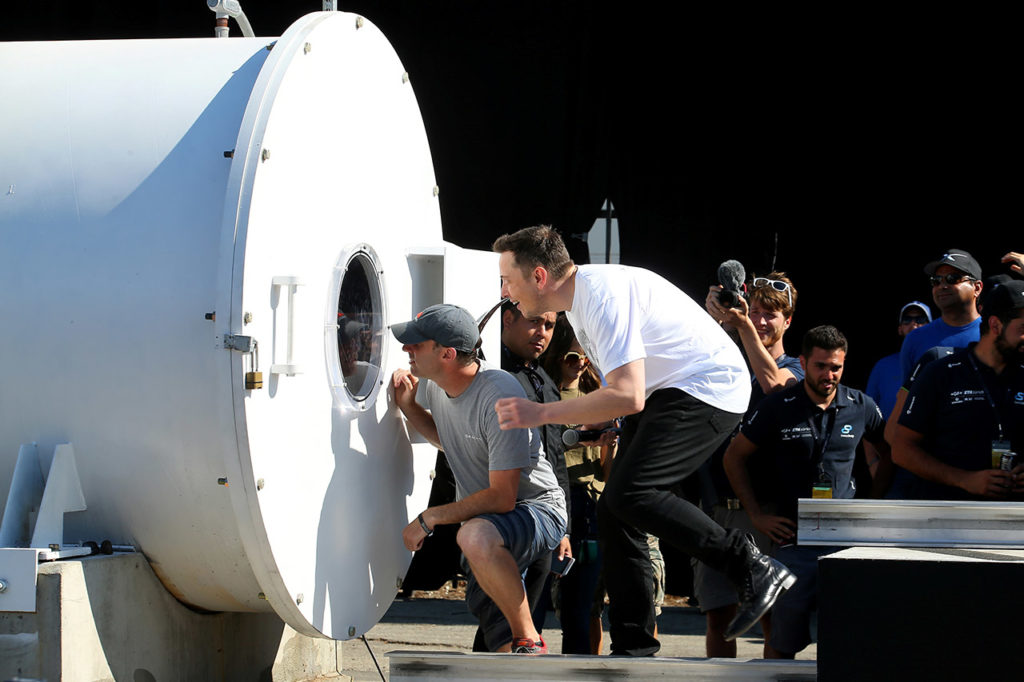
Hyperloop Technologies formal connection with the author of the idea - Ilon Mask - was not there, but the billionaire has always been nearby: in 2015, SpaceX announced that she would begin to sponsor the annual Hyperloop Pod Competition event. Despite the fact that SpaceX stated Ilon Mask’s non -involvement in Hyperloop Tech, he repeatedly appeared at events at which students and enthusiasts gathered their Hyperloop systems in miniature and launched them (in total four events were held: in January and August 2017, in 2018 and 2019).
Publicly about the real position of the Mask on Hyperloop, it became known in May 2015, when the biography of Ilona Mask, written by Ashley Wance, “Ilon Musk: Tesla, SpaceX and the search for a fantastic future” came out . In it, the billionaire admits that he proposed the idea of vacuum trains “out of hatred” to the California high -speed railway. Thus, he wanted to force politicians to rethink a megaproject - but not to build a real Hyperloop.
Despite this, Hyperloop Tech continued to develop and collect investments. By December 2015, the company attracted $ 37 million and expected the second round of funding-it ended in May 2016 and brought an additional 80 million. And in October in 2016, the company received another 50 million dollars from DP World - a logistics company engaged in operations in the Dubai port. Moreover, the Hyperloop Tech managed to achieve partnerships with Deutsche Bahn, Aecom, General Electric and other large companies, conduct the first tests in Las Vegas, Nevada, and even sell the idea to Russia-for Moscow they created a technical and economic rationale (TEO).
Loop of Zashkvara
Despite international expansion and good press, 2016 was marked for the company with scandals. The project was left by the co-founder and the only engineer among the top management-Brogan Bambrogan. The former SpaceX engineer and his supporters filed a lawsuit against his colleagues on the leadership of the courage and embezzlement of corporate funds. In addition to the accusations, that the Pishevar gave his wife access to the company's funds and hired his brother to a high position, Bambrogan said that Shervin Pishevar uses the company as a “marketing exercise” to strengthen a personal brand, and the company's engineers are systematically marginalized, which does not allow to reveal the potential of Hyperloop.
In response to the accusations, Brohan Bambroan received a threat to murder from Afshin Pishevar. He tied a thick rope in a loop - like a gallows - and decorated her with a bambrogan working chair; All this action fell on video surveillance cameras. However, the leadership still continued to threaten, intimidating the employees loyal to the bambrogan with court claims that “suck their leisure” if information about the internal conflict comes out.
The threats and promises of the “worst days in their lives” did not convince the supporters of the engineer from SpaceX. Then the Hyperloop Tech filed a counterclaim for Brogan Bambrogan and other employees who accused of "attempt by the coup." Despite the prospects of the high -profile proceedings, the court ended in the world: the parties came to an agreement whose conditions were not disclosed.
True, Shervin Pishevar himself did not remain at the head of the company. In December 2017, he first had to take an “unlimited vacation”, and later completely leave the company. The reason is second harassment against employees of Hyperloop Tech and former colleagues: five girls at once said that Pishevar offered them sex in exchange for promotion, receiving posts and other privileges. Against this background, the Board of Directors Hyperloop Tech asked Pishevar to resign. After the scandal, the company conducted rebranding and changed the name with Hyperloop Technologies on Hyperloop One.
However, it did not last long: to save the company after a series of corporate scandals and the difficulties with financing in October 2017 was the British Group of Companies Virgin Group, headed by Sir Richard Branson. The billionaire led to a new name - Virgin Hyperloop One - and investors, the main of which again was the logistics giant DP World. The company additionally invested $ 25 million in the project, the Russian billionaire Ziyavudin Magomedova invested the same amount of Caspian Venture Capital. New investments allowed the project team to boast of new high -speed records of vacuum trains. The total amount of investments in the project at this point was already $ 295 million.
Waiting for a breakthrough
Together with Branson, the company managed to achieve new agreements: in February 2018, Virgin Hyperloop One agreed to build a line between Mumbai and Puna in India; On July 18, 2018, the Texas authorities announced that they would like to study the Hyperloop system for a possible route between Austin, Dallas, San Antonio and Laredo. And on July 19, the desire to build a system between airports in Columbus, Ohio, said the regional planning of the Middle Ohio.
Title of two experimental capsules-XP-1 and XP-2 were also tested. However, none of them showed breakthrough results: XP-1 gained a maximum speed of 387 kilometers per hour without passengers (which is lower, for example, than the speed of the French high-speed TGV train-up to 574.8 km/h), and XP-2 with two passengers inside, instead of the declared 28, rode at a speed of 178 kilometers per hour, and the capsule itself looked like a piece of private aircraft, hidden under the Hyperloop casing.
Without waiting for the results, on October 22, 2018, Richard Branson left the post of chairman of the board of directors. The formal reason he called high employment by other Virgin Group projects, while the company needed a chairman who was actively involved in development.
The last influx of investment was in May 2019 - it amounted to $ 172.2 million. Thus, over the five years of its existence, the company raised more than 450 million dollars of financing. However, this money was not enough to create an efficient hyperallop version. In February 2022, the company changed the business model and completely abandoned passenger transportation in favor of freights.
This decision was followed by massive dismissal of employees and changing the name to the old - Hyperloop One (Virgin Group took the Virgin posture in the name). The company fired more than 100 people (more than half of the state). Two of them reported that the dismissal was in the format of a video conference and that they did not expect it. Another 19 employees were dismissed in December 2022.
But the change of the model, coupled with the staff reduction, did not help: a year later, on December 21, 2023, it became known that Hyperloop One was closing. The company was not able to fulfill agreements on contracts and build a working system of vacuum trains due to a lack of funding, which led to the dismissal of the remaining employees and the sale of assets. On December 31, the company stopped all operations and closed .
The quiet death of once one of the most ambitious projects in the field of transport was not commented even by Hyperloop One itself. The company's website no longer works , and it is possible to switch to it only with the help of a webark. Video from the website of the Virgin Group of Companies, the former owner, is also inaccessible .
Sudden Cambek
The idea of vacuum trains has already been implemented by a team of scientists from the Massachusetts Technological Institute in the early 1990s. Professor Ernst Frankel said that his team developed a similar technology - and it managed to successfully launch it. Then they calculated how to disperse a vacuum train to 930 kilometers per hour, and built a test under. This was enough to present such a technology to the state-which they did by introducing the project of a vacuum pipe between Boston and New York.
Trains would go at a speed of 480–560 kilometers per hour, and the route, usually occupying more than four hours, turned into a 40-minute one. But I had to refuse the technology: the price of one line would then amount to $ 12 billion ( about 27 billion at present), and the speed would be comparable to high -speed trains of China and Japan.
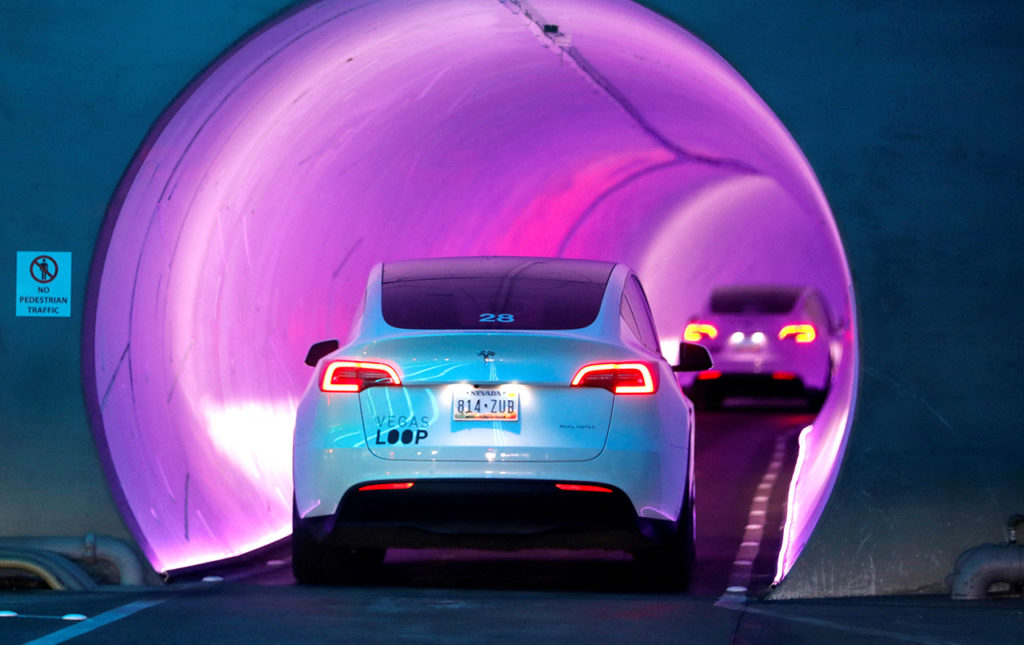
Elon Musk returned to his idea: now the billionaire is engaged in vacuum trains. It is she who is responsible for Loop and Hyperloop projects. Judging by the information that is on the site, Loop, he is Teslas in Tunnels, is a transitional stage: first, the company plans to run the car tunnels, and then - the vacuum trains work system. At least this is evidenced by the slogan of the project - “Loop Today, Hyperloop Tomorrow”.
The site states that Loop is a “high -speed, unlimited public transport system that is more like an underground highway than the subway.” Under a confusing description, ordinary underground tunnels are actually hidden, along which cars are moving. The original concept of Loop suggested that there would be many lanes of tunnels, which can be accessed with the help of an elevator-sanny, “sewn up” into the roadway. Going down there, the sleigh, on which the electric car is located, would go along the rail at a speed of 200 kilometers per hour. Also in the first concept were presented, designed for many passengers at once.
But the project has already experienced two serious simplifications. The first is the replacement of the sled with the Tesla electric cars themselves on auxiliary wheels attached to the front wheels of the car. The second is the rejection of the auxiliary wheels: now the advanced concept of the mask is just Tesla electric cars in underground tunnels. Now the tunnel on this concept is open in Las Vegas-it is true that in order to get into it, you need to visit the CES exhibition. The maximum speed that can be recruited in these tunnels is only 56 kilometers per hour. What speed will eventually become permitted is unclear, although the maximum speed is declared 241 kilometers per hour.
The Las Vegas authorities allowed the company to dig up 69 underground stations, and this should solve the problem of traffic. At the same time, the idea was criticized for impracticality and the desire to "just stuff all the cars underground." “Musk is more likely to swell millions of dollars into some kind of technical invention than will do something for ordinary mortals,” said Adam Something, specializing in assessing futuristic concepts.
From the original Hyperloop on The Boring Company, there is only one mention left - the annual Hyperloop Pod Competition event. There is no other information about the revival of the vacuum trains on the site - they probably wait for new enthusiasts.