
Translated material
Diplomatic duel - caliber 155 mm
In Paris, they created the "artillery coalition", and Macron promised Ukraine even more weapons. The ambassador of France was called to the Ministry of Foreign Affairs of the Russian Federation
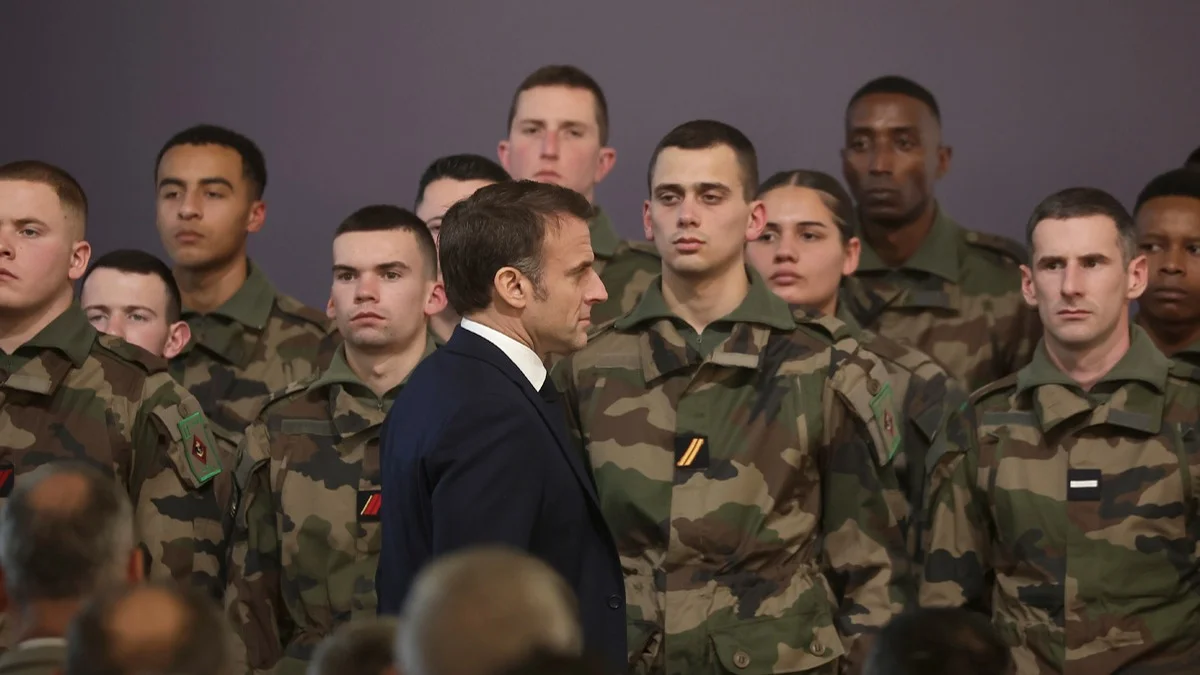
The Commander -in -Chief of Macron before turning to the armed forces. Sherbur. Photo: AP / TASS
The last few days have been hot on the “contact line” of Paris - Moscow. Once earnestly built in the thoughts of President Macron as a carrier axis of “architecture of general European security”, after 02.24.2022 it began to turn into a front line-at first political-diplomatic, and then more and more-to the very real, military.
On January 18, the “artillery coalition” was created in Paris in support of Ukraine; The 19th French ambassador in Moscow Pierre Levy arrived on the call of the Russian Foreign Ministry in the building on Smolenskaya in “Communication with the destruction” (according to I. Konashenkov and M. Zakharova) by the Russian troops “a temporary deployment of foreign militants in Kharkov”, including “there were several dozen Frenchmen”. On the same day, the French Foreign Ministry called this statement “another rough Russian manipulation”, and the commander in chief of Macron called on both the army and the military industry to ensure that Moscow could not think about “victory” in Ukraine.
... Hot "Franco-Russian" week began on Tuesday, January 16. Emmanuel Macron, in the end of his large press conference, which was mainly devoted to internal issues, announced not only that France would put the Armed Forces of the Armed Forces of the Armed Forces of new self-propelled artillery installations (self-propelled guns) Caesar (Fr. Caesar), about forty (long-range) SCALP (several hundred bombs "; Not only that in February he will personally come to Ukraine to sign the Franco-Ukrainian agreement on “security guarantees”, but also that Paris, together with other European allies, “will make new decisions in the coming weeks and months-just in order not to win Russia.”
The next evening, the Ministry of Defense of the Russian Federation reported that it turned out, just in the evening of the President of France, January 16, Russian troops (literally) “strokes a high -precision blow to the temporary deployment of foreign militants in the city of Kharkov, which was based on French mercenaries”: “More than 60 militants were destroyed, more than 20 were delivered to medical institutions.”
Non -appearance of the Minister of Defense of Ukraine to Paris and the creation of the "artillery coalition"
Late in the evening on Wednesday, January 17, the Ministry of Armed Forces of France reported in its commander that the Minister of Defense of Ukraine Rustem Umarov would not come to Paris "for security reasons."
The next day, the 18th, in the French capital, representatives of 23 countries gathered to launch the coalition "Artillery for Ukraine." Rustem Umarov made an introductory speech on the video. Then, the Ukrainian Ministry of Defense in its Communist reported that "the participation of the Minister of Defense (in the Paris meeting.- Yu. S. ) was reported in advance that the visit could be postponed due to the fact that yesterday" Umerov "participated in the Headquarters of the Supreme Commander-in-Chief."
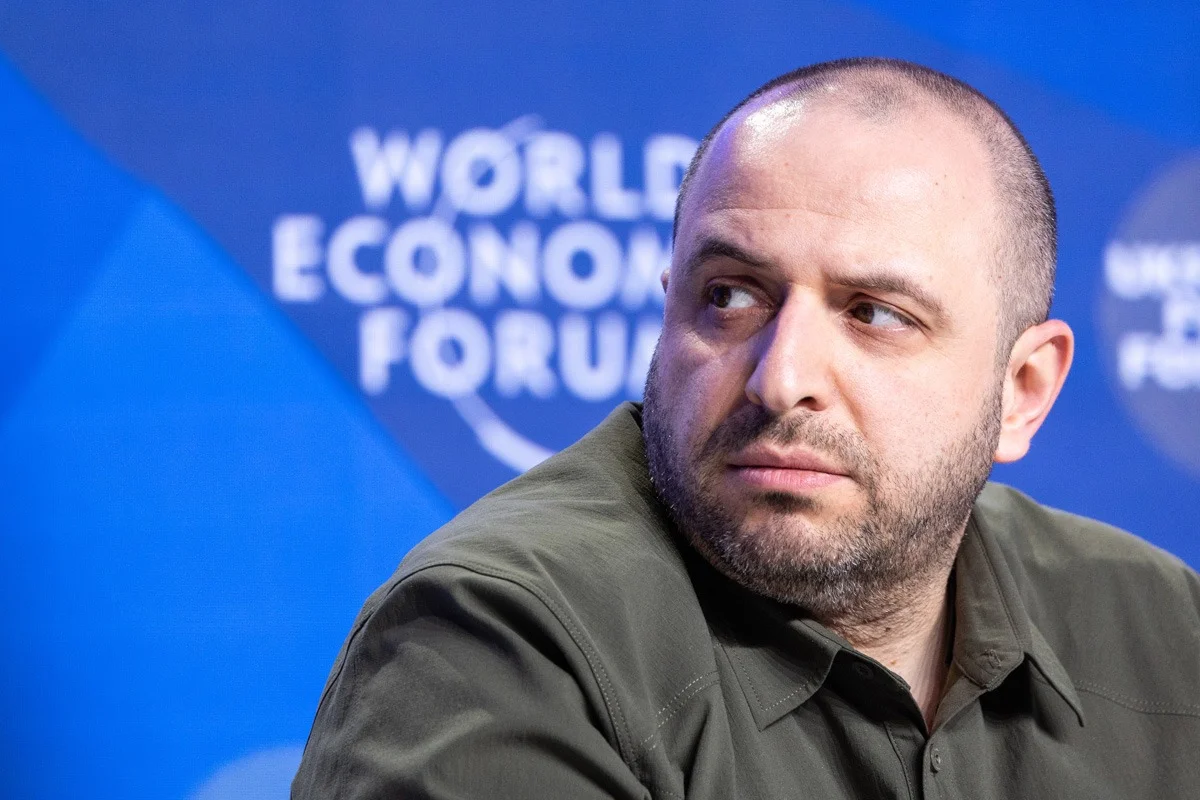
“Now the teams of the Ukrainian and French ministries are working on the new date of the visit,” the same message said. Not a word about “considerations of security” in it, but much indicates that the visit was canceled in the very last hours. Indeed, in addition to participating in the Paris meeting, Rustem Umarov, along with the Minister of the Armed Forces of France, Sebastian Lekorni, were supposed to visit the NEXTER plant in the bourgeois (where Caesari is produced) and the MBDA factory in the village of SCALP are produced, more known under their English name Storm Shadow).
As a result, visits to factories have not yet taken place, and in Paris Ukraine was represented by a delegation, headed by Deputy Minister of Defense Ivan Gavrilyuk. Umarov, in his entry appeal to the Allies, emphasized: “Modern artillery cannot be replaced. We must continue efforts by <...> scaling the production of ammunition and improving our artillery capabilities. " Added: "Strengthening the artillery potential is one of our key needs."
The French Ministry of Defense said that the coalition of “Artillery for Ukraine” will be headed by France and the USA, it will work “as part of the Ramstein format”*. “The purpose of the coalition is in the short term to provide Ukrainian armed forces with the opportunity in this key segment for the defense of Ukrainian territory.
In the long run, it is also aimed at creating a future Ukrainian artillery through ambitious and innovative industrial partnerships. ”
The Minister of the Armed Forces of France Sebastian Lekornny “deciphered” two days before the word of Macron on the supply of “Caesare”: six - previously ordered by Kiev - will be delivered in the coming weeks, and 72 ** can be transferred until the end of this year. Compare: in the first two years (...), the Armed Forces of Ukraine received (from France and Denmark) in a total of 49 attitudes.
According to France-Presse, to satisfy the demand, NEXTER (the French unit of the KNDS Franco-German group) accelerated the production of Caesares from three to one and a half years, increasing the production from duplicate per month to six. That is, 72 additional guns promised to Ukraine is the maximum of what France is now capable of producing in a year.
Caesar installed on a truck can shoot 155 mm shells at a distance of 40 kilometers; Such tools, judging by both the statements of the Ukrainian authorities and Macron, are “very needed” by Ukraine.
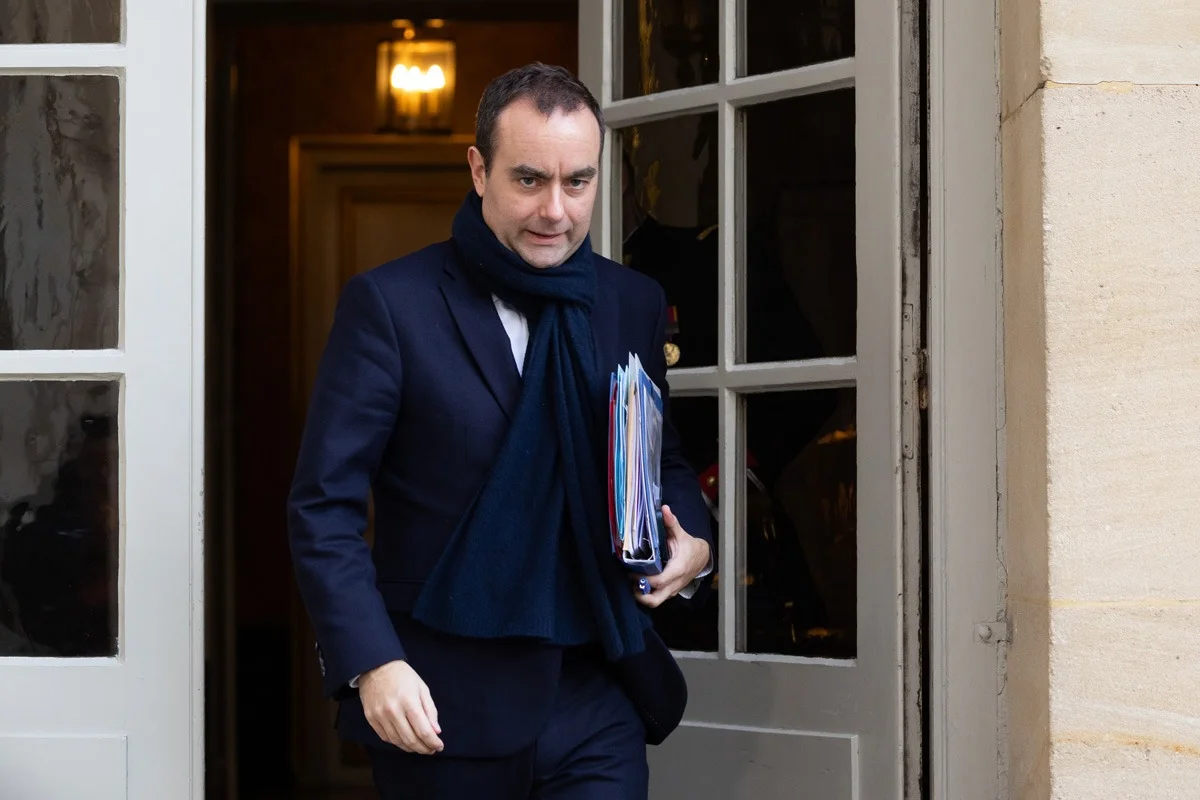
As for the 155-mm shells used by the Caesars, the Minister of Lekornny said that “from the end of January”, France will be able to supply the Ukrainian army of 3,000 shells per month, “while at the present time-2000, and at the beginning (...) it was only 1000”. And he greeted the acceleration of production pace, which became possible thanks to the transition to the "wartime economy" ***.
The Minister also announced the supply of fifty missiles per month of the Earth - Athos of the A2SM Hammer - starting in January - throughout the year. Missiles can be installed on Soviet aircraft of MiG and SU, clarified Lekorny.
Macron's conversation with "Dear Vladimir"
On the same day, first, the office of the President of Ukraine, and then the Champs Elysees, reported on the telephone conversations of Emmanuel Macron and Vladimir Zelensky. The Ukrainian leader thanked Macron for the launch of the “artillery coalition” and for the obligation declared within its framework to make dozens of advanced artillery systems Caesar and ammunition for them. “Leaders instructed political and military advisers to start the preparation of the upcoming visit of the French president to Ukraine and accelerate negotiations on a bilateral security guarantee in the framework of the G7 Vilnius Declaration ,” the Ukrainian office added.
Macron confirmed "the unchanged (...) determination to support the Ukrainian people in the long run (...) both at the bilateral and at the European level." “France will continue to play a role in the training of the Ukrainian Armed Forces,” said Elisei, clarifying that the French president “confirmed and described in detail new military deliveries” and “emphasized that it attaches great importance to the development of a joint production of military equipment with Ukraine.”
Thus, Macron, who agreed with Zelensky, “remain in close contact”, once again confirmed what on Saturday, on January 13, said the new French Minister of Foreign Affairs Stefan Sejurn. The Foreign Minister, who made his first foreign visit to Kyiv, said:
The French side intends to help "strengthen the potential of Ukraine for the production of the weapons necessary for it on its territory.
On January 19, the Ukrainian Ministry of Defense reported : “During a visit to France, Deputy Minister of Defense Ivan Gavrilyuk signed a technical agreement on the mutual acceptance of state guaranteeing the quality of goods, work and defense services between the Ministry of Defense of Ukraine and the Ministry of Armed Forces of the French Republic <...> in accordance with the requirements of the NATO agreement on Stanag 4107.”
Call of the French ambassador
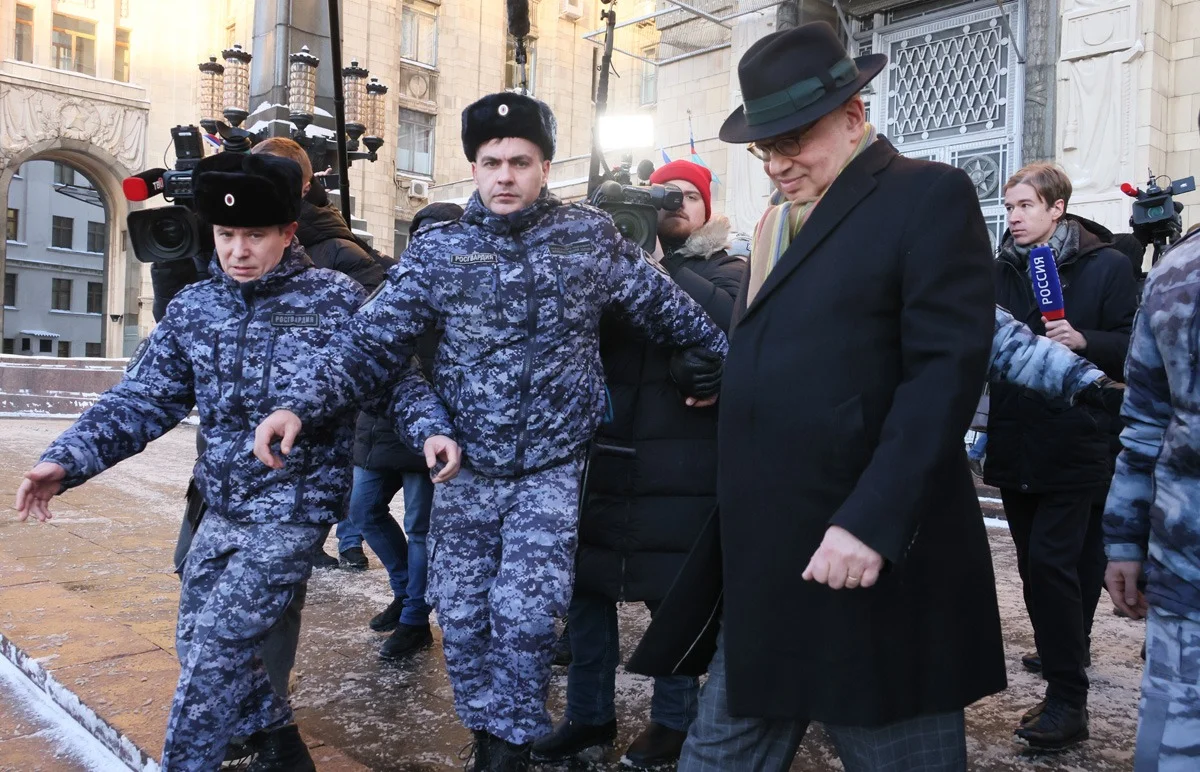
On the afternoon of January 19, about an hour before the annual circulation of the Commander -in -Chief of Emmanuel Macron to the Armed Forces of France, it became known that the French ambassador in Moscow Pierre Levy came to the Russian Foreign Ministry building on the Smolensk Embankment, where he was called the day. According to the Russian department, in addition to the statement on the “destruction of the deployment point of the mercenaries”, the ambassador “FACTS were presented with the increasing involvement of Paris in the conflict around Ukraine” .
Having left the building after 45 minutes (according to the statements of the Kremlin agencies), Mr. Levy, not answering the questions shouted by the employees of these agencies, silently got into the car and left.
In Paris, the French Foreign Ministry said in hot pursuit: “France has no“ mercenaries ”in Ukraine or anywhere else, unlike other countries. This is just another rough Russian manipulation. We should not attach to her more value than the previous or those that will definitely follow. ”
The “high -ranking French military” “on the terms of anonymity” in an interview with AFP also denied a statement of “mercenaries”, noting how the appearance of this information “coincided” with the strengthening of French statements in the support of Ukraine. “This fits into the framework of their ( Russian ) narrative built around the NATO War against Russia and the“ conspiracy ”against Moscow in order to prevent it from becoming a strong power,” the source said, assuring that Russian accusations are primarily intended for the Russian Federation, “to confirm that its leaders are“ courageously fighting ”with a bloc (western) countries.”
The appeal of the Commander -in -Chief of Macron
President Macron, in his 35-minute appeal to the armed forces, made on the naval base in Sherbur, once again, at the very beginning of the speech, designated the task of supporting Ukraine as the most important. “You understand that we cannot allow Russia to think that it can win,” because “Russia's victory would mean the end of European security.”
He explained: "That's why we will continue to help the Ukrainians." Once again he clarified: “From the very beginning I said that we are not at war with Russia, but our duty is to make their victory impossible.” Added:
“We will do this pragmatic and specifically, continuing to train and equip (Ukrainians) in all areas that are important for them: artillery, ground/air defense and distance blows.
We will also do this by introducing innovations to solve problems arising from the massive use of drones. ”
Then he added: “We are at the beginning of the real technological revolution, and, without a doubt, in the coming months at the Ukrainian theater of military operations and in the Middle East we will see devices that are at the same time very simple and very innovative, with inexpensive, massively produced drones and artificial intelligence, completely changing operational methods. <...> Therefore, our armed forces will be equipped with new sea and airy drones from 2024. "
Macron also noted those companies that, “responding to the call” made by him in June 2022, intensified production and called on the rest to follow their example to satisfy the needs of Ukraine: “We have the first results a year and a half after the launch of the project, and I thank you for it. <...> For example, for a double acceleration of the production of Caesars, Mistral missiles, Rafale aircraft, Thales radar ... is the best answers to those who told us that nothing is impossible. We radically changed the situation ... and must strengthen the transformations begun. ”
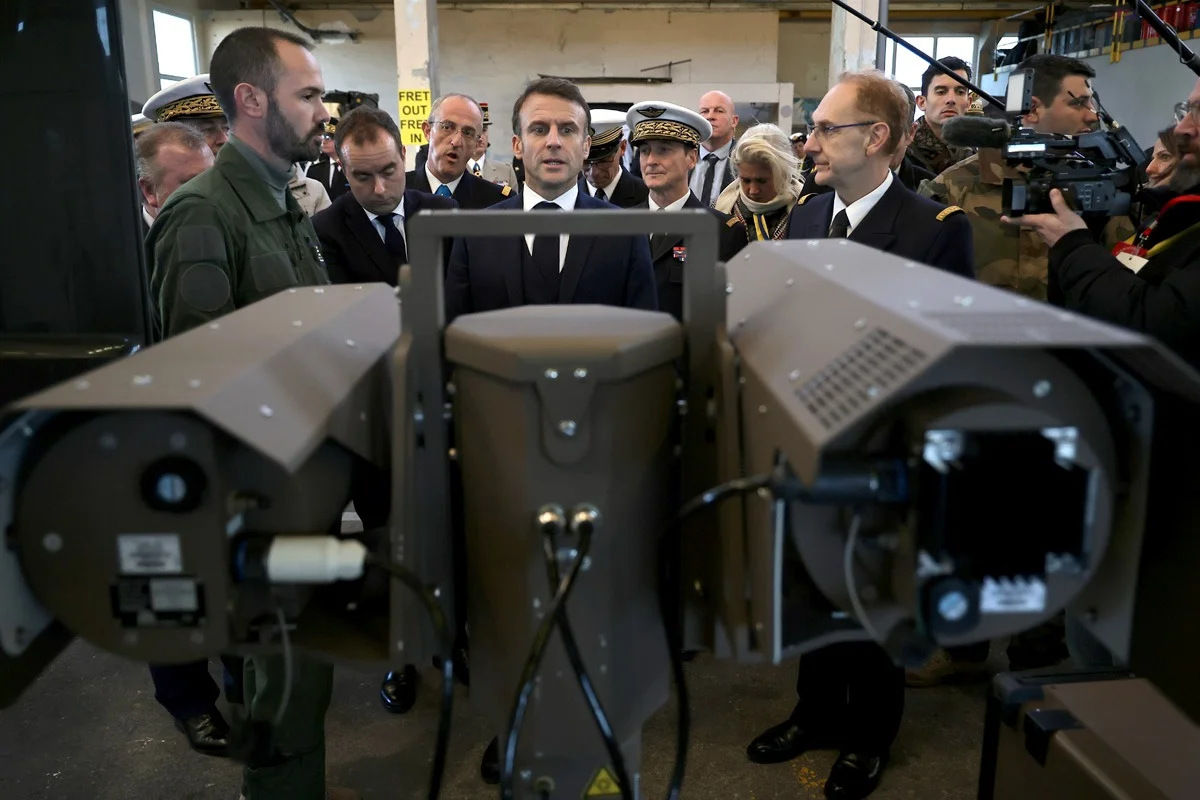
The audience, the basis of which was made up of military leaders and representatives of the defense sector, the president criticized the atmosphere of “satisfied numbness”, which reigned in the French military-industrial complex before February 2022. He mentioned “comfortable years”, which “sometimes allowed” “maintain a very high level of quality, very high, but expensive, costly - with small flows, with small innovations.”
“Our (today's) world does not allow this anymore,” Macron emphasized and asked “every leader to be completely concentrated on issues of production and supplies.”
... In the meantime, there are clearly problems - including in the field of artillery - this was noted at the end of last year, the European authorities, admitting,
that the promise to put Ukraine "1 million shells until the end of 2023" In fact, about 300 thousand turned into a supply.
Nevertheless, on the day of Macron’s speech, the European Commissioner for the domestic market Frenchman Breton gave a new ambitious promise: the European Union will have the potential for production “approximately 1.3–1.4 million shells before the end of this year, and we will continue to significantly increase their release in the next (2025) year”. The overwhelming part of the produced should be delivered to Ukraine, said the European Commissioner, who was on this day on a visit to Tallinn.
And the Minister of the Armed Forces of France Sebastian Lekornny, speaking on the eve of France Inter, “challenged” the recent calculations of the Kil Institute of World Economy, which refers to France to the number of “lagging” countries in the issue of providing military assistance to Ukraine compared to its own GDP. “What they say is neither reliable nor viable: this rating is based only on (evaluating) promises and statements,” said Lekornya, assuring: “The pride of France is that everything that is promised is actually fulfilled, and everything that is fulfilled works.”
Commenting on the Putin statement sounding this week that not only the Ukrainian “counterattack failed”, but the “initiative passed” into the hands of the Russians, the French minister assured: “No”.