
Translated material
Live in a word
Valery Semenovsky was gone. Criticism, playwright, many years of editor -in -chief of the magazine "Theater"
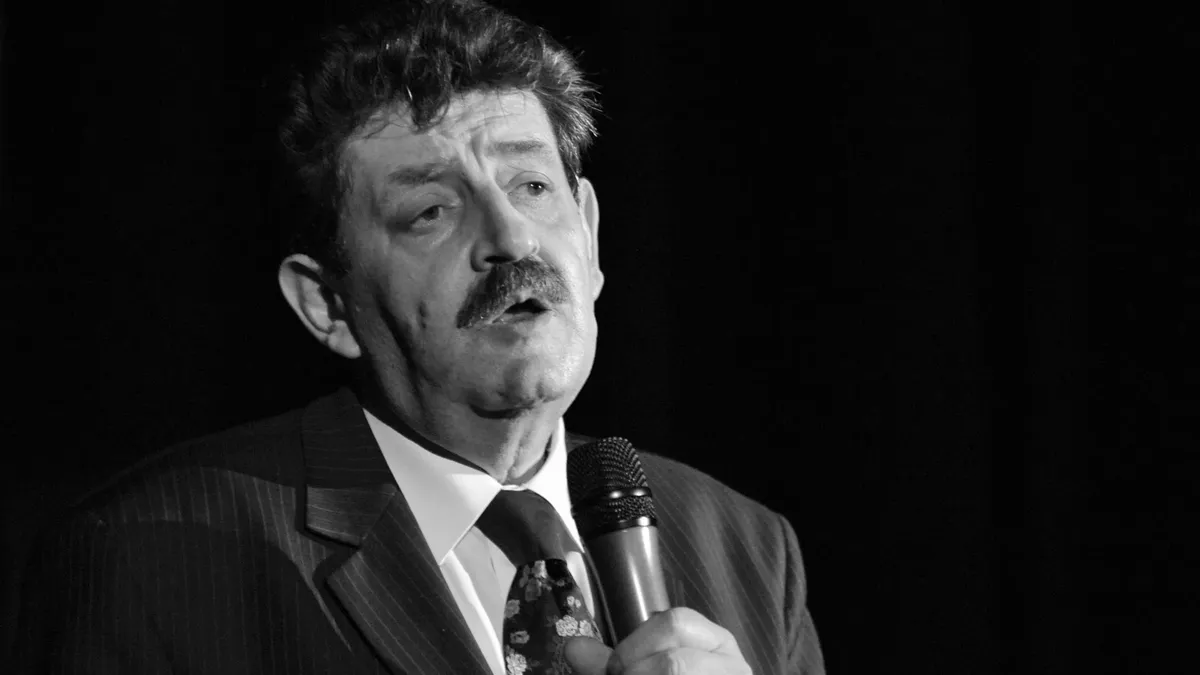
Valery Semenovsky. Photo: ITAR-TASS / Maxim Shemetov
He was a dispute, a polemicist, a bully, a man of barricades and resistance. That is why the nature of the conflict in the theater and in life dissected "at a time." He was an ironic, wit, a fan of laughing, getting out. He was sad, dramatic - but still hoping to all this bitter life at least again, take off, take off, see both heaven and diamonds ...
Semenovsky was able to make friends and enemies, compose plays, and start editorial office and company. But everything is best - to write theatrical texts, think on paper, live in a word. One of the most striking and thorough people in a critical workshop, never went behind fashion, current, rather - across, knew how to be and remain an independent loner. Those with whom he shared and comprehended time speak about him for the “new”.
Lev Dodin,
Artistic Director of the St. Petersburg Small Drama Theater / Theater of Europe, People's Artist of the Russian Federation
"He knew how to appreciate both greatness and jokes"
Valery Oscarovich Semenovsky is not just a brilliant theater critic, he is a brilliant theater writer. His articles are not only full of restrained passion - his texts are brilliantly written. The author feels the price of each word, removes extra words, and for the remaining finds the only possible place. For him, the precisely set word is an accurately expressed thought.
Valery praised violently and no less violently rejected. But he never insulted at the same time - this would mean bad taste for him, and Valery's taste was excellent,
And he loved, first of all, beautiful, smart, sharp, stylish, delicious theater. No wonder all the last decades his beloved actor was wonderful, not like anyone not like Viktor Gvozditsky. Valery retained his fidelity to his addiction until the end of his life, publishing an article about the carnation, books, spending evenings in his honor.
However, being faithful to himself, Valery knew how to admit and was ready to admit his wrongness, he was ready to admit that he did not see or did not understand what he did not understand and did not see. A wonderful feature in this is generally a very stubborn person. Estet and individualist, Valery Semenovsky turned out to be no less vivid artistic organizer, the theater magazine created by him for a short time, unfortunately, became one of the remarkable centers of the then theatrical life. “One of the remarkable”-this formulation itself beckons us with some longing for a distant and, it seems, irrevocably left life.
Finally, Valery knew how to be a friend, we have been friends with him from the mid -seventies until the last days. Sometimes we have long conversations on the phone at night.
Deprived of a professional rostrum, Valery improvised brilliant monologues - the charging on the phone ended, the money was exhausted on the phone’s account, but the phone was placed on charging, the account was replenished, and Valery continued. Believe me, it was not in vain spent nightly pre -wings.
On New Year's Eve, I scored and sent Valery a congratulatory card with the image of King Lear and the Jester from our new performance-I knew that Valery can appreciate both greatness and jesting-I wished Valeria and all of us miracles. For him, it did not happen. Hurt.
Valery Fokin,
Artistic Director of the Alexandrinsky Theater, People's Artist of the Russian Federation
"Building and defending a real theater"
Semenovsky was an absolutely brilliant man, and in different manifestations, they can be listed through a comma. He was very gifted dramatic, literary, pedagogically: he “put a lot on the wing” of young critics, from the “observer”, which he headed, a lot of talented people came out;
He knew how to educate and let it work.
But his abilities were not only critical. He, of course, is a brilliant theater and theater critic very interesting, sharp. But besides, he was interested in the history of the theater as a lively practice, for many years he worked with me in the Meyerhold’s creative heritage commission. He was especially interested in people, he seemed to collect them, of various interesting theatrical people. He knew how to maintain a relationship with them, quarreled, was friends, sometimes conflicting, but still was always in the clip of theatrical construction. He fled, supported, even in his delusions remained faithful to his principles, did not retreat from them. He could be mistaken, of course, like us all, but he defended some important things.
It seems to me that he was a member of a special theater team, which over the past decades fought for the main thing - for preserving in the theater of our artistic principle.
Why am I talking about this? Because today the artistic is pushing, more precisely, it is pushed back, it is not in the first place. You have to fight for the artistic principle, because without it there will be ruins, this is unequivocally clear. Here Semenovsky was just a man who built and defended a real theater, a sincere theater, a serious theater. He defended the most important thing, in fact, for which everything is in the theater, without which everything is pointless. What our teachers called the supercuseum. There are few such people. There are always not many of them, but now units.
... He came already a sick, half -blind to Petersburg for the evening of memory of Victor Gvozditsky, then he also read a lecture on our new stage. He had a clear, sharp mind, good memory. He was both for the process, and for me personally a very important person.
Grigory Zaslavsky
Critic, rector of GITIS
"He knew how to create professional happiness"
I was so lucky: he read my article in the “screen and stage” and began to look for me to invite to the “Moscow observer”. And immediately gave me tasks. I had to go to the Ministry of Culture and get a transcript of discussion at the board of the USSR Ministry of Culture regarding the dismissal of Yuri Sergeyevich Rybakov from the magazine Theater. And I sat in the archive of the ministry, they gave me this business, I rewrote everything by hand, and this was the first material.
Another, no less important, was a material dedicated to the “Artistic” cafe: the former place of power not only for the old generation of the art theater-Yanshin, Livanova, and other folk USSRs came in front of the performance, and someone managed to run in the intermission to drink half a glass or a glass of cognac, he sang Okudzhava ... And I went to Julia Aichenwaldo, Alexander wrote down, Alexander Petrovich Zvobodin, someone else who told me incredibly valuable household details. We then collected a completely wonderful number dedicated to the cabaret.
He was an editor, outstanding, instantly to feel, listened, understood the manner of every new author and his editorial proposal counted his editorial proposal precisely from how you, if you wrote better, wrote and formulated it. Some incredible lessons of editorial flair, editorial work.
He was a gambling man, and those values and those people whom he respected were always important to him. Zingerman, Rybakov, Svobodin, Solovyov, Krymov, Smelyansky, Maximov ... For us, young, beginners, this was, of course, happiness - communication with these people. Every month they came to the editor, and although some of them no longer bowed to each other, in a conversation about the theater they could quite constructively discuss, and these were also the highest lessons of professional responsibility.
Then there were many different magazines in different areas. But his magazine, the Moscow Observer, was one of the most interesting journalistic undertakings. In the theater world, he became an event with a very high professional bar, and he became so thanks to the Semenovsky and the team that he gathered. No one else could do it. And he, so ambitious, so offensive, so passionate, managed to hold all this, tolerate and pod and somehow take care of all senior critics-stars. The main thing is to give them real professional happiness. It was very important for them - and for us.
Prepared by Marina Tokareva