
Translated material
How to rule the world
105 years ago, the process of creating the League of Nations launched: it has not coped with its tasks, and the Second World War began. Does the UN work better to work?
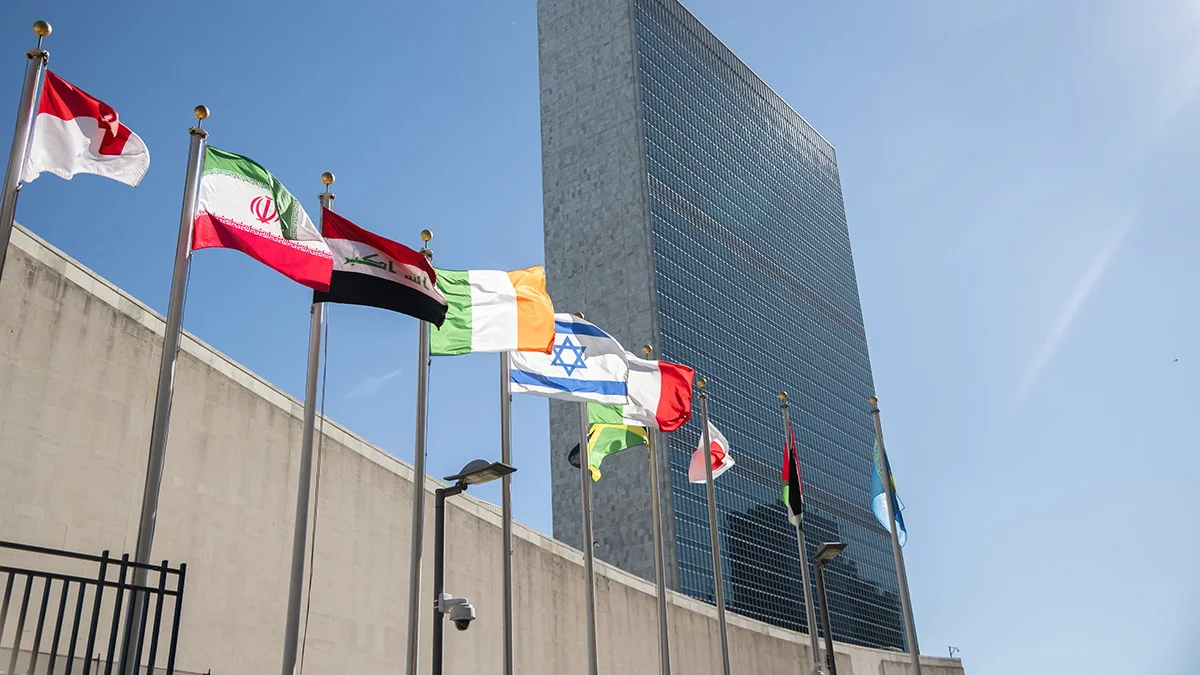
Flags in front of the United Nations building in New York on October 13, 2023. Photo: Noam Galai / Getty images
In January 1919, shortly after the end of the First World War, a conference began in Paris, whose participating countries agreed on the creation of the League of Nations. The organization had to work to prevent future conflicts and ensure security, but it did not succeed - after 20 years a new large war began in the world. The League of Nations faced several fundamental problems: in particular, the organization included few countries and it had little authority at the international level.
After the end of the Second World War, nations self -disclosed, and instead of it the United Nations (UN) was created. According to the charter, the main goal of the UN is “maintaining international peace and security”. The organization conducts peacekeeping and humanitarian missions, helps victims of armed conflicts and serves as a platform for diplomatic relations. Many criticize the UN, and especially the Security Council for inefficiency and bureaucracy. There are no fewer wars in the world, and countries, which, according to the plan, should monitor world safety, were on different sides of the ideological (and completely tangible) barricades. The organization itself is well aware that they lose trust. Evidence of this, for example, the theme of the last annual session of the UN General Assembly, dedicated to the "restoration of trust and the revival of international solidarity." About what the UN is criticized for, and whether it is possible to do better-in the material of the New-Europe.
Mutual locks
One of the main problems of the UN is the device of the Security Council (SB). This became once again clear after the start of Russia's full-scale invasion of Ukraine: the Security Council was paralyzed, because its composition contains an aggressor with a veto right.
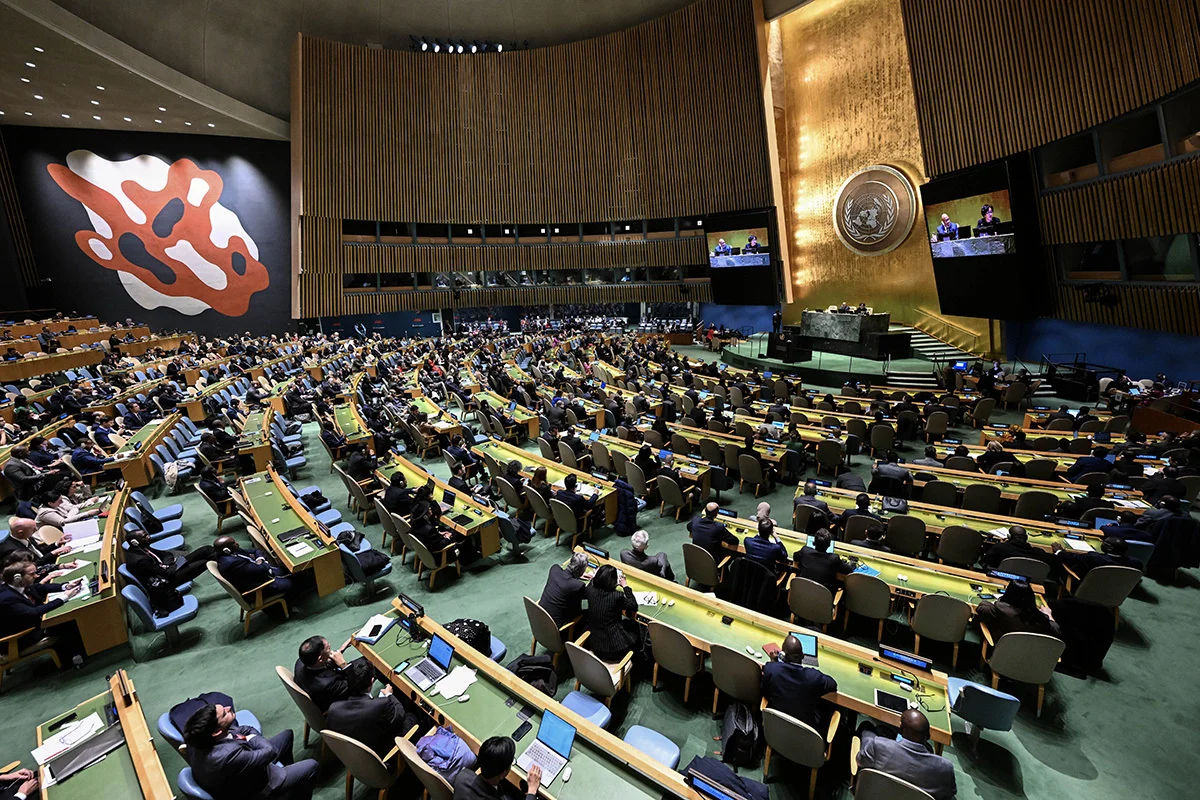
The UN Security Council is a body that, according to the idea, must be responsible for the coordination of any military operations as part of the organization. According to the results of World War II, it was decided to take eleven countries in the UN Security Council: five of them were on an ongoing basis, and the rest were elected. Permanent members of the SB - USA, France, Great Britain, China and Russia (the successor of the USSR).
All these states were allies during the Second World War and, in theory, they had to remain further and pursue a common goal - to protect the world from any manifestations of military aggression. The permanent members of the UN Security Council were decided to give the right to veto - that is, the opportunity to block any decision.
“Many, especially less influential states, did not like the idea of a veto from the very beginning. Disputes were conducted back in 1945 during negotiations on the creation of the UN Charter, ”says Kal Raustial, professor of international law in UCLA. - But in the end, representatives of some countries, in particular, the United States said that there would be no UN without a veto. During the conference, one of the speakers from the United States even broke a copy of the draft version of the charter with the words: "Having removed the veto, you will destroy the charter entirely."
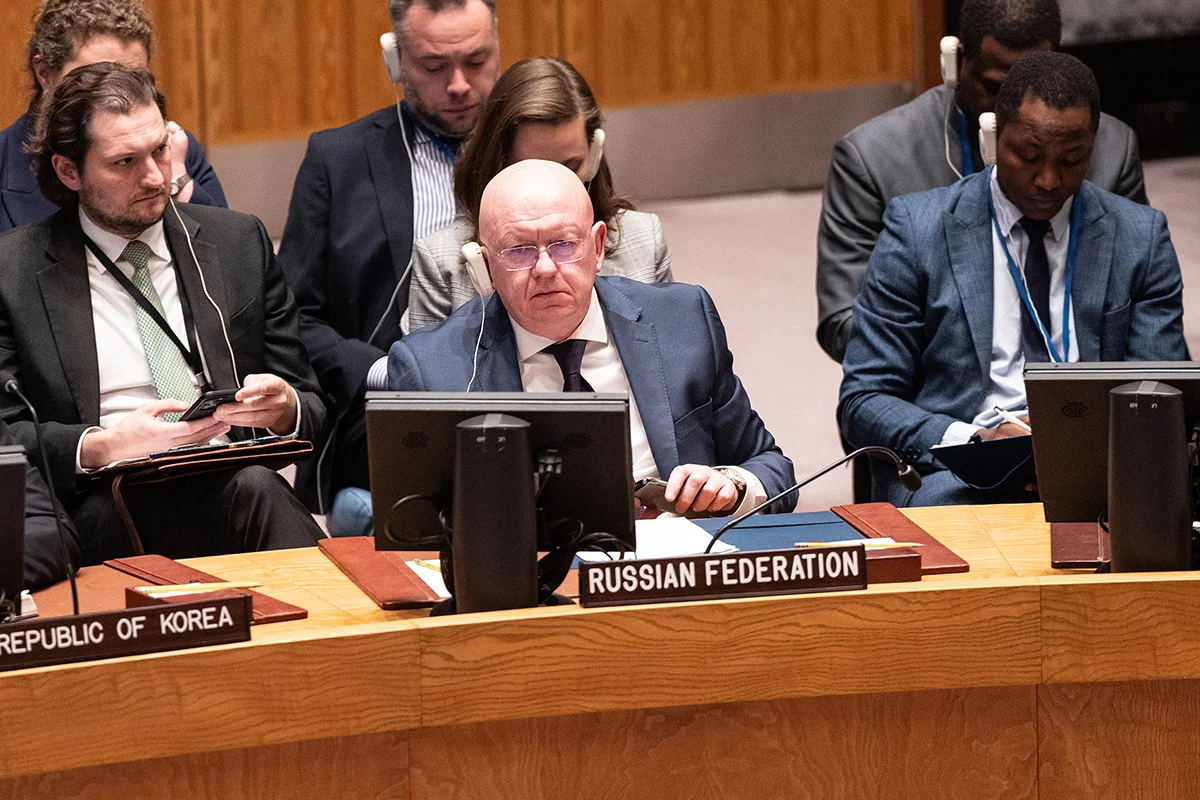
Having giving the Council the right of the veto, the UN essentially made it impossible for any following reforms of the body. According to Raustiala, this feature is at the same time the advantage and the weak side of the Security Council. On the one hand, the presence of a veto really paralyzes the council if the opinions of its permanent members diverge on any issue. On the other hand, more influential countries would simply refuse to join the UN if they had not been given the right to the veto, and then the organization would have suffered the same fate as the League of Nations.
Despite the rigidity of the system, once the Council of Council of Security was reformed. In 1965, the UN General Assembly proposed increasing the composition of unstable members of the organ from six to ten due to the fact that more and more countries adjoined the UN. As a result, the decision was made.
Veto's right was originally conceived as a mechanism for the most extreme cases. But a year after the creation of the UN, in 1946, the Soviet Union first used this right,
Having blocked the resolution of delegates from Lebanon and Syria on the withdrawal of French and British troops from their territories. Since then, the USSR has applied a veto at least 50 times. Russia successfully continues this tradition.
On February 25, 2022, the day after the start of Russia's full -scale invasion of Russia, the Security Council issued a resolution , in which military aggression was condemned and the call sounded immediately withdrawing troops from the sovereign state. Russia expectedly imposed a veto on this resolution.
On September 30 of the same year, the United States, together with Albania, brought for discussion another resolution drawn up following the results of the “referenda” by Russia on the accession of part of Ukrainian territories to the Russian Federation. Once again, the document was once again called out to withdraw the troops and cancel the results of a “popular vote”, but Russia again imposed a veto.
Of course, not only Russia actively uses the right of a veto. A month after the start of the new wave of the Palestinian-Israeli conflict in December 2023, Russia, together with more than 90 states, issued a resolution on the immediately ceasefire in the gas sector for discussion of the Security Council. The US veto was applied to this decision.
These examples clearly illustrate that the world in which we live today is as far away from the realities of the 40s of the last century. Many believe that reforms are needed. In search of an alternative, the South African Safety Institute (ISS) launched the Electa Council campaign (“Choose the Council”), which is engaged in the promotion of an alternative configuration of the Secondary Superior. According to the ISS proposal, the Security Council should expand to 24 participants (instead of 15, as it is now), as well as remove permanent membership and the right of a veto.
The professor of international relations at the University of Indiana, David Bosocas, also believes that the Council of Security is worth expanding in connection with the changing alignment of forces in the world, but doubts that it will be possible to deprive the country of veto.
“Such powers as Russia, China and the USA may disagree with the Security Council without a veto right. So, in my opinion, the preservation of the veto is necessary, ”the expert believes.
- An interesting question arises when the possibility of adding new permanent members is considered: should they also grant the right to be granted a veto? Personally, I am inclined to a negative answer.
It seems reasonable to limit the right of a veto in its current form. On the other hand, this approach creates significant inequality. ”
After the outbreak of war in Ukraine, the idea that permanent membership and the right of a veto in the Council of Council was more often deprived of Russia began to sound. Professor Bosos does not agree - he believes that it is important to have a “large nuclear power like Russia” as part of the SB. ”
“There will be situations in which the Security Council will not be able to take any measures. However, in my opinion, the value of influential powers act in a single structure exceeds the value of freedom of action in the absence of their participation, ”the expert says.
Military weakness
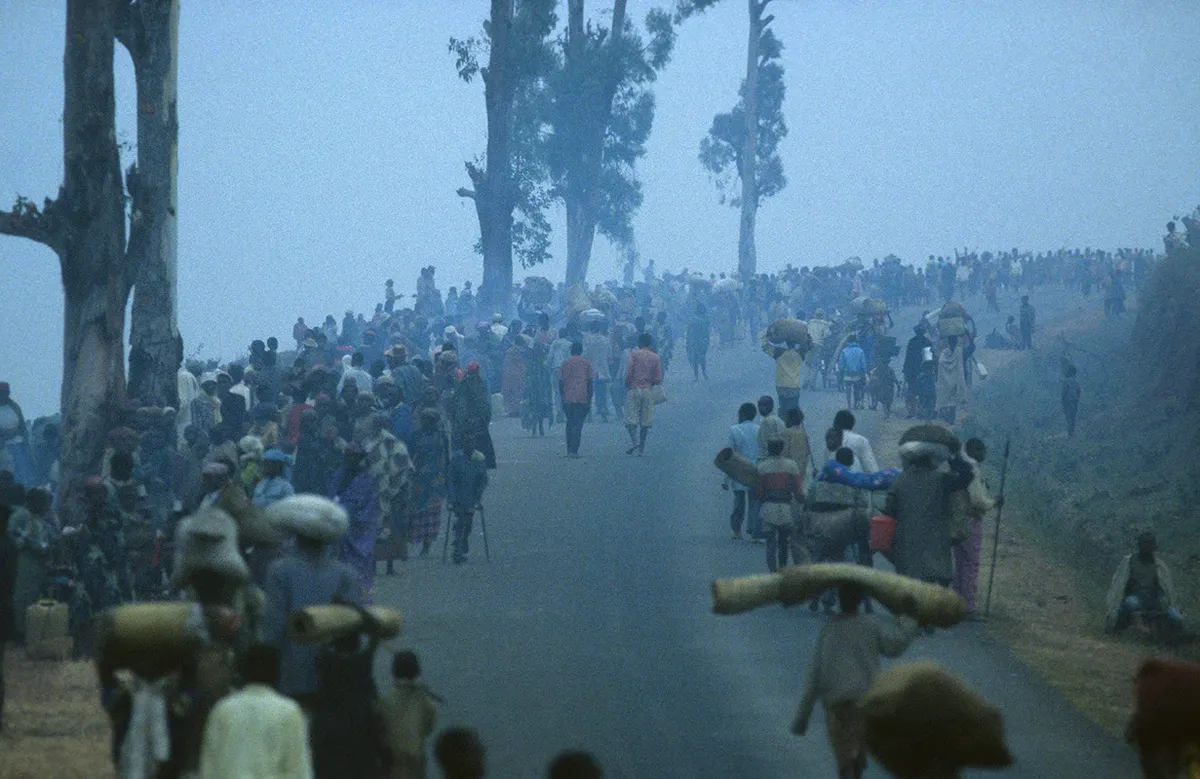
The UN is regularly criticized for the inefficiency of humanitarian missions: the organization often cannot collect the military on time and in sufficient quantities. One of the infamous examples is a mission aimed at maintaining a truce in Rwand in 1993.
The Civil War in the East African state of Rwanda began in 1990, and after 3 years the parties to the conflict managed to sign a document on a ceasefire-Arush agreements. The UN Security Council decided to send peacekeepers to Rwanda so that they monitor compliance with the agreement. However, as it turned out later, there were too few peacekeepers and they did not have sufficient powers and preparation.
Six months after the beginning of the peacekeeping mission, new clashes began between two ethnic groups - Tutsi and Huta. The Rwanda government, consisting mainly of Hutu, was displeased that the country's president Juvenal Khabyariman signed Arush agreements, considering the peace treaty “concessions”. On April 6, 1994, Habyariman died as a result of an assassination, a political vacuum formed in the country.
The representatives of Hutu in the government took advantage of this moment and ordered the security forces to deal with all Tutsi - genocide began in Rwanda. For 4 months, according to various estimates, from 500 thousand to a million people died.
The UN peacekeepers could not prevent the disaster: they basically observed and did not intervene. According to academicians, the fault of this is a number of reasons-an insufficient number of military, a slow reaction from the Security Council, the reluctance of the participating countries to send their soldiers to another state.
After Rwanda, the UN held a number of peacekeeping missions, most of which are recognized as unsuccessful. The most striking examples are Yugoslavia, Sudan, Somalia. One of the reasons for failures is associated with insufficient involvement of the Council of People's Commissars of the Council of People's Commissars, says David Bososm, professor of international relations at the University of Indian.
“First of all, the Security Council makes a financial contribution to peacekeeping operations,” the expert explains. - The Council of People's Commissars rarely provide the military or conduct briefing and training. <...> Difficulties arise with ensuring the troops of peacekeepers with everything necessary. "
Violence
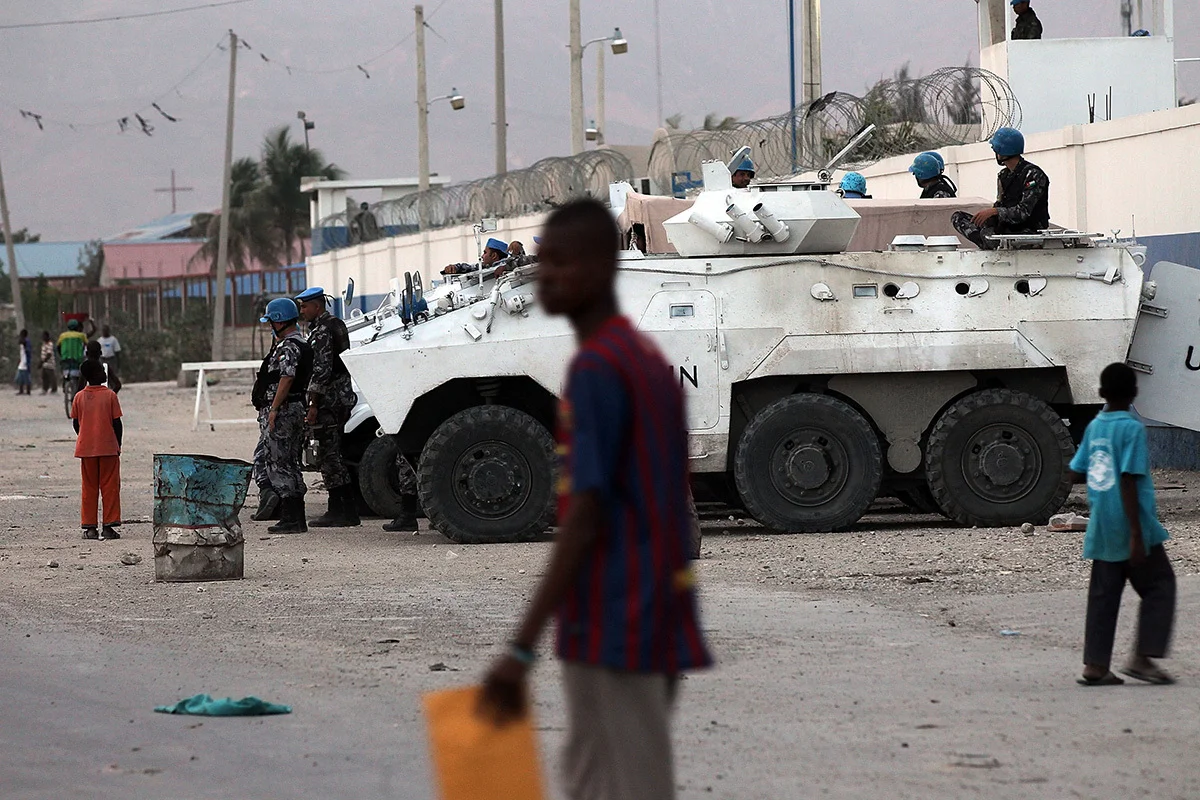
Military inefficiency is not the only problem of humanitarian missions. The peacekeepers have repeatedly accused of sexualized violence against citizens, often children, from those countries in which humanitarian missions were held.
In 2017, the Associated Press published an investigation that said that over 15 years, starting in 2002, it was possible to record more than 2 thousand accusations of sexualized violence by peacekeepers. It was about missions in different states - mainly in Haiti and TsA. In more than 300 statements about sexualized violence, children appeared.
“According to the UN internal report, which was at the disposal of AP, at least 134 Srilanki peacekeepers were operated for sex of nine children in Haiti.
In connection with this report, 114 peacekeepers went home. None of them were imprisoned, ”the investigation says.
According to one of the victims of the wages, in three years, from her 12 to 15 years, more than 50 peacekeepers had sex with her. One military man, she said, gave her 75 cents for this.
The scandal with the peacekeepers greatly affected the reputation of the UN, but the problem is that the organization does not even have tools to punish the highlights. The UN can conduct an internal investigation and share the results with the authorities of the country, which provided peacekeepers, but make further decisions and hold court hearings - the prerogative of the national state.
“If a soldier from some country participating in a peacekeeping mission is accused of rape or sexualized violence, this should be investigated by the country that sent him to this mission,” Bososok explains. - Too often, alas, countries cannot cope with this task. So it’s a little difficult to completely blame the UN. Many problems are actually national, they just become noticeable thanks to the UN. ”
Oil in exchange for corruption
Another problem of the organization is periodically arising corruption scandals. The largest such scandal was associated with the program “Oil in exchange for food”, launched in 1996. The program was aimed at providing humanitarian aid to Iraq, which experienced the consequences of the most severe economic sanctions.
These sanctions, introduced after the Gulf of Persian and approved by the UN, should have contributed to the demilitarization of Iraq, but as a result, a food crisis began in the country. “Economic sanctions imposed by the UN Council against Iraq in the period from 1990 to 2003 became the cause of one of the most tragic humanitarian disasters,” said Joy Gordon, a researcher at Joy Gordon in 2020.
The program “Oil in exchange for food” was proposed by the United States, headed by Bill Clinton. The idea was described in the name: Iraq was supposed to sell oil at a low price, and for the proceeds to buy products approved by the UN and other vital goods.
Many criticized the structure of the program itself, believing that it allows President Iraq Saddam Hussein to remain in power. But the main scandal turned after the end of the program in 2003, when corruption information began to appear as part of the mission.
According to the investigation published in 2005,
Saddam Hussein, with the support of representatives of the UN and friendly bankers, managed to get $ 1.8 billion in manipulations with oil and purchase contracts for the sale of oil.
As a result, several high -ranking UN employees, including the head of the Benon Sevan program, lost their posts, but there was no further punishment.
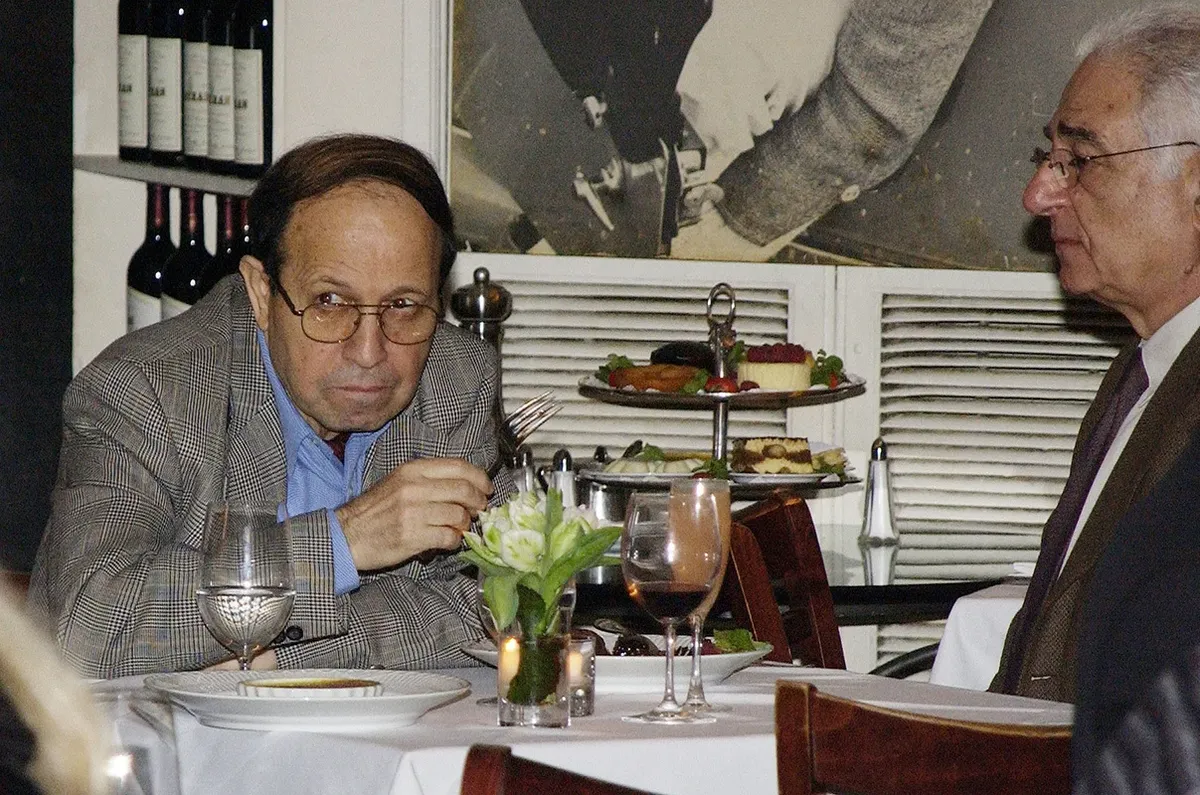
Benon Sevan has been working at the UN since 1965. According to the materials of the investigation, during the program “Oil in exchange for food”, he personally received bribes from the Iraqi government. Sevan left the United States and now lives in Cyprus. In 2007, the US authorities have an official accusation of bribery, and Interpol declared a former official. Cyprus did not issue Sevan due to the lack of an appropriate agreement on extradition. Now Sevan’s page in Linkedin says that he is an “independent expert in the field of international relations”.
Not very equal relationship
The financing of the UN activities occurs due to mandatory payments that all participating countries make. The deposit amount for each country is calculated separately, taking into account the volume of GDP and the population.
To date, the largest UN donor is the United States. According to data for 2020–2021, the states introduced almost a third (28%) of the total budget to the organization’s treasury. Further, China (15%), Japan (8.5%) and Germany (6%) are in a large gap. The five leaders are closed by the UK (5.8%).
The issue of financing the UN is quite acute in the American government: conservatives regularly urge to reduce subsidies. During the presidency of Trump, the United States began to allocate less funds for some UN programs. In particular, the Trump administration has completely stopped financing any programs that are terminating pregnancy (UNFPA suffered from this), and also sharply reduced the support of the UNAIDS program.
After the Democrat Biden came to power, the United States again increased subsidies to the UN, but this topic remains the subjects of disputes in the Congress. In addition, such a serious contribution to the United States to the UN activities raises questions about the potential bias of the organization. In the end, even the UN headquarters is in New York.
“The US contribution is really quite significant and gives the United States a great influence,” Bosco argues. - There are two ways to look at it. First: it is unfair and gives them too much power, too much influence. Second: rich countries take on expenses that poor countries cannot afford. It's like a progressive tax. "
The inequality caused by the history of the organization and sources of financing is manifested in the UN work in different ways. Large powers like India require representation in the Security Council.
“Western countries cannot continue to close the door to India,” said the country's Foreign Minister last fall. - While developed countries are faced with economic difficulties, India is growing as an economic superpower. Therefore, the UN Security Council will be forced to provide India by permanent membership. ”
The UN is often reproached with insufficient effective solutions to the problems of poorer. The most eloquent example in this area is the fight against coronavirus: a year and a half after the start of vaccination from Covid-19, about 75% of residents of richest countries received a vaccine. In poorer countries, this figure was only 13%.
The place where you can chat
This is not to say that there is no success in the UN activities. Хотя многие миротворческие миссии окончились неудачей, исследования показывают , что наличие миротворцев всё равно повышает шансы поддержания мира там, где был конфликт.
«Я бы не стал говорить, что миротворчество ООН в целом провалилось, — рассуждает Боско. — Многие миссии были провалены, некоторые были просто катастрофой: например, в Руанде и Югославии. Но во многих случаях присутствие миротворческих сил ООН на месте уменьшает вероятность возобновления конфликта».
ООН и ее дочерние организации ведут обширную работу по борьбе с голодом и распространением заболеваний. Часть средств идет на помощь жертвам военных конфликтов и природных катастроф.
«Вакцинация, гуманитарная помощь — все эти мероприятия крайне важны во многих частях мира. Возможно, всё это не столь актуально в Соединенных Штатах или Европе, но необходимо в других местах»,
— отмечает Раустиала.
Кроме того, ООН выступает дипломатической площадкой для всех стран-участниц. В результате совместной работы принимаются документы, которые становятся основой международного права и вектором, указывающим, куда старается двигаться человечество в целом. Например, Всеобщая декларация прав человека, Женевские конвенции, устанавливающие правила ведения войны, или Парижское соглашение по климату.
«ООН — это место, где все могут поболтать. Это важная штука в дипломатии, — резюмирует Раустиала. — Не всегда эти беседы приводят к чему-то серьезному, но всё-таки ООН — это место, где все [страны] встречаются. Не стоит ждать от ООН роли международной полиции. Это просто не то, чем занимается организация. Но говорить, что ООН совсем бесполезна, тоже не совсем справедливо. У организации есть свои недостатки, но ее вклад и роль на мировой арене всегда были весьма заметными».
В академической среде идет много споров по поводу того, как могла бы выглядеть Организация Объединенных Наций при идеальном сценарии, в чём ее сильные и слабые стороны. Но эксперты не сомневаются, что такая организация в любом случае нужна.
«Не все государства всегда неукоснительно следуют Уставу ООН. Можно использовать аналогию с ограничениями скорости на дорогах. Ограничения скорости регулярно нарушаются, но вряд ли кто-то скажет, что они не нужны», — резюмирует Боско.