
Translated material
"A modest place in the history of literature"
To the 150th anniversary of the Somerset Moham
The Russian -speaking reader knows the Somerset Maugham primarily as the author of the novel “Theater”, but in fact the creative heritage of the British writer is very extensive. Contemporaries hardly managed to appreciate Maugham during his lifetime - the more clearly the true scale of his literary talent becomes more clearly. Especially for “Gorky” about him and his prose, the literary critic Galina Yuzefovich tells.Starting from February 24, 2022, we were all in the face of the advancing barbarism, violence and lies. In this situation, it is extremely important to preserve at least the remnants of culture and support the values of humanism - including for the sake of the future of Russia. Therefore, the editorial office of Gorky will continue to talk about books, reminding our readers that the world remains in the world and fiction.
Live William Somerset Moem today, he would avoid social networks, but once in a couple of years he would give an exemplary arrogant interview to some media and, after with a detached interest, watched the storm caused-throughout his life, alien hostility touched him very weakly. However, like someone else's love - from childhood, Somerset Maugham is accustomed not to count on this sense on a lot. Zaika, an orphan, a stunted, painful and pushing, who at first spoke poorly and especially wrote in English (until 12 years old he lived in France, and his first language was French), he was a legal object of persecution in an English school, and after, having already reached fame, he could not boast of popularity in the light and a wide circle of dating.
In college, he studied medicine (to go along the beaten family path, go to Cambridge and engage in jurisprudence, like brothers, father and grandfather, Moham interfered with a strong stuttering), but, not experiencing a genuine tendency to medical business, and did not agree with the co -students. In the future, only the presence in his life of Gerald Haxton, a many-year-old friend, partner and secretary-allowed the writer to establish ties with others at the very least: sociable and cheerful Haxton took on the role of a bridge between Maugh and the world. The reason for this is not in shyness and not even in a universally recognized bad character of the writer - simply, in his own words, Maugham, at different times he loved individual people, "but he never felt special sympathy for people." The absence of sympathy was partly compensated in him by the lack of a habit of any pronounced and aimed antipathy: “Let it be very bad, but I am unable to be seriously resented by other people's sins, unless they touch me personally, and then too. <...> I am not my brother. I cannot force myself to judge my neighbors - there is enough for me that I am watching them. ”
The cold, rational distance of nature was converted, including into the choice of classes.
Until the collapse of the British Empire, intelligence remained a kind of "gentlemanly club" - the service in it was practically not paid and therefore was considered the privilege of secured and patriotic (in the meaning of "impersis") of configured people with a slight tendency to adventures. Maugham, to the very idea of a gentlemanly ethics (and the idea of strict social stratification as a whole), was treated with poisonous skepticism, treated adventure with moderate enthusiasm and certainly was not a patriot in the then elitist understanding of the word. However, this did not prevent him from entering the secret service and most of the First World War in Switzerland, coordinating the work of British agents in Germany and Austria, and later, in the summer of 1917, to go to Russia to try to persuade Kerensky not to leave the war.
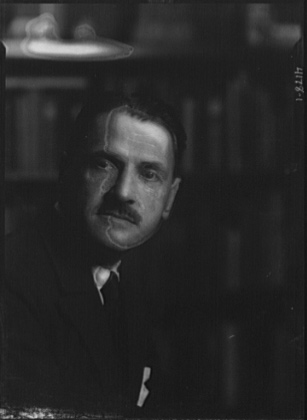 Arnold Genthe / Library of Congress
This work did not fully correlate with the personal values of Maugham (for example, he was a convinced pacifist), and the people with whom she brought him rarely evoked warm feelings in him. However, from the point of view of world literature, the intelligence service fully paid off: during the cooperation with it, Maugham collected truly invaluable material, which, as it should, has turned into one of his best collections-“Endenden, or a British agent” by the end of the 1920s. Twenty -five years later, this collection of 14 stories united by the figure of the central character served as a source of inspiration for Jen Fleming, the creator of James Bond, and a few years later influenced the great John Le Carre.
Any activity, any acquaintance, any trip-and the writer traveled a lot, including in the very far standards of the Territory, like the West Indies or Polynesia, became a material for novels and stories. “Everything that happened to me in my life, I used in my works in one way or another. It happened that some of my experiences served me as a topic, and I invented a number of episodes to identify it; But more often I took people with whom I was close or at least a little sign, and created my characters on their basis. ” A similar approach to writing, by his own admission, impoverished the daily life of Maugham, depriving any experience of freshness of perception and provoking non-rejoicing accusations of excessive pragmatism (“it feels like you to record you all the time,” recalled one of Haxton’s friends who visited their villa in the capfer). But this method, of course, was only good for creativity - tenacious observation filled the deficiency of immediacy.
Human heat -dwelling naturally was broadcast in Maugh and in the manner of writing. Fans call his style “transparent”, and ill -wishers - “primitive”, “poor” and “monotonous”. One way or another, no one ever tried to see a subtle and inventive stylist in the somerset of Maem - no one, including himself. In the narrative, the writer appreciated clarity primarily, in the second one - simplicity, and only in the third - the harmoniousness, which he also understood quite narrowly: mainly as the avoidance of inappropriate rhymes, non -dimensional alliterations, heavy grammatical constructions and tautologies. However, Maugham was always ready to sacrifice harmoniousness for the sake of clarity, and the ornamental splendor, characteristic of the prose of the times of his writer's youth, in adulthood caused him only squeamishness. His first book of flowering notes about Andalusia, for which the young Moham lovingly prescribed and memorized beautiful words from the Salome Oscar Wilde and the Bible of King Jacob (at the end of the 19th century it was considered the top of the style), later he was very ashamed of. Subsequently, Maugham tried to avoid any redundancy, limiting himself even in adjectives and adverbs.
The ethical position of Maugham as a writer also looks, so to speak, excessively transparently - not in the meaning of “obvious”, but rather, on the contrary, “elusive”. Especially she, of course, shocked the contemporaries of the writer. The first published novel by Somerset Maugham Lisa from Lambet, released in 1897 and telling about the adultery in the working environment, immediately caused a scandal. In the years when British literature was supposed to scourge and extol virtue, the young writer dared not to bear the unequivocal verdict neither the main character - the naive and brisk young Lisa, nor her seducer - a married and much more adulthood man. Moreover, if the public could still reconcile with a direct moral judgment, then it was more difficult to withstand the reader’s stubborn reluctance to provide the reader at least at the level of epithets and intonation. It is no accident that the critic of The Times scolded the novel for “dryness”, “soullessness” and “anemic”.
Approximately the same can be said about the most popular Maugham’s novel in our country - about the famous Theater. In the writer’s homeland, this book is poorly remembered - it is lost in the shadow of other, more significant things, such as “the burden of human passions” or “pies and beer”. But in the USSR and after, in Russia, it was the “theater” who was honored by the main text of Maugham (the reason for this is most likely a catastrophic shortage in the domestic book market of that era of at least some frivolous love novels). However, despite the cult status of the “theater” and his popular film adaptation of 1978 with the Latvian Diva Artman, as an aging actress Julia Lambert, hardly any of the enthusiastic fans could confidently answer the question whether the author considers his heroine “good” or “bad”.
All this is dry and simplified style, coldness and unemotionalism both in life and in prose, the rejection of ethical superposition - caused criticism or, in any case, puzzles from contemporaries and even after the death of the writer (Maugham lived an exclusively long life and died in 1965 at the age of 91) by many as a flaw of his prose, as a basis for its rapid oblivion. Maugham himself was ready for this outcome - well, or pretended to be ready. “It's nice to think not about the fact that you have achieved immortality (the immortality of a literary work is calculated at best for several centuries, and even then this is usually only immortality in the school curriculum), but that several generations will read you with interest and that you will take at least a modest place in the history of literature of your country. As for me, I look at such an opportunity skeptical, ”he wrote in his memoirs“ Summing up ”. Nevertheless, from the 1930-1940s, which accounted for the highest flowering of the Somerset Maugham as a writer, at least three generations were replaced by at least three generations, and he continues, in his own expression, “read with interest”.
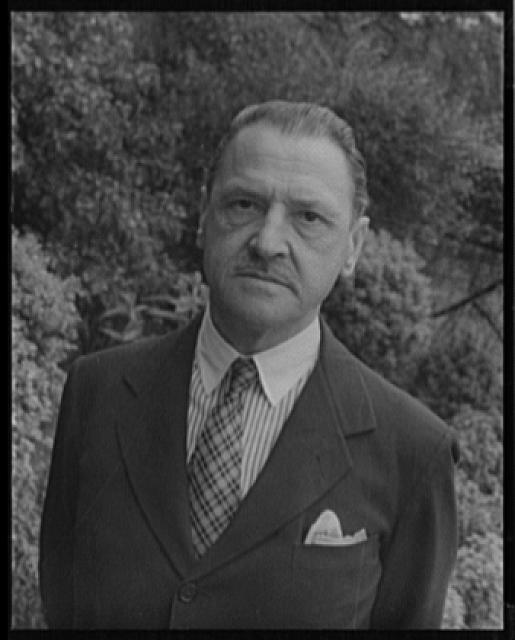 Carl Van Vekhten / Library of Congress
Over time, it became clear: everything that seemed to the weaknesses and defects of the Moemam prose, in reality, is the key to its longevity.
It is known that the most elaborate things go out of fashion the fastest - this also applies to the manner of writing. The pastel, verbose style of the late Victorianism today looks old -fashioned, and although in this old -fashioned there is a well -known charm, not many people read George Meredith or Thomas Hardy just for pleasure. The economical, compact and clean -up language of Maugham looks, on the contrary, where it is appropriate and fresh.
But even faster than the style, emotion becomes obsolete in literature. Rather, even she herself-the emotion just remains more or less unchanged-but the specific formulas in which the writer puts it on, and sometimes reasons for its occurrence. That is why the texts that leave enough spaces that the reader can fill with himself, putting his own emotions, consistent with time and circumstances, have been living quite long. And in this capacity, deceivingly impassive, full of verified voids and carefully built under the inspection, the texts of Moham are an ideal outline for readership. Each generation of readers pulls out, takes to the surface a tense emotion hidden in them, arranging and coloring it to their own taste.
Together with the British spy of Endhenen, we reconstruct the meaning of a dying cry (“England!”) Of an old governess in the story “Miss King”. Together with the foreman, we restore what the mysterious seller of lemonade from the story “Man with Scars” is actually. Together with the heroine of the novel "Patterned cover" we are trying to understand the character of her unattractive, but heroic husband. In each of these and in the great set of other cases (the literary heritage of Maugham is truly vast), the author tells us exactly as much as necessary - no more and no less. With a firm hand, he leads us through the story he created, not allowing to get off the path, but also without blowing his own emotions, opinions, experiences and assessments.
From the modern writers, we expect them to select the most accurate words for our momentary feelings, crystallized and explained-albeit metaphorically-the essence of what is happening with us here and now. That is why contemporaries were often dissatisfied with Maugham Somerset, for the most part, considering it a prolific fiction, deprived of at the same time, the moralistic and stylistic relevance - virtues, then considered the writer to be the most important for the writer. At the same time, the writers who die in the classics are supposed to be a kind of contemporaries eternal, reusable - remaining a reliable constant, to accommodate the needs, problems and questions of each of the next reader generation. Some of the writers manage to move from the category of “great contemporaries” to classics without effort and visible seams, but many are good in only one of these two of these role. Thus, having slipped through the stage of a contemporary (or rather, having lived in a rather modest status), the somerset Moem stepped directly into immortality, and his shares, which were at first in which they were short, are only growing in price over the years. The farther, the more great, modern and necessary its best texts look. In a word, for several centuries of immortality - as within the framework of the school curriculum, and beyond it - the writer can safely calculate.