
Translated material
The battlefield is the consciousness of the viewer
Theatrical premieres of December and January - our winters of our anxiety - demonstrate this particular
The theater is connected with everything that happens in time - changes in history and on the street. Even if the fairy tale is on the stage, the ancient Danish (as in the case of the text of Hans-Christian Andersen in the outbuilding of Mtuza), or her virtuoso interpretation (as in the dramaturgy of almost the entire Schwarz on the Sretenka), the director talks about “now”, throws his skills and strength into the furnace of the moment. And if earlier from the primary questions to the performance he was - how to do it, today he is pushed out by the question - about what.
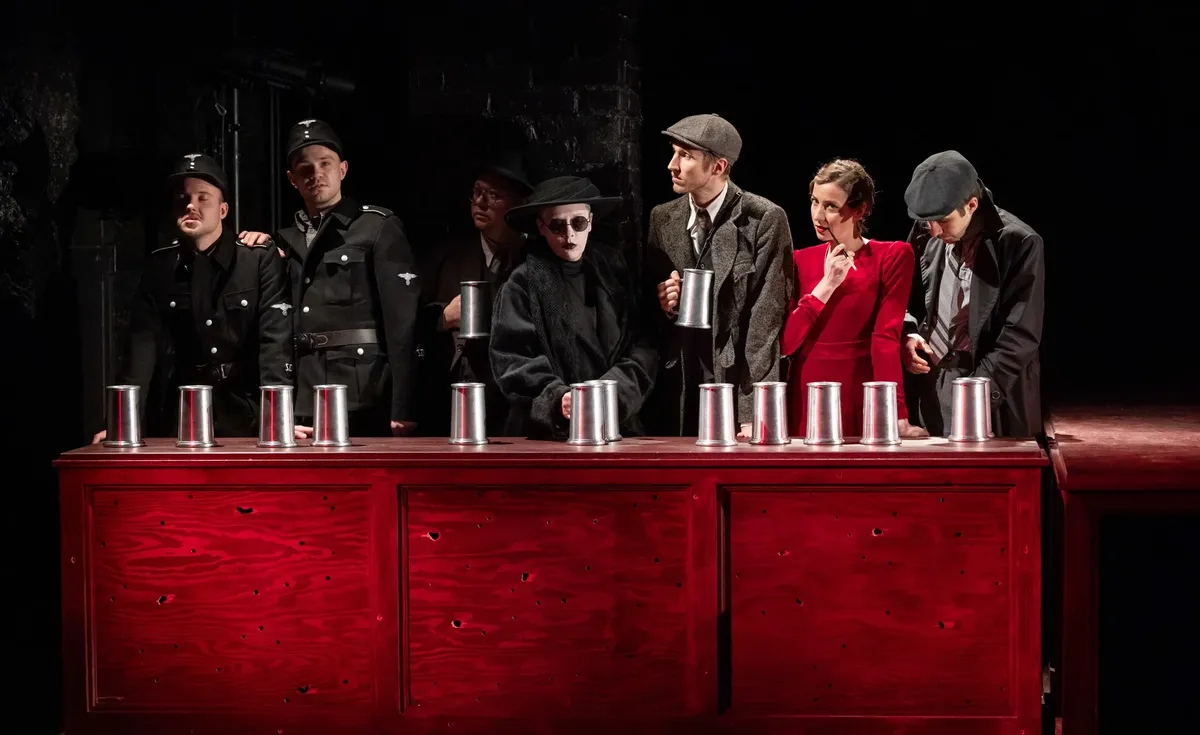
Spitz cutlets
This season, the Studio of Zhenovach’s students are invited in the Studio of Theater Arts: Sergey Tonyshev on the small stage works on the play about Shpalikov, Ulanbek Bayaliev released the premiere on the big stage. Its performance is called "Brecht. Schweik. World War II. "
Schweik Brecht, let's say right away, not at all the same that Schweik Gashek. Hashka wrote his satirical novel about the First World War, Brecht finished the play in the midst of World War II, and Bayaliev gives his spinning time out of time: Hitler nurses the catwalk here, and in the tavern this happens that all wars of the world: violence, cruelty, and hysteria of instincts. Satira Gashek was built on the long tyranny of the Habsburgs, Brecht reveals the onset of Nazism. The performance is about the war as such. The well -known motive of the “three -sided opera” - “first bread, and morality later” - is aggravated extremely.
The hero of the performance (Nikita Isachenkov) is a skinny, colorless, fantastically dodgy dog trader in Prague. The SSSovets in the brilliant performance of Leo Kotkin, who managed to give the features of real horror, wants to give a grotesque drawing. Schweik's friends want meat. The hostess of the tavern "at the bowl" wants profit. Context - hunting for dissenters, fear. The way the scarfurer beats the innkeeper demonstrates that the Nazis can and are going to do with people.
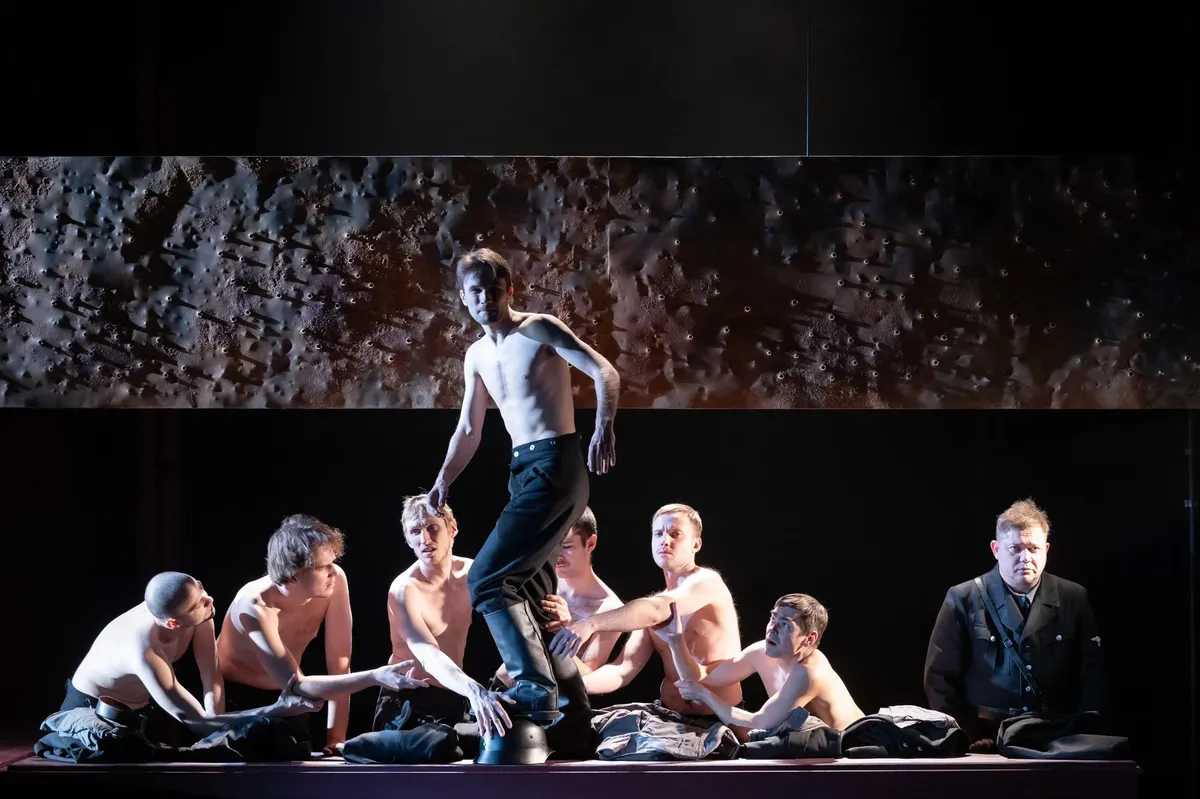
We were weaned from the pamphlet on the stage, from sharp staged techniques. At times, the famous phrase "offered from engravings to make a play." Here the performance seems to be made of a poster. Its colors are black and red: the scenographer Evgenia Shutin is hardly straightforward. Rightness is present in the entire system of production, behind which Brecht's voice is heard:
"When hypocrisy begins to become truly crazy, it's time to tell the truth."
Schweik (crawling on the belly in the snow near Stalingrad, stealing a dog, turning a spitz into a cutlet, and official ideology into nonsense) becomes a lively illustration of this very truth. It has shades of the puppet theater, surrealism, total irony. And the personal mythology of the Schweik sly cunning merchants with a horror show, plowing society.
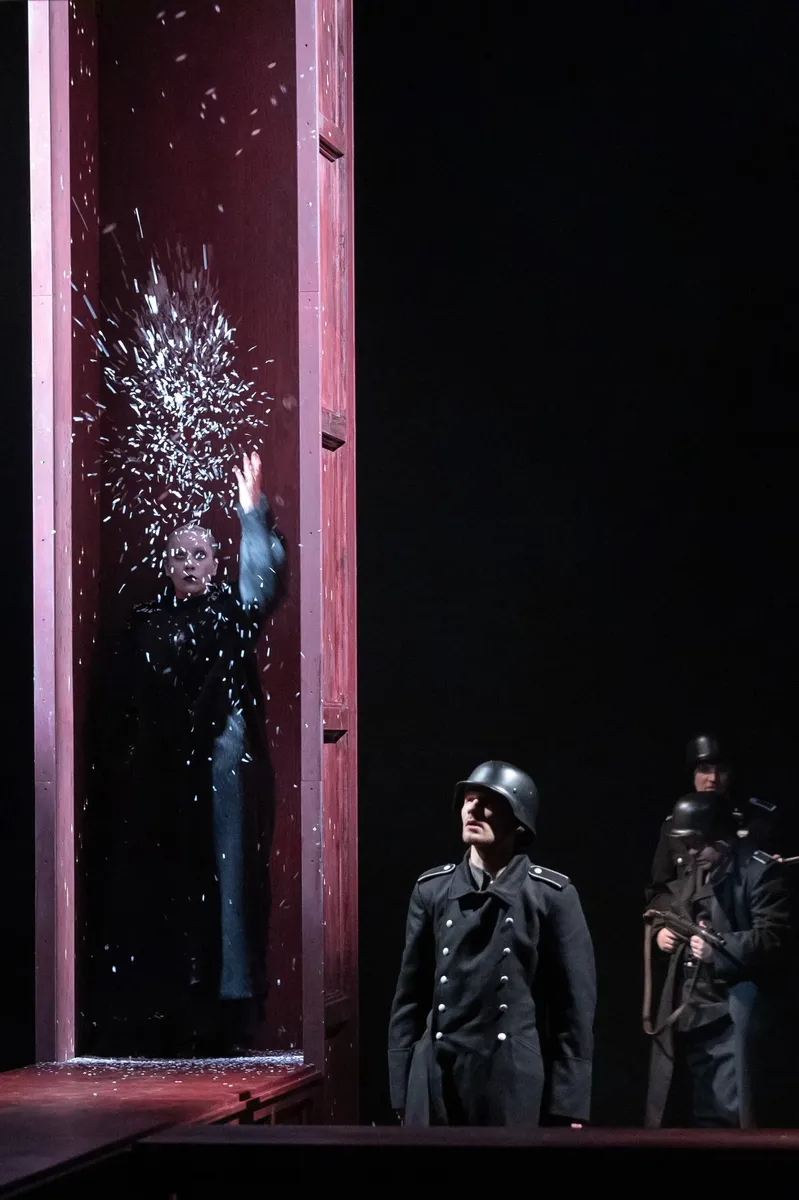
How retrograde is placed
An invisible rhyme - the theatrical life is now standing on them - the premiere of “Another Tales” in the Mayakovsky Theater, a scene on a Sretenka.
Sergei Ursulyak glorified himself in the cinema many times; He returned to the theater with a mature filmmaker. He connected the “naked king”, “dragon”, “Kaina XVIII”, added a little “shadow” and decided to protect himself, announcing that this was “setting a retrograde”.
But there is nothing such retrograde in the play. There is a rhythm, good acting parties and a message to the hall. The charm of this production is that it was Schwartz masterfully: it is easy to make funny things, to make fun of evil, to write happy ends to unhappy circumstances. The acting ensemble of Mayakovka is the director as a musical box on the gavot, in which, in the course of the performance, the notes of electric saws begin to grind.
The strongest and most “speaking” duet here is not a prince and princess, young-romantic, but the king (Vyacheslav Kovalenko) and the queen (Zoya Kaydanovskaya). Two rulers, surrounded by a flattering retinue, mother and groom. He is cold, cruel, not devoid of charm, and therefore, of course, “no other place except the Royal” is suitable. At first, he doubts the bride's intricate: “Maybe she is a seven? Maybe she is a rude? Away!" But having seen the princess, he forgets about everything - and the weaves begin their work.
... Mom from the groom is given a gun. Roose an ugly thing.
- For what? I'm not fighting with anyone?! - The queen is prudent and harsh.
- And therefore, you are not fighting that you did not have guns! - Royal matchmakers for a word do not climb into their pocket.
There is nothing in common neither in biographies, nor in the personalities of Andersen and Schwartz, except for the defining: these storytellers understood reality. And here are the quotes from the performance, where the Danish plot rod, and the stylistic firing are ours. The first minister (Evgeny Paramonov), similar to all Kagabashniks, broadcasts at once: “Our state is the most ancient, the best in the world”, “All around are idiots, and only we are well done, we are the best nation in the world, because we do not just believe in miracles, we miraculously and hold on”!
Deceptive affectionate humor, Schwartz's delicate playfulness:
“Fools will see the king naked! Our entire national system, all traditions are held on unshakable fools. What will happen if they tremble? The foundations will shake, the walls will crack, smoke will go over the state! ”
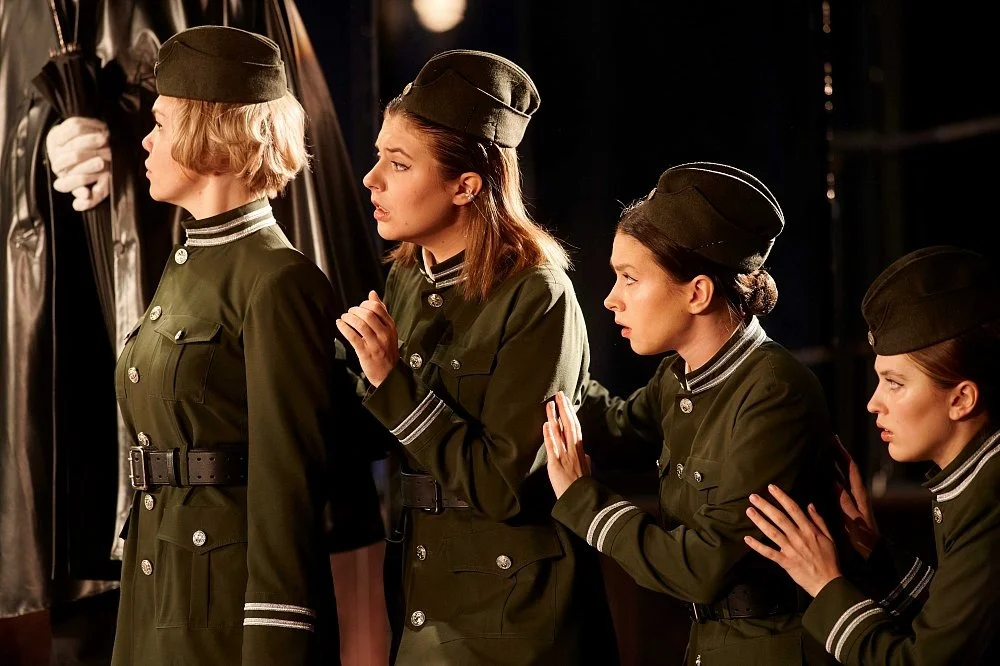
Well, of course, in the end the ring composition wins: the first minister comes to the place of the overthrown king, and his “democratic rule” opens a new era and lights the lights in the windows: “Our people will take anyone who takes reins ...”
Having lived across the time, the former ensign Schwartz in response to the vast immoralism of the state quietly and stubbornly wrote his codes-accents. Over the years, the intensifying tremor was not only the result of fear, but also the trembling rage of an artist who was able to become a storyteller for all times for our soil.
Ursulyak the nature of Soviet drama - and the Soviet drama of life - knows very well. And his directorial text is not in lightness and ability to make the author ridiculous on stage, not in acute-industrial associations that explode the hall, but in a bitter sealing with bitter sealing:
If it was in the days of Hans Christian and was repeated in the merciless decades of the last century, if everything returns, it means that you should not “lose despair” and hope for hope.
Here, all artists play with excitement of honest craft. And those two hours that lasts the performance and you can laugh with impunity (laughing in a voice or uncertainly smoking), “another fairy tale” works as an activator of civil courage, and courage of an accurate understanding of what is happening rises into the air of the hall.
The price of love
... Many years ago, at the premiere of the wonderful performance of Henrietta, Yanovskaya, “The Wolf and the Seven Kitty”, a spectator of about six was sitting next to me. In appearance, a pure Fayum portrait, with huge Maslin eyes and black curls, he did not come off the stage, with rapture swallowing all the misadventures of the goose, the machinations of the insidious wolf and the exploits of the brave father-coil in the captain's cap. "David! David!" - The girls from the back row were tearing to attract his attention, but he was completely focused on another.
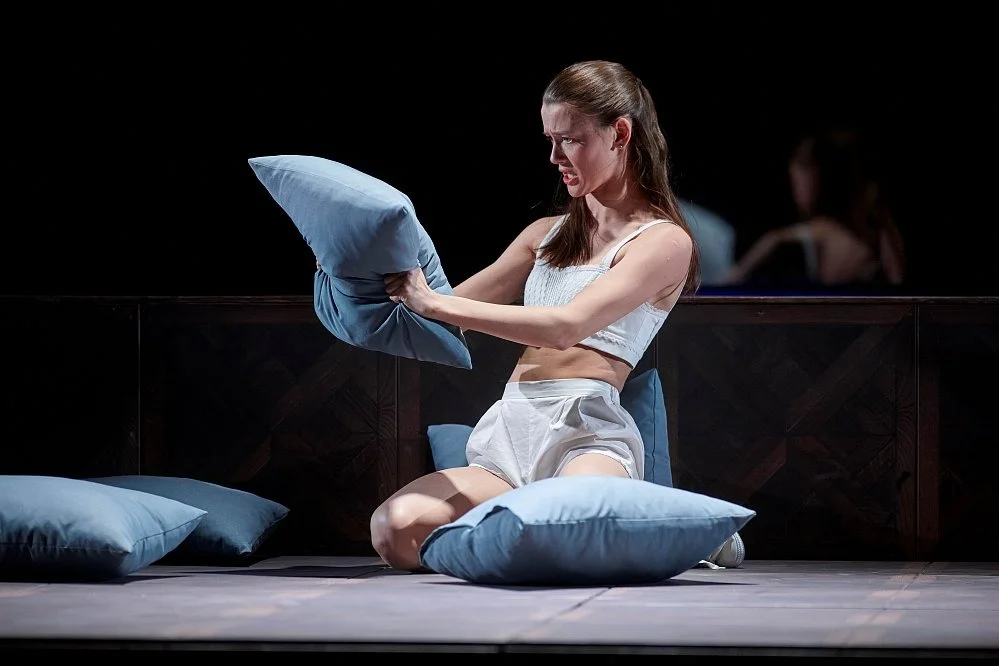
And in less than fifteen years, David Movsesyan composed the finest musical score for the play “The Little Mermaid”. The production of Ruzanna Movsesyan, a student of Ginkas and the happy mother of the composer.
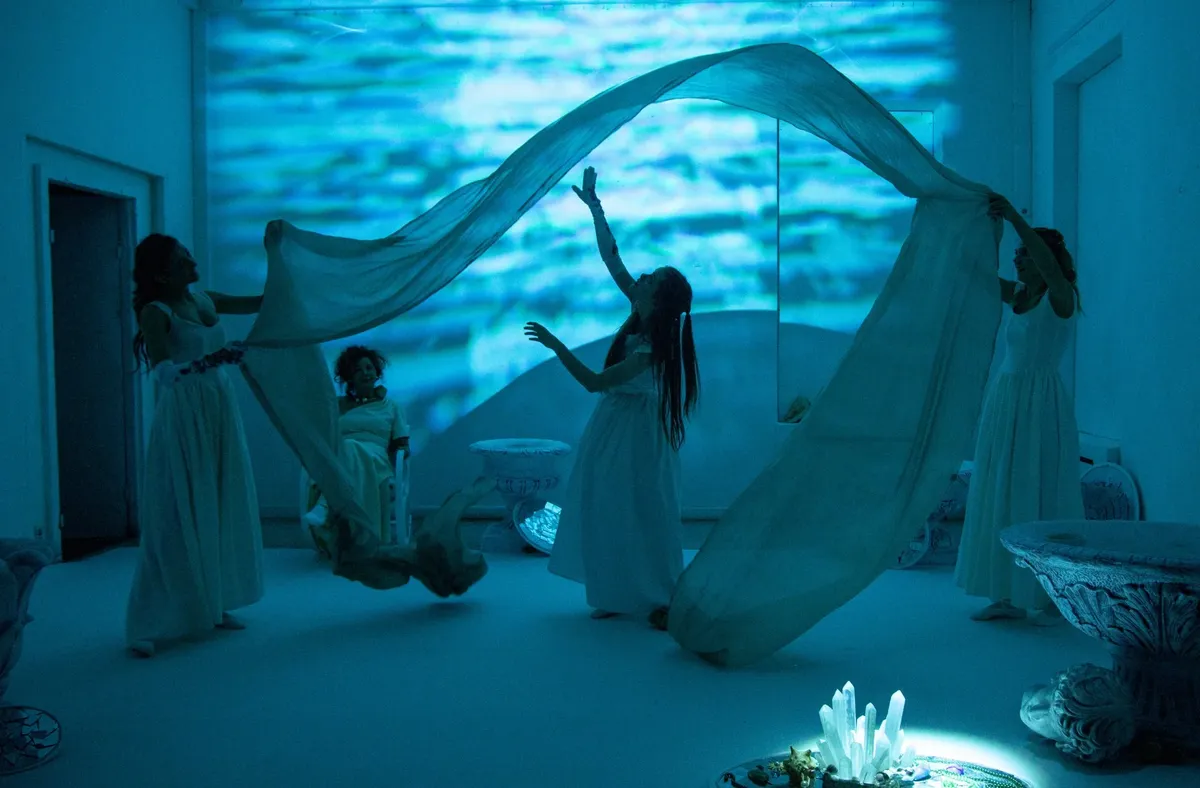
This performance truly deserves that today it is dull recommended "for family viewing." And grandchildren and grandmothers, and parents - each generation will extract his experience and conclusion from this premiere in the outbuilding of Mtuza.
Everything in this performance shimmers with the mother of pearl, the rainbow influxes of the sea shell: the snow-white-bearing underwater kingdom, where even the shadows are part of the world, the grotto with pearls, the marble fragment of the statue, the stormy sea, the sunset, and the ebb. The scenographer of magic is Maria Urbina.
And the characters are also gradually shimmered: the young mermaid, languishing with a foreboding of love, is a multi-hearted beauty-grandmother (she knows for sure how hard the day of the fifteen age is when the girls are allowed to rise to the surface of the sea), obedient sisters. And they really sing marvelously; No wonder the witch in paying for sorcery is required by Rusalochkin's voice.
The prince here, too, is only a voice, enchanting, quiet, but in response clearly - familiar from childhood: “She danced and laughed, and blood oozed from her legs” ...
One of Andersen’s most cruel tales, where it is necessary to pay in love and the rejection of his own nature for love, Ruzanna Movsesyan sounds with a magical symphony of the transformation of the mermaid - into a person, the mortal soul - into immortal.
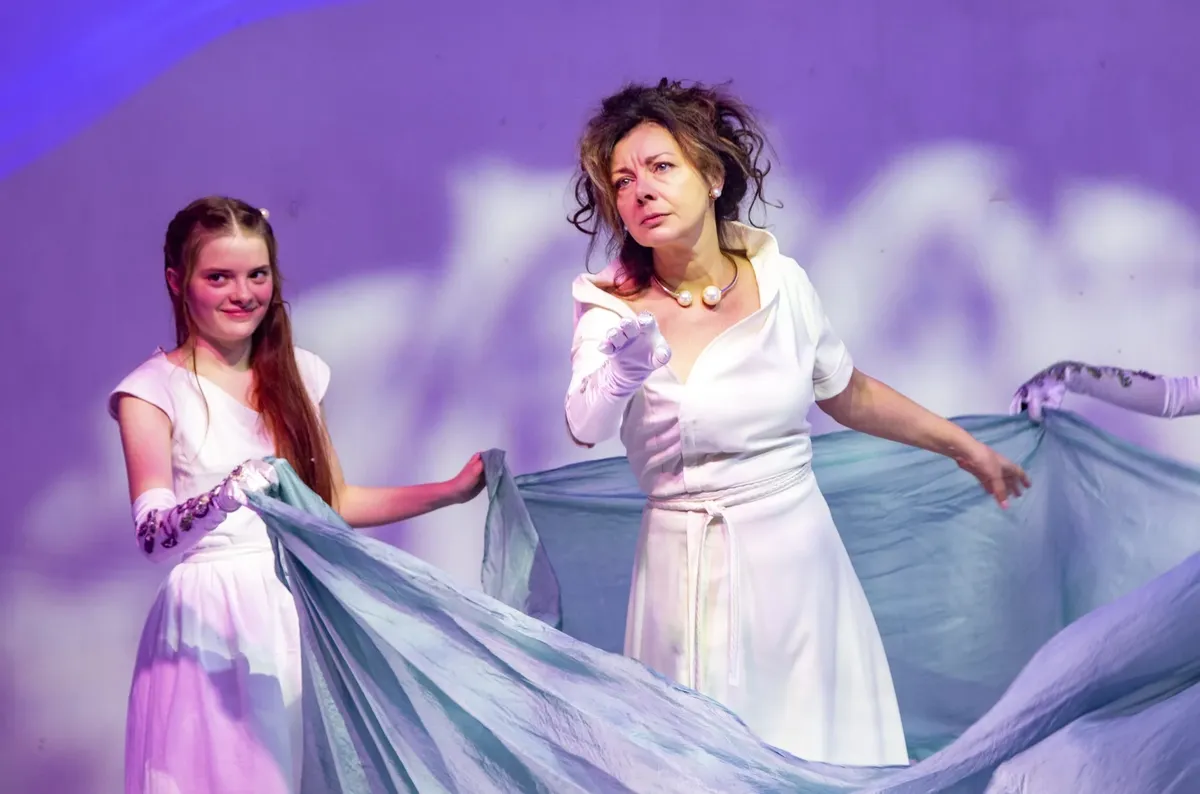
The performance was on children's holidays, and people of primary school age around me were not shy about helping the actors and directing the action. Well, the final turned out to be clearly a sign.
When the prince marries another, and the mermaid at dawn should turn to the sea foam, the sisters sail to the steps of the royal castle with a knife obtained from the same witch. If you have time to kill the prince and sprinkle yourself with his blood, you can frolic in the waves for three hundred years. The hall was divided. The girls froze, the little fellow fans in a furious whisper began to demand:
- Understand him, kill him !!!
I quietly asked my neighbor about nine: for what? He looked at the deaf: for resentment!
What can you say? And whose fruits are family, network or school “lessons about the important”?
... But the parents from the performance came out with lyrical faces: they really could remember that the main thing in the world.
Pushkin and traditional values
... In January, the “Golden Mask” reform was completed and a new jury was appointed. At the head - Sergey Zhenovach. The jury will have to travel around cities and towns and watch theatrical performances in the field.
In my opinion, a system error. The ZM institution itself has overgrown with so many claims, discontent, doubts that it should be thoroughly considered, which, in fact, can be done to increase the level of transparency and quality of assessments. It is possible to suspend the project for a year, hold a referendum (although here you can!) How to think about it. But, you see, it is ordered to survive. Do not drop the banner. And now - scandals in networks and haste in the new secretariat of the STD.
Two winter months in theaters went to Kuter through laughter and tears. Vice-Prime Minister Tatyana Golikova, who oversees the culture, seemed to be: the time, finally, bring the theaters “in line” ...
With the Decree of the President of the Russian Federation of November 9, 2022 No. 809 “On approval of the foundations of state policy to preserve and strengthen traditional Russian spiritual and moral values”.
The Ministry of Culture rushed to perform.
To “put on” these same “foundations” on the current theater repertoire, in which both Russian and foreign classics, and modern drama are more frequent than to drag a hippo from the swamp.
But from now on this requirement of state assignment; There is no “conformity” - no support.
The main task of directors of theaters is to properly spent the future repertoire in columns in accordance with the decree points.
The choice is not that unlimited. One is good:
- “Preservation of historical memory, counteracting attempts to falsify history, saving the historical experience of the formation of traditional values and their influence on Russian history, including the life and work of prominent people of Russia.” (Suppose: "War and Peace"?)
Others:
- “... Preservation, strengthening and promotion of traditional family values (including the protection of the Institute of Marriage as a Union of Men and Woman), ensuring the continuity of generations, taking care of the worthy life of the older generation, forming an idea of the savings of the people of Russia as the main strategic national priority.” ("Marriage"?)
There is also:
- "Education in the spirit of respect for traditional values as a key element of state policy in the field of education and culture, necessary for the formation of a harmoniously developed personality." ("Demons"?)
Someone inventive will follow, perhaps along a difficult path:
- "Strengthening civil unity, all -Russian civil identity and Russian identity, interethnic and inter -religious consent based on the unifying role of traditional values." ("The fairy tale of the priest and the employee of his Balde"?)
In short: in order to seriously fit into “traditional values”, it is necessary to re -create Russian culture, Russian literature, Russian theater. Gogol, Dostoevsky, Tolstoy on suspicion. Yes, and Pushkin (that “Count Nulin”, that “Onegin”) is not suitable for solving the State Council. At the same time, you need to figure out where to put Shakespeare and Goethe, Cornell and Hugo, Beckett, Sartre, Anuya et Cetera. It’s scary to think about the present. Only fairy tales survive: about the which is the immortal, the finalist, I am not afraid of this word, a clear falcon, about Marye-Krasa.
The theater administration also needs to be dug in: well, how is someone from the vigilant public council at the Ministry of Culture or from activists to the divergence of what is on the stage and what is in the papers? We will have to break the repertoire, stop the payment of artists and employees, cleaning the theater, discharge from the roof of snow (the budget for the performance is one).
The year has just begun. And good and evil, simplicity and complexity, the eternal meaning of art and voluminous absurdity of reality fiercely fight on stage and behind the scenes, and the battlefield - the consciousness of the audience.