Date
Author
Пресс-служба «ТИ-Россия

Preserved copy
Translated material
"Transparency International - Russia"
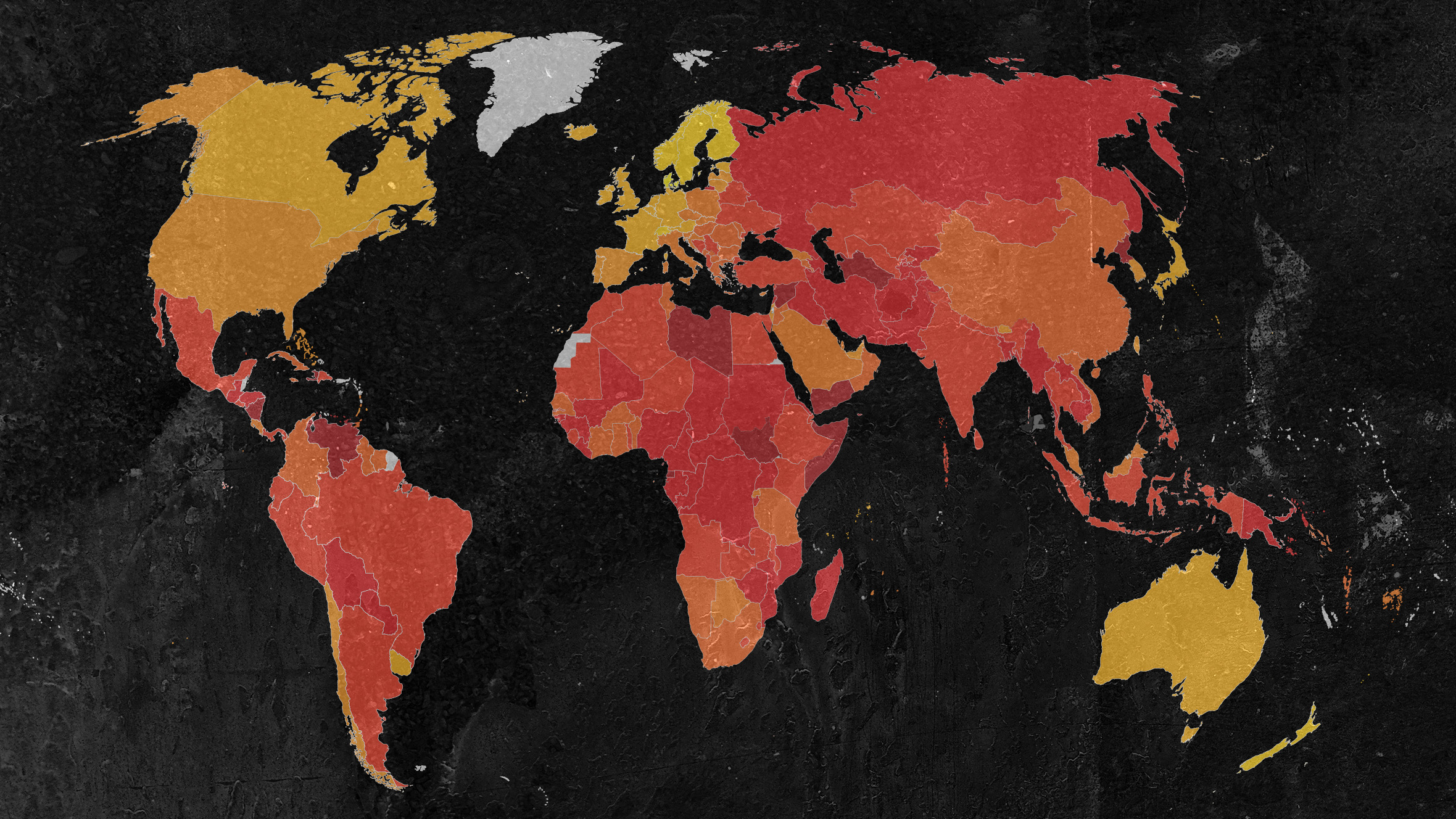
Russia in the Corruption Perceptions Index 2023: 26 points and 141st place
Transparency International has published the Corruption Perceptions Index (CPI) for 2023. This time, Russia scored 26 points out of 100 and took 141st place out of 180. Guinea, Kyrgyzstan and Uganda received the same results.
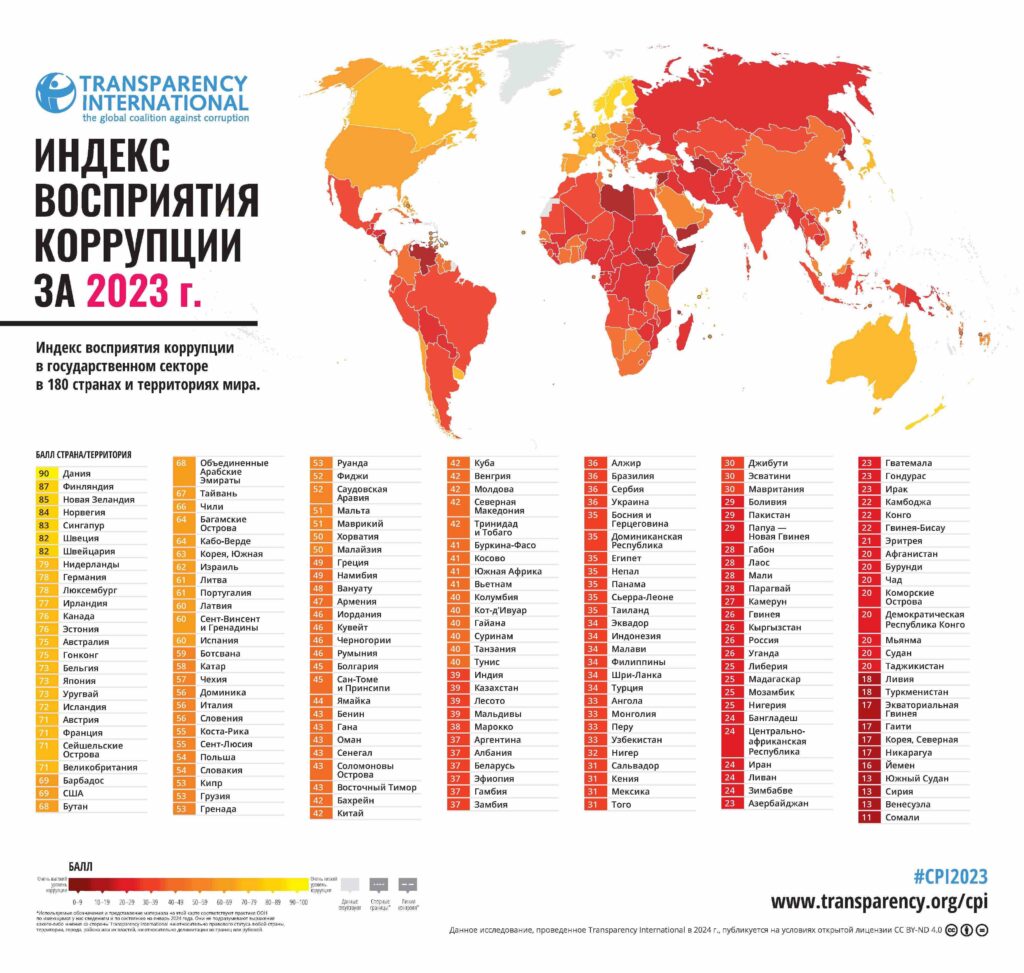
The Corruption Perceptions Index (CPI) is a ranking of 180 countries on the perception of public sector corruption. It is calculated based on data obtained from 13 expert sources, including the World Bank, the World Economic Forum, private consulting firms and rating agencies, think tanks and other organizations. Countries are ranked on a scale from 0 to 100, with 0 being the highest level of perceived corruption and 100 being the lowest.
In 2022, Russia scored 28 points and took 137th place. Mali and Paraguay, which then received the same results, took 136th place in 2023.
Global indicators and trends
The key theme of CPI 2023 is the effectiveness of justice systems. According to the rating, in countries where the principles of justice are violated, corruption increasingly goes unpunished, and sometimes is even encouraged.
“Corruption exacerbates social injustice and disproportionately affects the most vulnerable. Barriers to justice for victims of corruption remain in many countries. It's time to break down these barriers and ensure people have effective access to justice. Every person deserves a fair and inclusive legal system in which the victim's voice is heard at every stage. Anything else is a mockery of justice,” said Daniel Eriksson, Chief Executive Officer of Transparency International.
In 2023, the leaders of the ranking remained unchanged. Denmark (90 points) tops the index for the sixth year in a row, followed by Finland and New Zealand (87 and 85 points, respectively). The effectiveness of their justice systems also ranks these countries at the top of the Rule of Law Index.
The last positions in the index are occupied by Somalia (11 points), Venezuela (13 points), Syria (13 points), South Sudan (13 points) and Yemen (16 points). All these countries are experiencing a protracted crisis.
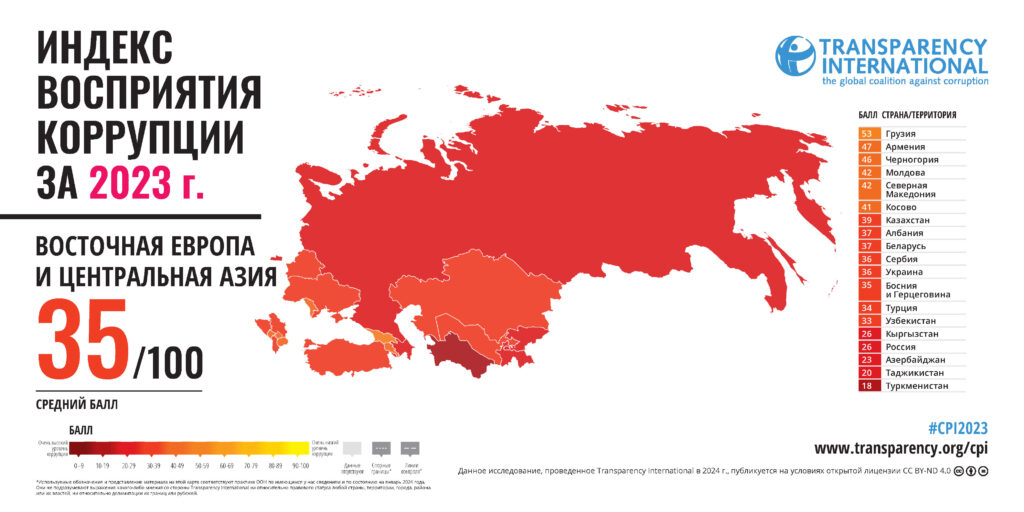
Among the countries of Eastern Europe and Central Asia, only Armenia (47 points, +1), Moldova (42, +3), Ukraine (36, +3), Bosnia and Herzegovina (35, +1) and Uzbekistan (33, +2) improved their scores. The results of Kosovo (41), Serbia (36), Azerbaijan (23) remained unchanged. Turkey (34, -2), Turkmenistan (18, -1), Tajikistan (20, -4), Turkmenistan (18, -1), on the contrary, lost points.
Recommendations
Lawyers at Transparency International Russia believe that in the area of everyday corruption, the Russian authorities need to strengthen funding for the courts: ensure decent salaries for court employees, adequate supplies of equipment and office supplies; set a plan to bring 100% of courts, including world courts, into proper condition.
It is also necessary to create acceptable working conditions for employees of the traffic police, the migration department, the prosecutor’s office, and other law enforcement agencies that solve the everyday problems of Russians: increase salaries in line with inflation from 2012, renovate premises, purchase equipment and office supplies in sufficient quantities; abolish the “stick” system that encourages refusal to initiate criminal cases and register crimes; cut staff positions, prioritize recruitment on the ground.
In addition, it is necessary to stop cutting federal spending on health care: index budget spending to the level of inflation; additionally finance the compulsory medical insurance fund, bringing tariffs for medical care to market levels; similar measures should be taken in education, increasing the per capita funding standard to the OECD standard (75 thousand dollars at purchasing power parity per student for the entire time; previously it was less than 30 thousand dollars).
Lawyers recommend paying attention to areas in which it is possible to achieve rapid changes through legislative reforms: corruption in the funeral business, housing and communal services - by increasing transparency.
The area of elite corruption also deserves attention. In this case, the authorities need to:
- resume publication of declarations of civil servants, deputies, governors, ministers and other officials;
- return the openness of information about government procurement to the level of 2019: cancel the hiding of tender participants and suppliers, return government procurement to law enforcement agencies;
- resume publication of the register of federal subsidies; create standards for publishing subsidies at the regional and local levels;
- pass a law on lobbying.