
Translated material
"Suicide will fly like flies"
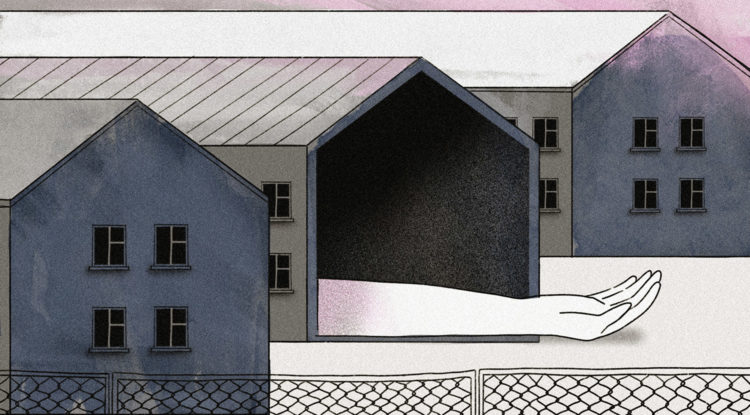
The Russians end with them in refugee camps in the Netherlands. Why?
In mid -January, it became known that the transgender girl from Russia Antonina Babkin, who received a refuge, committed suicide in the Netherlands. Over the past year, this is at least the fourth case of suicides of Russian -speaking refugees in the Netherlands. "Cold" tells who these people were, why they committed suicide - and how it is related to the problems of the system of working with refugees in Europe.
In order not to miss the main materials of the "cold", subscribe to our Instagram and telegram .
In 2022, the 20-year-old transgender girl Katya Mikhailova arrived in the Netherlands. By that time, she had been trying to find a safe place to life for many months. In her native Transnistria - a self -proclaimed republic on the territory of Moldova, existing with the support of the Kremlin - a criminal case was brought against her: according to the documents, Katya was still a man, and she was accused of evading the draft. She tried to escape to France, but they refused to provide her with political asylum.
Now Mikhailova hoped to get him in the Netherlands, where her acquaintance, also a transgender girl, had recently successfully received a shelter. According to Katya’s friend, due to problems with documents, she lived for several months in a transit center, where she received the benefit of seven euros per week, but then she still achieved a transfer to a refugee camp, where the conditions were much better. There she continued to wait for a residence permit.
But she did not wait. At the end of 2023, the Netherlands refused Mikhailova in the shelter. Within two weeks, she was supposed to be deported back to their homeland.
On December 25, the body of Katya Mikhailova was found in the lobby of refugees camp in the city of Herlen. She committed suicide. Before and after it, during the year, three Russian -speaking people who tried to escape from persecution by the state in Europe have committed suicide in the Dutch camps for refugees.
"He was buried the same who poisoned"
The first suicide in the Dutch refugee camp of those that Kold is known about occurred in January 2023-then the 19-year-old native of Yemen named Haitm committed suicide (it was not possible to find out his surname "cold"). On February 27, a transgender girl from Russia Hin Zakharova made suicide, November 26 - Russian Mikhail Zubchenko, at the end of December - Katya Mikhailova, and on January 11, 2024 it became known about the suicide of another transgender girl from Russia - Antonina Babkina.
They lived in one country, but in different cities and in different conditions. Someone was refused refugees, someone else was waiting for a decision, someone generally lived on the territory of the camp. However, according to Sandro Cortexaas, a representative of the Dutch organization LGBTQ Asylum Support, which is addressed to LGBT -Runs, these cases have one similarity: they did not provide psychological assistance on time.
“Most refugees come from their countries with a huge number of problems,” Cortexaas explains in a conversation with the “cold”. “Ideally, you need to conduct a medical examination when they come to the Netherlands, and one more before an interview about the refugee status.”
In total, the petitioners go through two interviews. The first - a few days after applying for refugee: they ask him about why a person decided to escape from his own country and how he got to the Netherlands. The second interview (it is Cortexaas that it is about him) that visitors have been waiting in the camps for several months or even more than a year. This is a more thorough interview, which can last nine hours : employees of the migration service meticulously ask about all the details to make sure that the petitioner is really in danger in their native country.
The official website of COA (the Central Agency for Reception of Refugees in the Netherlands) says that "experts check whether the petitioners are ready for interviews mentally and physically." But, as Cortexaas explains, since it has been for months to wait for the interview, for a long time refugees in a foreign country are left to their own devices.
Having crossed the border and announcing their desire to get asylum, the visitors first get to the main reception center, where they spend several days so that their request is registered, then to the temporary reception center. If the migration service begins to consider the request, then the petitioner is sent to the camp of temporary residence (there are more than a hundred in the Netherlands). There, during the year or two, they are waiting for a decision on whether they will receive a residence permit as refugees.
According to Cortexaas, the reason that LGBT quoters do not pay due attention to a large influx of refugees in the Netherlands. As of 2020, in the Netherlands, there were not enough places for five thousand refugees, and in 2021–2022 a full migration crisis occurred: about 20 thousand people were forced to live in inhuman conditions in the reception centers. Some petitioners had to sleep on chairs, hundreds spent the night on the streets until the government opened new sites for temporary residence.
According to the report of the Ministry of Justice, LGBT quoters are more often than other groups of other groups, therefore, they often fear other visitors and do not always trust the employees of the centers. It is much easier for them to communicate with employees specializing in working with LGBT, but such professionals are not in all refugees.
The camp of temporary residence is essentially a hostel where visitors are settled in blocks with a common kitchen, shower and toilet. There is no systematic approach during resettlement: people of different nationalities, religions and sexual orientations live in the room. As in any hostel, domestic conflicts often arise between neighbors-because of a psyche of loud music or a mess in the room. One of the residents of the refugee camp, who received a refuge in the Netherlands in 2020, said that people often have nothing to occupy themselves in centers, they are experiencing great stress due to the move and do not always behave adequately.
The administration of the camp should resolve disputes and more serious conflicts. But the same report by the Ministry of Justice says that employees do not always properly respond to complaints, so visitors simply do not see the point of informing them about their problems.
As a result, quarrels in the camps lead to tragic consequences. 19-year-old Yemenets Haitm committed suicide because of the persecution of his own refugee compatriots. “The worst thing is that the same people who poisoned it were buried in the end,” says Cortexaas.
In February 2022, the asylum asylum asylum to Nigeria tried to strangle the Russian LGBT-melee with whom she lived in the same block. She even persuaded her husband to kill a neighbor. Now LGBT Asylum Support is ensuring that in each camp there are blocks, where only LGBT-ceremony will be settled.
According to the organization, over the past four years in the Netherlands have committed the referers of the shelter, five of them, who died throughout the year, were LGBTs. In total, LGBT Asylum Support counted 640 incidents of discrimination against LGBT refugees in camps, including cases of attacks and harassment. In particular, according to Cortexias, in January 2024, a minor transgender girl from Russia was raped in one of the camps.
“We are notified of such cases, and we send [to SOA and the Ministry of Justice] as much information as possible. But all the time that we are doing this is not changing, ”says Sandro Cortexaas. -LGBT refugees find that they are discriminated in the same way as in their native countries. They think that they are safe from the moment of reference, but it turns out that this is not so. ”
LGBTQ Asylum Support also investigate each case of suicide: Cortecaas travels to camps and talks with friends and acquaintances of the dead. That is how he found out that the transgender Russian Hin Zakharova has already tried to commit suicide several times. “There were signs that indicated her mental problems,” he says. “I was surprised when, after her death, I found out that no one took her words seriously.”
"Suicide was inevitable"
“I did a lot so that Hina moved to the Netherlands. She said: “I will not do this [I will not do suicide] out of respect for you.” But what happened happened, ”says Anna, a transgender refugee from Ukraine, who was friends with Hina Zakharova. (Anna asked for "cold" not to publish her last name.)
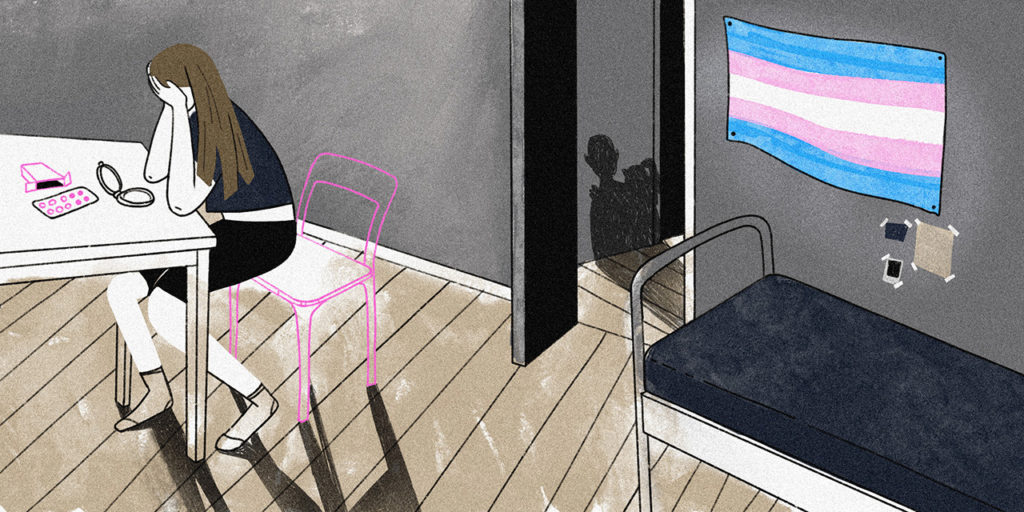
She met Hina in Telegram chat for transgender girls in 2021. Zakharova then lived in St. Petersburg and worked as a cashier in Pyaterochka. She complained about loneliness and problems in her personal life. Soon after Hina entered the chat, she told the participants that she tried to commit suicide. There were six such attempts, as close girls say; During one of them, Hin survived a clinical death. Anna herself at that time already lived in the Netherlands and tried to get refugee status as a transgender girl. She persuaded a new friend to move. Khina flew to the Netherlands on December 1, 2022 and soon ended up in a camp in Drakhten-a small Dutch town in the northeast of the country.
Anna describes Zakharov as a shy, beautiful girl with an angelic voice who really wanted to get married. However, it was difficult for her to start a relationship in Drakhten, a much more conservative city in comparison with Amsterdam. Anna herself lives in the capital, but her friends often talked, sometimes Hina came to visit-and at some point she again said that she wanted to kill herself.
“You see, this is a transce community - here many talk about suicide,” Anna explains why she did not accept it too seriously. - I also spoke with Hina about suicide, this is normal. Transluses, in principle, have big problems with the psyche. She liked the Netherlands, so believe that she would do it [it was hard]. ”
The inhabitants of the camp in Drakhten told Rain that in the refugee chats, Hin’s refugee chats directly asked for help, but did not receive any support: “People either somehow aggressively treated it or ridiculed her words that she wants to make euthanasia, and [questions about] how to do it.”
The same report said that Zakharova committed suicide after she was not given out the antidepressants that she asked for, and the necessary hormonal therapy. Anna clarifies that Zakharova was prescribed by female hormones, but testosterone blockers did not give-because of this she intensified gender dysphoria and the thoughts constantly arose that she "could never become a real woman."
Khina's close friend Olga Khludeeva told the “cold” that, in her opinion, Zakharov pushed the lack of antidepressants and loneliness to suicide. “ In Russia, she was discharged antidepressants, but in the Netherlands she could not get them. And the months without them were difficult for her, ”says Khludeeva. - She had no problems with hormonal therapy. The blocker that has not been prescribed by Khina drives into a sleepy state, it works as a tranquilizer. Anya believes that if Hina accepted this blocker, then Hina would not have the strength to kill herself. And in my opinion, in such situations there should be different help. Hina did not receive her. ”
Another friend of Hina, the transgender girl Sasha, says that Zakharova’s suicide could be expected: “Hina is probably the case when suicide was inevitable. The man just did not want to live. "
"The army will teach you"
Katya Mikhailova, who died 10 months after Hina, Anna also knew-they met in March 2022 in the main distribution center in Ter-Apel. Anna and Katya quickly became close and even not for long in a relationship. Anna says that Katya was a responsive person - despite the difficulties and lack of money, tried to help her friend and gave gifts. “In the case of Katya, it was a murder,” says Anna. -And this happened because of a specific employee of the Dutch migration, who made a formal decision [on refusal to asylum]. He saw that Moldova was in the list of safe countries, and decided that the rest in the case of Katya did not matter. I feel sorry for Hinu, but it was her honest and conscious choice. I know that Katya did not want to die. And it turned out that a kind, good, beautiful girl was gone. ”
The Dutch authorities really draw up and regularly change the list of safe countries, where, according to politicians, there are no discrimination on racial, religious and other signs, and cases of torture from the state are not recorded. For petitioners from these countries, the chances of obtaining refugee status are obviously reduced. Moldova is not formally included in the list, but all the interlocutors of the “cold” say that in practice it is attributed to this category.
Before trying to emigrate Mikhailov, she lived with her older sister and grandmother (her parents died a few years ago) in the city of Bender, which is located on the territory of Transnistria. As the “cold” told three of the girl’s acquaintances when she realized her transgender, her sister did not accept her - they began to quarrel, reached beaten. After the death of her grandmother, his uncle settled in the apartment to Katya and her sister, who also did well with the girl. As a result, she fled to Chisinau and turned to the Genderdoc-M center for help, which protects LGBT rights in Moldova. Until the age of majority, Mikhailova lived in a boarding school under the guardianship of the state, and then decided to return home.
“Moldova, in principle, is a fairly non -recovery country, and the Transnistria is especially, because there the government copies all Russian laws: they are aimed at the course set by Russia. Accordingly, LGBT people are persecuted there, including from representatives of the so-called state, ”Angelica Frolova, director of Genderdoc-M, told the cold. In Benders, Katya was drafted into the army. When she came to a physical examination, the doctors noticed traces of cuts on his wrists and sent her to a psychiatrist. As a result, Mikhailova was diagnosed with transsexuality (in world practice, transsexualism is considered an obsolete term; in 2019, the PLC excluded transgender from the list of mental disorders).
“It all ended with the fact that the military registration and enlistment office said:“ No, we did not come from the hospital, we are taking you into the army, ”Frolova continues. - He ran a military commissar for her, caught her on the street, threatened, manipulated, said: “Pidor, why did you bring us a certificate that you are a girl? You spoil your life, the army will teach you, make a man out of you”. After that, Mikhailova escaped not only from Bender, but also from the country. For evasion of the army, a criminal case was brought against her.
At first, Katya moved to France, where she also asked for asylum as a transgender girl who is persecuted in her homeland. However, there she was also bad. “Most of the petitioners live there either on the streets in tents or in the night. In the night you can only be until the morning, and not constantly. There can be both homeless people and drug addicts in one room. Katya lived like that for several months and realized that she could no longer, ”the transgender girl Sasha, who talked with Katya in the Netherlands, told the cold. “Very restless, she had problems with the locals.” In France, petitioners really often find themselves on the street, besides, Mikhailova’s shelter was refused - and then Sasha advised her to go to the Netherlands, because she herself requested asylum there in 2021 and then successfully received a residence permit.
According to the report of the European Council for Refugees and Exile Affairs, in European countries, chronically lacking places to accommodate migrants. Even though the governments are trying to allocate more areas for asylum, they are still not enough. For example, in France in 2018, only 44% of the petitioners were able to get housing. Spanish, Greece, Cyprus and Turkey also have similar problems.
Studies show that high risks of suicide are characteristic of refugees living in the camps around the world. Among the main reasons, socioeconomic dysfunction, exposure to traumatic experience, an increased level of anxiety, depression and lack of accessible medical care is called.
According to the work of Dutch scientists who studied the situation in the Netherlands, the mental health of refugees worsens due to the need to be in the camp with strict rules, as well as because they are seated with strangers of different cultures and backgrounds. Researchers came to the conclusion that refugees do not receive the medical care they need, and doctors and employees of centers often underestimate the mental problems of visitors.
In the Netherlands, trying to get a refugee status, Katya Mikhailova spent more than a year and a half. In September 2023, according to Sasha, she received the first refusal, tried to challenge him, but in December they confirmed the refusal. According to the Dutch newspaper Algemeen Dagblad, the court decided that although LGBT is really oppressed in Moldova, transgender people are systematically not pursued there. The court also came to the conclusion that Katya was not threatened with a deportation from Moldova to Transnistria.
Mikhailova tried to ensure that she was sent to another country, and not to Moldova, to no avail. Together with her friends, Katya decided that, having returned, she would spend some time in the shelter of the Genderdoc-M organization.
Katya's close friend said that she was suppressed in the last days and went to a psychiatrist for help, but did not receive support. Подруге она писала, что больше не знает, где искать помощи, а местные власти «только на очередной суицид могут слететься как мухи».
Вечером 25 декабря Катя Михайлова вышла к ресепшену лагеря, в котором она жила, и перерезала себе вены. Обычно у стойки есть сотрудники лагеря, но в Рождество там было безлюдно.
«Она лежала там и истекала кровью, а когда ее заметили и вызвали скорую, было уже поздно, — говорит Саша. — Я думаю, что, может, она и не собиралась убивать себя, а хотела показать свое отчаяние. Катю убило миграционное законодательство».
Все знакомые Кати сходятся во мнении, что она совершила суицид из-за перспективы вынужденной депортации в Молдову. Хотя Молдова не признает законы Приднестровья и в Кишиневе ее бы не стали преследовать, она панически боялась высылки.
«Она покончила с собой, потому что для нее было слишком страшно приехать в Молдову. Для нее это означало бы вернуться в ту психологическую ситуацию, из которой она бежала, — заключает Фролова. — У нее была очень серьезная психологическая травма, и она боялась, что ее посадят в тюрьму».
«К сожалению, доза оказалась несмертельной»
«Я только что приняла смертельную дозу таблеток, потому что в Нидерландах нет психиатрической помощи, а только сраные советы», — такое сообщение 27 декабря 2023 года запостила в своем тиктоке 25-летняя трансгендерная девушка Антонина Бабкина. Следом еще одно: «К сожалению, доза оказалась несмертельной и меня даже не нужно откачивать. Но после разговора с психиатром мне хочется еще больше себя убить, и я сделаю это». В тот же день она опубликовала видео, в котором сказала, что ей осталось «не больше месяца», объяснив, что не может жить в одиночестве, без секса и любви. О ее смерти стало известно 11 января.
Бабкина была известна как стримерка на Твиче: рассказывала о своей жизни и публиковала треш-контент. До трансгендерного перехода ее фото стало мемом «омежка» — так обозначали типичного посетителя анонимного форума «Двач». «Двачеры» часто занимаются деанонимизацией и травлей неугодных им людей — от порноактрис догеров вирусных роликов. В какой-то момент деанонимизировали и Бабкину, после чего стали заваливать сообщениями: присылали мемы, поздравляли с праздниками, иногда оскорбляли. Спустя несколько лет она рассказывала , что «двачеры испортили ей жизнь».
С 2020 года Бабкина начала писать о себе в соцсетях как о трансгендерной девушке и начинающей модели. После начала полномасштабного вторжения России в Украину она уехала в Нидерланды; к моменту гибели она уже получила ВНЖ и жила в квартире, предоставленной государством.
«У Антонины был аутизм и шизофрения. Я просил COA и врачей пытаться посмотреть на ситуацию с ее точки зрения. Она просила больше помощи и поддержки, но не получила ее, — рассказывает Сандро Кортекаас. — Одна проблема накладывалась на другую, и ее стали воспринимать как источник неприятностей».
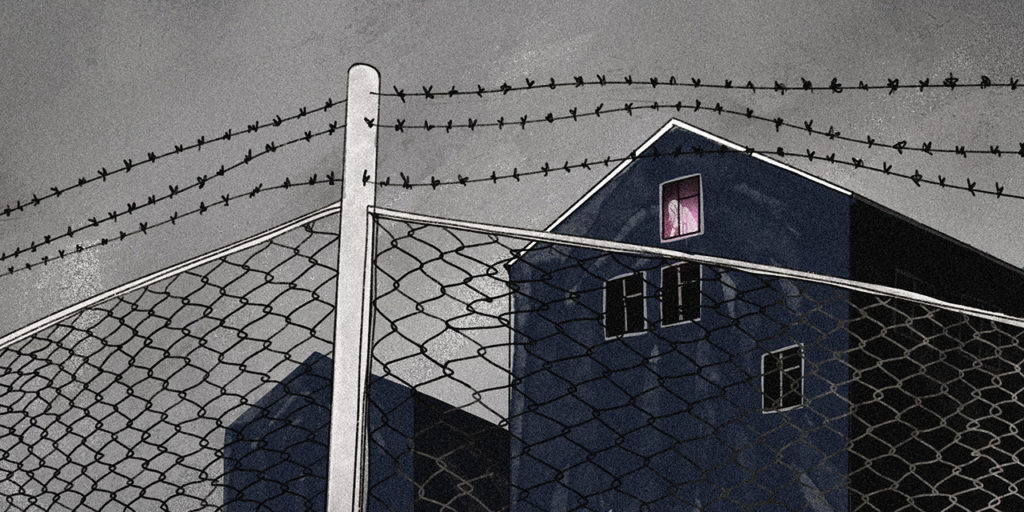
В итоге Бабкину поместили в центр по принудительному надзору для проблемных беженцев: туда отправляют людей, которые ломали вещи в лагере, вели себя агрессивно с другими жителями или нарушали другие правила общежития. Здание HTL окружено забором с колючей проволокой, его территория охраняется, а правила проживания там строже, чем в обычном лагере. Провинившиеся проходят в центре специальную программу по коррекции поведения. По мнению Кортекааса, людей с такими диагнозами, как у Антонины, нельзя отправлять в HTL, потому что это только усугубит их ментальное состояние. Он винит агентство по приему беженцев в том, что они не приняли всерьез просьбы Бабкиной о помощи.
Через несколько дней после смерти дочери мать Бабкиной сказала , что собирается похоронить ее в России, и поддержала закон о запрете трансгендерного перехода.
«Люди не понимают, куда едут»
Меньше всего пока известно о самоубийстве 24-летнего беженца Михаила Зубченко. По данным LGBTQ Asylum Support, он подавался на беженство как бисексуальный мужчина из России. Салим Алеулов, знакомый и бывший сосед по комнате Михаила, описывает его как доброго, чувствительного и даже наивного, но при этом закрытого человека, и говорит, что на момент их знакомства у Зубченко были проблемы с ментальным здоровьем. За несколько месяцев до самоубийства Михаил и Салим поссорились, поэтому Алеулов не знает, что могло подтолкнуть его к суициду. В попытках разобраться в произошедшем несколько знакомых писали его сестре, но она отказалась идти на контакт. С «Холодом» она тоже говорить не стала, как и отец Зубченко.
После самоубийства Михаила в телеграм-чатах для русскоязычных беженцев в Нидерландах появились объявления психологического проекта помощи Without Prejudice , который поддерживает россиян с антивоенной позицией. Его основательница Полина Грундмане писала, что проект запустил онлайн-группы психологической помощи для русскоязычных эмигрантов. Она рассказала «Холоду», что после общения с теми, кто пришел в группы, стало очевидно, что они не могут вовремя получить необходимую психологическую помощь.
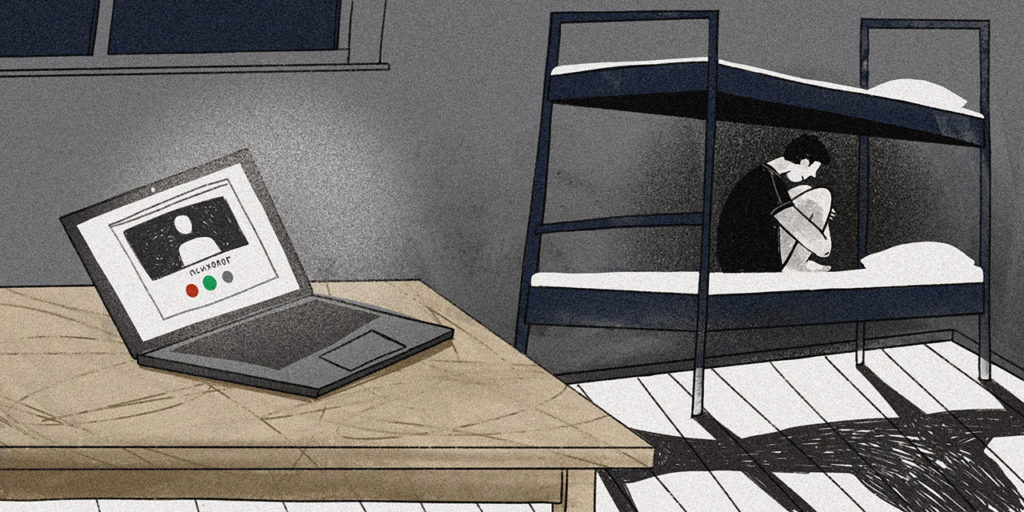
«В Голландии, безусловно, есть специалисты, но они говорят на голландском, а у людей, которые переехали, не то что с голландским, и с английским-то не все хорошо, — объясняет координатор “ Коллаборации проектов по сохранению ментального здоровья ”, которая проводит терапевтические группы совместно с Without Prejudice (собеседник попросил не называть свое имя в целях безопасности). — Специфическую информацию, которую пытаются донести специалисты, простому рядовому переводчику перевести сложно. Доступность помощи становится низкой. Поэтому люди сами не хотят обращаться за ней — они не видят ценности такой услуги».
По словам собеседников «Холода», с каждым разом на группах все меньше людей, потому что такая терапия — не их главная потребность. Больше всего просители нуждаются в медикаментозном лечении и улучшении финансовых и жилищных условий.
После новостей о суицидах российских беженцев Грундмане и координатор «Коллаборации» начали рассылать письма администрациям лагерей. Они рассказывали о том, что готовы бесплатно помогать русскоязычным приезжим, и просили передать свои контакты тем, кто в этой помощи нуждается. В ответ сотрудники писали, что сейчас не могут этим заниматься, потому что заняты расследованием самоубийств. Тогда создатели терапевтической группы для эмигрантов нашли в Нидерландах психолога из Украины, который будет сам ездить по лагерям и проводить очные консультации.
«Люди, к сожалению, не всегда понимают, куда они едут, — говорит Грундмане. — Они выбегают из страны и думают, что за ее пределами более-менее ничего. Или думают, что эти плохие условия у них будут какой-то конечный отрезок времени, а он не заканчивается. Они подают документы и сидят полтора-два года. Конечно, никто из них не ожидал, что они будут два года ждать документы, а потом еще и получат отказ. Люди, у которых изначально пошатнувшееся ментальное здоровье, должны взвешивать риски. Если к вам не стучат в дверь фсбшники, если у вас есть время, то нужно подготовить почву. Не рассчитывайте, что вы приедете и все сложится с первого раза, как вы хотели. Поймите, что будет сложно и тяжело».
Трансгендерная девушка Саша, которая общалась с Катей Михайловой, считает, что сейчас Нидерланды — это страна, где ЛГБТ-беженцам из России легче всего получить убежище. В случае успеха два года ожидания окупятся: просителю дадут квартиру для проживания, пособие, возможность получить образование по кредиту на хороших условиях, а спустя пять лет — гражданство.
С этим согласна и Анна, знавшая нескольких покончивших с собой беженцев. «Нидерланды принимают транслюдей со всего мира. И если русская девушка пересекла границу Нидерландов и ее не депортируют, то все, она обеспечена на всю жизнь. Люди получают такие жилищные условия, о которых мечтать не могли. Ты можешь вообще не работать годами, десятилетиями — я и таких людей знаю, — рассказывает Анна. — Другое дело, что людям становится скучно. Например, я знаю о трансгендерной женщине, которая имела все, прожила четыре года в Голландии, вернулась в Россию, объявила себя мужчиной, женилась и ушла воевать на СВО».
Иначе рассуждает бывший сосед Михаила Зубченко Салим Алеулов: по его словам, потенциальные беженцы действительно сталкиваются с проблемами, которые становятся факторами суицида — и которых можно было бы избежать. Дело не только во времени, но и в унизительных процедурах: например, на втором интервью при переводчике приходится в деталях рассказывать интимные подробности, чтобы подтвердить свой ЛГБТ-статус. Алеулов говорит, что регулярно пишет журналистам и политикам о проблемах в лагерях, но ответов пока не получает.
«У меня вопрос к лидерам общественного мнения, которые живут сейчас в той же Европе, — Ходорковский, Кац, команда ФБК. Какой ролик ни включишь на ютубе от любых из них, постоянно обсуждают, что будут делать, когда Путин умрет или там когда он отойдет от власти, — говорит Алеулов. — Ребят, это все прекрасно, но, может, это будет через 10 лет, а может, никогда. Может, мы будем жить сегодняшним днем и помогать гражданам России, которые все бросили и убежали ни с чем? Мы здесь не имеем себе применения и практически все в одиночестве. Вот и доходит до того, что человек кончает с собой».