
Translated material
"And they are going to arrest us"
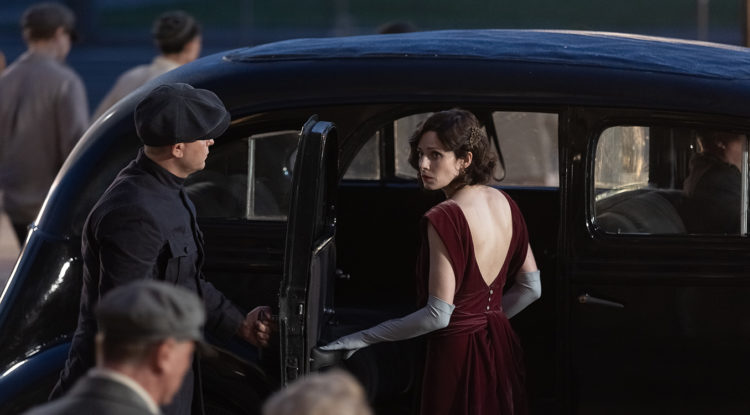
Z-bloggers, propagandists and deputies call the "Masters and Margarita" an anti-Soviet and anti-Putin film. Is it in it?
The pirate copy of the recently released film "Master and Margarita" Mikhail Lokshin is rapidly spreading on the Internet. Those who left Russia are massively looking from the screen, it seems, on a mobile phone version, with a muddy image and bad sound. But you can’t see: the latest film adaptation of Bulgakov’s novel is the most discussed Russian film in a long time. The Z-bloggers and propagandists accuse the authors of criticism of the USSR, Putin's Russia and even Sobyaninskaya Moscow-especially since the director has the US citizenship and he is known for his anti-war position. The protesting viewer also sees in the picture a lot of political hints, but accepts them with joy. Is there a civil statement in Master and Margarita? "Cold" asked the film critic of Alexei Artamonov to answer this and other pressing questions.
In order not to miss the main materials of the "cold", subscribe to our Instagram and telegram .
"Idated the NKVDshnikov with scum"
The success of the film by Mikhail Lokshin is obvious. For the first weekend, the Master and Margarita became the leader of the Russian rental and raised 428 million rubles. Enthusiastic reviews appeared not only in liberal publications, but also in TASS, and in the pro -government Russian newspaper. The rating in the folk "Kinopoisk" - 7.9. But soon, of course, a flurry of public denunciations and threats began to the director, producers, artists and even the Ministry of Culture, who gave the film a rental certificate, and a movie fund that sponsored the “anti -Russian” picture. The main complaint: Lokshin publicly condemned “Svo” and even, perhaps, donated the Armed Forces of the Armed Forces of the Armed Forces of the Armed Forces.
The voices of the indignant public are supported by links to the social network of the director. Truly, screenshot - an instrument of precariate! Among the evidence of crimes are quotes from Thomas Mann and fundraising for Ukrainian filmmakers (which was interpreted as support for the Ukrainian army).
“Director of the tape is an ardent Russophobe and a hawcock,” - Readovka
“We must seriously sit down and solve something with all this situation-from producers and ending with law enforcement agencies,” the propagandist Tigran Keosayan
“He probably didn’t look, but I can foresee it, depicted NKVDshnikov who saved the country from scum and cannibals from such scum as him,” the channel of the TV presenter Tatarenov “Explanatory Brigade left”
The wave reaches the highest propaganda stands and tribunals - on Russian TV, Lokshin Zvezta already Solovyov with Simonyan , Zakhara Prilepin “ is sick of the cinema authorities”, the black -intensive “call of the people” asks to hide a criminal case on the director. The producers of the film that your alisii, from Lokshin, hurry to disturb , assuring the public that the director’s contract ended in 2021 and in the fateful 2022 he had absolutely nothing to do with the project.
A special outrage is caused by the American citizenship of the director, and here I would like to dwell on details, because this story is worthy of a separate novel, well, or at least a political thriller.
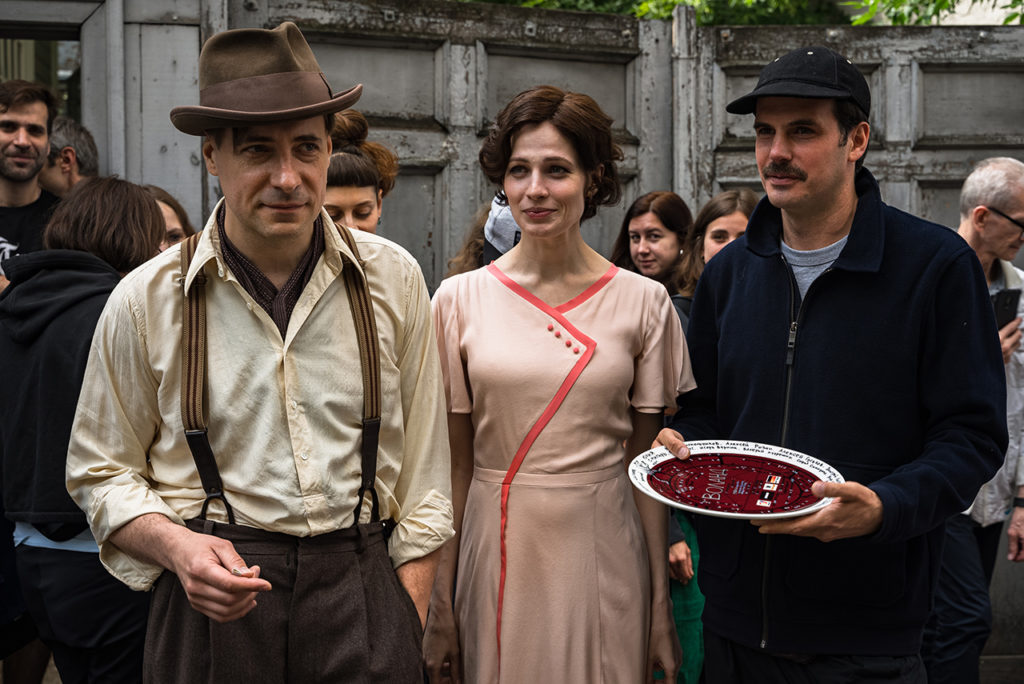
Lokshin family: between the USSR and the USA
Michael Lokshin was born in 1981 in the United States in the oncologist Arnold Lokshin, a descendant of Russian Jews who emigrated from tsarist Russia at the beginning of the 20th century due to anti-Semitic pogroms, and biologist Lauren Lokshin. Both in the 1960s joined the American left and anti-war movement, were members of the local Communist Party. According to Wikipedia, in 1970, Lauren even visited the 16th Congress of the Komsomol in the USSR as the chairman of the league of young workers Ohio.
In 1986, Arnold Lokshina was fired from the laboratory of oncological research of the hospital of St. Joseph in Houston-according to him, in the wake of a new hunt for witches because of his political position. In 1986, Lokshin publicly announced the persecution of the FBI, and the whole family asks for political asylum in the perestroika Soviet Union, which personally approves Gromyko - the loud thing was then the matter. In an interview with the Moscow Komsomolsalz in 2017, Arnold Lokshin said that his own father was drawn into the campaign against him, who was found dead under mysterious circumstances in 1988. Arnold Lokshin meets capitalism in Russia without enthusiasm, but under Yeltsin receives Russian citizenship, focuses on science and publicly declares itself only in 2013, speaking in defense of Edward Snowden.
In the same interview with MK, Arnold Lokshin says that he does not communicate with his wife and children, having dispersed with them in political views. But if you look at the “silver skates”, the previous (and debut) full meter of Mikhail Lokshin in 2020, it will become clear that the political views of the parents did not go without a trace for him. In this Christmas fairy tale in the Disney à la Russe style, which has become the first Russian film on Netflix Originals, Marxist pickpockets look much prettier and honest than Russian officers who protect the enlightened conservatism with clubs. And although Lokshin allows himself a hairpin towards utopian socialism, giving the name of the French philosopher Fourier to the arrogant charlatan performed by Denis Lavan, the director obviously recognizes the historical merits of the fighters for equality and social justice, because it is Charles Fourier that the invention of the term “feminism” is attributed, and this is the main theme of the film: the heroine there challenges the challenge And he leaves the aristocratic family nest to devote himself to science.
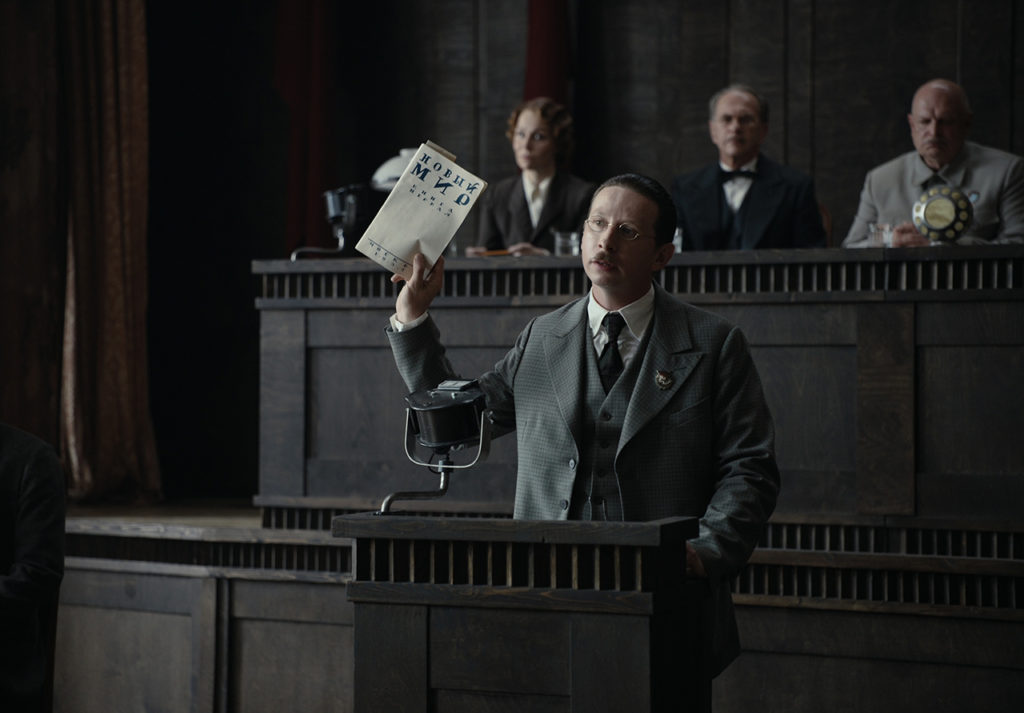
It would seem, what does Mikhalkov and Ivleev have to do with it
One of the producers of the Silver Skates was Nikita Mikhalkov, but, despite the external similarity with the other, the Trith's weighty cranberry company, from the Siberian Barber to the T-34, is amazing how much the Russian blockbuster may look alive and modern if the reactionary ideological sentence in the spirit of the Union may look different in it Salvation ” (a film about the uprising of the Decembrists in 1825, idealizing state power. - approx.“ Cold ”).
I must say that the fate of the picture “Master and Margarita” could have developed completely differently, because initially among the producers of the project was the general director of “Channel One” Konstantin Ernst, and Nikolai Lebedev, director of the ura-patriotic films “Legend No. 17” and “Crew” was supposed to shoot it. The adjustments made financial difficulties and a pandemic, to the end of which Lebedev, fortunately, was already occupied by Nuremberg, and instead of it the producers invited the authors of the newly faded “silver skates”. The funds for the film were supposed to allocate not only the cinema fund, but also Universal, but it was planned to show it among other things at the same Netflix, where, without a doubt, a great success would have awaited it. But fate ordered otherwise, the exit was deposited for a year and coincided with the apogee of the “popular” struggle with traitors and “ naked ” parties (some reviewers literally compared the Bulgakov ball with Satan with the event of Nastya Ivleeva).
But is there a challenge to the feelings of patriots in Lokshin’s film? To answer this question, we will run through the long history of adaptations of Bulgakov's text.
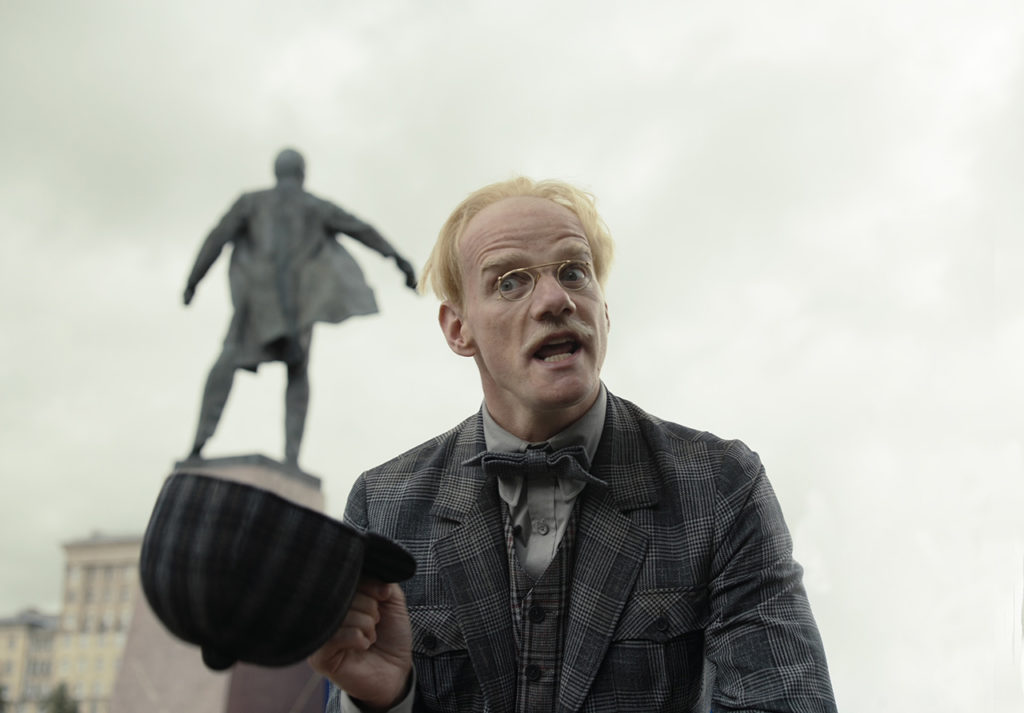
Damned manuscript
“Master and Margarita” - a work, of course, a cult, but an integral part of mass Russian cultural mythology, it became in late Soviet years amid fashion for mysticism, spiritual searches and everything supernatural.
A separate myth was the “curse” of the novel, the numerous attempts of the film adaptation of which over and over again stumbled upon insurmountable obstacles: in the late 1960s, the film was planned by the Alla and Naums, blessed by the Margarita herself-Elena Sergeevna Bulgakova, the Widow of the Widow and the Manager of the same manuscript. The author of the film “Go and Watch” and the first secretary of the Union of Cinematographers Ele Klimov, selected at the famous perestroika V Congress, dreamed of a film adaptation of the novel from the student. He was close to making the film a couple with Federico Fellini, but in the end he was forced to abandon this idea. Eldar Ryazanov could not achieve the approval of officials of the CPSU Central Committee; Yuri Kara, who realized the first film adaptation of the novel in Russia (by that time there were already many foreign ones), was able to make the film only in the era of “Cooperative Cinema” - and this, of course, did not add brilliance to the picture. Yes, and the tape came out due to conflicts with the heirs only in 2011. The series for Russia Vladimir Borto with Bezrukov in the role of Yeshua is a curse and even worse than the spells of the Egyptian pharaohs.
A new interpretation of the famous novel from director Mikhail Lokshin and screenwriter Roman Kantor dispels the myth of the unexplosive of the Master and Margarita. Together with the artists and operator Maxim Zhukov (who was responsible for the visual part and the other successful Russian blockbuster - “Major Thunder”) they managed to find an adequate and spectacular form for the science fiction world of the original source, neighboring the monumental image of the capital of the first socialist power.
Having connected the iconic post-constructivist objects not only in Moscow, but also Leningrad with unrealized utopian projects of the 1930s (the main of which is, of course, the cyclopic palace of the Soviets ), and the propaganda decorations and rhythms of the foxtrot-with sticky horror spilling over the facades of beautiful buildings and beautiful-hearted party speeches, they managed to make with Stalinskaya with Stalinskaya Moscow is the same as Hollywood cinema with New York, say, in Batman. Before us is a fantastic noir, in which the line is gradually erased between fiction and reality, futurism and decadence, farce and madness.
All this, of course, correlates with the spirit of the novel, which over the years, however, has lost his provocative sharpness. To understand it, the context is necessary, and it is his Lokshin in a condensed form that he returns, boldly moving away from the letter of the text and adding some scenes that were absent in it - for example, meetings of the Writers' Union, where the author of the play about Pilate and Yeshua is unexpectedly subjected to public persecution, which yesterday's friends, defenders and editors join. Democents, interrogations, a search with addiction - all this was in the original, but the drama of such scenes, again becoming part of our daily reality, eventually swept for the readers of Bulgakov, obscured by his masterfully invented grotesque.
The fact that the first truly successful screen version of the “Master and Margarita” appeared in Russia in 2023 under the explosions of missiles and the fierce wheezing of zealots of patriotic morality, of course, symbolic, but there is no mysticism. The immersion continuation of Bulgakov’s text in the Z-channels and on Russian television in wartime was predictable, given the innocent nature of the new film. The anti -war position of the director Mikhail Lokshin only threw firewood into this hellish flame.
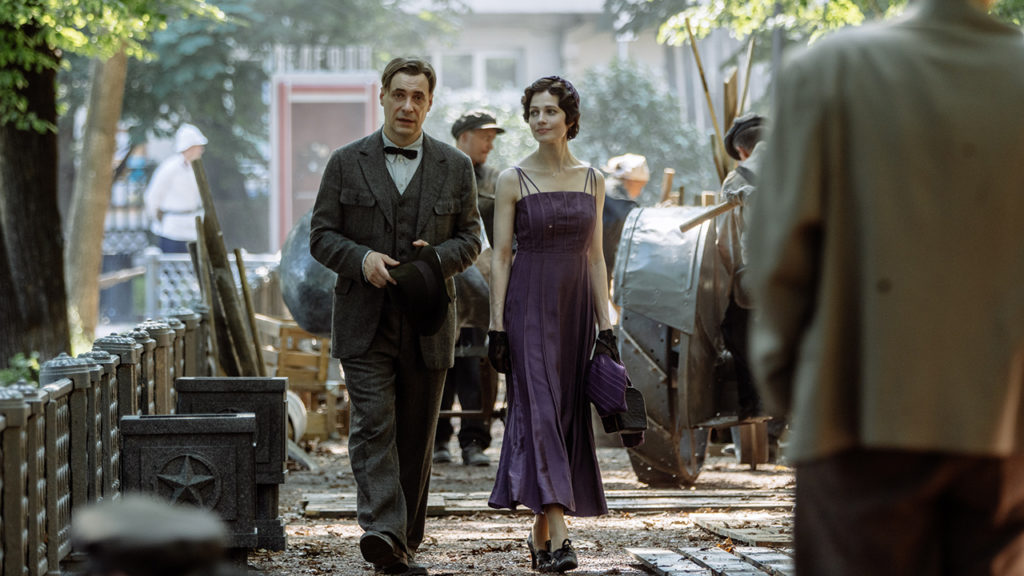
"Master and Margarita" - protest cinema?
One of the main advantages of the film is the clever interweaving of the history of the master, during the years of the staining of the socialist canon, who did not find another topic and wrote about the meeting of Christ with his Pontusi Pilate, with the biography of the Bulgakov himself, who fell into the disgrace and burned the first manuscript of the novel.
The autobiographical elements in the image of the protagonist were in sight, Lokshin and the author of the script Roman Kantor only emphasized the documentary of the phantasmagoria of Bulgakov, creating a colorful and gloomy fantasy about the column-fashionable 1930s, permeated by the Gothic of spying, black funnels and unprofitable extinction.
It is even amazing now how other film adaptations have been hidden to hide the dark, acute essence of the work for abstract eccentric and abstract spirituality, which spills on the deserted expanses of Judea. It was worth openly sewing the fate of the author of the Master and Margarita with the carnival horrors of the mass, as even for the most naive viewer, all repressive seams of permissible conversations about the important climbed out.
The difference between Stalin’s time and Putin Russia is that Bulgakov, telling about the tragedy of Pontius Pilate, for the lack of the opportunity for a public discussion, turned directly to the figure of a leader, not necessarily personalized personally in Stalin, as the only source of possible changes - albeit in an allegorical form and without a guarantee to be heard. Stalin with his own person and saved Bulgakov from hunger and repression, in a personal call in the disgraced years, inviting him to get a job in the Moscow Art Theater. Who can we project the figure of the prosecutor’s Judea today? It seems that the Stop Crane of History is not in anyone’s specific hands-the devils crawled out of the holes and no longer obey either Woland or Jehomon. But the master and Margarita have long earned their peace in eternity.
In the political message of the film, exactly one, but the most pressing replica today. More precisely, it has it, and Bulgakov had it, but was thrown by the master Pontius Pilate. Today, the audience intercepts and returns it. Not so much to the master as his prototype - the Creator. A century later, it is the audience, not Woland - part of the power that always wants evil and always performs good. This line finally points to the author to the old people: “Free! He is waiting for you! "
The author’s opinion may not coincide with the opinion of the editorial office.