
Translated material
Genocide that was not
Why did the Russian authorities invented the concept of “genocide of the Soviet people”, and why it is a new weapon of historical propaganda
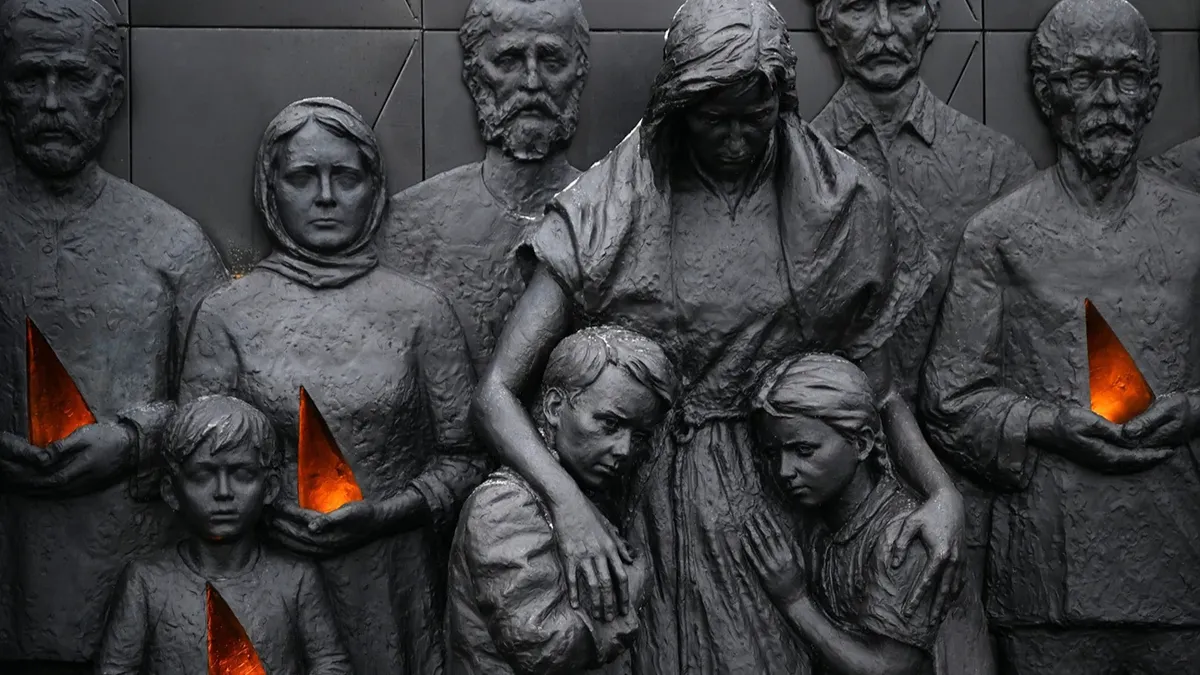
The memorial to civilians of the USSR - victims of the Nazi genocide during the Great Patriotic War. Photo: Pavel Bednyakov / RIA "Novosti" / Kremlin
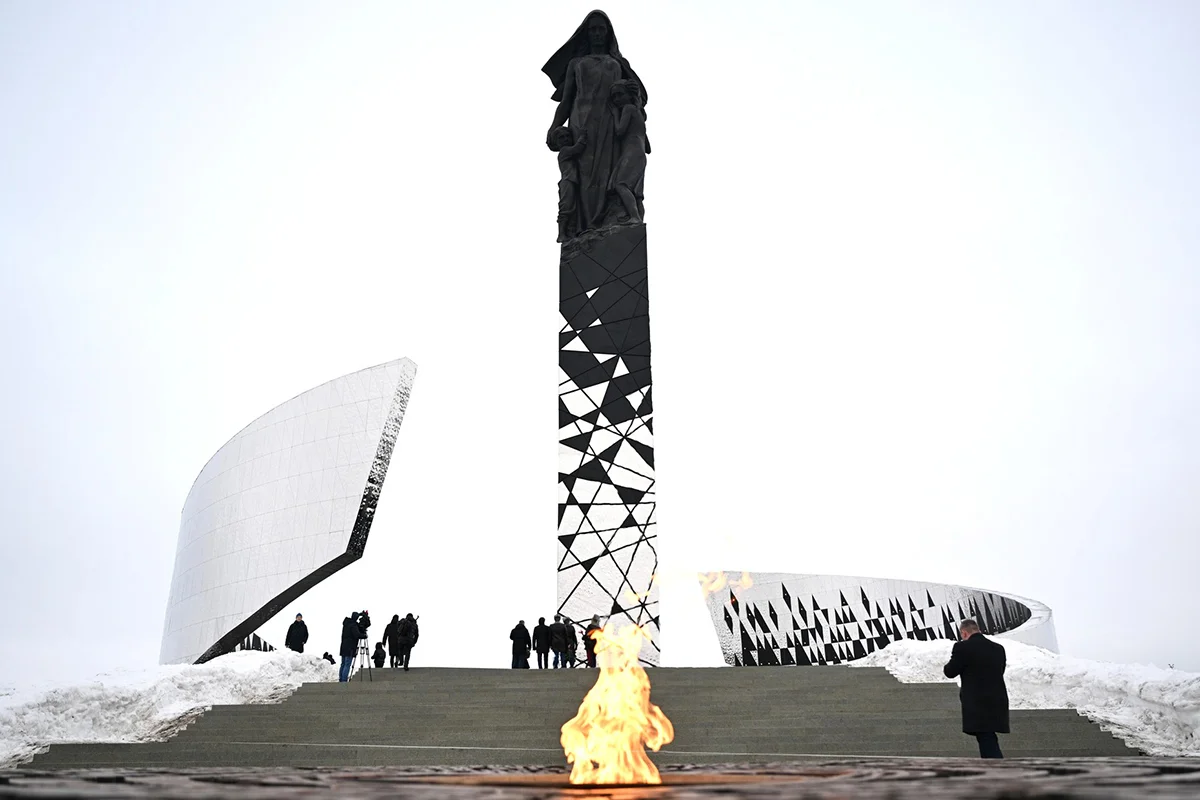
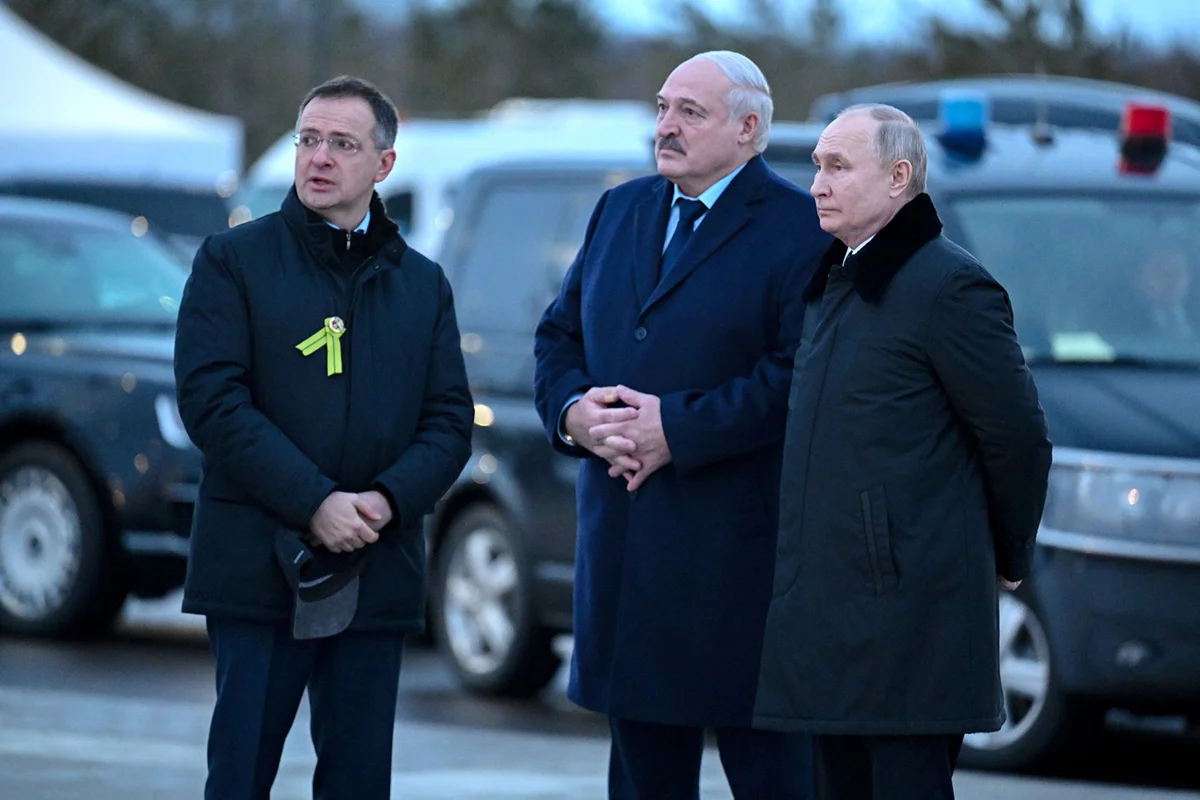
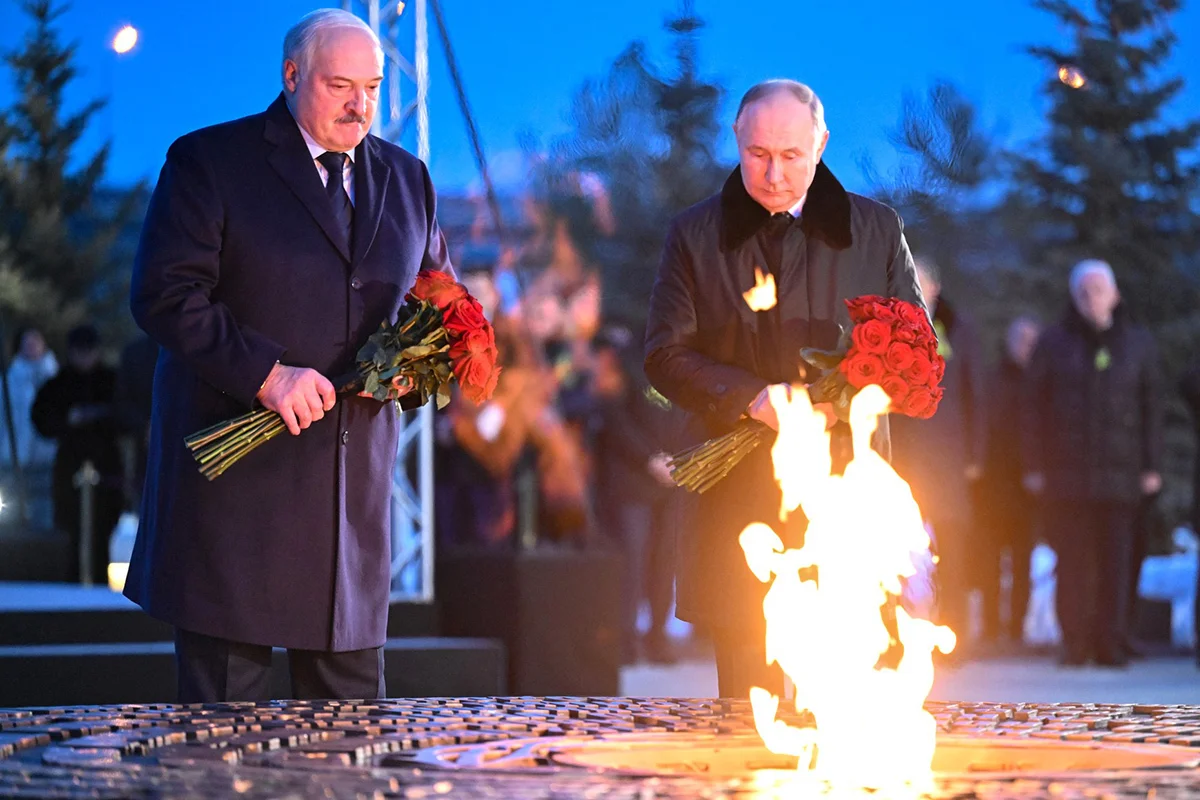
Last weekend, Vladimir Putin and Alexander Lukashenko opened under St. Petersburg a large-scale memorial “In memory of civilians of the USSR-victims of the Nazi genocide during the Great Patriotic War of 1941-1945.” This memorial captures the final reversal of the Russian state on the issue of memory of Nazi crimes: the Holocaust as a unique genocide and ethical reflection on the roots of Hitler's totalitarianism has no more place.
But through the design of the “genocide of the Soviet people”, Russians are now invited to feel not only great heroes, but also unexpressed victims. We publish a comment by historian Konstantin Pakhalyuk.
Now without the Holocaust
In Russia, on January 27, two commemorative dates are included - the removal of the blockade of Leningrad and the International Day of Remembrance of the Victims of the Holocaust. The largest war crime and the largest genocide in the history of World War II-throughout the 2010s, the Russian authorities tried to link both tragedies, emphasizing the unity of the memory of different groups of victims of Nazi terror.
Today all this is in the past. If in January 2023 Putin still met with representatives of Jewish communities and talked about the significance of the memory of the Holocaust, then in 2024, during the opening of the memorial, the president spoke only about the “genocide of the Soviet people”, promising the gathered victorious to complete the eradication of “Nazism” in the modern world. Its stronghold is named not only Ukraine, but also the Baltic republics.
But in 2005, the UN General Assembly deliberately installed on January 27 as an international memory of the victims of the Holocaust - out of respect for Russia.
It was on this day that the Red Army liberated the largest concentration camp and the death camp of Auschwitz (Auschwitz).
Today, the Russian authorities do not need the Holocaust. Neither the Russian historical nor the Russian military-historical society-two key structures of state policy of memory. In a statement by the State Duma of Vyacheslav Volodin, the Holocaust is mentioned, but the Jews are not.
At the same time, the Russian Foreign Ministry provoked a media scandal with Israel, when the thesis repeated a relatively new thesis for himself with the mouth of Maria Zakharova: they say, the Holocaust is not only the Jewish tragedy. This hides the manipulative reading of the aforementioned resolution of the UN General Assembly, which refers to a simple fact: pursuing Jews, the Nazis also killed non-Jews, for example, relatives or those who helped to hide. There is also a European approach to the memory of the Holocaust, consisting of linking the Jewish tragedy with other similar tragedies during the Second World War or in general in history.
Russian diplomats turned everything upside down - and approached the ranks of the rejection of the Holocaust, who believe that the Nazis did not create anything special with Jews.
Gossmi were not ready
The Russian State Media is not entirely ready for such an ideological line: we must talk about the Holocaust so that not to say anything or mention the Jews, but to reduce everything to the topic of the “genocide of the Soviet people”, which is really not known about.
So, RIA Novosti and Izvestia posted on -duty certificates about the history of the Holocaust as a tragedy of Jews. And the Russian newspaper published by the Government of the Russian Federation dared to recall that the Nazis on an ethnic principle were destroyed only by gypsies and Jews. The telegram Z-community showed almost complete indifference to the Holocaust and the "genocide of the Soviet people."
With the minimum attention of the federal media, traditional memorable events “Memory Week” of the Russian Jewish Congress and the Holocaust Center were held . Putin even sent a greeting to the participants of the memorable evening at the Jewish Museum, however, not published on the official website of the president.
The federal media were more outraged by the fact that the Chairman of the European Commission Ursula von der Layen said: the Aushvitz concentration camp was released by the “allies” (without specifying the “Red Army”), rather than talked about Russian memorial initiatives.
Genocide as a tool
In the discrepancy between official and newspaper rhetoric, there is nothing surprising. It reflects two trends that go from above: marginalize the theme of the Jewish tragedy and replace it with the general concept of “genocide of the Soviet people”.
As such, the Russian authorities never had a rejection of the Holocaust: they looked at him instrumentally. In the 2010s. Officials were increasingly lifting the official “myth of the Great Patriotic War” in heroic clothes, left a specific place for tragedies: to tell the Russians against which “we fought.” The Holocaust was needed in order to gain the support of Israel, to “remind the world” of the Liberative Mission of the Red Army and to convict neighbors in the collaboration of the Baltic states and Ukraine.
However, since 2020, the authorities began to give preference to the concept of the "genocide of the Soviet people."
Formally - to talk about all the tragedies of that war. It is real - to add to the image "we are the main winners of Nazism" the additional meaning "We are the main victims of Nazism."
After the start of aggression against Ukraine, the game began on absurd parallels: today's war is the continuation of the “Great Patriotic War”, which is waged against all the “same Nazis”. Then we were threatened by the “genocide of the Soviet people”, today - “Russian genocide”.
At the same time, any in -depth study of Nazi crimes leads to parallels unpleasant for the Russian authorities. They began with the extermination of the opposition and demagogy about the conspiracy of the "world financial elite", continued to the persecution of homosexuals and Jehovah's witnesses. The Nazi leadership considered the Poles the “artificial nation”, the same as the Z-propagandists of modern Ukraine draw.
All this is not necessary. Let there be one "genocide of the Soviet people."
The history of the issue
The concept of the “genocide of the Soviet people” arose in the bowels of the presidential administration and the ““ search movement of Russia ”related to it, and was also de facto supported by another structure close to the AP-the historical memory fund Alexander Dyukov. I can personally testify to this as a former employee of the RVIO, who always opposed this concept and observed its appearance, so to speak, "from the inside."
Unfortunately, in Russian historiography of Nazi crimes there are many gallows. We do not know the number of burned villages on the territory of modern Russia. There is not a single fundamental study on how the Nazis treated, for example, to the Russians. Different types of Nazi camps in the occupied territories have not been investigated. A whole field of work, but instead - scholasticism.
Indeed, from a scientific point of view, “genocide of the Soviet people” is a meaningless, if not a counter -productive concept. It reduces the whole variety of Nazi destruction policy to one definition, instead of orienting the researcher to details.
According to the established understanding, genocide implies the purposeful destruction of a certain group of people based on criteria (racial, religious, ethnic and national - they are indicated in the relevant UN Convention). But this is not all, there is an important condition - the destruction of this group "as such." Not as armed enemies, partisans and extra mouths, namely: the murder of Jews as Jews, Muslims as Muslims, Russians as Russians and so on.
“As such” the Nazis destroyed Jews and gypsies, as well as persons with disabilities. In other cases, other circumstances come first. Therefore, the concept of “crime against humanity” appeared.
This does not make the suffering of such victims less significant. It is unacceptable to talk about who “more” or “less” suffered, but the scientist cannot ignore the difference in the behavior of criminals to different victims.
The only consistent defender of the concept of the “genocide of the Soviet people” was not even a historian, but publicist Yegor Yakovlev, who issued the corresponding book at the end of 2021. For a quarter, it consists of a description of the pursuit of the Americans of the Indians, everything else is a retelling of well -known information. The evidence base is built on the top of the Nazis discussed: the war against the USSR will lead to mass hunger in the occupied territories. Departmental analytics and proposals are called plans, and specific tragedies - their implementation. Here is such a substitution of concepts. In conclusion, Yegor Yakovlev declared the victims of the "genocide of the Soviet people" even those who died from the hunger of the townspeople of Arkhangelsk. A very convenient concept for the authorities.
They mastered the "genocide of the Soviet people" gradually. In 2020–2021 Putin avoided this formula, preferring allegorical formulations. His Historical Policy Assistant Vladimir Medinsky in 2021 released a programmatic article where he argued that the Nazi occupation policy did not fall under the classic definition of genocide, and therefore it must be expanded. Today he asks himself in his social networks, they say why they were previously embarrassed to recognize the “genocide of the Soviet people”, and for three years earlier it seemed unobvious for him.
It is important to fix that the concepts of “genocide of the Soviet people” are not in Russian historical science. It is not divided by specialists on the topic of Nazi crimes. Such recognized specialists as Ilya Altman and Pavel Polyan publicly expressed against the “innovations”. Another well -known specialist Boris Kovalev, who was attracted by the authorities as an expert, also stated that this concept is unsuccessful.
True, this happened until February 24, 2022. After - public criticism became fraught with consequences.
Heroes and victim
The concept of the “genocide of the Soviet people” is dangerous not so much by monuments or rhetoric of the authorities, but by the fact that it makes it impossible to comprehend the topic of Nazi crimes. Nazism as a system of intolerance to differentness? Moral choice in the conditions of dictatorship or occupation? Our co-response for the genocide of the same Jews? Unknown questions to the Soviet authorities: why did she allow the occupation of 70 million of her citizens? Did Comrade Zhdanov do everything in the hungry winter of 1941 to save Leningraders from hunger?
There is only one answer: "We had our own genocide."
After a decade of calls to “focus on our heroes”, the Russian authorities decided to form a victim’s self -awareness of the victim, who is experiencing a series of injustices after the century. Previously, for the Russian memory policy, such notes were marginal and were present in the form of “swan tears by white movement” and “stolen victory in the First World War”. Now, the supporting ideological design of the Putin system is affected - “The myth of the Great Patriotic War”. If you look wider, we will see that in the “textbook” of Medinsky and Torkunov, bitterness and resentification are one of the central semantic lines, at least for the entire first half of the 20th century.
The constant repetition of the formula “Genocide of the Soviet people” by politicians and the State for any reason regarding Nazi crimes against citizens of the USSR is gaining defense.
The “Search Movement of Russia” at one time even launched an appropriate petition with a demand to recognize the “genocide of the Soviet people” (as if this issue had not been purely scientific) - and today everything looks like their petition was satisfied.
Since 2020, demonstrative courts have been conducted in different regions about Nazi crimes with unchanged success. In the near future, all these cases will unite and recognize the “genocide of the Soviet people” as a whole. The question is one: they will limit themselves to this or, as in Belarus, under the pain of criminal prosecution, they will ban this concept. However, the Belarusians have “their” genocide, the “Belarusian people”. The special nature of the relationship between Putin and Lukashenko makes through his fingers to look at this liberty.
In 2022, they officially established a commemorative date, April 19. In 2023, it entered the single “textbook” of Medinsky and Torkunov, and now the “central memorial” has appeared.