
Translated material
As a preferential mortgage has turned into a trap, the Nadezhdin campaign continues, China Kristoroleva saves Binance
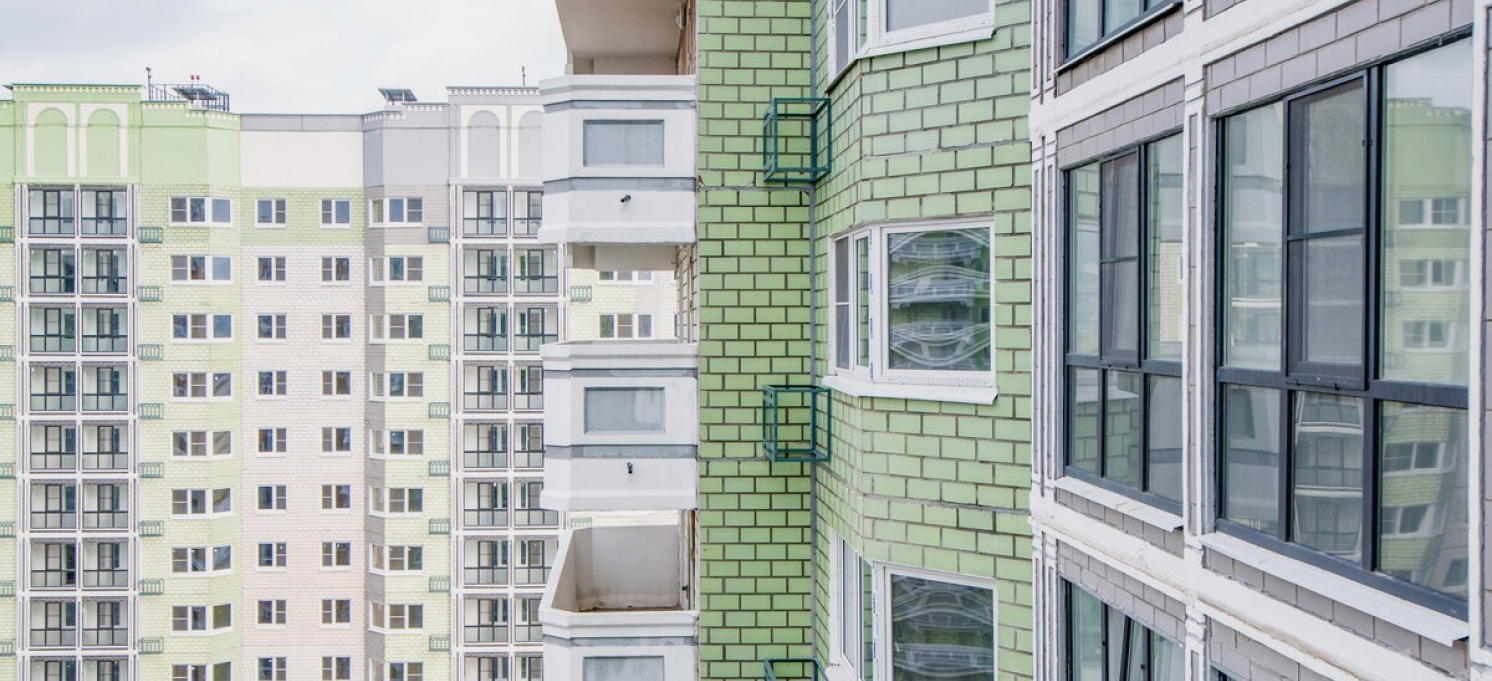
One of the most defiant distortions in the Russian economy is a bubble in the mortgage market, which has grown due to the program of preferential loans for housing since 2020. This week, the TPB summed up the results of 2023: the mortgage market grew by 60%, and more than half of the loans had to be a preferential mortgage. The mortgage bubble increases housing prices, loads the budget with trillion expenses and works on an increase in inequality: all taxpayers finance the purchase of apartments by those who can afford a loan. This summer, the program should end, but the war made the question politically complicated: the main recipients of loans were the security forces and the military who earn in the war.
What's happening
This week, TPB summed up the results of the banking sector - and stated another record in the mortgage market. In total, in 2023, banks issued 2 million mortgage loans in the amount of 7.8 trillion rubles ($ 92 billion). This is 1.6 times more than in 2022, and 2.8 times less than in 2019-the last year before the government began to massively distribute preferential mortgage loans to Russians.
According to the results of 2023, most of (60.8%, or 4.7 trillion rubles) issued mortgage loans were on the preferential programs. And this share grew rapidly all year: in December, as follows from the statistics of the Central Bank, it already amounted to 83.4%. Compared to 2022, the volume of issuing a preferential mortgage doubled.
In total, in Russia, there are now seven programs for the allocation of mortgage loans with state support to citizens. Most of them are targeted: for families with young children, military, IT specialists, residents of remote regions. But the most large -scale program is non -dimensional: according to it, the state subsidizes mortgage loans for the purchase of apartments in new buildings for everyone at 8% - exactly half the key rate of the Russian Central Bank. This program was introduced in the spring of 2020 as a temporary stimulating measure at the peak of economics closing due to pandemia Covid-19. Everyone forgot about the pandemic for a long time, but the program remained.
The Bank of Russia began to oppose the extension of the preferential mortgage program a few months after its introduction in 2020, but so far the government extended it annually. Another deadline, when the program should be extended or canceled, on July 1, 2024.
What they argue about
The last round of the dispute between the Central Bank and the government about the fate of the preferential mortgage began last fall and still has not subsided. Both the Central Bank and the Ministry of Finance advocate curtailing mass programs (primarily a preferential mortgage of 8%) and the transition to targeted ones. But those interested to extend the program of developers-a powerful lobby in the government, led by one of the new favorites of Putin, Deputy Prime Minister Marat Khusnullin.
Mortgage subsidies are beneficial to banks and developers. But, firstly, due to the increase in the key rate, they increase budget expenditures: when the program was introduced in 2020, the state guaranteed the borrower a mortgage at 6.5% at the rate of the Central Bank of 6%; Now - at 8% at the rate of the Central Bank 16%. According to the Ministry of Finance, the extension of preferential mortgage programs for two years would cost a budget of 1 trillion rubles.
And secondly, in the current form, the program obviously works for the growth of inequality in society. Only relatively wealthy people who can accumulate a preferential mortgage can allow themselves to be accumulated (until recently amounted to 15% of the cost of the apartment) and maintain payments. “And other taxpayers who do not use these benefits pay for mass preferential programs,” Elvira Nabiullina said this week. Simply put, as part of a non -dimensional mortgage program under 8%, VAT payers, including the poorests who spend all eating income, subsidize the mortgage for part of the middle class.
Compromising decision
Another problem is that more than 60% of borrowers on mortgages give more than half of their income for loans. The security forces, state employees and other “participants of the Swar” received access to preferential programs. Having lost this source of income, it will be extremely difficult for them to serve loans, especially in conditions of rising prices.
In the fall of 2022, the government, which was not ready to cancel the preferential mortgage, made a compromise decision: the program conditions were tightened by increasing the initial contribution for borrowers from 15% to 20%, and banks by 1 percentage of They reduced the subsidy from the state so that the budget saves a little. Banks decided to compensate for the losses at the expense of developers. Sberbank, VTB, Alfa-Bank and Rosbank (occupy about 80% of the market) decided to issue a mortgage from their accredited developers from January 2024 and introduced a commission for issuing loans for them.
Banks complain that tightening the regulation of preferential loans makes them disadvantageous. According to Sbering, in July 2023, before all changes, the pure interest margin when issuing a loan according to state programs was only 0.6%. But as a result of a decrease in government subsidies for banks and new requirements of the Central Bank, the margin of the preferential mortgage has become negative - minus 1.2%. The Central Bank has a diametrically opposite position: according to the director of the banking regulation department of Alexander Danilov, to tighten the rules, the profitability of these loans for banks was 20% and now remains positive.
In general, the banking sector finished 2023 in a fat plus. The net profit of banks amounted to a record 3.3 trillion rubles - 16 times more than in 2022.
What next?
The validity of the program of preferential mortgage expires on July 1, 2024. Until now, the government has extended it every year, but this year, it seems, everyone is still tuned to the fact that there will be no new extension. During the “direct line” in December, Vladimir Putin promised to extend only the largest targeted program - a family mortgage.
The main lobbyist of the program, Deputy Prime Minister Marat Khusnullin at the end of December, said that the government would offer to extend the non-duds program in certain regions with imprisonment. “We will not extend the preferential mortgage for the whole country, it completed its function,” he assured. However, the Ministry of Finance also confidently talked about the termination of the program and in the fall of 2022 - but a month later Vladimir Putin extended it for another one and a half years.
What am I to me?
The folding of preferential mortgage programs, most likely, will force developers to introduce less housing, after which the construction will cease to be one of the main drivers of economic growth, which it is now.
The preferential mortgage also has an important social side effect: in 2023, a new middle class structure finally took shape in Russia. Now it consists of the military, employees of the special services and other "dependents" of the state, whose income is associated with the war and police functions. A significant part of this new “middle class” is now participants in mortgage lending programs. The high payments that these categories of the population receive are driven into a trap: they will have to be preserved, even if the budget’s incomes deteriorate, since a sharp loss in money - all the more in social groups with combat experience and access to weapons - is able to provoke undesirable consequences for the regime.
The author of the article is an invited researcher at the German Council for International Affairs (DGAP) and the Berlin Center of Carnegie Alexander Prokopenko, especially for The Bell
Signals
The Nadezhdin campaign continues
Boris Nadezhdin continues to be in the unexpected role of a single opposition candidate for presidential candidates. On Wednesday, he handed over to the CEC the 105 thousand signatures from the collected 208 thousand laid down by law. Now the commission has 10 days to check the signatures from which a week has already left - until February 10 it must either register or refuse candidates. So far, the deputy head of the CEC Nikolai Bulaev said that in the signatures of Nadezhdin and the second signature of the applicant Sergey Malinkovich there were errors, and invited them on February 5 to the CEC to show these mistakes (this does not mean that the decision on admission or prevention will be made on the same day).
The remaining four candidates who collected signatures (including well -deserved spoilers Sergey Baburin and Andrei Bogdanov), on January 30–31, took place from the presidential election. This is another argument in favor of the fact that the Kremlin decided to “not clog the ballot” - but, given the excitement around the campaign of Boris Nadezhdin, the decision on his admission or prevention will, of course, take separately. The candidate himself, meanwhile, continues to give software interviews and publish independent surveys, according to which it takes second place with 10% of the vote.
INVESTMENTS
Bigtech from the farm
A company with trillion capitalization can grow in drugs from obesity. This market may be much more than even the most daring forecasts now provide, are sure of Goldman Sachs. To evaluate its potential size, the investment bank collected analysts and experts in medicine. Together they came to the conclusion that in case of successful tests in the next few years, a new company with a capitalization of $ 1.3 trillion may appear on the market. Bell. Investigation editor Vyacheslav Dvornikov found this report and tells what the optimism of experts is based on and which company can be on a par with the Bigtes at the market value.
TECHNOLOGIES
"Citylink" in the arms of security forces
The case of the extortion of a record 15 millionth bribe from the shareholders of the Merlion company is overgrown with new details and is more and more like an encyclopedia of Russian power entrepreneurship. As part of a criminal group from corrupt lawyers, resolver and security forces, including the son of a colleague Vladimir Putin, officers of the FSB anti -corruption unit have now appeared. The shareholders of Merlion managed to fight off the attack and maintain freedom - but what happened to their business during this time? We tell in the last issue of our technology building.
How Kryptocoroleva China saves Binance
The long -term confrontation between Binance with the American financial authorities is approaching a denouement. Last year, the largest cryptocurrency in the world managed to resolve the claims of the regulators at the cost of leaving its founder and the influential figure in the world Crypts Chanpen Zhao, who is under threat of conclusion and colossal fines. Instead, the co -founder of Binance and the Chinese legend of the Yi Hae industry are fighting for the survival of crypto -imperia. We talk about her career, roles in Binance and what awaits the company further.
What everyone is talking about
Will and captivity "Bi-2"
The situation with members of the Bi-2 group in Thailand, fortunately, was allowed to send them to Israel, but forced them to be pretty nervous and musicians and all sympathetic to them.
Seven participants of Bi-2 were detained on January 25 after a concert on Phuket, fined $ 95 each for organizing a concert without work permit. The next six days they spent in the immigration center of temporary content in the cell for 80 people in anticipation of deportation. According to a friend of the musicians, the politics of Dmitry Gudkov, all this time the Russian consul in Thailand insisted that the musicians who had long left the country and demonstrate an anti -war position openly, should deport to Russia.
Four of the seven musicians have Israeli passports, so they managed to agree with the Israeli consul that Israel would be accepted by all the detainees. The Thai authorities initially agreed, but after the visit of the Russian consul to the immigration center,they changed their decision. One of the soloists Yegor Bortnik (the pseudonym Lev Bi-2) on January 30, still managed to fly to Israel. The rest of the musicians were sent there only the next day, despite the fact that Russian representatives insisted on deportation to Russia at least those three who have no other citizenship. In Russia, meanwhile, they were promised to meet the State Duma deputy and the alleged international poisoner Andrei Lugovoi.
The detention of Bi-2 was preceded by the abolition of Maxim Galkin’s concerts in Bali, where the artist was not allowed at the request of the Russian authorities. And, apparently, there will be more such examples. According to Bloomberg, the Foreign Ministry ordered his diplomats to pursue Russian celebrities who oppose Vladimir Putin and support Ukraine, in the so -called “friendly” countries that did not condemn the war.
At the same time, the State Duma this week adopted immediately in the second and third reading the law allowing the property of those who “discredit” the Russian army, criticizing the war. We talked about how it will allegedly work here .
INTERVIEW
The first interview of Boris Akunin after his ban in Russia: Text version
On December 18, 2023, Rosfinmonitoring included the writer Boris Akunin in the register of terrorists and extremists, and the Russian Prosecutor General’s Office of Russia started a criminal case against him in two articles - for fakes and “On the justification of terrorism”. Immediately after that, all Russian bookstores, including electronic ones, stopped selling Akunin’s books, and publishers refused to print new ones. The tenth of the “History of the Russian State” and the My Calendar project will not be published in Russia. Last week, the first interview with the writer was the first after all these events on the channel “This is Ossetian”. And now you can read the conversation on The Bell.