
Translated material
“I couldn’t imagine that doing contemporary art in Russia would be dangerous”
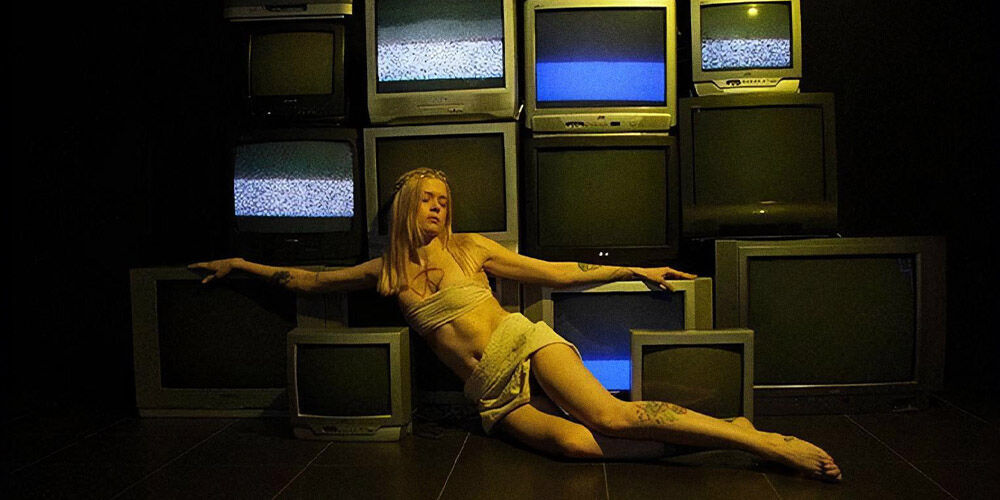
The court ruled on the first "rainbow flag" case. 33-year-old Inea Mosina was given a fine of 1,500 rubles. We talked to her
On February 5, Judge Natalya Afanasyeva of the Leninsky District Court in Saratov fined artist Inna Mosina a fine of 1,500 rubles for “demonstrating the symbols of an extremist organization.” This is an absurd and unfair decision. Mosina published photographs with a rainbow flag on her social networks before the court’s decision recognizing the “International LGBT Social Movement” as extremist came into force, and the “movement” itself was included in the list of “extremist organizations” of the Ministry of Justice. It was also not known what specific symbols the Ministry of Justice defined as “extremist”. When drawing up the protocol, Mosina was not notified of the court’s decision, she was not familiar with its text, and therefore was deprived of the opportunity and right to know what the illegality of her behavior was. Bringing Mosina to administrative responsibility violates the Constitution of the Russian Federation and the International Covenant on Civil and Political Rights, which guarantee freedom of expression to all citizens. “First Department” talked with Mosina about how her business developed and what she plans to do next.
— What were you doing before people started writing about you in connection with the “rainbow symbols” case?
— I do conceptual visual art: I work with photos, videos, I have had several installations. Now I have closed all resources, social networks, so it is impossible to see my works, but before they were relatively famous, primarily, however, abroad.
— Are the themes of your works socio-political?
— No, this is conceptual art, sometimes it is connected with what is happening around, but I have always been much more interested in mental problems and experiences. That is, in the first years I explored more internal topics, and more recently - external ones.
I had filming dedicated to the problem of violence against women, and there was one on ecology. I don’t choose the subjects for my shootings, they choose me themselves. It works like this: first I feel an impulse, then a thought appears, then visual solutions.
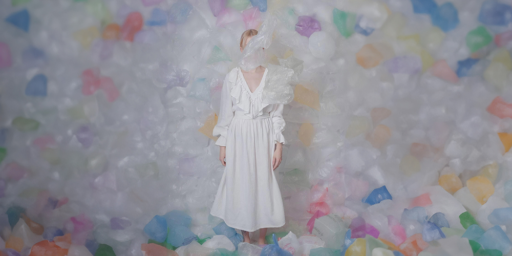
— Have you had exhibitions?
— Yes, my work recently participated in the exhibition of Nadya Tolokonnikova from Pussy Riot in New York. Now I have won one international competition and it seems that it is planned that my work will be exhibited in Times Square, on one of the billboards. I don’t want to jinx it, but I hope everything will happen soon.
— Before the “rainbow symbols” case, did you encounter any pressure or threats?
— Yes, they wrote posts about me that looked like denunciations. And about five months ago, some dude from Saratov in some telegram channel published my personal data, photographs, described what I had violated on them - from insulting the feelings of believers to the “LGBT law” - and gave me 10 years in prison. Of course, there are no such violations in my work, but I didn’t like going to the “E” center. Even after the most ridiculous denunciation, you are still called in for a conversation.
— How did the current case begin?
- It depends how you look at it. About a year and a half ago, after one of the filmings, I was detained by traffic police officers and taken to “pee on drugs.” Generally out of the blue, without any reason. I didn’t believe that these were real police so much that I even called 911, who, naturally, did not come to me.
So, the traffic police officers humiliated me all the way, asked about Navalny, ironically called me an “art critic,” and said that I was doing “origami.” I took tests, went to the doctors, and in the end the narcologist told me: “if you haven’t taken anything, everything will be fine.” I replied that “naturally I didn’t take anything, I’ve never even tried grass in my life.”
Then they took me back to the car (by the way, the National Guard was already standing there), they let me go, I come home, look at the certificate, and it says: “signs of drug intoxication were found.” I'm like: what?! I slept a little and went to do an independent examination, which, naturally, showed nothing.
And less than 24 hours later, a denunciation was received that I was involved in extremism. I found out about him later, but according to the dates in the case materials, it turned out that 20 hours after the traffic police check. In general, for some time I had a really busy schedule: surveys on extremism and matters with the traffic police.
My lawyers, in fairness, say that they do not see any connection in these episodes, but this is a “coincidence”.
- How did these things end?
- Nothing. Together with a lawyer, we went to surveys on extremism, everything was explained and no case was opened. In the end, the traffic police also didn’t show me any drugs.
Then I asked the “eschnik” who was looking after me what would happen to me next, whether the case would go to court, whether I could live in peace or not? And he answered: “it all depends on you.” These are his last words.
And another interesting detail: ever since then I have been interrogated at airports. Every time I fly somewhere or return, they look at my documents at the passport office, call a man in uniform over the radio, and this man takes me to the interrogation room and starts asking me all sorts of questions.
- Which ones, for example?
- Yes, different. The last time they even said that I had a “suspicious Slavic face.” It was in Makhachkala. I say: “So you also have a Slavic face.” And he: “I’m allowed, I’m an employee.” I was shocked, of course.
In general, nothing terrible or serious is happening by today’s standards, but for the last two years I have felt as if I was “on their pencil” there. This is, of course, uncomfortable.
— You haven’t thought about leaving Russia. Especially if your art is in demand abroad.
- It’s not in such demand that I could live there - that’s the first thing. Secondly, I like living in Russia. And thirdly, I don’t want to leave here like this - when they squeeze me out. If I leave, then consciously, of my own free will, and not because someone made this decision for me. Apparently, my creative soul has not yet been nourished here. Apparently I need more.
- Let's move on to the matter of "rainbow symbolism." How did you even find out about him?
— The district police officer called me and summoned me to his place.
- What happened next?
“Then they [the security forces] discussed for a long time what to do. They didn’t know anything, not even how to draw up a protocol. As I understand it, the district police officer went to the “E” center for advice, they all consulted with each other there and eventually decided to initiate an administrative case. I did not come to the drawing up of the protocol for personal reasons, leaving the power of attorney to my lawyer, who collaborates with the First Department.
The security forces refused to draw it up in my absence, although the code allows this if I was notified. And then they watched me all day. They knocked on the door and scared my mother. Apparently, two police officers sat under my house all day. That is, they spent so much effort and time on a person who is subject to some kind of administrative procedure with a fine of up to two thousand rubles or 15 days of arrest.
Another thing is that even a fine of a thousand rubles under this article is a very big threat. The second such case is a criminal case with a potential penalty of up to four years. That is, at any moment they can pull out some old screenshot, which, I think, cannot be, but still, or some kind of provocation will happen and then it will turn into a criminal case.
The feeling is that one life has burned out and there are no more “hearts” left. It’s so-so to live with this thought.
— How will your art change now? Will you censor yourself?
— Yes, I don’t assess my previous work as dangerous. I don’t like to work “head-on”, I like intellectualism in art, metaphors.
There are no political statements in my works, no propaganda of anything, and certainly not extremism. I am not going to censor myself, only if law enforcement officers prohibit me from doing something specific.
In general, to be honest, three years ago I could not imagine that simply doing contemporary art in Russia would become dangerous. That this could be classified as extremism, that some colors would be banned.
I consider myself a respectable citizen who recycles waste and helps public organizations. I am a conscious, adult person who does not break the law. I did not expect that with such a lifestyle I could have problems with the law.