
Translated material
Robot policeman
How artificial intelligence helps in investigations of crimes
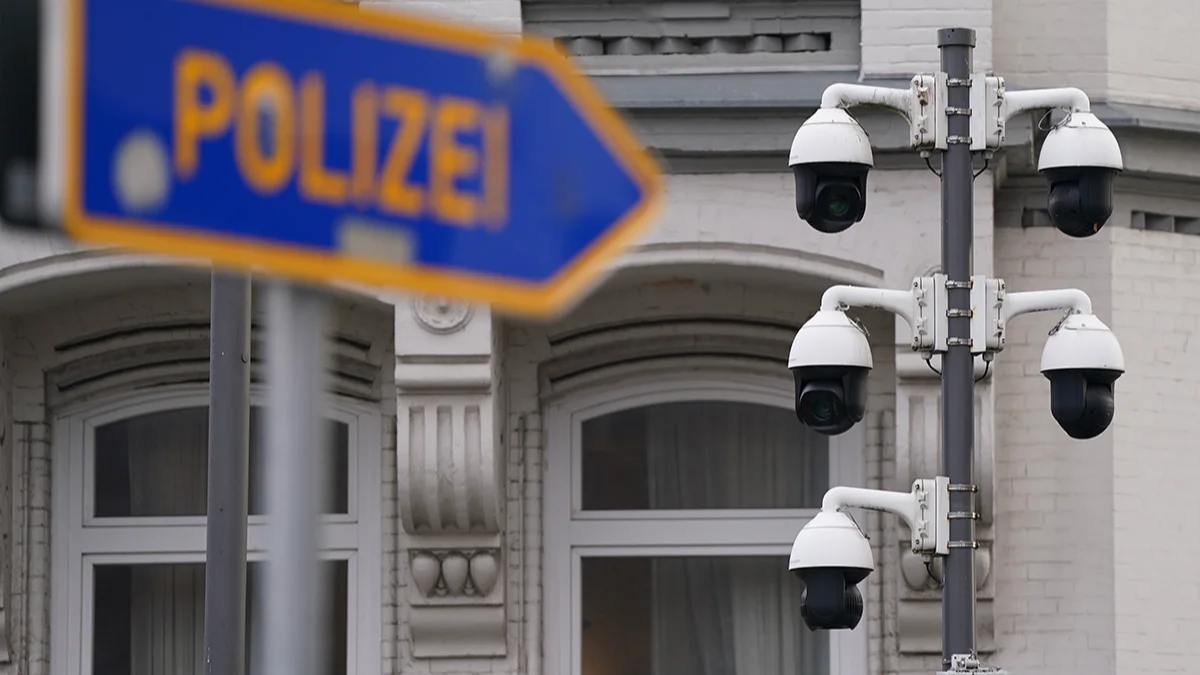
CCTV cameras in Hamburg. Photo: Marcus Brandt / Picture Alliance / Getty Images
A few years ago, employees of the police department in the San Francisco area turned to artificial intelligence to reveal the old murder. Using DNA samples from the scene of the crime, the special program created a 3D photobot of the suspect. The artist finished the portrait of the killer, adding his mustache - the detail that the witnesses pointed to. The portrait was published, and then the police missed it through the person recognition system. The search did not give anything, but excited the public: many considered the actions of the police unethical and not quite legal.
In Russia, they also do not want to lag behind. In January 2024, Vladimir Putin recommended the Supreme Court, the Prosecutor General, the IC, the Ministry of Internal Affairs and the Ministry of Justice “to analyze the practice of applying artificial intelligence technologies in the investigation of crimes and, if necessary, submit proposals for its improvement” by July 1. We understand how law enforcement agencies around the world use artificial intelligence technology in their work and what are the prospects of these technologies.
Which is already used
Smart video surveillance
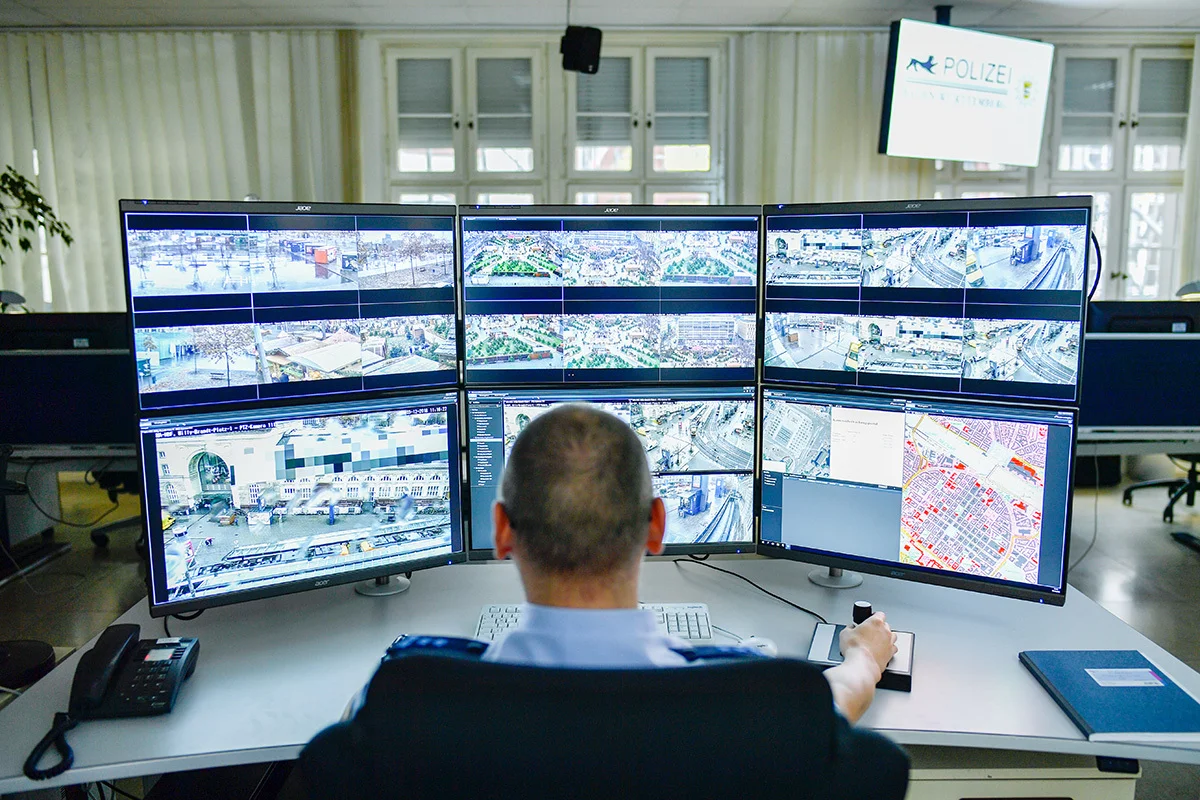
Police around the world actively use video analytics tools (Video Content Analysis) - technologies that use computer vision methods to extract data from video cameras in real time or from archival records. This allows investigators to identify the individuals of the data suspects, monitor their movement, as well as compare the data - for example, to correlate the number used in the offense of the car with the name of its owner. The Briefcam Video Assembly platform, which helped in investigating the explosion at the Boston Marathon and capture of the terrorist Anders Breivik, is already used in police officers in more than 40 countries.
Also in a number of countries, ANPR technology (Automatic Number Plate Recognition is used - “Automatic Nomber recognition system”). She reads the numbers of passing cars and compares them with numbers from the World Base. ANPR helps to search for stolen cars and track offenders. In the UK in 2021, she allowed to arrest robbers, whose car already appeared in another theft.
Work with databases
Law enforcement agencies accumulate large volumes of data that are often not structured, so it is difficult to find the necessary information in them, and neural networks come to the rescue. They find hidden connections between different cases, using many parameters, including analyzing the data of criminals and intermediaries, recordings of their conversations, the use of abbreviated designations or code words. Such tools are offered , for example, the American Voyager Labs.
There are more universal solutions that combine the analysis of databases and biometric information (photographs, voice recordings and fingerprints). This system was developed by the Indian startup Staqu. Abhed (Artificial Intelligence Based Human Efface Detection - “Exactly identification of people based on artificial intelligence”) is used to digitize criminal reports and analyze real -time information.
Currently, Abhed is working with a database containing information about more than 1 million criminals.
On this basis, the Gait system has been created, which allows you to recognize people who are wanted, based on the analysis of their faces, gestures and gait. In addition, Abhed helps to look for missing people with the help of AI-technology of faces. Their pictures are loaded into the database, and police officers can take a picture of homeless people or bodies when they find it to compare with this base.
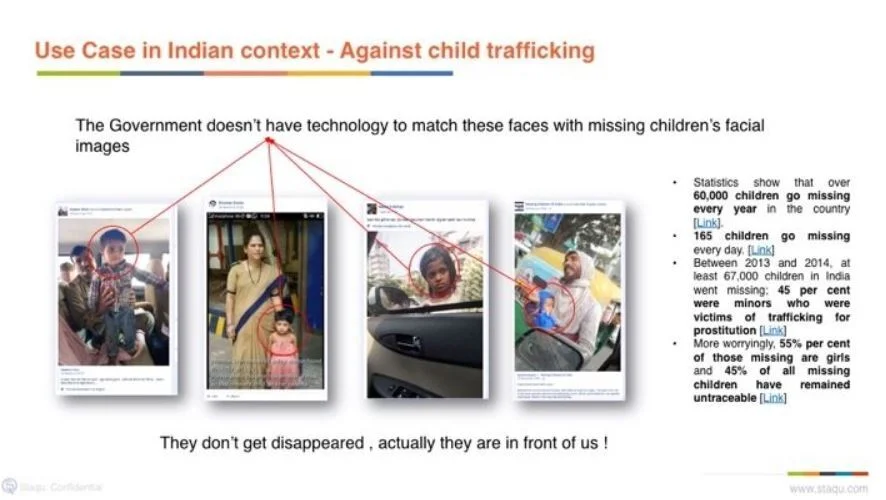
Finally, the solution analyzes biometric data (voice and fingerprints) to identify recidivists. So, it can establish the identity of the criminal requiring a ransom, if the record of his voice is already in the database.
Search for criminal patterns
Police are developing their own II tools to help in investigations. So, the New York police crime department has been using the Patternizr program for several years, which compares millions of cases of robberies, theft and thefts from the database to help investigators identify serial crimes patterns. For example, the tool may find cases when the offender uses the same hacking tools, and also operates in the same zone. However, Patternizr excludes the factor of the suspects from the analysis in order to avoid bias in the investigation of a particular crime. This program has already helped the police to identify several serial robbers. To teach the algorithm, a set of these crimes for a ten -year period was used, as well as the templates of serial crimes from the analytics department.
Patrol routes
AI allows not only to analyze data from the databases, but also to predict crimes. Thus, the police in the USA use the Resourceouter system, which studied on criminal statistics and predicts the likelihood of crimes based on the type of offense, place, date and time. This allows you to build effective patrol routes before each police change, and also saves departments analysts up to 80% of the time. The system does not use personal information (demographic, ethnic or socio-economic).
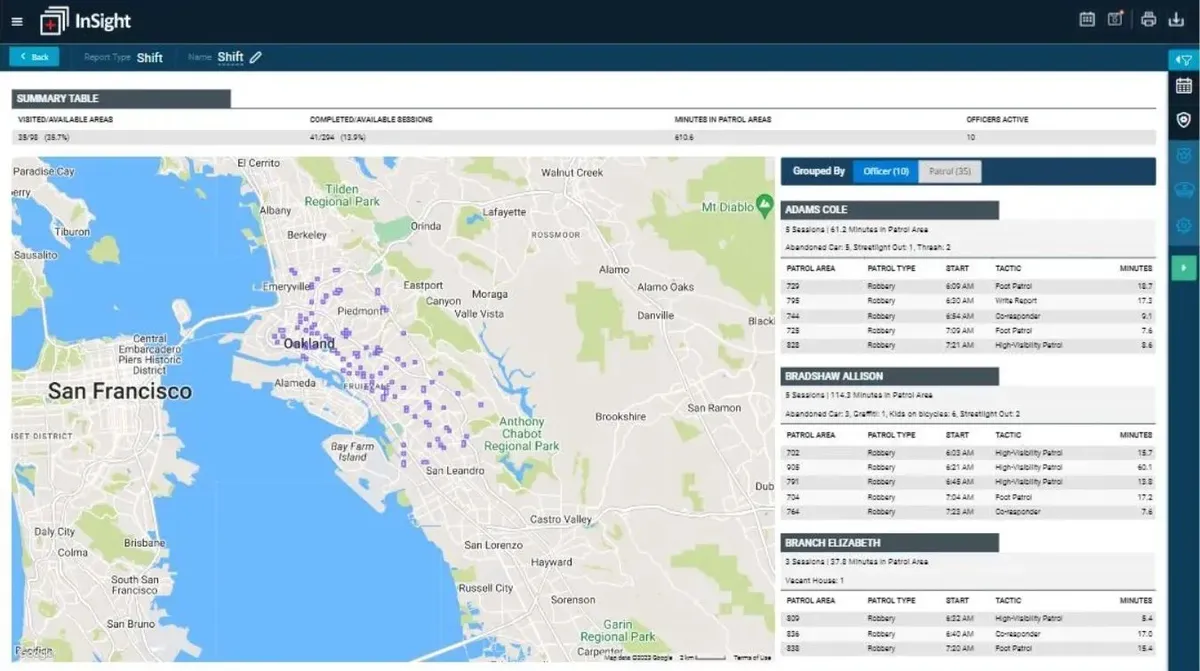
Singular Perturbats began to introduce a similar system in some Japanese prefectures. She uses criminological, mathematical and statistical methods of data analysis, place, weather, geographical conditions and other characteristics of crimes and incidents, as well as information from social networks.
The risks of the use of AI
The co -founder and general director of the company, the developer of the INNOVATRICS fingerprints, indicates the following dangers when using AI for the disclosure of crimes:
False arrests. According to Lunter, the technology of facial recognition technology does not always work well when identifying a person, and sometimes it is biased;
Lack of transparency and accountability. Lunter notes that the legislation clearly does not regulate the use of AI. So, in the United States, they are only preparing to oblige developers of person recognition technologies to disclose the teaching data that they use when creating the system, and the European Union adopted the law on artificial intelligence - the world's first large -scale law on AI;
Lack of data for teaching AI. The expert indicates that the systems can be biased due to insufficient educational information in various categories of the population, including ethnic minorities. Therefore, according to him, you need to generate more sets of such data to train more fair systems.
Case ClearView Ai
In 2019, the US police and special services began to use the ClearView AI person recognition system, which analyzes photos of social networks and various services on the Internet. The database of the system has more than 40 billion images. AI knows how to compare the image with photos of a similar person. By the beginning of 2023, the US police turned to the ClearView AI database almost a million times. This allowed law enforcement officers not only to find criminals who were engaged in the sexual exploitation of children, but also to reveal crimes for many years ago against minors.
However, the operation of the system itself raises many questions. Several European countries have accused the company of violating laws on the protection of personal data. In the UK and France, ClearView Ai has obliged to delete all the data of the country's inhabitants. The main claim of human rights activists is that ClearView applies dubious methods of collecting information without the consent of those depicted in the pictures. At the same time, the mechanism of interaction between the company with the police is still not completely clear, which allows law enforcement officers to bypass legislative restrictions and violate the constitutional rights of citizens.
In the USA in several cities, including Portland, San Francisco and Seattle, the system was also banned . The decision of the local authorities was also influenced by incidents with unlawful arrests. So, in Detroit in 2019, a local resident of Robert Williams was arrested on unjust charges of store theft. The system falsely marked Williams on the basis of a photograph from a driver’s license, comparing his picture with a low -quality and taken in the dark, a store chamber recording. Another incident occurred in the state of Georgia, where by mistake they arrested a local resident Randall Reed on suspicion of theft of a wallet. In this case, the system also worked incorrectly, since the man was black.
In total, six such incidents with facilities for faces of faces were registered in the United States, and a pregnant woman appeared in one of them.
The potential of AI
Crime forecast
Researchers are working on tools of predictive analytics, which in the future will reduce the number of crimes. Thus, specialists of the University of Chicago presented an algorithm that predicts the number and geography of crimes of a violent and property nature one week before they are committed with an accuracy of more than 90%. AI analyzes the pattern of the development of events in time and geography on the basis of open data on offenses. Then he divides the city into squares with an area of about 300 meters each and calculates crime in them. The system was checked in Chicago, Atlanta, Detroit, Los Angeles, Philadelphia, Portland, San Francisco and other cities. Researchers believe that the tool will be useful in the distribution of police outfits and to strengthen safety measures in dangerous areas.
Identification of recidivists
AI can become an effective tool not only for predicting crimes, but also to prevent relapse. Researchers already use neural networks to predict repeated crimes related to domestic violence, as well as relapses for various offenses in conjunction with racial affiliation. The authors of the last work noted that for their neural network they used many samples to get rid of racial bias. Such forecasting will allow not only to identify potential recidivists, but also to improve the conditions of rehabilitation in correctional institutions.
Disclosure of old crimes
In addition, AI can be attracted to disclose old crimes. The Dutch police are already doing this. She began to digitize reports related to unsolved cases since 1988. The machine learning system will analyze these records and select testimonies and results of a later examination of DNA for them. Then it is planned to automate the analysis in other areas of forensic examination. Interpol has alreadyaddressed the Netherlands police with a request to open 22 murders of women committed from 1976 to 2005.
Identification of the suspects
Persons recognition technologies were repeatedly criticized for the inaccuracy of work and bias. However, researchers are working on more advanced alternatives. For example, the US Army Research Laboratory has been developing a set of data for training a person recognition system that works in the dark. Visible-Thermal Face (Arl-VTF) already includes 500 thousand images filmed both under ordinary conditions and using thermal imaging chambers with low light. And independent researchers presented the triple identification method, including using thermal images, which allows you to achieve an accuracy of 90%.
Search for evidence
AI can be used for a more detailed study of videos from crime sites. Researchers from Leon University in the north-west of Spain have trained neural networks to detect evidence on them. This is done by loading thousands of images from the crime sites into the computer so that machine learning algorithms know what exactly they need to look for. An experimental model was taught on a dataset with images that showed objects from a room where they shot children's pornography. The neural network was able to successfully detect 75% of it from this set of data in photographs of other crime scenes.
Researchers believe that the system will work effectively in other cases. In addition, the neural network is trained in the search for all traces left at the scene of the crime, as well as comparing them with specific types and brands of shoes.
The study of microscopic evidence
Artificial intelligence will also analyze microscopic particles left at the scene of the crime, saving the forensic experts of the week or months of work. Neural networks are also able to classify these particles in order to focus on those that can help the investigation, and cut off unnecessary (for example, pets wool).