
Translated material
The grave of the Avar warrior
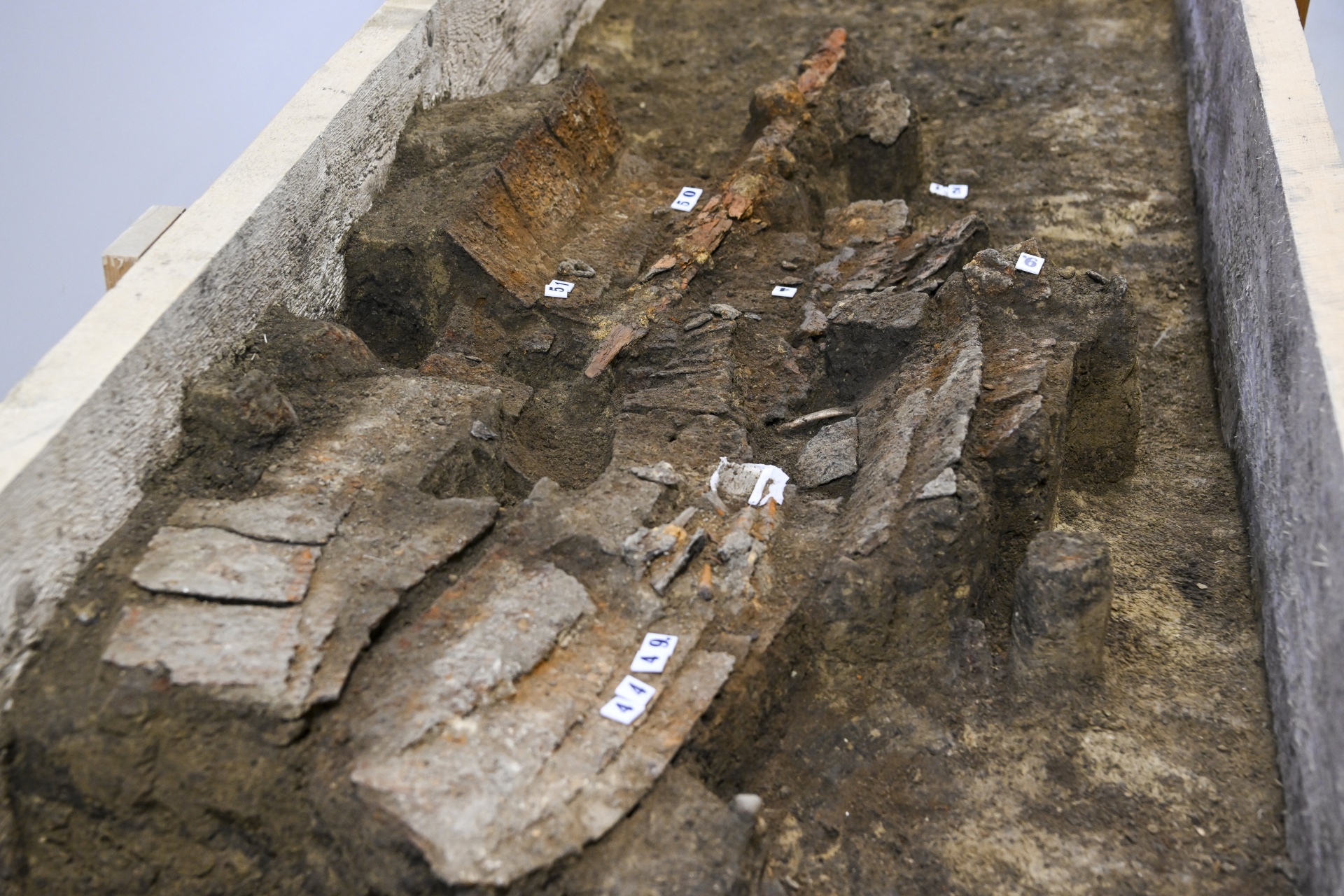
Archaeologists from the Deri Museum in the Hungarian city of Debrezen discovered a full set of plate armor in the early Avar burial near the village of Ebesh in the northeast of Hungary. The find dates from the first half of the 7th century. It became only a second set of Avar plate armor ever discovered in an intact state. The first was found in 2017 in the city of Derychka 16 kilometers south of Ebesh.
Avars come from Central Asia, from where they were supplanted by the Turks and migrated to the territory of modern Western Kazakhstan in 555. Two years later, they moved to the North Caucasus, and then went to Central Europe, where the state of Avar Kaganate on the Middle Danube arose since 526. In Europe, Avars fuck long wars with Byzantium and even in 626 besieged Constantinople. After the defeat under Constantinople, it is believed that the decline of the Avar began. But the Avar Kaganate existed until the beginning of the VIII century, when it was defeated in wars with Karl the Great (788–803) and with the Bulgars (803–804). Avars dissolved in the local population, their modern descendants are supposedly considered to be seconds - the ethnic group of Hungarians.
The heavy cavalry was the core of the Avar army. It was the Avars that were the first to bring the stirrup to Europe. The horsemen protected the plate armor. Since the armor was made individually, there is a wide selection of their types, sizes and shapes with different number of plates.
The burial was found in November 2023 during preliminary excavations on a area of ten hectares on the outskirts of the village of Ebesh. Previously, two Avar cemeteries were discovered nearby, but this grave was single and was not part of any of the cemeteries. Archaeologists found a horse skeleton in the grave. Under the horse bones there was a set of armor, over which a wooden quiver with arrows, onions and a sword were placed. The deceased was not buried in a worn armor, but put a armor on it, and then crowned it with a weapon.
The bones of the horse were extracted in place. The rest of the burial was removed in a large block of soil and transported to the museum for excavations in laboratory conditions so that the elements of the armor remained in their original configuration, and in the soil any organic materials could be found, even in trace queues. Weapons and armor are currently on the surface of the block.
It is expected that the complete analysis of the soil block will take a few more months. Archaeologists believe that under the body of the deceased there may be an additional inventory, which is not yet visible.