
Translated material
"State of Buryat-Mongolia"
How a hundred years ago the authorities were looking for separatism in Buryatia, and now they are looking for again
In January 2024, the headquarters of the threats of separatism and nationalism was created in Buryatia, and headed by the head of the republic, Alexei Tsydenov. Something similar here was already in the 30s of the last century-then it was called "the struggle against the panmonggolism." The case of the Pankongol conspiracy was fabricated and turned into mass repressions. But there were three real attempts to create Buryat autonomy.
"Thanks to Comrade Stalin for our happy childhood!" -the Soviet pioneers chased, lining up at the poster, on which Stalin takes a bouquet of flowers from a little brown girl. This poster is drawn from a photograph, and on it a real girl is the seven-year-old Gel Markizov, the daughter of the People's Commissar of Agriculture of the Buryat-Mongol Autonomous Soviet Socialist Republic Ardan Markizova.
Girl from the poster
The photo was taken in 1936. Gel came to Moscow with her parents, members of the delegation of the Buryat-Mongol Autonomous Soviet Socialist Republic. Among the participants in this delegation there were rumors that Stalin gathered them in Moscow to solemnly declare: the Buryato-Mongolian Autonomous Soviet Socialist Republic in the status from the Autonomous Republic as part of Russia to the Union Republic as part of the USSR directly. However, this did not happen. Everything was limited to a series of boring reports "On the successes of the national economy."
Then Engelsin recalled that during one of the performances she became unbearably bored. She got up and went across the hall to Stalin, handed him a bouquet brought by her parents. "This is for you from the children of Buryat-Mongolia!" She said and kissed the leader. He raised it in his arms and put it on the table - at that moment the well -known photo was taken. It was printed in millionth circulations in newspapers, and the gel instantly became a symbol of a happy childhood for millions of Soviet people.
However, the next year, a large terror began in the country. Geli's father was accused of organizing an “anti -Soviet, Pankongol conspiracy, the purpose of which was to break the sowing and the use of collective farm horses to organize saber detachments in the rear of the Red Army.” He was saved neither participation in the civil war on the side of the Reds, nor the many years of party experience, nor the fame of his daughter.
Gel even wrote a letter to Stalin in which she convinced him that her father was not a Japanese spy. Ardana Marquizova was shot in 1938, but relatives did not find out about this - they were told that their father was given ten years of camps without the right to correspondence.
Geli's mother spent a year in prison, after which she and both children were sent to exile in Central Asia as members of the family of the enemy of the people. After a couple of years, the mother found it dead - it remained unknown whether she was killed or committed with herself.
After the death of her mother, Gele and her brother were allowed to move to Moscow to relatives. In the capital, she graduated from school and entered the History of Moscow State University, where she studied with the daughter of Stalin Svetlana Alliluyeva - the girls knew about each other, but did not communicate close. Having become an adult, Engelsina taught at school and institute, married and gave birth to children. Until the end of her life, she kept the pateophone presented by Stalin.
As for the image from the photograph, it has already entered the Soviet life so firmly that it was difficult to erase it. Then the authorities simply changed the name of the girl in the photo, and the daughter of the enemy of the people Buryat Gel Marquizov turned into a hero of the children's Stakhanovsky movement, Tajikka Mamlakat Nakhangov.
Pankongolsky conspiracy
Gelie's father, Ardan Marquizov, was far from the only victim of the "case of the Pankongol conspiracy." Together with him, another 141 people were arrested, among them-People's Commissars from the Government of the Buryat-Mongol Autonomous Soviet Socialist Republic, secretaries of party district committees, writers, scientists, lamas and peasants. In total, 2026 people were charged with panmongholism. Some of them were shot, someone was sent to the camps.
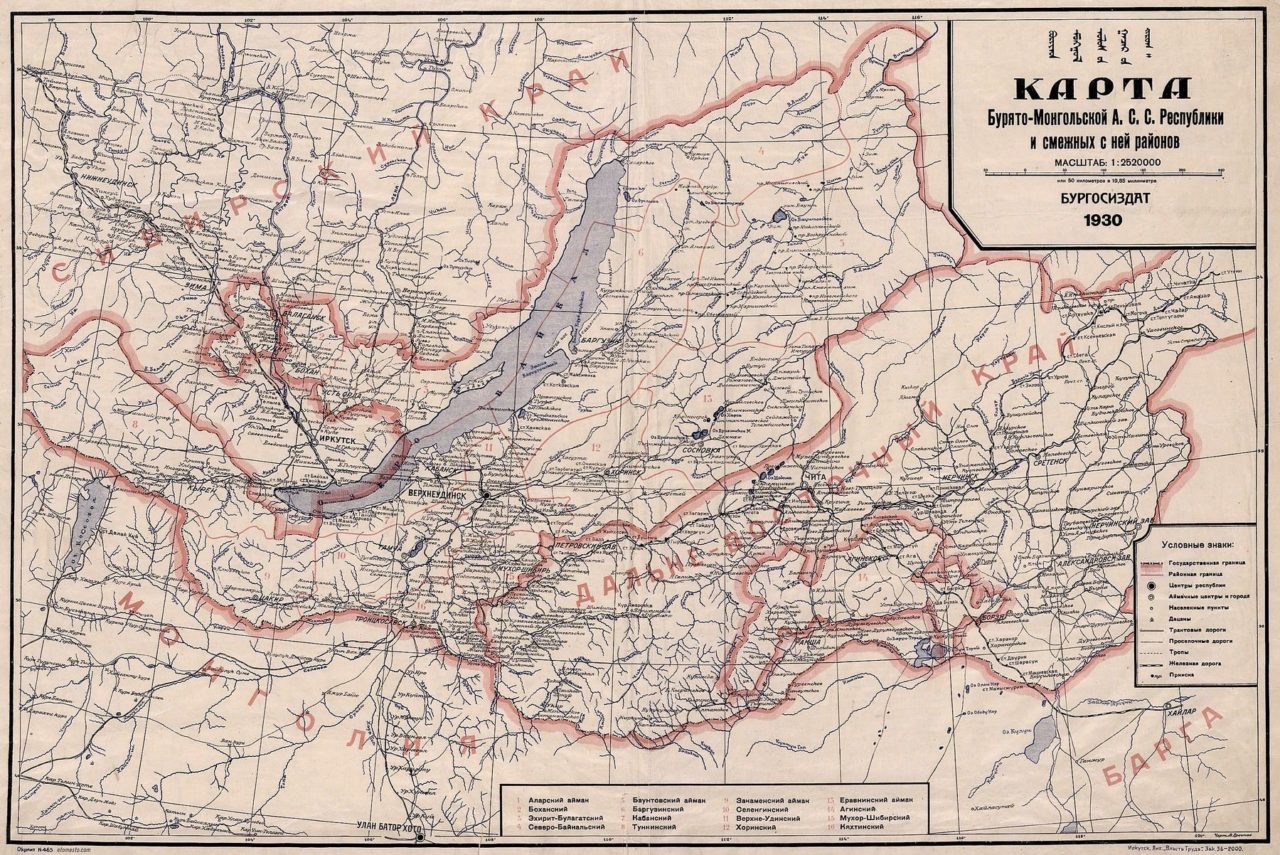
All of them were accused of planning to withdraw the Buryat-Mongol Autonomous Soviet Socialist Republic from the USSR and annex it to Mongolia. And as you know, in those years, Japan claimed to include Mongolia in its sphere of influence - hence the thesis about working for Japanese intelligence. For the sake of these goals, they allegedly created rebel detachments, armed themselves, and also poisoned cattle and crops to cause hunger among the peasants and raise anti -Soviet sentiments in the village. All this is a direct tip of Japanese intelligence in the interests of world imperialism. Moreover, among the accused were not only the Buryats, but also the Russians. After the death of Stalin, they were rehabilitated and recognized as victims of repression, and the matter was recognized as fabricated.
In 1937, the Soviet authorities by a third reduced the territory of the Buryat-Mongol Autonomous Soviet Socialist Republic. From it, the Aginsky and Ust-Horde district were allocated from it, and the Olkhonsky district was transferred to the Irkutsk region. So the Buryats turned out to be three national subjects in Russia.
In 1958, the Buryat-Mongol Autonomous Soviet Socialist Republic was renamed the Buryat Autonomous Soviet Socialist Republic. In 2008, after the referendum, the Ust-Ordynsky district became part of the Irkutsk region, and the Aginsky-in the Trans-Baikal Territory.
In the Buryat Book of In memory of the victims of the Stalinist terror of the 1930s, names 12,753 executed. Of these, only 4020, or 31.5%are drilled there, and Russians - 6206, or 48.5%
Three attempts to create Buryat statehood
The case of the Pankongol conspiracy was invented, and its victims were not planned to withdraw Buryatia from the USSR. But were there others, real attempts to create Buryat statehood outside the Soviet system? Yes, there were three such attempts, and all of them relate to the period of the revolution and the Civil War.
The first project was called the state of Burya-Mongolia, it lasted from April 1917 to April 1920. Despite the word "state", education was originally created as autonomy in Russia, which included the lands of the Buryat clans on both sides of Lake Baikal. At the same time, the lands of Russian settlers did not enter it.
Since Russian villages and Buryat uluses sometimes alternated every few kilometers, as such, Buryat-Mongolia did not have a single territory. At the head of this education, the Buryat historian Mikhail Bogdanov stood up. He relied on a multi -party parliament. Buryat-Mongolia pursued independent tax and cultural policies and often made decisions in the conditions of a vacuum of central government.
With varying success, he managed to maneuver between white and red, while in 1920 the Bolsheviks who defeated the White Guards did not eliminate Buryat-Mongolia, sharing her land in half. From the Buryat lands to the west of Lake Baikal, the Mongol-Buryat Autonomous Region was formed as part of Soviet Russia, and from the eastern territories-the Buryat-Mongolian Autonomous Region as part of the Far Eastern Republic. In 1923, both units were again united, creating from them the Buryat-Mongol Autonomous Soviet Socialist Republic. As for the fate of Mikhail Bogdanov, he was executed in 1919 by the Cossacks of the White Ataman Grigory Semenov.
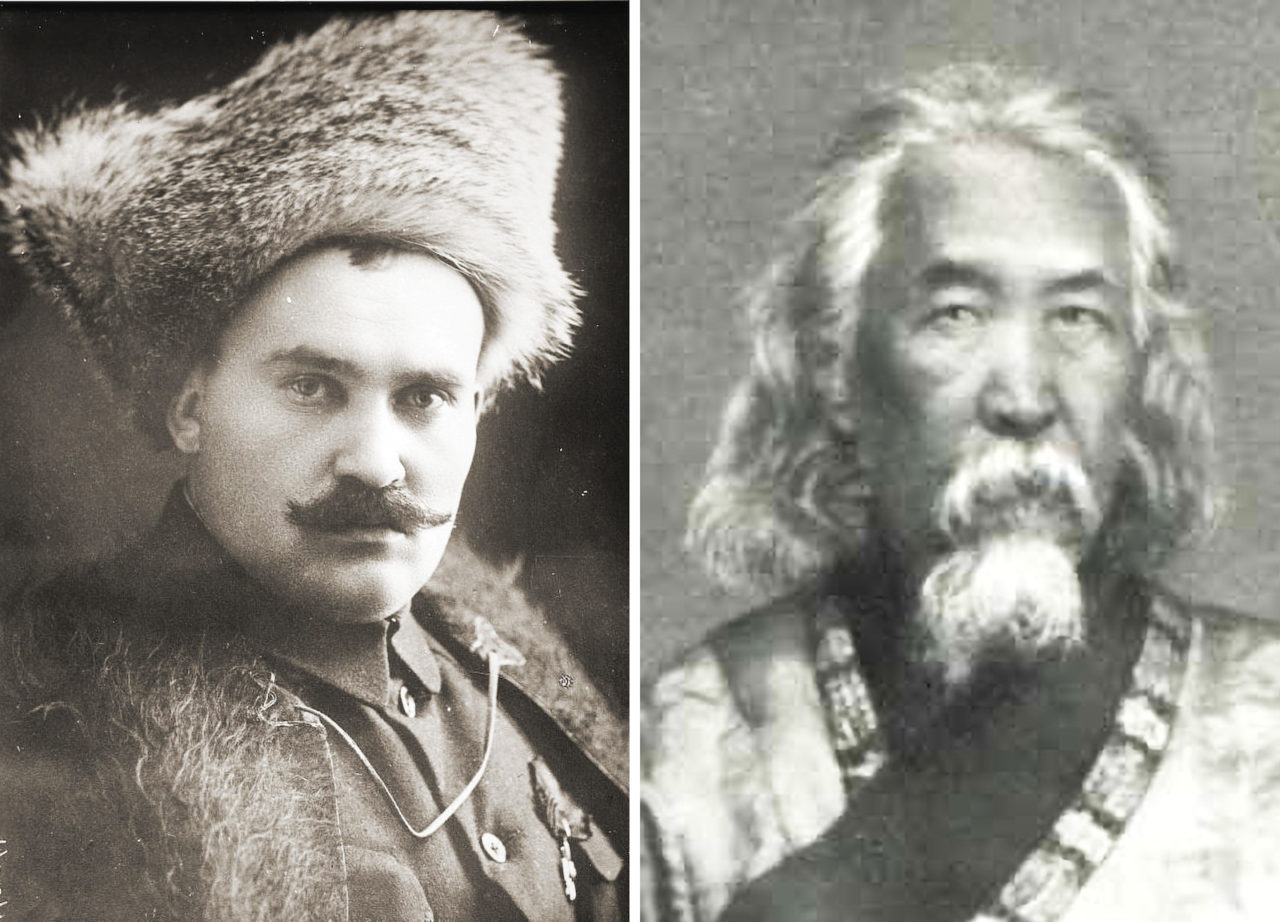
In the photo on the left: Ataman Grigory Semenov. Photo on the right: Lama Lubsan Tsydenov.
The second project was called the Kodunsky state and lasted about three weeks in the spring of 1919 on the lands of the present Kizhingin district of Buryatia. It was theocracy on the model of Tibetan-at the head of state stood a spiritual leader, 78-year-old Lama Lubsan Tsydenov, who proclaimed himself the "king of all worlds." The impetus for the creation of this state was an attempt to mobilize the Kizhingin Buryats in the army.
Lama Tsydenov urged to ignore the military draft, to leave Buryat-Mongolia and build a new society based on Buddhist teaching. At the same time, he did not attempted to exit Russia. The meeting of the elders of the Kozinginsky Buryats supported this idea. Semenov Cossacks quickly liquidated the Kodun state. They recognized Lama Tsydenov mentally unhealthy and released, but the remaining three years before his death, he mainly spent in prisons of the Far Eastern Republic.
The third project was called the Great Mongol state, and its initiator was Semenov himself, who was pushed by the Japanese to this. In February 1919, in Chita, he convened a congress of panmongogolists, which proclaimed the creation of the state of all the Mongols. It was supposed to include, in addition to the present Mongolia, also the inner Mongolia of China, Manchuria, Tyv and the land of the Trans -Baikal Buryats.
The new state was to lead the native of the inner Mongolia Mandabayar, and to stand at the head of the armed forces - Semenov himself. The Great Mongolia government was located at the Dauria station, but the advocate of the “unified and indivisible” Russia, the head of the White Guard troops in Siberia, Alexander Kolchak, and the Chinese government, actively spoke out against the project of Great Mongolia. By the fall of 1919, the Daurian government collapsed under the pressure of red partisans, and Mandabayar with the remnants of the troops went to Mongolia, where he was captured and shot by the Chinese authorities.
Of the four projects of Buryat statehood in the twentieth century, one was just a fiction of the NKVD, two more were limited to the struggle for autonomy in Russia, and only the project of the White Ataman Grigory Semenov really aimed complete independence.