
Translated material
Three oncillas
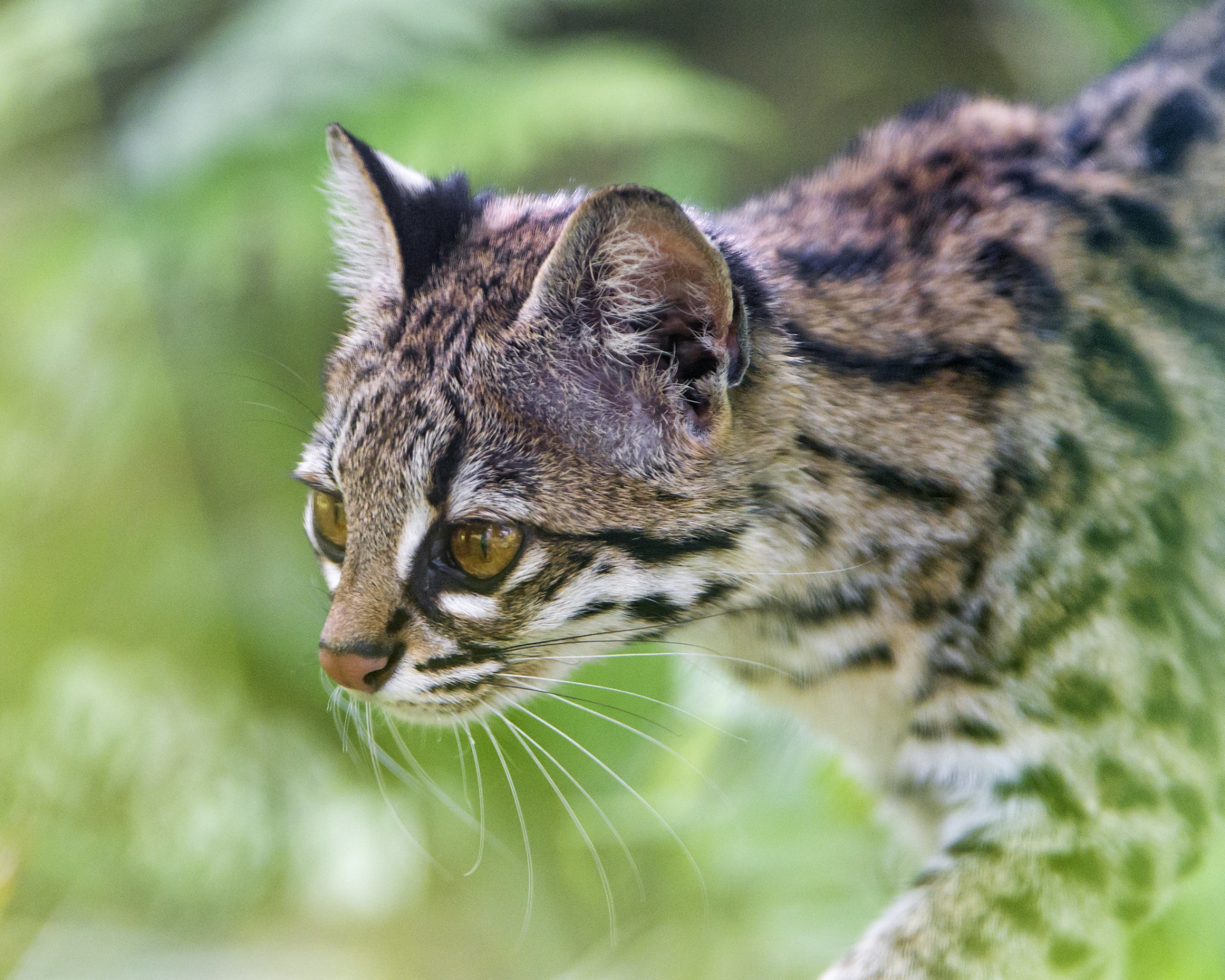
In 2013, oncilla ( Leopardus Tigrinus ) - the view of a small spotted cat from South America - was divided into two types: northern ( Leopardus Tigrinus ) and Southern Oncillus (Leopardus G Uttulus). A new study conducted by Brazilian biologists from the University of Maranyan shows that the oncillas actually represent not two, but three separate species.
Oncillas are found in mountain and tropical forests of Costa Rica, Panama, Colombia, Venezuela, Ecuador, Uruguay, Paraguay, Gayan, Surinam, French Guvian, Brazil and Argentina. They are close to the long -tailed cats ( Leopardus Wiedii ) and Obelotes ( Leopardus Pardalis ), but less in size, have a slender physique and a narrower muzzle. The weight of the largest males oncillas does not exceed three kilograms. The length of their body can be from 35 to 60 cm, and the height is about 25 cm. Oncillas lead a night lifestyle, and during the day they hide in the branches of trees. They feed on small mammals, birds, lizards, invertebrates, sometimes eat wood frogs. In nature, the ONCILLS LIFE is 10-14 years, in captivity they survived up to 23 years.
“A complex of species oncillas, the original species from old taxonomic schemes, is one of the most intriguing, mysterious and fascinating cats of cats,” says one of the authors of the work of Tadeu de Oliveira. - To date, the species complex of tiger cats consists of two types: Leopardus Tigrinus and Leopardus G Uttulus , and the first is divided into three subspecies: Leopardus Tigrinus Oncilla , Leopardus Tigrinus Pardinoides and Leopardus Tigrinus Tigrinus . Both recognized species are considered under the threat of disappearance. They inhabit some of the most unsafe eco -regions and hot spots of biodiversity in America, including Serrado, tropical Andes, the Atlantic Forest and the Talamanka Mountain Range. With the exception of Leopardus Tigrinus Tigrinus, there are no established priority saving areas for the complex objects. Given their status and high rates of habitat loss within their corresponding areas, it is extremely important to determine areas that are more likely to contain viable populations of these species. ”
The authors of the work sought to determine the real range of species and subspecies oncill, compare their characteristics, evaluate similarities and differences between them. As a result, they came to the conclusion about the need to highlight a new type of Leopardus Pardinoides , which includes both the subspecies of Leopardus Tigrinus Oncola and Leopardus Tigrinus Pardinoids . In the new look, the head is surprisingly similar to the head of a long-hung-to-stand cat, with a beautiful thick soft fur of a rich reddish, orange or grayish-yellow background color, decorated with medium-circular sockets of irregular shape, which are pronounced and often merged. It is noteworthy that Leopardus Pardinoide S only one pair of mammary glands. This species is found in the disappearing forests of the southern part of Central America and the Andian ridges, at an altitude of more than 1,500 m above sea level, but especially at an altitude of 2000 to 3000 m, in a subtropical or moderate climate with very abundant rains.
The results of the study are published in the journal Scientific Reports.