
Translated material
There was your apartment ...
Whether the deprivation will help to solve the numerous problems of housing and communal services, first of all - debt
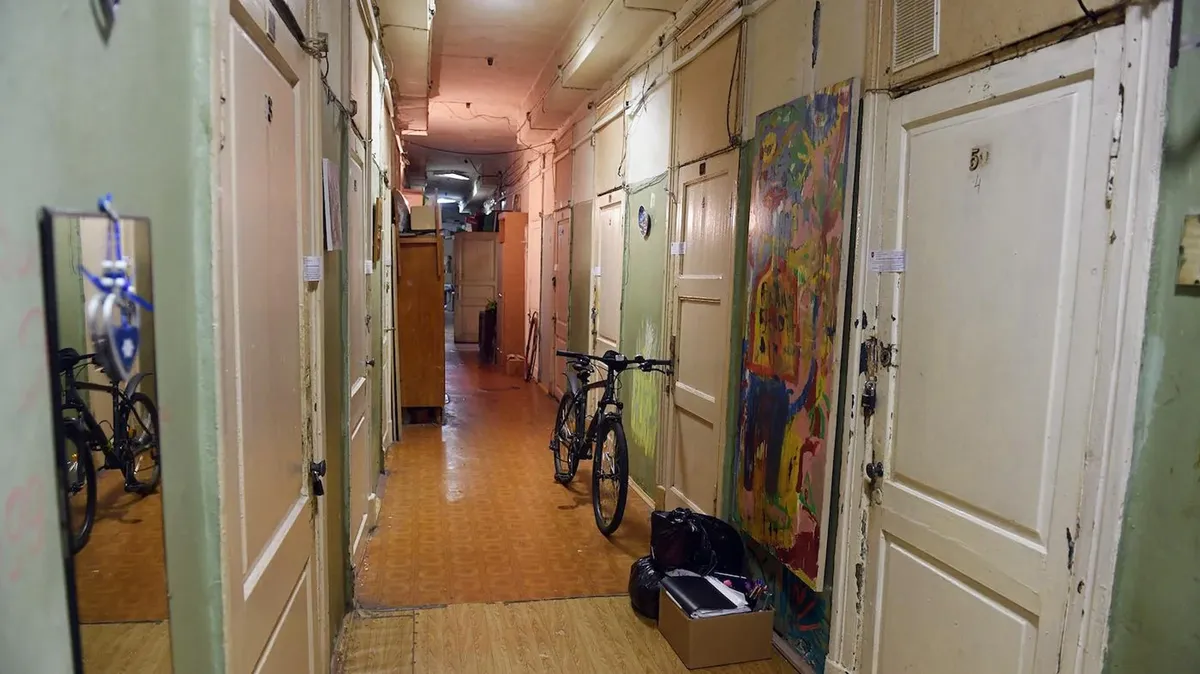
Photo: Alexander Kazakov / Kommersant
At the end of January, and just against the background of the All -Russian communal collapse, in several regions of the country, they began to violently discuss one idea: whether the privatized apartments of the poor Russians into municipal property, and the owners themselves are transferred to the status of tenants. Such a proposal was received from the chairman of the Committee of the Chamber of Commerce and Industry on Entrepreneurship in the field of housing and communal services Andrei Shirokov. In his opinion, mass privatization of housing in the 90s was a mistake, as it gave rise to a huge class of “poor owners”.
Various "defenders of the people" against
The idea with the resettlement of debtors for the services of housing and communal services was not born today. In a public field, she was discussed back in 2013. So, for example, the current governor of the Murmansk region Andrei Chibis (11 years ago he represented NP “Housing and Utilities Development”) became one of the authors of the scandalous bill on the eviction of malicious non-payers for housing and communal services (housing and communal services). In an interview with RIA Novosti, Chibis considered such tough measures justified. In addition, he insisted that even the only and privatized apartment should be allowed from the hammer, and to provide social housing to the debtor. Here, however, a serious inconsistency arose: Art. 446 of the Civil Code of the Russian Federation does not allow eviction from a privatized apartment just when this is the only housing of the debtor.
Be that as it may, it did not reach the implementation of the idea in 2013. The Ministry of Regional Development first published a bill, and then criticized it: the background was too negative around the idea. Nevertheless, she herself turned out to be extremely tenacious. In 2017, the proposal to sell for the debts of the apartment of those who do not pay for the housing and communal services were already made from another department. And in a commentary, the first deputy chairman of the Public Chamber of the Russian Federation for housing and communal services Svetlana Pravorotneva (now the State Duma deputy) said the following seven years ago:
“A serious incentive in the fight against non -payers could be the sale of an apartment for debts. However, various “defenders of the people” resolutely object to such a measure. And conscientious payers pay for populist decisions, since ultimately the accumulated debts are distributed between them, increasing the already heavy burden of utility bills. ”
It is not very clear about the incentive. Under it, apparently, was meant the threat of loss of only housing. But if a citizen is insolvent in a number of objective circumstances (loss of a breadwinner, work, illness), it is unlikely that even such a serious measure of influence will help him find money. There is another contradiction in the above statement. The expert talks about the difficulties in collecting debts from consumers even if the court recognizes the debt. Bailiff services such decisions "as a rule, they work out sluggishly - cheap debts, there are a lot of fuss."
So if the debts are penny, what is the conversation about? Why distribute them between bona fide payers? Maybe it’s more correct to just write off?
With different intensity, this topic has surfaced in public space more than once. And in January 2024-another surge. The representative of the CCI Shirokov first calls the mass privatization of housing in the 90s by a mistake that gave rise to a class of owners who are not capable of (and sometimes not wanting) to support their housing. And then he proposes to transfer the apartments of debtors in the “communal” from private property to the municipal one.
As an argument, Mr. Shirokov addresses the practice of deprivatization, which we have already encountered. According to him, many citizens first privatized housing, and then realized that they could not keep it. And in order to play back, they went to the courts. Today, the expert proposes to create an instrument of deprivatization of voluntary, but for all the same poor owners.
There is no data in the public domain about the number of "refritten" housing. But there is another curious figure from Interfax-Real Estate: about 265 thousand apartments remained in Moscow in the summer of last year in Moscow. This is approximately 5% of the total housing stock. The very free privatization of housing (it was a mistake or not) since February 2017 was declared unlimited for all Russians.
Exclude from the "collective farm"
Developing his idea, Mr. Shirokov discusses the economy of an apartment building (MKD). In particular, about the difficulties of maintaining common property. When a certain management company (Criminal Code) refuses to carry out certain work, this can be understood. With a huge debt of the owners of money for all needs, it will not be enough by definition. The MKD, in which we privatized housing, explains Shirokov, is not considered the object of real estate by law. Yes, we own the apartment, we have a share in common property. But at home as a single real estate object! And without this, there will be no real homeowners who are able to make responsible decisions on house management.
According to Shirokov, the main question that you need to think about is how this “collective farm”, a set of apartments, lead to a common denominator. He sees one of the ways to solve the problem in the exception of malicious defaulters from the “collective farm”. Can such a measure be effective?
With this issue, we turned to the leader of the public movement “People’s Housing Inspector” Sergei Krekov.
Sergey Krekov:
“In this case, he (Shirokov) is clearly cunning. Problems in the field of housing and communal services are in no way related to privatization. We extended ownership to part of the property. As a result, many owners of the premises arose inside one building. To implement the proposal of Shirokov, it is necessary to revise the principle of private ownership of real estate and prohibit the crushing of one object, and not conduct deprivation.
More than half of residential facilities with many owners arose following the development of the construction of the MKD in Russia, where ownership of the apartment is part of the investment agreements of citizens and the developer. This principle is also implemented in the activities of the housing cooperative, the history of which originates in the USSR. Over time, the situation was aggravated by the fact that not just residential buildings are being built, but multifunctional LCDs, in which the number of owners is measured in thousands.
In 2016, I proposed a new concept - the Institute of trust management of MKD. Its essence is that we create in the house of a single customer of management services through the collection of powers to participate in the general meeting of owners. Mr. Shirokov, together with the members of his committee in the CCI, categorically opposed this proposal. ”
Perhaps Shirokov see another algorithm. In any case, he calls our current fee for the maintenance of common property pennies that lead to underfunding (on average in the country it is 25 rubles per square meter monthly). Payments should be at least four times higher, at the level of 100 rubles per "square". But the authorities cannot raise them so sharply, the people will not understand - the representative of the CCI states.
Or maybe it's not about the popular sense, but in its solvency? The picture is still completely joyless. Last year, the debt of Russians in the "communal" approached Trillion (this is an absolute record in the history of observations). Moreover, the debt is massive.
Dmitry Aseev, municipal deputy, Samara:
“The causes are both objective and subjective. The former is a stable indexation of the size of the housing and communal services and innovations in the legislation. Namely, the adjustment of the heating fee where there are common -house heat energy metering devices. In such houses, residents first receive additional receipts for 7-10 thousand rubles when installing the device and then up to 8-12 thousand in the 13th receipt for heat. Only the Criminal Code of Kommunresurs (last year in its administration there were about 300 houses in Samara) stated that as of the beginning of 2023, the total debt of the inhabitants to it amounted to about 100 million rubles. This is despite the fact that monthly the company must collect 50 million. ”
The total dynamics is as follows (Rosstat data).
In the fall of 2020, the communal debts of Russians amounted to 625 billion rubles.
At the beginning of 2021 - almost 745 billion .
In the first quarter of 2022 - more than 804 billion .
In the winter of 2023 - almost 900 billion rubles.
Thus, over three years, the debt increased by 251.4 billion. The average debt is 200 thousand rubles.
The proportion of asocial elements among non -payers is in the range of 20%. This, in fact, is the same “target” audience for which the whole process was conceived - resettlement, deprivatization, and the change of owner.
"Bad" apartments
In fact, there are a part of the debts in a communal apartment in poor and socially unprotected citizens who have a legal right to receive a subsidy. True, with a significant amendment: according to the same legislation, they lose this right in case of untimely payment of housing and communal services. That is, they refuse help to those who really need it. As a result, debts are growing in arithmetic progression, because penalties and fines increase along with the debt. Recently, the procedure for providing subsidies has changed: it can only be obtained if there is a debt dried (the obligation to repay the debt confirmed by the judicial act). In fact, if a person issued a subsidy and missed at least one payment, the payment will be suspended.
With deprivation, the story is similar. It is possible only in an apartment in which there are no debts for communal services and taxes.
But according to the logic of things, those who cannot pay for their housing go for deprivation. If a person is able to pay off the debt, why should he abandon the ownership? And this is not the only inconsistency.
There are a number of factors that can seriously interfere with the process. And a number of questions, unanswered to which the mechanism will not be clear. For example: deprivatization should take place with the consent of all homeowners. But what if someone is against it? Or: the apartment was privatized not in general order, but, for example, was presented - what to do in this case? And who and how will evaluate the status of a non -payer? Among them there are those who got into complex life circumstances, there are people who are temporarily unable to close the duty, there are owners-investors who surrender housing.
Finally, there are “rubber apartments” (real estate objects, divided into a large number of microding, each of which has its own owner). In them, you often will not only find utility bills, but the owner himself. Situations are frankly hopeless. One of them was told by the chairman of the HOA in the south-west of Moscow:
“There is one apartment in our house, let's call it bad. The owner has been living abroad for three years. He rented an apartment for long -term lease, signed the contract and even took a fee forward. And the tenant passed it again. He settled a family of migrants there. Relatives came to them later. Maybe not relatives - no one knows for sure. The children arrived, they allegedly go to the institutes here ...
In short, even neighbors on the site cannot say how many people live in this apartment. What is their agreement there, who should pay a communal apartment? You will not find the ends. But the total debt is almost half a million. I tried to intervene ... They have one answer: we rent housing, pay money, Tolik (tenant) comes to us every month - we give everything. They tried to go to this Tolik - it is useless. "
In addition to a judicial consideration, an understandable mechanism for interaction with communal debtors today, it seems, does not seem to. Meanwhile, conversations about this have been conducted for not the first decade. So maybe you should first develop it, and then take it into a public field? Or is this all this story doomed with deprivation?
Sergey Krekov:
“It is not worth it to be frivolously treating such public statements. There is a deprivatization mechanism, and it works. Not to be the owner of the apartment becomes economically beneficial. Private property is expensive and not everyone can afford. So far, there are two instruments in the hands of the state: the tax on the apartment and contributions for overhaul. In Moscow, thanks to the large cadastral value of a square meter, they are the highest in the country - 25.58 rubles per "square". For large -scale deprivation, no legislative changes are needed. It is enough to create economic incentives, and the owners themselves will abandon their apartments in favor of social hiring.
In 2024, the government set the regions to differentiate tariffs for electricity in binding to consumption volumes. What prevents for apartments in socialists to set tariffs at the minimum level, and for the owners - at economically justified, several times higher? And people will begin to massively abandon the apartments and beg the authorities to take them back. ”
Citizens who have privatized the living space really have the right to transfer it to state or municipal property, if it is the only place of permanent residence for them and free from obligations. As a rule, people remain in such apartments, but already on the basis of socialist. That is, they are exempted from paying taxes and contributions for overhaul. Thus, the financial burden on citizens is seriously reduced, and on the municipalities that took apartments to the balance, is increasing.
We will return to this unscheduled load. In the meantime, I want to understand what the essence of the idea, thrown for discussion. What are they trying to offer (or impose) to us: deprivation or resettlement? Voluntary disposal of an excessive load or coercion to rejection of private property? Why are the wording in open sources so jumping like that? I quote: "... privatized apartments of poor Russians to transfer to municipal property, and transfer the owners themselves to subsidized housing."
You need to understand that the keyword here is “resettle”? And then it was painfully tempting to be the prospect of staying in your apartment, but to free yourself from contributions for overhaul and taxes.
Excessive property does not need
The idea of creating special social houses periodically pops up. Where do they get from? But just to this question, the answer is in the “Strategy for the Development of the Construction Industry and Housing and Public Utilities of the Russian Federation for the period until 2030”, approved by the government of the country.
“The key characteristic of the Housing Fund of the Russian Federation is a high share - 93% - housing in private property. The housing fund, provided under social contracts, is limited and retired as a result of its free privatization. For families with income below medium, it is necessary to create a segment of non -profit lease, which is formed by private investors with the support of the state. ”
How soon they will create it and whether they will create an open question at all.
In an interview, Mr. Shirokov says that with our level of economics, 60% of the population should live in rental housing, and not in their own apartments. And he offers “... on a voluntary basis, due to economic incentives to deprive part of the apartments, create a segment of rental housing, primarily for the poor. Yes, the municipality will own them, but he will bear all responsibility for its content. ”
And already in another statement, Shirokov admits: “... today it is clear that the municipal authority does not need excess property, any additive of the property for which she needs to be responsible, which she needs to maintain, is the load on local budgets.” Moreover, the load is serious, because the social employer, I recall, is exempted from taxes and contributions for overhaul.
What's in the dry residue? Will the municipalities oblige to take housing for balance? Is there any confidence that housing that changes the owner will be better maintained? Where will the funds and experts come from? Just the municipal deputy we asked about it.
Dmitry Aseev:
“This issue should be discussed separately. For example, now in the Arbitration Court of Samara, the case is considered on the house on the 54 factory highway. It has a municipal premises with an area of 92.3 square meters, which is transferred to the gratuitous use of the Main Directorate of the Ministry of Internal Affairs of Russia in the city of Samara. Residents were repeatedly interested in: why neither the Department of Property Management (Dui), the owner of the premises, nor the Ministry of Internal Affairs pay utility bills?
Obviously, the growth of debt is extremely negatively affecting all the management. The Criminal Code practically does not carry out current repairs, referring to the great debt from the DUI-MVD. A similar situation with overhaul. It can only be carried out with the collectivity of over 97%in the overhaul fund (FKR), and this is impossible taking into account such a powerful non -payer. ”
In most cases, when the owner of the apartments is the municipality, we are faced, according to the deputy, with malicious violations of payments. And now they also want to add expenses to municipalities? From a formal point of view, he considers Krekov, they do not need debt apartments. The change in the status of the debtor (from the owner to the tenant) will not affect the accumulation of debt.
Sergey Krekov:
“However, this is a good opportunity for officials to cash in. Они уже это делают, продавая квартиры, передаваемые застройщиками по инвестиционным соглашениям в рамках нового строительства. Как результат — очередь на получение жилья у детей-сирот составляет 20 лет и превышает 200 тысяч человек. А о предоставлении жилья инвалидам и о расселении ветхих и аварийных домов даже говорить не приходится».
По данным ГК «Фонд содействия реформированию ЖКХ», в реестре домов, признанных аварийными, ветхими и подлежащими расселению, на конец 2022 года числилось 107 841 здание общей площадью 38,1 млн кв. м. С 2017 года в стране ежегодно признается аварийным в среднем 4,29 млн кв. m housing.
Дмитрий Асеев:
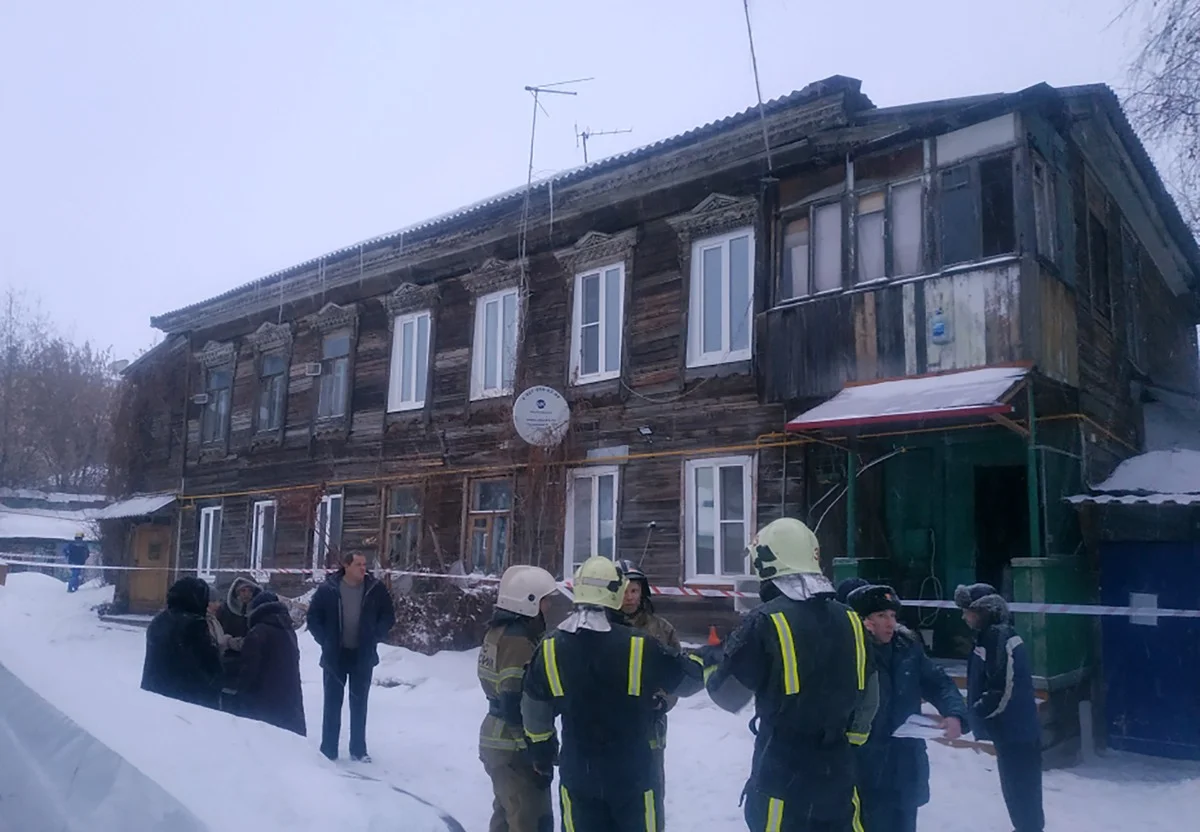
«Происходят действительно странные вещи. Например, попытки заполучить имущество граждан. Пока власти «обкатывают» схему деприватизации квартир должников, в Самаре активно пытаются «деприватизировать» имущество граждан путем признания домов ветхими, аварийными и непригодными для проживания. Имеется оценщик — ООО «АБ Вира», с которым у мэрии договор на проведение технической экспертизы. Численность конторы по данным за 2022 год — 1 человек. Но это не мешает ей делать около 800 экспертиз ежегодно. Все дома, по которым они проводились, имеют (как выяснилось) износ более 70%. А это позволяет признать помещение ветхим, ремонтировать которое нецелесообразно.
И вот таким образом аварийными признают целые кварталы. После чего кадастровая стоимость домов становится ниже в разы, люди получают копеечные выплаты. А затем в освободившийся «квадрат» входит застройщик, сносит все и начинает строительство высоток».
По мнению Асеева, при добровольной деприватизации процент желающих вернуть квартиру муниципалитету будет нулевым, это очевидно. И есть тому простое объяснение. Из приватизированной квартиры, если это единственное жилье должника, выселить не могут. На практике такая санкция в отношении собственников просто не работает. Суд, как правило, назначает выплату долга. Что же до муниципальных квартир, то здесь процедура аналогичная — через суд.
Но гораздо важнее другое — причины. Человека могут выселить не только за долги, но и в том случае, если объект недвижимости признан непригодным для жилья — аварийным. Или если дом переводится в нежилой фонд (собственно, поэтому и появляются аффилированные с городской властью оценщики).
И если суд найдет основания для выдворения, бывшему нанимателю выделят крайне скромное жилье где-нибудь на окраине в маневренном фонде — это в лучшем случае. В худшем — не получит и такого.
«И вот вы бомж»
В столице принят закон «О передаче в собственность города Москвы приватизированных жилых помещений», в котором прописана вся процедура. Она требует соблюдения двух условий: согласия на собственно передачу и заключения договора социального найма. На mos.ru в качестве аргумента в пользу деприватизации приведено следующее объяснение:
«Собственники жилья должны платить налог на имущество, оплачивать капитальный ремонт, страховые взносы. Они несут бремя содержания принадлежащих им помещений и обязаны поддерживать их в надлежащем состоянии. Поэтому для граждан с небольшим доходом может быть выгодно не владеть жилым помещением, а являться его нанимателем и проживать в нем на условиях договора социального найма».
Таким образом, механизм добровольной деприватизации законодательно закреплен.
Сергей Креков:
«Широков как бывший депутат Мосгордумы не может этого не знать. Следовательно, речь идет о принудительной деприватизации из-за просроченных долгов или просто за неоплату ЖКУ. На этом основании граждан из категории собственников будут переводить в арендаторы социального жилья. Делается это только с одной целью — иметь право выселить из него. Такое право в настоящее время возникает в случае, если задолженность жильцов, проживающих в квартире на условиях соцнайма, превышает шесть месяцев.
Скорее всего, аналогичное правило Широков предлагает распространить на деприватизацию квартир, и это будет одним из оснований для возвращения квартиры в собственность государства. Плати или не владей! Сначала вы собственник квартиры, потом — ее арендатор, а в конце вам предложат переехать в такие условия, из которых вы сбежите. И вот вы бомж».
Число коммунальных должников, по которым имеются исполнительные производства о взыскании, составляет почти 8 миллионов человек (данные Федеральной службы судебных приставов на ноябрь 2023 года). Эксперты связывают эти кромешные цифры с падением реальных доходов граждан. В таких условиях тарифы на ЖКУ не поднимать бы вовсе. But these are dreams.
Один из депутатов Госдумы назвал происходящее « политикой тарифного террора населения», которая ведет к стремительному увеличению его долгов. В какой-то момент (2021–2022 годы) тарифы на услуги ЖКХ и долги населения по их оплате росли одинаково.
Сергей Креков:
«Очевидно, что повышение тарифов ведет к росту задолженности опережающими темпами! Деприватизация, по мнению наших мыслителей, способна избавить рынок от неплатежеспособных клиентов, а бизнес сделать экономически эффективным. И он тут же начнет инвестировать миллиарды и триллионы рублей в отрасль, сети перестанут рваться, вода в трубе станет чистой, а управляющие компании начнут качественно обслуживать наши дома».