Date
Author
Настя Гордиюк, Денис Левен
Source

Preserved copy
Translated material
The pacification of Orban
The EU convinced Hungary not to block a new package of assistance to Ukraine. We figure out what Brussels had to go for and what instruments of pressure he still has
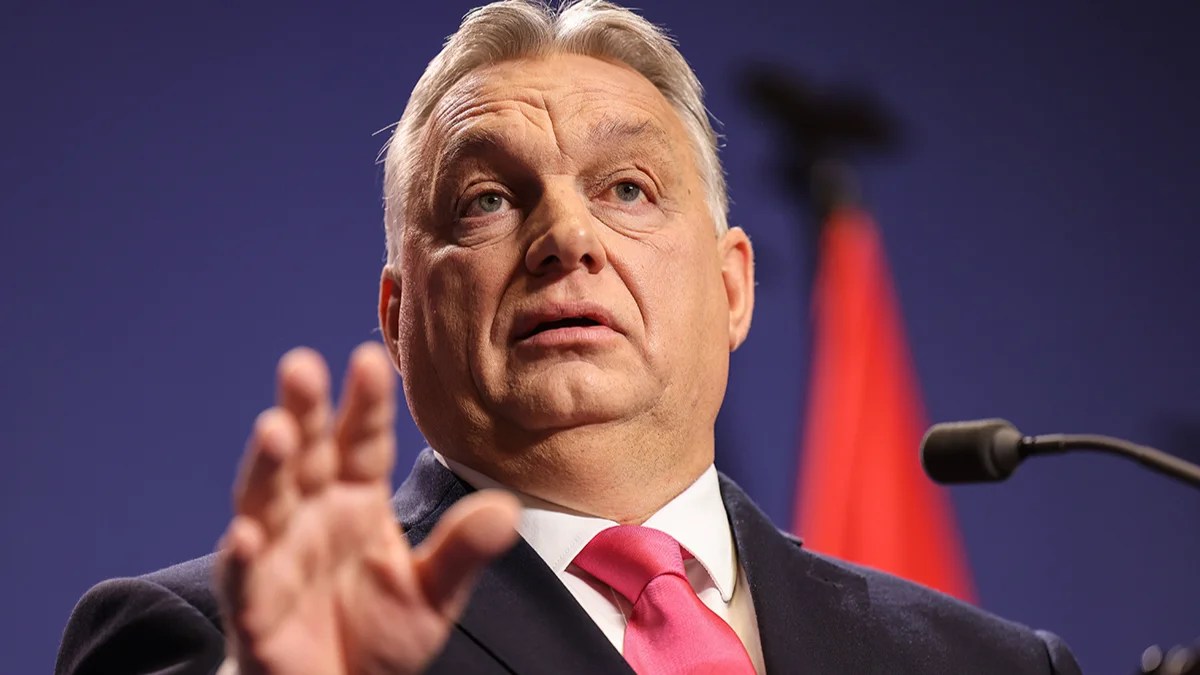
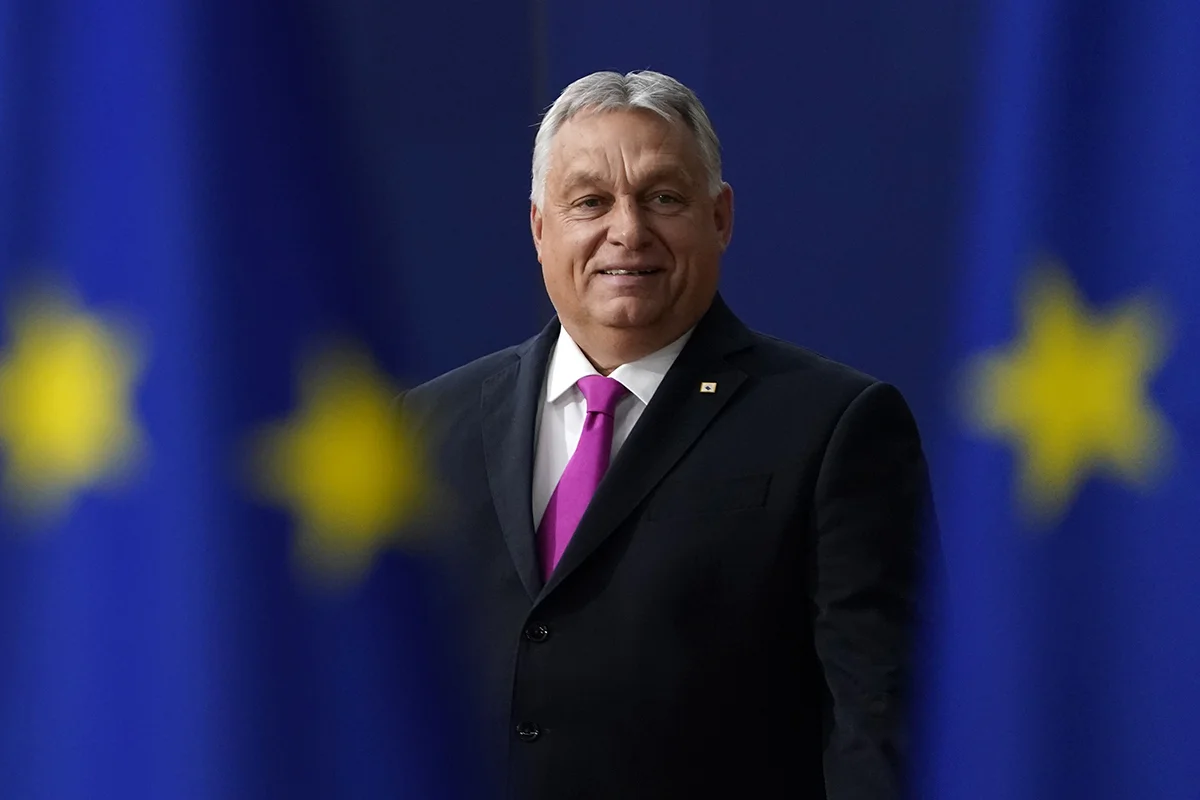
Viktor Orban, during the annual press conference in Budapest, December 21, 2023. Photographer: Akos Stiller / Bloomberg / Getty Images
In early February, the EU was able to reach an agreement on the provision of a new, large package of assistance to Ukraine in 2023–2027. The decision was also supported by Hungarian Prime Minister Viktor Orban, who previously imposed a veto in December in December.
Orban managed to squeeze the combination of the next symbolic concessions to Budapest and the personal efforts of the Italian Prime Minister George Melony. This tactical victory of Brussels nevertheless does not remove the “Hungarian” problem for the EU. Orban continues to sabotage the implementation of important solutions for the European Union and the entire West. For example, tightening the adoption of Sweden in NATO again. What the whole “European arsenal” looks like on Budapest’s pressure tools and why it is possible to finally get rid of Hungary’s blackmail only by carrying out a large reform of the entire EU, in the material of “New-Europe”.
On February 1, at a special EU summit, the leaders of the members of the association finally agreed to provide Ukraine with financial assistance with a volume of 50 billion euros until 2027. “This provides stable, long -term and predictable financing of Ukraine. The EU takes care of leadership and responsibility in the support of Ukraine; We know what is put on the map, ” said the leader of the European Council Charles Michelle.
However, whether this decision will be unanimously made by all 27 leaders, as the rule required, it was not clear until the last moment. Moreover, the first attempt at the EU summit in December 2023 failed when the Prime Minister of Hungary Viktor Orban blocked the initiative.
Being an authoritarian leader and long -standing ally of the Kremlin, Orban regularly sabotes the decision -making process in the EU - especially when the issue concerns Ukraine. So, in December 2023, with great difficulty, it was possible to come to a consensus regarding the start of negotiations with Ukraine on the entry into the EU. The monetary assignment helped-the European Commission unlocked access to 10 billion euros for the Hungarian economy, as well as the trick-26 leaders of the member countries made the decision when Orban “went beyond coffee”.
In February, in Brussels they decided to use another tactic. The personal ties of some European leaders with the Hungarian prime minister and symbolic concessions were used.
On the morning of February 1, an informal meeting was held directly before the start of the summit, in which the Prime Minister of Italy George Melony, French President Emmanuel Macron, German Chancellor Olaf Sholz, Chairman of the European Commission Ursula von Lyayen, Chairman of the European Council, Charles Michelle and Viktor Orban, took part. It was during this preceding the main event of the meeting that an agreement was reached.
In addition, some symbolic concessions were made to Orban. So, the EU pledged to conduct annual discussions of the effectiveness of the expenditure of funds by Ukraine, and if necessary, two years later, to revise the aid package. Orban himself was reported that the package could be reviewed annually and that the decision was made unanimously, which means for him the opportunity to block it. But the EU did not agree with this. Finally, Orban said that he received guarantees that “Hungarian funds” would not be sent to Ukraine.
At the same time, it cannot be said that everything went smoothly: European leaders are clearly in search of approaches to solving the “Hungarian” problem. Estonia Prime Minister Kai Callas shared her doubts before the summit: “We hold this extraordinary meeting because of Hungary, and, of course, our disappointment is growing. Why are we doing this at all? .. And what tools can we use? "
In fact, there are many tools in the hands of European leaders: these are financial pressure, political concessions, and informal ties, and even the deprivation of Hungary of the rights of vote in the European Council. The problem of each of these approaches is that it does not work as a strategic solution. At the same time, the approval of assistance to Ukraine and similar decisions will require voting more than once. And in general, the EU cannot every time look for a new approach to Orban or any other leader who will block this or that initiative for his own reasons. In fact, the only long -term solution can only be the reform of the entire EU, but it will not work quickly.
Melony factor
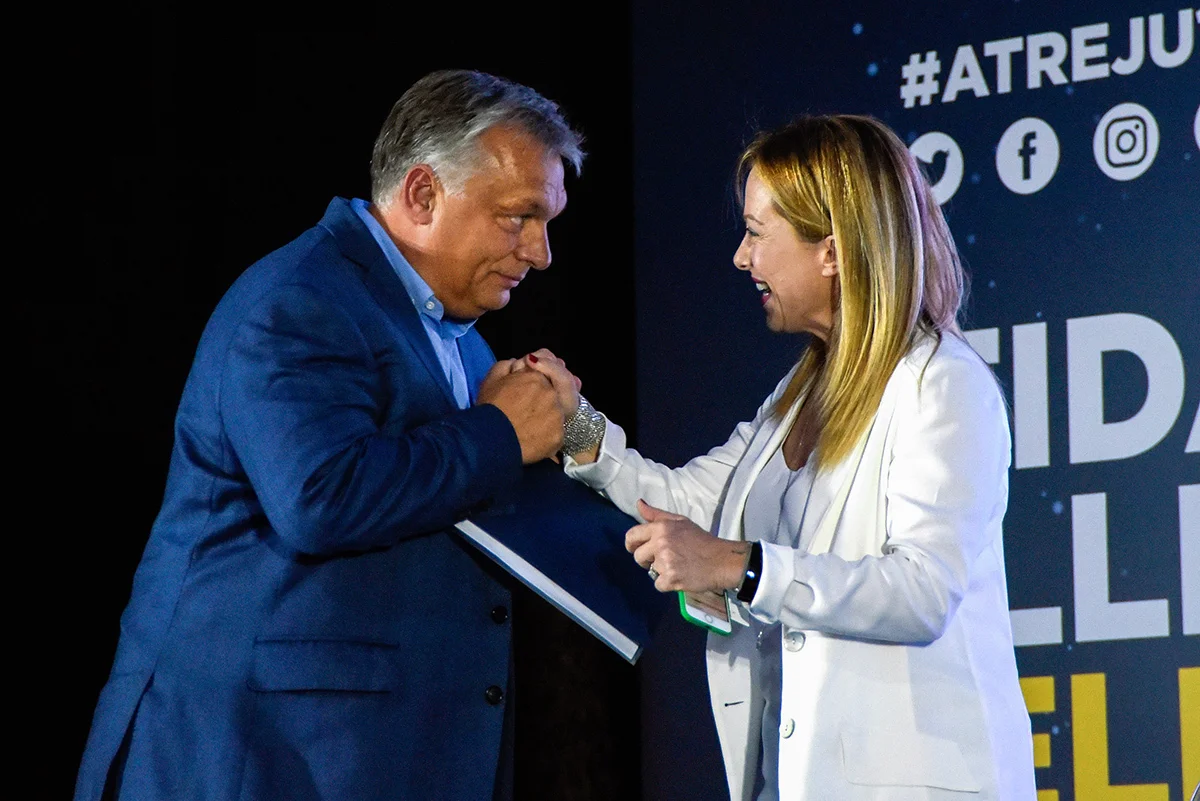
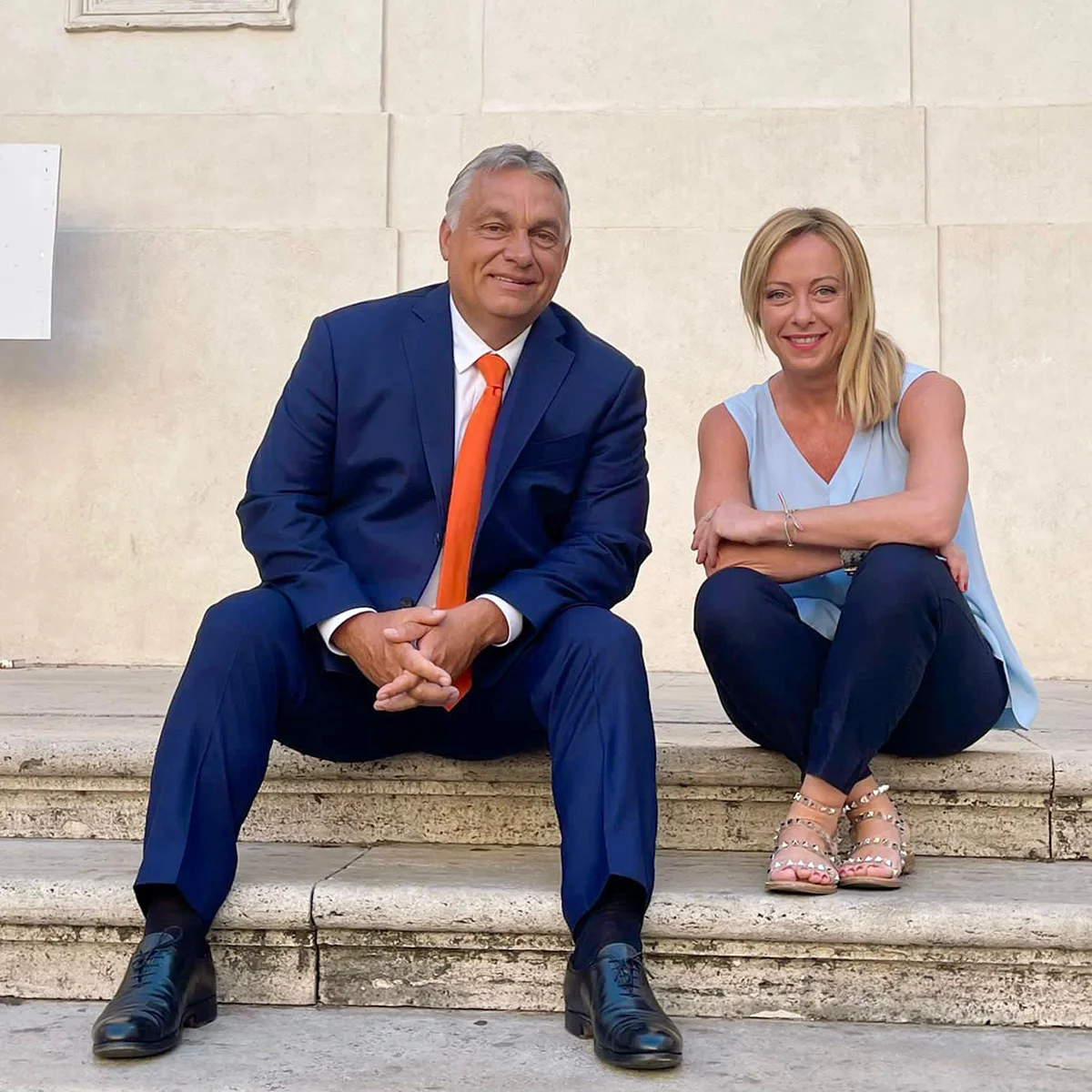
Attempts to influence Orban with the help of friendly politicians were made earlier. First of all, this applies to the Italian Prime Minister George Melony. Friendship between the two leaders has been continuing for a long time and is based primarily on ideological intimacy - both lead the right -wing conservative parties. At the same time, unlike the Hungarian colleague, Meloni does not distance herself from other European politicians, which allows her not to act as a mediator in the relationship of Budapest and Brussels for the first time.
“I think that you can bring much more benefit when there is an opportunity to talk to everyone. It is necessary to act as an intermediary, combine positions, have the ability to dialog. This allowed Italy to play a leading role from the point of view of the results achieved, ”Meloni said at the end of the EU summit on December 15, 2023.
Before that, Meloni held an informal meeting with Macron and Sholets. According to the Italian media, the leaders discussed the help of Ukraine. And although according to the results of the summit, the EU participants could not agree on the inclusion of 54 billion euros in the EU budget plan, the beginning of negotiations with Ukraine on joining the EU was approved - one of the nine stages of joining the Union.
As Libero later wrote with reference to the sources, it was Melony who convinced Orban not to impose a veto on Ukraine’s joining the European Union. And that became the famous “exit for the coffee” of the Hungarian politician from the hall during the vote - this is a strategy that was in advance with Rome.
This case is not the only one when Meloni acted as an intermediary between Hungary and the rest of the EU. In June 2023, she convinced Orban and the then Prime Minister of Poland Mateusz Moravetsky of the need to accept the migration pact - a large -scale reform of the entire EU migration system. And before that Meloni was informally met with Sholts and Macron, with whom she probably discussed her possible mediation. But then in Budapest and Warsaw they did not change their opinion.
About the same scheme, interaction was built this time. Sources of Politico in Meloni’s office report that she began “diplomatic work” according to Orban’s conviction several months ago, even before the summit in December 2023. Before the summit on February 1, Meloni also held several telephone conversations with Orban, after which two more personal meetings took place - the night before and morning before the general event.
The benefits of the negotiator
The reasons why George Melony took on such a role may be several.
First of all, it is beneficial for her to have the status of a mediator in relations of different EU participants. In the European arena, this increases its significance as a European leader - and as a point of access to Orban. On the domestic political - strengthens the image of a strong politician. It was in this logic that Meloni’s office informed the Italian media that she was a “leading player” in the process of resolving the contradictions between the EU and Budapest on the issue of providing assistance to Ukraine.
In addition, such a policy is important for Meloni in the aggravated domestic political competition with another Italian ultra -right politician - Matteo Salvini. The fact is that in one package with the help of Ukraine, an additional 9.6 billion euros were allocated in the European budget to combat illegal migration. This topic is especially important for Italy as the countries of the first arrival of many migrants and refugees from Africa and from the Middle East, and for the Right Government of Melony.
So the skillful diplomacy of Melony in the EU also works to strengthen its domestic political positions.
Finally, it is important for Meloni to maintain a political alliance with Viktor Orban. Among other things, she heads the extreme right -handed European Party “European Conservatives and Reformers” (ECR), which has a considerable representation in the European Parliament. Between Meloni and Orban there is an agreement that his Party Party will join the ECR after the upcoming elections to the European Parliament in June 2024. 21 deputies will be elected from Hungary. Now Fates has 12 seats in the European Parliament, the ECR group has 67. So the accession of Hungarian Euro deputies to the melony party will significantly strengthen its position at the pan -European level.
Macron will call
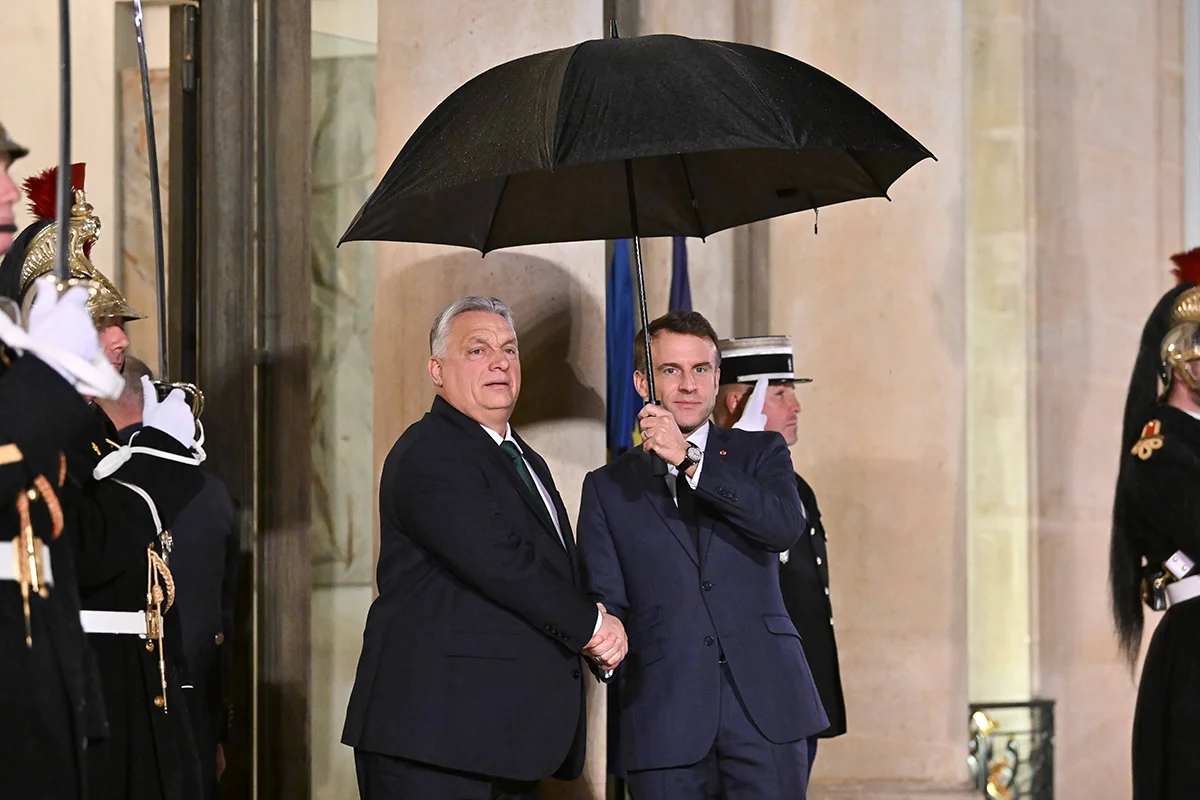
In addition to the Italians, the French Centri government also undertook to work with the Hungarian side at the personal level. In early December 2023, French President Emmanuel Macron invited Viktor Orban to an official dinner at the Eliseis Palace, where he was probably discussed by the beginning of negotiations with Ukraine on the entry into the EU.
On the night of January 31, on the eve of the summit, Macron also met with Orban. “[Macron] never wanted to configure Orban against himself, rather sought to“ take it on board ”. It is this approach that has its fruits today, ” reports Politico sources in the office of the President of France.
Money pressure
Probably, it was thanks to this diplomatic “artillery” - by the forces of Meloni and Macron - the decision on February 1 was quickly made, and Charles Michelle announced the achieved consensus on the issue of providing assistance to Ukraine at the very beginning of the summit
The complexity of this approach to working with “problematic” leaders of the EU countries, however, is that it is very situational. A much more stable and institutionalized method of influence on Viktor Orban are freezing and defrosting of funds due to Budapest from the European Union.
Due to problems with the rule of law in Hungary, the EU froze 32 billion euros due to Budapest from the total budgets. About two -thirds of this amount are ordinary funds distributed between the EU members. Another third - subsidies and cheap loans from the European Fund for Restoring Economics after the Pandemia of Coronavirus.
On the eve of the EU summit on December 15, the European Commission decided to defrost 10 billion euros. Formally, this was done in recognition of Hungarian merits to improve the situation in the country after judicial reform. Adopted in the summer of 2023, she expanded the powers of the judicial authorities, in particular the National Judicial Council, which now got the opportunity to leave reviews for bills. Apparently, this step of the European Commission has become an additional incentive for the Orban allow the EU to make a positive decision on the beginning of negotiations on Ukraine’s entry into the EU.
This approach to Hungary, apparently, enjoys certain support. So, on the eve of the summit, the sources of Financial Times in the European bureaucracy reported the presence of a plan to undermine the Hungarian economy in case of the refusal of Orban to approve assistance to Ukraine.
Although it was originally assumed that this tool would contribute to the return of Budapest from the authoritarian path to the democratic one, as a result, it turned more into a method of granting.
In this regard, the European Parliament opposed such a policy of “blackmail” and in January 2024 a majority of 345 votes adopted the corresponding resolution. In it, deputies decided that the European Union should not "trade the strategic interests of the EU and its allies, abandoning its values." In this case, “allies” in this case was clearly meant Ukraine.
According to deputies, in Hungary there was neither approximation to democracy, nor noticeable improvements in the field of the rule of law. Despite this, 10 billion euros were thawed, in connection with which the parliament initiated a proceedings on the legality of the allocation of money to Budapest. As part of this case, the first debate took place on January 24 - the parliament listened to the answers of the three European Commissioners.
Finally, the approach itself is doubtful from an ethical point of view. It is not entirely clear why citizens of Hungary should be responsible for the actions of Orban, who ultimately due to payments from the European budget.
Symbolic concessions
A softer option remains a search for possible compromise symbolic concessions to Orban, which do not worsen the state of affairs in the EU, but at the same time allow Orban to submit these measures to their electorate as the victories of the Hungarian perseverance.
As Novyevropa already wrote , such concessions include, for example, changes in the legislation on national minorities in Ukraine in favor of the Hungarian diaspora or the exclusion of the Hungarian OTP Bank from the Ukrainian list of sponsors of war. In exchange for the latter, Budapest agreed to support the next package of sanctions against Russia.
The same approach was used at the current summit. Hungary demanded the possibility of annual revision of assistance to Ukraine in order to reserve the right to block the decision. The remaining EU leaders did not allow such a concession, but agreed to the annual discussion of the package of assistance to Ukraine at the level of heads of state without the possibility of vesting all support. Nevertheless, this allowed Orban to declare that he achieved the establishment of a “control mechanism” for the funds sent to Ukraine.
So, on the one hand, such a search for compromise solutions and concessions can be considered as part of the democratic process, on the other hand, this is still concessions to the authoritarian leader to achieve his own goals.
Whip without a gingerbread
There is a much more radical way - to deprive Hungary of the right to vote when making important decisions. Formally, this is possible in accordance with the seventh article of the Treaty on the European Union - the main document of the association.
This article contains two options for measures against the country, which supposedly violates the values of the EU: soft and hard. According to the mild version, the European Commission, the European Parliament or a third of the countries of the association may submit an application for an “obvious risk of violation of the EU values”. This statement must be approved by two thirds of votes in the European Parliament. After that, the accused country appears to the EU Council, and he votes whether there is a risk. The decision should be made 80% of the vote, that is, 21 votes out of 26, and in this case the EU advice will further “check regularly” whether this risk is preserved.
In a more stringent version, a statement of “serious and prolonged” violation of the EU values can only be submitted by the European Commission or a third of the member countries. Further, the European Parliament must approve it according to the same procedure, and the accused country may make explanations. After that, the European Council - the body, is politically more significant than the EU Council - votes whether the violation occurs, and the decision should be made unanimously (excluding the accused country). If the violation is recognized, the EU Council can be qualified by a majority (55% of the EU countries, which represent at least 65% of the EU) to announce the deprivation of rights of rights, including voting right.
According to Politico sources, in the current situation in the circles of European bureaucrats, a tough version is no longer considered incredible. Nevertheless, despite the theoretical execution, this approach is also very problematic.
Firstly, it only exacerbates the conflict with Hungary and will push its population away from the EU, not to mention politicians and Orban itself. Secondly, this is also not quite a strategic and long-term decision. Governments in different countries may change, new "orbans" or simply disagreed with Brussels policy may appear.
The deprivation of the right of voting each of the disagreements would indicate more about the EU crisis than his ability to solve serious problems.
Reform is more necessary
A truly long-term solution to the problem would be the reform of the entire EU that would eliminate the possibility of one country to block the decision-making process. Moreover, as the Novyevropa wrote , the project of such a reform exists-it was developed in the European Parliament and has already been voting in it. The project strengthens the European Parliament, reduces the possibilities of using veto law and turns the EU into something similar to a federal state.
Nevertheless, the process of accepting the reform is very long and complex - it will require amendments to the fundamental agreements of the EU, and therefore it can be said with confidence that it will take at least several years to solve this problem.
За это время, очевидно, вопрос поддержки Украины встанет еще не раз. Как минимум придется одобрять новые пакеты помощи Киеву, утверждать новые санкции против России, а также согласовывать оставшиеся этапы вступления Украины в ЕС. И каждое из этих решений будет приниматься с участием Виктора Орбана.
Возможно, понимание этого факта заставит другие страны — члены ЕС проводить масштабную реформу Евросоюза более быстрыми темпами, чем сейчас ожидается.