
Translated material
The wireplane
Russia really produced many goods in 2023. But where did they find themselves?
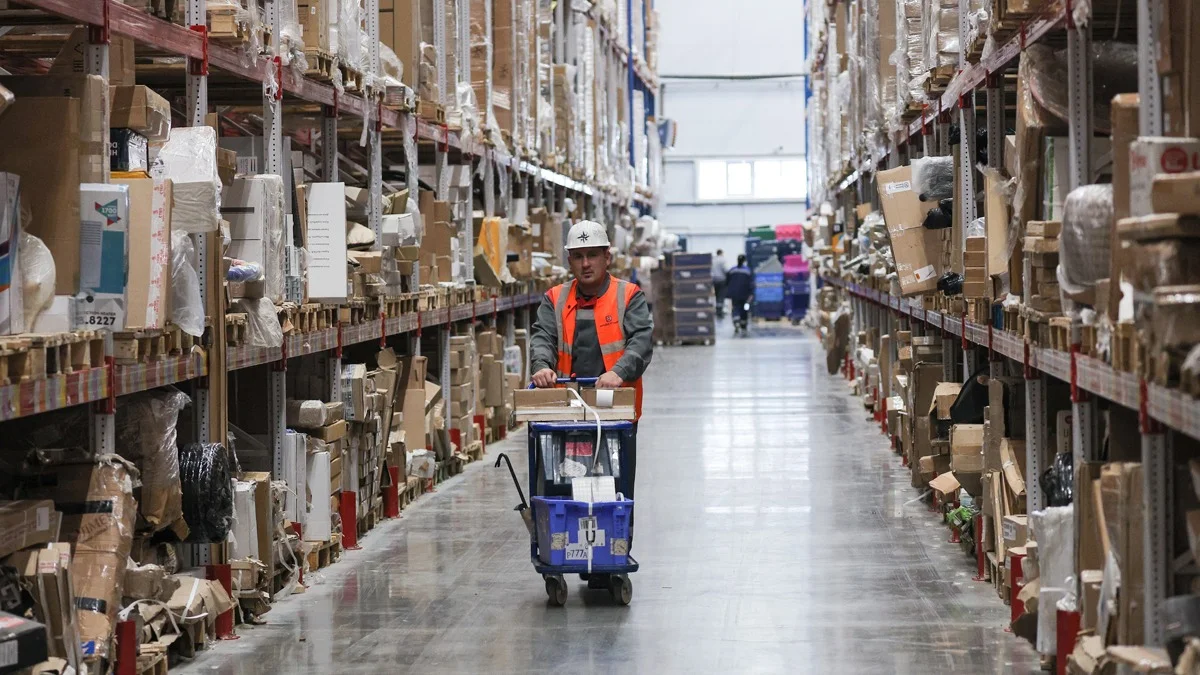
Photo: Egor Aleev / TASS
Rosstat is authorized to declare
According to the first assessment of Rosstat (it will be reviewed), the growth of gross domestic product (GDP) in 2023 amounted to 3.6% - this is the highest result over the past decade (with the exception of post -carantine recovery growth in 2021). Thus, the growth of GDP by one tenth percent even exceeded unofficial estimates, about which the Ministry of Equal reported to the country's leadership.
It turns out that we see the frontal growth in the production of goods?
Stop. Let's see what has grown up first. Let us pay tribute to Rosstat - they presented the data as detailed as possible. And thanks to such the scrupulousness of the statistical department, we can draw conclusions about the content of the process that the authorities call economic growth.
There are many numbers, because we will highlight this fragment in the certificate.
Help "New"
What has grown
The nominal volume of GDP in 2023 amounted to 171,041.0 billion rubles.
The index of its physical volume relative to 2022 is 103.6%.
The increase in GDP (+3.6%) was most impacted by the growth of the physical amount of value added in the following industries:
Production production - +7.0%(this is due to the growth in the production: computers, electronic and optical products by 32.8%, finished metal products by 27.8%, other vehicles and equipment by 25.5%and food products by 5.9%);
Construction - +7.0% (growth in the volume of construction work is associated with the implementation of large investment projects);
wholesale and retail trade - 7.3% (associated with an increase in demand for consumer goods, machines and equipment);
Transportation and storage - 3.2%;
Hotels and restaurants - 10.0%.
The growth of the physical volume of GDP has developed due to an increase in domestic demand (+9.1%) with a reduction in pure export.
Consumption expenses in general increased by 5.4% - mainly due to the costs of households (+6.1%), the expenses of the public administration sector increased by 3.6%, non -profit organizations serving households - by 1.8%.
The proportion of pure exports decreased from 12.6 to 4.3%.
The share of wages in the structure of GDP increased from 38.5 to 40.7%, the share of net taxes for production and import increased from 7.7 to 7.9%, the share of gross profit decreased from 53.8 to 51.4%.
Due to what GDP in 2023 increased by 3.6% against the fall by 1.2% in 2022?
The total growth of +3.6% is laid out on:
+2.3 (percentage point) P.P. - wholesale and retail trade;
+1,2 pp. - growth of pure indirect taxes (they always give a significant contribution after recessions);
+1,2 pp. - Processing.
Well, on the little things ...
If you run through a superficial gaze on all these percentages, then a rather blessed picture will be formed, which the TV tells us about.
However, Rosstat invites us to look at the GDP from a different angle: from the point of view of the structure of the use of goods produced.
And here the most interesting begins ...
Excumenic behavior
The gross accumulation increased by 19.8% to a greater extent due to the growth of stocks of material working capital. This category also includes the accumulation of fixed capital (investment in a general sense).
The change in stocks due to their number and/or cost is included in the calculation of GDP. Typically, reserves of raw materials/materials for future production, stocks of finished but also unrealized products, reserves of goods for resale, strategic reserves of raw materials (food or energy) and goods in incomplete production are taken into account.
And from the point of view of the “use of GDP” it turns out that 3.6% of GDP growth consists of:
4.4 pp. increase in gross accumulation;
2.9 pp. growing household consumption;
0.6 p.p. The increase in state consumption and reduction by 4.4 percentage points pure export.
That is, half the deposit of accumulation to the growth of GDP ensured the growth of reserves. Why do production behave like chipmunks?
And because economic dynamics have changed: companies can wait for demand growth and increase reserves of raw materials/materials in order to produce more in the future. On the one hand, this is good, but it may also be that since the products of companies are not used and its stocks are growing, in the future, companies will have to reduce the release. But this is bad. Well, there is another possible explanation of this behavior: in the context of the growth of uncertainty and restrictions of the company, they try to stock up on various components for the future.
We work for a warehouse
In other words, "the economy worked for the warehouse." Yes, production grew, but (for some reason) this growth in production did not reflect in sales. If the main contribution to the production of GDP in 2023 was made among the industries by trade (2.3 percentage points) with the deposit of processing sectors only in 1.2 percentage points, this means that the "industry" does not make what they buy.
At the same time, as the Center for Macroeconomic Analysis and Short -term forecasting (TsMAKP) noted in its review , “Stagnation has been observed in industry for about six months. The volume of release (with the elimination of the seasonal factor), accurate to small fluctuations, remains at the same level since May 2023. ”
So it is clear why, in its review, the “regional economy” of the Central Bank of the Russian Federation notes that, despite the reduction in consumer activity and slowing down monthly inflation, prices continue to grow increased pace. Production works, salaries are paid to people (an increase in employment and shortage of personnel increased the share of wages in the incomes of the population from 57.5% in 2022 to 59% in 2023), but those goods that industry are released do not go to the consumer market. Why?
Either because they have nothing to do with consumption (what produces a military -industrial complex, for example), or settled in warehouses.
In numbers (with a rough assessment) it looks like this. Of the 3.6% “GDP growth” - “accumulation” amounted to 2.4 percentage points. If you subtract 2.4% out of 3.6% of “growth”, it turns out 1.2 percentage points. - Just so much the economy of the Russian Federation decreased at the end of 2022.
Minus 1.2% growth plus 1.2% growth - give in total zero. That is, two years later we returned to where we started 2022.
But what about the growth of salaries and consumption in individual social groups, what about the “growth of industry” and agriculture, how is “import substitution” - are the data about this that Rosstat published and published is unreliable?
Reliable. But the fact is that the bosses made a fetish from GDP growth, and when some indicator becomes a goal instead of proportion, he ceases to reflect reality. This law was formulated by economist Charles Gudhart back in 1975. And about the error of “fetishization” of GDP, the great researcher of the reasons for economic growth, Nobel laureate Robert Solou said well:
“... Most people think that GDP is designed to measure economic well -being. However, he is not for this. It is conceived as a measure of economic activity. And not as an indicator indicating whether this economic activity is aimed at the right goals ... "
Economic activity in certain sectors paid by the government - yes, it is.
The growth of the well -being of people - well, here at least you can argue.
But the long -term growth of the economy, understood as a steady growth of the well -being of society, we do not see. In any case, from official statistics.