
Translated material
Feminist Orwell
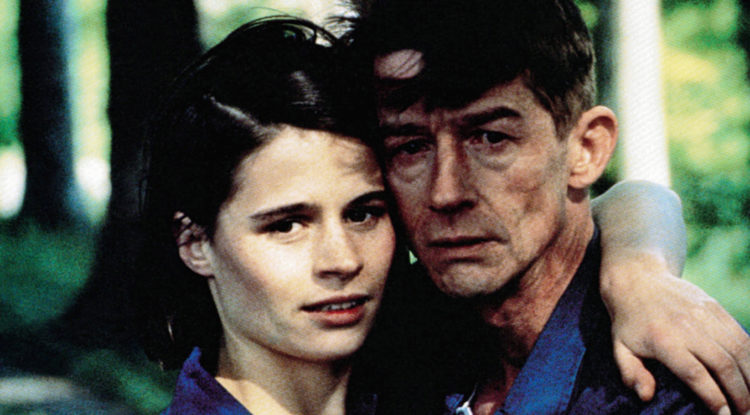
The novel "1984" was rewritten on behalf of the lover of the protagonist. What came of it?
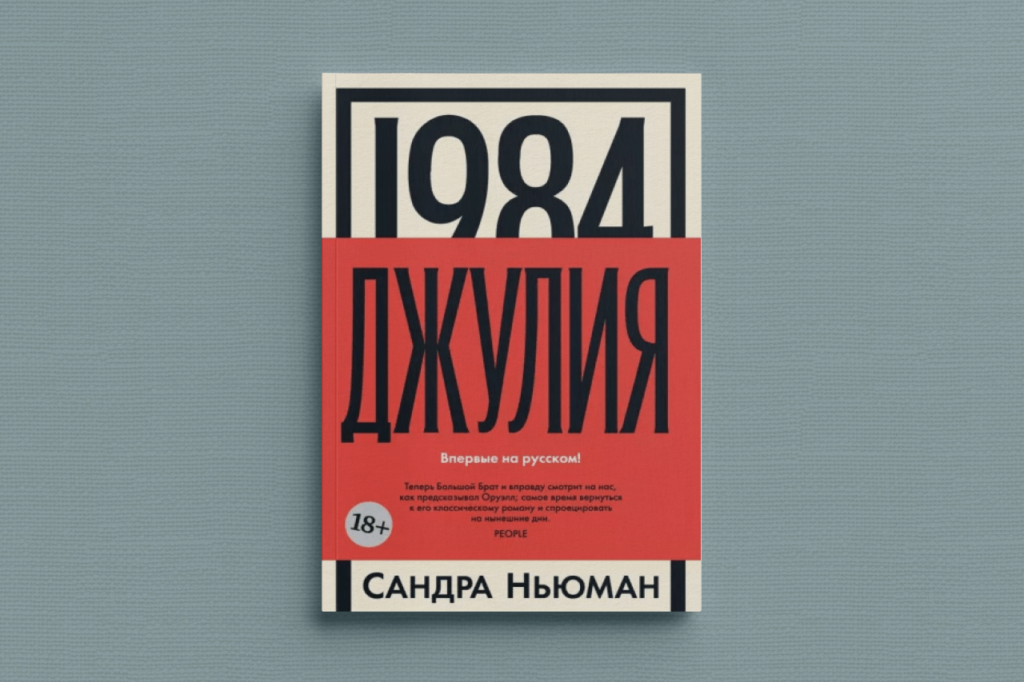
A month after the official release in Russia, they published and even voiced Sandra Newman's novel Julia. This international bestseller is a female view of the novel “1984” by George Orwell. That is, literally the same story, but not on behalf of an employee of the Ministry of Pravda Winston Smith, but his lover, a participant in the youth antipolis Union, a 26-year-old rebel Julia. The Orwell Foundation ordered this book by Newman on the 120th birthday of the writer. Julia Galkina, at the request of Kholoda, tells what the feminist version of 1984 turned out.
In order not to miss the main materials of the "cold", subscribe to our Instagram and telegram .
George Orwell partially wrote off “1984” from the novel “We” Evgeny Zamyatin. The American writer Sandra Nayman made the 1984 crossover with the “Handle’s story” Margaret Etwood, rewriting the anti -utopia on behalf of the female character - Julia. Actually, the new book from the Orwell universe is called “Julia”.
Necessary warning: I am not a literary critic. Further text is the subjective opinion of the reader. It will have many spoilers and even more feminity.
I learned about Julia from the selection of the best Fikshn-book 2023 at The Guardian. The reviewer wrote that the writer “is more immersed in the structures and consequences of totalitarianism” drawn in 1984.
Having started Julia, I immediately remembered the recent novel My Dark Vanessa, another American writer Kate Russell. In it, Nabokovskaya Lolita gains subjectivity, voice and tells its part of history. However, formally and meaningfully, Vanessa is an independent work. Heroes, our contemporaries, at some point only placed in circumstances reminiscent of “Lolita”.
Julia, unlike Vanessa, was not invented by the author herself. This is the woman with whom Winston Smith met, the protagonist of 1984. The one with which he fell into the torture rooms of the Ministry of Love (Mini -Libe). Newman gave her volume and recorded her story: from an early youth (the action takes place in the same 1984, but there are a lot of flashbacks in the novel) before the events after leaving the dungeons of the mini-Libe. This is when Winston Smith loved the elder (or, in another translation, Big) brother. And Julia fell out of love with Winston Smith.
From Roman Newman, we find out that she never loved him. Like other, very numerous men in their lives. Lost, but did not feel love-as well as hatred, which at some point became problematic for her.
In general, at first, approximately before Julia got into mini -lover, the book enraged me very much. It seemed to me that the author presented readers with erotic fantasies on the topic of mature totalitarianism. Such a fanfic about Stalin in the 1930s. Or, rather, a scenario application for Netflix: unlike the 1984, Julia is saturated with action, spectacular. I literally saw how it would be filmed. All movie Anglicisms: action, sappress, setting, the aforementioned flashback - on the spot.
And a lot of scenes "Zlothyeks". Of all, Newman, it seems, fell in love with this very word. If the Orwell London - suffocating, discolored - scared the intentional emasculation of the human, then in the "Julia" of this human, more precisely, carnal, with excess. And such London does not scare very much. Well, or does not really scare readers. I would like to look at the man’s face at the moment when he reads about the embryo found in the toilet (one of Julia’s neighbors had a miscarriage).
Okay, it was still not this. And the obsessive feeling that the author is sewn with white threads of allusia on the Soviet and North Korean (maybe some other) totalitarian dictatorship-a woman, probably unpleasant. She seemed to me such a conservative privileged feminist who easily votes for some kind of complaint candidate for president.
Later, after reading about Sandra Newman on Wikipedia , I realized: there may be something in this feeling. The penultimate novel of the writer, The Men (“Men”), was accused of transeexcliance. According to the plot, the extremely biologize-all people with the Y-chromosome disappear from the Earth-transzhenya seemed to be not women at all. Normal such a terif-camp ( TERF is a transexculsive radical feminist.-Approx. "Cold" ). In fairness, I did not read the “men” - perhaps they are beautiful and inclusive.
Returning to Julia: male characters in this novel are not only secondary - they are just support for the plot. Quite straightforwardly arranged, worthy of only regrets. Interestingly, among them Diana was flooded - the former mistress of the older brother, who was upstairs of the party hierarchy. This is such a maliciously noticed path from Srash on the topic of feminism. Type: "Men began the war!" - "Not true, look, there is one woman among them!"
Moreover, non -metabolic estimates relate not only to the population of Oceania, but also by the “free British” regime. They triumphantly appear at the end of the novel. More charming compared to the rotten, broken mechanisms of the repressive state, starting a new regime with executions and corrupt bureaucracy “Free British” in the potential are no less terrible than the party. “The Reds came and stained the sunset, / The whites came and climbed like snow,” the group “Nautilus Pompilius sang”. “Revolution, you taught us to believe in the injustice of good,” - how the DDT group sang.
In my opinion, such a plot turned the “Julia” qualitatively. Although the reader, who is familiar with the Schwartsevsky Dragon, is not that a strong shock from the final happened.
And in my eyes the book did not save this, but the only scene almost at the end. There, Julia sees his older brother - a miserable, crazy, defeated old man. Not at all terrible, rather vile and comical. And she does not feel hatred for him. Vice versa:
“No, she needed to see him beautiful, wise and powerful, as always. <...> Let him give the point of everything that happened, explain the murders justified and why all the victims are not in vain. ”
Perhaps my optics gathered in a raid, but I saw a hint of Putin here. Although, probably, this is a hint of any aged dictator .
It is curious, by the way, that the reviewer The Guardian Natasha Walter, on the contrary, liked the first half of Julia, and the second, with “free British” and this, as it were, Putin, is not very good. I think it’s hard to understand what it is about, not facing this empirically (and encountered only in books) - with ugly manifestations of moral choice, before which the state puts you.
I don’t know where the writer herself, who was unlikely to have ever lived with totalitarianism or studying the memoirs of the prisoners of the Gulag, undertook such a powerful, unexpected emotion when she painted the scene in the “crystal palace” (the residence of the older brother). I am almost sure that Newman did not come up with her head and somewhere there is an unfamiliar primary source. Because other bright finds in the novel caused deja vu, and not only because of the Celebrators agreed with the copyright holders and conscious borrowings from Orwell, but also because of less obvious, or inaccurate, or simply an example of allusions to me. For example, the topic of pregnancy is supposedly from the older brother, the motive with reproductive violence, the alienation of children - most likely from the "story of the maid".
In general, the whole life of Julia in London is a state of “immovability” in the sense in which it is described in the book of Alexei Yurchak “It was forever until it ended” (Bakhtin came up with the term). The heroine performs ritual, laid down according to her status, but manages to live in her own world. The state, however, makes his way into this world through simple manipulations.
Okay, the party of the older brother is terrible; “Free British” is also so -so. Where is the exit? Of course, in lesbian separatism (hello, apparently, to Roman The Men). Julia does not like Winston Smith, she loves Vicki - her young neighbor in the hostel. And Vicki loves Julia. In the description of Sandra Newman, a real family, at least for Julia - without narcissism, detachment and dominance, without pure utilitarianism - does not consist of a party, not of revolutionaries and not even of men. It consists of (cisgender) women. In this, by the way, the key difference between Julia and 1984: Orwell - about the unconditional victory of the public over personal; Newman wins his own, intimate, selfish.
The author’s opinion may not coincide with the opinion of the editorial office.