
Translated material
NATO candidate
In the presidential election in Finland, Alexander Stubb is preparing to win. He promises to place nuclear weapons in the country and deprive Finnish citizenship of the owners of Russian passports
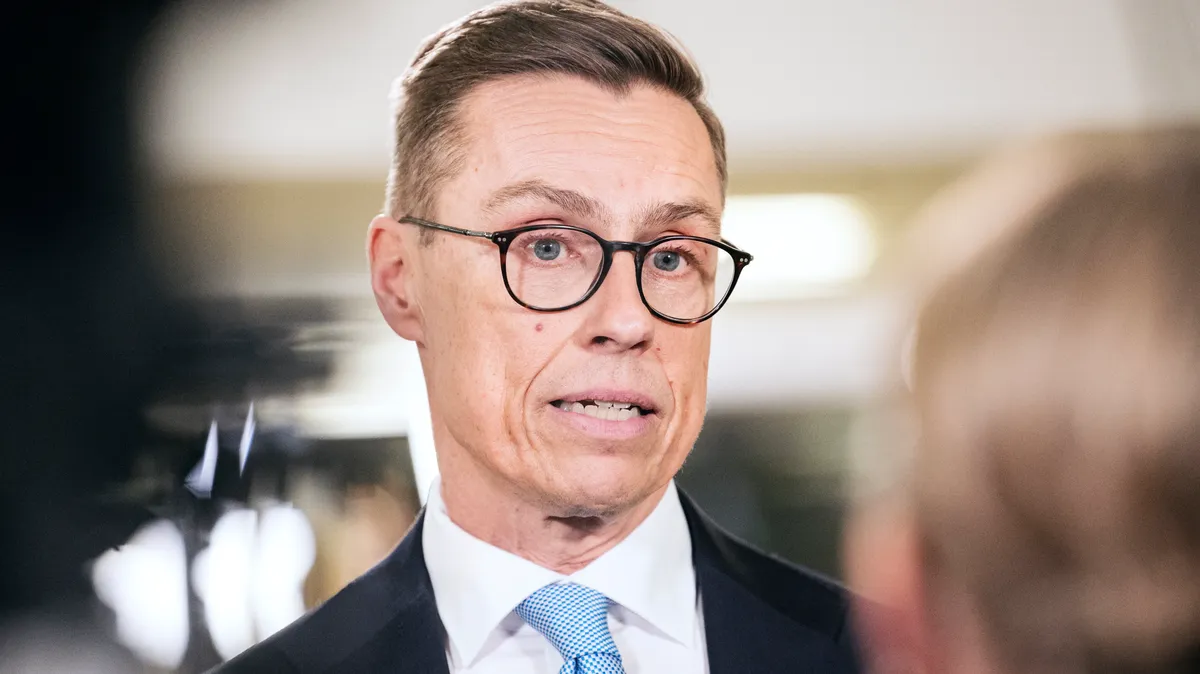
Former Finnish Prime Minister, presidential candidate Alexander Stubb. Photo: Roni Rekomaa / Bloomberg / Getty images
In Finland - now the country of NATO with the longest border with Russia - the second round of the presidential election is working. On February 11, the state citizens “thousands of lakes” will decide which of the candidates is able to better represent their interests, primarily in the international arena.
After the first round, at the end of January, two politicians remained in the race, two former former heads of the country's Foreign Ministry - Alexander Stubb and Pekka Haavisto. The winner of the first round Alexander Stubb looks like a favorite. He held the post of Prime Minister of Finland, but leaving politics in 2017, he decided to return to it five years later, largely because of the Russian invasion of Ukraine. As the success of Stubba is able to change the northern neighbor of Russia and strengthen NATO’s military potential, the new newspaper Europe understands.
The struggle for the chair
Finland, like many other EU states, is a parliamentary republic. This means that all key areas in the country's policy are determined by the Prime Minister, who, as a rule, becomes the leader of the party who won the elections.
However, in Finland, part of the Premier's Personal Parliament traditional for parliamentary republics was transferred to the president. The President is not able to dissolve the parliament or impose a veto on the legislative initiative, but is the supreme commander in chief, and also determines the state’s foreign policy not related to the countries of the European Union.
This is partly therefore in Finland, direct elections of the President of the country have been preserved, to which this year against the backdrop of the continuing war of Russia in Ukraine and the entry of Finland to NATO have been focused on.
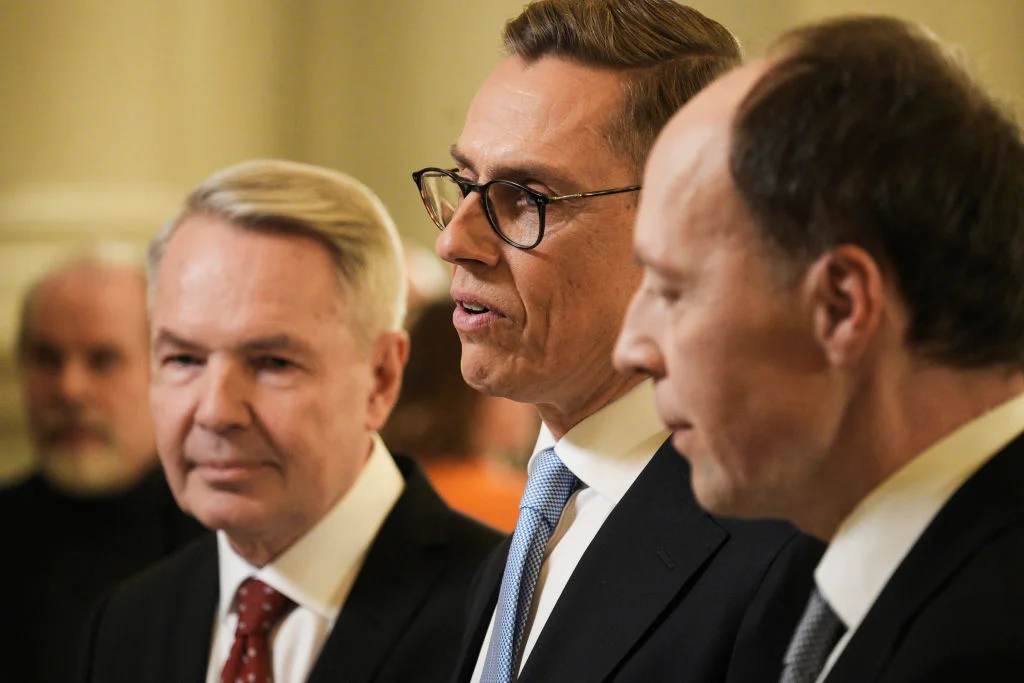
Given the profile of future work, it is not surprising that two ex-heads of the country's Ministry of Foreign Affairs reached the second round of the presidential election: 55-year-old Alexander Stubb, representing the ruling national coalition, and 65-year-old Pekka Haavisto from the Green party.
In the first round, the gap between the candidates amounted to only 1.4%: Stubb scored 27.2%, and Haavisto - 25.8%. The only competitors who could intervene in the struggle is Jussi Khalla-Aho from the Radical Right Party “True Finns”, but only 19% of voters supported him.
Candidate from "Motivational Trainings"
Alexander Stubb is a favorite of the second round of elections, according to independent experts and recent surveys . Stubba’s career trajectory in Finnish politics is interesting for an unexpectedly quick rise and the same sharp and rapid fall.
The Alexander who grew up in Helsinki, since his youth, was engaged in international politics. Twenty years ago, in 2004, he won the European Parliament from the Finnish Right -Procedure National Coalition (Cocoumus). From there, he quickly switched to a level higher, in 2008, taking the post of Foreign Minister.
“When Stubb appeared in the political arena of Finland in the mid-2000s, he was certainly a new face. From such a familiar Finnish diplomatic school and bureaucracy, he was distinguished by behavior, and performances, and in that he was a fairly bright politician.
-In a conversation with Novo-Europe, the director of the Russian programs of the Finnish Institute of International Relations Arkady Moshes recalls.
Stubb at the beginning of his career did not hesitate to show himself outside the press conferences with reporters. A young politician in bicycle shorts (they were an integral part of his wardrobe at many events) more than once fell into funny situations. So, in 2014, already as Prime Minister of the country, he visited Duudsonite entertainment Park, where he played the ball and stayed with a target for rivals who threw it with plush darts. And three years before, he was forced to apologize for the Minister of European Affairs for calling the “shit” a meeting of foreign ministers of the northern countries in Copenhagen.
“As a presidential candidate [Stubb], this does not allow himself this. It wears normal clothes, not as before. Before leaving politics, he periodically participated in the triathlon, went on a bicycle - he tried to show himself very sports. Stubb as a whole creates the image of an ideal person from the posters of motivational trainings, ”says Maxim Fedorov, journalist of the local edition of Yle.
Not noticing the storm
After in 2014, Yurki Kataynen announced the departure of the prime minister, Stubb managed to change him as a party leader and head the government. But he did not stay prime minister for a long time, only a year, and, as experts of the New Evrop, they did not remember anything remarkable in this position.
“[Stubbu] had to make a mock that he was not brewed before the elections of 2015. It is difficult to find some bright and remembered for his steps in this post, ”says Moshes.
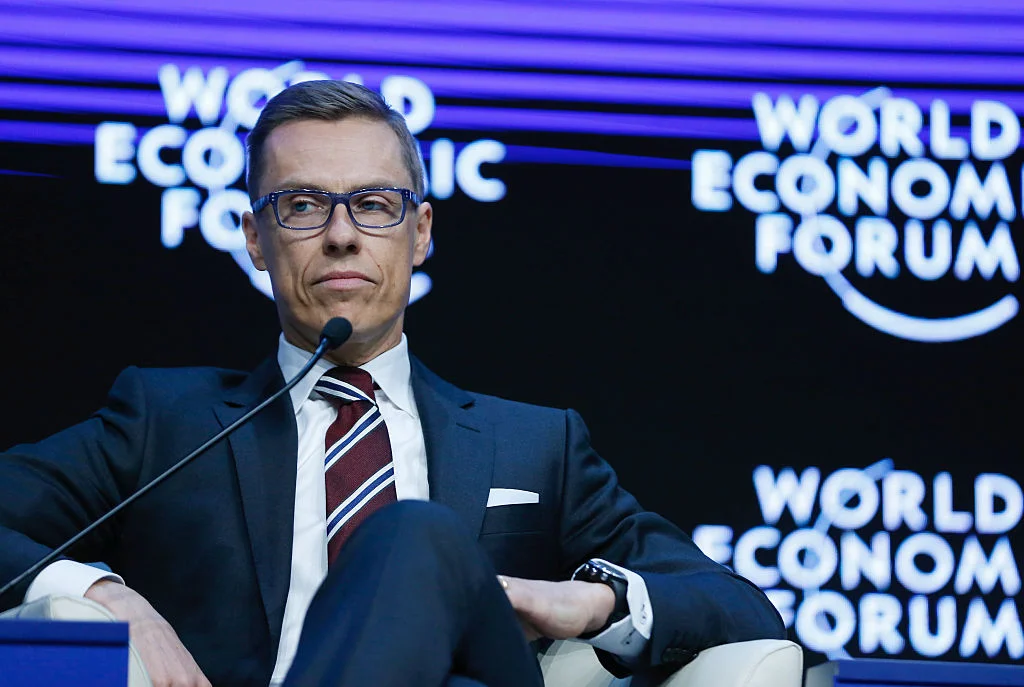
An important episode of Stubb's premiership was the signing of a transaction with Rosatom for the construction of a nuclear power plant in Finland, including Russian money. This happened after 2014 and caused criticism both within the country and in the EU.
“The opposition to this decision in the country was quite noticeable. People understood that from a procedural point of view, not everything is clean there. Diplomacy [Stubba], like diplomacy of many large European countries such as France and Germany, at that moment was aimed not to aggravate relations with Russia, to cooperate pragmatically.
Stubb was among those people [in Europe] who did not want to notice an impending storm, ”says Arkady Moshes.
Maxim Fedorov also recalls the story with the nuclear power plant as the most significant episode of Stubba’s career as prime minister. “When he was a claim - look what you are doing, sanctions are imposed on Russia, and you want to conclude agreements with Rosatom,” he accused everyone of Russophobia. But during the current campaign, Stubb himself admitted that this was an unsuccessful decision, ”says Fedorov.
The nuclear power plant with Rosatom remained unfinished. In May 2022, after the full -scale invasion of Russia to Ukraine, Finland tore the contract without starting construction.
After the year of the premiere, Stubb had to leave, the party of the national coalition lost the election, and the ex-Prime Minister was appointed Minister of Finance. In this post, he also stayed a little over a year, lost the post of head of the party, and in 2017 he decided to leave politics to business.
“This is a fairly common practice in Finland, when the prime minister or minister leaves politics. You can look at the recent example of Sanna Marin , who went to Tony Blara from the post of prime minister. But she is not forty years old, ”says Moshez.
Unexpected return
During the five -year break in politics, Alexander Stubb managed to work as deputy director of the European Investment Bank, and in 2020 took the position of the director of the Transnational Department at the very prestigious university in Florence (European University Institute).
Despite this, in the second year of the war in Ukraine, Stubb unexpectedly made a statement that he was returning to politics and would run for the presidency from the national coalition.
“Being in the government for eight years in a row and having been at all key posts, in 2016 I felt that I did a lot, as they say, for God and the country. My plans did not include returning to politics, especially national ... But Putin’s attack on Ukraine changed the situation, ”Stubb explained .
Probably, his return contributed to several factors at once. On the one hand, it was a decision of both the ex-Prime Minister and his party, which saw in him the applicant for victory in the presidential election. On the other hand, the chances of his nomination were increased by Stubb's long -standing commitment to the idea of joining NATO and the general orientation of Finland's foreign policy to the West.
“People remember that he himself was personally a supporter of the joining NATO even when it was a minority position. And today, when this is the position of the majority, he can win this. I think that there are people who like his style - sports, modern, assertive, ”Moshez argues.
How not to angry a neighbor
Over the past two decades, the rhetoric of Finland has been built around the task of remaining a European country, but not anger Russia.
Before the full -scale invasion of Russia to Ukraine, this policy worked quite well. Helsinki very carefully reacted to the war in Georgia in 2008: then Stubb, being the head of the Ministry of Foreign Affairs, condemned Russia, but opposed the imposition of sanctions against the Kremlin. At the beginning of the conflict in Ukraine in 2014, the government reacted not only by condemnation, but also by the introduction of sanctions, but continued to cooperate with Russia, in particular, concluding a contract for the construction of nuclear power plants.
The balance was achieved largely thanks to the personal communication of President Sauli Ninisto with Vladimir Putin. During the period of the presidency of Ninisto from 2012 to 2024, they repeatedly met and even played hockey.
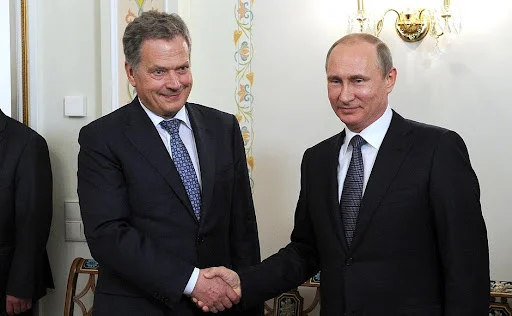
“Ninisto very much appreciated the possibility of dialogue with Putin and with Russia as a whole. It has always been emphasized that one of the foundations of Finnish national security is the ability to talk with Russia and a desire to conduct a dialogue.
But at the moment this simply does not, everything overshadows the Ukrainian question, ”says Moshez.
For a long time, Finland, like neighboring Sweden, did not want to join NATO. According to polls of 2017, only 19% of Finns would wish this for the country. President Ninista himself said : "The Finns do not support this [accession to NATO], and I am Finn." But after the Russian attack on Ukraine, even he changed his opinion and became an active supporter of Finland’s movement in this direction.
In April 2023, the country of “thousands of lakes” became a member of NATO, and in September Niinistosaid that the wars with Russia, which arose since Finland gaining independence, became part of the Finns self -awareness.
Such similar candidates
The new President of Finland, whatever it may be, will continue to bring the country closer to NATO and a strict policy against Russia. Both Stubb and his rival from the Green Party Pecka Haavisto declare the complete commitment to this logic. Their disagreements concern only the details. Haavisto opens against the placement of NATO nuclear weapons in Finland, while Stubb admits such an opportunity. Haavisto would not want the military contingent of the North Atlantic Alliance to be in the country, and Stubb does not see obstacles to this.
But Stubb’s most resonant proposal is to deprive Finnish citizenship of people who have a Russian passport. At the end of 2022 in Finland, there were 37.8 thousand such inhabitants.
“This is a fairly radical statement, it is difficult to realize and erases the border between [Stubba] and“ true Finns ”, or even other nationalist forces,” says Moshes.
According to him, today a significant part of the Finns draws a full parallel between the Russian attack on Ukraine in 2022 and the USSR attack on Finland in 1939. Stubb also expressed this thought. In this regard, the provision of assistance to Ukraine finds great support in society: over 80% of Finns believe that Russia should lose this war and withdraw troops from Ukraine. At the moment, Finland has provided Ukraine with military assistance worth about 1.75 billion dollars, which is about half a percent from its GDP. According to Moshez, all this cannot but affect the attitude of Finland citizens towards the Russians.
“Now the narrative is quite actively developing in society that [the owners of Russian passports living in Finland] are loyal to Russia that they are a fifth column. I do not think that it will reach the implementation of this idea, but its very discussion during the presidential election campaign is extremely unpleasant, ”says Moshes.
On the eve of the Voting Day, Stubb held leadership in the second round of the presidential race: polls predict his victory with 54% of the vote. If the ex-Prime Minister really wins, then he will adhere to the path, begun by his predecessor Sauli Ninisto: continuation of the rapprochement from NATO, a removal from Russia.
“The continuity of foreign policy will be observed. And she is what it is: it is extremely difficult to negotiate with today's Russia, ”concludes Arkady Moshes.