
Translated material
The last decisive
150 years ago, director Vsevolod Meyerhold was born. He loved the revolution, but in the late 1930s his theater was closed, and he himself was shot
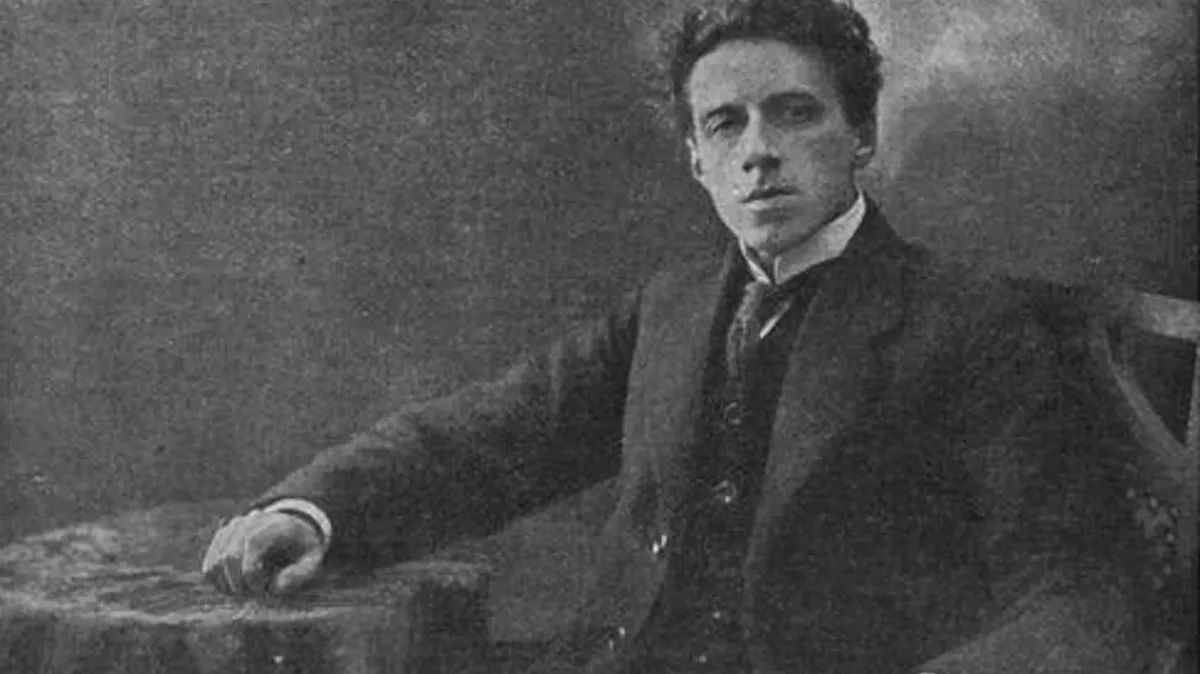
Director of Imperial Theaters Vsevolod Emilievich Meyerhold, newspaper "New Time" for March 1913. Photo: FLHC MDB6 / Alamy
“The last decisive” is the performance staged by Meyerhold based on the play of Vsevolod Vishnevsky in 1931. The performance of the upcoming war with Europe - and how 27 Soviet border guards die, but do not give up to the enemy. High pathos was combined with tricks: the machine gun of the border guards shot right into the hall, over the heads of frightened spectators.
It seems that there is no doubt that this is the perfect product of the Soviet theater: innovative, propaganda, spectacular. But the trouble is: even creating a seemingly militaristic epic, Meyerhold cannot restrain himself and inserts satirical episodes into the play with a mockery of the production of the Bolshoi Theater in particular and over the “old art” as a whole. This duality is the inability to reconcile the desire to change with honesty before their own ideas - and brought Meyerhold first into the ranks of fiery supporters of the revolution, and then on the list of elements that are unnecessary for the Stalinist totalitarianism.
Meyerhold loved the movie. He not only displayed video projection onto the stage, but also built performances on the principles of installation.
The same tape can be represented by his life, which itself is similar to a dizzying film.
1874, February 9* , was born in Penza. 1898 , Moscow, Nemirovich's student, actor Stanislavsky. 1902 , departure to directing, an independent theater in Kherson. 1909 , director of imperial theaters in St. Petersburg, productions in Alexandrinsky and Mariinsky, Lermontov's Masquerade. 1917 , revolution, work with Mayakovsky. 1920 , Novorossiysk, in captivity with the White Guards, return to Moscow. 1920–1921 , head of the theater department (Theo) of the People's Commissariat of Education under Lunacharsky, Revolution on the stage, Theater October, Mitings performances. 1922 , a wedding with Zinaida Reich (ex-wife Yesenin), adds her to his surname-becomes Meyerhold-Raykh. 1925 , Gogol's “Examiner”, reforms of one theater and the institution of another, tour in Europe. 1930 , Mikhail Chekhov offers not to return to the USSR, Meyerhold replies: “I will return out of honesty”, returns. 1934 , “Lady with Camellias”, in the title role of Reich, Stalin does not like the performance. 1937 , an article in Pravda: “... Departure from ... reality, political distortion, hostile slander to our life led the theater to a complete ideological and artistic collapse. <...> He made himself an alien body in the body of Soviet art ... ". The 1938th, the Meyerhold theater is closed, Stanislavsky invites Meyerhold to his opera studio, actually saving from Opala, but soon dies, and Meyerhold is left alone. 1939, the arrest in Leningrad, Zinaida Reich is killed, Meyerhold is tortured. February 2, 1940 - shooting.
In the spaces between these dates, individual films and books can fit.
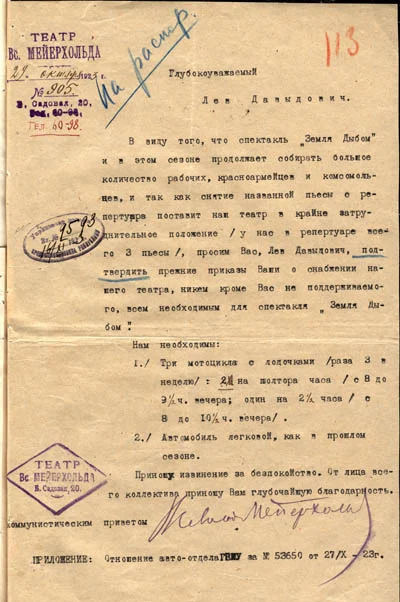
Letter Meyerhold Trotsky.

Letters of Zinaida Reich Stalin.
“ “ I argue with you all the time in my head, all the time I prove your wrong in art. ... You are so infinitely, endlessly deceive, hide and lie ... "
Letter Meyerhold Molotov.
“... I was beaten here-a patient of a 65-year-old old man: they put on the floor face down, they beat the heels and on the back with a rubber tourniquet; When I sat on a chair, they beat the same rubber on the legs from above, with great force ... "
But how, in his diary, Zinaida Hippius writes about him, whose play he put in St. Petersburg:
“[January 11, 1918] I want to record ... intellectuals-rebiegers, that is, those former people whom we all knew more or less ... I have no doubt that the Bolsheviks were sitting for a year (?!), Almost all of our flimsy, especially literary, intelligentsia, one way or another, will crawl to them. ... [But] today are important, first, who went, who ran immediately behind the chariot of the winners. Rushing there ... not by beliefs (what beliefs!), But for the sake of benefit, for the sake of fashion, ... these first, warm, we will write down:
<...>
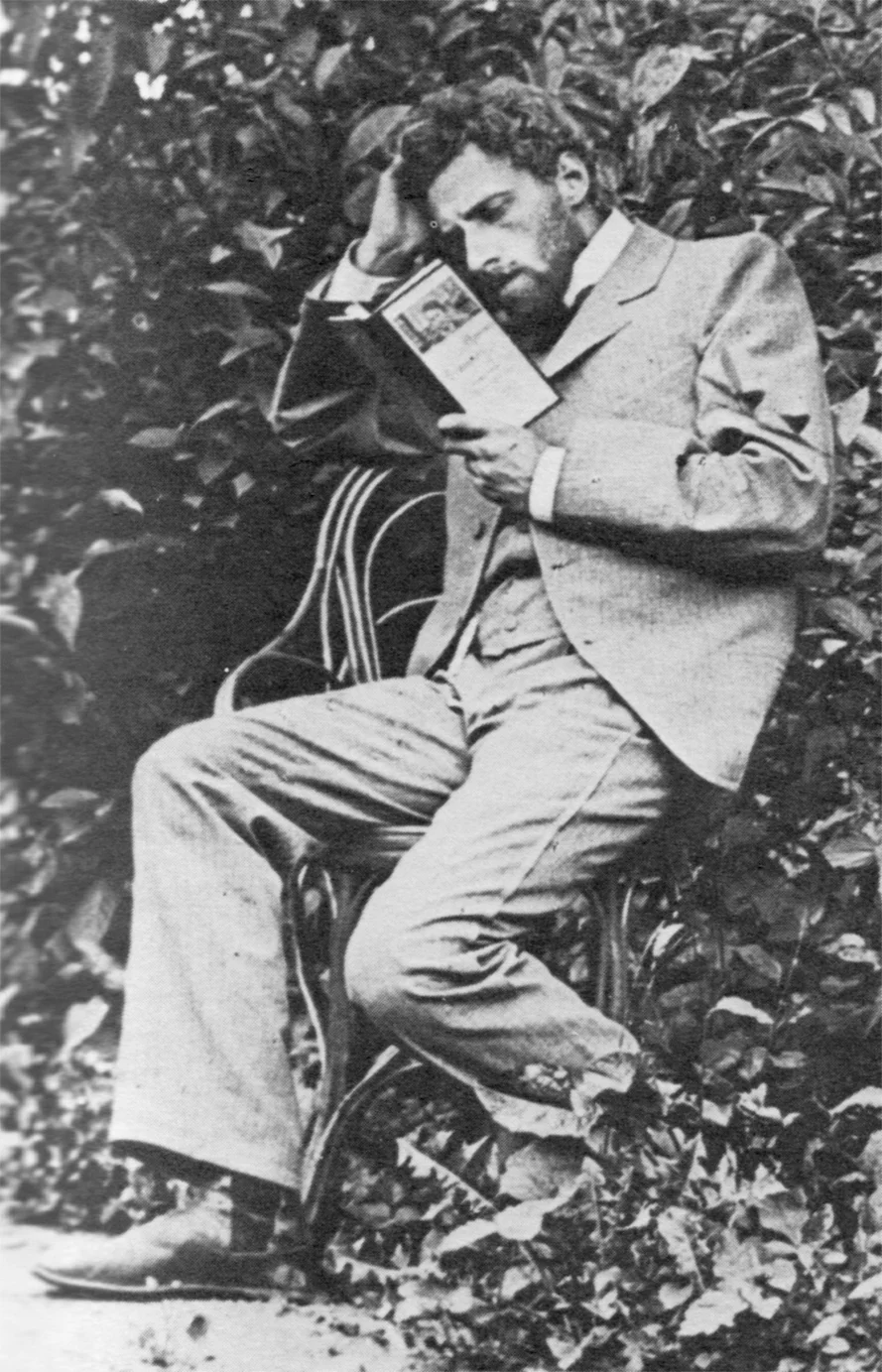
22. Meyerhold is the director “Novator”. He served in imperial theaters, with Suvorin. During the war, he worked in lasarets. After the revolution (according to rumors), he signed up for anarchists. Then, in August, he was again with us, was going to work in the newspaper Savinkov. More recently, in the Union of Writers, he shouted louder against the Bolsheviks. Now it is prescribed at theatrical meetings with the Bolsheviks. It is torn from zeal to the Bolsheviks. This, it seems, is a special rubbish. ”
The inspiration with which Meyerhold (but not alone) met the revolution is understandable. As the ideas that he funded first in the People's Commissariat of Education, and then in his theaters, are also clear. Futurist and avant -garde, he wanted to hack traditional stage forms - to provoke the audience to get out of the comfort zone, to become accomplices in the performance. This was also a political meaning: the performance as a rally, a performance, charging to a struggle, where the viewer is a people, not an elite, but the people are liberated - and having the right to vote.
Such a theater was easily applied to the red revolution of the proletariat. Meyerhold was very on the Red Army uniform. He equipped the scene with real military equipment, tried to use the armored vehicles, his motto was Parafras Chekhov - “If a gun hangs on the wall in the first act, then it should be a machine gun” (and he really requested real machine guns from the Red Army).
But the combat mood has not lasted a long time.
His ideas, aimed at the complete restructuring of the entire system of theaters of the USSR, the theater as an institute, in principle, did not find understanding among the Bolsheviks, who had already headed for the stabilization of the situation in the country in the early 1920s.
Meyerhold began conflicts with both them and with critics.
The former patrons faded away, and Stalin’s star soon rose.
And Zinaida Reich no accident later wrote to Stalin that he "does not understand Meyerhold." Stalin really did not love, did not understand and did not perceive Meyerhold theater. Stalin liked the Moscow Art Theater more, psychology, “turbine days”. Socialist realism captured scenes, movie screens and libraries.
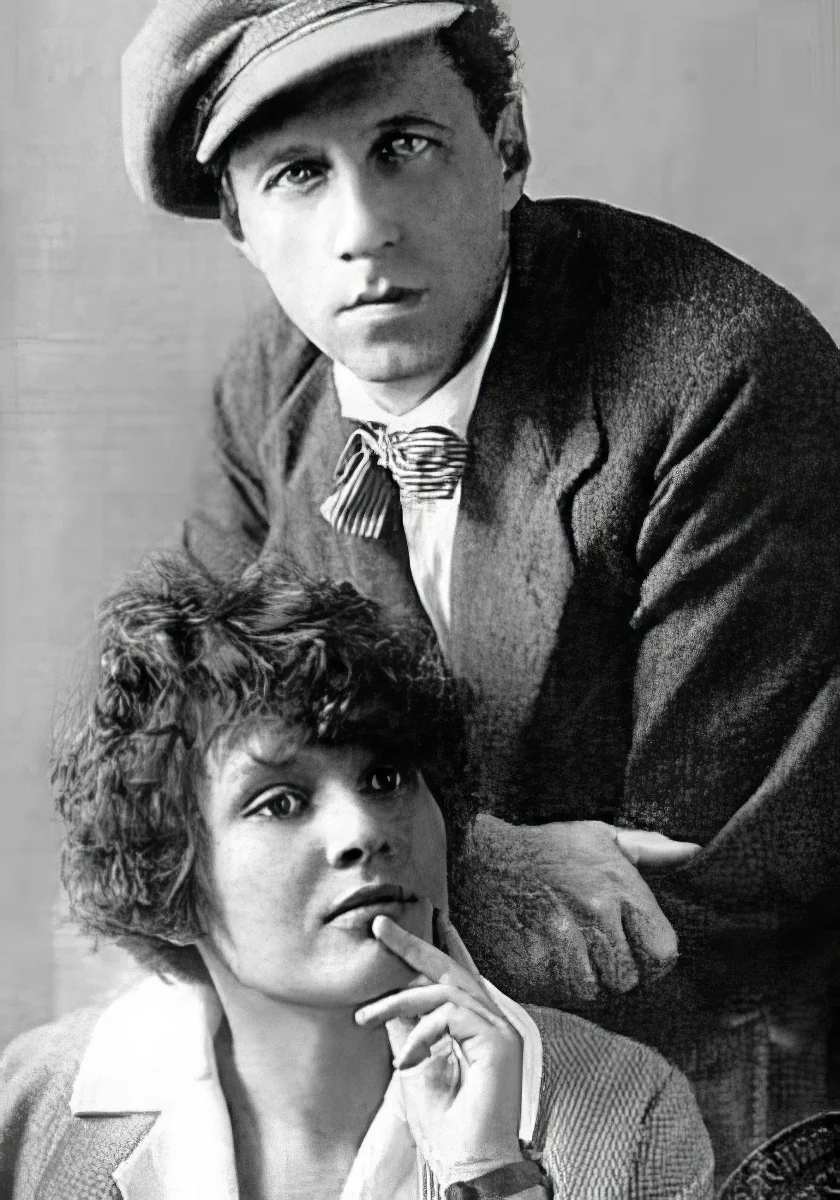
With his combination of heavy frontal propaganda and at the same time human, accessible, banal, socialist realism turned out to be not organic. Not being an opponent of Soviet power, Meyerhold remains a man of global changes and vivid images, a supporter of the World Revolution (his relations with Trotsky).
He was known and appreciated in the West, in Moscow to the theater and foreign guests constantly went to his house (and besides them, for example, monsters such as Henry Berry). And when Meyerhold tried to work in the field of socialist realism, realizing that he couldn’t survive otherwise, disasters were waiting for him from time to time. He tried to put “how steel was tempered” by Nikolai Ostrovsky: but instead of glorifying the feat of the Soviet man, the tragedy of the disappointed old Bolshevik came out .
But even after his theater was closed in 1938, Meyerhold was still not going to give up. His assistant Alexander Gladkov wrote down:
"V.E. Today in a black suit. Hands almost all the time in the pockets of the trousers. ...
- Yes, which once in my life I have to start all over again. You know my biography. How many such falls did I have?
-In my opinion, seven, V.E.
- No, eight ...
He pulls out a jacket from his inner pocket and shows me a white envelope with some documents.
- So I prepared everything and carry everything with me ... Here is a secret letter from the MK party, approved by the line of the “shot” and “growl, China!”, The exact text of the famous initiation of “land on the end” and ... the review of Kerzhentsev [the author of the article in Pravda] for this performance, ending with the magnificent glory of Trotsky. And more different. I won’t fight for the theater anymore, and I’ll still compete for a party card. ”
Meyerhold had a lot of chances to escape.
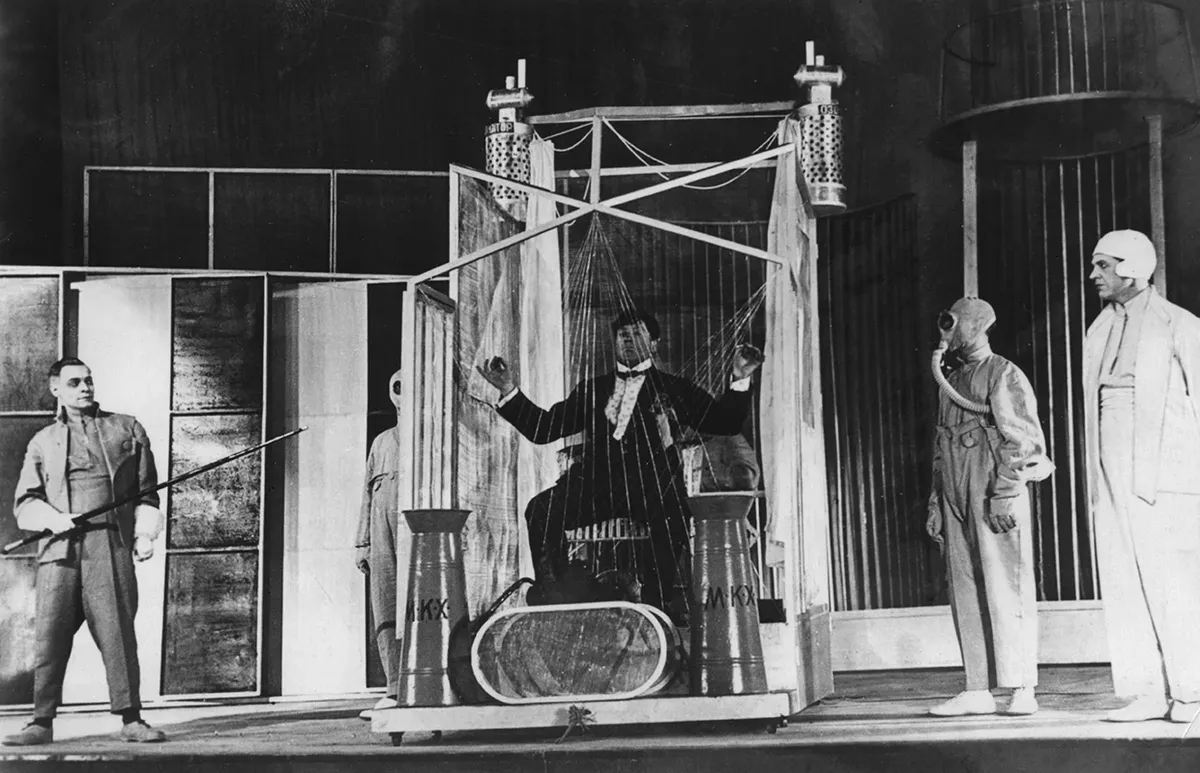
He could leave the USSR, but did not want to leave the place where he became famous and where he had almost achieved his visionary theater reforms (just look at the project of the new theater building, which was supposed to be built on Triumphal Square). Could stop in creative search, stop doing the old Italian theater and the Kabuki Theater and do what he himself would not like. In the end, he could turn into a conjunctural state building.
But he did not want to. From honesty, pride, pride, risk or illusions.
Of course, the installation tape of his life can be continued. As some critics note , "in the history of Meyerhold will still remain a victim, but a winner."
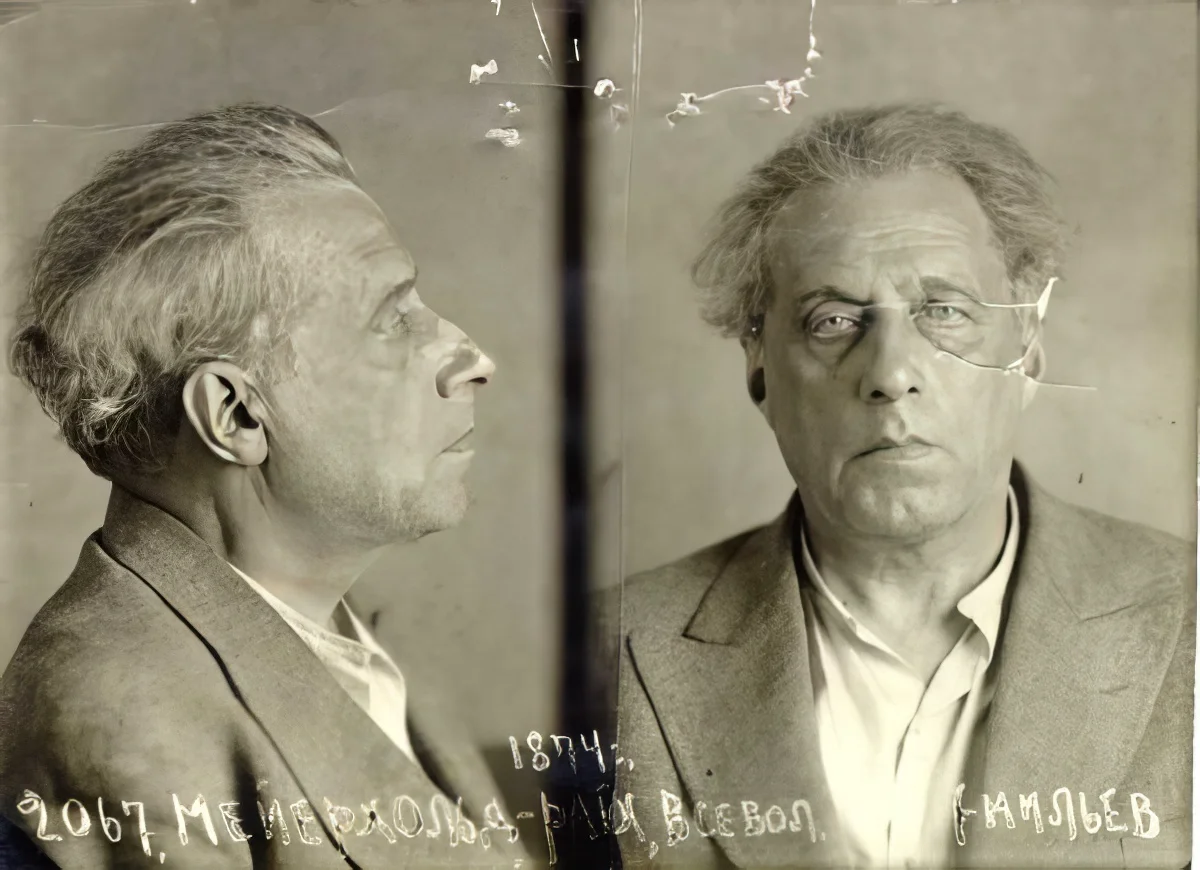
1955- rehabilitation. 1964- Yuri Lyubimov becomes the Khudruk "Taganka" and hangs a portrait of Meyerhold in the lobby (they ordered to take off, but Lyubimov did not take it off). 1968- at the house where Meyerhold lived with the Reich (and after their death-the NKVD employees), a memorial plaque was installed . 1984- Open-Museum of Meyerhold in Penza. 1988 -the publication of the Meyerhold case and the establishment of the exact date of the murder, the foundation of the museum in Moscow. 1991- the emergence of the center named after Meyerhold in Moscow.
But still, the main thing in his heritage is not these literal (sometimes formal, albeit important) manifestations. The entire modern theater - good, and bad, and “classic”, and innovative - literally consists of Meyerhold’s influences. As from the influences of Stanislavsky, to them - the influences of Shakespeare and English playwrights, Italian comedians, many earlier tragic.
As the director Konstantin Bogomolov expressed ten years ago, then the idol of the liberals and the big provocateur, “... our artic art, is studied through imitation. And they imitate what ... is happening here and now. “I was influenced by the director from the distant past” - it seems to me that this is a sly position. Only a myth of a particular person can influence. ” He, in principle, is right, but the same thesis can be turned over. Since Meyerhold affected the whole profession as such, it means that no one specifically. It is impossible today to deal with the theater and not to experience its influence, even if you yourself do not realize this.
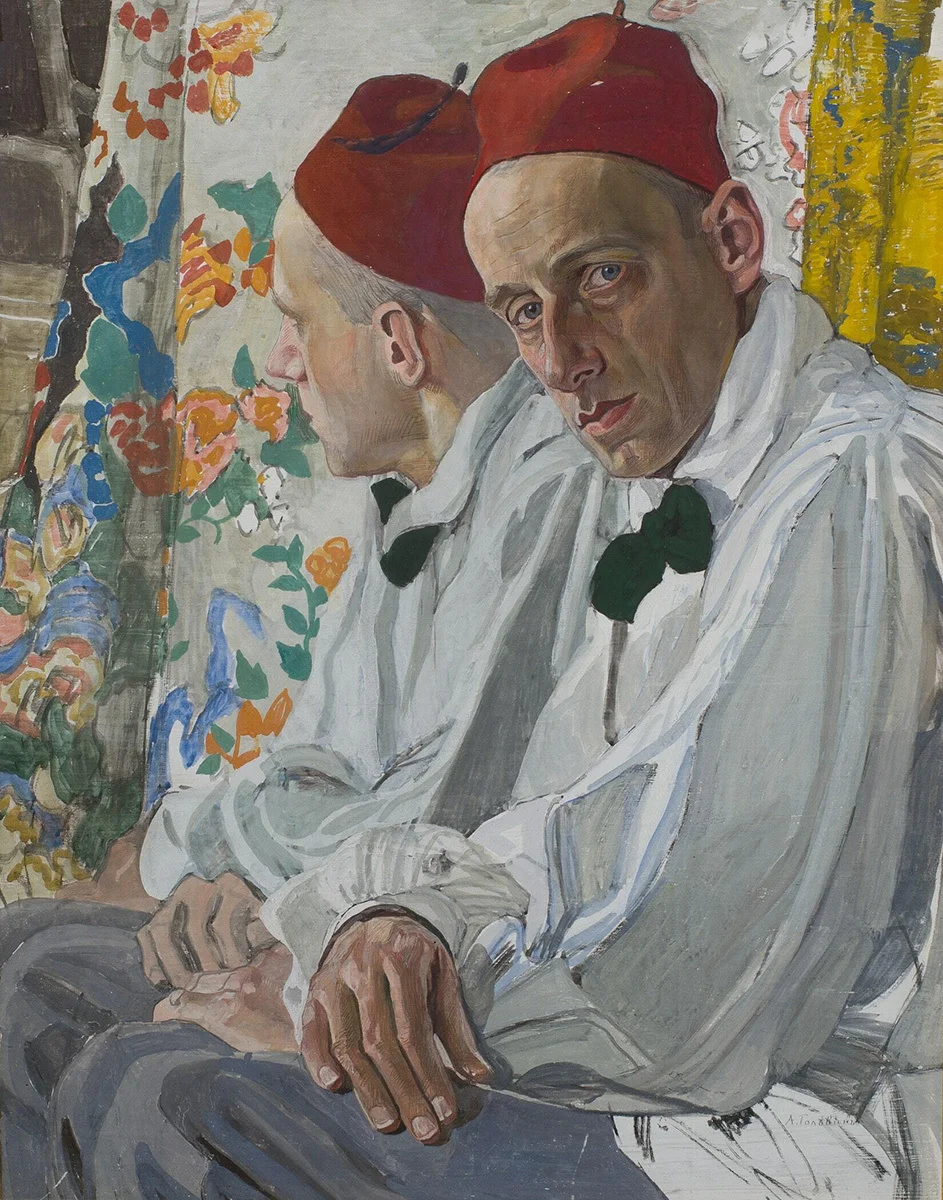
Of course, the myths of Meyerhold also developed and fixed. The main such myths (or narratives) about Meyerhold are two.
The first is the “school” story of the great artist. The second is the “dissident” story of the deceived admirer of the Soviet regime, whom this power a little later, slightly mutated, destroyed. Both of these myths make director Meyerhold to be fermented and frozen. One is in the eyes of an official audience that produces a brand in his honor and calls the planes in honor of him (he would like it). The other is in the eyes of the audience, the whole story of the authorities reduces to the villains (alas, it is not reasonable): as it turned out “by the way” that the center is. Meyerhold ceased to exist on March 1, 2022.
But the Meyerhold-man who adored the draws and once tried to joke or seriously arrest and send the writer of Ehrenburg to the VCHK for the fact that the latter did not recognize the genius of the play of a certain sailor about the Menshevik-Karas and the “fish of the Council of Councils”, could laugh at it.
The simplest mental experiment: imagine that Meyerhold is alive today. Not mythical bronze, but real - uncomfortable, brilliant, ironic, sometimes nasty, incomprehensible, full of energy. Can we say with confidence on whose “side” it would be?
Don't think. But for sure: the vast majority of those who admire them now would show off him with insults and curses. Some - for arrogance, others - for agreement. He would be called a coward, a collaborator, a traitor, a destroyer of culture.
About the same as many of those who are with us. And whoever one and a half centuries later will be remembered with the same enthusiasm.
* Meyerhold was born on January 28 according to the old style, which corresponds to February 9 in the new one. But he always celebrated his birthday on February 10, because since the country, when a change of days, added to the date of 12 days, he was simply obliged to add one day more.