
Translated material
Be a man
How masculine attitudes in Russia affect people, society and war
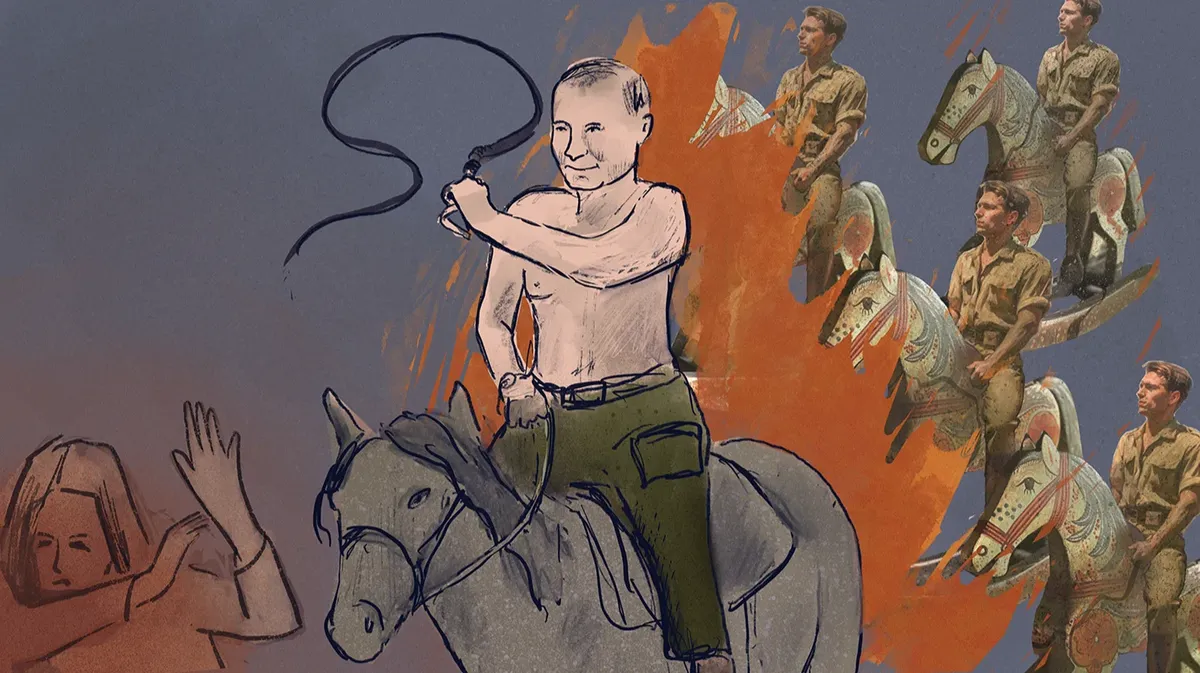
Illustration: Alisa Krasnikova / "New Gazeta Europe"
On January 20, the wives of the “Way home” mobilized from the movement came to the reception of Vladimir Putin to ask when the president signed a decree on demobilization. One of the employees came to women who answered this: “Dear girls, and we will not make it worse? Then they will say that "we will drop male dignity." The employee called the men sent to the war "soldiers and unique creatures of God." The idea that, fighting, a man retains his special “masculine” dignity is another patriarchal masculine installation of those that Russian society is permeated and which the president is so often broadcast by.
Back in 2004, Vladimir Putin, answering a question about freedom of speech in the media, brought a quote: “A real man should always try, and a real woman should resist.” In 2006, Putin said about the accusations of President Israeli Moshe Katsava in ten rape: “There was a very powerful man! Ten women raped! I never expected him! He surprised us all! We all envy him! " In 2018, Putin also noted that in Russia "a woman remains a woman, a man remains a man, we do not have such a mixture of concepts in the head and soul." In 2021, the president, in a conversation with the children's Ombudsman, Anna Kuznetsova noted that "the man strives to overcome all difficulties himself." Men can not express emotions, be afraid, engage in “female” deeds, you need to be brave, gestured, follow the main and understandable rule - “Be a man!” Women of these "men" must respect and obey them. Interviewing in male affairs, even trying to save from death at the front, women allegedly risk injuring "male" dignity. Such a discourse is built in society by generations and serves as a very convenient tool for militaristic propaganda.
What is masculinity?
Masculinity means practices and beliefs that determine what is considered correct for a man in a social context. Back in 1976, American researcher Robert Brennan formulated the traditional principles of a “real man”: he should not show tender feelings, should be a leader, be strong, not afraid of violence, and a sexual man should be aggressive and persistent.
“I don’t like the term“ toxic masculinity ”, although there is such a conceptualization, it just sounds like we say that there is still some kind of and not toxic masculinity,” says Vlad Krivoshchekov, a social psychologist, Phd in Social Psychology and the author of Men & Masculinites Telegram channel.
“There is a certain set of expectations that men should be at all,” says Vlad Krivoshchekov. “For example, the avoidance of feminine, arrogance, self -confidence, negative attitude to sexual minorities, rigidity, dominance, readiness for sex and limited emotionality, where the only legitimate emotion is aggression.”
In addition, there is a concept of hegemonic masculinity - this is a system aimed at ensuring that power is contained in the hands of a certain minority of men who are the ideal of masculinity. In the case of Russia, the example of such an ideal, of course, is Putin.
According to the researcher of Connell, hegemonal masculinity is in the relationship of dominance and stress with three other categories of masculinity: subordinate, marginal and accomplished. The concept of subordinate masculinity describes the image that deviates from heteronormative: this includes non -warrous personalities and just those men who, in the traditional sense, seem “feminine” to society. Such an image is always attacked and depreciated.
Men who are suffering from racism or class inequality, which also differ from the patriarchal ideal of a “strong and successful male”, fall under the category of marginal masculinity.
The accomplished masculinity, not possessing attributes of hegemonic masculinity, allows “ordinary men” to benefit from hegemonic masculinity, for example, dominant over women.
“In Russia, a difficult situation with patriarchal attitudes. On the one hand, a man owes a lot of things. This is usually about making money and physical work. On the other hand, a man is considered fragile, incapable of taking care of children and serving himself in domestic plan, ”says Sofya Goldman, a psychotherapist, a psychotherapist, a sex-therapist.
The Dutch sociologist Gert Hofstede described the masculinity and femininity by measuring , in which “achievement”, heroism, assertiveness and material reward for success are inherent in masculinity. Femininity means the preference of cooperation, modesty and concern for the weak.
“Masculinity means a society in which social gender roles are clearly distinguishable: men should be assertive, rigid and oriented towards material success; Women should be more modest, delicate and preoccupied with the quality of life, ”Hofstee described his model.
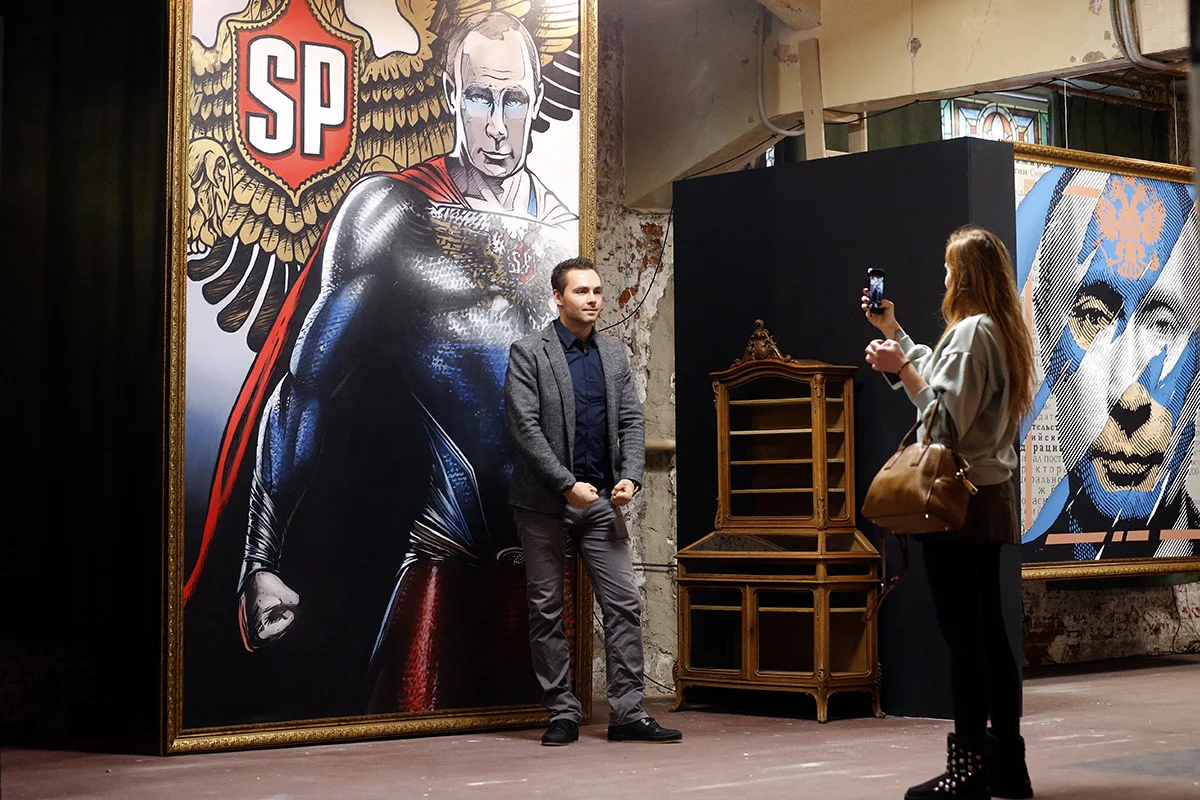
Do not cry and not pain
Studies show a number of problems that arise from masculine attitudes - for men, and for women, and for families, and for society as a whole.
Men in the world live on average five years less than women, and in Russia this gap is ten years. This is due not only to genetic characteristics, but also by the interaction of men with society - they are more prone to conflicts, to choose dangerous professions and ignore the rules. Studies of the Doctor of Psychological Sciences James Mahalik show that the more men meet the traditional norms of masculinity, the more they are prone to “risky types of behavior”, for example, to drink alcohol, fights or dangerous driving. On average, men commit suicides 1.8 times more often than women around the world, and in Russia more often than 6.5 times.
Studies indicate that men with radical views on masculinity take preventive examinations twice as often than those who adhere to more moderate views, and even if necessary do not always consult a doctor because of fear of seeming weak.
Traditional ideas about masculinity can become an obstacle to care of mental health : men who adhere to such norms often suppress their emotions and live in constant stress. The study of scientists of the University of North Carolina confirms that masculinity is associated with the development of depression.
“From the most striking examples of toxic masculinity: men should not cry, engage in“ female ”matters, be afraid, you can not choose clothes that you like, you can not admit in your feelings.
Although this is the nature of man, and each of us has the right to be weak, regardless of gender. The suppression of their feelings and emotions leads to the destruction of the psyche. Even in the fact that you have panic attacks, men still cannot admit that it leads to irreparable injuries, ”says Sofya Goldman.
“The literature clearly shows the correlation between masculinity and sexist attitudes, violence against women, and early mortality. Representations of a certain appearance of men lead to an unhealthy visit to the gym and the adoption of steroids. Masculinity develops an understandable system of attitudes, but in general it is about the limitation of potential, about the fact that a man should live according to a certain scenario, and this narrows options for the development of events in his life, ”says psychologist Vlad Krivoshchekov.
The principles of toxic masculinity are in contradiction with the basics of feminism. This clash of ideas is often accompanied by domestic conflicts, the financial dependence of women and manifestations of violence. Toxic masculinity insists that men should be bold, aggressive, strive for dominance, rule and control. The victims of this behavior are most often women surrounded by these men.
“You can mitigate the influence of masculine attitudes only through informing and demonstrating the consequences. The conservative view of the world, which is now increasingly popular in Russia, does not allow the pluralism of opinions, otherness and tolerance. It forms Patriarchate as the only possible system of values, and this greatly affects the socialization of boys. The suppression of emotions leads to the fact that men resort to violence - both in relation to each other and in relation to their families, ”says the psychologist and the head of one of the centers fighting violence in Russia, who wished to remain anonymous.
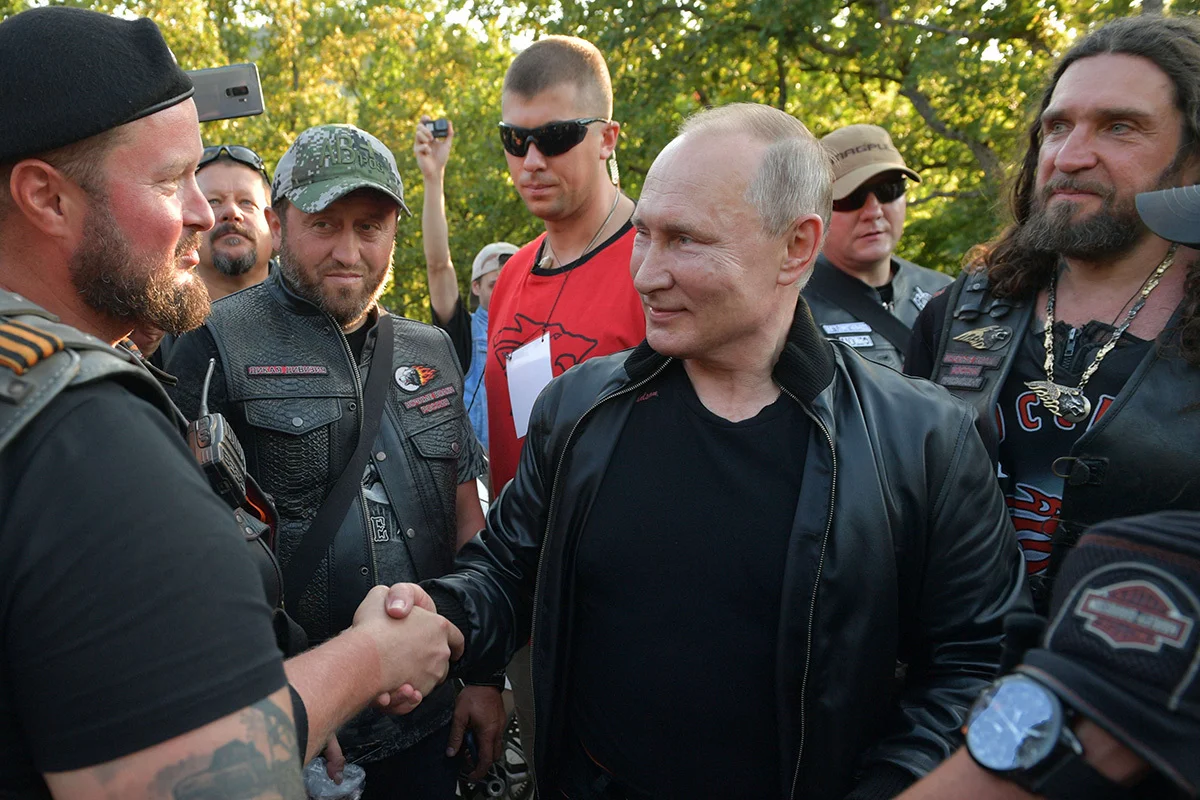
A real man supports Putin
“The norms of masculinity are formed by socialization mechanisms,” says the psychologist Vlad Krivoshchekov. - Such norms have an important function - the construction and preservation of a certain system. Men who support traditional masculinity will most likely support authoritarian power, think that inequality in society should be valid and should be preserved. ”
Scientists from the University of Australia conducted a study in which 188 men interviewed social relations, children's experiences and characteristic features of men. The results showed that in some cases, the experience of communicating with peers is the motivation for the ideal of masculinity.
The psychotherapist Sofya Goldman noted that any deviation from the “right” image of a man in a patriarchal society can be cruelly punished.
“Although recently a man who takes care of a child is preparing, starting to be accepted by society and get a lot of compliments, approval, but rather from women than from men,” Goldman explains. -Men can be nervous that someone breaks stereotypes, going on maternity leave instead of wives.
This causes fear that such behavior will become a duty, and therefore provokes aggression, which, alas, supported public structures. ”
Mecular masculinity
In June 2022, the former British Prime Minister Boris Johnson said :
“If Putin were a woman, - which he is obviously not, - but if he were her, I really do not think that he would have started this crazy Mashki war - invasion and violence in the form in which he did it. If you need an ideal example of toxic masculinity, this is what it does in Ukraine. ”
After a couple of days, the Russian Foreign Ministry called the ambassador of Great Britain and expressed a “decisive protest in connection with the frankly boorish statements of the leadership of Great Britain in relation to Russia, its leader and official representatives of the authorities, as well as the Russian people.”
Such a reaction of the Russian Foreign Ministry is understandable, because Putin has long and stubbornly working on his own image of a “real man” and “alpha male”. The head of state is photographed by topless on a horse, dives to the bottom of the Taman Gulf and does not tire of demonstrating a love of hunting and fishing. The president’s personal life is shrouded in secret, but it is clear that he is almost a sex symbol. Let us recall, for example, the popular song of pop artists Natalie "such as Putin." Natalie sings: "My boyfriend is not ready for big things, with my friends, he twists novels, he got me like that, and I drove him out, and I want now like Putin." Further, the singer lists: "full of strength, so as not to drink, so as not to offend and not run away."
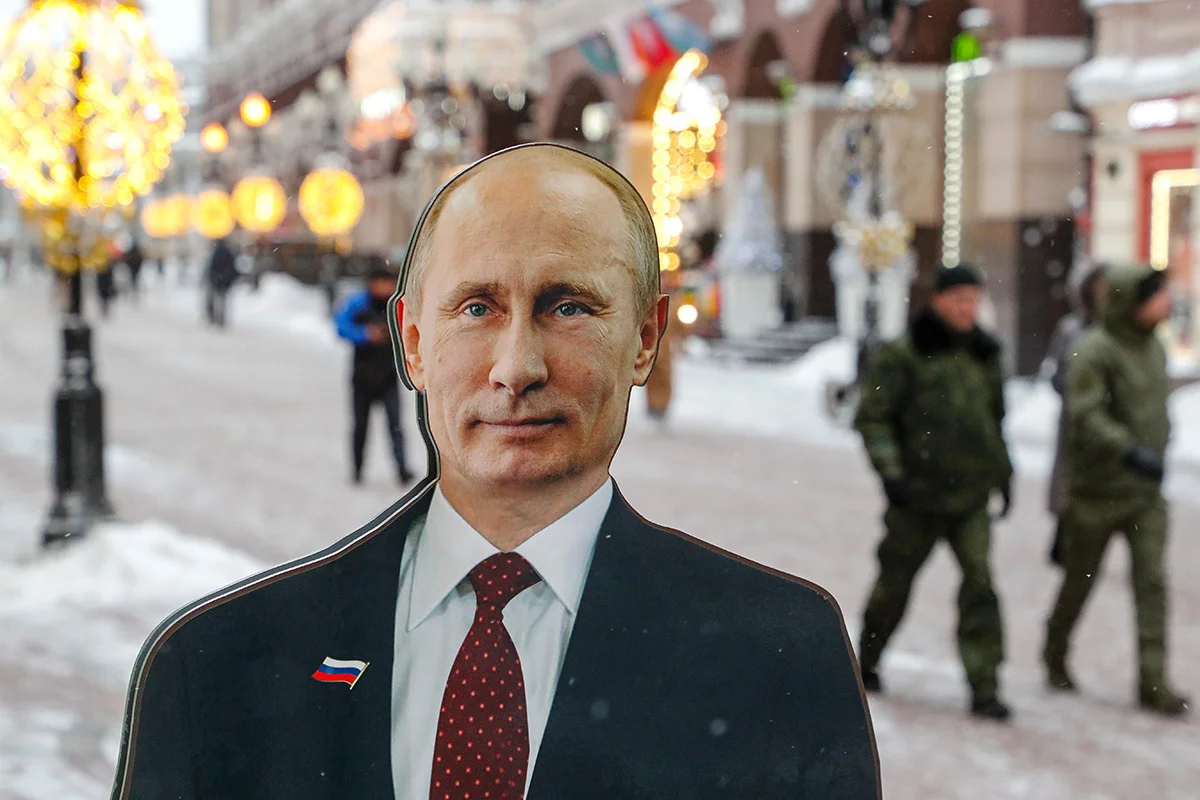
Now the Russian state, focused on patriarchal values and led by a figure, which shows toxic masculine features, wages a war against Ukraine. This war has a clear patriarchal subtext - Putin openly demonstrated it shortly before the start of the war by a quote about violence against a woman, so commenting on the implementation of the Minsk agreements of Ukraine: “I like it, I do not like it, my beauty.”
Psychologist Vlad Krivoshchekov says: “In Russia, authoritarianism is rather genderly painted. In the public sphere, Russia is far from the gender equality, so such attitudes are primarily manifested and broadcast in the political sphere and decision -making. Everything related to war and armed conflicts is associated with masculinity. ”
Patriarchal values and strengthening of masculine attitudes very successfully fall on militaristic propaganda.
“When the contracts were advertised, the Ministry of Defense sold the service through the image of a real man. Like, here you will serve and return a hero man, bring money.
Advertising is built in the logic that if you want to be a man, then go to fight. Most often, men are signed by men not from the most prosperous environment. There, the man does not fit into the traditional masculine ideal, so his desire to go to fight is explained, including the desire to reach for masculinity, ”says psychologist Vlad Krivoshchekov.
The psychotherapist Sofya Goldman noted that the image of the hero hero begins to sink even in preschool age by celebrating Victory Day, Games in the War, when children buy weapons and dress them up in military uniform.
“Thus, a role -playing model is created for a little boy, which, if he does not seek, cannot completely abandon this idea,” explains Sofya Goldman. - The horrors of war are silent. Instead, a picture of a hero who returned with a victory home to a loving family is presented, but young people simply do not know about the details and psychological injuries of war. The war seems to be the children's game in which you will win, put on a beautiful shape and everyone will admire you. This, of course, is to blame for the patriarchal education of boys. ”