
Translated material
In the second circle
Fifty years ago, Alexander Solzhenitsyn was expelled from the USSR - a fierce critic of the Communists, who dreamed of a conservative turn of Russia
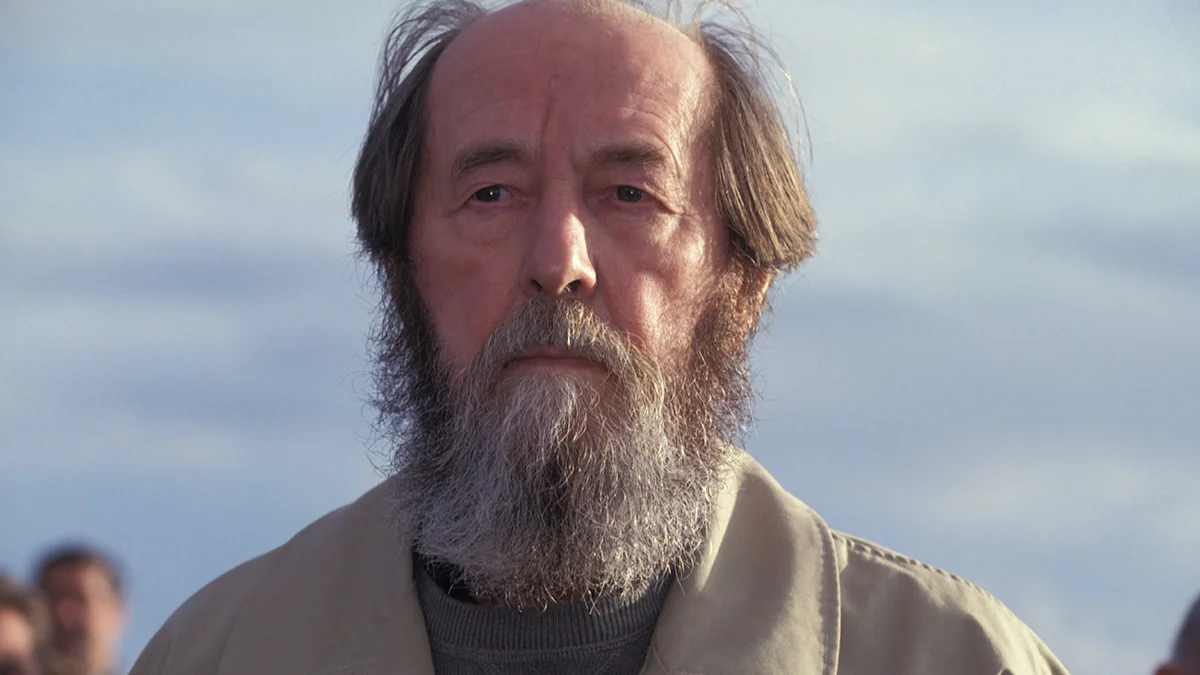
Portrait of Alexander Solzhenitsin, January 9, 1993. Photo: Patrice Picot / Gamma-Rapho / Getty images
Fifty years ago, the Nobel laureate Alexander Solzhenitsyn was expelled from the USSR. He returned twenty years later - and a completely different country. What then, in the mid -seventies, was his forced departure for society - and what turned out to be his return?
Chronicle of the flowing events
Alexander Solzhenitsyn decisively changed the Second World War. Apparently, it was then that he began to allow himself to express criticism of Stalin, which ultimately led to the arrest in February forty -fifth. Then the accusation, the sentence-eight years of the forced labor camps and the eternal reference to serving punishment, the camp itself, work in sharashki, the transfer after the conflict with the bosses of the prison Research Institute in Kazakhstan ... Solzhenitsyn was released on February 13 (this is truly the fateful month for him) of 1953, then the settlement in the Dzambul region, the disease, and the cure, and the cure, the cure, and the cure To central Russia, full rehabilitation (February 6, 1957).
Twelve years, sparingly retold in one paragraph. But behind this paragraph is endless suffering and humiliation that a man was subjected to, just doubting in something important. There were millions of such, but of the survivors of extremely few, literally units, found the strength to write about it. We will not even say “talent in ourselves”, because many could have talent, but almost no one left.
As it turned out, Solzhenitsyn was among those units, and as a result, due to the unprecedented volume of his personality, the strength of the spirit, the unconditional artistic talent and colossal performance, he managed to become the only one-it relate differently, and this is true, because it is also ambiguous in his actions, but the Solzhenitsa scale and uniqueness are indisputable.
In fact, the Soviet government from the good made only one for Solzhenitsyn: rehabilitated, that is, canceled her own illegal decision. Further, after a short period of a calm attitude, a mathematician who quickly became a writer developed in spite of the authorities and spite - his works were published, put on stage, he traveled and spoke. And, most importantly, he wrote further.
Publications abroad attracted the attention of not only the literary public to Solzhenitsyn, and explosive interest led to a relatively logical course - the award of the Nobel Prize. After the scandal in 1958, with Pasternak (which was given a prize for poems and “the continuation of the traditions of the great Russian epic novel”), the Nobel Committee seven years later gave the Sholokhov Prize (“For the Artistic Power and integrity of the epic”). The statements have not been subside that the Nobel Committee tried to establish relations with the Soviet leadership. So or not, we are unlikely to ever learn, but in any case, five years later a new powerful move from Stockholm followed-Solzhenitsyn award "for moral ( Ethical ) force with which he followed the immutable traditions of Russian literature."
The wording unequivocally says that Solzhenitsyn is right as a moral (ethical) landmark, and taking into account his opposition to the Soviet government to the whole world, it is clearly indicated who is not right in this confrontation. Scandal! A terrible scandal!
(It is often emphasized that the first publication of Solzhenitsyn and Nobel was divided only eight years-yes, this is a record, but still the story “Shch-854”, later renamed “Ivan Denisovich”, was written back in 1959. Eight years-not eight, although, of course, uniquely short time.)
Instead of rejoicing for his writer, who was ahead, as it became known fifty years later, Nabokov, Nerud, Grasse, Bell, Amadu, Durrenmatt, Ionesko and others, the USSR predictably decided to resort to methods tested on Pasternak and began to poison Solzhenitsyn. But he coped. Morally. In August 1971, they tried to kill him, secretly introducing him the poison, but here he survived. Physically.
Speaking of the writer on the part of the KGB to mention excessively - of course, he has long been under the closest attention of the "organs". And in the end, something truly irreversible happened.
Exile
The final aggravation of relations with the Soviet government occurred in August 1973, when a tragedy happened with Elizabeth Voronyanskaya-a longtime assistant to Solzhenitsyn. She met a writer ten years before and was engaged in both a reprint of texts on a typewriter and bibliographic work - she selected materials from old publications. In that fatal month and year, she returned to Leningrad from Crimea, and her (together with her friend) was arrested right on the platform of the station.
Apparently, the 67-year-old Voronyanskaya spent five days on Lubyanka and during the interrogations she testified to Solzhenitsyn, and also issued a place of storage of one of the instances of the typewriter of the Gulag Archipelago. Unable to withstand the load of her act, the Voronyanskaya on August ninth made a suicide attempt, unsuccessful - they managed to save her. The woman left the hospital and on August 23, exactly two weeks later, brought to the end.
Solzhenitsyn learned about this only ten days later-and immediately reported to Paris, to the Imka Press Publishing House, in which photographic film with the “Archipelago” for a long time, which was ready for the publication of the novel. He wrote the famous “letter of the leaders of the Soviet Union” - a giant nationalist manifesto, now it would be called a program statement or even a full -fledged election program. The eighteen -page letter was sent to the Central Committee of the CPSU in September, although there was no official reaction.
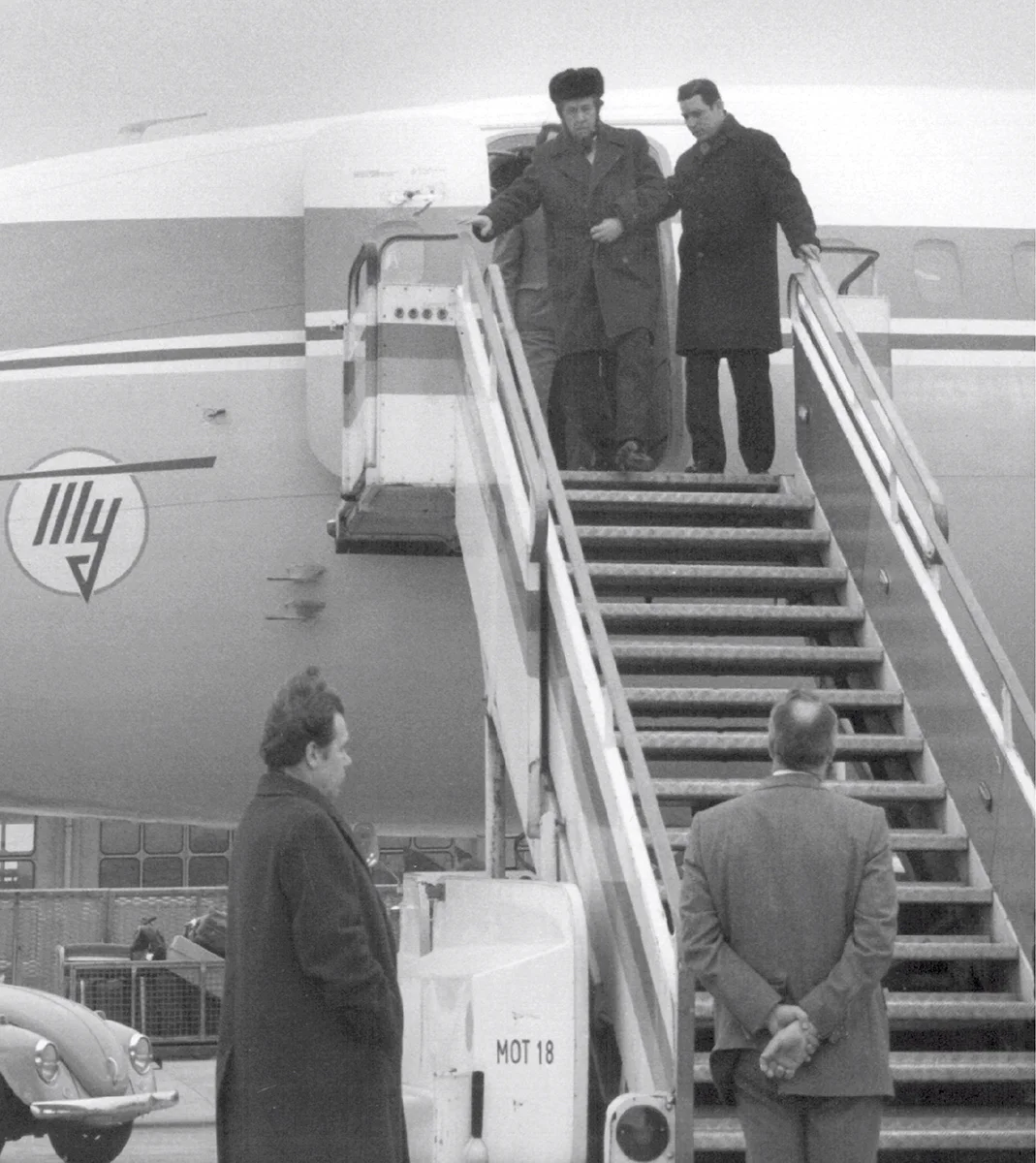
But they continued to follow Solzhenitsyn carefully, and at the beginning of January 1974 the writer's activities devoted a whole meeting of the Politburo of the Central Committee. The final, although not unanimous decision - Solzhenitsyn should be arrested and sent from the country (some members of the Central Committee insisted that it was necessary to arrange a public lawsuit). On February 15, Izvestia reported that the decree of the Supreme Council Solzhenitsyn was deprived of citizenship and “expelled” outside the country “for the systematic committing of actions that are incompatible with belonging to citizenship of the USSR and and damage” the same way.
This happened exactly 50 years ago - February 13, 1974.
Solzhenitsyn was not going to leave the USSR. He excluded emigration as such for himself, but did not want to temporarily leave the country, fearing that they would not let him go back - and, as it later became clear, fearing rightly. Therefore, for example, he did not go to the Nobel Prize at the end of 1970, but received it only in 1974-already in exile.
According to the writer from Moscow, Vladlen Efimov, the Soviet intelligentsia and citizens adjacent to it, in general having an idea of Solzhenitsyn, took the news of his arrest unequivocally: the famous wrestler with the regime was seized and thrown into prison. “What about him - and with all of us - will be further? .. Moscow was buzzing about this in those days. One of my relatives, a pensioner, who served a link in the Deaf Bashkir village, cried out with indignation: “Bandits!” Then he dressed, pre -which was bored and went to the party meeting, where the question of Solzhenitsyn was definitely not discussed, ”recalls Efimov.
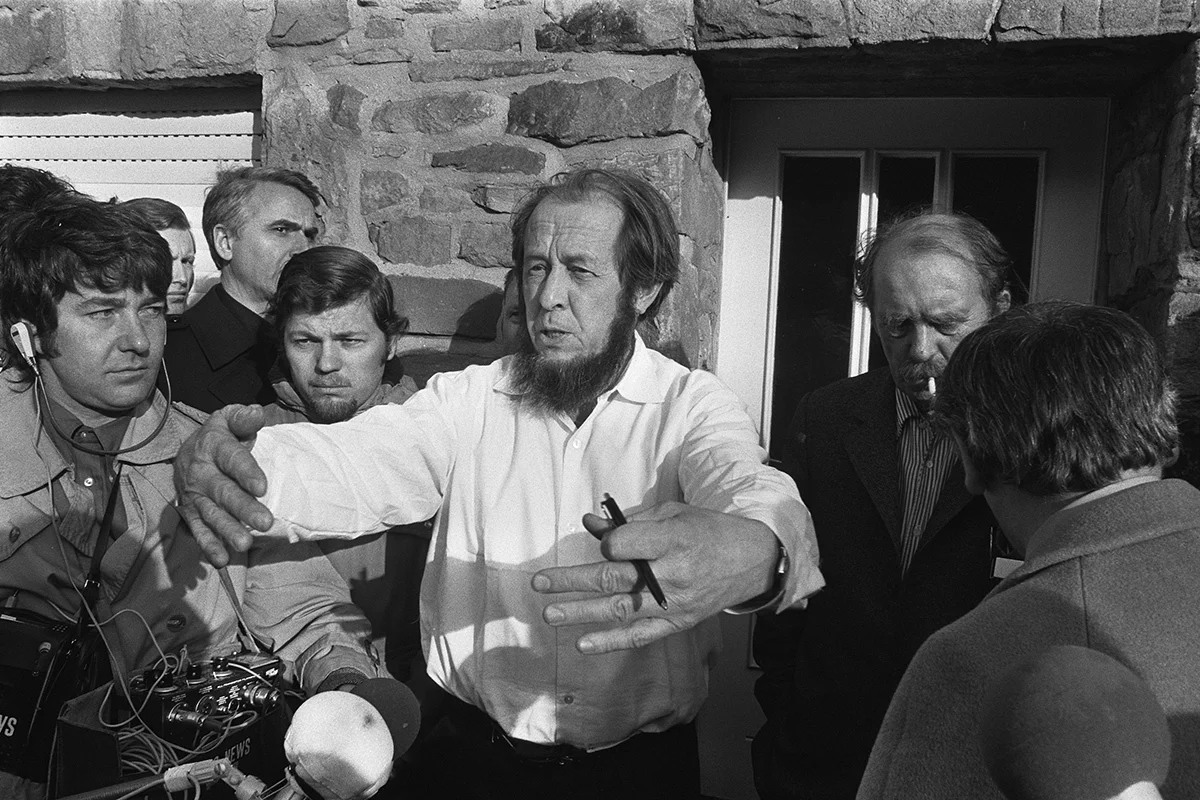
Solzhenitsyna was sent to West Germany. Where exactly, it was not so important for sympathetic - it was important that he was not left in prison. "Hooray! A sigh of relief flashed through cities and towns, ”the Moscow writer says slightly ironically.
The day when Solzhenitsyn was sent, Efimov, in his own words, remembers well: “From many windows came the grinding sound of a jammer-people tried to hear something from the“ enemies ”. He flew, did not reach how he was met, what does this mean? .. Exactly about the same people in an undertone spoke in the yards and in the kitchens. Someone said about the authorities: they stuck to plant . And someone: they chose a great move . I don’t remember anyone sincerely believed that there, in the West, his mother would show Kuzkin. ”
“Blind”, “excellent move” - interpretations are really varying. And what was the “expulsion” for Solzhenitsyn himself?
The famous writer Viktor Erofeev, by that time a 27-year-old young author, preparing for the defense of the dissertation, says unequivocally: “This was completely not release, but a punishment.
Expulsion from the country was generally one of the serious Soviet punishments. They wanted to send Pasternak, but sent Solzhenitsyn. This punishment became very painful for him, he experienced him seriously. ”
However, Vladlen Efimov does not agree with this. “The one who expressed the opinion that Solzhenitsyn’s fans (or to himself) were perceived as a punishment, apparently, either did not read samizdat, or lived not in the USSR, or did not live at all at that time. And those who read the quietly “in the first circle”, probably remembered the explosion of laughter that the sharashka was met by a playful sentence sent to Prince Igor at a parody court: “To declare the defendant by the enemy of the workers and expel from the borders of the USSR! Let them, in the west, will at least die!”
Solzhenitsyn was not going to die. He immediately, straight from the Frankfurt Airport, arrived at Henry Belll's house (this is about 220 kilometers), which also received the Nobel Prize by that time. As Rene Bell, the son of a German writer, was told in an interview in 2020, the noise in the newspapers was huge, and in the small West German village of Langenbroich, where Henry Bell and his wife Annemari lived, an unthinkable number of journalists gathered. The writers talked through the translator - Solzhenitsyn did not know English then. But, contrary to this, friendship really arose between the two Nobel laureates: they were actually peers (born in 1917 and 1918) and with a similar post -war experience, and they had something to discuss, albeit through a sieve of translation. “The father appreciated and respected Solzhenitsyn, but this does not mean at all that their political opinions coincided,” Rene Bell said in 2020.
But back for a short time to the situation in the USSR. In addition to the disgraced author of the “Archipelago”, after all, there were many other no less significant writers-sixties-but Solzhenitsyn seemed to cover them with all the powerful figure of Solzhenitsyn or at least covered them. “When he was sent, they became a little easier for them,” Viktor Erofeev believes.
Life in the West
Almost immediately after the forced emigration of Solzhenitsyn, in less than a month, in the West, the very letter was published to the Soviet leaders, which closed by European newspapers and frankly upset many Soviet emigrant dissidents. They found the text, and most importantly, the ideas of nationalist and anti -democratic (from 2024 the text seems the same).
Solzhenitsyn annoyed everyone, and this was a certain paradox: for almost all his life, he remained strangers among strangers. He still carried the Soviet system as possible-and, as Viktor Erofeev says, “crushed all the Murans Communists,” from which they sympathize with the “crushed” and they themselves were horrified. But Solzhenitsyn, having settled in the USA, criticized the American orders, which caused natural irritation in journalists and in some politicians. Solzhenitsyn did not succeed in becoming his own, except for his own home, until the beginning of the two thousandth.
“Further, he more and more exposed the soulless West and the Western lifestyle, actually quarreled Russian emigrants among themselves, was an eternal stumbling block, spread out with many former friends, including the closest ones,”
- recalls Vladlen Efimov. “His statements became more and more nationalist and patriotic,” Erofeev agrees.
Solzhenitsyn did what he considered correct, and since he was in a “safe place” (we take this expression in quotation marks only because it did not exist at that time, but appeared in recent years), nothing threatened him.
However, in the USSR, in the pre-perestroika era, they learned about this through the fifth hands and, in any case, not immediately, and the restructuring and the process of returning literature, the most important role in which the texts of Solzhenitsyn played, pushed the contradictions that he generated with all its existence for some time. He came to Russian-speaking readers (namely, “came, and did not“ return ”)“ The Gulag Archipelago ”, then, in 1990, Solzhenitsyn published the article“ How to equip Russia ”, whose name became almost a meme-there he developed topics raised in“ Letters of Leaders ”; In particular, the writer proposed to preserve the Union of Russia, Ukraine, Belarus and Kazakhstan after the inevitable collapse of the USSR.
“Yes, our people were divided into three branches only according to the formidable misfortune of the Mongol invasion and Polish colonization. This is all-a falsity invented incredibly, that almost from the 9th century there was a special Ukrainian people with a special non-Russian language, ”wrote Solzhenitsyn. “Today to separate Ukraine means cutting through millions of families and people <...> brothers! Do not need this cruel section! - This is the dullness of the communist years. Together we rebuilt Soviet times, we got into this pit - together and we will get out, ”Solzhenitsyn believed. “Everything that has been said is completely applied to Belarus, except that there was no reckless separatism there,” he added.
“Unfortunately, I was not heard. He was not understood, ”Solzhenitsyn said in 2005 in an interview with VGTRK“ Russia ”according to numerous reprints (the source could not be found).
In any case, he was quite heard. Just not right away. And it is not a fact that Solzhenitsyn had in mind just such an embodiment of his ideas.
Solzhenitsyn in the USA
Especially for this text, Dmitry Bykov shared some thoughts about the current perception of Solzhenitsyn in the United States. The main thing is that, contrary to counter -jet statements, the reputation of Solzhenitsyn in the American academic and student environment to this day is extremely high. “Students prefer to get acquainted with the Russian history of the twentieth century through the“ Gulag ”and the chapters from the“ Red Wheel ”, which was translated in a timely manner and was repeatedly reprinted; According to them, Solzhenitsyn Well Packed , that is, the material is well laid - it is clear that the mathematician wrote, ”Bykov says.
Solzhenitsyn in the United States is popular primarily due to the fact that [almost] his book became a bestseller and/or turned into a scandal. In extreme cases, a political discussion.
And all this turned out due to the fact that he chose sensational topics, saying that he was worried, not particularly vulgarizing his thoughts. (“In general, the American political correctness is exaggerated: here someone’s hurts, he says about that, and the ability to go against the general opinion is rather welcome than condemned,” says Bykov.)
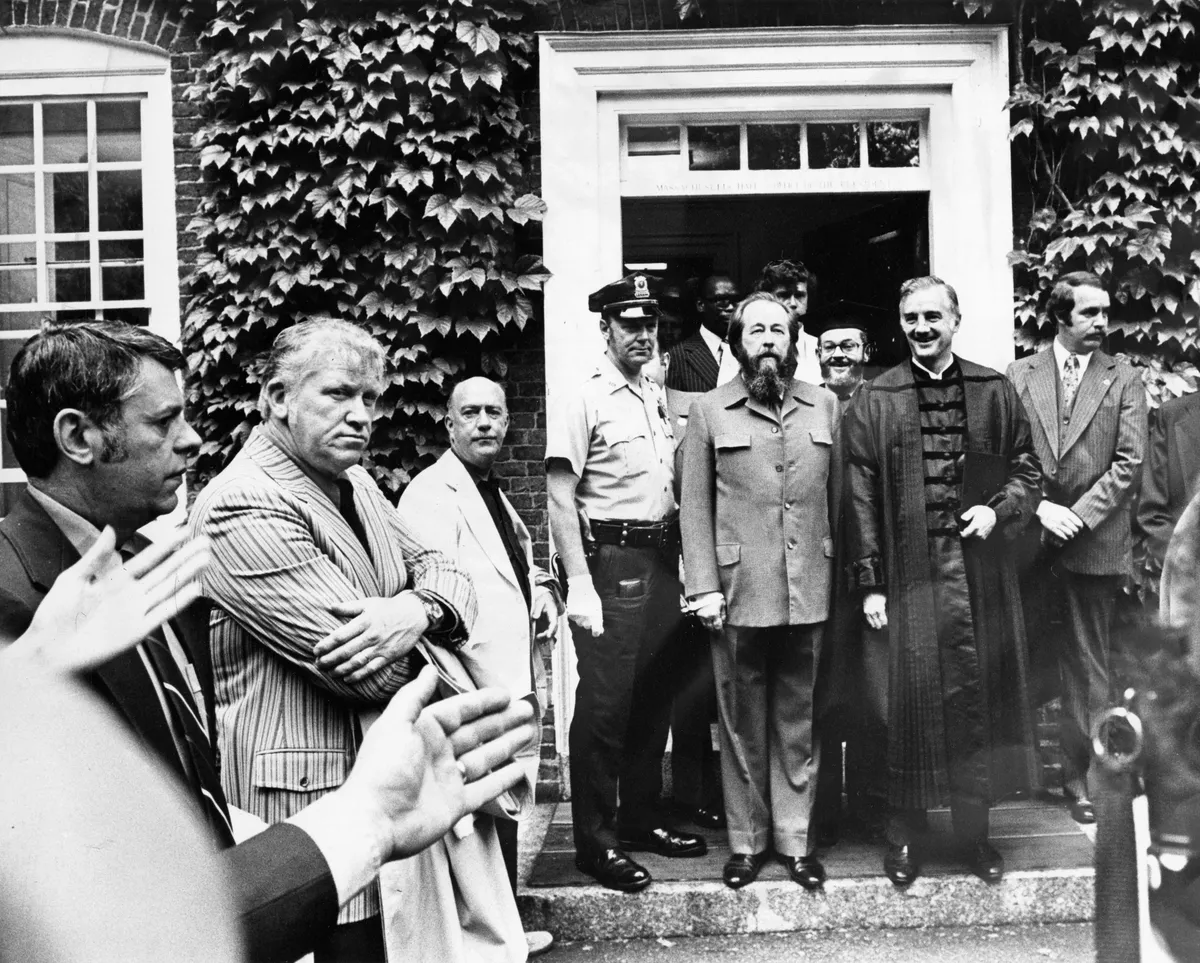
He also notes that the Americans are proud of Solzhenitsyn as their own - he lived there for twenty years (“And America loves its sights,” says Bykov). Another thing is that Solzhenitsyn, of course, outside the same academic circles, became a character in pop culture in the USA, appearing even on T-shirts and circles. But could it be different if you take into account that it is difficult to understand the intricacies of Soviet-Russian politics and literature even its participants, so what to expect from non-specialists in the United States? Solzhenitsyn himself perfectly, in the words of Bykov, embodied the type of crazy professor-poker (outwardly-exactly yes). All this of the most expelled Nobeliat would be pleased - far from a fact.
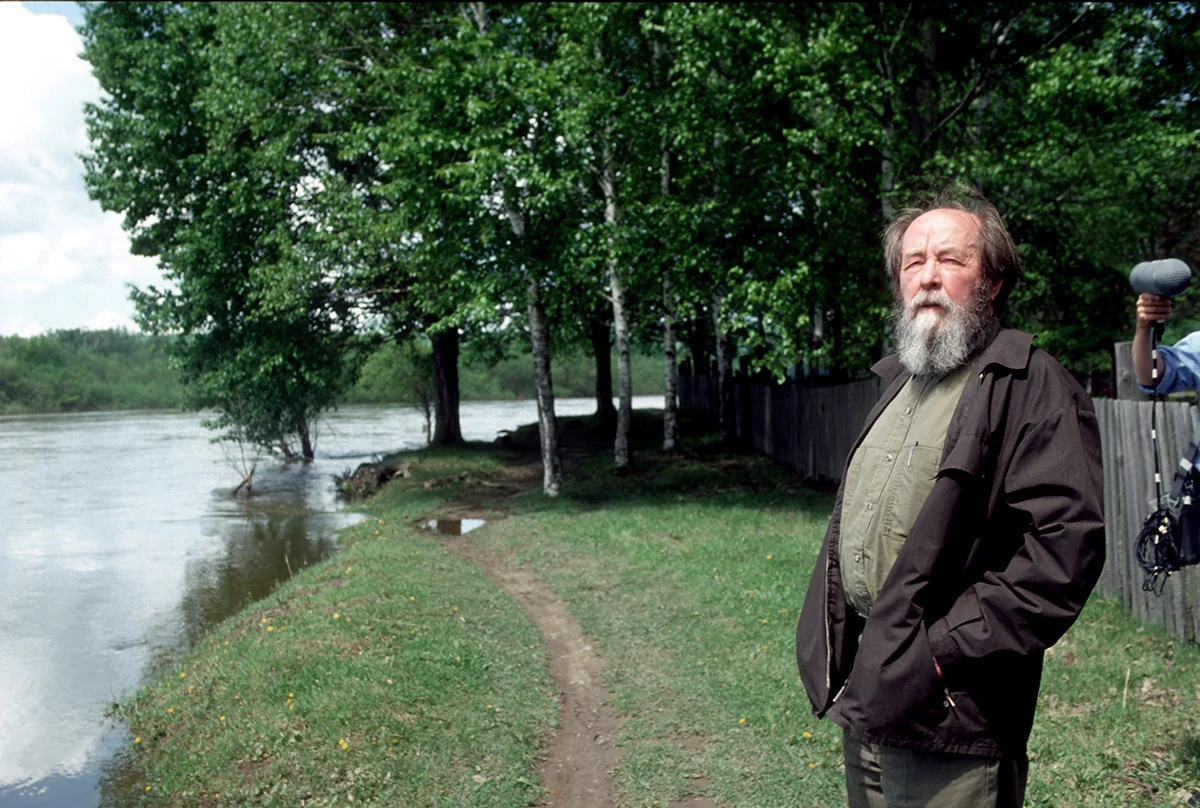
But, probably, another would be pleased. Russian -speaking readers may be surprised, but Solzhenitsyn in English is easily read - he has everything “dynamically, practically, informatively”. So his American students told Bykov, and why would they be shouted with their souls. Bykov himself believes that the Solzhenitsyn original complexity is smoothed out in translations. “I read the first circle (“ in the first circle ”) and was amazed at what classic and slender prose it was, while in the original a lot clung and scratched,” says Bykov. Well, of course, you should not get to the extremes, believing that Solzhenitsyn's texts in English turn into reading - this, of course, is not.
It is also important that many in the United States are perceived as a pamphletist, the author of non-fiction and generally publicist. “Whatever you say, and his journalistic investigations have no equal,” the words of the student from Aiva, who writes the work of True Crime . Solzhenitsyn would like such an assessment, he understood in publicity, adds Bykov.
Again in Russia
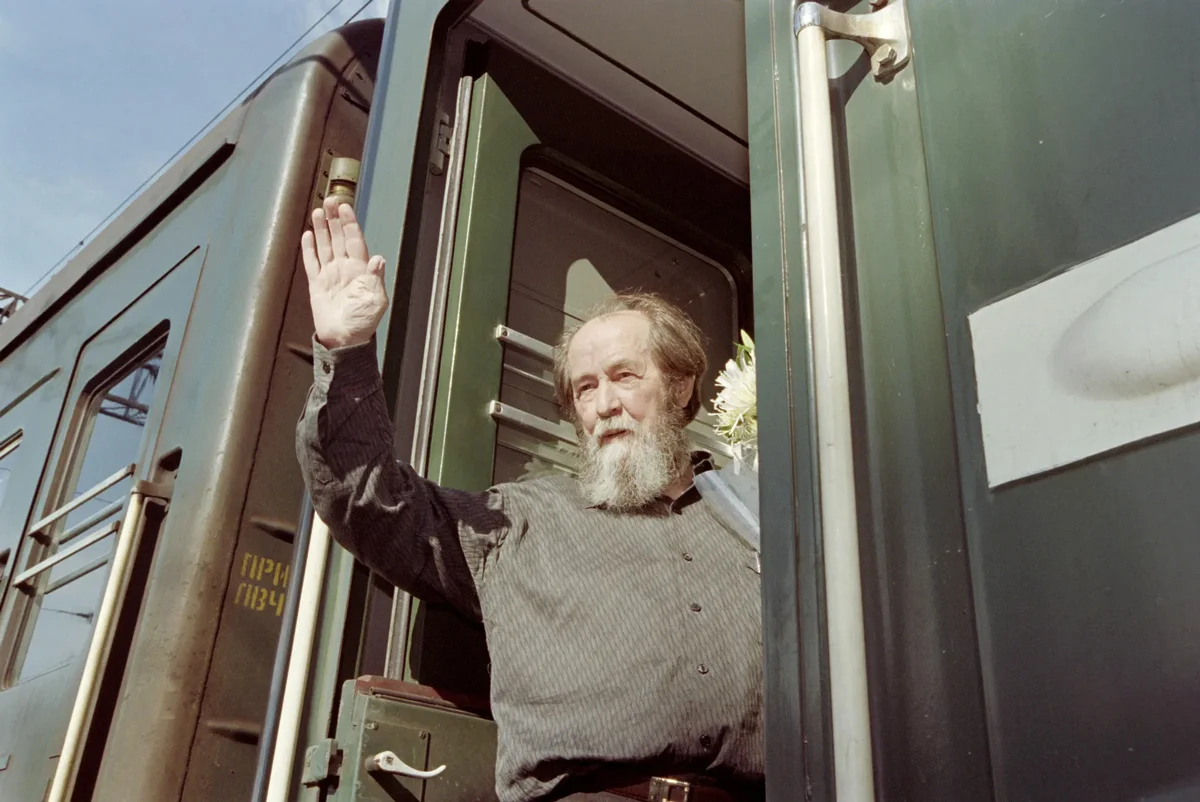
The final return of Solzhenitsyn to Moscow through the Far East in a specialized wagon attached to ordinary trains is unprecedented. Politics and artists-artists have no time for such voyages-they all need to show off before the public, that is, work. У писателей время, наоборот, есть, но решиться на это в послевоенной истории мог только Солженицын — естественно, вопрос не в том, чтобы потратить неделю на поездку из Владивостока в Москву прямым поездом (из США Солженицын прилетел в Магадан, а потом перелетел в Приморье), а в том, чтобы ехать два месяца, останавливаться в каждом большом городе, выходить «в народ» и общаться с людьми. Для этого требуется… Что? Самолюбие? Самоуверенность? Всё вместе, и много чего еще. Но в первую очередь — масштаб личности. И осознание этого масштаба самой личностью. В истории русской литературы таким же был только Толстой — еще один великий возражальщик, создатель противоречий и бородатый почти-мессия.
Разговоры с людьми — всегда хорошо. Но неизбежными стали и другие разговоры — с руководителями разного пошиба, но единого бэкграунда. Кто мог руководить регионами в 1994-м? Только бывшие обкомовские. Приветствия, застолья… Восторга в интеллигентских кругах всё это точно не вызывало. Начавшееся слияние Солженицына с государством российским (уже не советским) многих настораживало с самого начала.
Хорошо помню свое подростковое ощущение от телерепортажей про многонедельную поездку Солженицына с востока на запад.
Казалось, что он едет бесконечно и никогда не приедет. Казалось, что надвигается айсберг, глыба, сверхгора.
Казалось, что грядет нечто новое — что неизбежно с собой несет человек такой биографии, пусть ему и 76 лет. Но… Солженицын приехал, ярко выступил в Госдуме («Мы как будто не видим, что сегодня в массах белорусского и украинского народов растет понятие, что произошел болезненный разрыв многомиллионных родственных связей, что мы родные народы, что мы должны быть вместе. А вот из Казахстана… Из Казахстана нам никак нельзя бежать») — и… Всё. Солженицын, по словам Виктора Ерофеева, будучи царем и богом, по неизвестным причинам со своего трона сошел. Российского Вацлава Гавела не случилось.
Зато случилось кое-что другое: воззрения Солженицына стали опорой режима нулевых (а также, как впоследствии стало известно, и десятых, и двадцатых). Солженицын считал, что Россия не должна быть открытой миру, в чем прямо противоречил Андрею Сахарову. По Солженицыну, Россия должна жить обособленно. Он полагал, что фактически из советской системы нужно изъять атеизм и коммунистическую идеологию, а остальное оставить почти в таком же виде. Да, безусловно, в конце той самой думской речи Солженицын сказал, что нужно сберегать народ, чего в современной политике Кремля, мягко говоря, не наблюдается. Но Солженицын говорил и о многом другом, что частично было процитировано выше и что было взято на вооружение в прямом и переносном смыслах.
«На фоне реванша консервативных ценностей, впрочем, идущего на спад по мере приближения выборов, солженицынский традиционализм и антиглобализм выглядит скорее достоинством, нежели пороком»,
— считает Дмитрий Быков. «Режим не исходил из «постулатов» Солженицына, но использовал их в своих целях», — полагает Владлен Ефимов. Оба высказывания максимально похожи на правду: настоящий поворот во внутренней и внешней политике России произошел тогда, когда Солженицына уже не было в живых, и для режима было бы неосмотрительно поднимать на знамена хоть и классика, хоть и человека, который поверил Путину (в чем, по мнению Виктора Ерофеева, и заключалась одна из основных ошибок Солженицына), что самому правителю РФ очень нравилось, но все-таки уже умершего.
А умер Солженицын 3 августа 2008 года. До начала российско-грузинской войны, на деле показавшей намерения Кремля и фактически разделившей постсоветскую историю на «до» и «после», писатель не дожил пяти дней.