Ecologists - about record catches that the authorities boast of, and about the state of the country's fishing economy Photo: Administration of Primorsky Territory
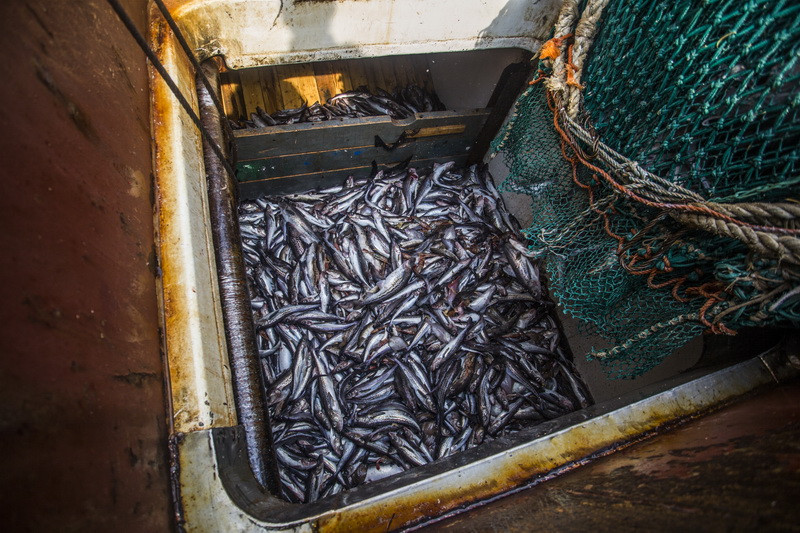
On January 17, the head of Rosrybolovstvo Ilya Shestakov reported to Vladimir Putin about the record catches of 2023. “Russian fishermen have produced over 5.3 million tons of fish. This is the best indicator over the past 30 years, ”he said. According to Shestakov, the country provides its needs for fish and seafood by 150%, selling surpluses to other states.
Such victorious statements sound beautifully, but after them questions appear. Are such records achieved by destruction of populations? In which regions of Russia are the overflow of fish and what species suffer from it to the greatest extent? How are things with poaching? In a word: we will not be left without fish if we catch it in such volumes?
Smola talked about this with ecologists Dmitry Lisitsyn and Konstantin Zgurovsky.
Without harm, you cannot catch a fish from the pond
“Smol”: Record catches that Rosrybolovy are talking about - is this an achievement or a danger to be left without fish in the near future?
Dmitry Lisitsyn:
There is no clear connection that if more fish is caught, then it will remain less. Most fishing fish have a relatively short life cycle, and when the industry catches too much, the reserves fall quickly. Therefore, we can say that a stable large catch reflects the general relatively favorable state of sea biological resources. But this is precisely the general condition. Separate fish populations can suffer greatly from excessive catch, and some are even on the verge of disappearance.
5.3 million tons include not only fish, but also seafood: crabs, shrimp, mollusks, sea hedgehogs. This also includes aquacultural fish and seafood - that is, grown in pond/garden farms and in fish farms. In the latter case, the fish is raised in artificial conditions from fertilization to the fry stage, after which they are produced for a ridge into open ponds - rivers and ocean.
If you are engaged in aquaculture, it will cause damage to wild populations. In Russia, this is especially true for Pacific salmon in the Far East,
Where the mass artificial reproduction of the young at salmon fishing plants (LRZ) and its release “on free graz” threatens wild individuals with a simplification of genetic diversity. LRZ reduce the effect of natural selection - salmon they have issued are worse adapted to free conditions. They cross with wild individuals, which leads to a decrease in the survival potential of natural, natural populations.
Photo: Administration of Primorsky Territory
In addition, in the process of competition for food and habitat, concentrated masses of factory salmon often suppress wild populations (especially small ones) because of which they can quickly be under threat of complete disappearance. This is already happening - an example of this is the story of a unique population of the wild ceta of Lake Lebedino in the Basin of the Kurilka River on the island of Iturup. The results of studies published by a team of 13 Russian scientists in 2011 showed that in just a few years, after a sharp increase in the power of the local LRZ, it was almost completely replaced and replaced by artificially grown young people.
Therefore, it is important to isolate the aquacultural fish from the wild and manage their resources separately.
Wild fish is born, lives and dies in a natural environment, eats natural food, therefore it is in high demand among consumers who are ready to pay more for it. The fact is that the modern aquacultural industry is non -viable without the use of a wide range of all kinds of chemicals. In garden farms, a great crowd of fish contributes to the spread of infections and parasites, which means that antibiotics, antibacterial drugs, trappers, and antiparasitic agents are needed. To maintain the proper quality of water, various aquachymicates are used, including disinfectors and means to remove pollution. In order for goods to enter the shelves of stores faster, growth stimulants are also used. And in salmon garden farms, artificial dyes are added to fish to food so that the meat on the counter has a bright, attractive appearance.
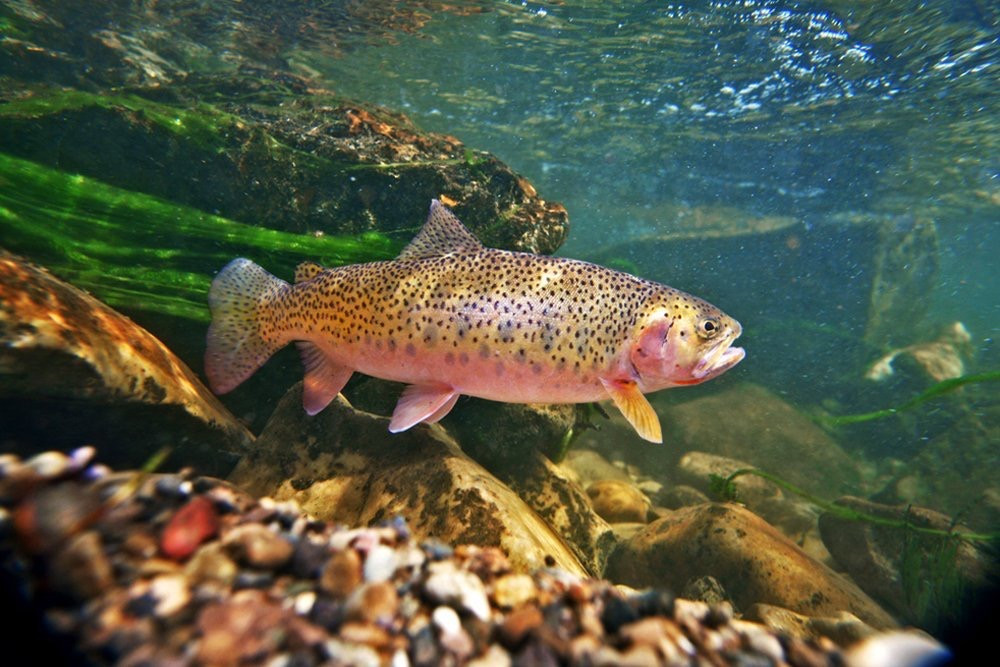
Atlantic salmon and rainbow trout, which we see on the shelves of Russia are a fish completely grown in artificial conditions. Farms involved in its breeding are no different from industrial pig farms and poultry farms.
Rainbow trout. Photo from social networks
People in Russia, unfortunately, do not know that such a fish is notorious, and with frequent use is even harmful due to the content of various chemicals in it. The European Union has long adopted the norms for the content of harmful substances in the Atlantic salmon and rainbow trout. We have such requirements either underestimated or absent. Pacific salmon will spawn once in a life. There are six types of such fish in the Far East: pink salmon, keta, kizhum, non -nonsense, champ and Sima. There are practically no sims in industrial production due to its low number. The reserves of the champs are greatly undermined and are still not restored, so today the main fishing species are pink salmon, keta, failure and kizhum. The growth of catches of precisely these fish, especially the first two, makes a significant contribution to the increase in all -Russian indicators. Most representatives of fishing science say that this is due to global climatic changes.
"Smol": That is, for fish, a global climate change has a long -term positive effect? And will it remain in the future?
Dmitry Lisitsyn: Here is the time to recall the textbook example about the average temperature in the hospital: far from everywhere the catches are growing, somewhere, on the contrary, they fall strongly. So, for example, the catches have grown markedly in Kamchatka and Sakhalin, but in the Amur in recent years they decreased greatly. Clocks of pink salmon beat all records in Kamchatka, and on Sakhalin they fell catastrophically. If until 2015, Sakhalin Island was provided an average of 40% of the annual Russian pink salmon catch, then in the past five years this figure has fallen to 6% - that is, seven times! In absolute terms, the average annual catch of the Sakhalin pink salmon for the same time periods decreased from 93 to 30 thousand tons - three times. But back in 2009, the catch of pink salmon on Sakhalin was 232 thousand tons.
It cannot be that climatic changes positively affect Ketu and Gorbusha Kamchatka, but negatively - on Ketu Amur and Sakhalin Gorbush. Obviously, the matter is different. Namely, in the too large catch of these specific species in these regions. In recent decades, the approaches of pink salmon to Sakhalin and Keta to the Amur have gradually decreased, the spawning grounds were filled weakly, but the authorities allowed to continue the industrial catch. Natural reproduction in the rivers began to fall, caviar on the spawning grounds remained less and less, like a young man migrating into the ocean. Together, this is called Poles.
Photo: Government of the Kamchatka Territory
The situation is aggravated by mass poaching, which the authorities are simply not able to cope with. In other words, if the fish is not allowed to be spawning grounds, no climatic changes will help her recover.
In general, I fully admit that climate change can positively affect the survival of the young salmon in the northern part of the Pacific. But at first it is necessary that this young man be born in the rivers! In Kamchatka, this has long been aware, and now it is monitored that wild salmon passes to spawning grounds in the necessary quantities. It has not yet been possible to restore the champs there, but the return of the pink salmon, ketes, nonsense and kizhuch are growing to the shores of the peninsula, even despite the high level of poaching. In 2018, Kamchatka fishermen took a record catch of salmon in the history of observations. The result of 2023 is only a little inferior to him. But on Sakhalin, salmon catches, on the contrary, are close to historical minimums, and no climate saves the situation.
“Smol”: In which regions of our country of Pisces are observed most and is there a threat to population?
Palace - excessive catch, withdrawal of too much of the population, undermining the potential of its reproduction. It can occur as a result of both permitted catch and poaching. But poaching does not always lead to a shift. If illegal withdrawal does not exceed the restoration abilities of the population and the maximum "capacities" of ecosystems, this is not over. 5.3 million tons voiced by Rosrybolovstvo include not only legal prey, but also part of the poaching catch, legalized through various schemes. At the same time, everything that is caught by poachers is in the “gray” zone and often does not lend itself in a quantitative assessment.
Konstantin Zgurovsky :
Poacher (and overheads) is observed in those places where valuable aquatic biological resources are concentrated, or where there is an active fishing. And this is, first of all, the Far East, which gives 60-70% of the catch in Russia. In particular, Western Kamchatka, where about a quarter of all Russian fish is mined.
If there are few bioresources, illegal catch does not go beyond the scope of small household. The level of poaching most often depends on the season - for example, when the crash of the crab begins, the poachers focus on it, if salmon goes to spawning, they catch this fish. But there is also year -round poaching - this applies, for example, sea cucumbers (trepang).
Also, illegal catch is affected by the employment of the population - if people do not have the opportunity to earn money, they will poach. This is reinforced by the activity of sales markets for such "gray" products. So, the population can illegally catch salmon and hand it over to legal processors for the sake of earnings. It is beneficial for unscrupulous processors - they can only caviar from the fish, and throw everything else.
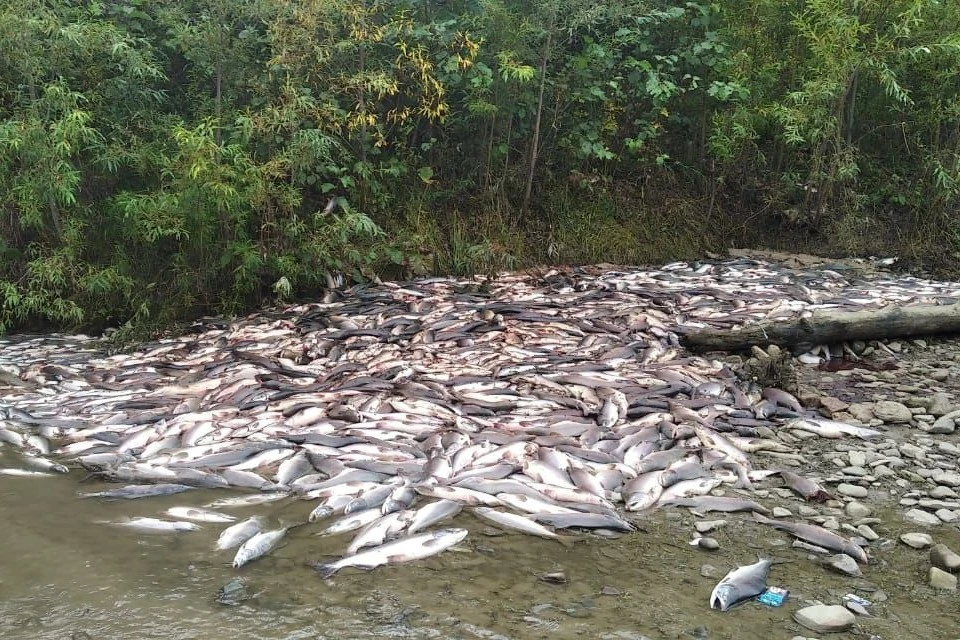
Sakhalin Island. The fish burial in the upper reaches of the Lazovaya River. Poachers extracted caviar and threw out unnecessary fish. Photo from social networks
In the Caspian region, at the mouth of the Amur, Sakhalin and some Siberian rivers, sturgeon poaching is common. Despite the increase in the amount of fines for the catch of sturgeon, this case is still very profitable. Poachers still remain in the plus - having caught one red -hot beluga or kaluga, which can weigh up to a ton and carry up to ten kilograms of black caviar, they can pay a fine and continue to engage in this case until they fall under criminal prosecution .
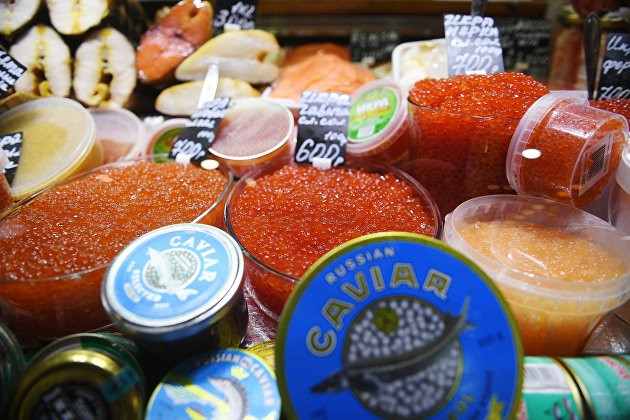
My colleagues-scientists once did an analysis of the black caviar sold in Moscow restaurants, and found out that a significant part of this caviar is poaching. Although according to the documents it was supposedly artificially grown.
This is a common practice: wild sturgeons caught in natural conditions are presented as a product of aquaculture. It often happens that caviar of Chinese origin is given out for Russian, which is valued above in the market.
In addition to sturgeon, in the mouths of Siberian rivers the illegal fishing of Nelma, Muksun, Muksun, are also widespread, poachers catch omul in Baikal, in the White Sea and the Baltic - the salmon and kumzhu, which significantly undermined the reserves of these types. Therefore, if you are offered wild salmon on the market, with almost 100% confidence you can say that you are either deceiving, or it is a product of illegal fishing.
Photo from social networks
"Smola": What other threats for fish populations in Russia carry human activities?
Konstantin Zgurovsky: Our rivers are polluted to varying degrees - they get waste of cities, villages, industrial facilities. So, the Ob is one of the most polluted rivers in Russia. Those who are damaged by the rivers, such as Norilsk Nickel in 2020 , pay decent compensation . But then the money is spent mainly for artificial reproduction - the construction and maintenance of fishing plants "afloat", the effectiveness of which is often doubtful. But we are talking about billions of rubles! These funds can be used more efficiently - to protect wild spawning grounds and the fight against pollution itself to support the natural restoration of ecosystems. Therefore, first of all, it is necessary to eliminate the cause, not a consequence.
A separate problem is pesticides and fertilizers used in agriculture, which eventually find themselves in the rivers and fall into the seas. This leads to ethtrification , the formation of dead oxide zones, the flowering of blue-green algae, which negatively affects water inhabitants.
Another problem is the ocean acidification due to the dissolution of CO2 in sea water, due to which mollusks, corals and even planktonic organisms with a lime skeleton die. But plankton is the basis of the ocean food chain. And, of course, we must not forget that the river is the main source of pollution of the seas of macro- and microplastics, again- due to human activity.
“Smol”: Are there any “accompanying victims” of the activity of the fishing complex in the form of marine mammals and other representatives of the marine or river fauna?
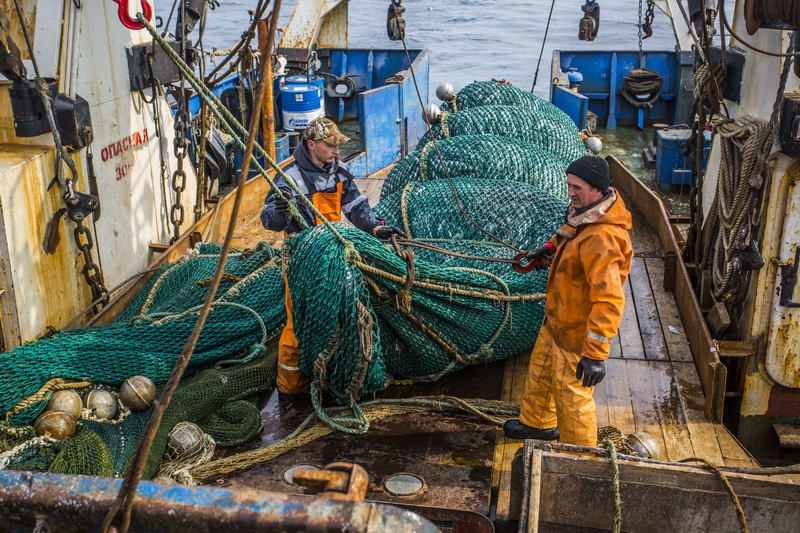
Dmitry Lisitsyn: Unfortunately, yes. In the first place here is the mining of salmon in the Far East - it is caught by drift nets. Since the 40s of the last century, Japan systematically increased this type of fishing in the northwestern part of the Pacific Ocean on the ways of migration salmon, which spawn to the shores of the USSR. In 1992, the Russian Dyntherolov courts joined the Japanese vessels. The length of such networks is measured in tens of kilometers - when installed in the sea, they drift in the surface layer of water under the influence of currents and winds, the fish in them is confused and there is practically no chance to get out of there.
But in addition to commercial species, many birds and a variety of marine mammals - dolphins, killer whales, sea seals, sivuti and other seals fall into drift nets. Sharks, sea turtles and even large whales are confused in the networks. It is not for nothing that they are called the "walls of death", they senselessly kill many living beings.
In 1992, the UN introduced a ban on any fishing with drift networks in the international waters of the World Ocean and urged all countries to do the same in their jurisdictions, but Japanese and domestic vessels continued to lead it in the Russian 200-mile economic zone. They did this until 2016, until drifting was prohibited in Russia. From this, not only the sea inhabitants, but also the fishermen of the Kamchatka coast immediately won. Previously, the drift fleet intercepted in the open sea part of the salmon going to the shores of the peninsula, and it was very difficult to determine the size of this part. However, the drift fishing did not completely disappear. Today, some Russian companies continue to use smooth networks, which, on the principle of action, are no different from drifts.
Photo: Administration of Primorsky Territory
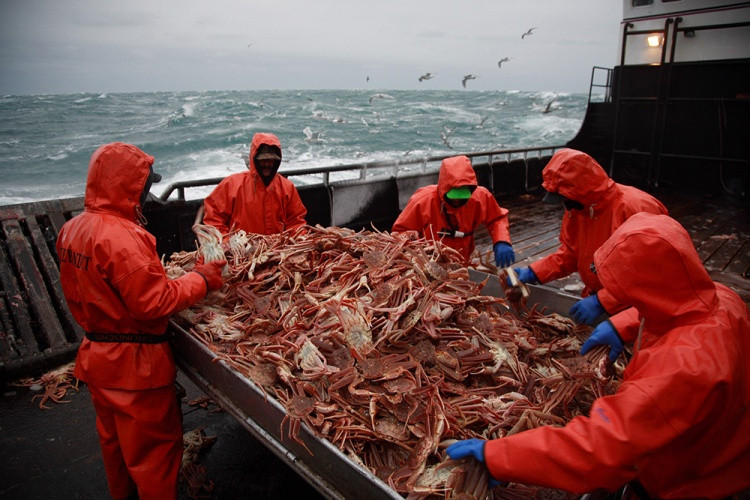
Konstantin ZGUROVSKY: The extraction of aquatic biological resources is associated with many problems: these are overlays and forms of other species along with the main object of the fishing, and the confusion of marine mammals in fishing networks, and the influence of fishing guns on the bottom inhabitants. So, for example, drages and bottom trawls cut everything that comes across on the surface of the bottom. For example, the coral-luggular “forests”, which exist in Russia: in the Arctic, in the Barents Sea and Western Kamchatka, suffer from this. These are ecosystems rich in animals, which serve as an important habitat for the propagation of many commercial species.
In the same Western Kamchatka there is a “kindergarten” of the Kamchatka crab, where the young people come - it hides there, eats, grows and migrates from there to other places. If it is destroyed, then there will be no crab either. In addition, crabs are very sensitive to the transference and the effects of climatic changes - an example of this is a sharp drop in the number of crabs in Alaska - about five times, starting in 2018.
At the same time, the famous American scientist Ray Hillborn compared the impact of agriculture and fishing on nature and showed that
If you engage in fishing correctly, introducing stable practices, then the damage from it is much less than from agriculture, which irreversibly transforms ecosystems.
To do this, you need to rely on the recommendations of scientists, as well as on the criteria developed by international organizations, in particular to the Code of Remember FAO . It is also necessary to pay attention to the preservation of habitats of valuable commercial species and all aquatic ecosystems as a whole. For example, now in the world there is a movement to preserve algae forests (Kelps) and their restoration in the places where they were destroyed. The academic community believes that Kelps can help solve the food problem of the growing population of the Earth, reduce the content of carbon in the atmosphere and reduce environmental pollution.
Do not forget about environmental examination, including an independent environmental audit of various forms of human activity and projects. In the case of fishing, this helps, for example, certification of crafts according to the standards of the Marine Board of Trustees (MSC) or according to the requirements of Global Seafood Alliance.
Fish rot from the head
“Smola”: Back in 2017, environmentalists demanded not to open Putin’s season at Sakhalin at all in order to save salmon population. What changed seven years later? Does any effect give the establishment of "passing" days for fish or other restrictions on fishing?
Дмитрий Лисицын: В 2017 году на Сахалин пришло очень мало горбуши. Поэтому для полноценного заполнения нерестилищ надо было максимально ограничить промышленный лов еще до начала путины. Но Росрыболовство этого не сделало, потому что ВНИРО и его сахалинский филиал СахНИРО дали завышенный прогноз по возможному вылову. Промысел шел в полном объеме, власти не стали его ограничивать, однако рыбаки поймали лишь 13 тысяч тонн горбуши — вдвое меньше прогноза. Для сравнения, в 2011 году улов составил 174 тысячи тонн, то есть всего за шесть лет он упал в 13 раз! Пустыми остались не только невода, но и реки — в южной части острова заполнение составило 39% от оптимального, а в северной лишь 4%.
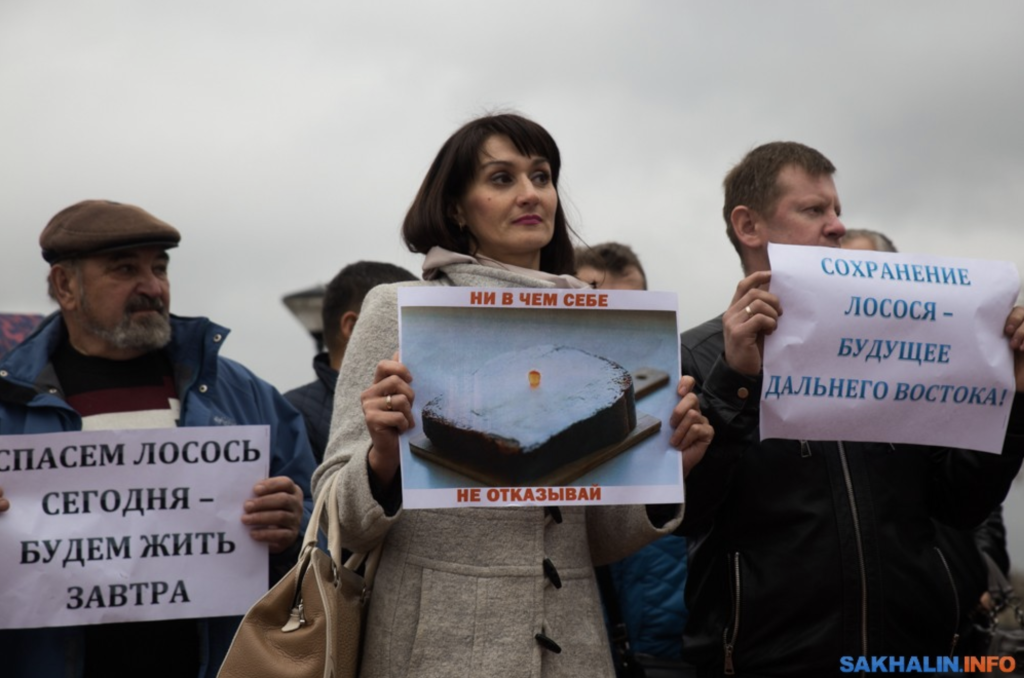
После такой провальной лососевой путины жители Южно-Сахалинска вышли на митинг , требуя запретить промышленный вылов горбуши. Росрыболовство полный запрет вводить не стало, но в путину 2018 года на всем Сахалине вдвое сократило разрешенную длину ставных неводов — до 1,5 км. Это сразу дало положительный эффект — заполнение горбушей сахалинских рек резко выросло. Однако в последующие годы чиновники продолжили практику сокращения длины только на юго-востоке острова, где очень много ЛРЗ. А на северо-востоке, где обитает только дикая горбуша, как и раньше разрешали ставить невода длиной до 3 км, ограничившись введением «проходных дней», то есть кратких периодов запрета на вылов, которые обычно плохо соблюдаются.
Митинг за сохранение лосося в Южно-Сахалинске. Фото: Sakhalin Info
В результате, на юго-востоке острова заметно увеличилось заполнение нерестилищ, и запасы горбуши выросли уже к 2021 году, а вот на северо-востоке ситуация остается неважной. AND
если говорить в целом о Сахалине, то уловы так и держатся на низком уровне. В предстоящую путину-2024 вновь ожидают слабые подходы горбуши, но Росрыболовство упорно отказывается ограничивать длину неводов на северо-востоке острова.
Местные наблюдатели объясняют это желанием влиятельных фигур рыбного бизнеса распространить индустрию искусственного воспроизводства лососей и на этот район, пока еще свободный от ЛРЗ.
«Смола»: Какие меры предпринимает государство и промышленные компании для сохранения популяций рыб и других видов?
Константин Згуровский: В 2022 году был принят новый национальный план по борьбе с нелегальным промыслом, введен в действие электронный промысловый журнал, работает система спутникового мониторинга, которая переходит сейчас на отечественный софт и оборудование, но их эффективность еще неизвестна.
Ответственные рыбаки в России заботятся о запасах, сотрудничают с экологами, потому что понимают: от состояния запасов, продуктивности и целостности морских экосистем зависит их будущее. Так, рыбаки Камчатки еще в 2013 году выступали против дрифтерного промысла. Несколько лет назад на Баренцевом море рыбаки согласились не работать в районах, где донные экосистемы особенно уязвимы, стали искать способы снизить негативное воздействие донных тралений и вкладывать средства в это направление. Ассоциации рыбаков принимают на борт и выделяют деньги на работу научных наблюдателей на промысле, заинтересованы в снижении загрязнения океана пластиком, нефтепродуктами, орудиями лова, работают над сокращением выбросов серы и углекислого газа в атмосферу.
Создание фонда ответственного рыболовства в России могло бы вовлечь еще больше рыбаков в решение экологических проблем — с его помощью можно было бы финансировать различные инициативы в области устойчивого развития. Но сегодня учредить такую организацию сложно из-за возросшей финансовой нагрузки на рыболовный бизнес — им нужно инвестировать в строительство современного флота, участвовать в аукционах квот, более того — растет цена на топливо и другие ресурсы.
Жизнь коренных народов Сахалина среди меняющегося климата и отравленной ради денег природы. Reportage
«Смола»: Что из себя представляют эти аукционы?
Константин Згуровский: Продажа квот на вылов сейчас активно внедряется в разных регионах России. Аукционы организует Росрыболовство. Квоты — это фактически право на вылов определенного объема ценных биоресурсов. Кто на аукционе больше заплатит и возьмет на себя дополнительные обязательства, тот право и получит.
Первые шаги в эту сторону начали делать в 2017 году — тогда государство выделило рыбопромышленным компаниям 20% от допустимого улова на сельдь, треску и минтай на Дальнем Востоке, на треску и пикшу на Севере. В обмен на эти квоты компании взяли на себя обязательство построить 64 рыбопромысловых суда и 27 береговых перерабатывающих заводов. Таким образом власти хотели развивать необходимую инфраструктуру. Общий объем инвестиций в строительство — свыше 240 млрд рублей. Правда, ⅔ этих «инвестиций» — кредиты Сбербанка.
В 2019 году Росрыболовство провело «крабовые аукционы»: на торги выставили 50% квот на добычу краба, а получившие их предприятия обязаны были еще и построить 41 новое судно. Однако из 64 и 41 судов построено было только 10 рыбопромысловых и 4 краболова.
Проблема в том, что рыбаки, заплатившие за квоты большие деньги, вынуждены влезать в долги. Их общая задолженность перед банками приближается к триллиону рублей. Сейчас аукционы касаются в основном крабов, но разговор уже ведется и о разных видах рыбы — треске, минтае, сельди. Недавно на аукцион выставляли несколько тонн атлантического лосося в Балтийском море.
Если ты получишь право на вылов 3-5 тонн лосося, то тебе, чтобы покрыть свои расходы (топливо, инвентарь, зарплата экипажа и пр.), придется добывать эту рыбу в бо́льших объемах нелегально, иначе ты просто не сведешь концы с концами.
Сегодня рыбаки набрали столько кредитов на покупку квот, что рано или поздно они могут прийти к браконьерству, чтобы не уйти в минус или разориться. А это приводит к безработице, которая способствует бытовому браконьерству — замкнутый круг, разорвать который рано или поздно придется. Необходимо восстановить долгосрочное право ответственных рыбаков на ресурс. Тогда они, как показывает опыт, гораздо бережнее относятся к сохранению биоресурсов и экосистем, не опасаясь того, что кто-то особенно богатый перекупит их право на вылов.
Фото: Администрация Приморского края
«Смола»: Что еще стоит сделать государству и российским промышленным компаниям для сохранения водных биоресурсов?
Дмитрий Лисицын: Возможные меры можно разделить на три группы — сохранение биологического разнообразия водных экосистем, поддержание благоприятной среды обитания рыб и предотвращение их перелова. У нас на Дальнем Востоке как моря, так и реки находятся еще в относительно неплохом экологическом состоянии. Особенно если сравнивать с нашими соседями по Тихому океану — США, Канадой и Японией, где значительная часть рек перекрыта сотнями плотин для выработки электричества и орошения полей.
А вот с простой, казалось бы, задачей — не ловить рыбы слишком много — государство, бизнес и общество справляются далеко не всегда.
Почему еще и общество? Потому что браконьерство в России давно превратилось в серьезную системную проблему. А в «лососевых» регионах оно имеет еще и массовый, «народный» характер.
Все чаще вместо защиты наших ценнейших рыбных запасов рыбопромышленники и некоторые чиновники, особенно сахалинские, предлагают наращивать строительство ЛРЗ. То есть, фактически, заменять естественные популяции искусственными — и это при живых, здоровых нерестовых реках.
По такому пути пошла Япония, застроив свои лососевые реки к середине XX века не только плотинами, но и сотнями ЛРЗ. Сохранить запасы горбуши это не помогло — ее уловы в стране с тех пор только снижались. Так, в 1950-е годы японцы в среднем ловили 53 тысячи тонн горбуши в год, а в последние 10 лет этот показатель упал до 5 тысяч тонн.
А вот запасы японской кеты с началом массового заводского воспроизводства довольно долго шли вверх и в 1990-е годы достигли 177 тысяч тонн среднегодового вылова. Этот успех тогда многих вдохновил на Сахалине на строительство ЛРЗ. Однако затем с японской кетой что-то пошло не так, и в последние десять лет ее средний вылов упал уже до 93 тысяч тонн в год, а в последние пять лет и вовсе до 68 тысяч тонн в год. Но при этом все последние 40 лет выпуск молоди кеты с японских ЛРЗ держится примерно на одном уровне. Это значит, что довольно быстро снижается ее жизнеспособность — то есть растет смертность в период жизни на воле. Это объясняется ухудшением генофонда искусственного кетового стада. На Камчатке, для сравнения, с кетой сегодня полный порядок.
В США и Канаде воспроизводство лососей на рыбоводных заводах тоже не демонстрирует особых успехов, даже при огромных усилиях и гигантских капиталовложениях. Несмотря на все эти убедительные негативные примеры, в российских околовластных кругах продолжаются настойчивые попытки распространить индустрию ЛРЗ на дикие лососевые реки Дальнего Востока. И сегодня это одна из самых серьезных угроз диким популяциям тихоокеанских лососей в нашей стране — наряду с переловом и браконьерством.
При этом в России до сих пор не принята стратегия искусственного воспроизводства лососей, не определены принципы, основные подходы, нормы, методы и ограничения ее развития.
Государственная политика в этой важнейшей сфере до сих пор не сформулирована, и в этом плане Россия невыгодно отличается от остальных «лососевых» держав.
Константин Згуровский: Ситуация с браконьерством в стране стала лучше, но многое только предстоит сделать. К сожалению, на мой взгляд, система «Меркурий» , которой пользуется Россельхознадзор, хоть и помогает в борьбе с недобросовестными производителями и продавцами рыбопродукции, все же не обеспечивает полной прослеживаемости «от лодки до глотки». Поэтому в прошлом году власти запустили эксперимент по внедрению национальной системы цифровой маркировки черной и красной икры, но пока не ясно, к чему это приведет и будут ли издержки у рыбаков.
Photo: RIA Novosti
В море очень тяжело осуществлять контроль, который свел бы браконьерство к минимуму — нужно понимать, что полностью его искоренить вряд ли когда-то удастся. Да и оценить уровень снижения браконьерства мы можем только по косвенным признакам — на основе сравнительного анализа вылова, таможенной статистики, поставок на рынок. Признанные государством методики оценки нелегального промысла мне не известны.
Определенно нужны особо охраняемые морские территории. По инициативе ООН была запущена программа 30×30: к 2030 году 30% морских экосистем должны стать охраняемыми. Это шаг вперед, но надо осознавать, что именно мы охраняем в том или ином районе. Морские охраняемые территории лучше всего создавать на шельфе и подводных горах. Можно отчитаться о создании огромной охранной территории, например, в центральной части Индийского океана, но там практически нет промысла. Второй момент — кто будет следить за исполнением ограничений? Охранная зона может быть создана только на бумаге, но по факту для природы ничего не изменится. Поэтому создание морских охраняемых районов и территорий требует всестороннего обсуждения.
В российском законодательстве с 2004 года существует возможность создания морских рыбохозяйственных заповедных зон. Однако до сих пор в стране не появилось ни одной такой территории,
несмотря на все усилия и рекомендации ученых по их созданию в наиболее ценных с точки зрения воспроизводства водных биологических ресурсов.
Также разные типы промысла по-разному воздействуют на морские экосистемы. Так, запрещенные дрифтерные сети сильно уступают по экологичности прибрежному промыслу ставными неводами. Поэтому необходимо переходить на менее вредные практики, пересматривать использование драг и донных тралов — применять их только там, где это безопасно для морских экосистем.
Еще одна угроза — обновление флота. Сейчас в России полным ходом идет строительство более эффективных и экологичных судов. It would seem that this is bad? Однако безудержное строительство без вывода из эксплуатации старых судов может привести к переловам и истощению биоресурсов. Во многих странах действует проект buyback program — старые суда выкупаются у рыбаков, чтобы «мощность» флота соответствовала запасам водных биоресурсов.
И, конечно, стоит обратить внимание на ответственное потребление. В мире широко распространены Seafood campaigns — кампании по продвижению «устойчивой» рыбопродукции на рынок и издание руководств для покупателей, которые помогают людям буквально голосовать вилкой. Законопослушные граждане читают экологов и не покупают незаконно добытые морепродукты. В России тоже важно проводить такую работу с ресторанами и образовывать конечных потребителей: показывать, какая рыба к ним приходит и откуда. Если снизится спрос на браконьерскую продукцию — уменьшится и уровень нелегального промысла.
Will the fish be left? • Smola • RIMA — Russian Independent Media Archive