Translated material
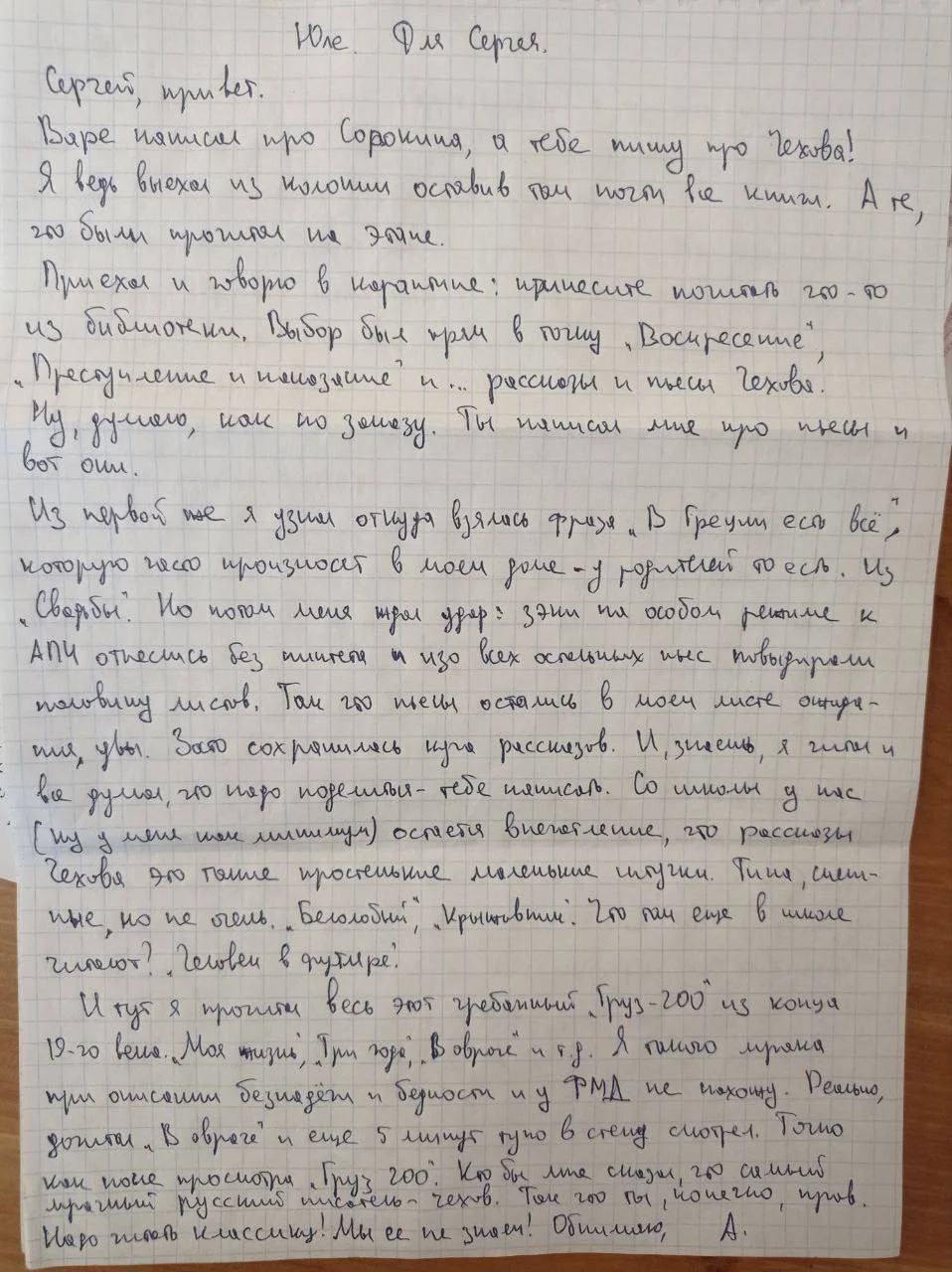
Letter of Alexei Navalny to journalist Sergei Parkhomenko from the colony
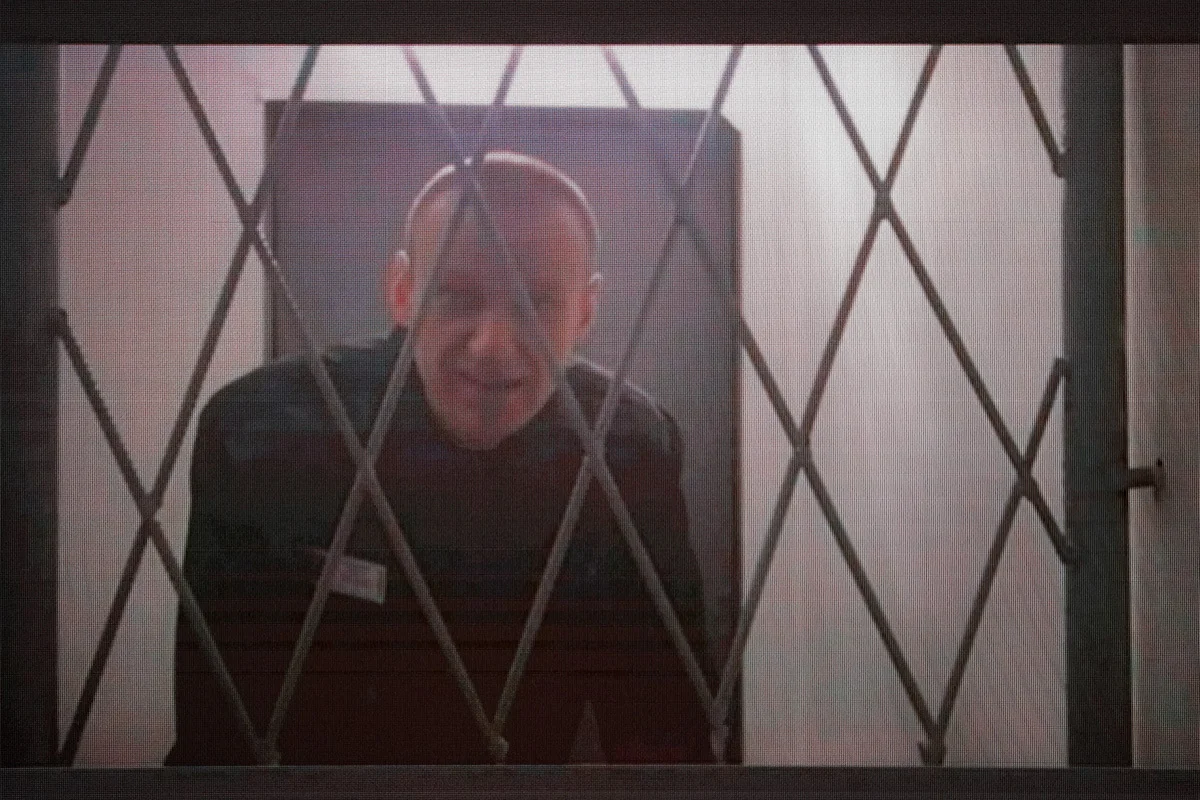
Journalist Sergei Parkhomenko published a letter from Alexei Navalny from the colony, which he received from him five days before the death of the politician. In his message, the imprisoned oppositionist talked about the books that he managed to read in the colony during the quarantine period. Novye Europe publishes text with minor punctuation amendments:
*Sergey, hello!
Vara wrote about Sorokin, and I will write to you about Chekhov! I left the colony, leaving almost all the books there. And those that were read at the stage.
I arrived and speak in quarantine: Bring to read something from the library. The choice was straight to the point: “Resurrection”, “Crime and Punishment” and ... Stories and plays of Chekhov. Well, I think, as if by order. You wrote to me about the plays - and here they are.
From the very first I found out where the phrase “In Greece is everything” came from, which is often pronounced in my house - that is, that is. From the "Wedding". But then a blow was waiting for me. The convicts in a special regime to the APCh (Anton Pavlovich Chekhov - approx. Ed.) Related without food, and all other plays raised half of the sheets. So the plays remained in my waiting sheet, alas. But a bunch of stories has been preserved. And, you know, I read and everything thought that I had to share - you write. From school we (well, I have at least) the impression that Chekhov’s stories are such simple little little things. Type funny, but not very. “White -faced”, “gooseberries”, what else are they reading there at school? "Man in a case."*
*And then I read all this fucking “cargo-200” from the end of the 19th century. “My life”, “three years”, “in a ravine”, etc. I do not find such darkness in the description of hopelessness and poverty and the FMD (Fedor Mikhailovich Dostoevsky - approx. Ed.). Really, I read “in the ravine” and looked stupidly at the wall for another 5 minutes. Just like after watching the “cargo-200”. Who would tell me that the most gloomy Russian writer is Chekhov. So you, of course, are right. We must read the classics! We don't know her!
I hug, A.*