
Translated material
Mixed impressions
About the theatrical treatise by Fyodor Kuryokhin
At first glance, Fyodor Kuryokhin’s book “Mixed Feelings. Treatise on the Theatre" continues the tradition of director's autobiographies, such as Stanislavsky's "My Life in Art" or Tovstonogov's "Mirror of the Stage". However, Kuryokhin deliberately challenges his great predecessors and writes about working on his performances in a completely different way. Vitaly Nikitin understood what he accomplished.
All of us, since February 24, 2022, have found ourselves in the face of advancing barbarity, violence and lies. In this situation, it is extremely important to preserve at least the remnants of culture and support the values of humanism - including for the sake of the future of Russia. Therefore, the editors of Gorky will continue to talk about books, reminding our readers that there is still a place for thought and fiction in the world.
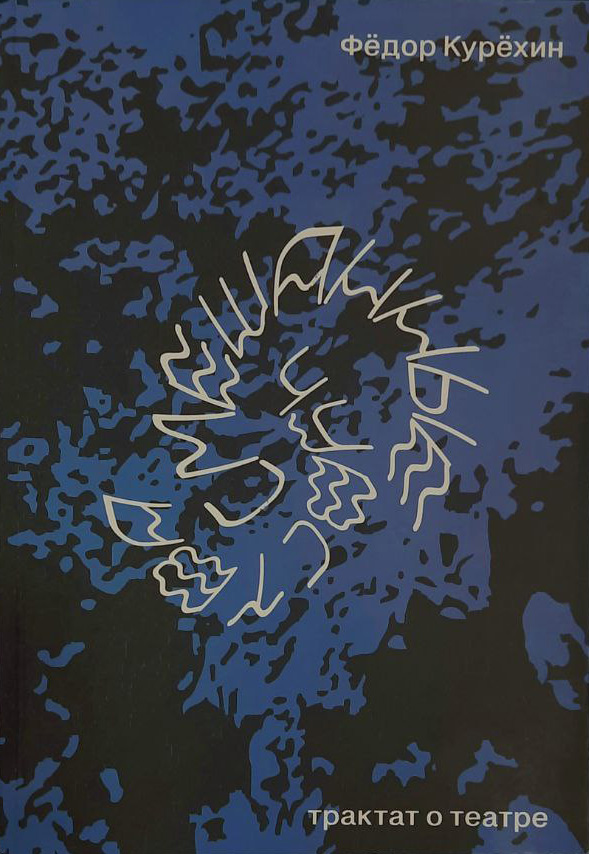
Fedor Kuryokhin. Mixed feelings. Treatise on the theater. St. Petersburg: Pop-Mechanics, 2023
The second half of the 2010s in the life of the Russian theater is a time of active discussions and new utopias. The images of a director-demiurge who did not take anyone into account, the isolation of the stage from public life, nepotism and intellectual arrogance were criticized. Due to the fact that the people who came to the theater did not have a specialized education or did not attach much importance to it, they also had a different language. Instead of previous authorities, such as Konstantin Stanislavsky, Vsevolod Meyerhold or Anatoly Vasiliev, new ones were proposed - Western artists and theorists, left-wing sociologists and researchers: Han-Thys Lehman, Erika Fischer-Lichte, Michel Foucault, Pierre Bourdieu.
Against canon
Fyodor Kuryokhin directly contrasts his book “Mixed Feelings” with the established canon. In the Russian theater there has long been a tradition of “director’s” books: “An Actor’s Work on Himself” and “My Life in Art” by Konstantin Stanislavsky, “Mirror of the Stage” by Georgy Tovstonogov, “Rehearsal is My Love” by Anatoly Efros and so on. These books can be found in all lists of preparatory literature when entering a theater university. Here is what Fyodor Kuryokhin writes about them: “All the theater books by Soviet directors that I read during my student years left me slightly bewildered. “Mirror of the Stage” and “Rehearsal - My Love” rather confused me than gave me theoretical things. This is a strange memoir with sluggish philosophical conversations about the great art of theater and some kind of imaginary analysis of the works of Soviet authors with unrealistically painful erectile show-off.”
Indeed, the authors of the Russian literary and theatrical canon were not inclined to theorize. Until now, abstract reflections are considered something far from dramatic art. In this tradition, genuine experience, almost in a Buddhist manner, can only be conveyed from “mouth to ear” or, in extreme cases, in the form of memories of how the author, as if unexpectedly for himself, found a new tool for creativity. Even in Konstantin Stanislavsky’s book “The Actor’s Work on Oneself,” a fictionalized form is used: in a certain school, teachers communicate with students and give them tasks. Of course, this does not mean that there were no theoretical reflections on theater in our country at all: Vsevolod Meyerhold was actively involved in journalism, Nikolai Evreinov rightfully bears the title of the first theater philosopher in Russia. However, it is the autobiographical format that avoids such an approach.
Fyodor Kuryokhin criticizes the old canon from two sides. Firstly, for the fact that he refuses theory, preferring “talks about the great art of theater,” and secondly, for “imaginary analyzes of plays.” The second claim is perhaps more interesting than the first. Isn't the director's method evident in the analysis of a dramatic text? However, usually such analyzes are difficult to separate from the pathos of the artist-demiurge or simply the personality of the author. Precisely because the theoretical approach is not described, it is perceived as “natural,” that is, the only possible and inevitable. Paradoxically, a director who undertakes to write a book about his work only shows his method, but does not explain its components.
Sincerity instead of authority
What does Kuryokhin oppose to this tradition? This is by no means pure theorizing. As the director writes, he specifically did not turn to academic authors, “so as not to feel their influence on himself, but rather to work according to the feelings they gave me as something I had once read as a student . ” Perhaps the most important word here is “sensation.” In place of the authority and pathos of the artist, Kuryokhin offers the almost naive sincerity of a well-read practitioner, who not so much describes his work on the performance as reflects on the state that he experienced during this work. This spontaneity is also emphasized by the fact that the book is deliberately unread: there is almost no punctuation in the text, slang, abbreviations, colloquial syntax, “remarks to the side” are used. But there is a lot of irony in it, and in some places without the prefix self-, - the author, for example, really thinks that he joked successfully: “And Wagner Said that the art that includes all this is Opera. Not a browser."
The author wants to appear before the reader as if unprotected by anything, to describe his experience extremely frankly, allowing him to gain some new knowledge. This sincerity must simultaneously replace both “high theorizing,” which Fyodor Kuryokhin himself praises, and “strange memoirs.” In essence, this is an attempt to return to naive empiricism, in which the reliability of a fact is replaced by its statement. Trying to get away from the literary and theatrical canon of director's notes, Fyodor Kuryokhin actually returns to it, but from the other side. He also writes memoirs without any theorizing, but he wants to appear in them not as an artist remembering the past, but as an ordinary person. It is ironic that a similar literary mask can be found in the autobiography of Konstantin Stanislavsky “My Life in Art”. If you read it, forgetting that it was written by a great director, then it may seem that these are notes from a not very successful actor. Stanislavsky writes much more often about his mistakes, problems, unfulfilled dreams than about the development of the famous method: “But in this book - both before and now - I judge myself not by the reviews of the press and audience, but by my own feeling and understanding. For myself, I failed miserably in the role of Salieri. But I wouldn’t trade this failure for any successes or laurels: my failure brought me so many important things.” True, Stanislavsky talks about failures, citing the fact that they made him smarter, and Kuryokhin - that he does it sincerely.
Personality comes first
An attempt to talk about experience and only about it, without hiding behind the mask of an artist, leads to unexpected consequences. In the 2019 play “PVL”, Kuryokhin uses the screen not to illustrate what is happening on stage or to enhance a certain effect, but as a specific location for the action. The actor plays GTA 5, adjusting the passage of the game to the text being read. This can be called "digital improvisation". Here's how the director justified his decision:
“Suppose an actor needs to imagine that he is driving a car in a traffic jam and let this image pass through himself. Moreover, if he needs to drive a car, then this burdens the budget, because a CAR appears on the stage for REALISM... GTA already allows you to do all this for real without theatrical convention (my italics - V.N. ).”
It turns out that the director strives for a narrowly understood realism and in his own way (consciously or not) reproduces on stage the theatrical cliché about the “truth of life.” Conventionality is seen as a device, a deliberateness, against which a certain sincerity rebels. Moreover, it is created with the help of recognizable media, a game stream. This solution is opposed here not by theatrical convention in itself (otherwise we would not be talking about a real car), but by hyperrealism. Kuryokhin essentially does not consider the visual and metaphorical possibilities of the theater.
Talking about the performance “Make out in my car”, which took place as part of the Perfotachki festival 2021, Fyodor Kuryokhin specifically describes the space of action. The performance took place in the forest, and not on the usual stage; such a rejection of theatrical conventions seemed to enhance the “realism” of what was happening. This is what they say about the effect created by a simple light bulb suspended from an electric pole: “... this pole immediately became an object. And the yellow grass next to him, when the light bulb was on, turned it into Tarkovsky’s “Stalker”, but it’s just a battery-powered light bulb, and the effect it creates in space.” The author's sincerity here is expressed not through a direct description of the scene of action, but through associations associated with it. It turns out that the author speaks more about himself than about space. And this is symptomatic: the realism that Fyodor Kuryokhin writes about is important not because it is “more truthful,” but because it coincides with his own sense of the world.
Sometimes this feeling turns on itself, as if forgetting about the audience. In the already mentioned performance “PVL”, the operator (Fyodor Kuryokhin himself) filmed and displayed the faces of the audience on the screen: “As a cameraman, I need to film the one you love, one day my girlfriend came to me and at the moment of Phaedra I was filming her, and the immersion worked. I’m not sure that this situation was clear to the viewer, but the main thing is that it was inside the performance.” This description seems to be the exact opposite of the meaning of the word immersive, which involves involving the viewer rather than simply addressing the viewer. But within the framework of the approach that Kuryokhin writes about, this is logical. The immersion of the performance is aimed at the author himself, and not at the audience. At least, it is precisely this impact that seems to the director to be a sufficient reason to describe it.
Story without distance
In other words, the author’s sincerity in this treatise is a deliberate refusal to distance himself from the object of description. Fyodor Kuryokhin does not reconstruct memories, but experiences them in writing. In many ways, this justifies, in essence, the refusal to think about other participants in the theatrical process, that is, from the objectification of one’s own past. This leads to the fact that some passages seem to have been written quite recently, like posts on a social network. Fyodor Kuryokhin writes about the background to the creation of the play “Moon Paw”: the first version of this work was being prepared for the Bolshoi Drama Theater in St. Petersburg in 2021. However, it was not possible to finish it there. As the director writes, “this is what happens when you exist in a totalitarian sect led by a crazy tyrant, and it is very easy to squeeze out such things (that is, Kuryokhin’s performance. - Note by S.N. ) only the carelessness of the service staff, and under the guise of unwillingness to buy copyrights (and in fact the problem is deeper) they closed it for me, and I left the M course.”
Most likely, we are talking about the former artistic director of the theater Andrei Moguchy. But further, nothing is said about either the “totalitarian sect” or the “deeper” reasons that led to the abandonment of the play. The point is not that the reader wants to stand up for the BDT or accuse its artistic director of violating the artist’s right to self-expression. I just want to know about something more concrete than Kuryokhin’s offense. After all, otherwise the opportunity to explain the process of his interaction with the BDT and the true reasons for the disruption of the performance disappears.
Here we come to the question of how the theatrical process should be documented in general. After all, it is obvious that, unlike other forms of art, this issue is much more difficult to resolve in the theater. A video recording cannot always not only record a certain fact happening on stage, but also document it, that is, translate it into a new, own language, just as writing “appropriates” speech. Therefore, it is hardly possible to clearly prefer video to text. The key concept for documentation using any media (whether book, film or photography) is performance . The author must “act out” the memory in order to make it a fact accessible to the perception of another person. The category of performance within the framework of theatrical language contains an important contradiction: on the one hand, a person must, using a certain set of techniques, “appropriate” the material, the role, and on the other hand, this requires an initial distance between him and this material. Otherwise, the author will talk only to himself, which for the perceiver from the outside means no conversation. In light of this, Fyodor Kuryokhin’s sincerity does not so much help to find out the “true reality” of his creative biography, but rather hinders such understanding. Even the fact that the description of each performance mentioned in the book includes a link to its video recording does not solve this problem.
But it would be strange to consider such an approach an accidental mistake. After all, it arose as a reaction to the rigidity of the language of official culture, to the narrow approach of the “totalitarian sect” and the “imaginary analysis of plays.” It's all about the very distance that needs to be established to adequately describe the performance. It is this that allows, with the help of some techniques and performance techniques, to restore the material at a new stage. Kuryokhin breaks it up deliberately so that, in his opinion, he does not make the same mistake as the authors of traditional director's autobiographies. He refers to sincerity as a demonstrative refusal to accept. But this does not lead to the creation of a “genuine” memory, but to the loss of contact with the reader.
Language documentation
Fyodor Kuryokhin himself feels the ambiguity of the results of his work. Therefore, at the end of the book, the author mainly asks questions, rather than trying to summarize the text or indicate a possible perspective for its development:
“More precisely, the book is a conductor of Performances and the Reader. When reading about the performances, did they come to mind in the minds of readers? What feelings did you evoke while reading? If yes, which ones? Is the effect of reading similar to the effect of watching?
The confusion of the presentation coincides with the feeling of the impossibility of a real summing up. But if the documentation of performances and past artistic experience obviously failed, then what does the treatise “Mixed Feelings” record?
In my opinion, the text documents a certain language that was actively developing in the artistic environment of the 2010s, and is now gradually being adopted by popular magazines, influencing the everyday perception of art. Its main feature is freedom. However, this freedom is negative, that is, “liberation from something.” Hence the constant incompleteness of the artist’s position, irony, play on canonical schemes, rhetorical questions instead of answers. It seems that the same can be said about the literary language of the recent past, but there is an important difference between them. The “sincere artist”, whose image is created by Fyodor Kuryokhin, seems to have no point of reference. This artist comes out of nowhere, is not responsible for his word and does not feel any need for it. Otherwise, everything turns into “a strange memoir with sluggish philosophical conversations about the great art of theater.” However, the era that begins in 2022 requires responsibility, not playing with memories.