
Translated material
The accident, the daughter of the housing and communal services
What is common between communal emergency and tariff indexation? Both inevitable
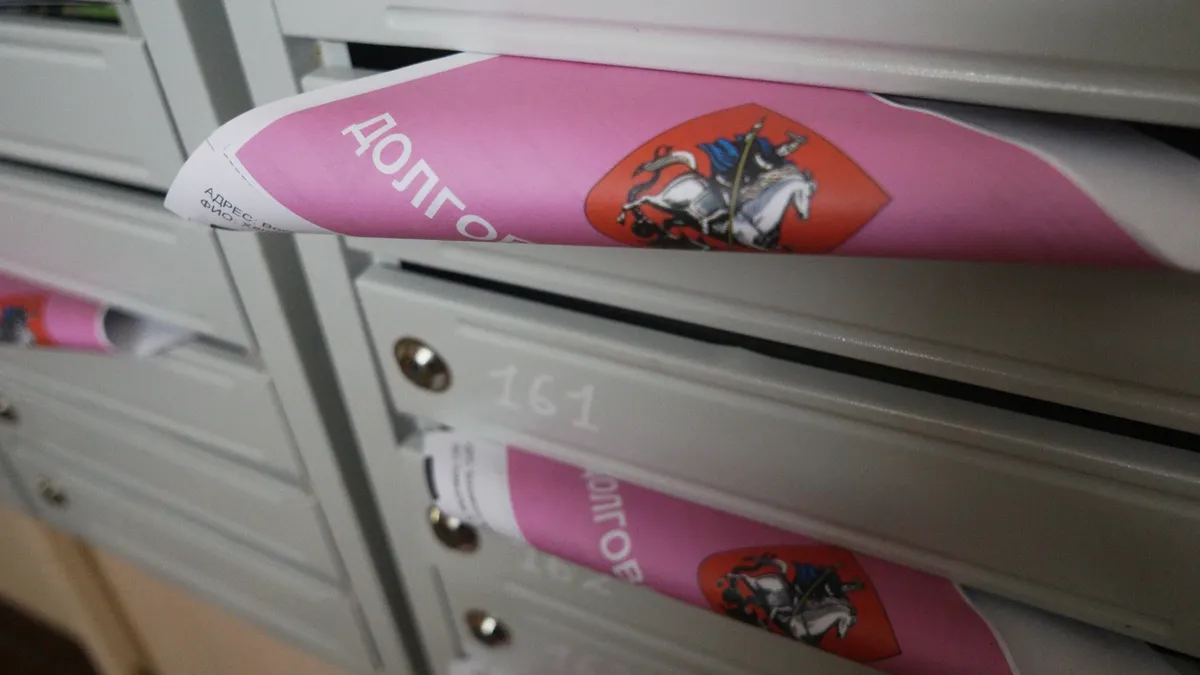
Photo: Andrey Epikhin / TASS
The accident in the housing and communal services of Russia since the end of 2023 followed one after another. The first month of the New Year has become a communal collapse for many, the consequences of which have yet to be eliminated. It is not a fact that it will be fast and effective. And it only seemed as if everything had subsided a little, as another communal event arrived - expected, but unpleasant. The January receipts of the housing and communal services were returned from the euphoria of the New Year holidays to the harsh reality. And it seems that the figures in the payments are not terrifying, and the indexation affected only two points. But not to the place and not by the time of raising tariffs in almost the most problematic industry. Although when did this happen appropriate?
4500 percent
The increase affected just those lines in the receipt that cause the most issues. According to the paragraph “Content of the dwelling and the handling of MSW”, the payment increased by about 3 rubles per square meter. The annual indexation of this particular line from January 1 is almost a communal constant. According to the contributions for overhaul (they are also reviewed every year) an increase even less: from 24.09 to 25.58 per "square".
Against the backdrop of bursting pipes and cold apartments, this is not even seriously discussed. Well, they raised and raised, in the end, not suddenly. And not for everything. Heating, hot water and electricity rise in price only in the summer. But right now this indexation is not in place-this is first. Secondly, it is no secret to us that some management companies (Criminal Code) begin to overestimate the cost of their services precisely during the period when tariffs are adjusted, using the situation to make a noise.
At the disposal of the editorial office were two payments from the family of Muscovites. The amount in January is higher than in December, by 2782 rubles. And in the size of the announced indexation does not fit in any way. This is a frank bulkhead.
With the "mistress" of the receipt, we begin to check the accrued by points. With the content of common property (OI) and contributions for overhaul, everything is clean: we multiplied the new tariff by the apartment area and received exactly those amounts indicated in the document. But here is the consumption of cold water, and with it the drainage in December (just on the eve of indexation), the family grew monstrously - more than two times compared to the average monthly indicators.
The campaign in the MFC did not add clarity. The employee of the center voiced at first the most obvious, as it seemed to her:
The testimony on the water was not transmitted, so they wrote off part of the debts around the house, it is always done, and citizens must keep this in mind.
Having checked with the data of the computer, the center’s employee was convinced that the testimony was incorporated. And she asked: maybe there really was an overrun, holidays, guests, prepared a lot? “That is,” the “mistress” of the receipt asks in response, “twice as much as usual, if you look at the numbers?” Only in December the whole family was absent in Moscow for almost a week. And she did not accept numerous relatives with an overnight stay. Everything was standard. And the amount in the receipt did not increase at all on the indices that were approved by the government and officially voiced.
The owners of the apartment suggested that they hung other people's debts on them. And this is a quite common practice. Now you have to find the ends of this individual indexation. Then achieve recalculation. Then make sure that it is done. After - with a magnifier and calculator, check each line in each next payment. By the way, in Moscow, cases of fictitious accruals for common house needs by water at 4500%were recorded, when tens of extra millions of rubles were attributed. These data are published in the Telegram channel of the housing union (channel about housing and communal services).
Lift, street, lantern ...
Tariffs for utilities are raised, as a rule, once a year. Usually in the summer. But the indices of the change in the fee for housing and communal services (in other words, the maximum growth of tariffs) have already been approved by the government. I’ll clarify: the index has an average value, for example, 10% in a particular region. And the maximum deviation, for example, is 5%. This means that in some area local authorities can increase the tariff to 15%, but on average in the region it should not exceed 10%.
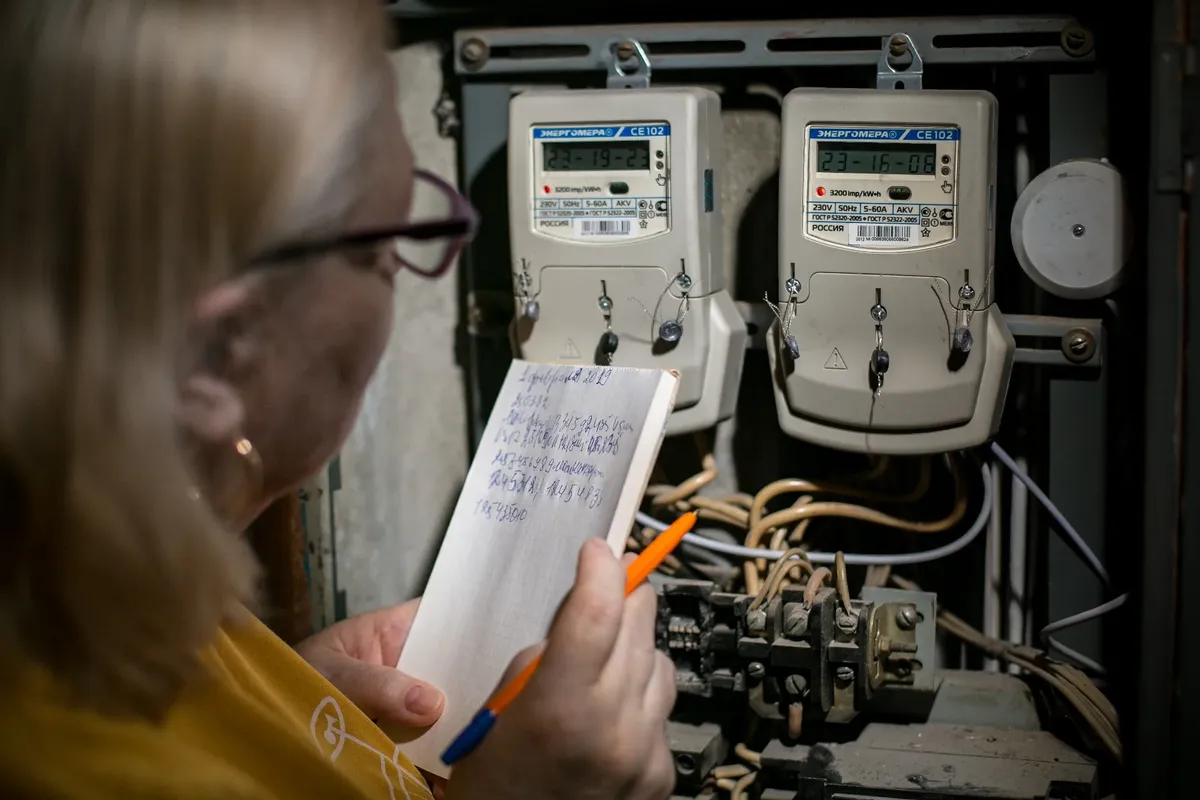
In Moscow, the maximum of the rise in price of housing and communal services was recorded at 11%, in St. Petersburg it is 9.8%, in the Novosibirsk region-9.5%, in Sakhalin-6.2%, in the Kaliningrad region-13%, in the Krasnodar Territory-9.6%. The most serious rise in price - up to 15% - is waiting for Transbaikalia. But the inhabitants of Khakassia were more fortunate, here the limit is only 4%. A little more in the Magadan region - 4.9%. On average, the country is at the level of 9-10%. Now it’s even strange to remember that since 2017, indexation has never reached five percent. But in 2022, the increase amounted to 10.7%, and the tariffs were raised twice in a year.
Since January S.G. The most controversial positions are indexed. Thus, the maintenance and repair of houses with elevators and garbage chute has risen in price from 38.93 to 42.41 rubles per square meter (that is, by 3.48 rubles). In the actual figures already received, this looks as follows:
Owners of an apartment of 80 square meters. meters in the capital for the maintenance of the total dwelling and the handling of MSW now pay 255 rubles more. The contribution to the overhaul fund (FKR) grew by 121 rubles.
In Samara, the owners of a 40-meter apartment in the receipt are now more expensive than 40 and 36 rubles, respectively. It is annoying that during indexation do not take into account the current state of common house property (OI). And the amount of payment is in no way related to the real state of affairs. “For almost a month there is no lighting in front of the entrance to the entrance,” I read the message on the profile site. - The elevator broke twice in six months. For more than a week, only one lighting lamp worked in the yard. As soon as the thaw on the street, there is water in the entrance at the entrance, the storm cannot cope. And how does this affect the numbers in the receipt? And they only grow. "
For example, MSW - are they really exported as regularly as the process rises? Just the other day, in one of the districts of Moscow (in three metro stations from the center) I came across a garbage site, where the containers themselves were no longer visible behind a pile of trash. This "pyramid" crowned a sofa pretty fragmented by a street living creature. A talkative local resident, noticing my “interest”, shared her sadness: until they complain collectively and repeatedly, garbage can go without movement for a week. Meanwhile, it is necessary to export it in the cold season every three days, in warm - daily.
I can say responsibly about my house that I don’t even remember when the washed floor was the last time in the entrance. Exactly not this year.
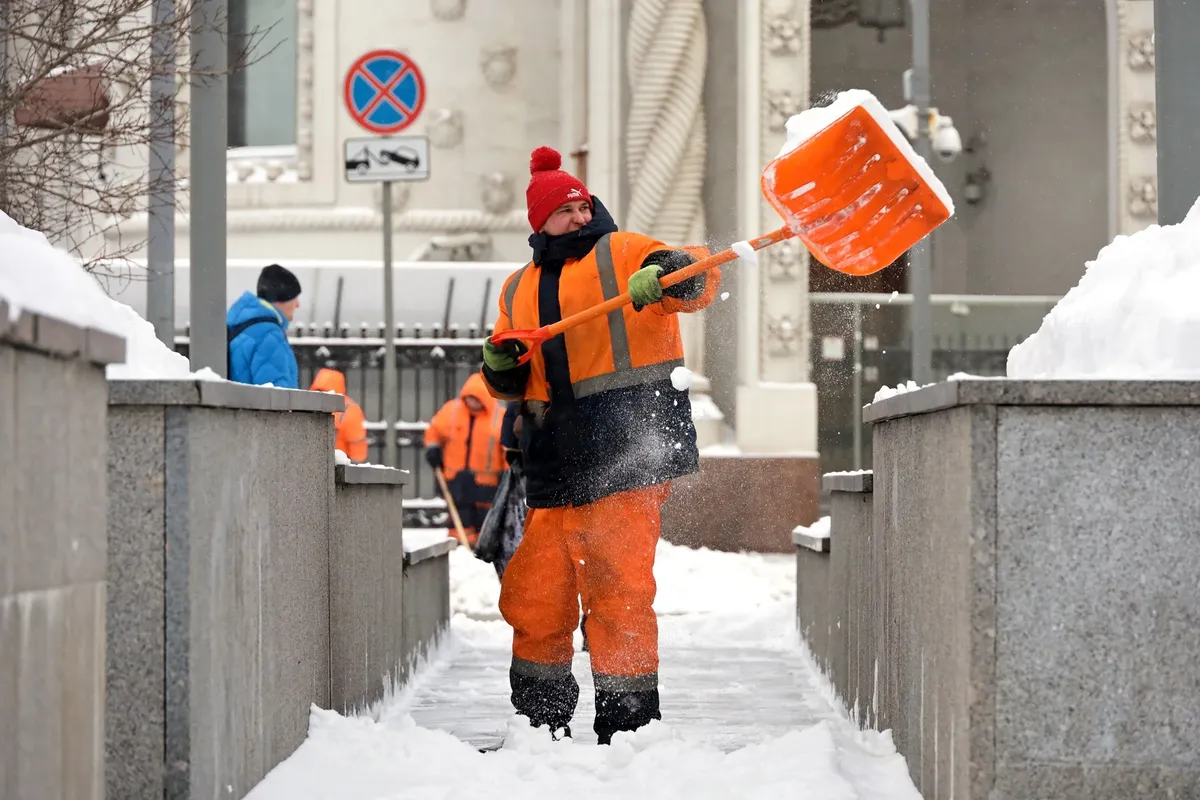
Another point: parking in the house territory was doubled by us by half. Snow heaps firmly settled on the site of cars, becoming a sign of entourage. Sending complaints about this in our house is put on stream: woke up, washed, complained. Only on a state of affairs does this have a poor effect.
But just all of the above and is included in the very line of payment, which stably rises in price. In January, in my receipt, common house expenses, including MSW export, increased to 3944 rubles. And in the normal state of affairs, and with an abnormal amount, the same is charged.
And here's what is annoying: in our own apartment we are free to pour water in liters or save. Leaving, extinguish the light or leave it all day. But to dispose of common property is no longer our prerogative. In principle
You can also compile a schedule for washing the floors in the entrance, and the yard itself, and the garbage to be exported by personal transport. If even at the same time they removed the cost of maintaining the OI from the payment. After all, only heating costs us more expensive than this, and then only in winter.
What is curious (but not everyone knows about it), the owners of the apartment building (MKD) are entitled to establish the betting and repair rate. If they do not do this, the rate, according to the Housing Code, appoints the municipality. Without a decision of the owners, the management company (UK) is not entitled to set and change the tariff for their services. And the amount of payment for the maintenance of the OI can not adjust the size of the payment. In addition, the owners are allowed to exclude individual components of the tariff. There are times when the residents of the house find a new point in the receipt. In this case, it is important to know: according to the law, the Criminal Code does not have the right without consumer consent (namely, in this status, the owner acts) in a non -contractual manner to impose services.
Finally, the main thing: in Art. 156 of the RF Housing Code is enshrined that the size of the fee for the maintenance of the dwelling in the MKD, in which the HOA or the housing cooperative has not been created, is established at the general meeting of owners. The size of the fee is determined taking into account the proposals of the managing organization and is set for a period of at least a year (therefore, it can be revised annually).
To understand how things are in practice, I interviewed 20 people. I was interested in whether they had a similar meeting at least once over the last, say, three years? Only one answer was affirmative - from people who recently moved to a new building and became members of the HOA. Of course, my survey does not pretend to be representativeness. But for a special case of a general phenomenon - perhaps.
And about contributions for overhaul. I got acquainted with the chat of the residents of the house, where it just ended. Assessments - from negative to extremely negative. Residents refused to take work: plaster on the facade falls off, in one entrance of cracks on the floor, in the other - mold on the walls. After the next snowfall, the roof flowed, and the rusty sewer pipes are simply behind the line of good and evil. In January, in the “renovated” house there were twice malfunctions. More often the consequences of overhaul, participants in this chat discuss only the numbers in the receipts. And here's the question: what should make them regularly pay considerable contributions to the FKR?
Collapse and money
Speaking of indexation, it is especially worth dwelling at the victims in utilities.
For a year, I recall, it began with collapses in several regions at once. One of the largest and most loud ones happened in Podolsk near Moscow, in early January, thousands of residents of the Klimovsk microdistrict remained without heating. The accident in the boiler room of the cartridge plant led to the fact that the supply of heat and hot water stopped. As a result, batteries froze in the houses. People went to the pickets, demanding to hold inactive officials accountable. The GU Investigative Committee of the Russian Federation for the Moscow Region opened a criminal case under an article on the provision of services that did not meet security requirements.
It took several days that the system would work as usual. People promised not to issue heating accounts in January. “We also compensate for the cost of electricity-payment will be considered on the December payment,” wrote the governor of Mo Vorobyov in his Telegram channel. For several days, people forced to use heating devices and, most likely, around the clock. When the apartment has 10-13 degrees, there is no other option. I can imagine how many meters have wound. It would not be considered to be considered December indicators, but to exemption from payment at all. But after all, people were already promised to replace the bursting batteries in apartments. The main thing now is to find the culprit of the accident in each individual case, so that there is someone to assign expenses.
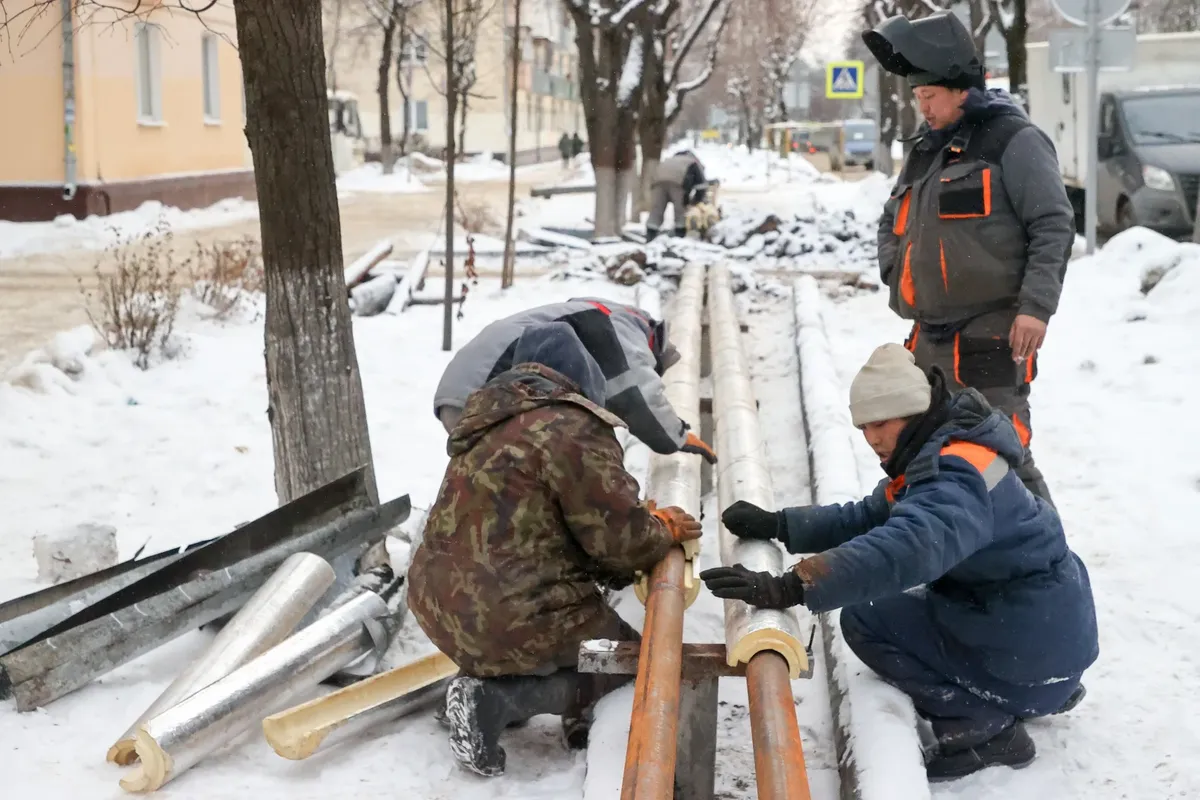
Without heat in January, several settlements near Chekhov were in January. Pipes with hot water broke into Khimki and Solnechnogorsk. The inhabitants of the Elektrostal, who lost heating for several days, were warmed up with gas ovens and burned bonfires on the streets. In Arkhangelsk, an apartment building without warmth and hot water celebrated the New Year. They could not eliminate the accident for several days. And enormous leaks will have to be paid to the residents.
In the Khanty -Mansi Autonomous Okrug, communal disasters fell on forty -degree frosts. It all began on December 31 in Sovetsky. The accidents shook the city all of January. One of his residents wrote on social networks (the author’s stylistics was preserved): “This is simply no one, everything is clear, frosts, half of the city of gusts, in the houses of the cold !! What is going on? There is no strength. Is the administration really cannot hire private workers, equipment, allocating money from the budget for these purposes ??? There is not enough evil, children are sick, you need to work to pay this communal apartment !!! ”
Without water at the end of the year, 14 houses were left in Nizhnevartovsk. The accident of the heat supply system in the Central District of Krasnodar led to a disconnection of heating almost five thousand people. In places, water, heating and electricity disappeared simultaneously. In the Prikuban district of Krasnodar, 10 streets were left without electricity.
In Novosibirsk, after breaking through the pipe on the night of January 10 to 11, hot water and heating lost more than 200 apartment buildings. For the restart of heat supply systems, more than one day has gone. The residents of the city, having learned that the accident is far from local in nature, massively went to shops for heaters and heat guns, which they themselves wrote in messengers. Heating devices quickly ended. At the next stage, the collective campaign of overlapping people happened already in pharmacies. The Siberian generating company promised to recalculate a communal apartment for injured citizens. A typical approach - not a word about compensation.
“I have been living for about 30 years in one area, and the pipes have never changed,” writes a resident of Novosibirsk at a thematic forum. “And the place where one day broke and poured, now they dig up four times every year, such as repaired, and digging, draining the money.” Another citizen rightly notes that water pipelines and sewers as such will not sell. Apartments are sold. That's why
New houses are built right on top of old networks. New buildings are connected to worn communications, which are simply not designed for such a load.
Meanwhile, the Siberian Directorate of Rostekhnadzor after the January emergency shutdown of heat on the left bank of the city revealed 162 violations of industrial safety requirements in the work of the Novosibirsk Heating Company. In particular, it turned out that there is no industrial safety examination on buildings and structures, the results of checking the readiness of the sections of heating networks after repair are not drawn up, there is no thermal insulation of pipelines, there are defects in the form of fistulas and leaks. Administrative proceedings have been excited.
And against the background of this, people will only recount a utility payment in one month. Interestingly, and in specific numbers it will definitely be commensurate with the losses incurred? As a person who once encountered a similar emergency, I can assume that many will have to change not only batteries.
But, if you approach the problem philosophically, everything becomes somehow easier. Do not fight, in fact, with nature. And the culprit of the accident is she. The press secretary of the President of the Russian Federation Dmitry Peskov explained the problems with heating in different regions with abnormal frosts. The second reason he called the wear of housing and communal services, the repair of which takes time. Their wear was spoke about 10 and 20 years ago. The reform of the industry began even before. The results are not obvious. And January events showed the whole depth of the systemic crisis in the housing and communal services. Experts talk about the depressing state of the economy. According to Konstantin Krokhin, the chairman of the Union of Housing Organizations of Moscow, the volume of wear of networks ranges from 40 to 90%.
In early February, the Ministry of Construction, together with the relevant State Duma Committee, argued about the need to tighten the rules for licensing management companies (UK). And experts argue that licensing showed its inefficiency and corruption. The quality of services is falling because the Criminal Code is not afraid of licenses.
In parallel, other departments persistently promote the idea of resettlement of debtors in a communal apartment from privatized housing to social, seeing this way of combating the trillion debts of Russians for housing and cooperation. And literally at the first meeting of deputies of the State Duma in the new year, the question of the return of the heating system to state property is raised. And this is only a small part of what is thrown into a public space - there are a lot of projects for global rescue of the housing and communal services. But I so want to start, finally, at least change the pipes.