
Translated material
Congress of the survivors
On February 25, 1956, Nikita Khrushchev spoke at the twentieth Congress of the CPSU with a report “On the Cult of Personality and its consequences”, which was the first public step in revealing the crimes of Stalinism
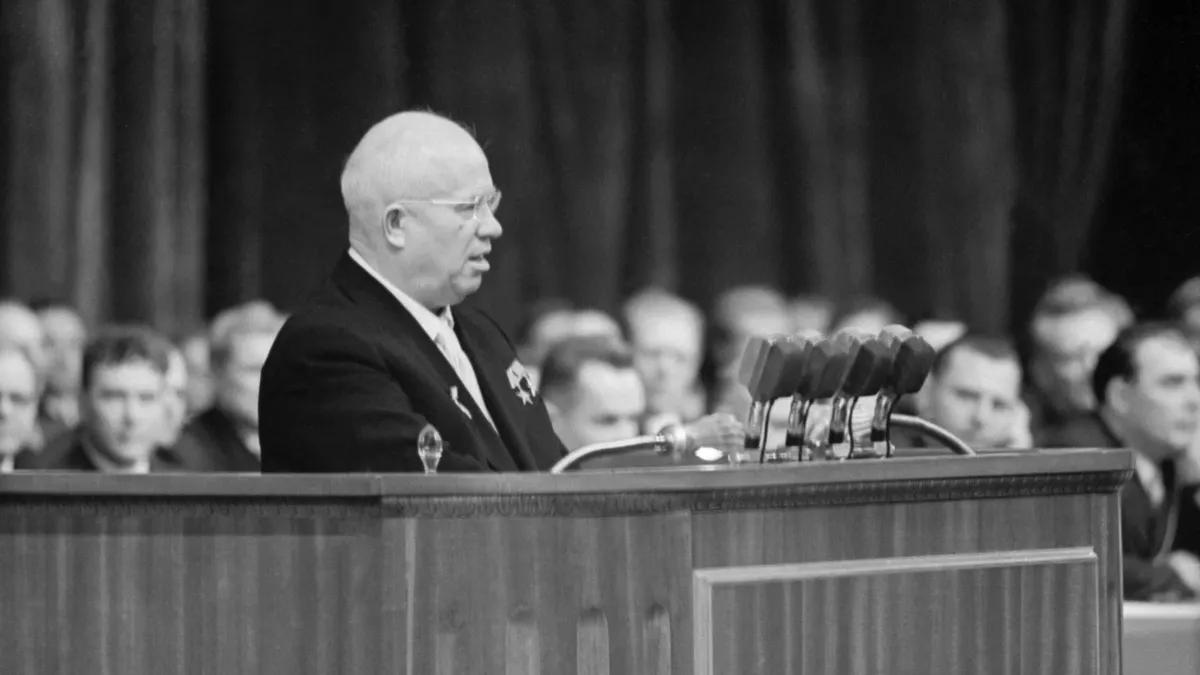
Nikita Sergeyevich Khrushchev during a speech at the opening ceremony of the XXI Congress of the CPSU in the meeting room of the Grand Kremlin Palace. Photo: TASS
18+. This material (information) was produced, distributed and (or) sent by foreign agent Schlosberg Lev Markovich or concerns the activities of the foreign agent Schlosberg Lev Markovich.
On February 14–25, 1956, the XX Congress of the CPSU was held in Moscow. On the very last day of his work, February 25, at a special closed morning meeting, the first secretary of the CPSU Central Committee Nikita Khrushchev made a report “On the Cult of Personality and its consequences”. Speech by N.S. Khrushchev became the most powerful in strength and political consequences of the report of the head of the CPSU for the entire time of its existence.
The processes of rehabilitation of the victims of the Stalinist repressions were already underway, but there was no official political decision to expose Stalinism. Society could only guess about a change in the vector of domestic policy.
Until the last day, the CPSU leadership was struggle around the decision on the need for public description and explanation to members of the party that took place in the country until 1953 (the year of the death of I.V. Stalin). The proposal to hold a closed meeting of the congress and a speech on it N.S. Khrushchev with the report “On the cult of personality and its consequences” was formally nominated by the Presidium of the CPSU Central Committee on February 13, 1956, in the last day before the opening of the congress. On the same day, the Plenum of the Central Committee of the CPSU was held, which approved this proposal. Thus, the highest collegial body of the CPSU was psychologically and morally prepared for the performance of N.S. Khrushchev.
At the time of credit, the text had the vulture "strictly secret." The report was literally until the last day, mainly in the direction of softening the formulations. Only a day before the performance it was decided that Khrushchev would personally make a report. The meeting on February 25 was organized not by the working presidium of the congress, but by the Presidium of the Central Committee of the CPSU.
Most of the congress delegates are members of the CPSU, brought up and saturated with Stalinist propaganda and agitation, well remembered organized rallies with slogans such as “No mercy to the enemies of the people!” And “shoot like frantic dogs!”, Passing in the USSR everywhere, were deeply shocked by what they heard in the first person of the party. The reaction of the delegates is hidden in the transcript of the report behind the notes: “Movement in the hall”, “The noise of indignation in the hall”.
For the first time in the Soviet period of history, the official document described in sufficient detail the bloody system of dictatorship as a machine of destruction of the people and the political elite.
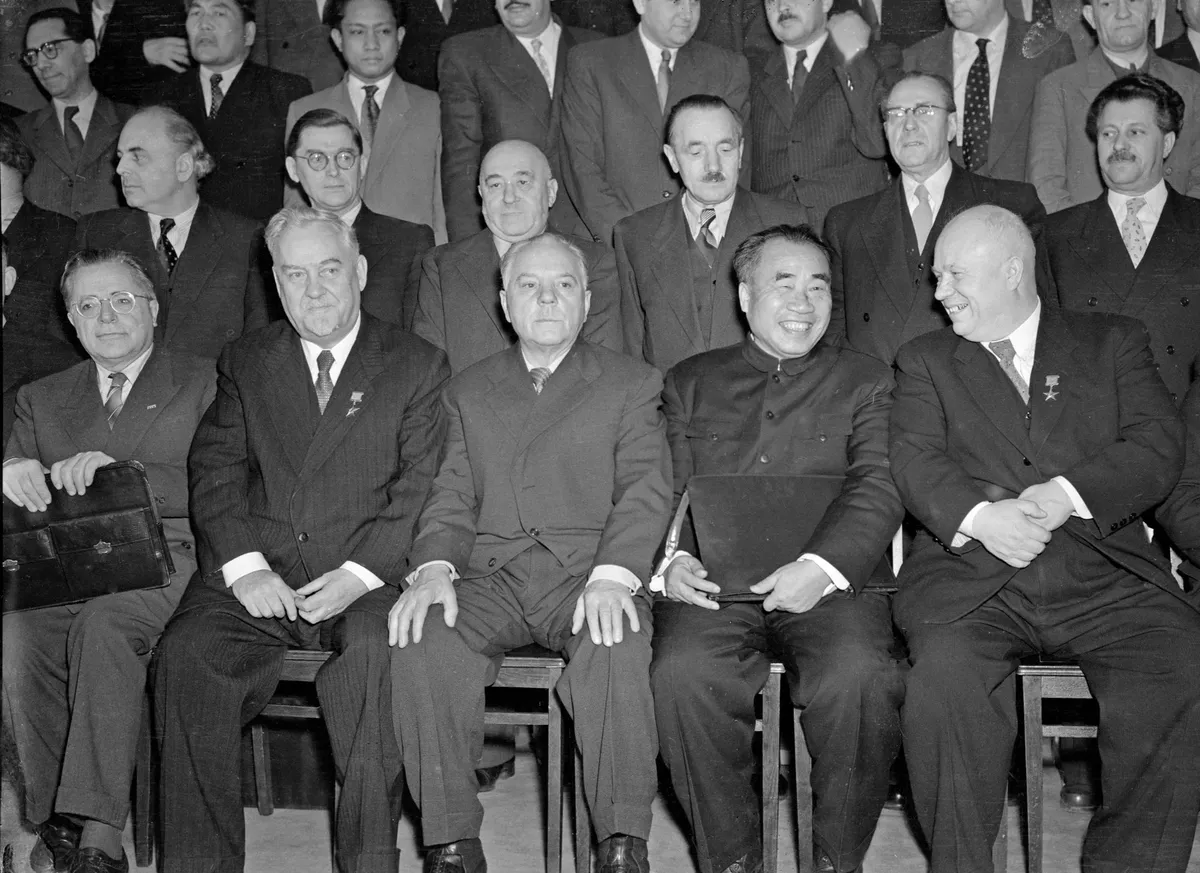
In the report of N.S. Khrushchev, no matter how the political generalizations were softened in it, detailed details of the torture, into which the whole country was turned, the details of the deadly milk were visible, which turned the executioners into the vertices of the destinies, and then destroyed them as extra witnesses, calling for the bloody workplaces of new pathological sadists created by Stalin.
The leadership of the CPSU did not dare to a full -fledged popular submission of the report N.S. Khrushchev. They were afraid of mass folk speeches, the situation in the camps, where tens of thousands of victims of repression, still suffered, was also unpredictable.
In order to avoid unnecessary publicity, the course of the closed meeting of the congress was not even stenured on February 25. After the report was completed, at the proposal of the Presidium, it was decided not to open the debate on it: the course of the debate was unpredictable for the leadership of the CPSU, many unplanned speeches could take place, and which was not possible to prevent or stop.
At the suggestion of the chairmen at a closed meeting, the chairman of the Council of Ministers of the USSR and a member of the Presidium of the Central Committee of the CPSU N.A. The Bulganin Congress (unanimously, of course) adopted the resolution “On the cult of personality and its consequences”, which was published in the open press (this was the document read by the whole country and marked the change in the course of history), as well as the resolution on the full text of the report to party organizations - without publishing it in the open press.
On March 1, 1956, the text of the report, intended for sending party organizations, was sent to N.S. Khrushchev members and candidates for the Presidium, secretaries of the CPSU Central Committee.
A small stylistic and editorial edit was made in this text: links to the works of K. Marx, F. Engels, V.I. Lenin and other cited sources, the dates of the adoption of documents mentioned in speech are clarified, are included in the characteristic of N.S. Khrushchev retreating the speaker from the pre -prepared text of the report (a kind of improvisation), the reaction of the delegates to certain fragments of the report was noted.
On March 5, 1956, the Presidium of the Central Committee of the CPSU adopted a special resolution “On familiarization with the report of Comrade. Khrushcheva N. S. "On the cult of personality and its consequences" at the XX Congress of the CPSU. " It said: “1. To invite the regional committees, regional committees and the Central Committee of the Communist Parties of the Union republics to familiarize with the report of Comrade. Khrushcheva N. S. “On the cult of personality and its consequences” at the XX Congress of the CPSU all communists and Komsomol members, as well as the non -partisan asset of workers, employees and collective farmers. 2. Report Comrade Khrushchev send to party organizations with the Grif “not for Press”, having removed the stern “strictly secret” from the brochure.
The “softened” version of the report was published as a decree of the Presidium of the Central Committee of the CPSU of June 30, 1956 entitled “On overcoming the cult of personality and its consequences”.
In accordance with this resolution, the report was read out at meetings of party and Komsomol organizations in the USSR, it was also sent to the communist parties of many countries from where it spread around the world. According to these brochures, the report was then reprinted in Soviet Samizdat, as well as Russian emigrant publications abroad.
Stalinists around the world hated N.S. Khrushchev for this report.
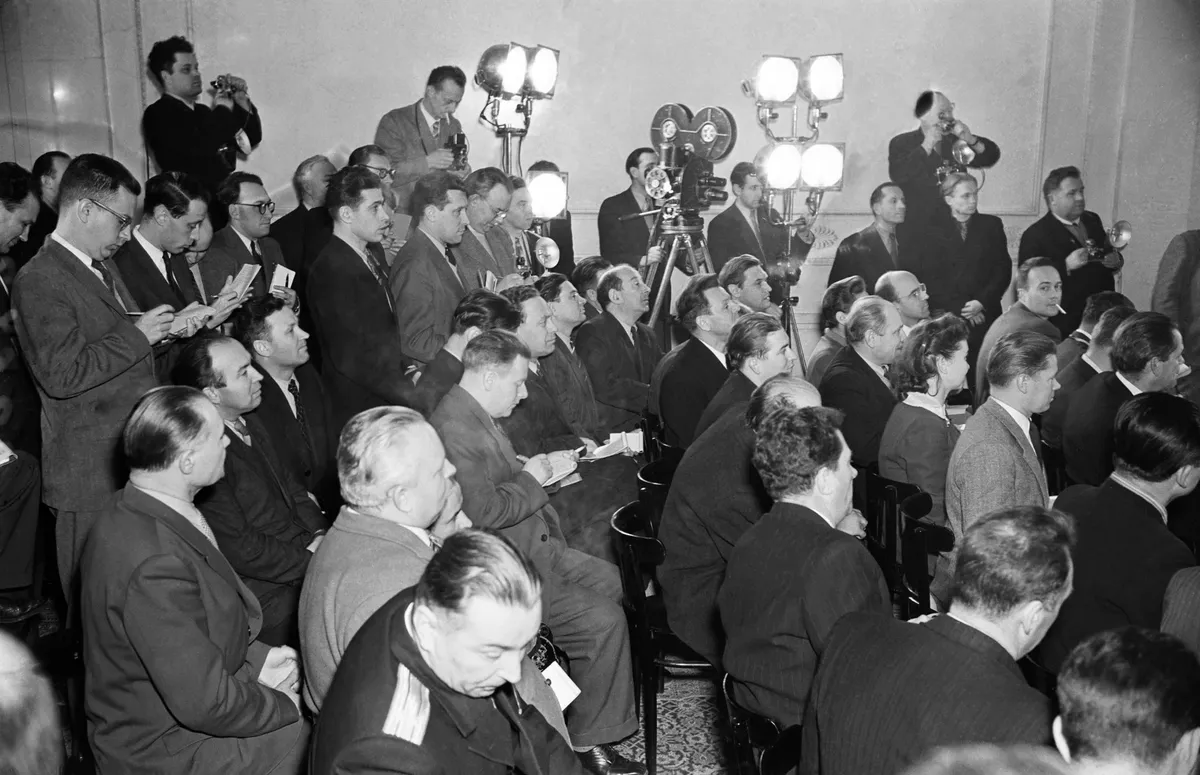
Even a relatively free discussion of the report in the USSR showed that in some cases the participants in the discussion quickly moved to political conclusions, which were not counted at the CPSU Central Committee and who were afraid, because the country's complete decilization naturally threatened the destruction of the foundations of the monopoly power of the CPSU, its political dictatorship.
According to the researcher of the history of the XX Congress of the CPSU V.P. Naumov, two weeks after the XX Congress, the editor -in -chief of Pravda and one of the authors of the report D.T. Shepilov played at the Academy of Public Sciences under the Central Committee of the CPSU (AOO) following the results of the XX Congress. The debate was two scientists, a communist who went far beyond criticism of the cult of the personality of Stalin. Shepilov sent a memorandum to the Presidium of the Central Committee and the Secretariat of the Central Committee. On this signal, measures were immediately taken: the famous professor B.N. Kedrov was forever expelled from the AOO, and the teacher of the Department of Philosophy I.S. Sharikov - a participant and a war disabled person, a member of the party since 1931 - was not only dismissed from the AOO, but also convicted. For several years he was in a camp for political prisoners.
A report note by D.T. Shepilova had large -scale consequences, she instantly spread throughout the apparatus of party committees, serving the leadership of the actions to curb the “disobedients” and established a kind of “destruction of the sludge”.
Only in 1989, 33 years after the performance of N.S. Khrushchev and 4 years after coming to the leadership in the CPSU and the USSR M.S. Gorbacheva, the Politburo of the Central Committee of the CPSU decided (as was said, “considered it appropriate”) to publish in the official journal Izvestia of the CPSU Central Committee, the full text of the report of the first secretary of the Central Committee of the CPSU N.S. Khrushchev at a closed meeting of the XX Congress of the CPSU on February 25, 1956 "On the cult of personality and its consequences." The chairman of the editorial council of Izvestia of the Central Committee of the CPSU was M.S. Gorbachev. The circulation of the magazine was 675 thousand copies. One copy in a soft cover (505,500 copies came out in it from the total circulation) cost 1 rubles, in solid binding - 1 rubles. 50 kopecks. The publication of the report took place in the third issue of the magazine for 1989 and caused a strong public reaction.
Obviously, the general thought of the report on the cult of the personality of I.V. Stalin was a return to the so -called The Leninist norms of party life, and Stalinism is shown in it as an intentional distortion of Leninism. The first secretary of the CPSU Central Committee in 1956 could not occupy any other position: the revision of Leninism would mean the full and immediate political collapse of the CPSU, the loss of the ideological basis of the party. Antileninz N.S. Khrushchev, of course, was not.
A clear understanding that Joseph Stalin was actually a logical and consistent successor of the “Lenin case”, in those years had extremely small number of people, and the understanding of this in a wide society began to spread in Russia only at the end of the twentieth century, before the collapse of the USSR.
But all these circumstances cannot belittle the political significance of the report N.S. Khrushchev. This report discovered in the USSR the era of teninization, in fact - opened the gates of the Gulag, allowed thousands and thousands of innocent people who survived in the dungeons of the NKVD -MGB -KGB. This report was politically stained by the frozen with the death of I.V. Stalin and the execution of L.P. Beria flywheel of mass repressions, and the bloody youh no longer returned to the Stalinist “turnover”.
The report “On the cult of personality and its consequences” became the main personal political merit of N.S. Khrushchev. It was with him that he entered immortality as a politician.
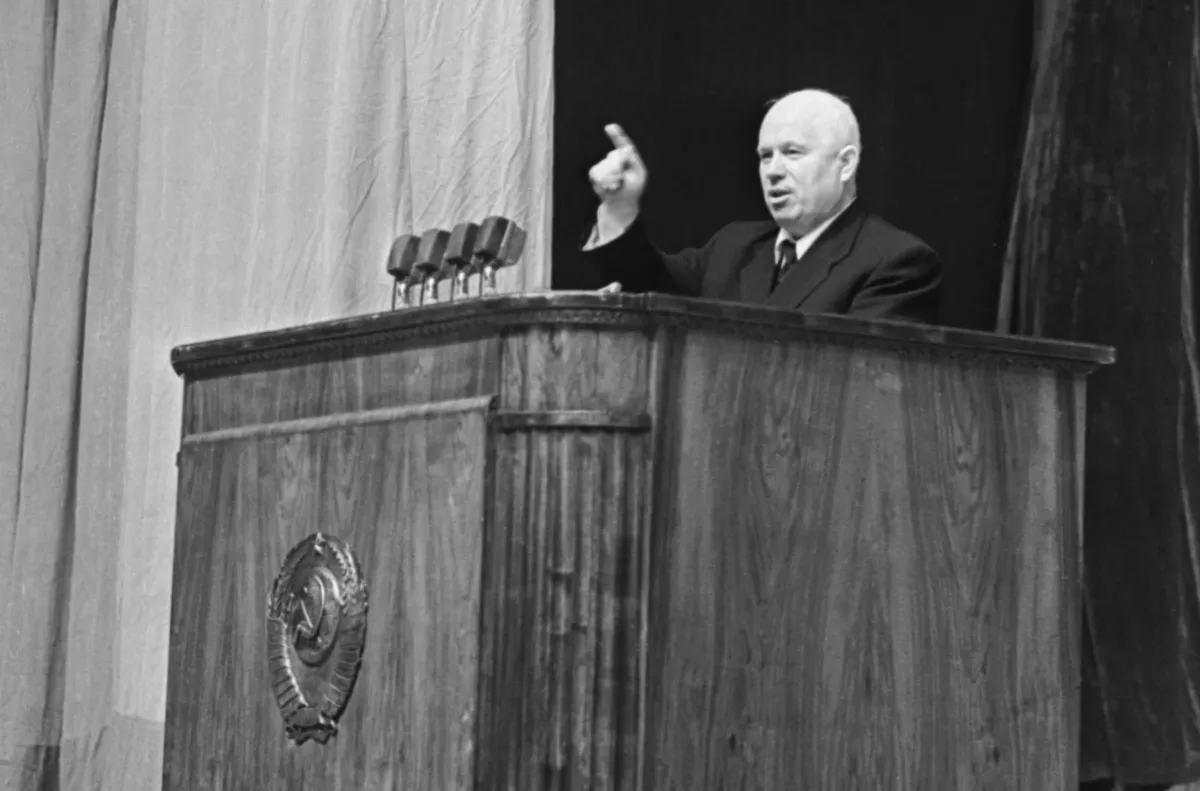
But it was this anti -Stalinist report that was largely caused by the internal political opposition of N.S. Khrushchev, who in 1956 had no chance of his removal from power, but after eight years, using N.S.'s failures Khrushchev in socio-economic policy organized a conspiracy (it is significant that he actually organized and implemented the Lenin-Stalinsky in the spirit of the KGB) and achieved the replacement of N.S. Khrushchev at all the highest state posts.
Who came to power as a result of the Soviet palace coup L.I. Brezhnev began the so -called Silent restroilization - public criticism of actions by I.V. Stalin was discontinued, it saw a danger to the communist regime.
Today the report of N.S. Khrushchev is not only purely historical, but also direct political interest. In his significance, he did not lose relevance. This report reflects the bloody drama of the people who lived under the dictatorship of the people, including the drama of the political elite, which also became the victim of the system created by the “operational expanse” by the paranoic and cannibalist. But it is the Bolshevik elite (more than anyone) is responsible for the formation of the most bloody regime in the entire history of the USSR.
As a matter of fact, it was Stalinism that crushed the country's main resource - the people. He (Stalinism) brought such enormous victims to the manic visions of the “leader of all peoples” (both in “peaceful” and in wartime) that it was sufficiently impossible to compensate them for decades. Stalinism interrupted the ridge of the people, and all the years after Stalin, the agony of the Stalinist system of power took place, which was impossible to modernize and humanize.
The salvation of the people was possible only with a complete abandonment of Stalinism. This refusal did not take place either in the days of the USSR, nor in the Russian Federation politically inherited it. Therefore, Stalin is politically alive.
In the offices of the current leaders of the Russian intelligence services, the portraits of the Oakover Dzerzhinsky and photographs of the Big House on Lubyanka, in the internal prison for years, were tortured and killed for people, are also quite officially hanging. There was no repentance, and no.
Any country, in the future of which the symbolic appearance of a mustachioed executioner loomes - in whatever appearance he appeared today or tomorrow - you need to look closely in the mirror of the XX Congress of the CPSU.