
Translated material
The victory of the discourse over the mind
Why on Berlinal-2024 politics displaces art
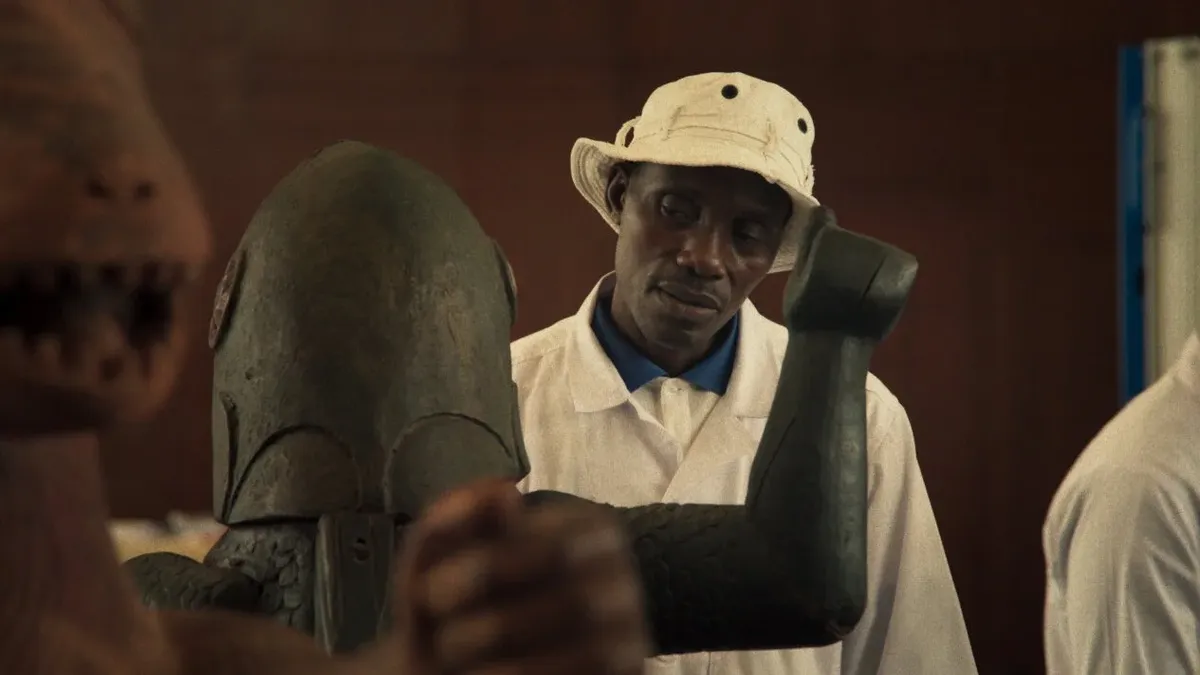
Frame from the film "Dagomei"
The wording in the title is not mine, but a smart girlfriend, a talented director. You can’t say more precisely. Throughout the festival, the signs of the “discourse” flashed with bright light. Modern politics has always been an important part of one of the main film forums of the world, existing on the site of the scars of the once torn Europe. But today, politics is invading the spheres of art, more and more dictating the rules to him, before our eyes turning into new dogmas. News festival press releases are increasingly reminiscent of newspaper headlines.
For the first time, the African American woman became the chairman of the jury! This is a beautiful Keny-Mexican actress, the holder of the Oscar for the film “12 years of slavery” by Lutita Niongo. And the choice of refereeing under her management is also similar to a political statement.
Direct action
The “Golden Bear” “Dagomee” of the Franco-Senegal director of Mati Diop is not so much cinematic achievements as a high degree of tolerance. In fact, this is a documentary dispute on post -colonial injuries - against the backdrop of the return of the royal treasures of Benin (in past times - the kingdom of Dagomei), plundered and assigned to France.
These treasures are appealed to the European viewer along with Benin activists, students of the university. The zoomorphic wooden figure of the king Dagomei, the small sculptural allegorical portraits of his heirs with bitterness tell about "captivity in the caves of the civilized world." They are carefully wrapped, white hands of cultural colonialists are packaged in boxes. The colonialists can not decide whether the wooden sculpture can be packed face down.
Of the seven thousand stolen objects, only 26 were returned. Offective, as they say in the dispute. And as the author rightly believes. Apparently, this is only the beginning of the return process, and this process can accelerate the loud success of the film. Students say that not only culture, but they themselves are victims of colonialism, because they speak French. And even the return of cultural artifacts is dreamed of French. Nevertheless, they are full of optimism, Benin's culture is created today. And she has a great future.
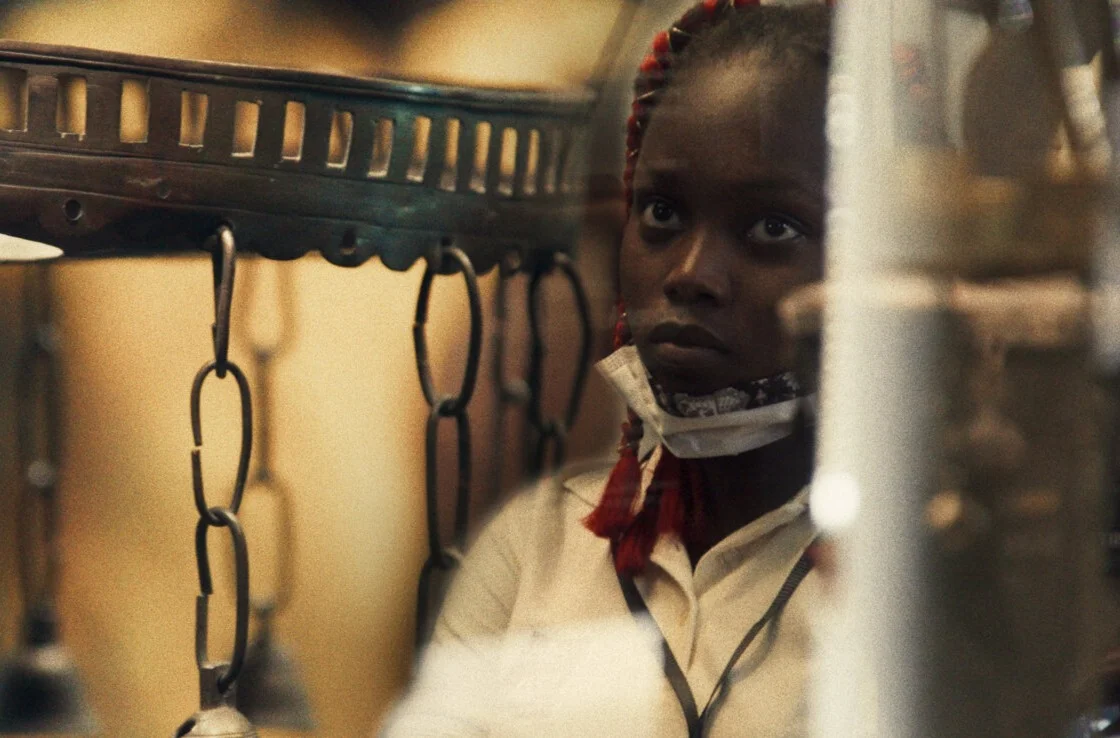
The film is not devoid of poetry. The minister of the Benin Museum freezes in front of the returning statue of King Behazin, depicted in the form of a shark, and whispers to himself for a long time. As if praying. And the dull voice of King Gezo comes to us, as if from eternity. The film is silent about the fact that Saesu himself led the numerous military campaigns against neighboring African tribes, turning prisoners of war into slaves.
Diop is the first black director who participated in 2019 with an interesting debut drama “Atlantic” in the Cannes competition, which received the jury Grand Prix. Her "Dagomei" is a decent non -senior picture. Appropriate in the documentary panorama. But the main prize of the Berlinal game contest is also a pilot card, a vector for the development of world cinema. And it sadden.
By the way, the best in the documentary contest is the painting “There is no other land” about the destruction of the Palestinian villages “Israeli occupation forces” on the western bank of the Jordan River. The authors of the film are the Palestinian-Israeli team of activists. "Crystal Bear" for the best film in the Generation 14plus contest received the film "Last Swimming". Director Sasha Natnani. About the young Irank in London, in love with astronomy.

At the awarding ceremony, Mati Diopus appealed to justice for the past, which is the basis for moving forward:
“It's time to restore justice - for this we need restitution.” She criticized the war in Gaza from the stage and called for the immediate cessation of fire.
Guillaume Kayo and Ben Russell, directors of the film “Direct Action”, called the best in the Encounters section, put on Kufi, expressing support for Palestinians. Russell told reporters that this was “a gesture of attaching our votes to voices calling for the cessation of fire in order to put an end to the genocide. The Palestinian documentary director Basel Adra called for the supply of weapons to Israel, saying that he "destroyed tens of thousands of people in the gas sector." They were joined by Juliana Rohas, who received the Encounters prize for the best directing for the film "Sidada".
The audience applauded. The theme of terror of militants Hamas, the protruding laureates touched only casually.
Ah! Crocodiles, hippos
In addition to the speaker, the speaking king of the murdered murdered fiber-philosopher “Pepe” was noted. More precisely, the Dominican director Nelson Carlo de Los Santos Arias, who inspired this legend. We wrote about the film. But in the parable of the local population scaring the local population, the anti -colonial motifs brought by the drug lord by the drug lord Pablo Escobar.
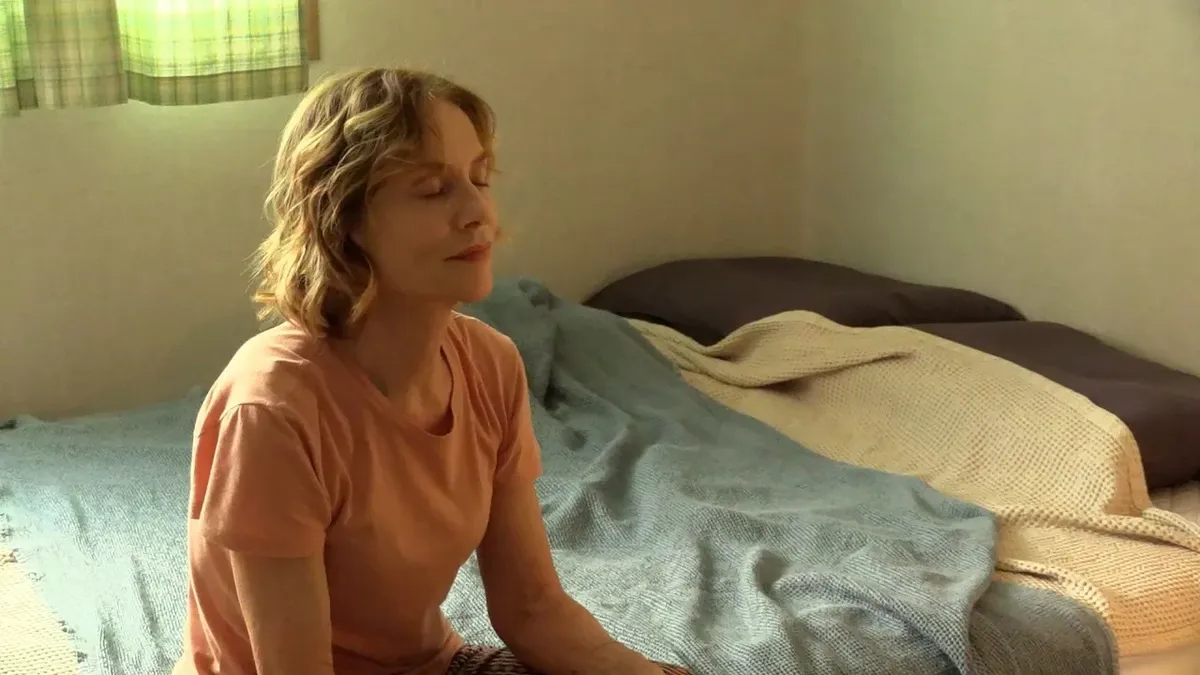
Habitually, receiving the next prize for his (this time not the best) film “Traveler needs”, shot in a few days, the South Korean classic Hon San Su ironized: “I don’t know what you saw in this film.” We saw Isabelle Jupper, which you can look at the water. And which has an amazing sense of humor. For His Frenchwoman, God knows how it ended up in Korea, she came up with a gait, dangling hands - like poultry wings, and unpredictable, sometimes completely ridiculous reactions. I think,
Hong San Su knows how to make a beautiful hollow movie - with air holes, which the viewer himself fills with his own ideas and meanings.
Another wonderful director-Bruno Dumon-received a prize for a comedy-parody of Star Wars. The action of the film "Empire" about the aliens and the battle of good with evil takes place in the French fishing village. Cute for home viewing.
On Berlinal, acting prizes are no longer divided by gender, so there are fewer. This year there were no awards for the best female role. And this is a shame. Because the competition had excellent works. Anya Plashg is in the role of the Devil's Devil in the film “The Devil Bath”, the incredible Tunisian actress Salha Nasraui - as the mother of Aisha, who does not believe his son, who returned from the war literally with death in the image of a girl in Nikaba. The Iranian star Lily Farhadpur is in the role of a freedom -loving pensioner Makhin, who fell one day of happiness and love. But for some reason, the Marvel star Sebastian Stan, who played the “other person” of the actor with neurofibromatosis-a genetic disease that causes ugly tumors, which can be cured with the help of innovative medical treatment. Therefore, half of the film is in a mask. After the awards, Stan said that ugliness and disability were topics that were unfairly “overlooked from our own bias”. So another justice is restored.
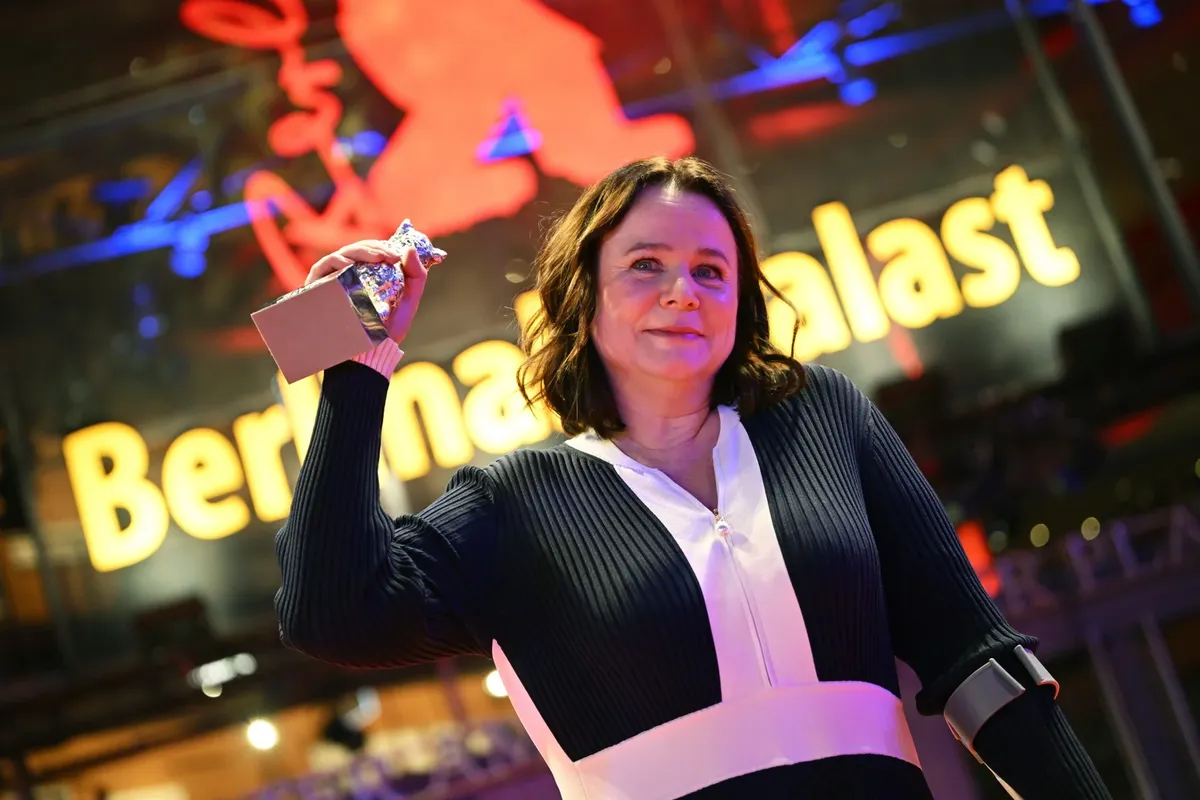
The outstanding actress Emily Watson received a reward for the best supporting role. She really convincingly played the episode in the film “Such Little things”. The abbess of the monastery with cruel foundations, in which they re -educate the lost souls of "sinful women." Emily Watson supported the general rally mood. Gave tribute to “thousands and thousands of young women whose lives were destroyed by conspiracy between the Catholic Church and the state in Ireland.”
Of the unconditional awards - the “Silver Bear” for the outstanding artistic contribution to the operator Martin Glacht for the image, and I would say - for the visualization of the world in the spirit of paintings by Bosch or Bruegel in the film “Devil's Bath”. Women in the eighteenth century kill children ... so that the Catholic Church forgave their non -existent sins. Very beautiful and very terrible psychotriller.
The German writer and director Matias Glasner (“Hour of the Wolf”, “Mercy”) received the “Silver Bear” for the best scenario of the tragicomedy “Dying” -a filmmaker about a dysfunctional family, which, as the classic said, is “unhappy in its own way”. In it, everything is not "thank God." The father, who fell into dementia, is difficult, the mother is seriously ill, the adult son does not get rehearsals over the symphonic work “dying”, the conflict with the composer who composed him is brewing. In addition, his civilian wife gives birth to another man. And there is also his crazy sister, who has an allergy to music, and therefore the main concert of the hero’s life is under threat. In the retelling, it looks anecdotal. But Glasner is a master of weaving psychological lace on the screen even in the most concentrated comedy with tears in his eyes.
Note that for the second year, the main prize of the Berlin film festival has been received by a non -inframed picture.
Last year, the film “On the Adamant” by Nicolas Filiber, the first part of the trilogy about a psychiatric clinic, became the triumph. In 2024-a movie about the royal treasures of Benin's colonialism injured by colonialism. If this goes, it is just right for the guides and actors to make the idea of protecting the feature cinema at festivals.
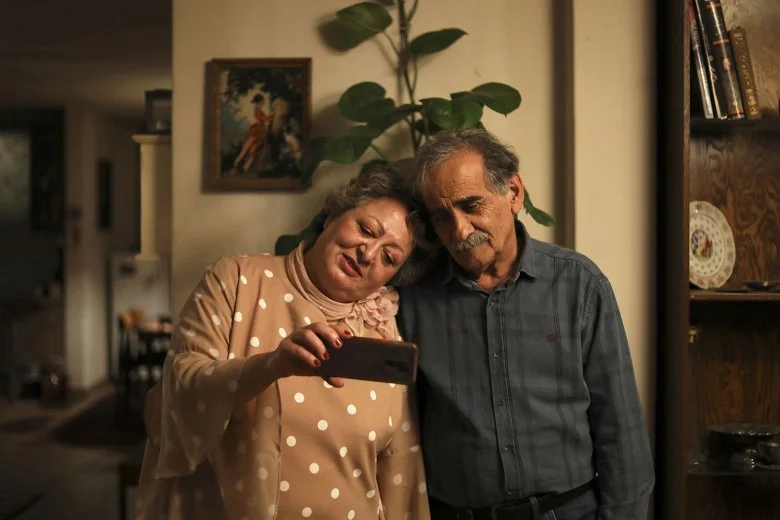
A feeling of amazement by the results of the festival partly compensated for the prize -fins and film presses of Fipresci - the Iranian painting “My Favorite Cake” directors Maryam Mogada and Bekhtash Sanaikh, who were not released from the country from the country. Taking a movie about personal freedom in a non -free country, they consciously risked. And this simple story speaks of monstrous discrimination without pathos, artistic means.
It is not surprising that in our time at the Film Festival about politics they talk more than about the movie. It is anxious when there is a threat of turning the film forum into a means of political irreconcilable struggle.
More about the cinema
Larisa Malyukova leads a telegram channel about the cinema and not only. Subscribe here .