
Translated material
Storm on the Dniester
Storm on the Dniester
Editorial “Layout” February 26, 2024 |Should we wait for Transnistria to join Russia?
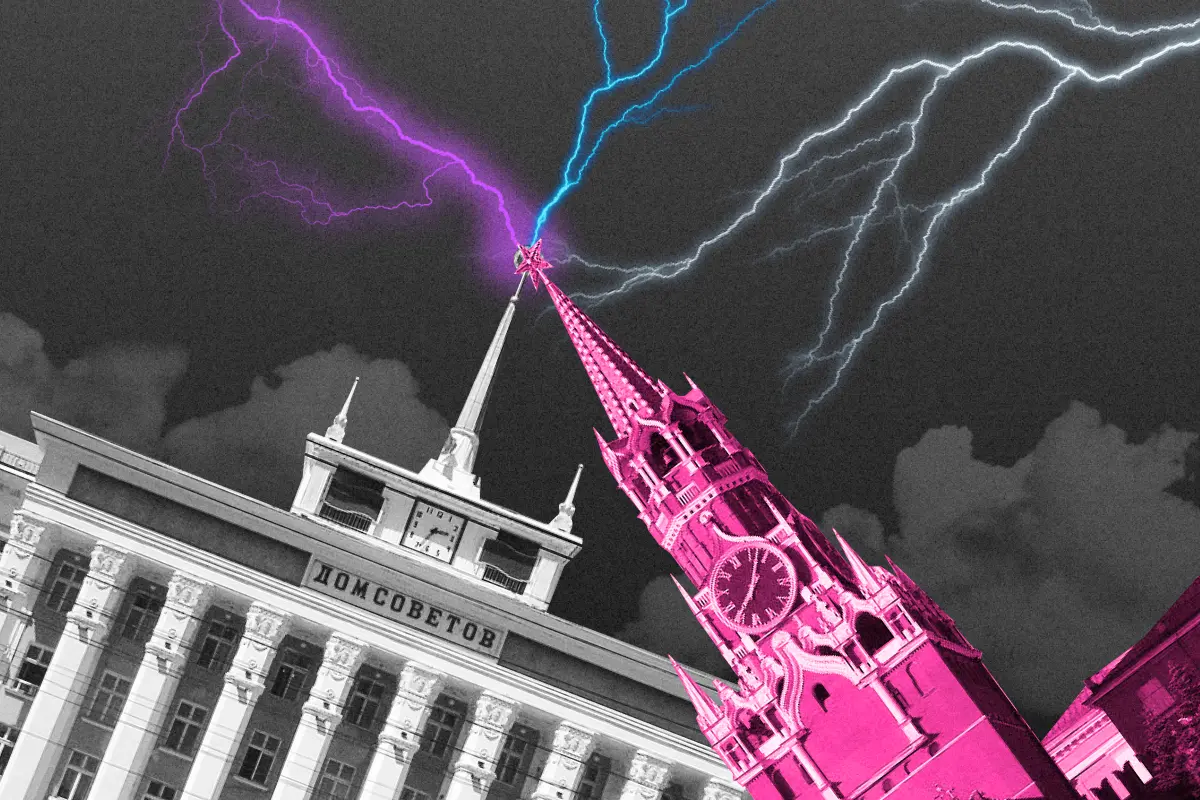
A congress of deputies of all levels will gather in Transnistria on February 28. An event that has not yet happened has already caused a stir: the press and analysts suggested that Tiraspol will ask Moscow to annex the unrecognized republic to Russia. “Vorstka” found out whether such a development of events is possible.
In order not to miss new texts from “Layout”, subscribe to our telegram channel
What's happened?
The leader of the unrecognized Pridnestrovian Moldavian Republic (PMR) Vadim Krasnoselsky announced the holding of the congress. A message about the convening of the congress appeared on the website of the Transnistrian leader on February 19. The message also describes the reason for convening the congress - in connection with “pressure from the Republic of Moldova, violating the rights and worsening the socio-economic situation of Pridnestrovians.” Two days after this, the PMR parliament (Supreme Council) set the date for the event - February 28.
The PMR authorities call pressure on Moldova to change the usual rules of the game that have been in effect for decades. In January 2024, a new Customs Code came into force in Moldova. It does not contain the previous benefits for Transnistrian companies that were previously exempt from customs duties. Chisinau, judging by the action plan of the Moldovan government for 2024, is going to take other steps in the near future. In particular, start charging Transnistrian enterprises a fee for environmental pollution and ban cars with Transnistrian license plates from driving on national roads.
In Transnistria, which is not controlled by the central Moldovan government, we recall that it has approved its own car registration plates with the symbols of the PMR, as well as its own currency - the Transnistrian ruble, and its own passports. Now cars with Transnistrian license plates can move freely throughout the entire territory of Moldova, but cannot travel to the EU or the territory of Ukraine .
Tiraspol is not satisfied with the steps already taken by Chisinau and the measures planned. “Chisinau, year after year, increases political and economic pressure on Transnistria, violating the rights and interests of our people,” Vadim Krasnoselsky said on February 24 in an interview with RIA Novosti.
The Congress of Deputies of all levels, scheduled for February 28, will be the seventh in more than three decades of the existence of Pridnestrovie. In the past, important decisions have been made in such forums. In particular, it was at such a congress that the unrecognized republic was proclaimed (1990), then the constitution was approved and the coat of arms and flag were approved (1991).
The last time Pridnestrovian deputies of all levels met was in 2006. The reason then, as now, was economic issues. Chisinau sought to ensure that all cargo going to the PMR was cleared at Moldovan customs. Ukraine, from whose territory at that time the main cargo flow to Transnistria came, i met Moldova halfway. The Ukrainian government ordered to stop servicing cargoes intended for the PMR that did not pass Moldovan customs clearance.
Tiraspol accused Chisinau and Kyiv of an economic blockade. And in March 2006, he convened a congress of deputies of all levels. The deputies turned to the State Duma of the Russian Federation with a request to recognize the independence of the PMR and decided to hold a referendum in the unrecognized republic.
The plebiscite took place in September of that year. Local residents were asked to answer two questions: “Do you support the course of independence of the Pridnestrovian Moldavian Republic and the subsequent free accession of Transnistria to the Russian Federation?” and “Do you consider it possible to renounce the independence of the Pridnestrovian Moldavian Republic with subsequent entry into the Republic of Moldova?” 97.1% of all voters were in favor of independence and joining the Russian Federation.
Why did they talk about the annexation of the PMR to the Russian Federation?
The decision of the Transnistrian authorities to hold a congress of deputies of all levels immediately attracted increased attention. There are several reasons. Firstly, such forums are rare, and important and high-profile decisions are made at them. This, as well as the memory of the 2006 congress and the referendum that took place afterwards, formed the expectation of possible sensations.
Secondly, the press drew attention to the analysis of the American Institute for the Study of War (ISW), which on February 22 warned: “Transnistria may organize a referendum on joining Russia to support the Russian hybrid operation against Moldova.” Western publications began to refer to ISW. “Moldavian Transnistria may ask Russia for annexation,” Euronews reported .
The third reason for the increased attention was the post of former Transnistrian official Gennady Chorba. In 2013 - 2015 he headed the State Service of Communications, Information and Media of the PMR, and after leaving the civil service he became a critic of the authorities, for which he was detained and eventually spent 13 months in prison. After his release in 2021, Chorba left Transnistria beyond the Dniester - to Chisinau - and continues to criticize the Tiraspol authorities from here.
On February 20, Chorba wrote on Facebook: “Most likely, based on an analysis of the situation, a command was issued from Moscow to hold this congress, at which a request should be voiced, on behalf of citizens living on the Left Bank of Russia , to accept Transnistria into the Russian Federation, and on February 29, Putin will announce this in his address , and the Federal Assembly, in an expedited manner, will decide to satisfy the request request."
This post by Chorba was replicated by Telegram channels, Russian , Ukrainian , Moldovan and other media. Conspiracy theories about the upcoming congress are also supported by the fact that in Transnistria, which broke away from Moldova in the early 90s, pro-Russian sentiments are strong.
Visually, the unrecognized republic already looks like a Russian region. Along with the red and green Transnistrian flag, Russian tricolors are hung everywhere on administrative buildings. Russian is the official language here, along with Ukrainian and Moldavian . In the development strategy of Transnistria until 2026, accession to Russia is indirectly designated as one of the goals. “Strengthening the independence of the Pridnestrovian Moldavian Republic with a focus on gaining international recognition and implementing the results of the 2006 referendum,” the document says.
In order not to miss new texts from “Layout”, subscribe to our telegram channel
What to expect from the congress?
What added suspense to the information noise surrounding Transnistria was the fact that Transnistrian officials did not refute the version that the congress was being held to appeal to Russia with a request to join. Although the intensity of passions was partially cooled by the head of the foreign policy department of the unrecognized republic, Vitaly Ignatiev. In an interview with the Transnistrian television channel TSV on February 24, he said that the purpose of the congress was to loudly declare Tiraspol’s position on the steps taken by Chisinau.
According to the official, this is “a chance to be heard far beyond the borders of Transnistria and an opportunity to show the real picture of what is happening.” “This is economic pressure, this is a violation of human rights and freedoms, this is blocking the normal work of the negotiation process,” Ignatiev noted...
Chisinau denies the accusations. The Bureau for the Reintegration of Moldova i , when asked by “Vestka” to comment on Tiraspol’s accusations of the blockade, responded that the Transnistrian side “refuses to comply with the elementary requirements proposed by Chisinau that comply with current legislation and international standards.” The department emphasized that there is no talk of any blockade on the part of Moldova, and Tiraspol uses “manipulative and politically motivated tactics.”
The new Customs Code of Moldova, the Bureau noted, concerns only “payments applied to all economic agents from both banks (Dniester) for customs clearance procedures.” Separately, they noted that Pridnestrovian companies are still exempt from VAT and excise taxes.
The Bureau for Reintegration of Moldova also believes that no problems should be expected from the upcoming congress in Tiraspol: “According to the information we have, there is no reason to believe that the situation in the region could worsen.” The Main Intelligence Directorate (GUR) of Ukraine has a similar opinion. “According to our data, the information that on February 28 the “authorities” of Transnistria will allegedly ask the Russian Federation to annex them into its composition has not yet been confirmed,” GUR representative Andrey Yusov told the Ukrayinska Pravda publication.
Two informed interlocutors of “Verstka”, close to the Pridnestrovian leadership, on condition of anonymity, assured that no requests to accept the PMR into Russia are planned at the congress. “Nobody will talk about this. We will talk about economic pressure from Moldova,” noted one interlocutor of Vestka.
Another source familiar with the preparations for the congress said that the outcome of the congress will be an address “on the current moment.” “No sudden steps,” he assured.
There were also no instructions from Moscow in connection with the congress of deputies of the PMR. “ We have not received any tasks regarding Transnistria, other than preparing the presidential elections in the Russian Federation, ” a source involved in preparing the unrecognized republic for the March elections told Vorstka.
Experts interviewed by VERSTKA also believe that one should not expect from the upcoming congress what has been written about in the press and social networks in recent days. “The congress is a mini-referendum on what to do next. I don’t think that the question of what is currently being discussed on the Internet is relevant,” former head of the Pridnestrovian foreign policy department Vladimir Yastrebchak told Vorstka. According to Yastrebchak, the congress is needed so that “there are no illusions in Chisinau that a solution to the conflict is possible through the adoption of unilateral decisions by Chisinau.” “Only negotiations, not unilateral decisions,” says Vladimir Yastrebchak.
Director of the Tiraspol Institute of Socio-Political Research and Regional Development (ISPRRD), Associate Professor at the Financial University (Moscow) Igor Shornikov believes that “the emphasis is on communicating to the international community the problems and the situation in which Pridnestrovie finds itself.”
“Moldova is tightening the screws, introducing measures that limit the economic independence of the republic and is not going to stop, but is going to press on. Understanding this course, the deputies want to inform the world community of what is happening. so that no one could say: “Why were you silent when you were being pressured?”,” Shornikov noted in a conversation with Vorstka.
The expert called the congress “an unusual instrument of direct democracy.” “They voted for these people, and even if someone considers the executive power of Transnistria illegitimate, it is difficult to call local deputies illegitimate. This tool, in theory, should work in an information and image version. The OSCE, the European Union, and those external players who have interests in the region will be informed. There is the EU, there is the USA, there is Ukraine and Russia. Very different players and each has tools of influence. Maybe some bet will win,” Shornikov concluded.
Cover: Dmitry Osinnikov
Support “Vestka” - it’s important and safe →