
Translated material
"In bed with the enemy"
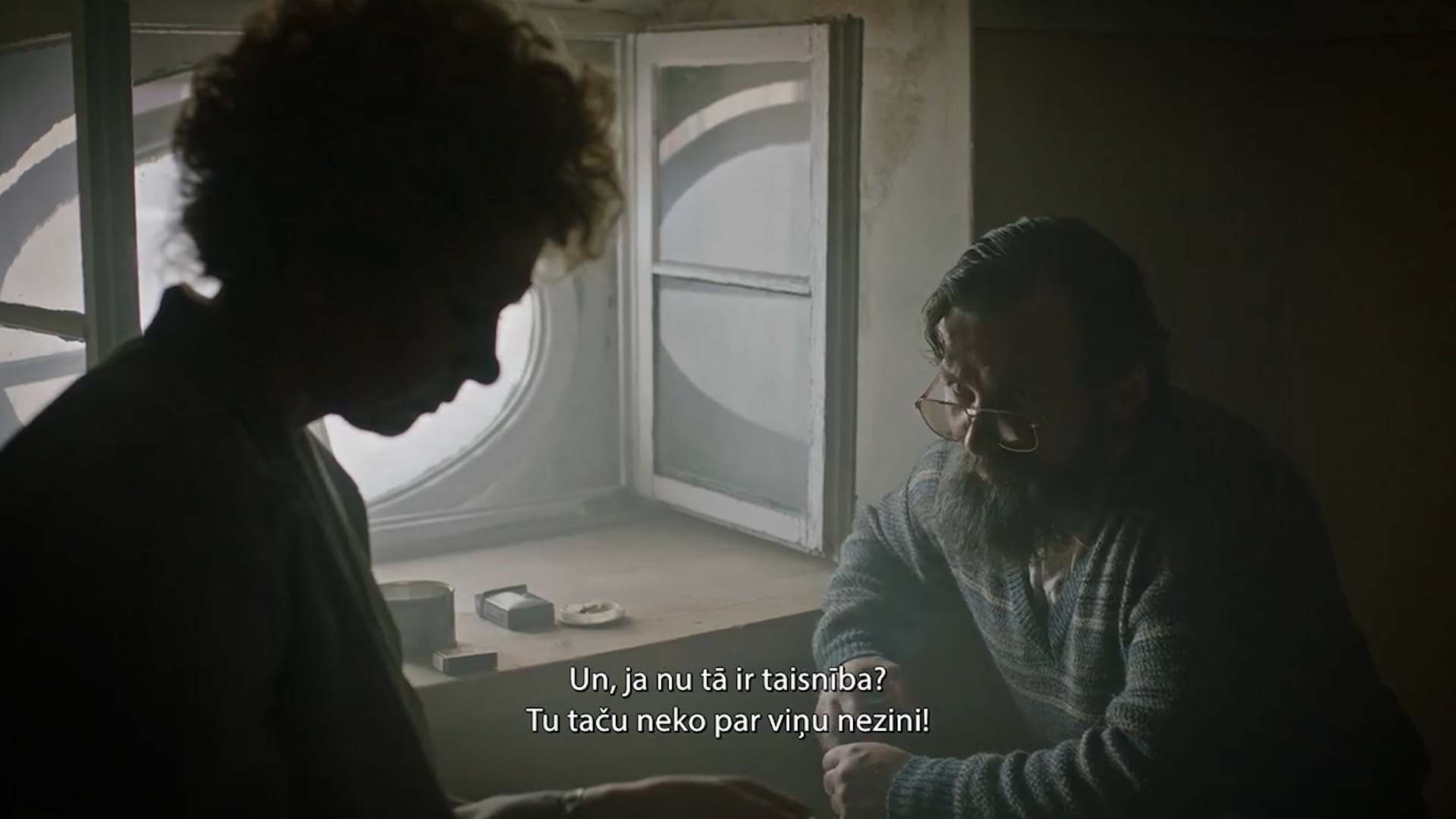
The heroine of the struggle for the independence of Latvia shot the Bayopic film "My Freedom", which is nominated to the National Oscar in Hollywood.
Who was the real Ita Kozakevich , Polka by origin, whose ancestors supported the uprising of the late 19th century against the Russian Empire? Why did she not have time to be in the 1991 Riga barricades? "Woman Latvia", which fought with Soviet Russification of her country and at the same time defended the rights of national minorities. The icon of feminism of the era of perestroika. And her husband, the likely agent of the KGB. A conversation with the director of the film Ilze Kung-Melgayle and actor Darus Bushkauskas .
- I would say that the second name of our conversation is "the heroes do not die." In paradoxically, against the backdrop of the death of Alexei Navalny, we will talk about the most important woman for Latvia, who was the prototype of your heroine. This is a powerful female image, comparable to Galina Starovotova in Russia. What can be said about the biography of Ita Kozakevich (in the film her name is Alicia)?
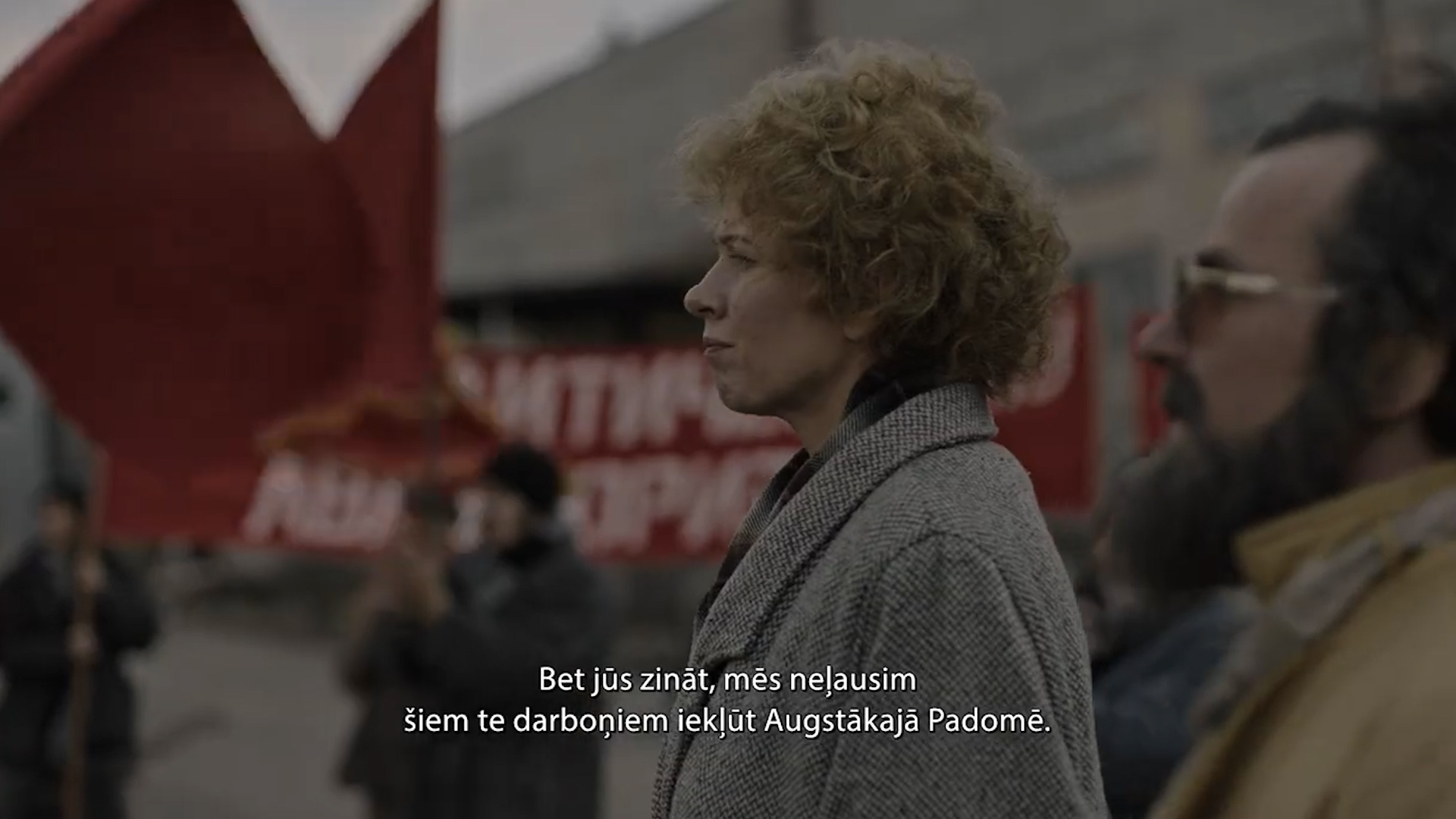
-I was in search of a hero, in search of a plot about this time, about the end of the 80s. I was 14 years old then, I remember it very brightly, and it lived in me all the time. I had a plot about these times: a family where dad, for example, is Russian, and mother Latvy, and suddenly all this movement of the late 80s, and how difficult it is to take shape in the family. I made material for the Museum of the Popular Front, viewed archival videos. I saw her and just remembered her. It was the 88th year: she, a simple, ordinary woman, went on stage on the forum of the peoples of Latvia. She represented Polish society and spoke very sharp words: ignorance of the language, emigration - all these complex issues.
In reality, Kozakevich has a tragic fate
- She is half Latvy, half Polka, she is from the family that fell into Latvia after the suppression of the Polish uprising at the end of the 19th century. The Polish cultural activist, even put her monuments in Poland. And I do not agree that she is a very simple woman. She was a multiple, knew nine languages.
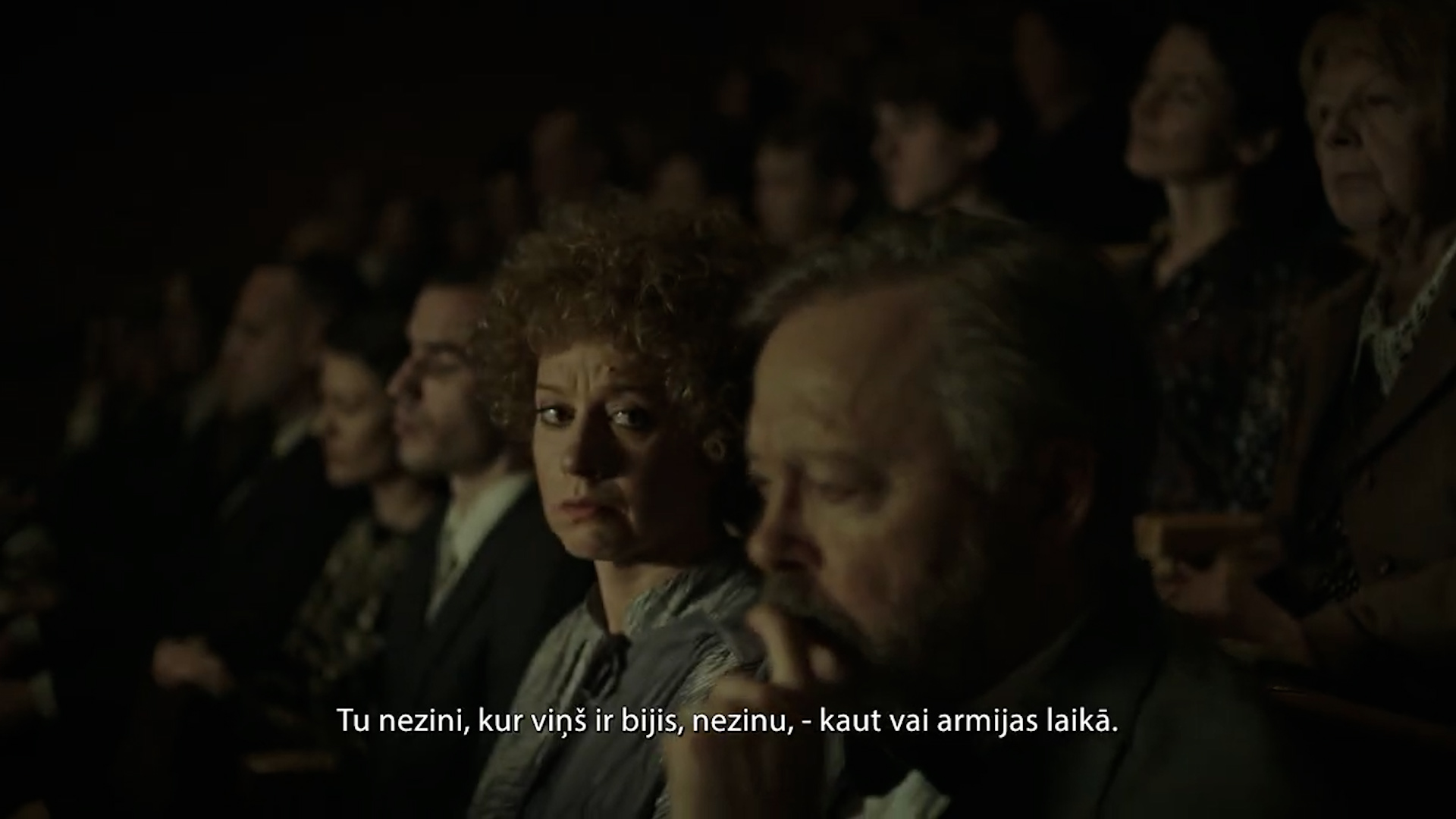
One of the dramatic lines of the plot - it turns out that the heroine’s husband probably cooperated with the KGB. The influence of special services on people's lives: discrediting, blackmail, attempts to force for cooperation and betrayal - this is a red line in the film. And in the finale, when he says: “You are in bed with the enemy,” (this is almost a quote), she replies: “This is now a new Latvia.”
This is an amazing episode. How do you feel about him? And is it really new Latvia? There are a lot of questions about the past and present, about how to be with people who collaborated with the regime were or were not lustrated. In reality, Kozakevich has a tragic fate. She died by accident - drowned. And her husband, who was a famous scientist, a mathematician, then became a deputy of the Supreme Council.
- In the life of Ita Kozakevich there were all important topics that I wanted to talk about: what happened then, what is its contribution, and how we are building a bridge from that day to date that we received, how we coped with this all these 30 years. I interviewed her friends, from the people with whom she was in politics found friends and colleagues of her husband. That's how my story was built. In fact, it is very close to the truth. When I just started showing the film, of course, everyone said: "How could she return to him?! She is a saint!" And the scene when she, in general, forgives him ... or maybe she does not forgive, but she applies with understanding.
-Takes it somehow.
- Yes. And maybe she herself grows up, understanding what they were, these times. Some adapted to this life, some suffered, some in general broke these 70 years of Soviet power. I also received such reviews that it is very good that the ring ends and everything ends with this scene when she forgives him, returns to him. This is a big question: how we continued to live after 1991. Of course, we were all busy with survival, because the previous economy collapsed, we started life in independent Latvia. And now all these issues are very relevant: where did these agents remain, who cooperated or were officials who put their signatures, decided the fate of other people, their career, the opportunity to learn and become someone. And now this question is also worth it.
“He's sharp than ever.”
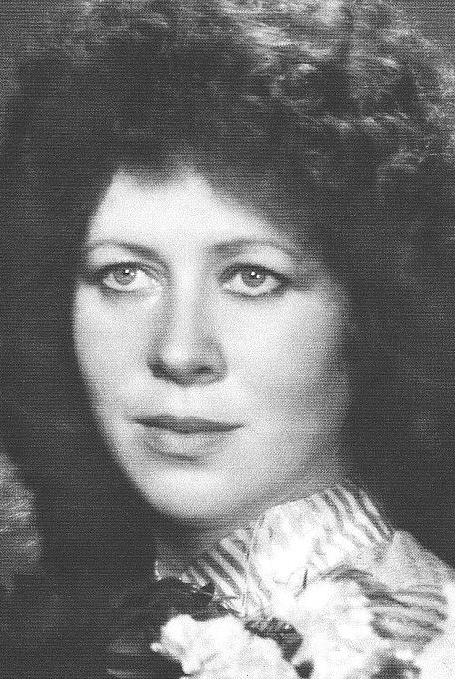
Some generally broke these 70 years of Soviet power
- We will find everyone. You will all answer for what is being done now not only in Ukraine, but also everywhere! And the question is: we will study something, will all be found?
- Darus, the hero says with your lips: "The deputy and the informer in the same bed." What do you think about your hero? It seems simple ahead, but it is very difficult and dramatically living an image.
- This image becomes dramatic because his fault in front of her and in front of a friend, whom he sent to the camp with his denunciation, makes this role voluminous. But he does not get out, my character Ilgvars, he admits his wife, although this is not easy. And she forgives him. Actually, this is Christian. A person is experiencing because of this, he has a feeling of guilt. And creating my character, I just thought about this feeling of guilt. It makes this role voluminous. This scene, in my opinion, is the most important. A lot of things fit into this phrase, it is like a bridge to the future, these days.
-Darus, did you have some personal experience of such a meeting with hidden agents, specialists, informals in your youth when you studied or when you already worked in the theater? If so, could this help you comprehend this plot?
- We participated in all rallies, went to Siberia, to Baikal, restored crosses, cemetery there.
- The cemetery of the Lithuanian political prisoners?
- Yes. This is 1989. When we returned from Siberia, rallies in Vilnius were just taking place, and our flight was detained in Moscow for an hour and a half so that everything resolved in Vilnius.
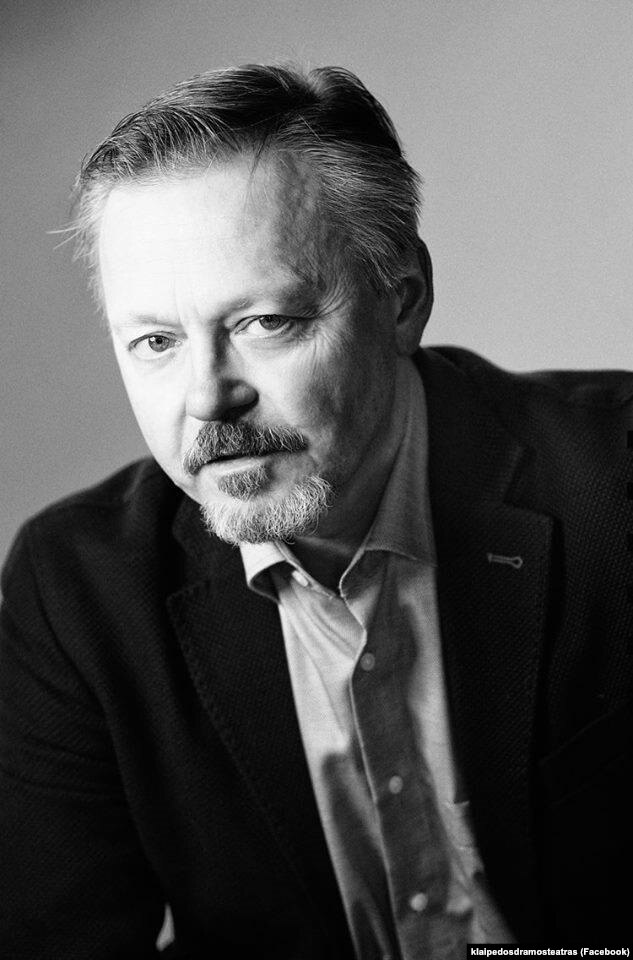
This system worked through violence against man
Then the police beat people at a rally. And, of course, we knew that there was a informer on the course, we just did not know who he was, and still do not know. At each course in acting, there was one or more people who collaborated with the security authorities of the USSR, that is, we had to think what to say, not to say. Here is the whole point in violence: this system worked through violence against man.
And so we restored cemeteries in Baikal, and one journalist later said: "Now it will be easier for you to make a performance about it?" I replied: "harder." Then I realized: the whole problem is that these people were taken by force. That is, all this pain in our heads: violence has been committed, they are not there of their own free will, so they suffered there. Well, plus, of course, and cold, and malnutrition, and the like. They pulled them out of life.
- We are talking about the deportation of the Lithuanians after the entrance of the Soviet troops into the territory of Lithuania. Then, after 1945, there was a repeated action of deportation. Continuing the topic of violence, I would say that this is an episode of psychological violence, completely hellish manipulation, when a hidden agent (or specialty) manipulates people's feelings. Ilze, how did you build this scene?
- I met people related to the KGB who "left the closet", frankly said about it. And he is one of the first, such a prominent person in Latvia. I called up with him, we had a long interesting conversation. He said: "The essence of my tragedy is that I do not even know what I did." Because the tasks that he had, in general, was ridiculous: if you leave for some conference abroad, go to the libraries, watch some materials. Libraries around the world are open, anyone can come in. He said the key thing: “They are kept on the hook all the time, you are behind you all the time, and you don’t know when someone comes, put your hand on your shoulder:“ Come ”.
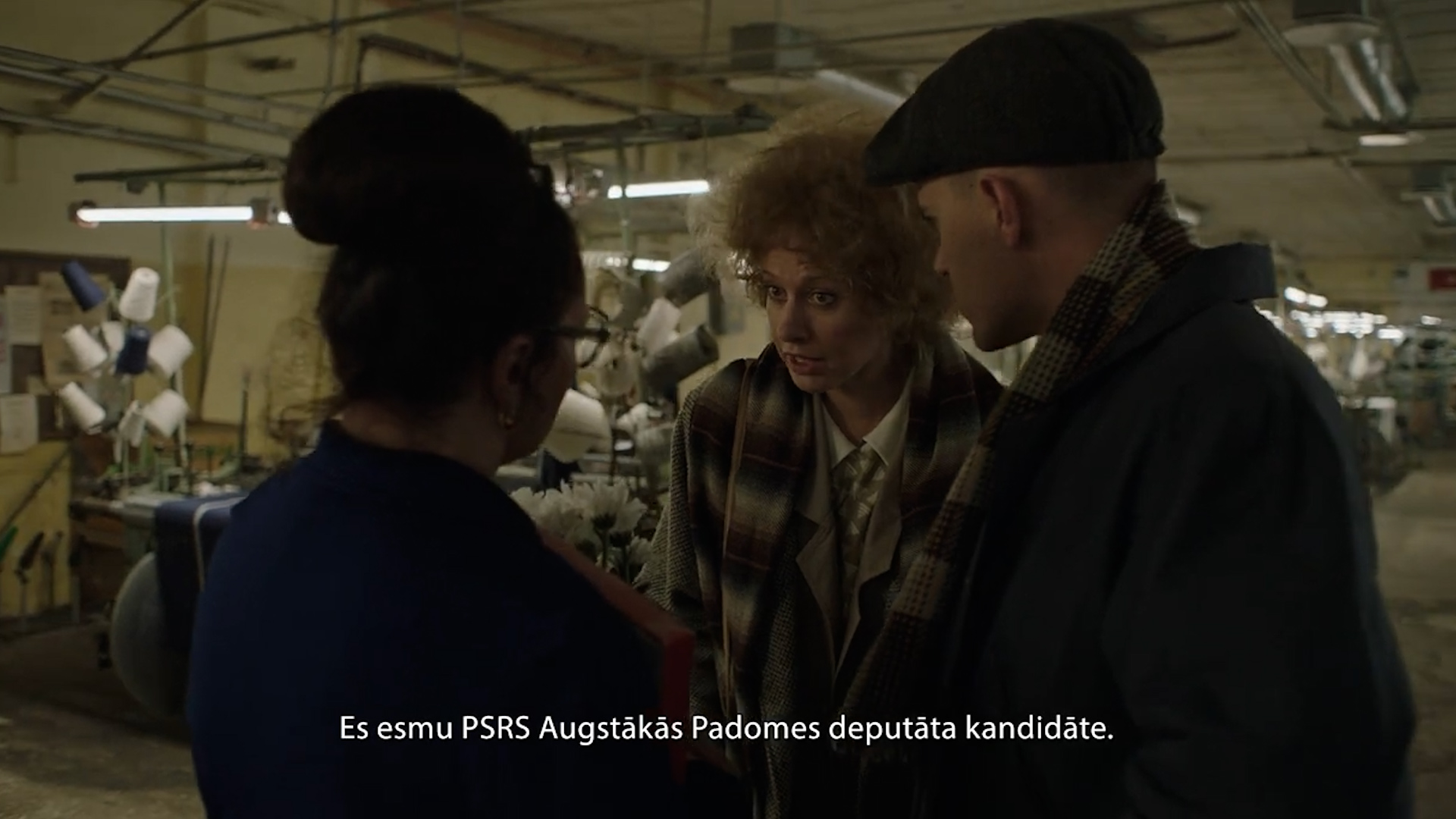
We will find everyone, you will all answer for what you are doing now!
And I thought of this and adhere to: Ilgvars in my film have the feeling that he does not feel free-now someone will come, he will be confused. He is a little intimidated, cannot live freely. And Alicia just seems that everything is simple, and I did it a little naive. She lived with her parents. I talked with her friends, they said: "She came home, and she had everything there - and a plate of soup, and a room." Still simply! Just tell the truth. But during this film, this story she understands that everything is not so simple for everyone. Not only ideological issues, but simply household issues: problems with living space, with everything else. You know that you are taken to the hook, and you don’t know when, where and how you are pulled.
- How loudly were the figures of people who collaborated with the KGB were hidden officers or agents? Were there open processes in Latvia in the 90s about this?
- Some admitted, for example, Foreign Minister Mr. Andreev. And he left this post. The rector of the university also admitted. But I do not remember the trials.
- To Darus the same question. At one time, in the Memorial Society, I listened to the report of Lithuanian human rights activists who said that former KGB officers in Lithuania still receive Soviet pension. How did the official Vilnius and society approach this? Were there any loud lustration affairs? Or the phrase that "a deputy in bed with a knock" meant universal forgiveness? Oblivion, reluctance to know about it. How do you look at this?
We reap the fruits of impeccable lustration
- I look at it badly. Lustration is very important. The only way to become free from all this is to admit. And with lustration after the Soviet Union, in my opinion, only the Czech Republic under Gavele coped.
- Also, perhaps, Germany and Poland are with different successes.
- That's why we reap further the fruits of impeccable lustration. We also had names, writers who admitted that they were recruited. Someone from the great said that betrayal and lies can be forgiven, but there is no need to forget. How else can you interpret the phrase at the end of the film that you can forgive, you can’t forget, and you have to live with it? After all, if you cut off this: there was nothing, they forgive everyone in general - this is just infantile. And this infantilism leads to the new Komsomol members, the new Hitler-Jugend , new hunwebral. Ideologies are different, and the mentality remains the same. There were many right activists - former and collaborating with the KGB. Their guilt drove into more radical political positions. Such an interesting mechanism. But this is already psychology.
- Irongated lustration in Russia led to the political and military horror that we now have. To the preservation of the power of the KGB officers, to the right nationalism within the ruling elite and to unleash the war in Ukraine . These are the results of unheated historical work.
In your film, it does not reach the events of 1991, because the heroine died in the 90th. When I watched your film, I inevitably thought about another Latvian film, last year, "January"-about the events of the 91st year. These two films - your and "January" - make up a certain historical dilogy for me. It is no coincidence that the film has already received several European prizes, and yours are nominated for the national Oscar.
The film about a young man who did not want to notice politics wanted to be a free artist, the new Bergman or Tarkovsky, but the reality in the person of OMON came to Riga streets. And one of the people who appear there is the lawyer Uzniex , the famous director, the pride of Latvia, whose operators died in this January. In parallel, the heroes of the film go to Vilnius, the main cruel events happened in Vilnius around the capture of a television tower. Darus, have you found this time?
Omonovites obscured the doors in our scenery in the Press House
- Yes. On January 11, we had to have a performance in Vilnius. I went by bus and in the middle of the road on the radio found out that military operations had already begun there. Then I ended up in Vilnius. The riot police obscured the doors in our scenery in the Press House. And then we ran between the TV tower and parliament, sat at the bonfires ... I participated in this. I was 22 years old.
- We have a commentary on the filmmakers Andrei Timofeev . He tried to answer the question: what is national cinema.
- National cinema - a movie about the homeland. Our movie, which is made by Latvians about Latvians and for Latvians. Why "January"? In my opinion, at the Latvian box office it was the main film of 2022. When there were episodes with the barricades (and there art episodes were mixed with documentary), I walked goosebumps on my skin, I just took off, sitting in a chair. It was simply amazing, very rare experience!
"January" was a film that caused me the most positive emotions. And I compared “my freedom” not only with him, but also with other, large -scale examples: “Namis Ring” , “Riga Guardians” , DVēseļu Putenis (“Blue Soul”), these are already historical films about the period of the First World War. The difference between "my freedom" is that this is also a Bayopic, a biographical movie, in the center of which a specific historical character is a person with his history.
When you write about a real person, your hands are already constrained
It was necessary to reckon with this, because we cannot insult relatives, the memory of a person who is often somewhere conditional, somewhere subjective. As a rule, this fetters the authors. Kayrish in "January", I am sure, had much more opportunities to fuck, make some punk and give up someone. And when you write about a real, real person, your hands are already constrained. This is partly why I have a cooler attitude towards "my freedom".
- I have two questions. The first is the remark that you were constrained in production. It seemed to me that this is a rather frank film about a young living woman that men surrounded around her. This is a normal, living life. What do you say, Ilze?
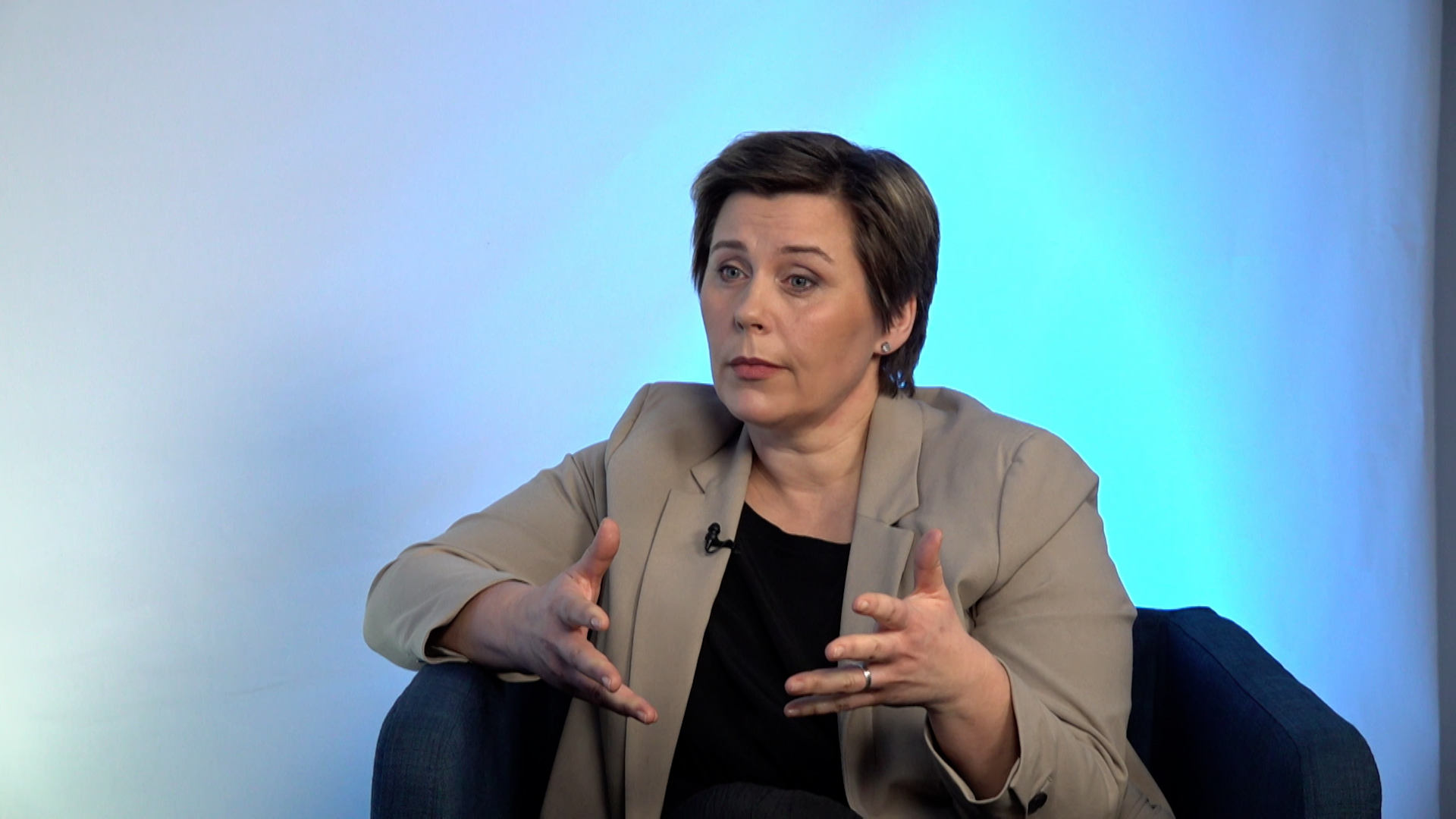
-I did not want to use the image of it for some of my own purposes. She is a historical person with an interesting biography. I wanted to respect her. Some episodes of her life could be put in the script, but in one film you can’t tell everything, and I refused them, because people look at ITU all the same and as a person from the encyclopedia. After the release of the film, I even received comments: "How so, she is a woman of Latvia, and you show how she drinks with men ...".
- ... flirts.
“But she was a living person!” I also do not show everything in this film.
- I remembered brilliant Czech films just about the era of Havel. And there are wonderful episodes of his personal life, we can say.
- I very brightly remember this time - through my parents, relatives.
I will never believe in any way in the collapse of the USSR in my life
-This is the time when the "sexual revolution" of the 91st year was being prepared. This was also a consequence of the general democratization, which collapsed the Soviet Union, all that we remember and love the Baltic Way , this solidarity, incredible demonstrations that I remember in Russia. It was a huge rise! And I will not believe in any "tragedy of the collapse of the USSR", because I saw this collapse with my own eyes, and all this happened with great fun.
- And I also saw her speeches on the forum of peoples. She is such an image, an excellent student: she came out, said loudly, clearly, the right speech. And then, when I already began to be interested in her life deeper, I was looking for information in the archives and her friends, it was directly relief that she was a living person, with her pros and cons, and life itself offered her many interesting episodes and decisions.
- Another question in connection with a conversation about national cinema. You have a multinational brigade: one actor from Ukraine, five Lithuanians and even an operator with Russian citizenship.
- He passes through everything that many people from Russia are now passing through who do not want to stay, who have a different position in relation to what is happening. He wants to work, so he tries not to work in Russia, but to ride, but he still needs to return home.
- Ukrainian actor and Russian operator - did you work normally?
Was buch, and how was he ashamed ...
- Very normal. This is not the only Ukrainian actor, but in our mass scenes there were women and children - Ukrainians, refugees. We began to shoot in January 2022, and then the next filming period was after February 24. The operator from Russia just arrived. There was buch, and how ashamed he was ... All this with tears in his eyes. The first refugees have already appeared in Latvia. But on the site we all worked very well together, worried together, and this set a good tone: we tell an important, relevant story today.
- With Darus, we will talk about another project in which he participates in Riga: this is the reading of the play “The totalitarian novel” Marus Ivashkeavicius , where it is about events in Dushanbe - about bloody events and repressions. Moreover, about the events of the 90s, and about the present. But while I want to ask Darus: how did the Lithuanian part of the team feel in this, if not complete international, then in this cooperation?
- I felt good. I knocked Latvian, I play in the film in Latvian. True, they then voiced me, because I, it turns out, is the Latgale accent. There was a very friendly team. And most importantly, you are what your beliefs are, it doesn’t matter whether you are a Latvian, Russian or Ukrainian. There is a story about Churchill. When during the Second World War they wanted more money for military needs, they offered him to take money from culture. Он ответил: "А что защищать будем?". Наша культура, наши убеждения, наша человечность и есть то, чем мы являемся, а не штамп в паспорте.
Я зубрил латышский, я ведь играю в фильме на латышском языке
В фильме "Моя свобода" мне очень ценно то, что там и не пахнет пропагандой. Это фильм про людей, про судьбы, про сложную ситуацию, и потому он ценный и не банальный.
– В пьесе Марюса Ивашкявичюса вы исполняете роль автора, который оказывается в Казахстане и встречается со своим коллегой-режиссером, который много раз был вынужден уезжать из Таджикистана по политическим причинам. Что вы думаете про эту работу? Я заговорила об этой пьесе потому, что она тоже о том, как работает память, как мы помним или не помним трагедию, как истории сталинских репрессий работают в современности.
– Эта пьеса интересна своей конструкцией. Там персонажи Булгакова, "Мастера и Маргариты", и сам Булгаков переплетаются с реальными людьми; потом там появляются и таджикские персонажи, и все это происходит в голове автора. Все эти персонажи начинают в его голове как бы общаться между собой и выявлять что-то такое... Там написано: "главная суть механизма насилия", то есть как это работало у Сталина, как это работает в Средней Азии, у новых корольков, как работает пропаганда, как люди искусства начинают служить власти, как она их вербует, ломает их судьбы.
– Илзе, советский мир в вашем фильме играет, как мне кажется, не только фактурную, фоновую роль, но и роль антропологическую. Вам удается воспроизвести такую Ригу, которой уже почти нет, то есть обшарпанный советский город, это очень достоверная история, почти с запахами. Но Андрей Тимофеев считает, что это может быть и недостатком.
– У меня даже не появилось мысли о том, что это может быть какой-то прием. Мне кажется, это, к сожалению, просто не очень хорошо сделанная драматургическая работа. Альтернативный фактор – прием в драматургии, когда ты должен понимать, что грозит герою, если он не достигнет своей цели. И героине как будто бы ничего особо не грозит. Грозит мужу, семье – происходят какие-то мистические звонки. А она как будто бы... Ну, возьмут – хорошо, не возьмут – ладно. И так нельзя, ты перестаешь сочувствовать, переживать, воспринимать это как что-то важное. Это не дало мне чувственно воспринять этот фильм.
– Илзе, ваша реакция? Андрей критикует две вещи – несвязанность драматургии с большим советским материалом, и то, что, кажется, у главной героини нет вызовов.
Люди очень хорошо смотрели этот фильм
– После премьеры я много ездила встречаться со зрителями, люди очень хорошо смотрели этот фильм. После сеансов некоторые не хотели меня отпускать, говорили: "А как вы это сделали?". Одна женщина очень хорошо сказала: "Я этот фильм смотрела – и мне было так больно, мне все время хотелось уйти, настолько это правдиво. И какой финал! И как хорошо, что вы в конце показали ее в архиве".
Конечно, я тоже критически смотрю на свой фильм: может быть, каких-то пять-десять минут надо было вырезать… Но в основном, мне кажется, этот фильм – как явление в латышском кино, как немножко что-то другое, как Кайришс . 25-30 лет – очень хороший период времени, чтобы посмотреть на прошлое свежим взглядом.
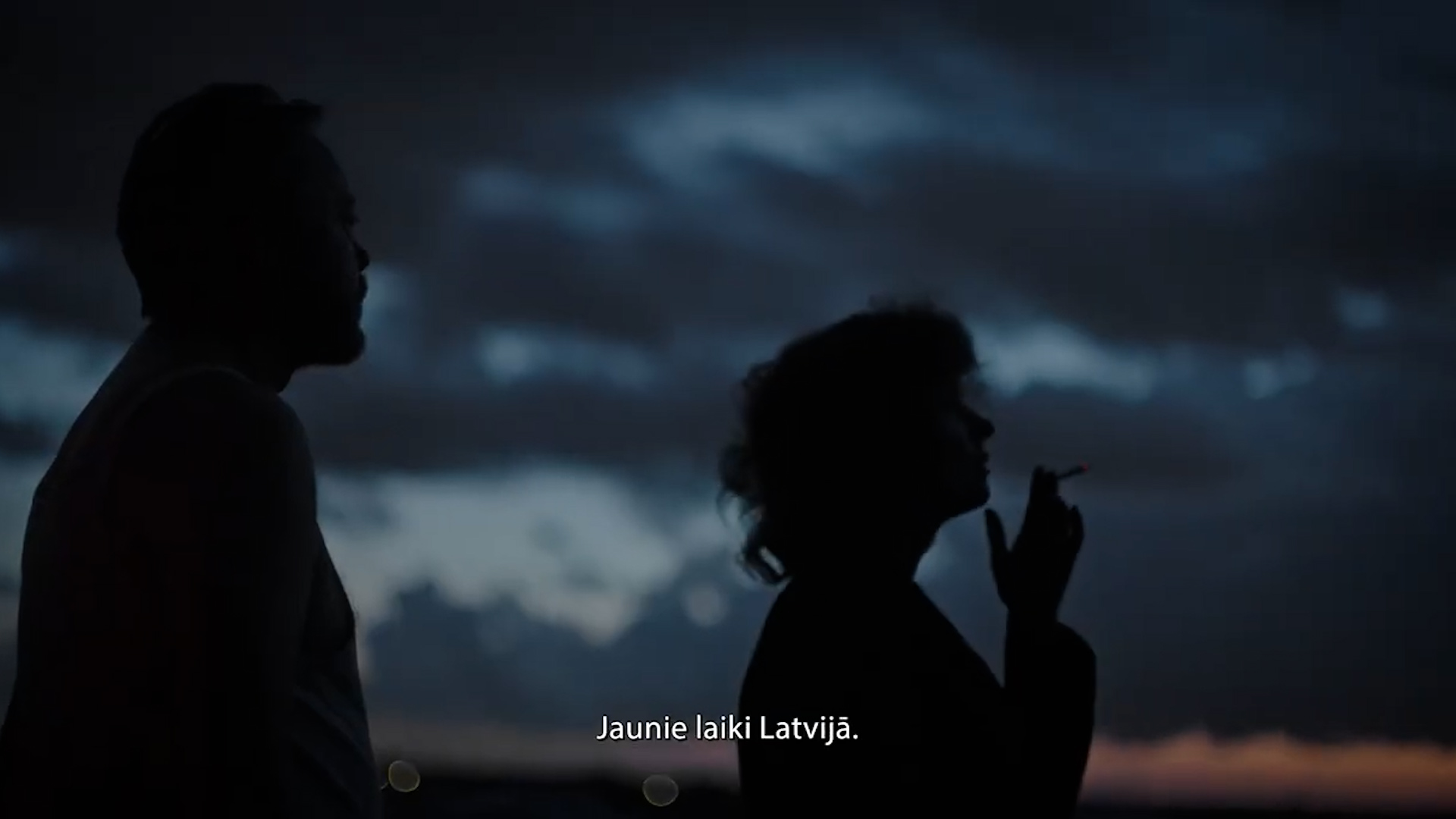
По поводу художественного решения. Мне хотелось вернуть ощущение пленки "Свема": этот непрозрачный воздух, то, что люди жили тесно, все было забито разными вещами. Получали какой-то дефицит – нужен он тебе или не нужен, он все равно хранился на маленькой жилплощади. Люди жили тесно и должны были сотрудничать, дружить, были очень зависимыми друг от друга. Нужно было решать глубинные мизансцены, первый, второй, третий планы. Может быть, современному кино присущ более отчужденный взгляд на вещи, нет глубокого кадра с движением в глубину.
– А что думает Дарюс по поводу соотношения советского мира, его драматургической роли и современного взгляда?
Зритель должен работать, смотря фильм
– Как по-другому можно поднять эту тему? По-моему, искусство должно задавать вопросы, а не формулировать ответы. Ответы зритель должен давать сам себе, а мы должны провоцировать его мышление, воображение. По-моему, такая задача и была. Когда слишком много ответов и нет вопросов, зритель сидит в зале и просто ленится. А зритель должен работать, смотря фильм.
Podcast "Babylon Moscow" can be listened to on any convenient platform here . Subscribe to the podcasts of Radio Liberty on the site and in the studio of our podcasts in Telegram .