
Translated material
The most important books, films, musical albums and objects of contemporary art, helping to comprehend the Russian-Ukrainian war
2022–2024. List compiled by the critics "Medusa"
For two years of full-scale Russian-Ukrainian war, artists, musicians and writers are trying to comprehend this catastrophic event. They continue to work, including within Russia, where independent art is subject to persecution of authorities and is actually squeezed underground. Critics of Medusa have chosen films, books, musical albums and other works that are already seeming key to understanding wartime. This is a very subjective top compiled by the authors who used to live in Russia-for readers, first of all, speaking Russian. It is quite obvious that the look from Ukraine would be completely different. Nevertheless, we tried to make our list as universal as possible.
Movie
Mariopolis-2
Director - Mantas Kvedaravravichyus
The first full -length documentary, from which the annals of a full -scale war will now and forever. The Lithuanian director and social anthropologist Mantas Kvedaravravravichyus, who studied, among other things, torture in the Kadyrovskaya Chechnya (his debut film “Barsh” was dedicated to him), in 2015, shot the amazing “Mariopolis” in Eastern Ukraine, and after the invasion of February 2022 returned to the places of those filming. While working on a new film, he was arrested, tortured and killed. Anna Belobrova, who, together with the editor of Dunei Sycheva, completed the body and the filtering material to Lithuania, took his co-author. The world premiere took place in May 2022 in Cannes.
The strongest impact from viewing is unlikely to ever be able to separate from knowledge about the tragic fate of the author-although previous works do not allow to doubt the talent and identity of Kvedaravichyus. And we, of course, will never know what the film would be if the director himself completed it.
In its current form, it is a grand visualized metaphor. The whole film, his heroes - the inhabitants of the city, remaining without houses - are hiding from shelling and trying to survive in the building of the Baptist Church. And the camera through the embrasure removes the apocalyptic landscape of the city, over which fire is blazing day and night. The house of cinema becomes a temple covering civilians from death.
Eastern Front
Directors - Vitaly Mansky, Evgeny Titarenko
The founder of Artdokfest, since 2014, showing at this festival, uncensored films about military operations in Ukraine, the director of the wonderful essayist painting “Relatives” about the members of his family living from Lviv to Donetsk, Mansky invited the co -author to a new film. Evgeny Titarenko is a volunteer of a medical battalion who does not leave the battlefield, but also a “regime” known under the call sign, that is, the director: after all, everything that happens to him takes on camera.
Thus, in the "Eastern Front" there are two plot planes. One was shot by Mansky: several days of respite in the rear for Titarenko and his front -line comrades in Western Ukraine, where they came to the christening. Idillic landscapes and feasts, visualized utopia. The more powerful shocking contrast with the first-person removed by Titarenko’s reports from the war zone, where the pace and rhythm set from the first frames does not stop and does not slow down: after all, every second can cost someone life. The film-action, free from rhetoric and abstraction, literally does not allow the viewer to renounce the everyday life of the war.
20 days in Mariupol
Director - Mstislav Chernov
The laureate of the BAFTA Award and the Sandance festival, the Oscar nominee - today it is the most famous and successful of documentary films about the current war. It was removed not at all with a filmmaker, but by Mstislav Chernov, a military correspondent of the Assosiated Press agency, who worked from the first day of the invasion of Mariupol along with the photographer Evgeny Moillet (his pictures received the Pulitzer Prize) and the field producer Vasilisa Stepanenko. Before leaving the city along the humanitarian corridor, journalists spent 20 days there, the chronicle of which formed the basis of the material.
This is a chronicle. The Kharkov citizen Chernov has been shooting around the world for many years, and he is used to separating professional tasks from personal reactions - but in the case of Russian invasion, this task turned out to be almost unsolvable. The evolution of the author’s voice and vision unfolds gradually, from almost impassive observation of bombing, destruction, panic, injuries and deaths to the inevitable personal involvement in the war - with all the deliberate dryness of the narrative, the confrontation of Ukraine and Russia begins to look like a clash of forces of good and evil, and not a political conflict.
The role of cinema and journalism, however, is spelled out clearly: to testify. On the screen is a terrible reality, from which it is impossible to turn away precisely because the camera is in the thick of events, and the director’s desire for objectivity only enhances the effect of the truth presented by the viewer.
Street art
Refugee Valery
Authors - Artem Lurchenko and Jr
Ukrainian photographer Artem Lurchenko photographed Valeria in the first weeks of invasion: a five -year -old girl crossed the Polish border with other refugees. Lurchenko sent a picture of the anonymous French street artist JR, he printed it on a 45-meter piece of tarpaulin and brought it to Lviv.
It took a hundred volunteers to deploy and hold a portrait of Valeria. In this act of collective solidarity - the whole essence of the plan of JR: society must make an effort so that vulnerable people are noticeable. The action removed from the drone fell on the cover of Time magazine, it was reproduced in Dusseldorf, Berlin and Venice. The artist created two NFT on the basis of the project, sold it and transferred money to Ukrainian refugees. The portrait of Valeria was the first in the Déplacées series (“moved”), where JR talks about refugee children from around the world.
Our zinc!
The author is Philippenzo
On May 9, 2022, Street Artist Philip Kozlov, known under the pseudonym Philippenzo, published a photograph of new street work on a deaf wall on his native Volgograd-a city that was once called Stalingrad and was destroyed by a war, and then turned into one of the centers of the Soviet-Russian militarist cult. The artist painted zinc coffins built in rows, like soldiers on a parade, and wrote the slogan “Our zinc!” On top of the image.
Philippenzo chose the date consciously. In explication to work, he wrote: "My homeland turned from a winning country into a aggressor country."
Another iconic anti -war work of Kozlov - “Pouring” with the Black Russian Emblem - appeared in the summer of 2023 on a concrete support of one of the Moscow bridges. The project, in fact, about the place of violence in the architecture of the regime. For anti-war street art Philippenzo was pursued; After three fines, two administrative arrests and a search, he had to leave the country.
Berlin "Church of the Transfiguration"
Author - Sasha Kurmaz
A tiny “temple” similar to the change house grew at the Berlin Academy of Arts in March 2022. On the shabby body of a Soviet military truck is a new church poppy, inside there are cheap icons and candles. Sasha Kurmaz, a Ukrainian artist and photographer, conceived this work before a full -scale invasion, but after February 24 (and after Patriarch Kirill supported Vladimir Putin in the war with Ukraine), she began to be perceived especially acutely.
As the author himself explained , similar temples are really found in Ukraine: they are being built without the knowledge of the city administration of the Ukrainian Orthodox Church of the Moscow Patriarchate. If no one objects to the construction, the temple grows, capturing more than the territory. Kurmaz believes that in this aggressive tactics the whole nature of the UOC controlled from Moscow is reflected. For the artist, as for many Ukrainians , she is an agent of the “Russian world”, that is, Russian expansion: it is no coincidence that the temple in its installation is a customized - or “transformed” - military equipment.
Banksy in Borodianka
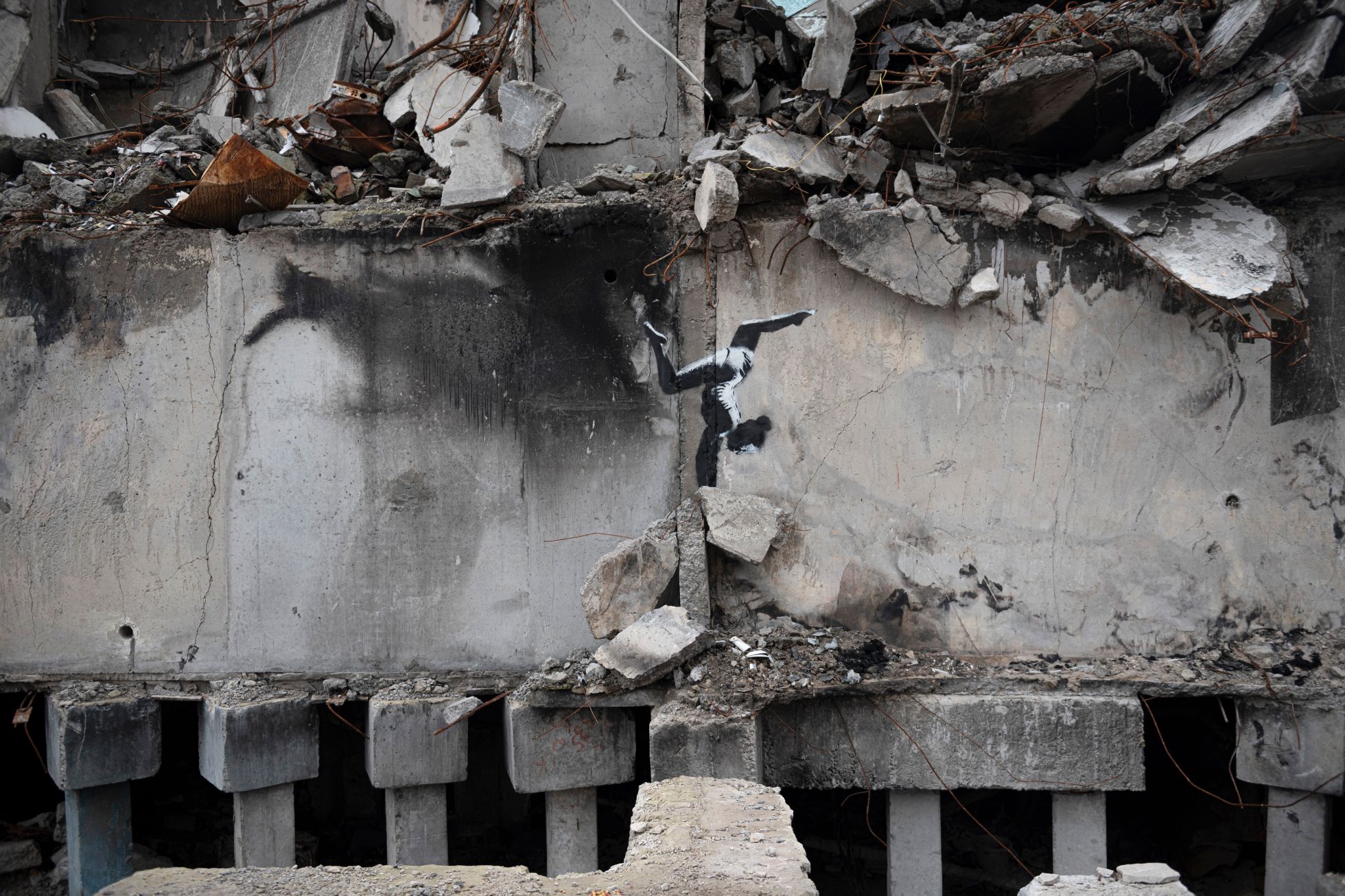
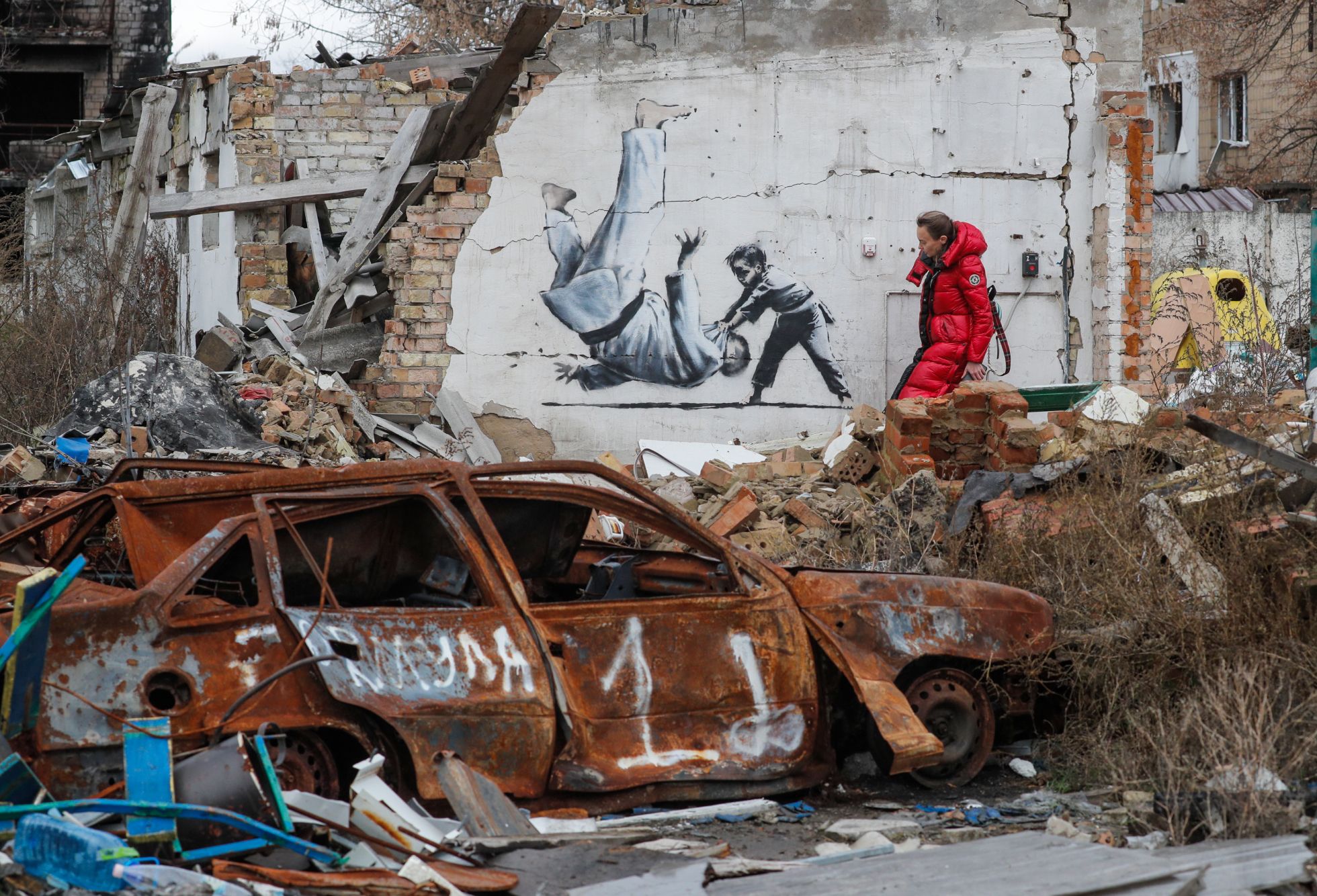
Street art of an anonymous British was noticed in Ukraine in November 2022. This is not the first time that Banksy leaves graffiti in conflict zones: among his most famous works - work in Israel and Palestine . The artist created seven works in Kyiv and the Kyiv region, using stencils - his favorite technique.
The life -affirming drawings from the beard - the village, which passed through the Russian occupation, reprisals against civilians and monstrous even for the Kiev region of destruction , received the most attention. This is a gymnast in ruins - and a child who defeats the adult fighter judo, under which, obviously, Putin is meant. The last work fell on the Ukrainian postage brand.
Music
Wolves in a dash
Authors - Yuri Shevchuk and Dmitry Emelyanov
History ruthlessly treated Russian rock. In the 1980s, he was at the forefront of protests and seemed the most heroic and noble music, the soundtrack of the era of change. In the 2020s, against the backdrop of the unthinkable Russian-Ukrainian war, the former heroes of Russian rock for the most part obediently lined up under the Z-digit, singing an invasion. It turned out that they never understood the essence of rock music, deeply anti-war in nature, and only played with the form-or stopped understanding, honestly evolving to conformism.
Exceptions from the rule can be counted on the fingers: Grebenshchikov, Makarevich, Shevchuk. The DDT leader, who began his career in the 1980s with the song “Do not shoot”, not only the main anti-war musician in Russia, but also one of the most famous anti-war activists. In the 1990s, and in the zero and in the 2010s, he consistently and actively opposed all the wars in which the country participated-and after February 24 continued to stand his ground. The authorities prohibit the DDT concerts in Russia, Shevchuk personally fined for the phrase about the President’s ass .
Despite this (as well as despitethe heart attack ) and contrary to censorship, Shevchuk continues to release anti -war songs about the “funeral of the war”, urging his homeland to “return home”. The compositions from the album “Wolves in the Die”, written together with the talented musician Dmitry Emelyanov (he is the guitarist and Zamfira's keyboard player), can get into textbooks. If someone suddenly wants to remember Russian rock, let this example be before his eyes.
Warnyakannya
Authors - Anton Slepakov and Andrey Sokolov
"Medusa" has repeatedly written about the main Ukrainian songs that comprehend the war and became international symbols of resistance to invasion. The first to come to mind to the stadium numbers of the “Elsa Ocean”, the duet of Andrei Khlyvnyuk with the Pink Floyd, as well as the “MRIA” track of the future Eurovision participant Jerry Heil - about the unique Ukrainian plane destroyed in Gostol. At the same time, of course, it is not surprising that by the end of the second year of the war there were no none of the Ukrainians in the Russian charts -although until 2022 there was a unique general Russian-Ukrainian musical space (Anna Asti Cherkassy native, which remained in the Russian Federation and does not speak about hostilities, not counting).
Another important (albeit local) musical project of the war years was the album “Warnyakan”, recorded by Anton Slepakov - the frontman of the group “Logs -Whited” and “I and my friend of my truck” - along with the electronic musician Andrei Sokolov. From the first days of the invasion of Slepakov, he began to metainly to record the feelings that Ukrainians experienced on whom the grief of the war collapsed.
Of course, this is an album in Ukrainian. Slepakov, well known to the Russian public, no longer writes Russian (like a huge number of his colleagues on the Ukrainian stage). It gives charitable concerts in Europe and Ukraine, including in the most affected cities - for example, in Kherson.
Reception!
Authors - Sveta Ben and Galya Chikis
The time of the war for many artists is the time of the Ezopov language. And some with his help manage to speak out very accurately.
An exemplary example - the album "Reception!" Two artists from the Belarusian Vitebsk - Sveta Ben and Gali Chikis. Each has a rich experience on the Russian musical stage: Ben sang in the Silver Wedding group, Chikis founded the Chikiss team. They united relatively recently - in Berlin. In the joint program of the duet, it is not difficult to find references to the brutal acceleration of Belarusian protests in 2020. But in general, this work - as if glued from household sketches - is dedicated to the impotence of a common person: life is unfair, good fails to defeat evil, all days now blacker than the night.
At this point, many listeners find themselves after February 24, 2022. Many of them will probably agree with these lines: “To survive, I need to forget all this”; “I need to forget all this, so as not to suffer. It is unlikely that it will work out. ” But the album "Reception!" It does not just remind you of these wounds, he still treats them - invites to go to the very heart of darkness, then to return to the light.
February lasts
The author is Vlad
The album "lasts February" is hard to listen to. This is too a frightening document of the era, in which military Russia was reflected in the mirror. Here is all our collective unconscious: from the impotent rage of retains (see the previous chapter) to the Satanist rampant propagandists (see every third text of the "Medusa"). Almost no artistic imagination, just a statement of facts, almost a news report - mixed with kitchen conversations.
It is difficult to listen, the conclusion ruthless: the former life collapsed, there is nothing more, we all died. “The picture of the world from the first moment is destroyed by a missile blow,” all “old morality has gone to fertilizers”. And if two years after the start of the war it seems that you began to get used to it, perhaps this is exactly what you need to do: listen to the Album of Vladi. You can’t turn away and get used to it.
Contemporary art
Stone "Sishop"
Artist - Zhanna Kadyrov
Skiyanitsa is not only the name of Ukrainian bread, but also a sludge , a word that helps to distinguish its own from strangers: as affirmed in numerous memes, only people who are familiar with the Ukrainian language can pronounce it correctly (and Russians, for example, cannot). The project of the Ukrainian artist Zhanna Kadyrova refers primarily to the identification, military meaning of the word "Sking". But this is not the only association that her work causes. The petrified domestic bread suggests a peaceful life that has gone so far into the past that it has become the property of archaeologists.
On the other hand, stone bread is the gospel image. "Which of you is your father, when your son asks him for bread, gives him a stone?" - says Jesus to the students. So in Kadyrova, you can see a hint of a common idea of the Ukrainian people in Russia as a “related” or “fraternal”, which does not prevent the Russians from waging a brutal war against the “brothers”.
Moscow Alexander Gronsky
“The current time is the time of Gronsky,” says Russian collector Anton Kozlov in an interview with OBDN magazine, and he is right. Moreover, Kozlov calls the photographer Alexander Gronsky "the first artist reflecting modernity."
For many years, the photographer has been documenting Moscow street life, but from February 2022, when the capital was filled with letters Z and other symbols of military aggression, its Instagram turned into a priceless chronicle of the new era. Gronsky shows Moscow as a hypertext, where propaganda is a loud, but not the only voice: in combination with the city landscape, slogans on billboards and screens are read quite differently than invented (as, for example, in this photograph). On the other hand, in some of his pictures there are neither inscriptions nor official symbols - only the details of urban everyday life, which, thanks to the context (say, date) grow into volumetric metaphors.
Iron banners
Author - Nikita Kadan
Ukrainian artist Nikita Kadan explores monumental modernist art, primarily Soviet - and works with this tradition in his sculptures. Among other things, he makes banners from sheets of iron, which he removes from the houses and cars affected by shrapnel. The first such banner was dated 2015 and testifies to the war in the Donbass, others were created in 2022 and 2023 .
Kadan's works are a rare example of a heroic topic in contemporary art. They organically combine the language of monumental sculpture with Found Art - artistic practice, when the subject of art becomes a ready -made (and not specially created) object. It is important not only the authenticity of objects, but also their origin: it is not the wreckage of military equipment - these are artifacts of everyday private life. The individual fate of the cadan is no less significant than the abstract ideas that unite the country, such as patriotism: this is its difference from the monumental art of the last century.
Reports to the Russian Ministry of Justice
Artist - Daria Apakhonchich
The artist and Themactivist Daria Apakhonchich was among the first five Russians, whom the Ministry of Justice in December 2020 declared the media, “foreign agents”: before individual people were not assigned such status. Like all “foreign agents”, Apakhonchich is obliged to regularly report to the department about his expenses and classes. Before a full -scale invasion, the artist fulfilled this requirement, although she lived in exile. But since April 2022, its reports turned into anti -war graphic essays, drawn on top of official forms - inventive, capacious and sharp.
The discriminatory procedure receives a fundamentally new meaning in this project: Apakhonchich does not “report” to Russia, but speaks with it on equal terms - in the form that he considers the necessary (addresses of the messages - and the state as a whole, and specific officials of the Ministry of Justice, and the artist’s subscribers in social networks).
Books
Bobo
Author - Linor Goralik
The main result of the war in modern Russian (Russian) literature: today, direct anti -war statements can afford only poets or political prisoners (and also not without consequences). In the novel form, allegory defeated. The authors of great prose speak only allegorically about the war - and both those who remained in Russia. The reason for this is the second result of the last two years: writers in Russia are increasingly haunting, their books are removed from the shelves. But the pressure on the authors, as always, only arouses reader interest.
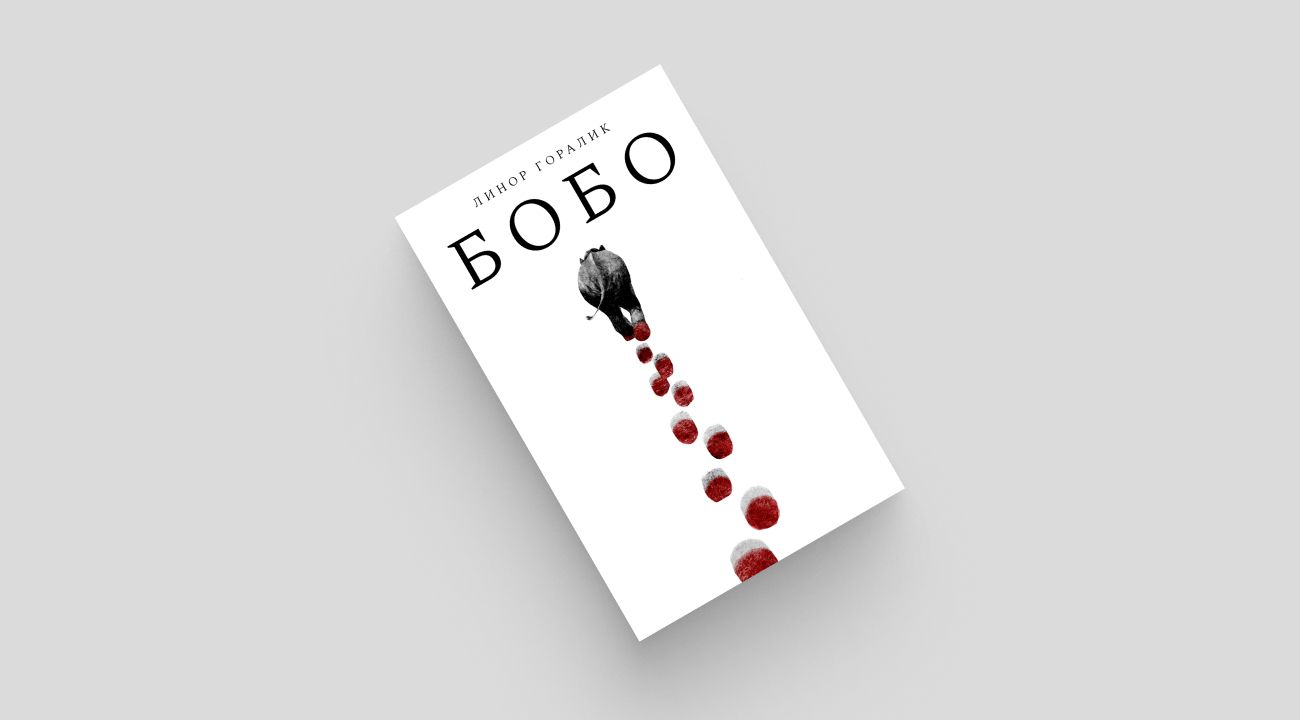
The most important book about the experience of the Russian war was written in Israel (which is especially gratifying: it can be downloaded for free). “Bobo” is a fantastic fairy tale about the journey of the speaking elephant to the Russian king across the country, accompanied by a motley retinue. At the same time, before us is the chronicle of the first year of the war. Linor Goralik wrote a novel in 2022, and events from real life appear right on its pages: news about a massacre in Bucha or a mobilization announcement. The horror from what is happening becomes the background of the novel, in some ways even excessively supportive to the Russian reader. After all, the author, as it were, by default, suggests that horror cannot be divided into two parts and that the grief of war is a collective experience.
And of course, we must not forget that in the anti -war literary movement Goralik participated not only with her own texts: since April 2022, she publishes the Roar network almanac, “Bulletin of Russian Opposition Culture”. While the official book publishing in Russia is forced to be silent, fearing repressions, Roar becomes a platform for anti -war protest: 11 issues; translations into Russian, English, Italian, Polish and even Japanese; Hundreds of participants and participants - writers, poets and artists. Now Roar seems to be more likely an archive - to comprehend all these statements remains (Roskomnadzor, however, has already begun ).
Witnesses and witnesses
Compiled by Irina Golovinskaya
The collection of anti-war verses, compiled by Irina Golovinskaya for the Tel Aviv “Babel” (publishers and store), was published in the first half of 2022, when the prose writers have not yet found suitable words to describe what was happening-and the poets found.
One of the authors writes from Paris (Dmitry Vedenyapin), someone from Berlin (Alexander Delphin), someone from Venice (Andrei Biljo). Someone fearlessly performs from Moscow (their names are just better not to call them, especially in Medusa). The verses of Ukrainian poets are included in the book: Kyivian Alexander Kabanov, Odessa Odessa, Vladislav Ilyinskaya and Boris Kherson.
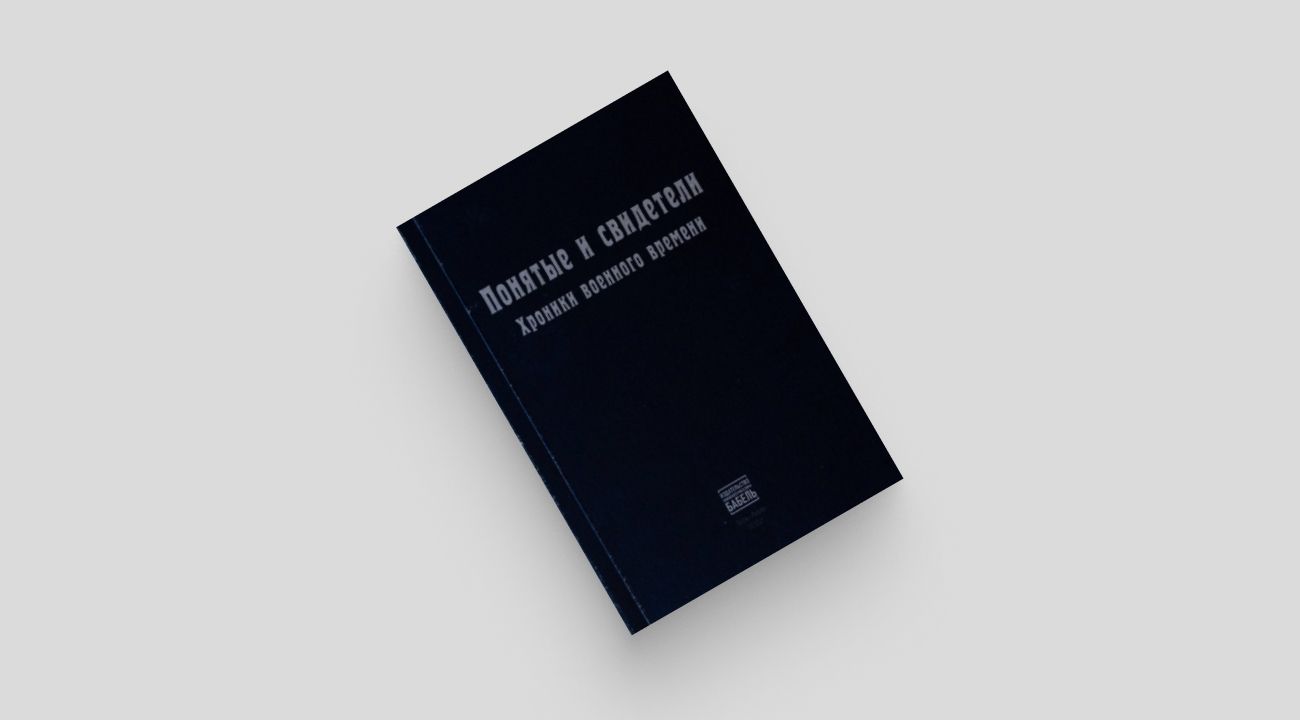
The main feeling that arises during the reading of this collection, not so much unity as, on the contrary, is a strange bifurcation. This emotion is most accurately expressed in the poem of the Russian poetess Maria Stepanova "While we were sleeping, we bombed Kharkov." In it, the news about the war is trying to dissolve in the lazy July day on the river - with barbecue and dragonflies: “Then we sang in chorus about how the shore was covered with hundreds of stood people.” The feeling that the war cannot be built into a familiar life, that I want to forget about it, but it doesn’t work out - probably one of the leitmotifs of this collection, like all anti -war texts.
You can buy books about the war that the Medusa publishing house has published: “Take my grief” by Katerina Gordeeva, “My beloved country” by Elena Kostyuchenko,“War and Punishment” by Mikhail Zygar, “I wish the ash Daria Serenko, “ We can repeat ” - a book from the“ Signal ”newsletters.
Heritage
Author - Vladimir Sorokin
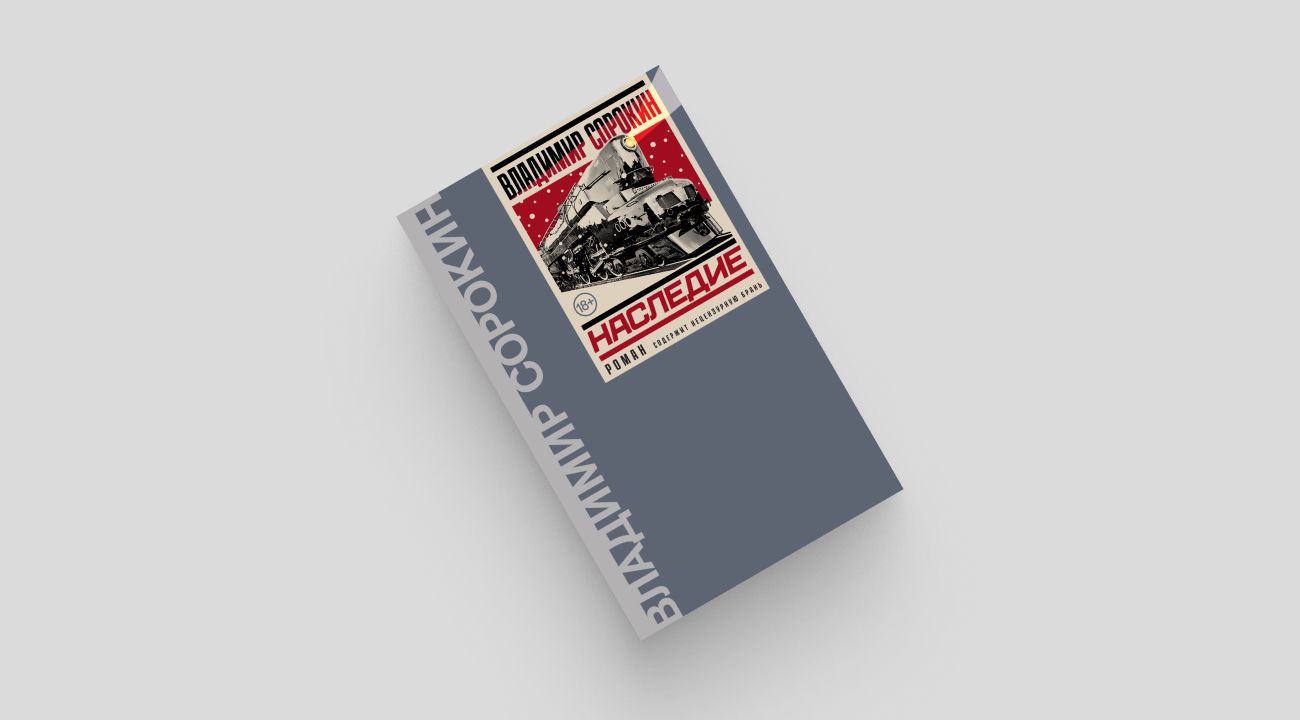
The completion of the trilogy about Dr. Garin, begun back in 2010, the story “Metel”, formally has nothing to do with today's war. The action takes place in the world of the future, where constant conflicts, including with the use of nuclear weapons, have become everyday business. And the next war is over - what will remain after it?
Sorokin replies: there are charred remains, the tongue turns into a slurred mutter, intellectuals (as always with this author) feast while everyone else suffers. However, the “Heritage” is suddenly a bright novel that war is not destroying everything. Human dignity remains. And until the last, hope is preserved.
Two hundred third day of winter
Author - Olga BITIVEVA
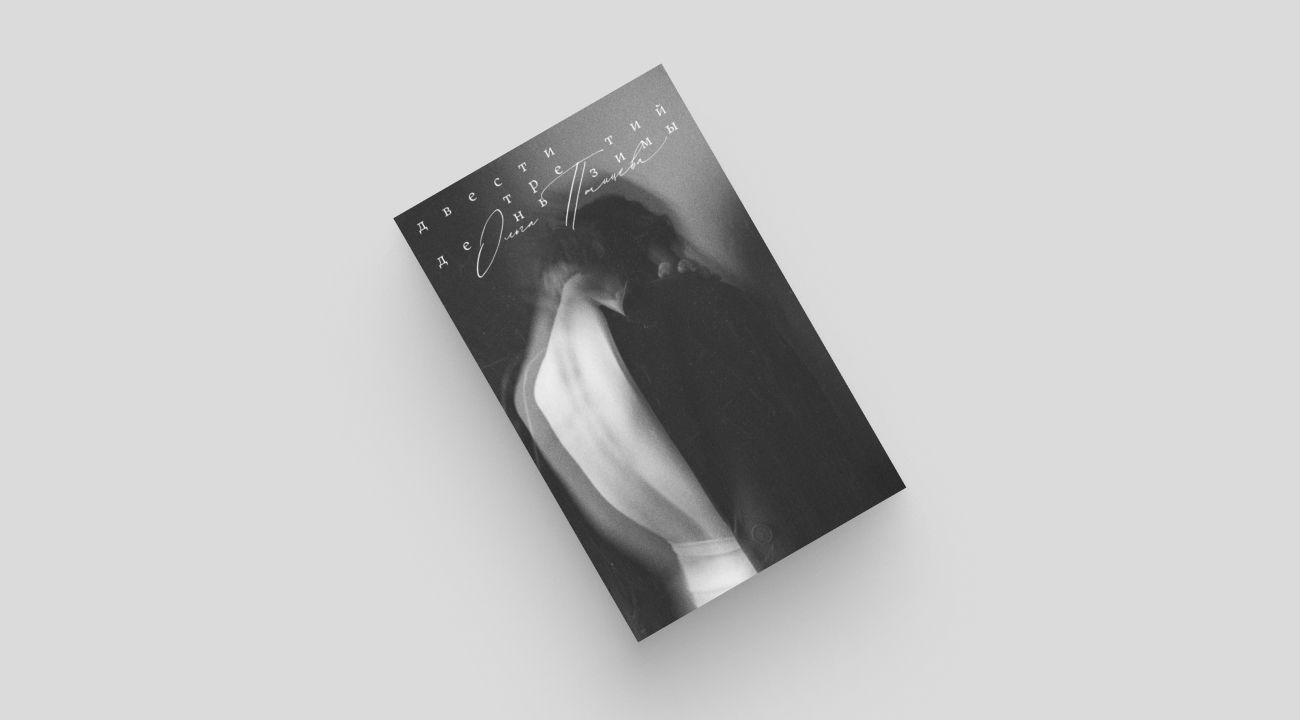
Olga Ptitseva, one of the most interesting (and successful) writers in the Young Adult genre, published a potential bestseller about the life of young people in modern Russia. At the same time, there is nothing from modern Russia in the scenery of the novel: this is an anti -utopia in which the country plunged in the eternal winter. For violation of the snow cover, cruel punishments are threatened, but contrary to all the snow, living daffodils bloom right near the Kremlin.
All roll calls with reality are random. Or not? The country hidden under the snow broke off relations with the outside world, those who left are disappearing forever, the remaining do not lose optimism. Now the writer began the second part of the dilogy - but the first is enough to recall the hope contrary to all circumstances.
Sit and look
Author - Andrey Bulbenko
The teenage story of Ukrainian Andrei Bulbenko miraculously published in Russia in 2023. But it is unlikely that we will ever see it in stores-it is easiest to read an electronic copy (it is in Russian and Ukrainian).
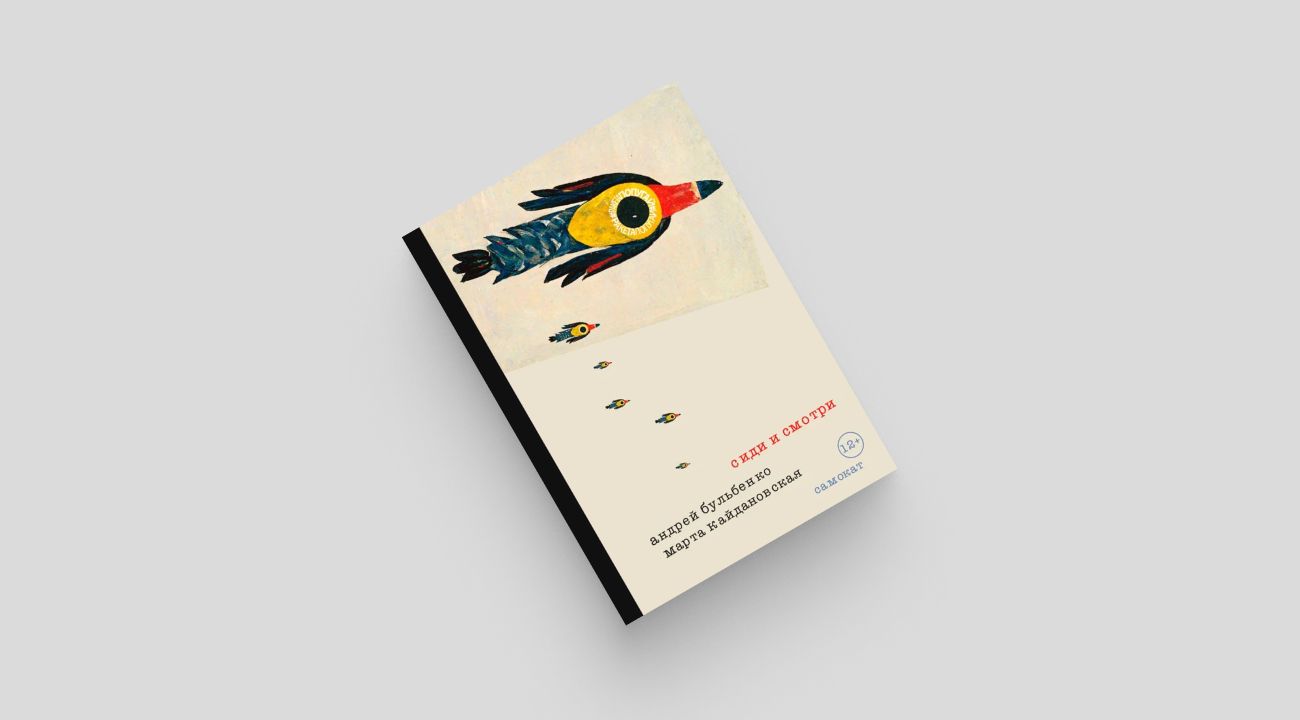
These are the scattered notes of Martha Kaydanovskaya, a 13-year-old girl named Martyshka, forced with her parents to run away from her home-after a neighbor attacked her country. The author and the heroine are first found at the Hotel "Dead", where for several weeks they wait for bombing. Before you go further, Marta gives the writer two envelopes. One must be opened if it does not appear in a week. Another - if there is no news about it in a month. In the first concert, a manuscript is found, written on top of the Chinese instructions for assembling some object (which is incomprehensible). A description of the trip is formed from the scattered sheets: Marta goes through a destroyed country in which February lasts. We will not talk about the second envelope in order to avoid spoilers.
“Sit and look” is a very simple and completely uncompromising book about the price of war. It is full of eloquent images: here the piano explodes on the minefield, but the refrigerator with a load of 200 - the younger sister of Marta believes that penguins are hiding there; She is all rushing to see them, but you can’t.
Anton Dolin , Anton Khitrov , Alexander Filimonov and Lisa Birger