
Translated material
Chinese warning
Tbilisi establishes partnership with China, but from Brussels they remind that Georgia is going to join the EU, which means that he should strive for the European course
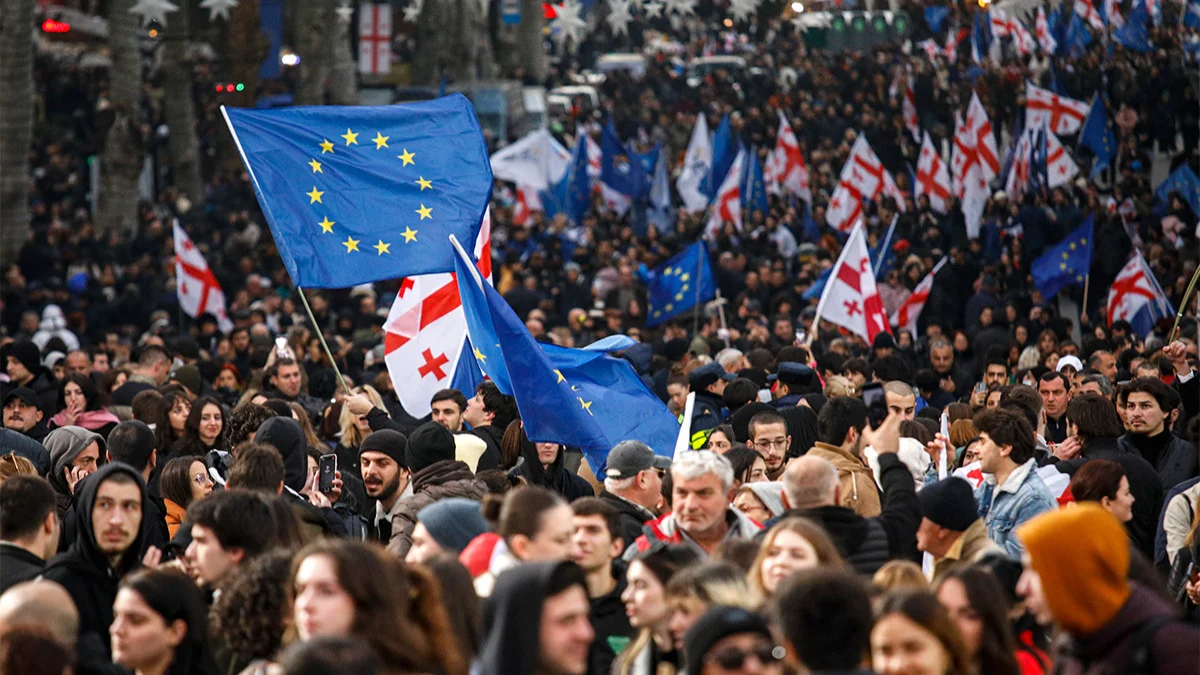
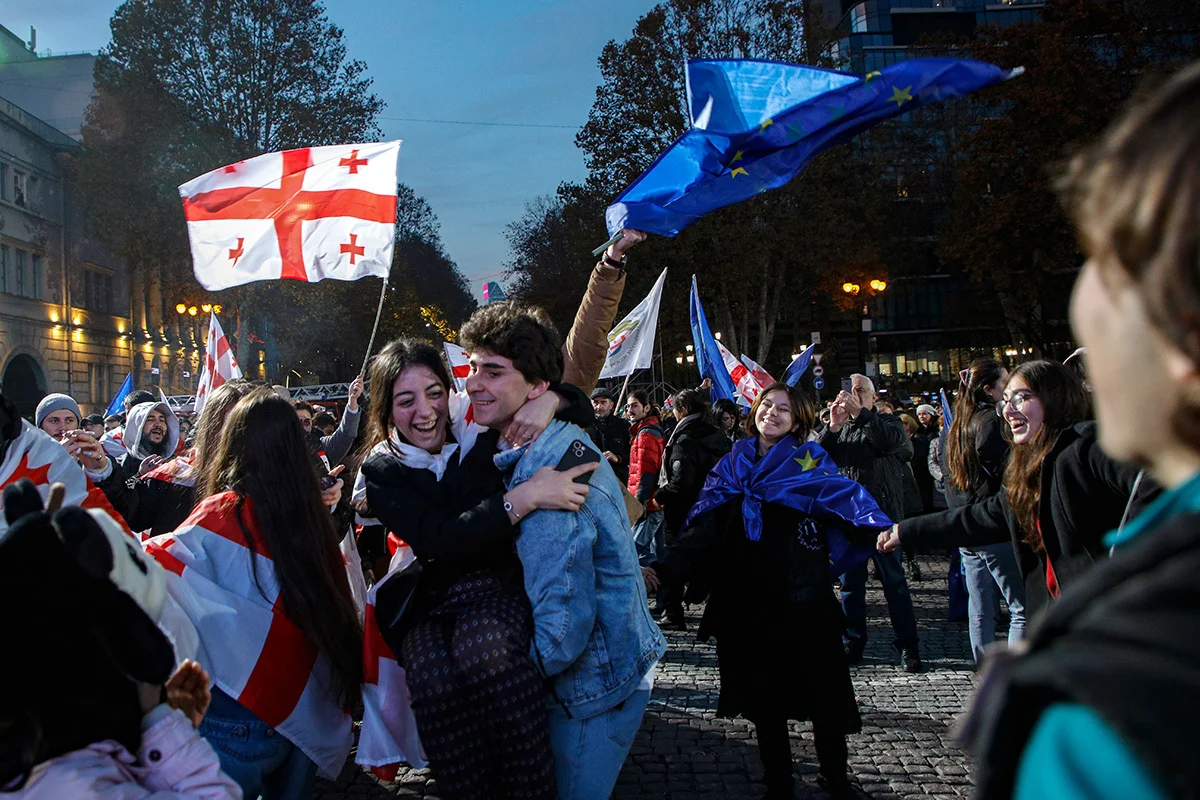
People celebrate at a rally after the provision of Georgia the status of an official candidate for joining the European Union in the center of Tbilisi, Georgia, December 15, 2023. Photo: David mdzinarishvili / epa-efe
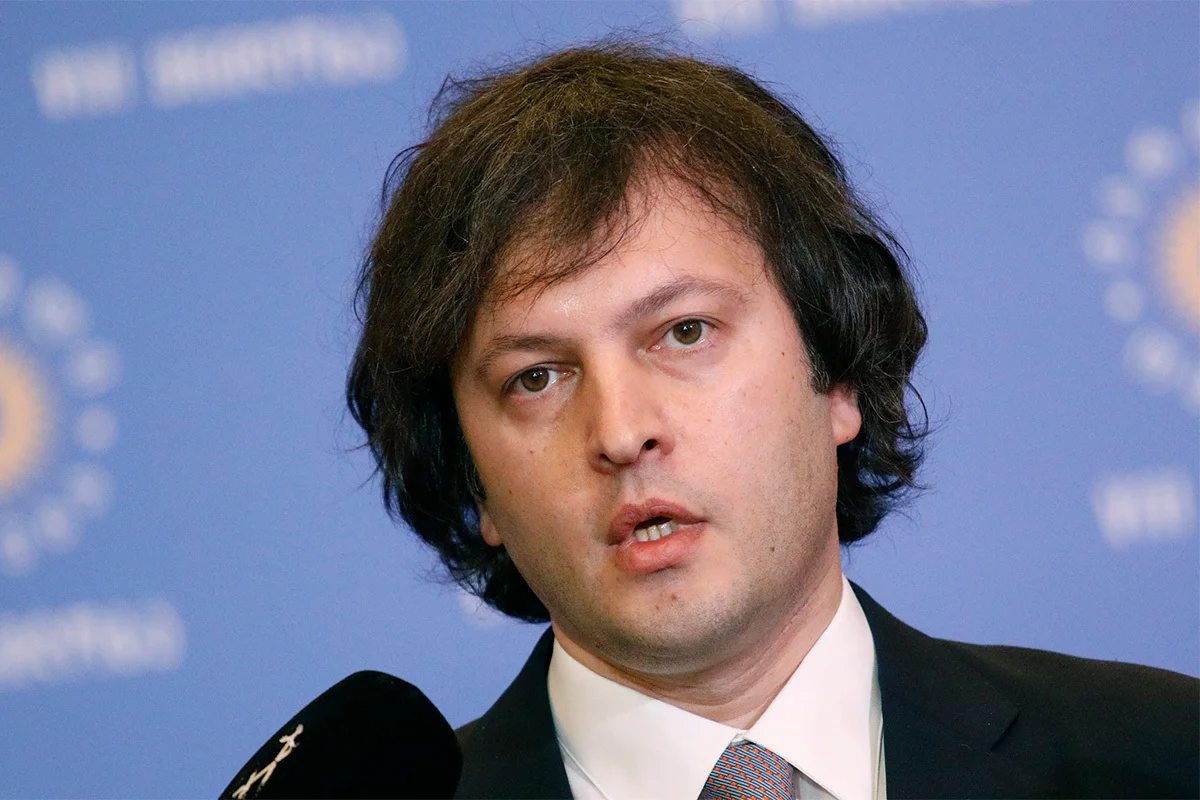
Tbilisi relations with Beijing are more dynamic than with Washington. Such a comparison was made by the new Prime Minister of Georgia Irakli Kobahidze.
The other day, a visa -free regime for Georgia citizens established by China will come into force. Last year, Georgia and China announced their strategic partnership, which was an unpleasant surprise for the pro -European part of the opposition. The discussion on this topic is part of the political agenda of Georgia. Meanwhile, from Brussels it is also reminded that the foreign policy of Georgia should correspond to the European Union rate.
Chinese vector
The first foreign visit of the new Prime Minister of Georgia Irakli Kobakhidze was a trip to Brussels - this is an established and quite natural tradition in Georgian politics: the country's constitution says that the purpose of Georgia is the entry into the EU and NATO. Kobakhidze was approved for the post of head of government in February, but a month before, in January, he began the political season with a trip to China in the rank of the head of the ruling party, although they already knew that it was he who would become the next prime minister from day to day.
The party delegation of the “Georgian Dream” spent a week in China, meeting with the top of the ruling party, members of the government and the leadership of the city of Shanghai.
But the real author of the breakthrough in the relations of Georgia with China is the predecessor of Kobahidze as prime minister, Irakli Garibashvili. In July 2023, Garibashvili was invited to Sichuan to the opening of world student games. There, the chairman of the PRC Xi Jinping met with him.
Suddenly, Comrade SI said that China and Georgia "will establish a strategic partnership." In the Parliament of Georgia, this issue was not pre -discussed.
There was another nuance: if Prime Minister Garibashvili during a meeting in the city of Chendu stated that Georgia “firmly supports the principle of a single China”, then the Chinese leadership did not spend words on the expression of supporting the territorial integrity of Georgia.
The pro -European Georgian opposition was mainly outraged by such a strengthening of relations with the Communist Party of China, although it recognized the development of economic ties useful. Critics resembled the “Georgian dream” of the exclusion of European socialists (RES) from the European Party, which was considered its “political family”, and accused the authorities in a radical change in priorities. If the EU from Georgia requires reforms, then in Beijing no one will raise questions about the “clanity” of the Georgian court, fair elections or strengthening democracy, the opposition said.
A lot was said that allies with China inevitably indicate a departure from the Western vector and rapprochement with Russia. In the end, the opposition deputy Anna Buchukuri asked the parliament a reasonable question: “Who can call some other country whose strategic partners are both the USA and China?”
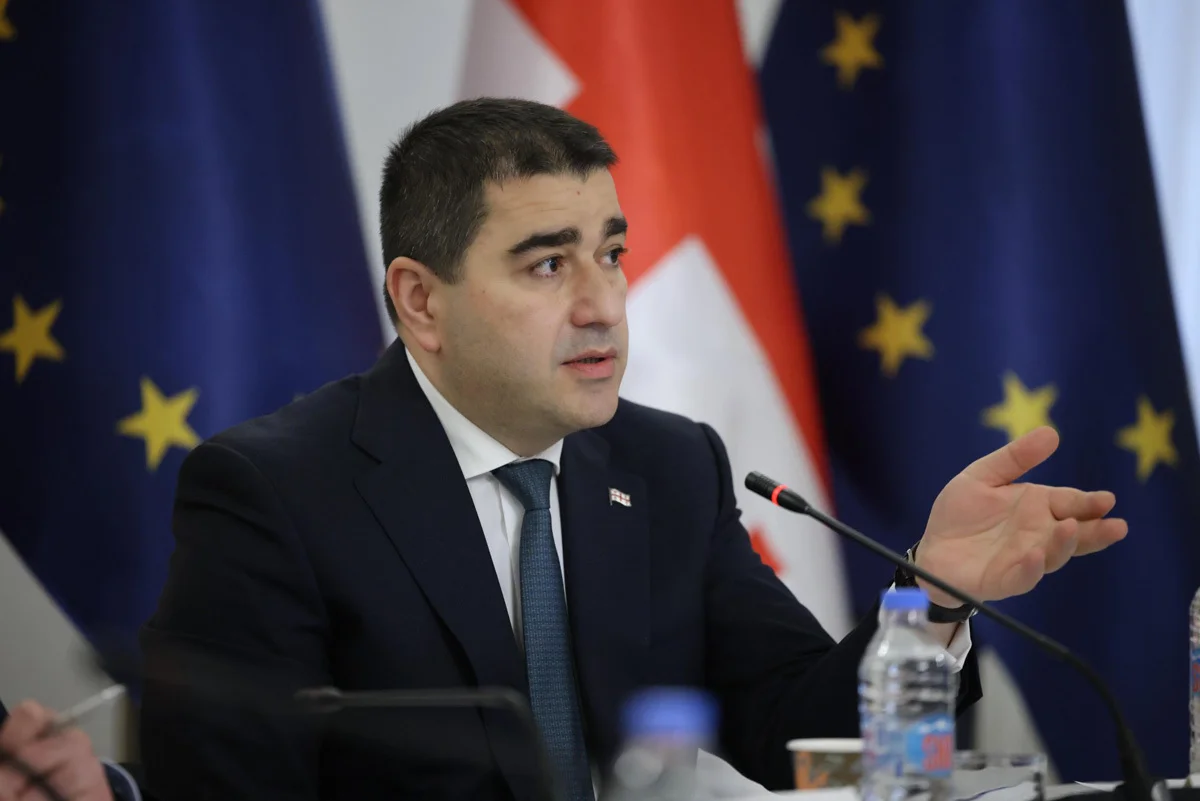
However, the speaker of the parliament Shalva Papuashvili rejected all such accusations with special indignation, calling the "manipulation" and "anti -Chinese propaganda." And listed large Chinese projects in which Georgia has really participated for many years:
“Our interest is a middle corridor, a silk path along which a lot of cargo moves today. The northern corridor passing through Russia is blocked and, apparently, will remain closed for a long time.
Now we have the opportunity to use our route so that the goods from China to the EU go through Georgia.
Everyone who incites anti -Chinese sentiments work to disrupt strategic projects, the transformation of Georgia into a dead end, and not into a corridor. ”
The Vice Speaker from the "Dream" Giya Volsky also assured that Georgia did not invent a bicycle, as the Western countries themselves improved relations with China because of the war in Ukraine:
“The Chinese project“ One belt, one path ”covers not only the regions of the Caucasus and Asia, its goal is to expand relations with the Western markets. Georgia occupies an important geopolitical position on the historical Silk Road from Asia to European markets. ”
Where is better, where worse
The other day, Prime Minister Kobakhidze at a government meeting announced that the People’s Republic of China canceled the visa regime for Georgian citizens for 30 days a year. In Georgia itself, the Chinese were canceled for the same period last year. By the way, in the countries of the Schengen zone, Georgian citizens can live without a visa of 90 days a year.
The prime minister used the successful development of relations with China as an occasion to recall another strategic partner - the USA.
Kobahidze admitted that "the Georgian leadership has not received a single congratulatory letter from Washington for eight years." In addition, "for several years, visits at a high level have not been made between countries." And he immediately reminded that his predecessor in China "met at the highest level."
By the way, having become the prime minister, Kobahidze promised to continue Garibashvili to strengthen relations with Beijing in his government program.
And speaking of the United States, Kobahidze said that "interest in terms of strategic partnership was like weakened, which was a sad development for us."
He also indicated that the countries could not strengthen trade and economic relations, since there are still no direct flights between Georgia and the USA, and the visa regime is still valid for Georgia citizens in America.
Meanwhile, Georgia and China signed a free trade agreement back in 2017, and Chinese companies “very actively” participate in economic projects in Georgia, the prime minister recalled. Georgia also has direct air traffic with China, and it is planned to increase the frequency of flights, so in Tbilisi they are counting on the attracting of Chinese tourists.
China is included in the five largest trading partners of Georgia along with Turkey, Russia, the USA and Azerbaijan. In January-November 2023, the turnover between the two countries exceeded 1.5 billion dollars. Kobakhidze spoke about the state of trade, as well as the importance of strengthening the “connections between people” at a meeting with China's ambassador to Georgia Zhou Jiang. The prime minister accepted the ambassador immediately after returning from Brussels.
However, Kobakhidze clearly observed the diplomatic balance: the next day he held his first meeting as the Prime Minister with the US Ambassador to Georgia Robin Dannigan. Perhaps this inspired the ambassador to announce his speech in the Parliament of Georgia with a report on US foreign policy.
Robin Dannigan is the new US Ambassador to Georgia, she stood up on this post in the fall and her relationship with the Georgian Dream is not yet overshadowed by anything, except for the scandal with the trainings of the non -governmental American organization Canvas, which is also financed by the State Department.
The authorities claimed that at the training of Canvas allegedly taught organizations of riots in order to change power.
The US Embassy categorically refuted this: both the diplomatic mission and the training participants said that the methods of non -violent protest were discussed.
Nevertheless, the new American ambassador is still in a much better position than her predecessor: the diplomatic mission of Kelly Donnan, who headed before her, often became the object of public and personal criticism from both the opposition and the ruling party. At first, the opposition accused her of protecting the interests of the founder of the ruling party Bidzina Ivanishvili, and in the last two years, the “dream” has been suspected of an American diplomat of relations with the opposition all the time.
For example, Irakli Kobakhidze himself, then in the rank of chairman of the ruling party, accused the Debens of “violation of diplomatic standards”, when she ridiculed and called the “conspiracy theory” a letter from the anti -Western party “Power of the People”, in which the United States was accused of intention of drawing Georgia into a war with Russia.
Even earlier, in 2022, Kobahidze stated that the authorities "less interesting from a practical point of view, the help allocated to the United States Georgia, since most of it is spent on non -governmental organizations." Prior to this, Prime Minister Irakli Garibashvili publicly stated that he was also “uninteresting” by the annual report of the State Department on the situation with human rights, 57 pages of which were dedicated to Georgia.
All these sharp statements followed the criticism expressed at the Committee hearings in the US Senate. Then Senator Jin Shakhin said that the United States may be time to revise the strategy in relation to Georgia by the volume of assistance.
According to the US Ambassador, the amount of American financial assistance to Georgia over 30 years, since 1992, amounted to $ 6 billion.
Under Kelly, the densel, the most serious cooling in the relationship between Georgia and the USA occurred: exactly a year ago, in March 2023, the State Department first imposed visa sanctions against several high -ranking judges of Georgia for their involvement in large -scale corruption.
The “dream” called such accusations “unproven”, and in the parliament there were statements about “the inadmissibility of interference from outside the ships”.
As a result, the ambassador Kelly Donnan said that he was simply “confused” by the messages of the Georgian authorities, who simultaneously speak of strategic partnership with the United States and at the same time “collaborate with those who undermine this partnership”, pointing to the endless criticism of the West and its personally from the Power of the People party.
By the way, Kobahidze criticized not only the American ambassador. In 2022, he publicly spoke out about the work of the EU Ambassador Carl Khartzel who completed his mission as follows: “He played only a negative role in relations between the European Union and Georgia.” Kelly Debenan then stated that she was “shocked” by this attack.
Pleasant face for cover
Boldly criticizing the Western diplomats in the past, Irakli Kobahidze clearly did not suspect that he would be lucky to become the person whom Bidzina Ivanishvili would once appoint the prime minister.
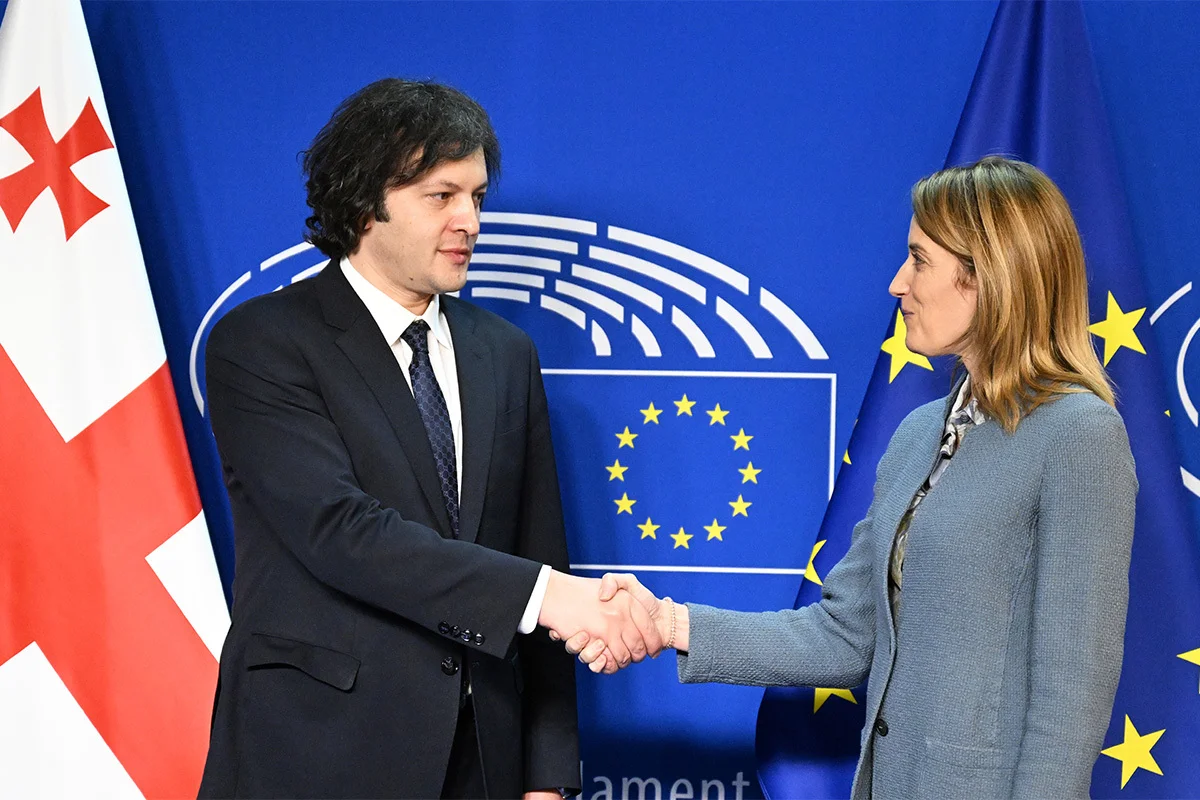
Because of this, during a visit to Brussels, he had to survive an awkward situation in negotiations with the President of the European Parliament Robert Metetsol: he used to aggressively criticized the resolution on June 9, 2022, in which the European Parliament urged to consider the imposition of sanctions against Ivanishvili.
“Once you called the absurd resolutions of the European Parliament, and also compared the European Parliament with the Supreme Council of the Soviet Union. Was there a conversation on this topic with the president of the European Parliament? " - the journalists from Kobakhidze were imposed after his return from Brussels to Tbilisi.
The Georgian prime minister admitted that he really had a “very frank conversation with Madame Robert Metsola on all topics, including specifically on this issue related to the misunderstandings that existed between the parliament of Georgia and the European Parliament. By the way, she was the first to touch on this topic, and I am grateful to her for this ... In 2022, three different, absolutely unfair resolutions were adopted. Naturally, we had to criticize these unfair resolutions. Thank you, including Ms. Robert: after that, the right practice was established ... "
Now, according to Kobakhidze , "the Georgian government is as interested in resuming relations with the European Parliament."
In Brussels, Kobahidze was also at the NATO headquarters, where he met with NATO Secretary General Jens Stoltenberg and took part in a meeting of the NATO-Georgian Commission .
Both Stoltenberg and the EU leadership spoke with Kobahidze about the need to carry out reforms. In Brussels, a meeting of the Council of the Association of the EU-Georgia with the participation of the EU Supreme EU for Foreign Affairs and Security Policy, Vice President of the European Commission Josep Borrerem was held. This was the first meeting of the Council of the Association after Georgia received the status of a candidate country in EU members.
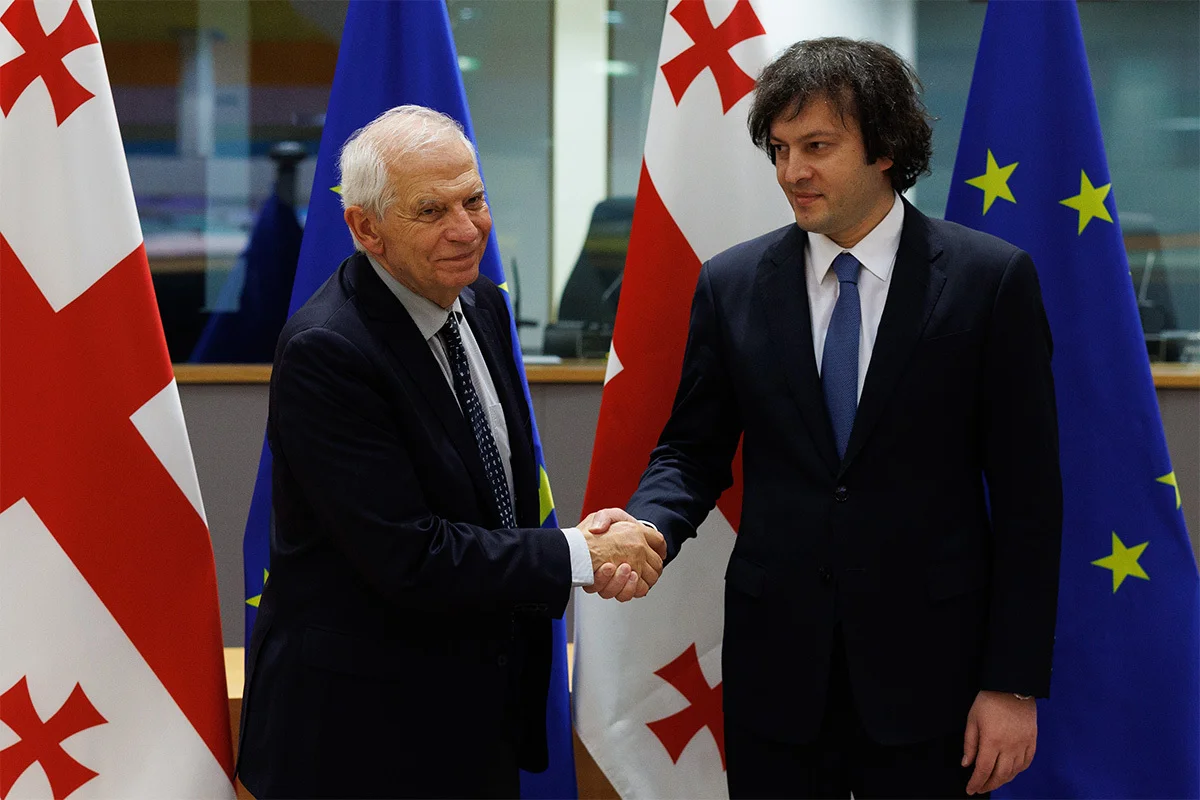
As a result, the Georgian delegation received three tasks in Brussels:
"Strengthen the pace of implementation of reforms." According to the fighter, this means that the country should fulfill nine recommendations of the European Commission, and involve the opposition in this process and to “reduce political tension”.
“To completely agree on your foreign policy with the EU Security Policy and the sanctions regime”: this is said in the statement following the meeting. The document also refers to the importance of combating misinformation and anti -European rhetoric in Georgia. In addition, Borrel called on the Georgian authorities to “make every effort to combat the manipulation of information and the intervention of foreign power”, recalling that such an intervention will have a larger scale during the parliamentary elections in Georgia.
"Pass the important exam in Georgian democracy in the elections." Then Borrel urged Georgia to fulfill all the recommendations of the Venice Commission and the BDIPCh/OSCE to ensure free, fair, competitive parliamentary elections.
Irakli Kobahidze met with President of the European Council Charles Michel. He congratulated him on his appointment, the country - on receiving the status of an EU candidate, and again said that "now for Georgia the main thing is to carry out reforms."
Meanwhile, the Georgian Radio Free Europe service, citing its source in the European Parliament, announced the impression that the new Prime Minister of Georgia made to the EU leadership. “Irakli is a good young man, he was very modest and friendly in relation to everyone - like any person who is for the first time here [in Brussels on an official visit]. But it seemed that he seemed to be just a pleasant face that was used to block the overall aggressiveness of the “Georgian dream”.
Inconsistencies
A week has passed since Kobahidze visited Brussels, and diplomats again started talking about problems, or rather, about inconsistencies.
“Today, three months after the provision of Georgia, the status of an EU candidate, the degree of compliance with the foreign policy of Georgia is at a low level, and should be 100 %,” said EU Ambassador to Georgia Pavel Gergchinsky. He recalled that all Candidate countries in the EU should strive for this purpose.
“At the moment, the level of observance is low, especially compared to countries that are at the stage of negotiation. We work with the authorities of Georgia to gradually increase the level, and
When the time comes and Georgia enters the European Union, the foreign policy of Tbilisi and Brussels will be identical.
The goal is 100%, but we know that in one day we will not reach it. There is a geopolitical situation, Abkhazia and the Tskhinvalsky region, but we expect that the level will gradually increase, and this is happening in recent months, ”said Gerchinsky.
The ambassador identified “most importantly” on the path to ensuring compliance with the EU policy - this is the struggle against anti -Western misinformation, “the target of which is the European Union and the West as a whole.
One of these “inconsistencies” is the refusal of Georgia to support the extension for three years, until December 8, 2026, the European “Magnitsky List”: restrictions established by Brussels for “serious human rights violations”.
We are talking about the European analogue of the "Act of Magnitsky", adopted in the United States. The document establishes restrictions on traveling to the European Union zone and blocking bank accounts of law enforcement officers and companies from Russia, Iran, China, North Korea, Syria and other countries. The list also has Russian officials - former director of the FSIN Alexander Kalashnikov, chairman of the Investigative Committee of the Russian Federation Alexander Bastrykin, Prosecutor General of the Russian Federation Igor Krasnov and director of the Russian Guard Viktor Zolotov.
Georgia joined the European “Magnitsky List” in 2020, but since 2021 it has no longer appealed in the list of countries that agreed to extend the document.
The Georgian Foreign Ministry on the Magnitsky List is explained by the fact that "retain the practice of recent years."
At the same time, according to the agency, over the past year, the statistics of Georgia’s accession to the EU’s statements “sharply increased” to 50%. An example, Georgia as a candidate for joining the European Union supported the extension of the EU sanctions against North Korea and the leaders of the unrecognized Transnistria.