
Translated material
Putin's new "six-year plan"
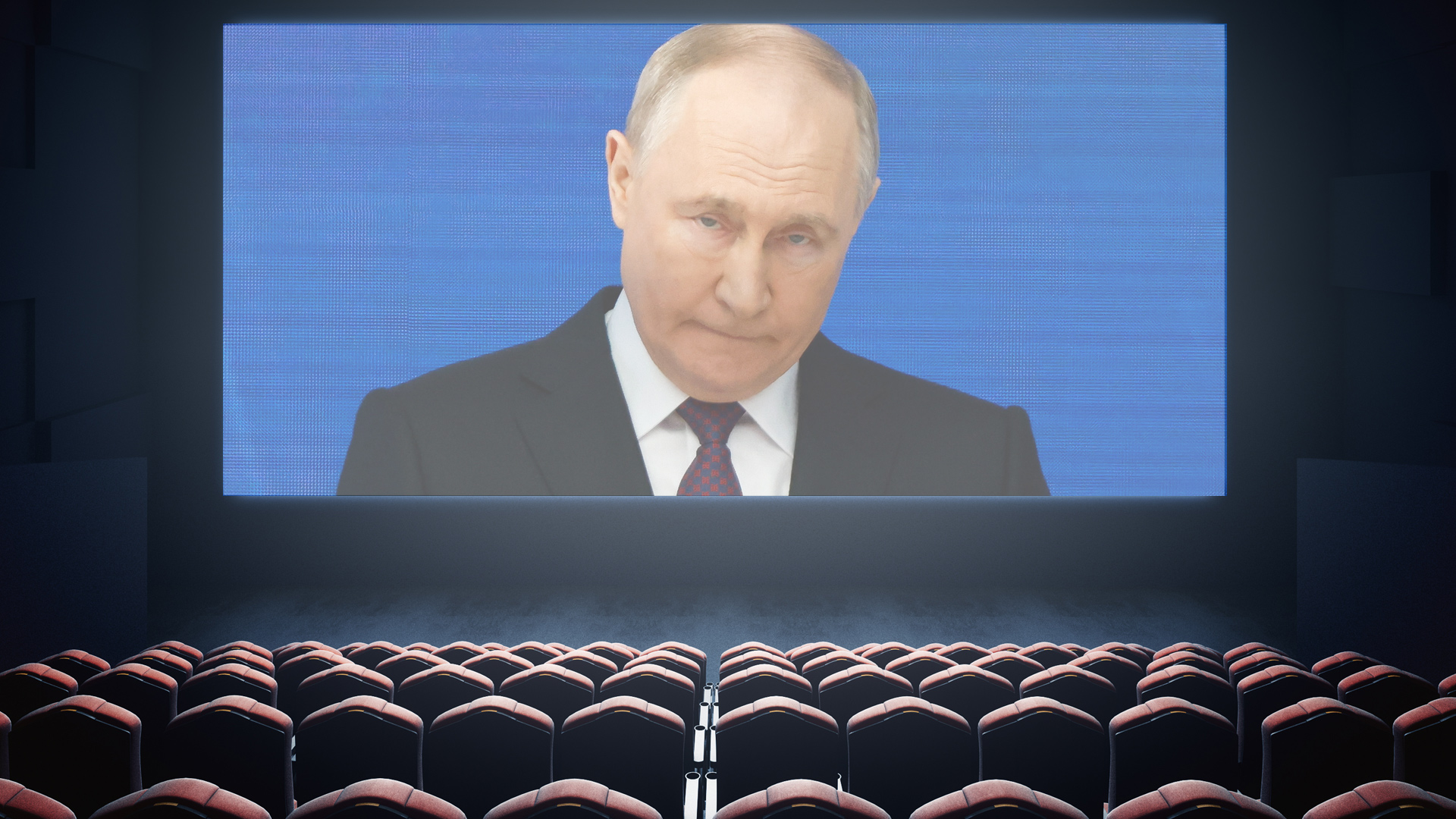
Putin's Address to the Federal Assembly is discussed by Nikolai Petrov, Nikita Savin and Sergei Erofeev
Vladimir Putin addressed a message to the Federal Assembly, but in fact, two weeks before the elections, he announced his presidential program. The elites will be the participants in the so-called special operation, the West must be wary of the “Sarmatians,” and the Russians must endure, because, according to Putin, “We are one big family and we want to do as we dream.” This and other promises of Vladimir Putin will be discussed on air by political scientists Nikolai Petrov and Nikita Savin , as well as sociologist Sergei Erofeev . Hosted by Artyom Radygin .

Putin's Address to the Federal Assembly is discussed by Nikolai Petrov, Nikita Savin and Sergei Erofeev
Text copiedwidth px height px
The URL has been copied to your clipboard
No media source currently available
0:00 0:00:37Artem Radygin: But Putin’s plans are in tune with the words of the late blogger Tatarsky ! In his next message, Putin promises more weapons, more money for the military and six more years of stability. All of Russia could watch Putin handing out gifts and threatening the West not only on TV, but also on the facades of houses, and even in cinemas. But judging by the empty theaters, Putin was a box office failure. Although he talks throughout the message about how the country rallied around him and around the war . It rallied, of course, not thanks to, but in spite of the evil West.
Artem Radygin: The Agency has calculated that in this address Putin promised ten trillion rubles. This money will be spent until 2030 - just then his next term will end. Can these promises be considered an election program and which of them will survive the elections? Let's discuss it with political scientists Nikolai Petrov and Nikita Savin . Money for the military, money for families with many children, war with the West - is this Putin’s program?
Putin promises more weapons, more money for the military and six more years of stability
Nikolai Petrov: This is not something new, this is his program, which has been declared for quite a long time. Here, in financial terms, it is important to compare the amounts that are promised for various kinds of peace initiatives and national projects, and those expenses that are included in the budget for military needs: these are absolutely incomparable things. It seems to me that this partly indicates that the bag of gifts that is usually opened for elections is quite empty, since the budget is already having problems filling it, so we did not see the usual cascade of financial promises.
Artem Radygin: Why do you think Putin won’t choose one area where he can give more money? For example, he says: we will double the tax deduction for families with many children. This is 2800 rubles, that is, 30 dollars. In the poorest country in Europe, this is three hours of work.
Nikolai Petrov: Because we are talking about throwing money at all those groups of the electorate that the Kremlin is counting on, and this is really the overwhelming majority of citizens. We need to do this in such a way that not only one group feels like a winner, but everyone else, relatively speaking, is envious, but so that everyone feels that they are getting at least something from this holiday. In pre-election terms, this is a completely logical thing.

Artem Radygin: At this holiday, Putin says how much the whole country supports him. But for some reason the country does not know what its president looks like. I watched the election campaign, videos, posters that are put up in Russia, and for some reason there is no Putin’s face on them, there is simply “Vote for Russia, vote for Putin!” Why don't they show what Putin looks like?
Nikolai Petrov: This is a very interesting thing, connected with the fact that Putin is partly addressing citizens, partly the Kremlin, its political bloc is playing along with Putin himself. This idea of showing a boring two and a half hour speech of the president in cinemas - clearly, it could not be designed for the fact that crowds of citizens would gather there to watch this boring presentation for free. But Putin was informed about this. Please note, this is not the first time recently that he has said that, yes, my meetings are orchestrated, staged, but nevertheless some aspirations emerge, which I listen to and which I focus on in my message.
The bag of gifts that is usually opened for elections is quite empty
Artem Radygin: Putin’s entire message says that “we are one family, we are all together.” But if so, then who is he in this family? It seems to me that for now he is only suitable for the role of a drunken stepfather who returned from the military training camp. Who do you see him as?
Nikita Savin: It’s not so important who I see him as, what’s important is who Vladimir Putin himself wants to appear to the groups that he considers as his electorate. He wants to appear to them as a kind father of the family, bringing home gifts and distributing them to groups that must vote for him. Most likely, some voters will indeed evaluate this accordingly.
We've had 24 years to remember what Vladimir Putin looks like. For you and me, and for most citizens of the Russian Federation, this is more than enough time to remember what a candidate looks like. Here you can fantasize and assume that this is such a specific strategy of a populist campaign, where everyone can come up with their own Vladimir Putin. To some extent, it doesn’t matter what he looks like, what kind of person he is, it’s important that everyone votes for their ideal president, whose last name is Putin.
Artem Radygin: I want to show a fragment in which Putin talks about the elites.
Artem Radygin: Literally a week before the message, the head of the Union of Entrepreneurs Alexander Shokhin spoke with Putin, and they talked about such a thing as double restitution. If I understand correctly, this is when the state can take away a plant or his business from an entrepreneur, but will pay him compensation. Putin seemed to like the idea. What, will Putin take away gifts from someone after the elections?
We've had 24 years to remember what Vladimir Putin looks like
Nikita Savin: The Address to the Federal Assembly is not a format where Putin gives gifts to his own elites. Once a year, St. George's Day is held, when large-scale promises are made to different groups of citizens; the elites are presented with gifts somewhat more often. The messages are quite typical of mobilization and populist rhetoric, pitting the elites against the common people. Of course, Vladimir Putin’s goal here is to identify with the conventional ordinary people against the elites. You can remember how many years ago he said that some forces caused a hurricane in the 90s. This is typical rhetoric for him, which he repeats over and over again.
As for double restitution, yes, it is obvious that war requires money, and it is precisely within the elites that we observe some growing risks of redistribution, to which Alexander Shokhin reacts, trying to somehow institutionalize this process in a well-known logic: if you cannot resist some process, try to lead it.
Artem Radygin: Putin says that now there will be some kind of new elite, he instructs deputies to develop a scheme so that all the people who return from the war go through some kind of management school, and then manage somewhere. Will they actually get anywhere?
Nikolai Petrov: I see two problems here. Firstly, in the passage you showed, it could be easily and beautifully parodied. Putin talks about those who lined their pockets in those years, meaning that it was 25 years ago before he came to power. Those who have filled their pockets during these 25 years are taken out of the equation. I see a serious problem; it will apparently lead to very significant changes in the political regime, regardless of how the relationships within Putin’s elites will develop.
Putin does not have personnel today, he cannot make appointments. We see that someone is removed or sent into retirement, or someone dies at the top of Olympus, and for a year or more Putin cannot replace this person. In fact, apart from the children of his old comrades and orderlies, he has no one from the younger generation. Therefore, the national personnel project that he announced was probably not just inserted by Sergei Kiriyenko, who has been running around with this for decades, and in part is even implementing it, and this is vitally necessary, otherwise the system will simply die, as the Chairman of the Supreme Court recently died.
Another thing is that this carrot for those who return from a special military operation is unlikely to really work here. Because it is very difficult to imagine that a person who survived and established himself as a killer in the war will become the support of the regime in terms of some managerial talents and skills.
Artem Radygin: Putin hopes not only for those people who will return from the war, he also talks a lot about entrepreneurs. He asks them: please do not withdraw money from Russia, do your business here, we will protect it, these are guarantees. He says that in Russia the guarantor of a reliable business is a reliable political system. And when Putin dies, what will remain of his system? Which institutions created under Putin will outlive him?
Putin has no personnel today, he cannot make appointments
Nikolai Petrov: There are no institutions other than the institution of the great president, which includes, in addition to Putin personally, all those who exercise his colossal powers given by the Constitution: the Presidential Administration, plenipotentiary representatives, various kinds of presidential councils, and so on. With Putin gone, all this deflates like an air bubble. What remains is a certain utilitarian, technocratic management system, which since 2020 has been built by Prime Minister Mishustin, which today can already be perceived as competing or competing with the archaic system of Putin’s personalist power, based partly on fear, partly on the transfer of greater powers to someone in a variety of spheres. In this sense, you don’t have to worry too much about the system; Putin can rather worry about the system that he built and which is now dying.
Artem Radygin: During the entire time that Vladimir Putin has been in power, he has addressed the Federal Assembly 19 times. The president's messages are not some kind of legal act, but essentially promises, which, as we see, are not necessary to fulfill. We have collected for you Vladimir Putin's previous promises and how they were fulfilled.
Artem Radygin: But now Putin talks incessantly about the Sarmatians , nuclear tests, threats from all sides. If we listen to his message as an election program, then this is what Putin has in store for Russia for the next six years in foreign policy.
Artem Radygin: Putin, as usual, started talking about how the West is colonizing other countries. But in the same speech he announced the “Zemstvo Cultural Worker” program. She assumes that if a person moves to Donbass, he will receive two million rubles. How is this different from colonization?
Nikita Savin: It’s difficult to fit this into the framework of colonization, since colonization in the classical sense of the word involves pumping resources from the colonies to the benefit of the mother country. Still, what Vladimir Putin is proposing here looks more like the opposite process: it is pumping resources from the federal budget into the budgets of new territories.
Artem Radygin: Putin, for example, can get voters as a resource. We were told many times that the territories were annexed - plus ten million voters. Putin is offering two million to move there, and then he will pump out votes for himself and show how everyone loves and supports him.
Nikita Savin: Yes, in this regard, of course, the message contains a number of measures aimed at integrating new territories into the legal, political, and economic field of the Russian Federation. To be honest, I am amazed at how openly various speakers from the Kremlin say that the message is pre-election in nature. Because, by and large, this is very similar to voter bribery. Vladimir Putin hasn’t won the election yet, so why is he distributing money to those who are supposed to vote for him before the election?
Of course, such processes also exist in democracies. There are many studies that show that in the pre-election year the executive branch tends to spend more money on supporting different social groups. But there, as a rule, the opposition carefully monitors this and does not approve these initiatives in parliament. In my opinion, in your story Nikolai Kharitonov flashed among those sitting in the hall, who is breathing down Vladimir Putin’s back in the upcoming elections. For some reason, we did not see how his fists clenched, how he stood up in the middle of the message and shouted: you have completely lost your shame, bourgeois power! Vladimir Putin has no qualms about distributing budget funds without having yet received a mandate to do so.
By and large, all this is very reminiscent of voter bribery
Artem Radygin: We saw Kharitonov clenching his fists in his election trailer, where he stands near the Mausoleum and says: enough capitalism, we’ve finished the game - and that’s enough. What did you hear that was new to you in this address?
Nikolai Petrov: You know, 19 times in a row it is very difficult for speechwriters to come up with something new, other than some figures of speech. When you showed Putin’s speech back-to-back with the audience a few years ago, quite a big contrast caught my eye. And in Putin’s state, and in the absence of any kind of drive: he himself is tedious and bored reading all this, and the people sitting in the hall are tense, because God knows what other trick they can get from the president during this message.
Artem Radygin: The Chronicles research project conducted a survey in which it asked Russians: what do they expect from Putin’s new term and what do they generally want from the next six years? The Chronicles found out that the majority of Russians expect Putin to mobilize and spend more on the war, but want peace and friendship with the West. Where does this spread come from? – we asked sociologist Sergei Erofeev .