
Translated material
Ivan Tomatorov shot himself
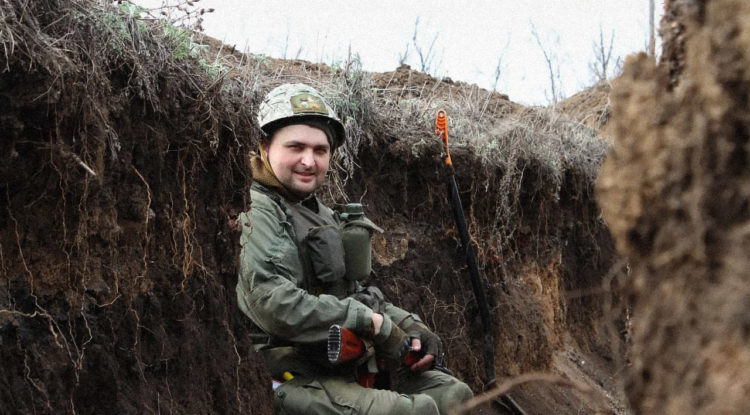
He struggled with the opposition, sat for the arson of United Russia, fought for the LPR, committed suicide due to censorship. Wild story of Andrei Murza Morozov
On February 21, 2024, Andrei Murz Morozov, a sergeant of the Russian army, who fought in the Donbass since 2014, the author of the popular telegram channel “We have been written from Janina”. According to the most common version, the reason for suicide was his conflict with Russian propagandists. Thus ended the Blogger’s biography, rich in wild, nicknamed the fighting cat Murz: he fought with the liberals with the help of tomatoes, tried to set fire to the United Russia office, sat in prison, served in the Lugansk Ghost battalion, and after the beginning of a full -scale invasion of Ukraine became one of his most loud patriotic critics, accusing the Russian military superiors of the Russian military supervisory authorities of Unprofessionalism and excess losses. "Cold" tells an amazing story of a person born on Rublevskoye Shosse and shot in the Donbass.
In order not to miss the main materials of the "cold", subscribe to our Instagram and telegram .
In the May 2012 day of 2012, several hundred people gathered on Chistoprudny Boulevard: after the brutal dispersal of the agreed opposition rally in Bolotnaya, a permanent peace protest camp, called “Occupy Abay”, was formed for a week and a half, and various political events regularly passed. This time, journalist Sergei Parkhomenko and politician Ilya Yashin said. When applause came, a long -haired guy in a bright cowboy hat suddenly began to throw in protruding tomatoes.
Yashin immediately recognized the attacker. “This is my old friend, terrorist Ivan tomatoes,” he said . In fact, a man with tomatoes was called Andrei Morozov; Another nickname under which he led the “Living Magazine” was the fighting cat Murz (in honor of the hero of the Strugatsky’s novel “The guy from the underworld”) - and Ivan Potorov began to call him seven years before, when he rushed to journalists, Polish diplomats and the same Yashin who stood in an opposition picket. Even the hat in Morozov was the same as in 2005.
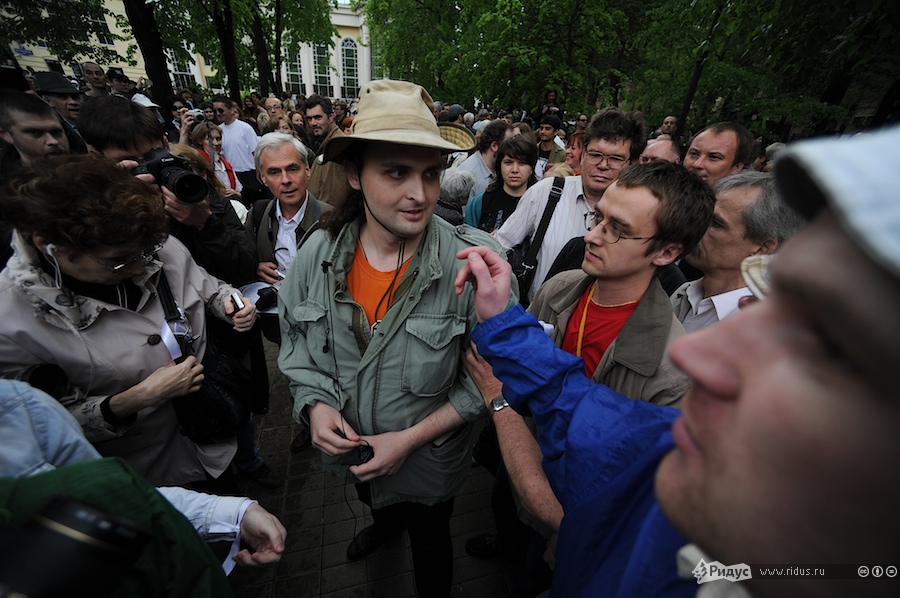
Three days after this scene, the Campai Abay camp dispersed. After 12 years, Ilya Yashin ended up in prison on charges of “discrediting” the Russian army during the invasion of Ukraine, and Morozov first became a participant in the invasion, and then he shot himself due to the conflict with other patriots of Russia.
Listen to the audio version in the "cold" podcast:
Really uniform scumbags
One night in 2004, 25-year-old Andrei Morozov, who worked in the IT-company, was on his knees with his girlfriend. He was good: in his life there was "everything that needed." The girl at that moment told him about her recent trip to Voronezh: local “Peshayki Children”, taking her and her friends for rich tourists, fled after them and “asked for money for bread”. Later, Morozov recalled that at this “moment close to absolute happiness”, he was “pricked” by the thought: “Can I be happy with my life, relations with a woman, when everything is bad around?”
According to him, it was that night that he experienced an “impulse” to engage in street politics.
Friends called Morozov “romantic”, “idealist”, “samurai”, “unrest from the category of those who fought in the civil war”. He grew up in the house on Rublevsky highway, was proud that two generations of his ancestors worked for defense industry. According to Aleksey Baykov, who was friends with him in the 2000s, when he first came to visit Morozov, he immediately showed him a "facing tile from the" Buran ", in the work of which his mother participated."
Baykov believes that a complex of views of Morozov (Stalinism, Nationalism, hatred of liberals-all that will subsequently become the Russian conservative mainstream) was due to a sense of resentment characteristic of the 1990s for the fact that people who did a “great work” and moved the country forward, now trading in the markets. Morozov said that while his peers transferred from hand to hand the new Playboy number, he studied the magazine "Model-designer" and was interested in the history of World War II.
Baykov recalls that the circle of reading his friend “consisted of books on military history from the publishing house“ Yauz ”,“ Military Passes ”of the Soviet era, Dumas, Peres-Reverte and the like historical and adventure literature.” The Yauza publishing house proclaimed its goal “The education of a military-patriotic spirit in the younger generation of Russia”; As Baykov says, as a result of such an intellectual diet, “the brilliant mind [Morozova] turned out to be locked in a rather narrow corridor, which brought him to where he eventually found himself.”
In 1996, Morozov entered the Mehmat Moscow State University, but after the second year he was expelled. The army did not threaten him: Morozov received a white ticket due to diseases of the cardiovascular system. The next few years he worked in technical support, and at the same time studied the history of the Second World War and wrote a lot in his blog in the “Live Journal”, where he became a “thousand -man” (that is, more than a thousand accounts signed up for it). The current policy, which was often discussed in LJ, Morozov also followed. Since the end of 2004, shortly after the revolution in Ukraine, which led to the re -election of the president, Morozov increasingly began to reflect on how to deal with the “orange threat” in his homeland: he did not say the policy of Vladimir Putin (supporting the dictatorship as such, he considered the Russian regime to be the wrong dictatorship), but Liberalov did not like much stronger.
Tomatoes were his method. This was quite consistent with the spirit of time: in the mid-2000s, there were many performances in Russia in street politics. Supporters of the opposition rareded the presidential administration in ski costumes; Opponents launched a flying dildo at a press conference by Harry Kasparov. Morozov threw his first tomato at Ilya Yashin-it was logical in his own way, since the politician created his youth movement “Defense”, focusing on the Ukrainian “time”. The day spent in the isolator was not embarrassed by the patriotic activist: after a couple of days he planned a new action.
Morozov’s tomatoes flew to the editor -in -chief of the Moscow Komsomolets Pavel Gusev, who published a column about the price of the victory of the USSR in the Great Patriotic War. To the publicist Julia Latynin, who napatriotically performed on the air of "Echo of Moscow". In the building of the Polish Embassy in Moscow - since the Polish authorities did not apologize for the beating of children of Russian diplomats in Warsaw.

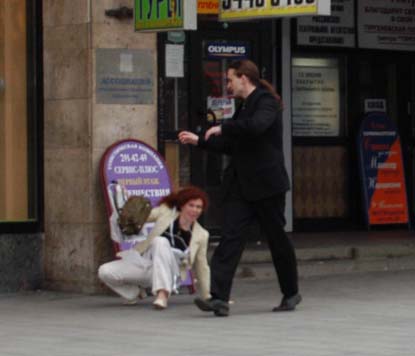
The list of new goals of frost published in his “live magazine”. Together with his associates, he formed a small activist group called “Red Blitzkrieg” - he also included Alexei Baykov. There is a version that the activities of the group were supervised by the presidential administration; Allegedly Morozov and his comrades were even offered money for the murder of one of the leaders of the youth opposition or for cutting the “orange bastard” in one of the Donetsk villages (neither one nor the other happened, and no evidence of the prayers of the curators of the “blitzkrieg” from the AP “Cold” could not be found).
The Blitzkrig had its own program: it said that non -violent opposition to the "collapse of the country and the establishment of a colonial regime" is ineffective. With the opposition, if something like a Maidan begins in Moscow, he was going to fight with the help of a mortar: "To kill scum until we die ourselves." “We are really uniform scumbags with a very samurai attitude,” Morozov wrote about himself and his associates.
It is difficult to say how seriously someone perceived it: in the LiveJournal there were a lot of political shock in those years (Familiar Morozov did not speak with the “cold”). But over time, the performances of Morozov really became more and more creative and aggressive. For example, in the fall of 2005, he planned to arrange a “rat” - to throw rodents from the Yashinsky “defense” of the defense of the Yashin. In the tube with whom he came to the rally, there were dead and living mice.
And after a year and a half, Morozov was in prison. This time his action was not directed against the opposition, but against the authorities. After in the spring of 2007 the police detained Olga Kasyanenko, a participant in the Red Blitzkrig, he decided to attack the central office of United Russia. He came to the building on Kutuzovsky Prospekt at night with several bottles of Molotov cocktail and a torn - according to Morozov, by that time his team had been preparing weapons for several months just in case. The lighter broke down, it was not possible to set fire to anything, but the activist blogger shot a neon sign with the party logo.
A few months later he was detained. During a search in his house, a cut, a combat knife, a small sapper set, threads and nodes for attaching “stretch marks”, boxes for storing detonators, as well as a special black uniform,were found . The court sentenced Morozov to three years in colony.
Baykov later wrote that the prison greatly influenced "Morozov's ability to think soberly and rationally." At the same time, having freed himself, Morozov continued to be a blog, where he wrote about the “Russian march”, praised National Socialism, and also toldhow the model of the ship Jack Vorobya from the “Pirates of the Caribbean” adheses. In 2011, it seemed to him that the time of “great trials” was approaching, while he, in general, stopped engaged in activism. The case of tomatoes during “Occupy Abay” was an exception - a few months later Morozov in the comments in the “LiveJournal” called Ilya Yashin to a duel, but did not even receive an answer. Sometimes he complained that he did not have time for political actions, because he works up to six - and also needs to lay time on the road.
Fucking from Moscow
By the spring of 2014, Andrei Morozov worked peacefully in IT and was going to marry - but, like 10 years ago, everyone changed events in Ukraine. Finally, he realized that he could not live like that when he found out about the events in Odessa: there, as a result of street clashes and a fire in the house of trade unions, 48 people were killed, mostly supporters of Antimaydan. Morozov decided that he could not put up with a situation where "Russian people became those who can be killed with impunity and publicly." A week later, on Victory Day, he got on a train to cross the border with Ukraine and join the separatists in the Donbass.
According to Alexei Baykov, by that time Morozov became a huge fan of the writer of Vera Kamsha, who composed the Fantasy-Roman cycle of the “gleam of Eternes”, and identified himself with one of their heroes-the Duke of Roque Alva, constantly wiring dynastic wars. In all likelihood, the trip to the east of Ukraine seemed to the blogger an almost literary adventure. In the spring of 2014, the conflict was just beginning, and there were almost no volunteer single volunteers from Russia. The “Moscow Book Boy”, as the nationalist Yegor Kholmogorov said about him, “fucking from Moscow”, as he called himself, a person absolutely without military experience, Morozov aroused suspicion of the Cossack chieftain Nikolai Kozitsyn, whose detachment tried to get into the detachment. They did not take him to the Cossacks, but instead they first tortured, and then, having achieved nothing, they were handed over to the Russian border guards. As Baykov recalled , Morozov returned to his homeland with bone necrosis in his wrists.
However, this did not stop him: he soon went to the Donbass again and ended up in the Ghost battalion, which acted in the self -proclaimed Lugansk People's Republic. The “ghost” was headed by a former employee of the military registration and enlistment office Alexei Mozgova. According to Baykov, there they “quickly realized what kind of frame it was, and they transferred [Morozov] to the near rear-“ glue tanks in an adult ”, that is, to repair radio equipment, and later drones.”
In the spring of 2015, the commander of the Ghost was killed - apparently, the new Lugansk authorities put up by Moscow were dealt with with militias who did not want to obey the Kremlin; According to some versions, the murder of the brain was one of the first operations of the detachment, which later turned into a Wagner PMC. The fighters of the "ghost" - and among them Andrei Morozov - joined the ranks of the army of the LPR; Morozov, according to him, even took part in the battles for Debaltseve, but then left the front due to the aggravated bronchitis.
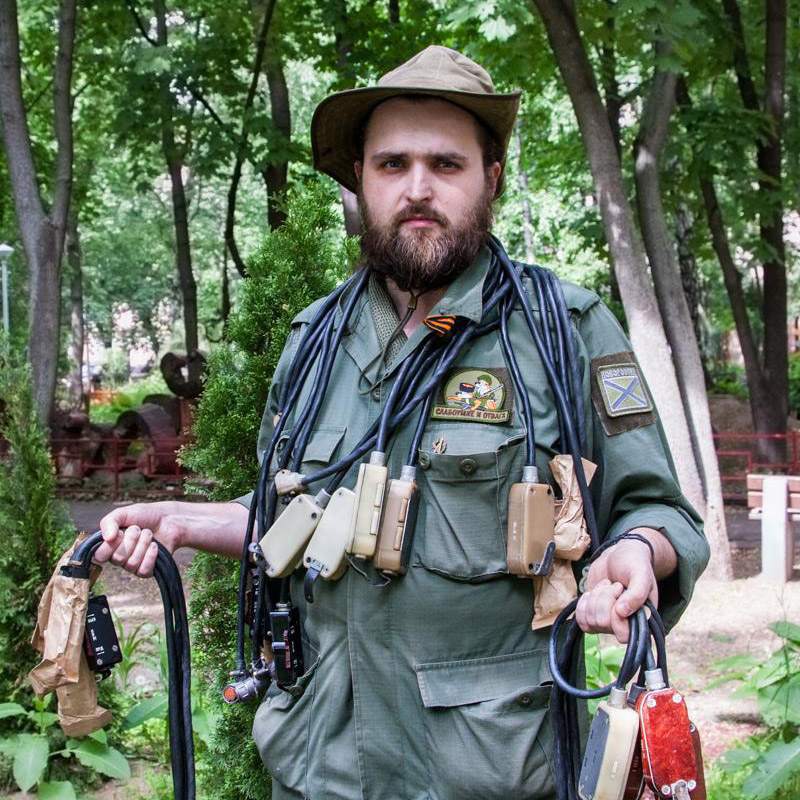
Since 2016, Morozov worked at the coordination center for the assistance of Novorossia, carried humanitarian aid to the supporters of the self -proclaimed republics, simultaneously performed in Moscow and St. Petersburg with seminars, at which he talked about his Donbass experience, and corrected his health, hoping to return to the forefront. When he succeeded in March 2020, Morozov wrote that he spent at the front the "happiest days in three years."
When Russia annexed the territories of the self -proclaimed East Ukrainian republics, Morozov became a Russian military: now he served already in the rank of sergeant and worked with drones and communication systems. Morozov also did not stop making the blog either, but he was no longer in LJ, but in Telegram: by the beginning of 2024, at the channel “They wrote to us from Janina”, where Morozov talked about the war, there were already more than 120 thousand subscribers. He did not change his political views: he scolded the protesters in Belarus and the liberal opposition, expected an attempt on a coup in Russia inspired by the West - and at the same time scolded the Putin regime for insufficient compliance with the values of Stalinism and for corruption.
The second after Strelkov
The impressions of Morozov from the invasion of Ukraine were far from enthusiastic. “This is a man who completely sincerely believed in the war, in the purpose of the war, hated Ukraine, dreamed of the victory of Russian weapons,” says writer Ivan Filippov, who in his telegram channel analyzes patriotic bloggers. - And day by day I saw how people who are entrusted with this war to fight do not want to win it. This drove him crazy, and he regularly wrote about problems. ” Filippov calls Morozov "the second whiner [in the Z-community] after Strelkov."
Morozov published the first post after the outbreak of war only in mid -March. He hung patriotic poems in his channel, joked, called photographs with the corpses of civilians in Buch Fake, stated that the war could be stopped only on Russia's terms - and at the same time he criticized the Russian military leadership a lot. At the same time, he continued to serve in the Donbass. A significant part of his salary of frost, according to the Avva telegram channel, was spent on the purchase of equipment for the military, and after the death of his mother, he was going to sell two of his three Moscow apartments in the fall of last year in order to launch the wolf to drones.
On February 20, 2024, responding to the news that Minister of Defense Sergei Shoigu reported Putin about “minimal losses” when taking Avdeevka, Morozov wrote another critical post . In it, he gave the numbers of losses from another telegram channel-16 thousand killed, 300 units of armored vehicles-and added that Ukrainian losses are more than half as much. After that, official propagandists began to attack Morozov - in particular, the leading channel “Live Solovyov” Armen Gasparyan and Julia Vityazeva: they hinted that in Soviet times Morozova would have shot; Vityazeva declared a blogger a "pest."
In the conflict between the supporters of the war there is nothing surprising, says Ivan Filippov: this is the same large world, fragmented into groups and factions, such as a Russian opposition. There is someone who is fighting and writing about it; there are “professional court military commissars”; There are propagandists - and so on. “They are globally divided into patriots, tri-patriots and guards,” explains Filippov. - The guards are those who say that everything according to plan and around is solid glorious victories. Patriots are somewhere in the middle. And tri-patriots are more often talking about problems. ” Morozov for his critical posts was repeatedly threatened with criminal cases for the "discredit" of the army; After the capture of Avdeevka, the critically tuned wiren bloggers began to come to warnings about the possible responsibility for the dissemination of information, which “contributes to the anti -Russian activity of the enemy”.

In the early morning of February 21, a thorough text appeared in Morozov’s channel about how he was forced to delete a post about losses in Avdeevka on the orders of “Comrade Colonel”. “It turned out that I can’t serve under your beginning, under the command of a man who accepted the headless brigade in a critical situation on a critical site and“ took out ”the situation, I can’t serve you and, at the same time, tell the truth,” wrote Morozov, apparently turning to his commander. - If I “cannot change anything”, then you will have to win the war yourself with what is. IF".
Также в своем тексте Морозов цитировал фильм «Терминатор» и кодекс самураев «Бусидо», предлагал читателям смотреть мультсериал «Рик и Морти» и фильм «Капитан Алатристе» по роману Артура Переса-Реверте и говорил, что ведет свой «странный бой» с 20 июня 2005 года — того самого дня, когда он бросил свой первый помидор в Илью Яшина.
Опубликовав этот пост, Андрей Морозов застрелился. Похоронить себя он попросил на кладбище в Кировске Луганской области — «рядом с солдатами батальона “Призрак”, погибшими с момента подписания Минских соглашений и до начала СВО».
«Нынешняя война пожирает в первую очередь идеалистов — тех, кто в самом деле верит в то, что делает, — написала после смерти Морозова литературный критик Галина Юзефович. — А вот циники, именующие себя “прагматиками”, живут и чувствуют себя отлично». Алексей Байков заключил, что «крапивинский мальчик со шпагой, как сейчас модно говорить, “зашел не в ту дверь”, а вытянуть его оттуда за шкирку оказалось некому».
«[С одной стороны, Морозов] даже в посмертном тексте упомянул про “победу в захваченном Париже”, продолжая собственные же идеи о вечном и безальтернативном противостоянии с Западом, решиться которое может только силой, — рассуждает политолог Андрей Никулин. — С другой, этот же текст буквально усыпан отсылками к западному же кинематографу и культуре. Похоже, он писал, действительно не понимая, что тут что-то одно — или русские войска на улицах Праги и Вашингтона, или Рик и Морти. Вместе им не бывать».