
Translated material
Six years Salisbury
In March 2018, Sergey and Julia Skripali were poisoned. We recall those events
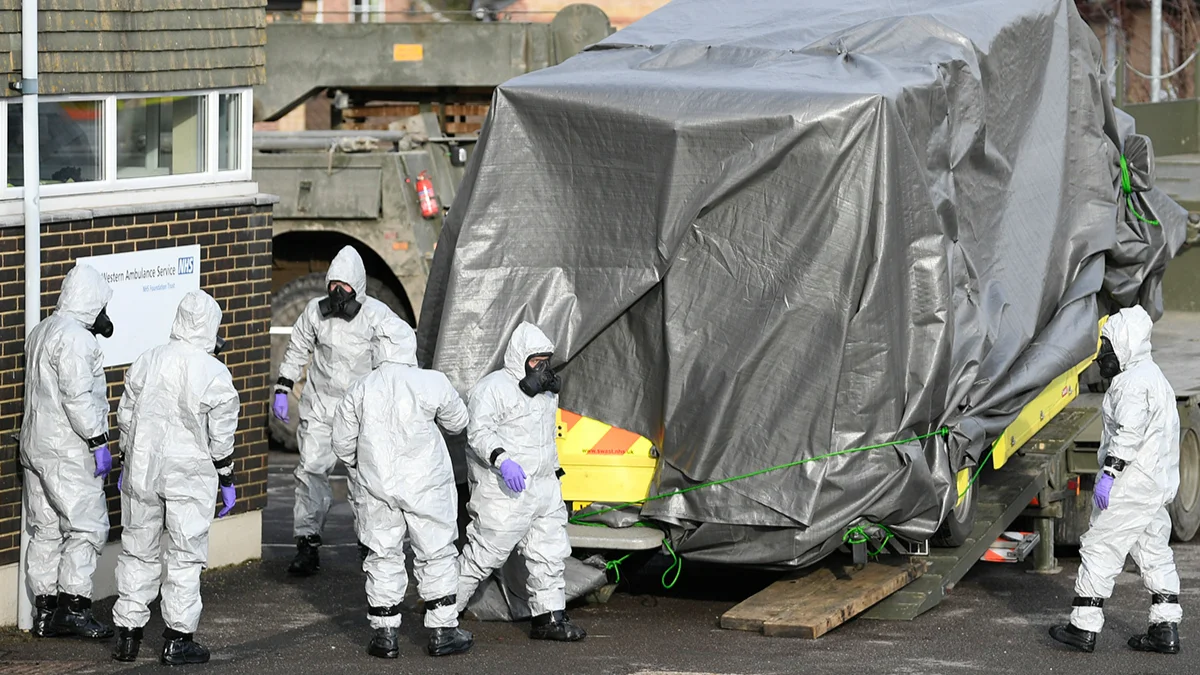
Military personnel in protective costumes take the car from the ambulance station in Salisbury, March 10, 2018. Photo: Neil Hall / EPA-EFE
On March 4, 2018, in the English town of Salisbury, former GRU employee Sergey Skripal and his daughter Julia were poisoned with neuro-paralytic poison. Unlike another native of the special services of Alexander Litvinenko, who died 12 years earlier from Polonium poisoning, the creaks survived. The Russian special services suffered a failure, and the world first learned about the existence of a combat poisonous substances of the Novichok class.
We recall the events of those years, the conclusions that the British investigation came to, and the Kremlin reaction.
Who is Skripal
Sergey Skripal - Soviet, Russian and British military intelligence officer, until 1999 an employee of the GRU. He went into the reserve with the rank of colonel.
Until 2001, he worked in the management of the Russian Ministry of Foreign Affairs, then in the Ministry of Territorial Education of the Moscow Region. He taught at the Military Diplomatic Academy. In 2004, the FSB of Russia arrested Sergei Skripal on charges of cooperation with UK intelligence. During the investigation of a criminal case initiated under Art. 275 of the Criminal Code of the Russian Federation (“Gosizman”), it turned out that Skripal was recruited by the UK secret intelligence service back in 1995 during the military service in the Main Intelligence Directorate of the Armed Forces of Russia. This happened during a business trip to Spain, where Skripal worked as a military attache of the Russian Embassy. During the investigation, Sergey Skripal found himself guilty, gave detailed testimony about his activity, which was taken into account by the court as a mitigating circumstances. In 2006, the Moscow District Military Court sentenced Skripal to 13 years in prison in a maximum security colony. He was deprived of all titles and awards.
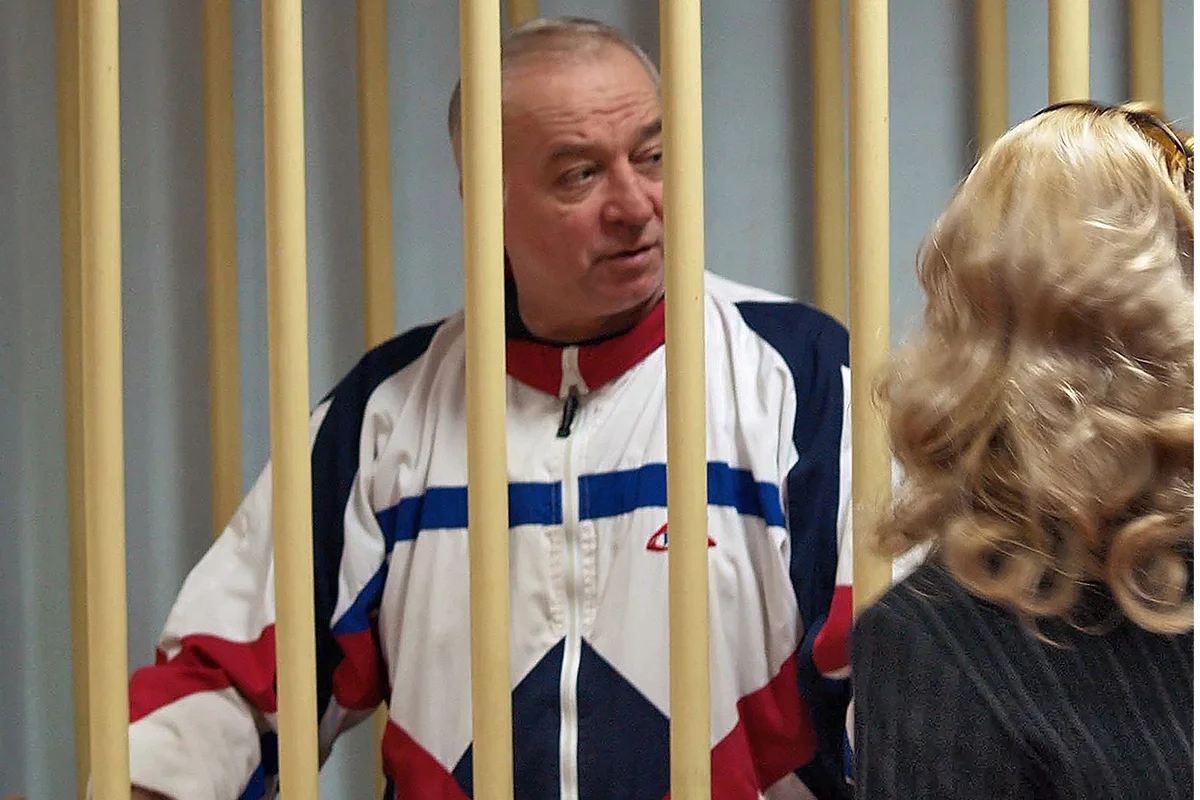
In 2010, Vladimir Putin signed a decree on the pardon of four Russian citizens, including Sergei Skripal. The pardon took place as part of the exchange of four Russians convicted of espionage in favor of the United States and UK and serving sentences in Russia, ten employees of the Russian special services (Russian citizens) detained in the United States in June 2010.
After the liberation, Skripal settled with his family (wife, son and daughter) in the south-west of Great Britain, in the small town of Salisbury. In the UK, Sergei Skripal gave to the Mi-6 lectures on Russian military intelligence to cadets of military academies, and also gave consultations on military intelligence issues.
The wife of a former GRU employee died of cancer in 2012. In 2013-2014, the daughter of Julia returned back to Russia. Son Alexander unexpectedly died in July 2017 during a trip to Russia at the age of 43 - from acute liver failure.
Poisoning
On March 3, 2018, Julia Skripal flew to the UK from Moscow to visit her father. The next day, March 4, at about 9:15, father and daughter left the house in Salisbury and drove by a Skripal car in the cemetery, where his wife and son were buried. At about 11:30 they returned home for a while and at 13:40 local time left the house again - we went to the Maltings shopping center. For a short time we went to the Pab of The Mill, after which they dined for about an hour in the Italian restaurant Zizzi, which is located in the same shopping center. Closer to four o'clock in the afternoon we went outside. At 16:03, a local resident Freya Choch saw a strange couple sitting on a bench - an elderly man and a girl. The girl was unconscious, and the man behaved extremely strange. Church called the police, describing the situation. After 12 minutes, emergency services arrived at the place. Julia and Sergei Skripaley were taken to the district hospital.
An investigation of the incident began, the scale of which the police had not yet guessed.
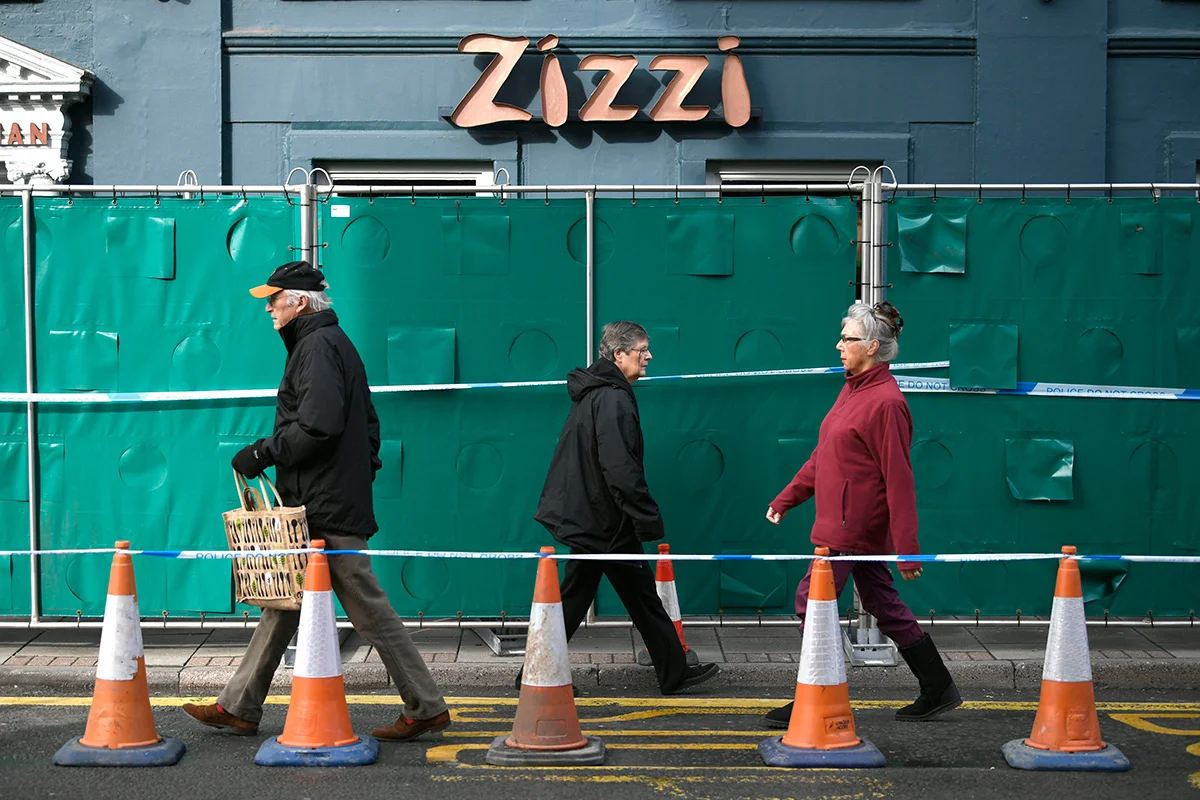
First, traces of poison in the Zizzi restaurant were discovered, where they dined the creaks, and in the Pob The Mill, where they went before. The maximum concentration of the poisonous substance was found on the handle of the front door of the house in which Sergey Skripal lived. As it was possible to establish during the investigation, the neuro-paralytic substance in the form of a gel was applied to the pen in the interval between the trip of the Skripals in the cemetery and their return to the house at 11:30. Touching the handle first, Skripal received the largest portion of poison, Julia Skripal was poisoned by a smaller amount of substance. The third victim, Sergeant Nick Bailey, was the first policeman examining the dwelling of the Skripals. He also received a portion of poison.
Later, more than forty people turned to medical assistance, including a forensic expert who directly investigated things belonging to the family of a former GRU employee.
180 soldiers were sent to the help of the police in Salisbury. Among them are officers of the chemical protection of the royal tank regiment, marine infantrymen, officers of the royal military forces and experts of the Center for Chemical, Biological, Radiological and Nuclear Defense. The state council of the UK Sallel, Sally Davis, recommended that local residents wash all their clothes, and wipe the phones with a damp cloth to prevent possible poisoning.
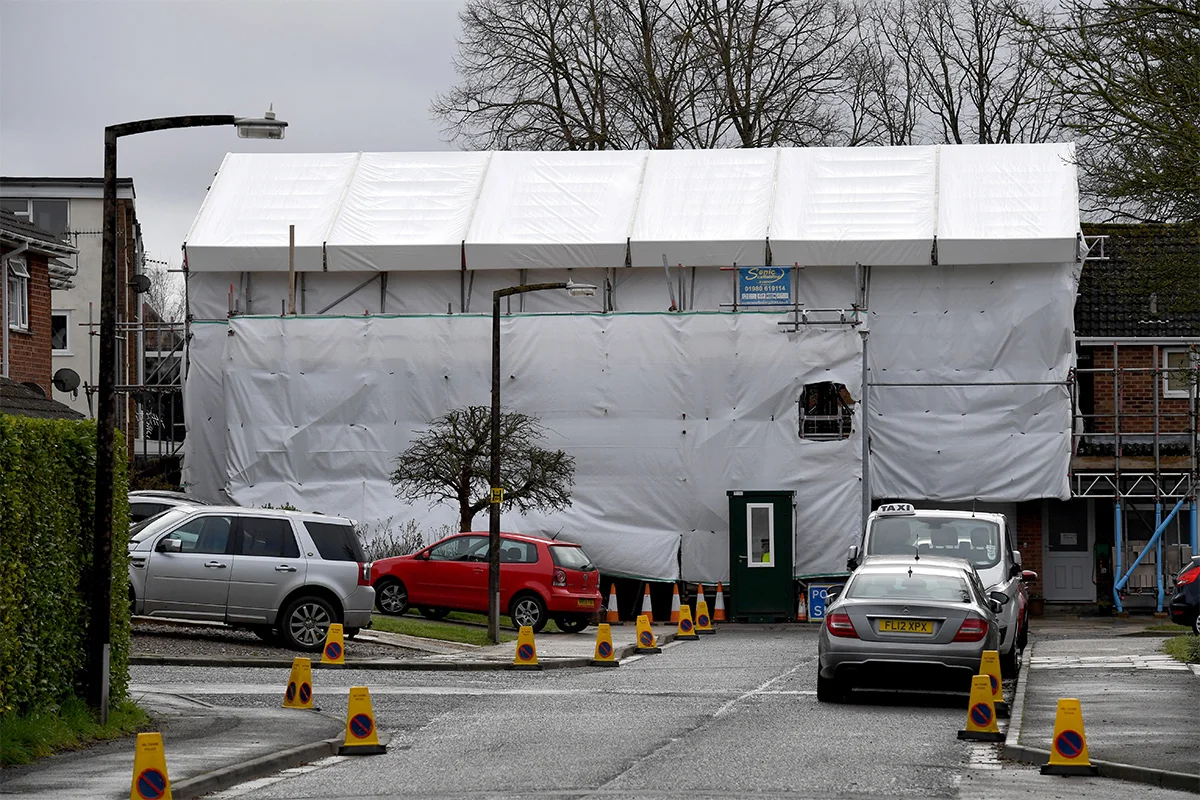
Objects where traces of poisonous substance were discovered were surrounded by a three -meter fence. In mid -April 2018, the UK Environmental Environmental Protection Ministry organized work to clean the area from poison in Salisbury.
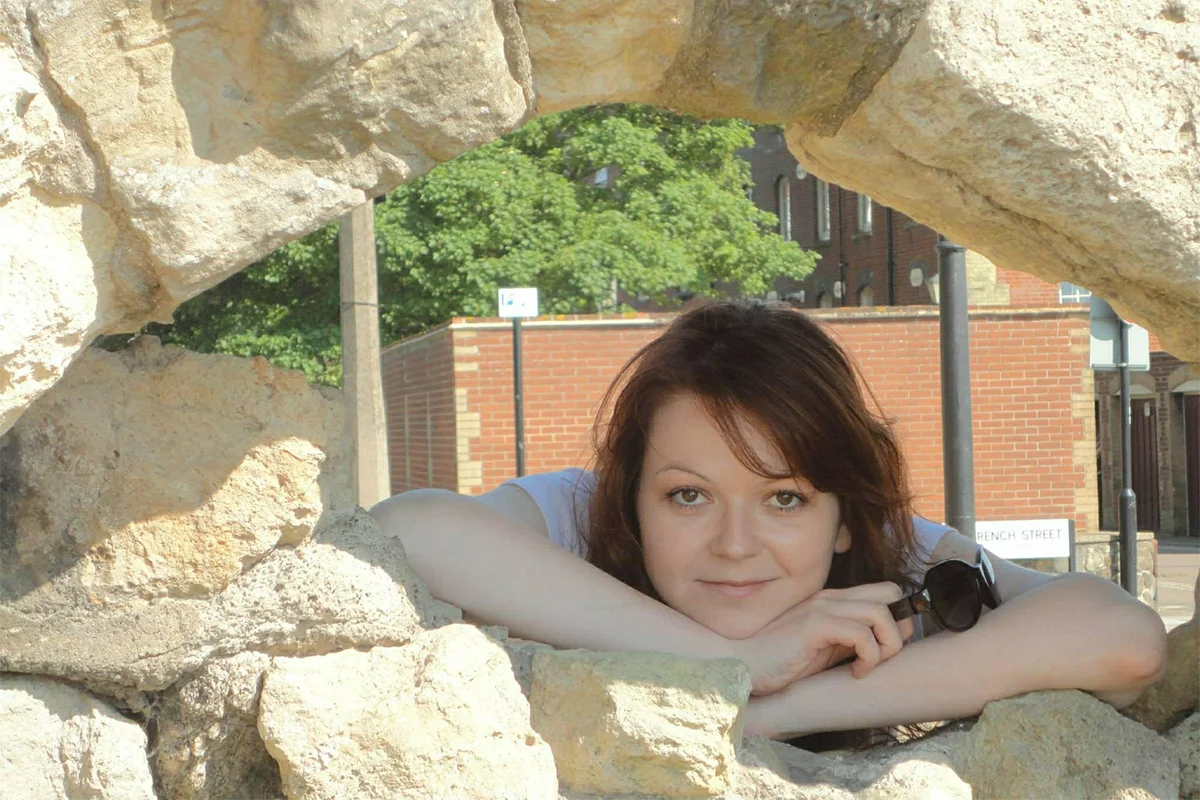
Julia Skripal came into consciousness after 23 days. After more than 30 days, Sergey Skripal left coma. Julia abandoned consular support from Russia. In April and May, both were discharged from the hospital. At the end of May 2018, Julia Skripal first after poisoning appeared in front of the Roiter agency cameras. She said :
“I do not want to go into details, I will only say that the treatment was invasive and deeply oppressing. I am grateful to all the wonderful and kind employees of the hospital in Salisbury, a place that became very close to me. My life was turned upside down, and now I'm trying to come to terms with incredible changes in my life. I try to live today and I want to help my father before his complete recovery. In the future, I hope to return home to my country. ”
By that time, the Soviet chemist, who emigrated in the United States, Wil Mirzayanov (he is considered one of the developers of the Novice, in Russia he was persecuted for the disclosure in 1992 of a secret chemical weapon development program) expressed the opinion that the creaks did not die due to the fact that on March 4 there was a strong fog and high humidity, which made the full use of poison impossible. According to Mirzayanov, the poisonous substances of this group are destroyed in water. Other scientists expressed a similar opinion.
Investigation
Representatives of the British police said that the investigation of the circumstances of the poisoning of Skripal and his daughter became “one of the largest and most complex that the anti-terrorism department of the British police ever made.”
On March 12, eight days after the incident, the British Prime Minister Teresa May, in a speech before the parliament, said that the poisoning of the Skripals was caused by the A-234 of the Novice-type nerve substance, which, according to her, was developed in Russia. This was emphasized by May, evidenced by the origin of the substance and “Russia's involvement in such cases in the past” (meant, first of all, the poisoning of Alexander Litvinenko in 2006). According to May, for Russia, Skripal was "a legitimate purpose for murder, because he was a defector."
On March 22, the British court allowed to take blood tests from Sergei Skripal and his daughter in a coma. The results of the examination confirmed that Skripal and his daughter were poisoned by the “novice”.
This information was provided to the court by an expert from the Porton-Daun laboratory, in which a blood test was carried out. The head of the laboratory, Gary Eitkenhead, confirmed the assumptions expressed earlier in the media that the “newcomer” could most likely be made only at state -level facilities, since its production requires high -tech methods. Eitkenhead also rejected the statements of the Russian side that a possible source of substance is their laboratory to Porton Dawn, located 13 kilometers from Salisbury.
In mid -April 2018, the organization for the prohibition of chemical weapons (OPCU) published a brief version of the report (the full version was classified), in which it confirmed the conclusions of the British side about the type of poisonous substance used in Salisbury. The conclusions about the type of agent were made on the basis of information about the condition of the victims, blood tests, as well as the samples taken by OPCW experts at the scene. During the analysis, it was also found that the applied substance is highly purity and almost does not contain polluting impurities. At the same time, the report did not indicate the possible origin of the substance, since this was not included in the tasks of experts.
Vil Mirzayanov, the same newcomer developer in the USSR, noted in an interview with journalists that the “prototypes” of this substance could have “among many countries”, including the UK, but its production was “debugged only in the USSR and Russia”.
The Times newspaper, citing an anonymous source, wrote that at a closed meeting for NATO members, British intelligence said that the “Novice”, which was poisoned by Sergey Skripal and his daughter Julia, was promoted to a military research base in the city of Shikhana in the Saratov region.
From the very beginning, Moscow denied the involvement in the incident of its special services. On April 20, 2018, the Russian Embassy in London even stated that the British intelligence agencies injected the Novice Julia Skripal right before starting her samples for analyzing OPCW laboratories. This assumption was based on the fact that in the blood of Julia (unlike her father, who was more severely exposed to the poison) 18 days after poisoning, an indefinite neuro-parap The agent was discovered.
Suspects
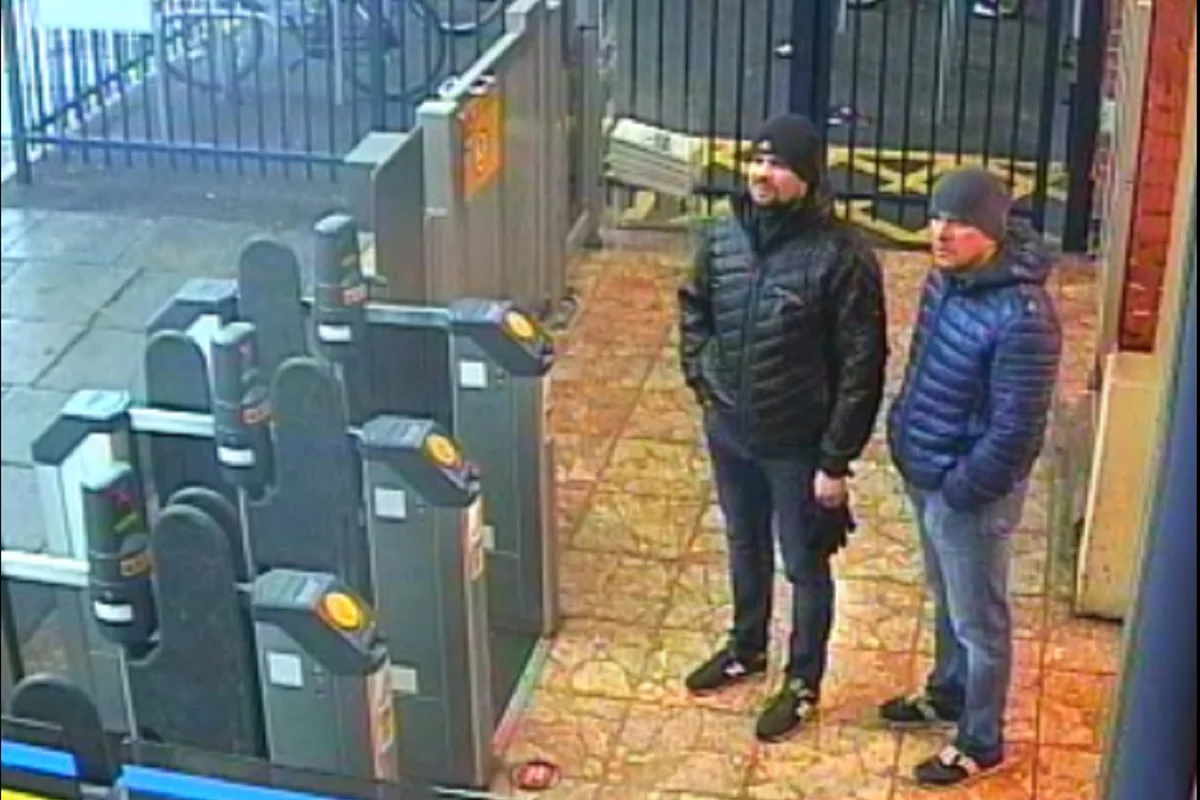
On September 5, 2018, the head of the Counter-terrorist department of Scotland Yard, Neil Basa, announced that the UK has sufficient evidence in order to make charges against two Russian citizens, GRU officers who entered the UK under fictional names Alexander Petrov and Ruslan Boshirov. It was claimed that their real names at that time were already known to the investigation. The accused came into the view of the surveillance cameras in Salisbury. March 4 at 11:58 the camera recorded them 300 meters from the Skripal house immediately before the attempt was made. Recall: according to the police, the creaking of March 4 first left the house at about 9:00 (in the cemetery), returned at about 11: 00–11: 30 and about 13: 00–13: 40 left the house again, and at about 16:15 they were unconscious. Petrov and Boshirov arrived in the UK on March 2 and left the country's territory on March 4. In the room of the City Stay Hotel hotel in London, where they stayed, traces of Novice were also discovered.
During the investigation, it was found that the “beginner” was in a capacity specially made to transport him, imitating the perfume bottle “Premier Jour” Nina Ricci.
The Royal Prosecutorial Service said that the European order for the arrest of the suspects was issued.
On September 5, 2018, speaking at the House of Commons, British Prime Minister Teresa May emphasized that GRU is a very disciplined organization with a well-established subordination.
“So this operation,” May noted, “could not be spontaneous. Moreover, it was almost certainly approved outside the GRU at the highest level of the Russian state. ”
British Security Minister Ben Wallace, in turn, assigned responsibility for poisoning personally to Vladimir Putin: “Ultimately, he is liable for [Putin], because he is the president of his country, his government finances and manages the activities of special services - GRU - through the Ministry of Defense. I don’t think that anyone could say that he does not control what is happening in his country. ”
On September 26, 2018, The Insider and Bellingcat publications stated that Ruslan Boshirov is a GRU Colonel, Russian Hero Anatoly Chepiga. On October 2, Bellingcat, together with Radio Liberty reporters, Mark Krutov and Sergei Dobrynin , said that they found a photo of the Graduates-heroes on the social network “Odnoklassniki” by the Dvok, on which Anatoly Vladimir Chepiga is clearly visible, his name, surname and middle name are well read. ”
The Insider then published a photograph of the internal passport of the Russian Federation addressed to Alexander Evgenievich Mishkin, a military doctor and colonel GRU, who, according to the publication, is “Alexander Petrov” - the second accused of poisoning Sergei Skripal. On October 9, The Insider and Bellingcat additionally reported that Alexander Mishkin was born from the village of Loyga, Arkhangelsk region.
And the Czech Radio Radio Company, citing a source in the Czech special services, said that Ruslan Boshirov and Alexander Petrov led to Sergey Skripal in 2014, when Skripal had to meet with representatives of the Czech special services.
Kremlin's reaction
Back in mid -September, during his speech at the Eastern Economic Forum in Vladivostok, Vladimir Putin said that the Russian authorities found those whom the UK considers suspects. These people, according to Putin, are civilian, and there is nothing special and criminal in their actions.
“Of course, we looked at what kind of people are. We know who they are, we found them. I hope they will appear themselves and tell about themselves. It will be better for everyone, ”Putin said and added that journalists invite them for an interview.
“I want to turn to them to hear us today.” Let them come somewhere, here, in the media. ”
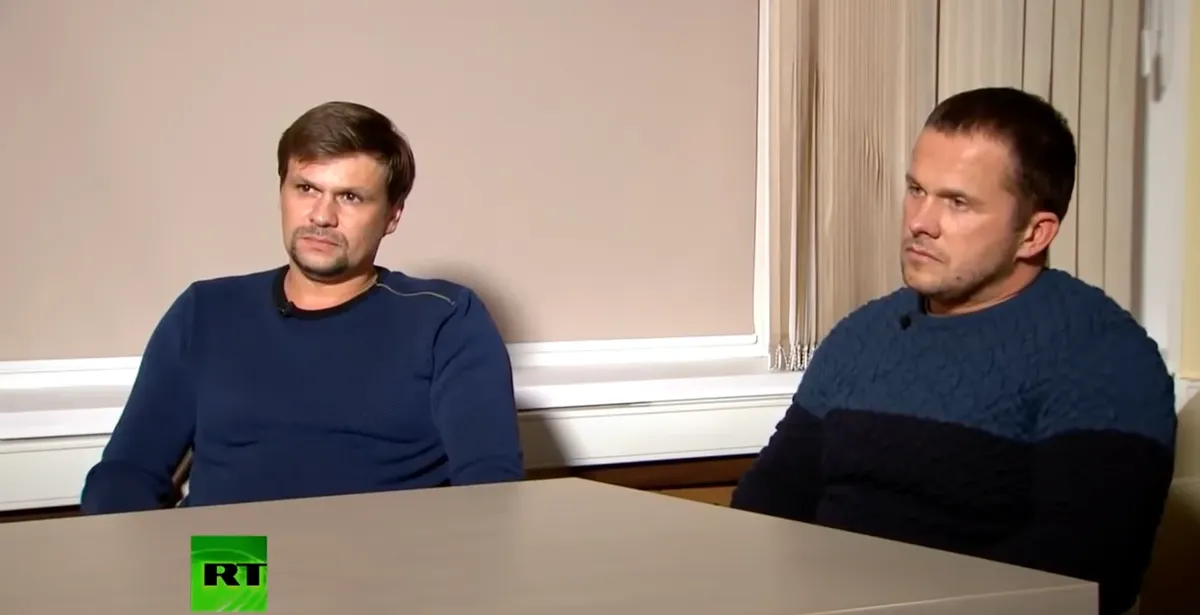
And the very next day, September 13, the Prochrevskaya television company RT posted in Utub an interview with the editor -in -chief of Margarita Simonyan with two men, whose photos were published by the UK as a photo of the suspects. The men hinted that they were gay pair (boldly by current Russian standards), they said that Alexander Petrov and Ruslan Boshirov were their real names, said that they were working in the fitness industry and that they visited the UK, and in particular Salisbury as tourists. They really wanted to see the Salisbury Cathedral.
Sending diplomats
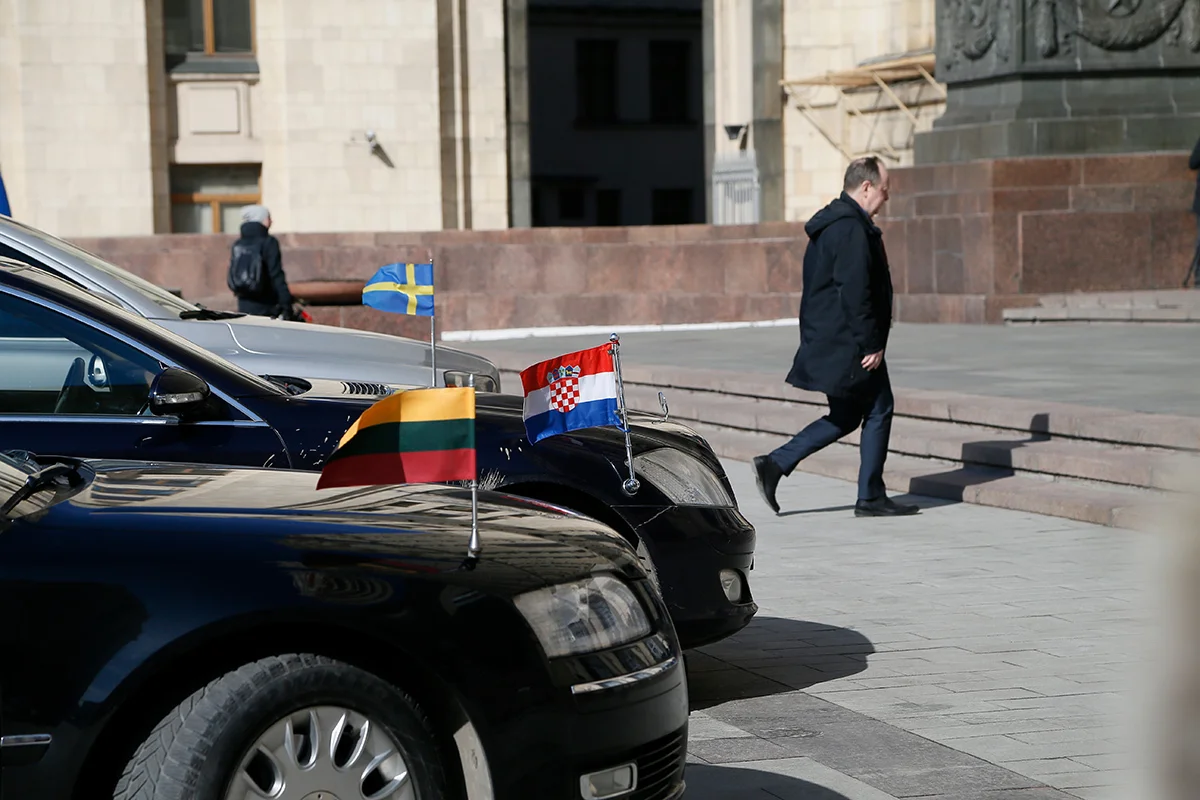
After the poisoning of the Skripals, mutual expulsions of diplomats occurred: the countries of the European Union, NATO, USA, Canada, Ukraine, Germany, France, Poland, Lithuania, Latvia, the Netherlands, Australia, Albania and a number of other countries expelled a number of Russian diplomats, in response, Russia sent a certain number of diplomats of these countries.
23 Russian diplomats, whom London considered intelligence officers, were deported from the UK itself. It was also announced the suspension of bilateral contacts with the Russian authorities at a high level.
The Russian Foreign Ministry announced mirror response measures - the expulsion of 23 diplomatic employees of the British Embassy in Moscow. The closure of the British Council in Russia was reported “in connection with the non -reinforced of its activities” and the consent of the Russian side to open the UK Consulate General in St. Petersburg was withdrawn.
The press secretary of the President of Russia Dmitry Peskov called the actions of Great Britain in the Skripal case “unprecedented rudeness”, which borders on “banditry in international affairs”.
What next?
In February 2019, The Insider and Bellingcat wrote about the establishment of the personality of the third suspect in poisoning. According to them, they turned out to be a senior officer GRU Denis Vyacheslavovich Sergeev born in 1973, who in 2010 received a passport for the underground personality of Sergey Vyacheslavovich Fedotov. In September 2021, Major General Sergeyev was officially accused of involvement in poisoning.
What about the Skripals today
According to The Telegraph, close to the special services of the source, as of January 2019, the creaks remained under the supervision of doctors and under the protection of special services, and Julia Skripal got a job and met with some of her close friends. The sources of the publication also reported that the creaks had changed externally. Sergei Skripal lost a lot of weight and, perhaps, does not want to give an interview, including because he does not want to reveal his current appearance.
On June 7, 2020, The Sunday Times reported that the creaks were replaced by personalities and moved to New Zealand.
In December 2020, the Russian edition of MK published a conversation between Julia Skripal with its cousin Victoria, living in Russia. If you believe this conversation, according to Julia Skripal, she and her father continue to live in the UK. Сергей Скрипаль постоянно находится с медиком, который регулярно ухаживает за специальной трубкой, установленной врачами после отравления и операций в его горле.
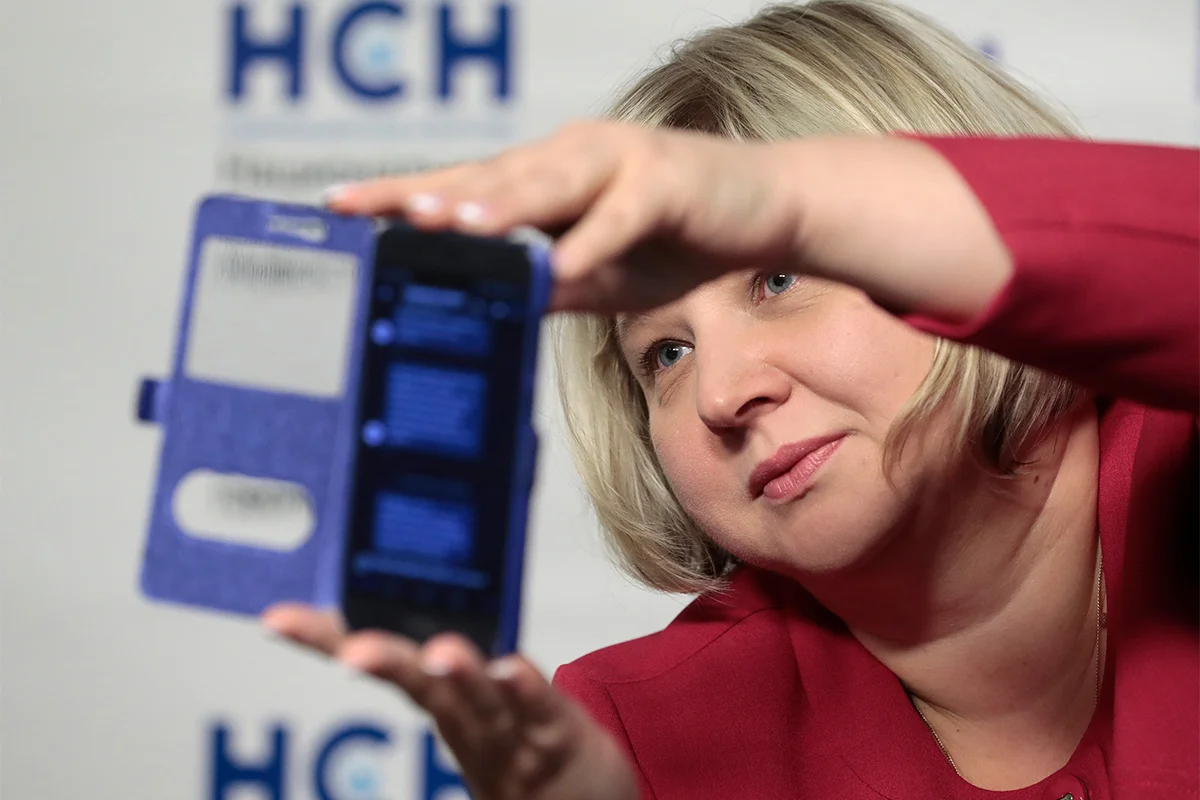
«Ему сложно разговаривать из-за того, что у него трахеостома стоит. Он сейчас спортом пытается заниматься. У него беговая дорожка, силовые упражнения. <...> Каждый раз, когда трубу меняют, раз в три-четыре месяца, ему трубки с камерами через нос засовывают, мышцы носоглотки проверяют. Но не особо-то они начинают двигаться. То есть вероятность того, что они восстановятся, очень мала. У него в носоглотке поражены только эти мышцы, которые отделяют дыхание через нос и через рот. Когда ему трубку затыкают, он может немного через нос дышать, но ему не хватает воздуха. Никто не знает [когда уберут трубу из горла]. Поскольку раньше такого отравления не было ни с кем, поэтому про прогнозы говорить сложно. Они все надеются. Но знаешь, с каждым годом эта надежда у меня падает.
Папа, конечно, говорит: “Как меня достала эта труба!” Ему приходится с медиком жить, который каждый день эту трубу чистит. Естественно, сам за рулем он не может ездить. Соответственно, человек, который с ним живет, ему и закупки делает, помогает по дому убраться.
А так с этой трубой он сам не может на улицу свободно выходить, чтобы его не узнавали. Гулять ездит, но куда-нибудь вне города».
По словам Юлии Скрипаль, она в свою очередь восстановилась полностью, «глаза только не отошли до конца». «Единственная проблема — фокусировка. Вблизи смотрю, смотрю, и потом мне надо пару секунд, чтобы сфокусироваться на даль».
Произошедшее Скрипали, согласно записи беседы, не обсуждают:
«Мы стараемся с папой на эту тему не разговаривать, но у него чувство вины очень большое, конечно. Иногда начнет — я говорю: всё, не надо, хорош. Ему очень жаль, что меня на этот маховик репрессий накрутило случайно с ним. Он себе этого простить не может никак. Я говорю: да ладно, всё нормально, хорошо, что я приехала. А был бы один, никто тебя в доме не нашел бы, так бы и помер. Мы хоть были на улице, в людном месте. А так бы точно никакого шанса не было, если бы он один был».