
Translated material
They argue about tastes
Lecture by Natalia Pakhsaryan "Birth of literary criticism from the spirit of normative poetics"
At the end of February, a cycle of lectures “The History of Literary Criticism” began in the House of Peredelkino’s work, and the first of them was the lecture “Birth of literary criticism from the spirit of normative poetics. Criticism from Aristotle to Friedrich Schlegel ”, read by Natalia Pakhsaryan. We bring to your attention its abbreviated text version prepared by Lena Ekoy, and also report that the next lecture by Natalia Tigranovna “Literary criticism: from romanticism to structuralism” will be held on March 10.Starting from February 24, 2022, we were all in the face of the advancing barbarism, violence and lies. In this situation, it is extremely important to preserve at least the remnants of culture and support the values of humanism - including for the sake of the future of Russia. Therefore, the editorial office of Gorky will continue to talk about books, reminding our readers that the world remains in the world and fiction.
It is extremely important to know about literary criticism, because literature, unlike other types of arts, is able to reflect on itself with its means. For example, what is musical criticism? This is the criticism that musicologists create, but not the music itself. Specialists in the history of painting are discussed about picturesque criticism. Meanwhile, literary criticism from the very beginning takes the form of self -reflection.
Reason and inspiration
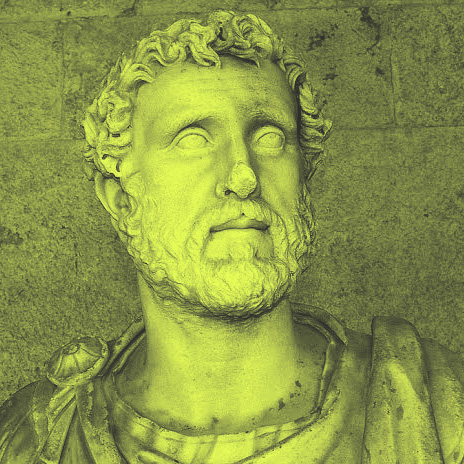 The history of literary criticism originates in antiquity. For example, the name of the critic of Zoil, who lived in the 4th century BC, has long become a household. Zoila was nicknamed “Gumer’s scourge” for caustic comments on the poet, whom he accused of contradicting common sense. For example, why is Apollo in anger the arrow in dogs and mules? Why didn't they please him? Why is Achilles crying when cartridges died? After all, men should not cry! The evidence of Zoyil's contemporaries has been preserved, characterizing him as witty, but evil and little understanding a person in the literature.
Serious literary criticism in the era of antiquity takes the form of poetics and reflects on how to write poetry. An important role in the development of poetic art at that time was played by Plato. He does not write works about the art of poetry, moreover, he expels poets from his “ideal state”. Plato claims that inspiration is the result of a divine frenzy into which the gods plunge the poets. This frenzy gives rise to poems, but paralyzes the work of the mind, making creators with fools, who should look after. The only possible occupation of the poet Plato considers the creation of hymns for the education of warriors, and calls everything else unnecessary. Paradoxically, subsequently, the idea that great poetry is born precisely due to inspiration, and not to reason and knowledge, will develop from this performance.
Plato is neglecting poetry also because it, in his opinion, does not reflect reality. Reality is a copy of the absolute idea. For example, what is a deer? This is a copy of the idea of a deer. And what is a picturesque image of a deer? This is a copy of the copy. What is the benefit from this copy? Therefore, poetry and drama give us a false idea of reality. I must say that the question of whether the true art or false, remained unanswered for a very long time.
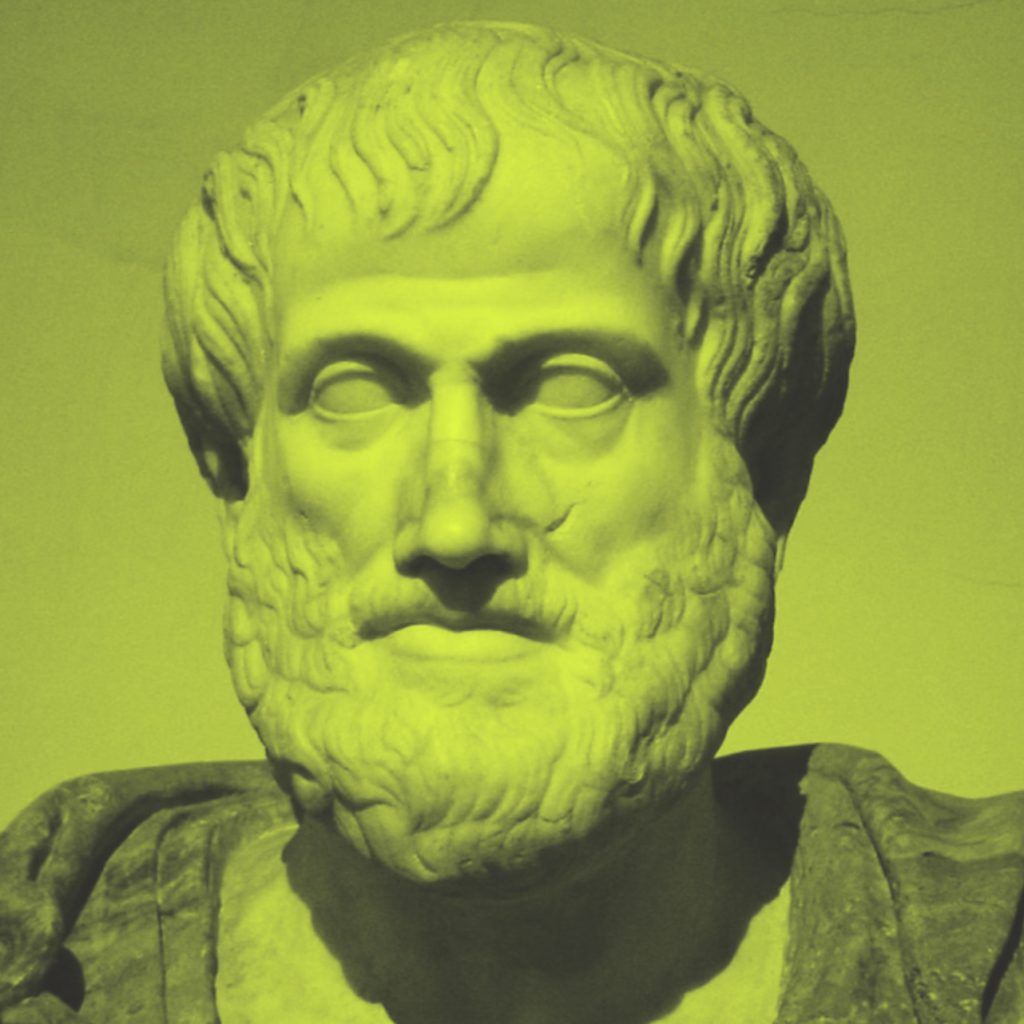 Aristotle develops completely different poetics in the treatise of the same name. He says that engaging in art, including poetry, is a “techno”, that is, skill, craft. At the same time, Aristotle trusts giving poets and believes that they may see and know even more than philosophers. In the future, a combination of the ability to create poetic texts with talent will become extremely important for the development of literary criticism.
Aristotle also determines the norms of creativity and talks about how to write. He does not endure assessments to one or another works from the point of view of the reader, but sets the rules as the legislator of art. One of the important rules is the rule of Mimesis - imitation of nature. At the same time, imitation implies a certain action that does not mean nature in its absolutely empirical form. From this there is an idea that there is truth, but there is credibility. There is a story, but there is art. In history, it is necessary to portray the truth, but in art - believable: to talk not about what is, but about what can or should be. Of course, here Aristotle draws attention primarily to dramatic works that are most popular in his era. He develops not only the law of credibility, but also the rule of three unities. It is important to say that the trinity of the place, time and action is what was removed from the teachings of Aristotle much later, since he himself speaks primarily about two unity: the unity of action and the unity of time.
From Latin to French
In the Middle Ages, ancient Latin sources, primarily Cicero and Horace, enjoyed authority. As you know, Cicero spoke more about rhetoric, but eloquence and poetics at that time were inextricably linked with each other. At the same time, Cicero believed that it should not be evaluated first of all in shape, but the content: if the poet writes badly, but expresses smart, useful thoughts - this is a good poet, and he needs to be read.
 Horace expresses a different point of view. In the “Epistle to Pizons”, he turns to friends who want to write poetry, and tries to prove that art is what benefits and pleasure. And in order to realize this pleasure, you need to learn to create good verses. But, of course, if a person has no poetic talent, then he will not reach the art of great heights. In the future, this essay Horace will play an important role in early medieval poetics and criticism. Interestingly, the first medieval critical works were written in grammars. For example, the famous Roman grammar Eli Donat explained what rhymes and expressions should be, what poetic genres should be addressed. From this point of view, everything that was written was evaluated.
In addition to the Latin line developing the rules of versification, poetics in national languages also existed in the Middle Ages. Previously, it was the poetics of the troubadours who wrote on Provensal. The most significant composition here is the poetics written by Raymon de Bizaly. Good poems, Bizalu considered it should be written in the dialect of Provencal, Limuzen, while the North French is more suitable for prose. Here, Bizaly is criticized by Trubadura Bernart de Ventadorna, who mixes both languages.
Raymon de Bizaly is trying to combine the rules of versification with the assessment of poetry, which is precisely the primary function of criticism. At the same time, he explains why the critic, not readers should give assessments to the works. Readers are different: some do not know at all what good poetry should be, and experts, who, as a rule, are not only educated, but also educated people, cannot afford to openly say that this or that work is poorly written. Consequently, a person who knows how to approach other people's writings is impassive and with knowledge of the matter. Thus, Bizaly was the first to define the criticism as an intermediary between a writer and a reader audience.
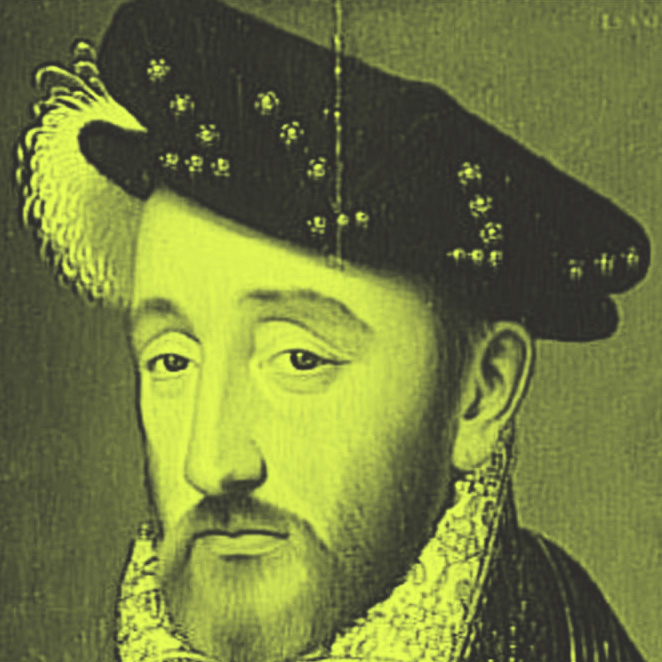 In the era of the Renaissance in national poetics, a kind of symbiosis of normative poetics and criticism arises. A significant place is occupied by the manifesto of the poet Joashen Du Bella “Protection and glorification of the French language”, which discusses the history of poetry from antiquity to modernity. Agreeing that the purpose of poetry is to imitate, Du Belle asks the question of who should be imitated - medieval French or ancient poets? Choosing the latter, he nevertheless notes that they should not imitate them in absolutely everything. Of course, the Latin language is perfect, but the French language has potential. This potential must be developed in the same way as the Greeks and the Romans once did. Similar ideas are also present in English criticism. So, the poet and prose writer Philip Sidney in the treatise “Protection of Poetry” argues with those who believe that they need to focus exclusively on high genres and their pragmatic goal. Sidney is sure that it is important to be able to see interesting aspects in low genres, for example in pastorals.
Old and new
Thus, before the New Age, criticism manifested itself mainly in poetological works, the task of which was to teach to write. The authors of these works gave their own assessments of various works as positive and negative examples. Actually, literary criticism was born only in the 17th century thanks to the appearance of the periodic press, when to take out the estimates read on the pages of newspapers. In addition, literary circles and salons began to appear at this time.
However, even then criticism remained normative for some time. An example of this is the reaction of Jean Shapalen to the play of Cornel's Sid. The protagonist of the play by Don Rodrigo should protect the honor of his father, who was insulted by the girl’s father named Himen. Rodrigo is in love with Jimen, but understands that the rejection of the duel will not help maintain its location: if he does not manage to intervene for his father, he will dishonor himself and will be rejected. The fatal position is saved only by the fact that after the murder of Father Himen, Don Rodrigo becomes the savior of the Fatherland. The play was a huge success: even the expression appeared “it is fine, like“ SID ”.” However, the chapne found many shortcomings in the play, in particular, he accused the poet of violating the rules of trinity. In addition, he made one curious remark: as a girl endowed with honor and dignity, can marry someone who killed her father? That is, Shaplen accuses Cornell of violating the rules of credibility, saying that he neglects ethical standards in his play.
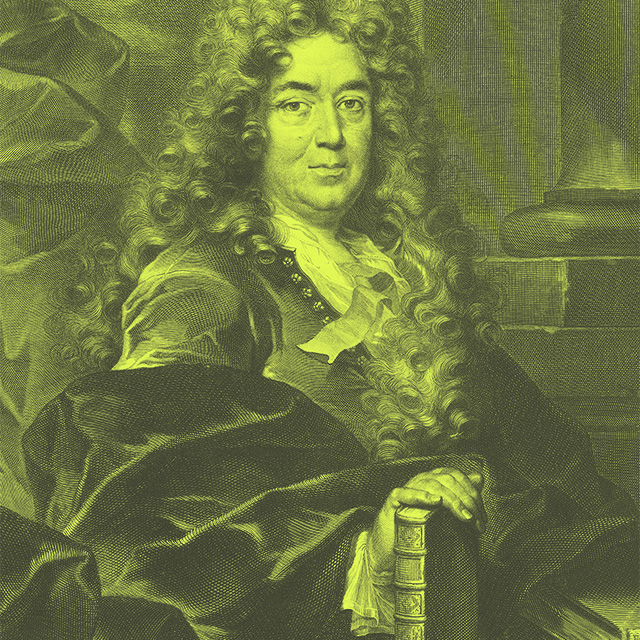 For the XVII century, an orientation towards ancient art, which was considered an unsurpassed example, was still very important. However, this meant not so much the imitation of ancient authors as a competition with them. In this regard, at the end of the century, a literary and critical dispute arises about old and new authors. Charles Perrault is the first to enter into a discussion. He talks about the successes of modern society in different areas and notes that writers are quite capable of surpassing their ancient predecessors in the skill of their ancient predecessors if they use the rules of that era. Two opposite points of view arise: some believe that it is useless to compete with the ancient masters, while others are sure that the new authors should still listen.
An important role here is played by Nikola Boailo, who can be considered as an author of another poetics. But he acts not only in the role of a legislator explaining how to write, but also as a critic that evaluates the literature of the past. It is known that he completely did not accept the poetry written before the 17th century, but very much appreciated the Mlerb, who, according to Boailo, "showed the French a simple and clear verse, // In all, pleasing to the museums." Those who wrote not so simple and not so clear, Boailo considered it worthless writers.
Mlerb was really an interesting author. On the one hand, it can also be called the legislator and reformer of French poetry: he talked about how important it is to develop clear criteria for different genres, observe their hierarchy, use accurate rhymes and avoid anjabemans - transfers from one line to another. On the other hand, Malelerb did not write treatises on the art of poetry. Instead, he simply set out his critical notes on the fields of the collection of poems by the fashion poet Philip de Port. This is also a normative criticism, but it is written not by a separate composition, but placed in the text of another author.
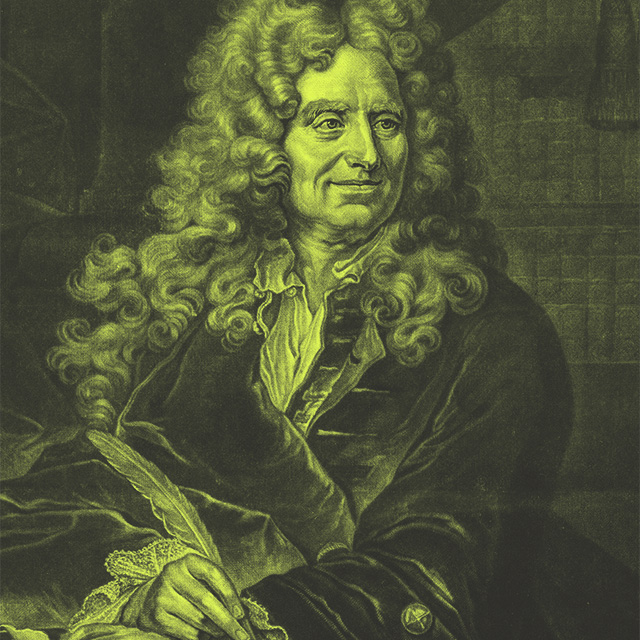 But back to Boailo. He gives evaluations to various works in his treatise “Poetic Art”, in particular, reproaches playwrights who focus on romantic plots: according to critic, the tragedy should always concern important historical events, not love and downs. The latter are suitable only for the novel - the Blessed genre, where it is excusable to portray historical figures as crazy lovers. In addition, Boailo determines which genres are most suitable for specific authors. For example, the talent of a maleta is ideal for writing OD, and rakan is very good in pastorals. Thus, the main goal of “poetic art” is again training how to write.
In 1711, the “Experience of Criticism” of the English poet Alexander Pope was published. Some readers immediately begin to blame him for imitating Boailo, which is absolutely unfair. Firstly, it is precisely in the POUP that the concept of “experience” first appears, which involves not strict and prescribing, but a reflecting attitude to the phenomena of literature. POUP writes how to criticize poetry and how to understand it. It is significant that in his treatise there are more names of critics than poets. Secondly, the POP clearly defines the paramount function of criticism: to help the reader understand what he reads.
The person playing
In the XVIII century, for the first time begin to think about how certain works affect the reader, how to explain the advantages and disadvantages of these works to the reader. The critical works of Didro and Lessing are very important here, which paid attention to how the theater public changed. Previously, the tragedy was guided primarily by the aristocracy and nobles, before which scenes were played from the life of great commanders and mythological characters. Modern bourgeois spectators wanted to see themselves on the stage. But there were no such characters in the tragedy, and in the comedy they looked funny. The new viewer needed a new, medium genre.
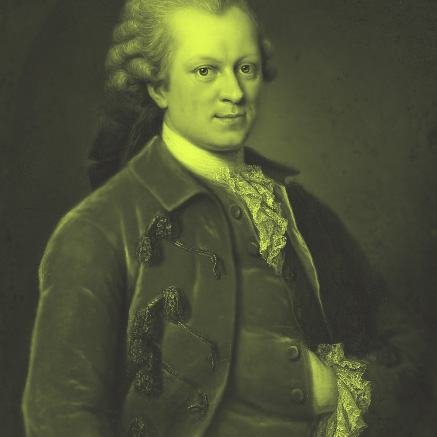 So it appears that today we call the drama. Didro called her “serious comedy”, Lessing - “bourgeois tragedy”. The drama turns the famous “all life is the theater, and the people in it are actors”: now the theater should portray life, and dramaturs should pay attention primarily to everyday life. Hence the desire to somehow explain his intentions, which is expressed, among other things, in the preface of Diderot to his dramas or in the “Hamburg drama” of Lessing - a book consisting of the author’s letters about plays that will be placed or can be staged in the Hamburg Theater. In this essay, Lessing closely connects theoretical thoughts with practice, which is extremely important. In the past, these concepts existed separately from each other: the same Eli Donat wrote about what the tragedy and comedy should be, although neither one nor the other was in the medieval theater.
Finally, “letters about the aesthetic education of a person” Schiller come out, where the question raised in antiquity is first resolved: what is art - truth or lies? We all know the expression “a fairy tale is a lie, but in it is a hint”, which implies that art is false, but this lie can be useful. And Schiller says that art is a game. And what is the game - true or lies? For Schiller, the game is primarily freedom. Its concept has a great influence on further thoughts about art. So, in the 20th century, the book of Johan Huysing “Homo Ludens” will be published, where it is proved that a person of art is a playing person.
It is no coincidence that Schiller is considered the forerunner of the era of romanticism: he really prepares the ground for romantics, switching attention from how to write, to what a creative person should be.
Schiller's thoughts coincide with the thoughts of Johann Herder, who believes that art expresses the spirit of the people. It follows that the only criteria of the beautiful does not exist, because in different eras different nations had their own ideas that it was beautiful, completely and truly. This idea became extremely important for romantics and made it possible to switch from some general poetic rules to the one who creates a work of art.
They argue about tastes
For romantics, the idea of the historical variability of criteria, the idea of novelty, was very important. The concept of the new existed before them, but it was very specific. The new suggested combinatorics: we take some constant rules, paths, images and place them in a different order. Something really new did not fit into the framework of the “good”, so writers of the beginning of the 19th century had to somehow indicate their direction, thereby contrasting themselves with the classicists. This is now we are talking about classicists, sentimentalists and mannerists, and at that time none of them needed such definitions. Everyone was looking for the right, perfect art, believing that it is universal and constantly. Only romantics have the realization that universal perfection does not exist. If today we consider someone a wonderful poet, this does not mean that in the future he will be perceived the same.
In the “dispute about the ancient and new” Charles Perrault says that in antiquity to Homer preferred other creators of epic poems, now forgotten. A completely different thing is Cornell and Moliere, which will always be considered wonderful authors. Romantics reason differently. They suggest first to see who this or that poet was in antiquity and what role he plays now. For example, Shakespeare, who was once considered an imperfect poet, now seems delightful to us. However, Shakespeare's circumail began in the XVIII century. Even Voltaire, who agreed that Shakespeare did not know the rules of versification, considered him a genius. Но великий драматург стал не только преимуществом, но и бедой английской поэзии: впоследствии многие авторы начали подражать ему, причем очень неудачно. При этом младшего современника Шекспира, испанского драматурга Кальдерона, Вольтер называл ужасным поэтом.
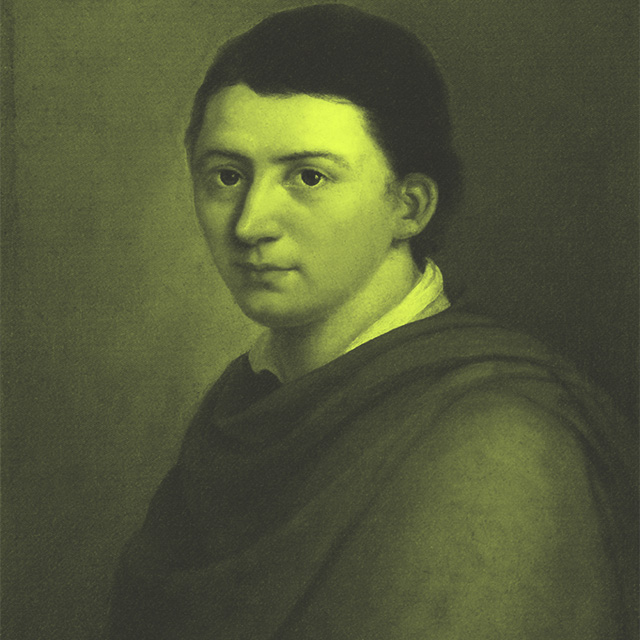 Между тем романтик Фридрих Шлегель считает Шекспира и Кальдерона поэтами, равными по своему дарованию. Для него они замечательны еще и потому, что каждый из них обладал яркой индивидуальностью. Размышляя об индивидуальности, Шлегель переносит всю силу с объекта на субъект. Субъект должен быть индивидуален и замечательно одарен. Поэт как субъект бесконечен. Он создает универсальный замысел, который всегда реализуется частично, так как творческая личность поэта шире того, что он делает. То, что он пишет, — в каком-то смысле преходяще. А сам поэт — это что-то невероятно прекрасное. И для того чтобы понять то или иное сочинение, нужно сначала постичь личность его автора. Из этой идеи развивается новый, биографический метод литературной критики.
Создателем биографического метода является Шарль Сент-Бёв. Его считают первым чисто литературным критиком, который старался добиться объективности в оценке произведений. Тот же Шлегель, будучи членом йенской романтической школы, отстаивал критерии только своего литературного направления, выступая одновременно как теоретик и как творец. Поскольку Сент-Бёв тоже был писателем, поначалу и он защищал романтические сочинения своих соратников, однако затем осознал, что хочет судить о литературе исходя из собственного, индивидуального вкуса.
Таким образом, в литературной критике появляется новый критерий — критерий вкуса. Это понятие возникло еще в XVIII веке, но рассматривалось как нечто коллективное. Ориентироваться следовало только на хороший вкус, то есть на предпочтения образованной публики. Впервые об индивидуальном вкусе заговорили романтики. Неслучайно у Канта в «Критике способности суждения» мы находим два противоположных утверждения: с одной стороны, о вкусах не спорят, но, с другой стороны, подобные дискуссии возникают постоянно. Говоря о вкусах, люди исходят из личных критериев, связанных с художественной, читательской индивидуальностью и так далее.
Сент-Бёв ставит перед собой задачу изучить биографию поэта, постичь его индивидуальность и творческий облик. Анализируя произведения разных стран и эпох, критик должен понимать разных людей, знать историю и культуру разных народов. Он должен уметь вживаться в образ сочинителя, которого оценивает, но вживаться не до конца, сохраняя некоторую критическую дистанцию. Важно уметь выйти из этого творческого облика и точно так же переместиться в другой.
До романтиков критики занимались лишь выискиванием недостатков. Следовало уйти от этой практики и сконцентрироваться на том, чтобы показать красоту произведения. Люди проницательные тут же обратили внимание на то, что представители новой литературы, поэты-романтики, хвалят только своих единомышленников. Именно поэтому Сент-Бёв, желая быть объективным, порвал с романтизмом. С этого началась история критики в ее современном понимании. Теперь критиком назывался тот, кто, являясь посредником между литератором и читателем, не принадлежал какому-то художественному течению, а скорее обозначал определенные критерии внутри критики и вырабатывал различные критические принципы.