
Translated material
Energetic people on the Dniester
Transnistria deputies complained to Russia to high tariffs, and the head of Gagauzia was march with students in Sochi - so the presidential campaign began in Moldova
Photo: Zuma TASS
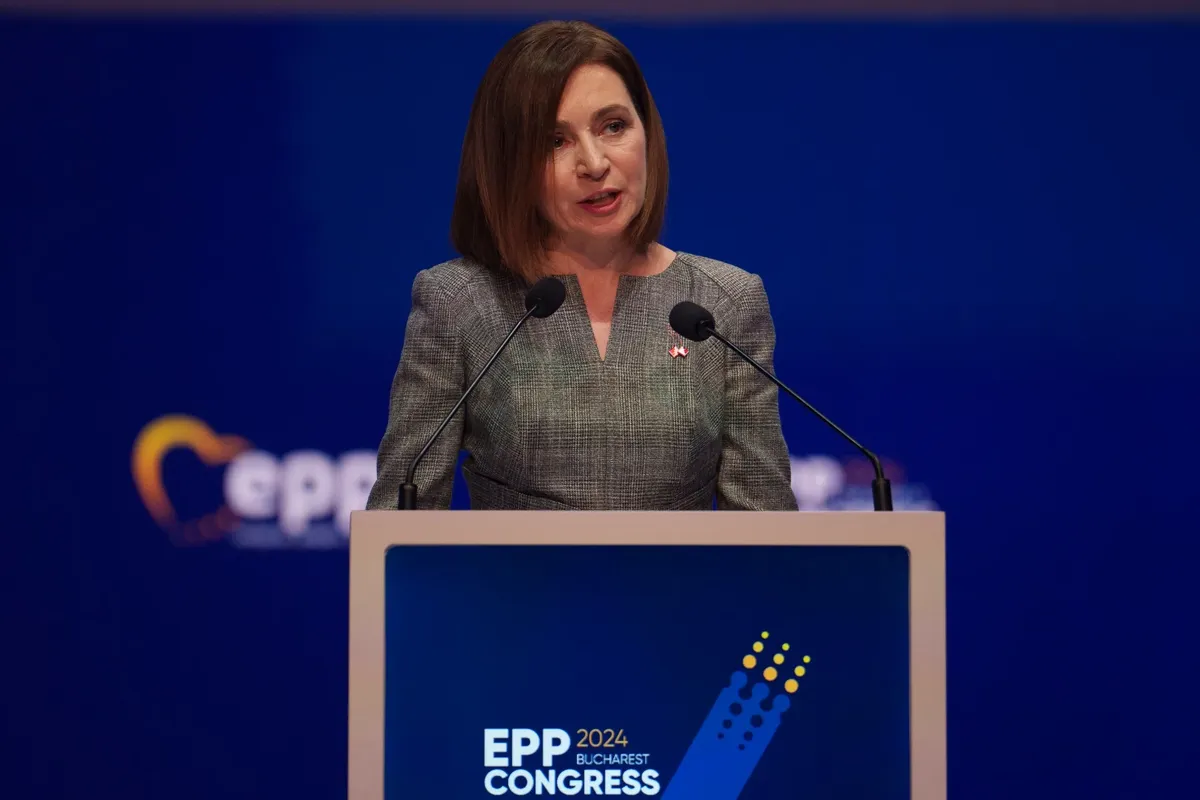
The current President of Moldova Maya Sandu has already stated that she would run for a second term. The leader of the Moldavian “Our Party” Renato is not hidden by his presidential ambitions. During the 2020 elections, he gained 17% of votes, and in the second round he called on his supporters to support Sandu, and this provided her victory over President Igor Dodon.
Dodon, still considered the chief pro-Russian politician of Moldova, publicly did not yet declare his intention to run again to the post of head of state. But events in Transnistria may well become a catalyst that will force Dodon to accelerate and decide on autumn plans. And the Kremlin, apparently, will have to force the decision of whom to support in the upcoming President of Moldova this fall.
Transnistria calls for help
Let me remind you, on February 28, Transnistrian deputies made an appeal to the State Duma and the Council of the Russian Federation, the UN Secretary General, the CIS, the European Parliament, the Security and Cooperation Organization in Europe. In Russia, this event was covered very largely. Here, for example, what the Russian Channel One told his spectators:
“The Transnistria authorities turned to Russia for help. The reason is increased pressure from Moldova. The document, which adopted the congress of deputies at all levels, is noted: the republic was faced with unprecedented challenges. First of all, an economic nature. The situation worsened with the election of the pro -Western President Maya Sandu in Moldova. And after Ukraine’s closure in 2022, the Transnistrian border section of the border in the republic can only enter the territory controlled by Chisinau. Since the beginning of this year, Moldova canceled customs benefits and began to levy barrage duties "
In the first paragraph of requests for the help of Transnistrian deputies, they recalled Russians registered in the republic, not recognized by Nobility, even Russia.
Verbatim:
“Contact the Federation Council and the State Duma of Russia with a request for the implementation of diplomatic measures to protect Transnistria in the context of increasing the pressure of Moldova. More than 220 thousand citizens of Russia lives in Transnistria. Russia is involved in the peacekeeping mission on the Dniester and is the guarantor and intermediary in the negotiation process. ”
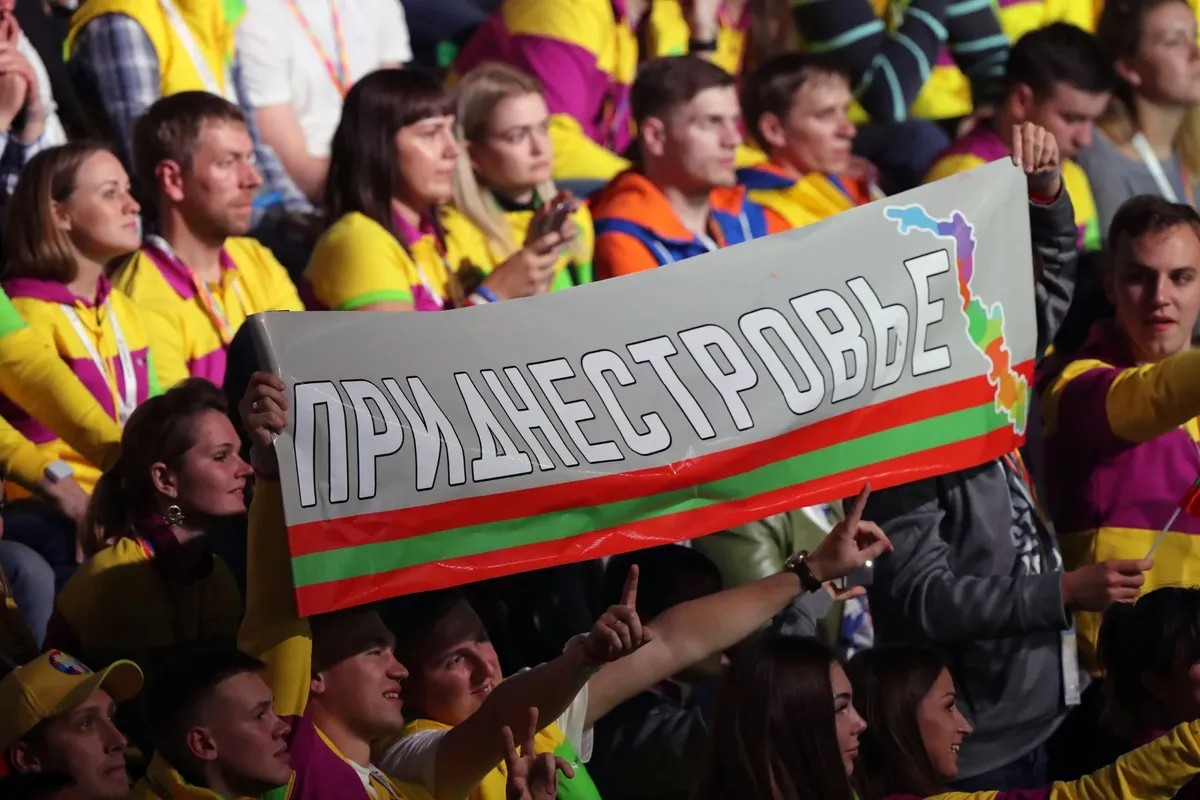
This is true: out of 360 thousand inhabitants of Transnistria, 220 thousand have passports of Russian citizens. But the truth is that about 100 thousand Transnistrians have passports of citizens of Ukraine. In addition, the authorities of the unrecognized republic cite the following figures:
“More than 210.8 thousand citizens of Ukraine entered Transnistria since February 2022. Almost 197 thousand registered in the PMR, more than 2 thousand used refugee centers. ”
It turns out that today the prevailing population of Transnistria is refugees from Ukraine?
How many passports of Romania live in Transnistria, it is not known for certain, this number is not advertised. But we are not talking about units and not even about thousands, but about tens of thousands.
In addition, almost every resident of Transnistria has a passport of a citizen of Moldova.
Many Transnistrians live and work in Europe or in Russia. According to various estimates, this is from 40 to 60% of the able -bodied population of the republic.
In 2020, in previous presidential elections, most voters in Transnistria are 26 thousand people, or 85.8% of the number of those who voted in 42 areas open to residents of the unrecognized republic on the right bank of the Dniester, preferred precisely the pro -Russian Dodon. However, much has changed since then. And above all, the life of the Transnistrians remaining in the republic: it has not improved at all recently.
Unexpected challenges
One of the main sentences of the congress of deputies was the criticism of the political course of Maya Sandu, who is making serious efforts to accelerate the European integration of Moldova. It was under the presidency of Sandu, on June 23, 2022, at the EU summit, a historical decision was made to grant Moldova the status of a candidate for the European Union (which, of course, is unlikely to suit Moscow).
However, the life of the Transnistrians made unbearable not to Sandu's decisions. Or, in any case, they are not alone.
On January 1, 2024, several provisions of the new Customs Code of Moldova entered into force, annulled customs benefits for Transnistrian enterprises. These benefits have operated about two decades, but since 2024, the Transnistrian business with export-import operations is obliged to pay duties to the Moldovan budget on a common basis.
Moldavian customs explained the innovation, spreading an official press release:
“The new Customs Code of the country is harmonized with the EU directives and regulations and, accordingly, provides the opportunity to conduct economic activity in a single space, observing the principles of loyal competition and non-discrimination, within the framework of trade and economic preferences provided by the EU and other international treaties, the side of which is the Republic of Moldova.”
The official Tiraspol called the introduction of new customs duties "an unprecedented challenge." The second such “unprecedented challenge” was the equalization of gas prices, heat and electricity for all consumers in Moldova, including in Transnistria.
Until January 2024, in the Right -Bank Moldova, consumers paid 2774 Leia for one gigacalorium of thermal energy (this is about 14 thousand Russian rubles). But to consumers in Transnistria, the same gigacalorium of thermal energy cost seven times cheaper.
The same with electricity: in the Right -Bank Moldova in 2023, the electricity tariff amounted to 2.39 Leia per kW/h for consumers of the South and the Center and 2.88 Leia per kW/h in the north (2.39 Leia is about 12 Russian rubles). And on the left bank of the Dniester, electricity cost almost five times cheaper - a little more than two rubles in terms of Russian currency. For comparison: residents of the villages of the Moscow Region in 2023 paid for each kW/h of electricity 4 rubles 71 kopecks. That is, twice as much as residents of Transnistria.
From January 1, 2024, Moldova finished with such a price scatter, the level of consumers on both banks of the Dniester.
Paradoxically, but
In making a decision on equalizing gas prices, heat, electricity to the Moldovan authorities, Gazprom, which was and remains the main supplier of gas to Moldova.
Gas for consumers of the entire republic, including for residents of Transnistria, is buys JSC Moldovagaz, a subsidiary of Gazprom, which owns 50% of the shares of the enterprise. Another 13.44% is under the control of the Cabinet of Ministers of Transnistria and transferred to the trust management of Gazprom. Controlling 63.44% of the shares of Moldovagaz JSC, Gazprom de facto sold gas to his “daughter”, but made claims on debts to the authorities of Moldova.
Until 2022, almost all of Russian gas, entering Moldova, walked along gas pipelines laid in the Nikolaev, Zaporizhzhya and Odessa regions of Ukraine, entering the republic through the entrance points located in the villages of Grebeniki and Alekseevka. At the same time, the main volumes of gas were pumped through the GIS “Grebeniki” and came from the Odessa region of Ukraine to Transnistria, and from there the gas went to the right -bank Moldova.
According to the official Gazprom reports, almost two -thirds of the total gas supply supplied by Gazprom to Moldova remained in Transnistria. At the same time, Transnistria actually did not pay for fuel at all. Darm gas allowed the Transnistrian Moldavian Republic to produce very cheap electricity of the Moldavian GRES (by the way, from the moment of privatization in 2005, CJSC Moldavian State Duma is part of the Russian group of Inter RAO).
Thanks to indecent cheap electricity, Transnistria, for example, became the largest cryptocurrency mining center in Europe (details in Novaya October 28, 2021.
In addition, it exported electricity to Europe.
But after the start of the Russian special operation in Ukraine, the situation has changed. Due to hostilities in the Odessa region, Gazprom had to sharply reduce the volume of gas pumped through the GIS GIS of Grebeniki. In Moldova, Russian gas began to flow through Alekseevka, located not in Transnistria, but in the north of Moldova.
In the fall of 2022, Gazprom PJSC began reducing the volume of gas supplied to Moldova, demanding to pay for old debts (primarily on the debts of Transnistria). Moldova refused to pay. Gazprom reduced gas supply. Immediately followed a reduction in gas supplies in Transnistria. As a result, the largest Transnistrian plants - the Moldavian Metallurgical Plant (MMZ) and the Rybnitsky Cement Plant (RCC), arose. The Moldavian State Enterprise was forced to go to work with one power unit and stop electricity exports.
An interesting point: the decision to reduce gas supplies in Transnistria was not made by the President of Moldova, not the government of the country, not Moldovan deputies. This was the sole decision of the head of Moldovagaz JSC Vadim Cheban. And Gazprom was appointed to this position (in fact controlled, I recall, 63.44% of the shares of the enterprise).
Since the fall of 2022, a meager gas ration for Transnistria has not changed. And whatever one may say, the “Gazprom” was involved in the emergence of “unprecedented challenges” for the economy of the unrecognized republic.
The factor is standing
Meanwhile, last week in Moldova, another event occurred, which can greatly affect the electoral layouts. The court fully acquitted the former prosecutor of the country Alexander Stoyanol, who was removed from his post in the fall of 2021 and sent under house arrest. Five criminal cases united in one proceeding were immediately instituted against him. The key point put forward against Staynogli was an accusation of crimes covering in the framework of a large -scale case, known in Russia, Moldova, and around the world as a “landromat”.
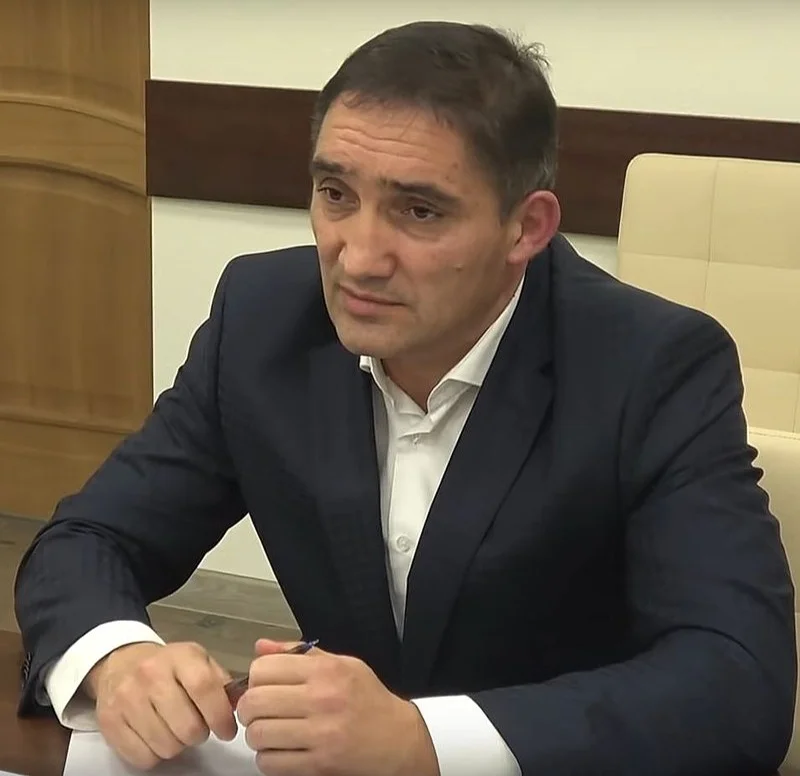
This is a criminal case on the fact of pumping from Russia $ 22 billion to European banks through Moldova banks was excited in Moldova back in 2015.
In 2019, immediately after the appointment by the Prosecutor General of Moldova, Alexander Stayanoglo requested information during the investigation of the “landromatic” criminal case, in which about 500 volumes had already accumulated by that time. According to Stoyanogla in numerous public speeches, in this case there was no evidence of criminal origin of $ 2 billion, which received Moldovan banks from Russia. The Prosecutor General’s Office of Moldova sent a corresponding request to Moscow. But, as Stayanoglo claimed, she received an answer that "Russia cannot provide information about the illegality of obtaining these funds."
Having not received information about the criminal origin of $ 22 billion from Russia, Staynogol decided to terminate the criminal prosecution of about 40 Moldovan citizens, including high -ranking, who were defendants in the case. The basis for this procedural action was stained by the fact that
The legislation of Moldova, like all European countries, provides for punishment exclusively for wiring criminal money. And if the money of non -criminal origin, they can be distilled at least billions.
But the “landromatic” criminal case in Moldova was not closed, the investigation continued. Nevertheless, in the autumn of 2021, the state was accused of excess of official powers.
Public revelations are stood about the fact that in the “landromatic” criminal case both in Moldova and in Russia the origin of $ 24 was not established, and did not go to him for nothing. He set against himself the pro -Russian elite of Moldova, who was alarmed that the issue of a source of $ 22 billion would begin to be asked not only in Moldova, but also in Russia (details in the “New” of November 21, 2021).
The removal from office, the arrest and the criminal case against Alexander Stoyanogla, fans of the President of the country Maya Sandy presented as a decisive and large -scale struggle with corruption in the country. But the criminal case against the ex-prosecutor of the country ended with zilch. He was justified not only by the Moldavian court. Even the ECHR recognized the criminal prosecution with a stake illegal.
The excuse for the standing, undoubtedly, caused serious damage to the reputation of Sandu and her anti -corruption initiatives. Because three years after the arrest and removal from the post of Prosecutor General through the prism of justifying court decisions, the events of the fall of 2021 look like a Sandu’s conspiracy with Russian corrupt officials who are not interested in this investigation of the Landromat, clarifying the origin of $ 22 billion, as well as establishing the final beneficiaries of this operation.
Gagauzia
According to the coincidence, the Gagauz by nationality and enjoys great authority in Gagauzia, an autonomous territorial education in Moldova, where about 120 thousand people live. And this Moldavian region in the near future may well become a new focus of tension.
Today, Gagauzia is led by 37-year-old Evgenia Gutsul. A lawyer by education and the mother of two children, she was born, grew up and lived in the village of Etulia, the Vulcanesta district of Gagauzia. A year ago, two weeks before the start of the election of the head of the region, Gutsul decided to participate in these elections. Suddenly, for many, the second round went on the second round, where it was supported, for example, by the Russian pop stars Philip Kirkorov, Nikolai Baskov and Stas Mikhailov, who starred in a video clip, in which they sang the Gagauzia anthem in Russian and called for voting for Evgeny Gutsul in the second round of the elections.
In the second round, Gutsul was ahead of the candidate from the Party of Socialists, headed by the ex-president of Moldova Igor Dodon.
Immediately after the victory in the election, the newly elected head of Gagauzia said that she wanted to be closer to Russia. And last week, Evgeny Gutsul was accepted in Moscow by the chairman of the Russian Federation of Russia Valentina Matvienko. During the meeting
The head of Gagauzia complained that the rights of regions are oppressed in Moldova. To which Matvienko replied that in Russia with great grief, they were observing the events in Moldova, and called the course of Chisinau Rusofobsky.
From Moscow, Evgeny Gutsul flew to Sochi, where she took part in the work of the so -called World Youth Festival and even held as part of the Moldova delegation at the march of the festival participants.
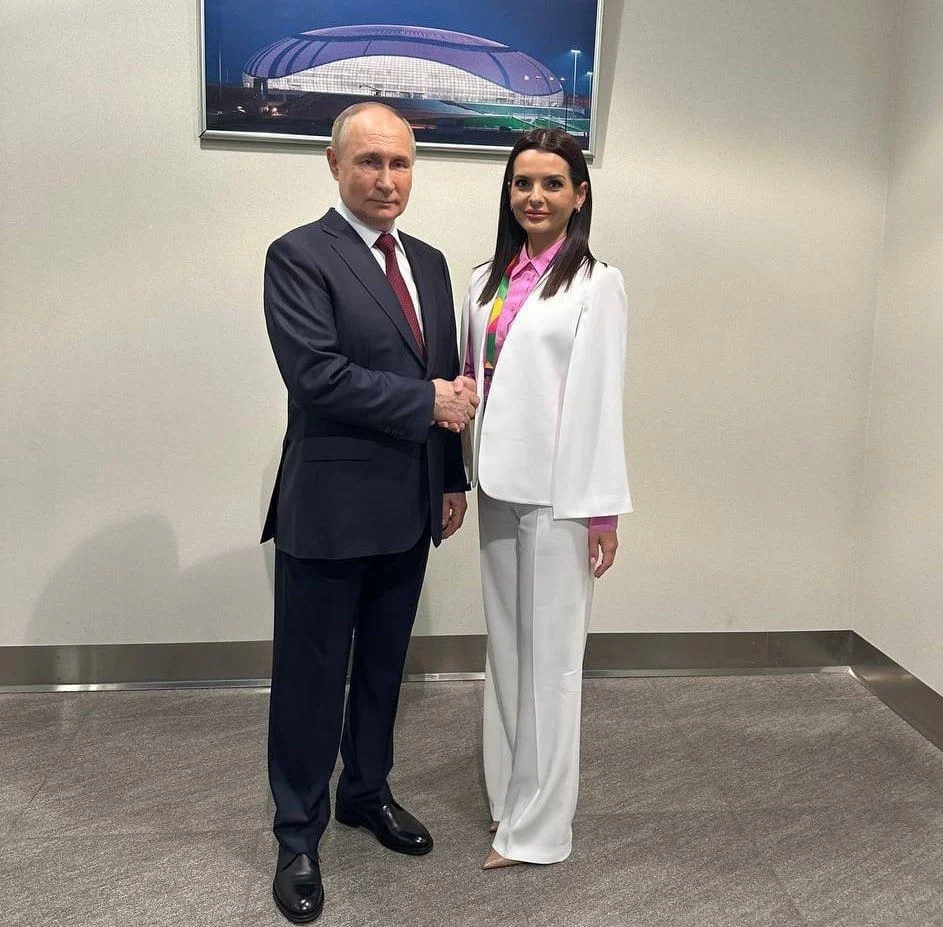
There, in Sochi, the head of Gagauzia met with Russian President Vladimir Putin and discussed "complex regional and geopolitical issues at the epicenter of which our Gagauzia is located."
This is a quote from the telegram channel Evgenia Gutsul. There, she told her readers that "... she informed Vladimir Vladimirovich about the lawless actions of the authorities in Moldova, who takes revenge on us for our civil position and fidelity to national interests." At the same time, “the Russian leader promised to support Gagauzia and the Gagauz people in defending our legal rights, powers and positions in the international arena,” Gutsul emphasized. With what initiatives Evgenia Gutsul will return from Russia to Moldova, apparently, we learn in the very near future.
We continue to observe the development of events in Moldova.