
Translated material
Hepatitis through a towel and HIV in a sauna?
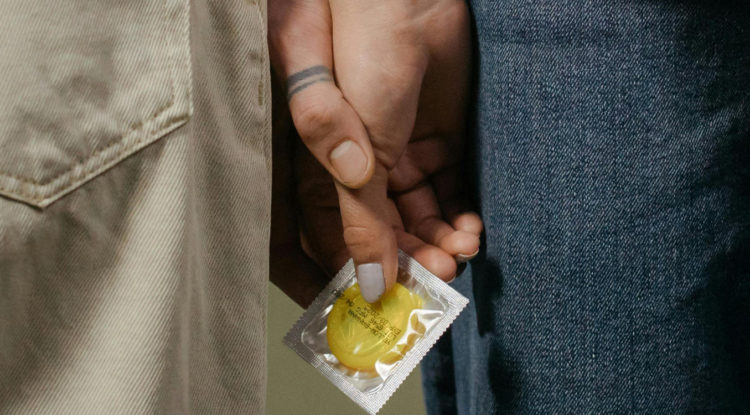
How to protect yourself during sex and not become infected with an infection? Hyde "Cold"
Before sex with a new partner, it is important to take care of health and safety. In addition to the risks of an unplanned pregnancy, during sex you can become infected with various infections - some of them are very dangerous and cause incurable diseases. For Russians, this is especially true due to the HIV epidemic: only in 2022 71 thousand new cases of infection were recorded. In addition, due to the fact that the topic of sex is taboo, many are embarrassed to see a doctor, which leads to serious problems and risks for himself and a partner. The cold spoke with the obstetrician-gynecologist, candidate of medical sciences Tatyana Rumyantseva about how to protect himself and a partner from unwanted consequences.
In order not to miss the main materials of the "cold", subscribe to our Instagram and telegram .
STPP - sexually transmitted infections. According to WHO, more than a million cases of infection of STIs are fixed daily in the world. You can get infected through sperm, vaginal discharge, the use of the same condom or sex toys when changing the type of sexual contact (for example, from anal to vaginal). Even the penetration of the fingers is unsafe when changing the type of contact due to discharge in which there may be an infection, or if there are open wounds on the fingers of an infected partner.
Viruses can also be transmitted through blood, with kisses and contacts of the skin with an infected area of another person. But it is almost impossible to become infected with Suppules in saunas, baths or public toilets, except that you have sex there, since the PIT pathogens most often quickly die in the external environment.
In total, there are more than 30 infections, but among the most common in Russia and Europe they call nine. Let's talk about them in more detail.
HIV
The human immunodeficiency virus is an incurable virus that affects the immune system and is transmitted mainly through sperm or vaginal discharge with unprotected sex. You can get infected through the blood during transfusion, using an infected syringe or unprocessed tools. HIV cannot live outside the human body: it dies when the fluids containing it dry, and almost instantly dies at a temperature above 56ºС. It is also almost impossible to become infected with HIV through sweat, saliva and urine, since they do not contain enough virus for infection.
If you change partners and do not use a condom, you are at risk. According to Rospotrebnadzor, in 2022, among all HIV infections, unprotected sex between heterosexual partners was the cause of infection in 72% of cases. The share of infection with intravenous drug use is 22.5%, and during sex between men - only 4%. At risk, there are adolescents who know little about protection, are embarrassed to seek help due to the tabularity of the topic or do not have money for doctors.
In Russia, the HIV epidemic still continues. According to the report of the European Center for Prevention and Control of Diseases, more than half of the new cases of HIV in Europe for 2022 falls on Russia. Although the Ministry of Health claims that over four years, HIV incidence in the country has decreased by almost 35%, Rospotrebnadzor, who also collects statistics, explains the decrease in the number of infection cases by the fact that risk groups began to test less.
- Symptoms : Within two to six weeks after infection, temperature, sore throat and muscles and rashes may appear. As soon as the immune system is seriously damaged, new symptoms may appear: weight loss, chronic diarrhea, night sweating, skin problems and recurrent infections-even after the treatment or temporary disappearance of symptoms, infections may return due to the inability of the body to effectively fight them.
- Complications : destruction of the immune system, AIDS.
Rent a test no earlier than two to three months after unprotected sex, and test every three months if you are at risk.
HPV
The human papilloma virus is another incurable virus. There are more than 200 HPV strains with different symptoms. About 40 of them affect the mucous membranes, especially in the genitals, the rest affect the skin.
All types are divided into oncogenic (low and high risk), that is, those that cause cancer, and neo -infogery. The most aggressive and common-oncogenic 16th and 18th types-they cause most types of cancer associated with HPV.
Approximately 80% of people leading sexual life are infected with HPV. This virus can be transmitted even with a condom - through the friction of previously infected areas of the body around the genitals.
- Symptoms : some have warts in a few weeks or months, but there may not be symptoms.
- Complications: High -oncogenic strains can cause cervical cancer, vagina, anal canal, oral cavity and pharynx. HPV infection causes more than 300 thousand deaths from cervical cancer every year.
The doctor should go only after the onset of symptoms. However, after reaching 25 years in Russia, it is recommended to take a papa test annually (a cytological study of a smear from the cervix). It helps to detect changes in the cervix in the early stages and begin treatment that can prevent cancer. If there is no indication, then it is not worth taking an analysis of oncocytology more often. There are also vaccines from HPV - we will talk about them below.

Herpes
Herpes is an incurable sexual infection and through the skin.
There are a herpes virus of the first type, which affects the lips and skin around the mouth, and the second type - it manifests itself on the genitals or around them. After infection, a person may have painful ulcers or bubbles.
The danger is that even after the sores disappear, the virus will still remain in the body and will be transmitted with kisses and contacts with the skin.
- Symptoms: painful blisters may appear on the lips and skin around the mouth or on the genitals and around them, pain during urination, itching around the genitals, atypical discharge from the penis or vagina, as well as symptoms similar to influenza: temperature and headache. But they may not be.
- Complications: Herpes of the second type increases the risk of infection and transmission of HIV.
The doctor should contact the doctor after the appearance of blisters on the lips, genitals and around them. With genital herpes, it is also worth passing the HIV test.
Hepatitis
This is a group of inflammatory diseases of the liver, pathogens of which are hepatitis A, B, C, D, E. Each of these viruses has its own characteristics, such as transmitting and the severity of the disease they caused.
Hepatitis B and C are considered the most dangerous - they often become chronic and can lead to cirrhosis and liver cancer. According to Rospotrebnadzor , about 27 thousand people die in Russia annually in Russia. In 2022, the department revealed 43.3 thousand cases of chronic hepatitis, most of them were hepatitis C.
Hepatitis C is most often transmitted during blood transfusion, re -use of syringes, and also in sexual contact. According to the latest data, in Russia in 2017, 5696 people died from hepatitis C.
More often than the rest, hepatitis B is transmitted in 2017 in Russia, 2164 people died from it. It is also dangerous in that it is very stable outside the body, so do not use other people's towels with blood spots, razors and toothbrushes - domestic objects that are in contact with the skin and mucosa.
- Symptoms : fatigue, decreased performance, muscle pain, headache, jaundice. But they may not be before damage to the liver.
- Complications: cirrhosis, liver cancer and death at the chronic stage .
To take tests for hepatitis C should at least two weeks after unprotected sex and no earlier than a month later - for hepatitis V.
Syphilis, chlamydia, gonorrhea, trichomoniasis and mycoplasmosis
These diseases are not so dangerous compared to those described above, since
are treated. The pathogens of these diseases are mainly transmitted with vaginal, anal and oral sex. At the same time, without treatment, these infections can spread to the entire body, cause a rash and joint pain. Also, gonorrhea, according to WHO, can become incurable over time. The reason is that the bacteria of Neisseria gonorrhoeae - a resistance to many antibiotics - with which the disease is treated, has developed .
Most of the diseases proceed asymptomatic or signs of infection appear after weeks, months, or even years. But there are the most common symptoms:
- atypical vaginal discharge;
- burning sensation during urination;
- genital ulcers;
- pain in the abdomen.
Contact the doctor after the onset of symptoms or no earlier than two months after unprotected sex.
Is it possible to vaccinate from STIs?
This is a basic and effective method of combating infection, but it is available only in a few cases: to combat HPV and hepatitis A and V.
It is recommended to get a vaccination against HPV before the start of sexual activity to reduce the risks of cervical cancer. If you already have papillomas, you can still be vaccinated so that in the future you will not become infected with other types of virus. It is advisable for adults to take an analysis of HPV before vaccination to understand whether the vaccine will be effective. For example, if you are sick with the 16th and 18th strains, then it will be pointless to vaccinate.
In Russia, two vaccines against HPV - “Gardasil” and “Cervvarix” are registered . The latter protects from the 16th and 18th and types, which cause about 70% of cases of cervical cancer in the world. “Gardasil” protects from four types of virus: the 16th and 18th, as well as from the 6th and 11th, from which warts appear on the genitals and in the anus .
Hepatitis B vaccine is included in the Russian National Vaccination Calendar, so all citizens under 55 can get it for free in the clinic. However, before vaccination, it is still recommended to pre -pass a blood test for hepatitis B, since the disease can occur asymptomatic. Before vaccination, you also need to check the level of antibodies if you are vaccinated in childhood. If there are enough of them, then repeated vaccination is not needed. It is recommended to check this every few years, since the level of antibodies can decrease.
How else can you protect yourself?
Wash your hands thoroughly and always use a condom and latex napkins during sex with a partner or when using sex toys. They also need to be changed every time after a change in the type of sexual contact (for example, from vaginal to anal, and vice versa).
Do not use syringes and needles more than once.
Complete a preventive examination by a doctor, even if you have no symptoms. Women need to hand over a smear from the vagina to be checked for chlamydia, gonorrhea, trichomoniasis and Mycoplasma Genitalium. Men can pass a smear or urine. If there was oral or anal sex, it is also recommended to pass a smear from a oropharynx or rectum. Both partners can donate blood for HIV, syphilis, hepatitis B and S.
Show your partner your certificate after examining from a doctor and testing. Feel free to ask him the same.
Antiseptic agents, such as chlorhexidine and miramistin, are not included in any protocol of treatment or prevention of IPP. Their effectiveness in the fight against sexually transmitted infections has not been proven. And having done douching after unprotected sex, you expose yourself to the risk of bacterial vaginosis - a violation of the normal microflora of the vagina.