
Translated material
Smile at him, Lord
The great theater director Rimas Tuminas died. "New Europe" tells how it will be remembered
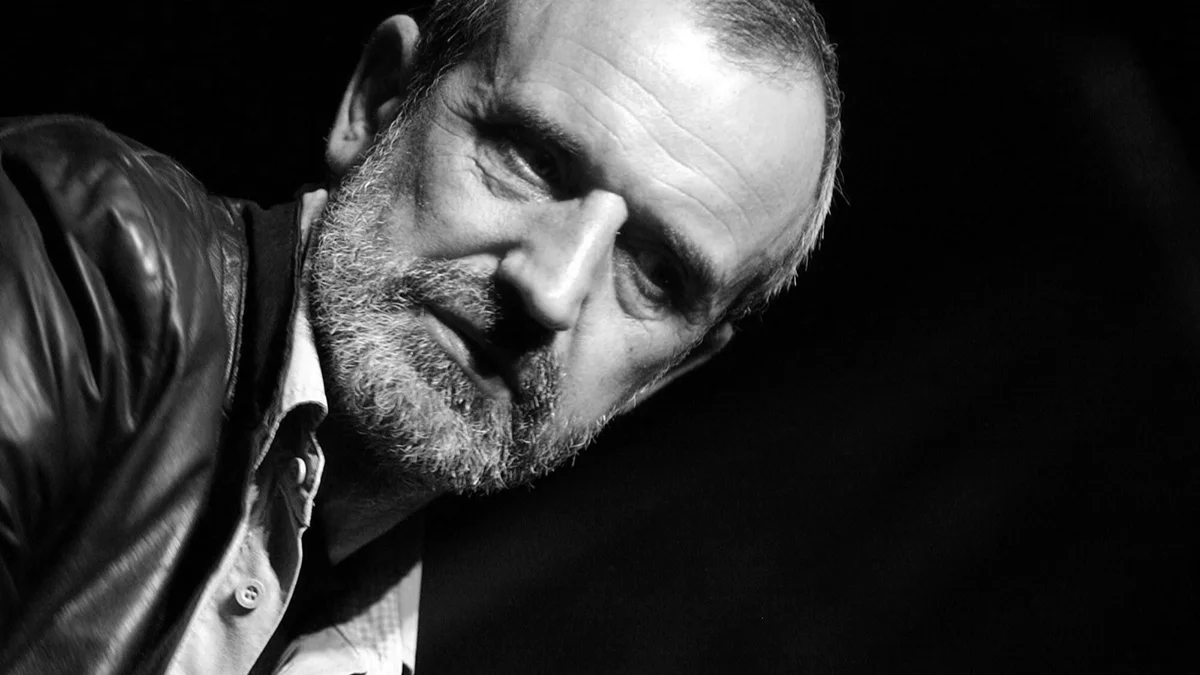
Theater director Rimas Tuminas during the 9th International Theater Festival in Bogota, Colombia, March 31, 2004. Photo: Miguel Menendez / EPA.
On March 6, in Italy, at the 73rd year of his life, the great theater director-Lithuanian Rimas Tuminas died. For the past two years, the former artistic director of the Moscow Theater named after Vakhtangov and Vilnius Maly Theater staged performances in Italy and Israel.
In January, Paris Standing applauded him with the Israeli Anna Karenina. In March, Tuminas began to work in Italy on the “Cherry Garden”, to which he returned throughout his career. It will not be a stretch that he became a director thanks to Chekhov. About how we will remember Rimas Tuminas - Lera Peshkova.
"Pierre, are you Russian?" - the secular lions and lionesses of Pierre Bezukhov in his “war and peace” asked suspiciously. The phrase from the performance, in which the patriotic carrier of the heroes was almost caricature, reminded how many screams were heard to the citizen of Lithuania, who had taken over a huge uninterrupted theater. In 2007, Tuminas became the first citizen of the European Union, holding the position of artistic director of the Russian theater-the Vakhtangov Theater, whose leadership Mikhail Ulyanov actually bequeathed to him. Those who are older remembers perfectly in what a sworn state the theater was located and how not immediately, step by step, Tuminas returned to the Vakhtangs the former success - not only in Russia, but also in other countries where they began to invite them without interruption.
But there was everything. In the spring of 2009, Minister of Culture Alexander Avdeev came to the run of Tuminasovsky "Uncle Vanya". It was his answer to a group of artists who wrote to the Ministry of Culture, which, they say, distort the new artistic director classics, violates the Stanislavsky system and generally Russophobe. After the run, the hall, where, in addition to Avdeev, there were ten more people (including your correspondent), could not immediately come to his senses - the Chekhov play grew to the heights of the tragedy. Avdeev woke up first, got up, applauded and immediately went to Tuminas. The issue was resolved 13 years in advance.
Judging by the "war and the world", its last production in Russia,
Tuminas, like his Pierre, who became a spokesman for directorial thoughts in the play, learned to forgive and revive, became more tolerant of people.
He never flattered us, but said honestly. And, of course, all this chauvinism in the “War and Peace” appeared for a reason. What did Tuminas try to protect us from, releasing a deeply pacifist performance in the fall of 2021? Large directors often find themselves predictors. Actually, this is a sign of a great director: to hear the time, distinguishing in it, the hum of close disasters.
Rimas Tuminas was born in 1952 in the Lithuanian town of Kelm. The son of the Russian noblewoman with the Old Believers and Lithuania, in childhood, often moved from place to place-his father-teacher had an undeveloped character. Tuminas recalled this when he put “Woe from Wit”, called Chatsky a “lost” person trying to find a house, and immediately gave an example from his own youth. Having worked as a welder and a cinema mechanic, he entered the television department at the Vilnius Conservatory, after which he was called to the shooting as a director, and the youth theater was waiting for him as an actor. But at that moment, according to his stories, he was already so passionate about Chekhov that he went to Moscow and entered the directing of GITIS.
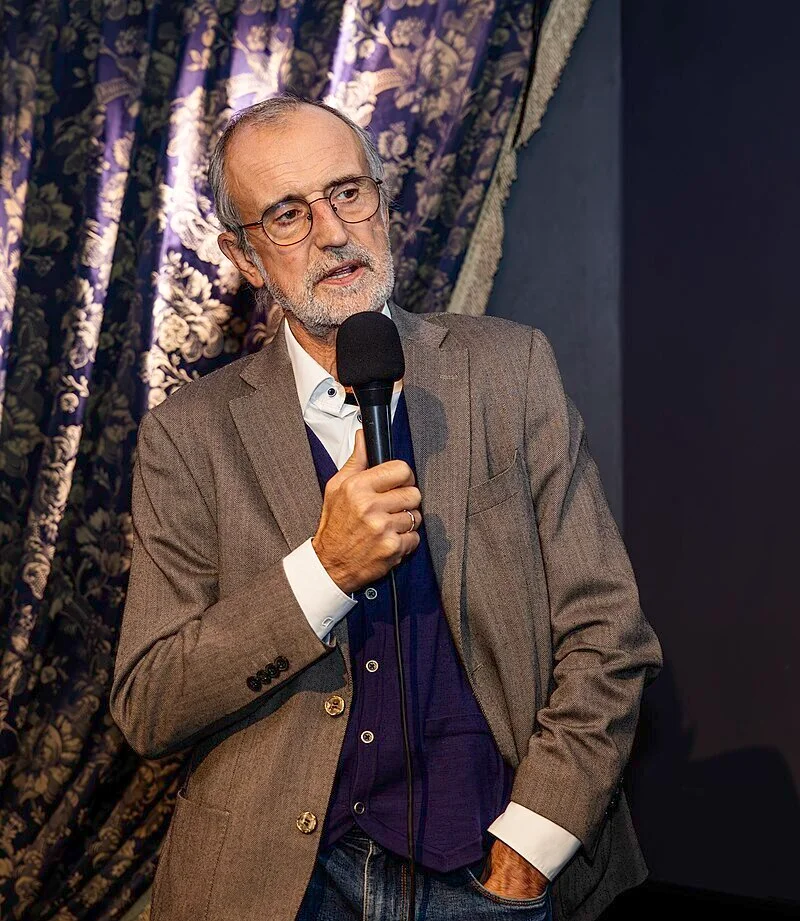
Their paths with another Great Lithuanian, director Emuntas Nyakroshus, went in parallel. Both finished GITIS, but with different masters. In the future, they were often and sometimes rather tactlessly compared, although only the famous Lithuanian metaphorism was common when one gesture or mise -en -scene can replace a whole monologue. To understand what it is, it’s enough to see what it looks now, on these bitter days, the Vilnius Maly Theater: the old building in the city center is almost completely hung with a black canvas. And the words are not needed here.
If you go deeper in particular, you can dare to postulate that the nyakroshus is more a philosopher, and Tuminas is a poet. He loved poetry, felt its rhythm, because, perhaps, he became interested in Chekhov, in whose plays the rhythm of replicas is very important.
Returning after GITIS to Lithuania, Tuminas worked at the National Theater, in 1990 he opened his small theater in the building of one of the first cinemas (the same one that lost after Russia's invasion of Ukraine).
In the latest theatrical times, when Lithuania has already become an independent state, Tuminas put in the small “Smile to us, Lord” - a performance by two novels by Grigory Kanovich, who described how three old Jews go to Vilna to find out the fate of the son of one of them - a revolutionary who shot at the governor. Tuminas staged a performance as an Ommage of the life of Jewish towns, which forever ended in Lithuania after the Holocaust. The old people rode in Vilna, remembered the past, wished the children the best share. Their belongings, buffets, chests and suitcases poured over each other, acquiring in the dim light the outlines of a kind of biblical construction. The acting ensemble was so coordinated that on tour in Moscow the performance was understood almost without translation. In post -perestroika Russia, the theater was not in the best possible way, and Tuminas already showed us the sky in diamonds, and in the most literal sense: in the final, stars lit up over the elderly, the hall yelled with delight.
Galina Volchek called the first Tuminas for the production: the play "Play ... Schiller!" According to Maria Stuart, he was the first “vaccination” and the first, as we would say today, the collaboration of Lithuanian directing and the Russian acting school. Marina Neyolova played one of her best roles - Queen Elizabeth, who decided to execute Maria and condemned herself to terrible torment. Something clearly broke from its decision in the universe-and the fragments fell on the characters on their heads. Standing on tiptoe, the queen diligently “worked out” the lesson: again and again she wore a huge glass from the wings in the wings, filled with wheat grains, and could not convey. During the rehearsals, there was an incident: they wanted to take Tuminas with his prickly gaze and a humpbow -bona profile as a “face of Caucasian nationality”. Putting the performances in his Maly Theater, then in Moscow - after the “Contemporary”, Ulyanov called him to make the “Examiner” in Vakhtangovsky, -
Tuminas always remained so prickly and not like anyone. In Russian performances, he showed us a bitter and terrible approaching Russian life - and, of course, many did not like it.
In this, by the way, he also inherited Chekhov, who looked through and in the absurd humor of his “grief from the mind”, and even in the “war and the world”, where, of course, there were no happy families.
“A person flows, and there is all the possibilities in him: he was stupid, became smart, was angry, became kind ...” - in fact, this is the main idea of the performance, embedded in Pierre's mouth.
Learning to change, revive after disasters, becoming more human - this, perhaps, is worth considering it a will to the Russian theater.
He lost his small theater immediately after the start of the war and said that, of course, "Lithuania could not do otherwise." Having written a statement about the need for treatment, Tuminas actually stopped leading Vakhtangovsky. But the final departure occurred after the pranker draw, which the least I want to remember now, on the third day after the death of the director. The leadership of the Russian Federation, however, believed and deprived of Tuminas of the government award in the draw, which was issued six months before - for a great contribution to Russian culture.
An eternal traveler, a “lost man” with a tough character, he turned out to be a knight when it was about the actors: how many stars he gave crown roles, not to count how many debutants made stars - too. He always served the actors by faith and truth. Most of all - in Vakhtangovsky. (Here, by the way, it is worth mentioning that another Litovets, Mindaugas Karbauskis, following Tuminas, called up “to the kingdom” to the Mayakovsky Theater, served as devotedly, also dissolved in the actors-and was also ruthlessly removed due to the protest against the invasion.) The last two years-in the theaters of Italy and Israel.
For almost ten years, Tuminas did not only fight oncology, but rather played with the disease. In 2021, he diagnosed the fourth stage of cancer, the doctors gave him several months. But in Vakhtangovsky a 100th anniversary was planned, the government allocated money-and Tuminas said that he would die only after the celebrations were over. He managed to celebrate, lose two theaters, release several performances in Italy and Israel. There is a picture in Gesher: an actor rehearsing the role of Sirano, hugs Tuminas, kneeling in front of him. There could be several dozen such pictures around the world - give only the will to the actors.
In February, after the triumphal French tour with Gesher, Tuminas arrived in the Italian city of Galatin - to rehearse the Cherry Orchard with Chinese artists. And a week ago he wrote to your correspondent: “... Now I’m lying in the oncological clinic somewhere in southern Italy (I brought me to the“ Cherry Garden ”), I will be in Vilnius at the end of March.” Having received this message, for some reason I remembered how, in the last year of my life, Chekhov wrote “The Cherry Orchard”-lying down, going from coughing attacks.
Tuminas often said that death is the main event in life. He was preparing for her for a long time and calmly, but, I wanted to believe, he himself did not notice how he left. Smile at him, Lord.
At the request of Rimas Tuminas, his ashes will be scattered in Lithuania.