
Translated material
“Hell is always with us. If you do not protect yourself from it, there will soon be nothing to protect ”
An interview with Lena and Evgenia Koganov - the founders of the Babel bookstore. He became an important part of the life of many emigrants from Russia
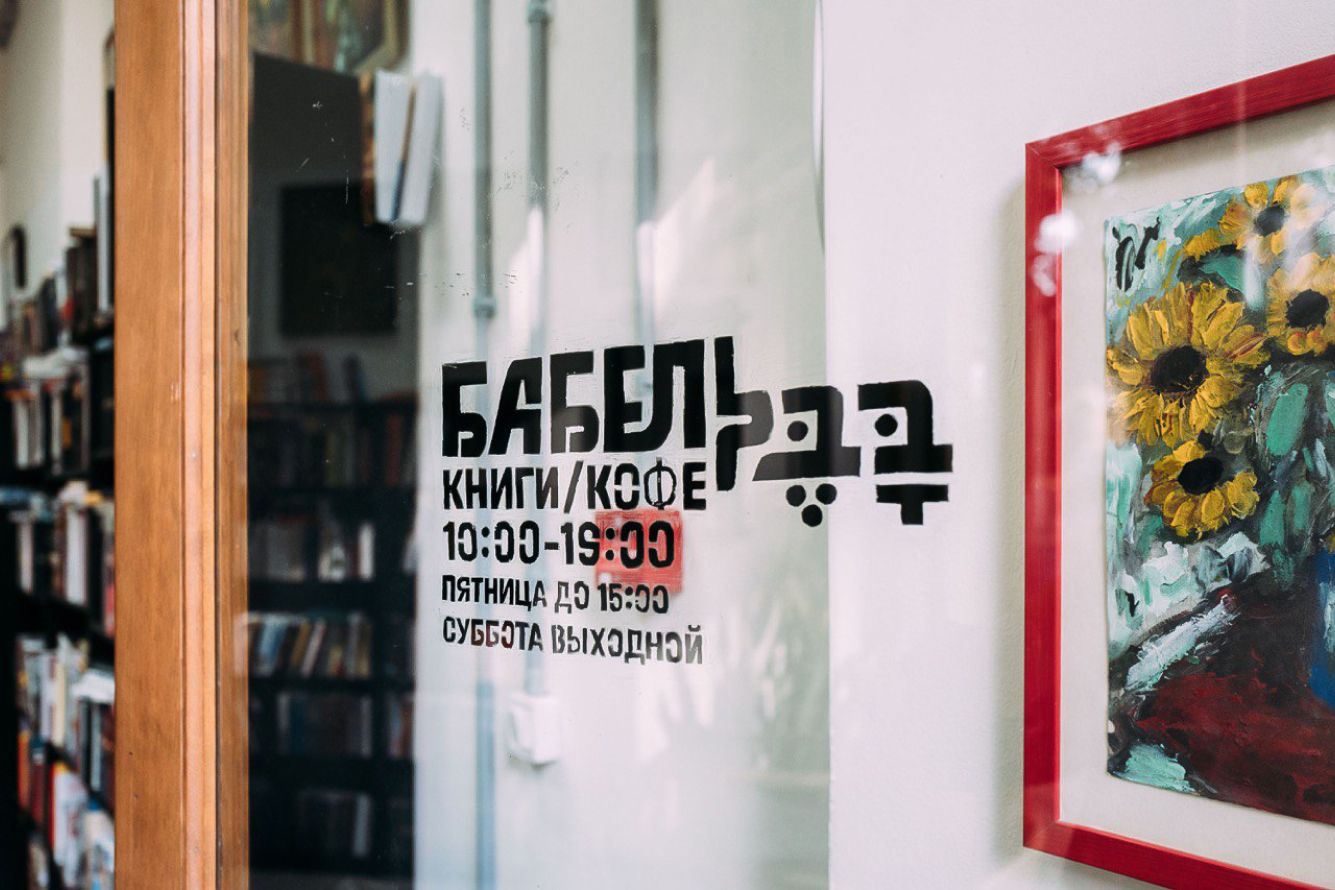
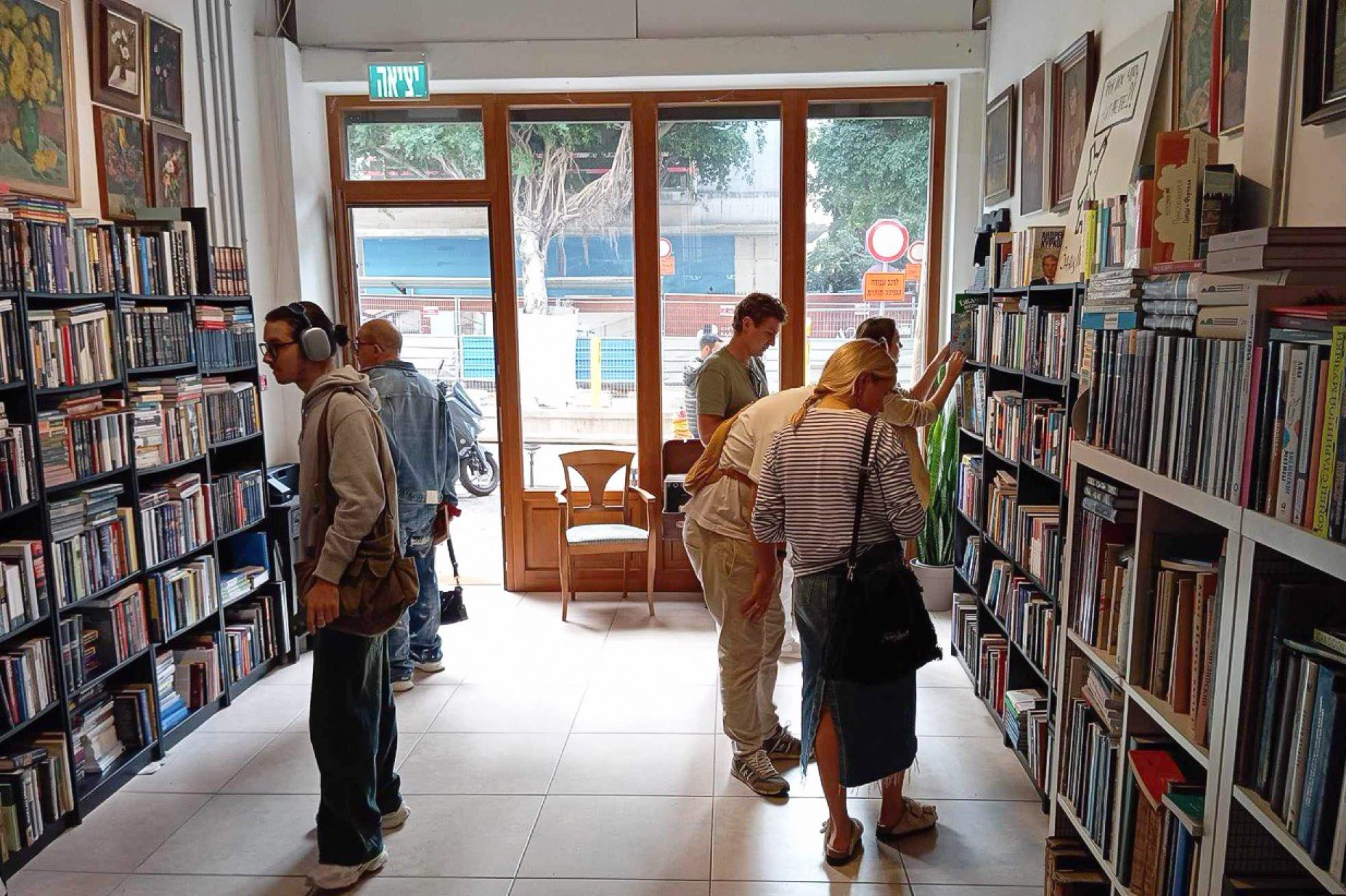
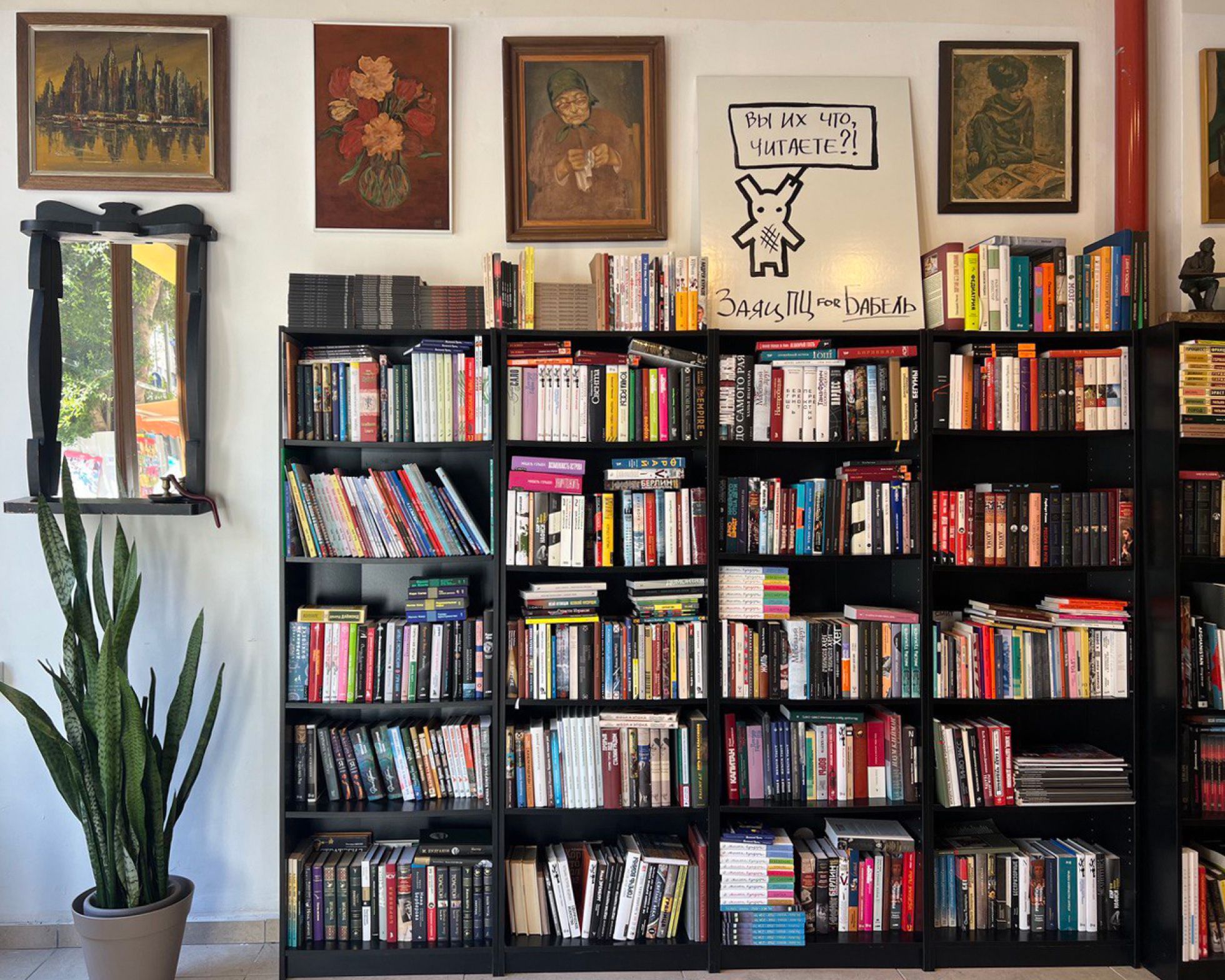
In 2015, Evgeny and Lena Kogan moved from Russia, where they worked as editors , to Israel. In Tel Aviv, they opened Babel-one of the first independent bookstores abroad, where you could buy books in Russian. Babel quickly became an important cultural center, now there are lectures and exhibitions, where hundreds of Tel Aviv residents come. In 2019, another store opened in Jerusalem, then in Haifa and Berlin. After February 24, 2022, each of the "Babels" became an important center of attraction for emigrants from Russia. Kogans themselves began to publish literature, including anti -war. Lisa Medusa Lisa Birger Evgeny and Elena talked about the life of their network during wars - and what books, in their opinion, are now especially needed by readers.
- In 2015, you left Moscow to Israel, where you opened a bookstore. How did this happen?
Lena Kogan: Before leaving, Zhenya worked as an editor at Corpus, traded books at all kinds of fairs, and he really liked it. So even then we began to dream of our store. And then in some Swiss newspaper I read the story of a girl who opened the Russian book in Zurich-and her things went pretty well. These are now shops of Russian books abroad there are already quite a lot of, and then it seemed impossible to me. In general, when we moved to Israel, we already knew for sure that we would open the store. True, we did not tell anyone about this, it was our little secret.
- In that store in Zurich, did you visit in the end?
Lena: Only a little corresponded with them at the beginning. And then we learned that Zakhar Prilepin spoke in this store, so we were no longer on the way.
- Was it difficult to order the first books from Russia?
Evgeny Kogan: In Moscow, we made friends with the guys who are engaged in wholesale sales of books abroad. But the mistakes of the newcomer, of course, were: we ordered fewer books than we need, and some extra books-relied on our Moscow experience, and a little different is sold in Israel. In general, we put all these books, wrote in the evening in social networks that we were opening tomorrow, and the next day a frantic number of people came, and about a third of these books were bought right there. As a result, we sat for another and a half without books, while the next party rode to us.
- Are the first buyers friends and acquaintances?
Evgeny: Then we only arrived in Israel, almost no one knew. In our city there were ten friends and relatives by the time the store was opened. And a dozen acquaintances. And they came at least two hundred.
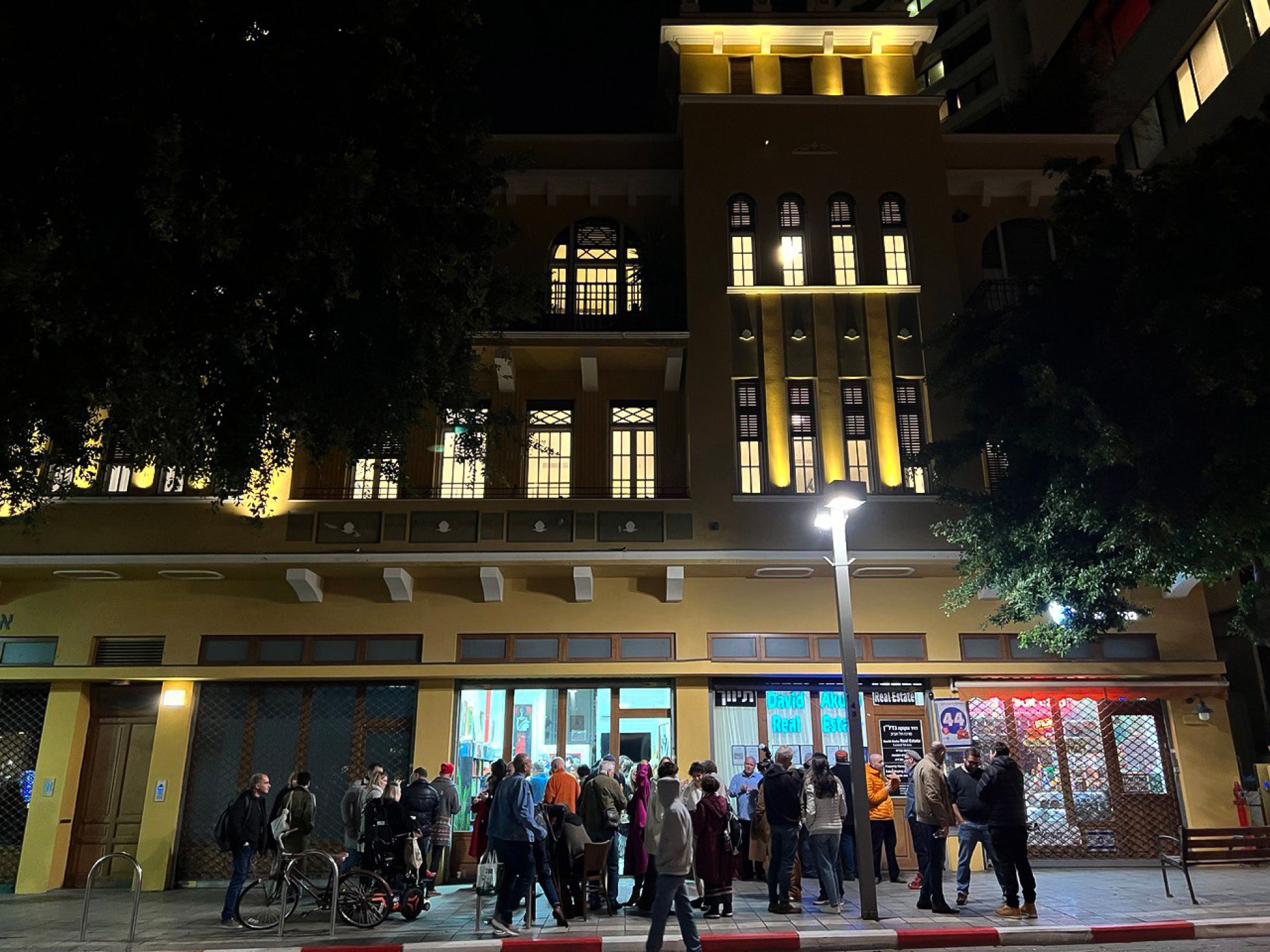
Lena: There is a photo from the opening, completely crazy. It shows how people blocked the street. True, we have never seen some of them again. Others stayed with us, someone became our regular buyer, and someone began to perform with us.
- How did you decide to combine a lecture store?
Lena: We planned this from the very beginning, but did not know that there would be so many lectures. When we only opened, such lectures were constantly held only with us. Now many are practicing this. One of the first to have Lev Semenovich Rubinstein - just a couple of weeks after the opening, he flew to Israel for the holidays and suggested that we read [his poems].
- What are your exhibitions?
Evgeny: In Israel, for example, such a great artist - Jan Rauhverger , a student of Vladimir Weisberg and the keeper of his great collection lives. And we had an exhibition of Weisberg paintings.
Lena: Then we had a luxurious exhibition of Vadim Kruglikov . This is a person of incredible fantasy, a wonderful conceptual artist who is very close in spirit to us. His exhibition was called “The price of art in the shekels” and consisted of paintings, in which everything, from frames to content, was found on the street, and in each picture its price was literally depicted. Half of the paintings were bought from him.
Evgeny: There was also an exhibition of Israeli artist Andrei Kumanin , who is not only an artist, but also a blacksmith. And he poured illustrations to the "Konarmia" of Babel from iron. It was very cool. There was an exhibition of Pavel Zaltsman , we published his book “Dreams”, consisting of very surreal texts. They made an exhibition for this business, as large as the [small store] space allowed. Alexander Voitskhovsky came to us and made a very funny exhibition, which occupied the entire store: at first he took a bomb shelter [under the store], then he left the bomb shelter a little, and then he thought a little more, he came to the hall and also curtained everything with paintings. All this was so cheerful, cheerful and multi -colored.
- During these eight years, there were moments when you thought that the survival of the store is in question?
Evgeny: When the rain is, for example, the survival of the store is in question. Or when too hot. When the holidays. There was a Covid - and the survival of the store was in question. Then it turned out that all this is absolute nonsense, because we all plunged into hell. And then our personal hell of war in Israel joined this hell of the monstrous war of Russia against Ukraine.
Lena: A store is a struggle for survival every day. It happened that half a day has already passed, and the store was empty. But we always cheer ourselves: well, the sun is shining, who will go to the store in such weather? Then people return, we do nothing special for this. We have never had any advertising companies. But if you ask us, whether the question was at least once seriously facing us, whether to close the store, then no, such a question was never stood before us. There were some unrest, and then we just worked further, invented some events, lectures and stopped worried. Now it turned out that all these problems are nonsense in comparison with the horror in which we have been living for the past two years.
- You survived two wars ...
Lena: We have not experienced anything yet. We are still inside. Here we are sitting now and talking to you, but at any moment the siren can sound. Our dog, with which we have not removed the collar for all these three months, is already reacting not even to the sound of the siren, but to the sound of notification on the phone about what will be shelling. She immediately rushes to the door and waits for us to run. That is, we are still in a state of this war and so far we still do not fully understand how it changed us and what remote consequences will have.
Evgeny: I do not see this in any news other than Israeli - but we still have a war, including in Israel. Only yesterday 50 missiles were launched from Lebanon during the day. In this environment we live. My parents live in the city of Rishon-Le-Council, this is one of the largest Israeli cities. And they had 103 shelling in three months of the war. And my elderly parents - they will kill me, of course, for this wording - they run into the shelter three times a day. Every day there are reports of our dead guys, dozens of hostages remain in captivity. So no, we have not experienced anything.
- How does this affect you personally?
Lena: I ask myself this question. Sometimes it seems to me that I put myself in the inner mamad - “refuge” in Hebrew, because, if you do not hide, I’ll go crazy. More recently, I read Katya Gordeeva’s book , evidence of the horrors that occurred in Ukraine, and I constantly think that this hell is now always with us. And if now you can’t protect yourself from him, there will soon be nothing to protect. Strange life: on the one hand, the opening of some new book, trips, presentations, and on the other, you constantly sleep in clothes, because sirens can sound every minute. Now it is already easier, and in the first two months [of the war in Israel] we were desperately bombed, so we ran out [from home to bomb shelter] several times a day.
Evgeny: The war in Ukraine, of course, also changed all of us very much. We began to carefully monitor what we were saying. Because when your friends daily, bombs are falling every day, you must be very attentive to words. The publishing house recently published the play by Asi Voloshina Crime, we arranged a reading. The play is based on the correspondence of the main character in social networks in the first months of the war. The heroine all the time is waiting for her lover, who at that time in Ukraine, in the Armed Forces, will answer her. All the time waits for this green light in the messenger, but it does not burn and does not burn. And she finds and re -reads his last post on Facebook, it says that the only thing that can help is "silence and quiet help."
- How did what happened reflected in the store?
Evgeny: Before the [Russian-Ukrainian] war, our position was unequivocal: we did not talk about politics in the store in general. And after February 24, this changed. And now we have a lot of events and lectures on this subject.
Lena: In addition, we have a whole regiment of actual socio-political literature.
Evgeny: Books about Nazi Germany are most popular now: “ The History of one German ”, “Diary of Desperate”, “In the Garden of Monsters”, “ German Autumn ”. And, of course, what is closer to our experience: “ uncomfortable past ”, “ end of the regime ” of Baunov, “ my beloved country ” by Elena Kostyuchenko, the book of Daria Serenko “ I wish the ash to my house ”. All that we call the terrible word “actual”.
It is curious that even all kinds of [large publishers like] Eksmo, feeling the market, have released a certain number of very good books about Nazi Germany and events that led to the Second World War. And behind these books, people specially come to the store because they understand that their former homeland has become Nazi Germany.
- What did your customers read after October 7, when Hamas attacked Israel?
Evgeny: After October 7, the number one in the store, just with a huge margin, became the “my life” of Golda Meir . She was disassembled instantly, as soon as she appeared on a shelf - several dozen copies.
- You closed at that time?
Evgeny: In the first weeks after October 7, the store was closed. The whole country was empty, like on quarantine, people were afraid to leave home - you never know where the bombing would catch you and where to run then. And then we decided to open. There were no people yet, it just seemed to us to open the store correctly - as if you are convinced of yourself and others that everything is fine and life is ongoing. Moreover, we have a bomb shelter in our store - otherwise we would not be allowed to open.
Little by little, people began to come, and two months later we all resumed. But now, before each lecture, each show we explain that the arrival time is one and a half minutes, and during this time everyone will have time to go down in a bomb shelter without panic.
Dear readers! This material is a good reason to recall that in all Babel stores-in Tel Aviv, Jerusalem, Haifa and Berlin-you can buy the Medusa paper books. This is “my beloved country” by Elena Kostyuchenko, “War and Punishment” by Mikhail Zygary, “Take my grief” Katerina Gordeeva. And of course, we hope that all our new publications will be sold there. When buying our books, you help Medusa to work - including to distribute non -certificate texts in Russia. Thank you!
- For eight years, Babel opened several more stores - in Jerusalem, Haifa and Berlin. How did this happen?
Evgeny: It all started with our girlfriend Yana Kurdchina from Jerusalem. She regularly went to our store [in Tel Aviv], bought books, came to a lecture. And she dreamed of her own book. So at some point she said: and let us make a franchise. We answered: a franchise - what a cool word. What is it?
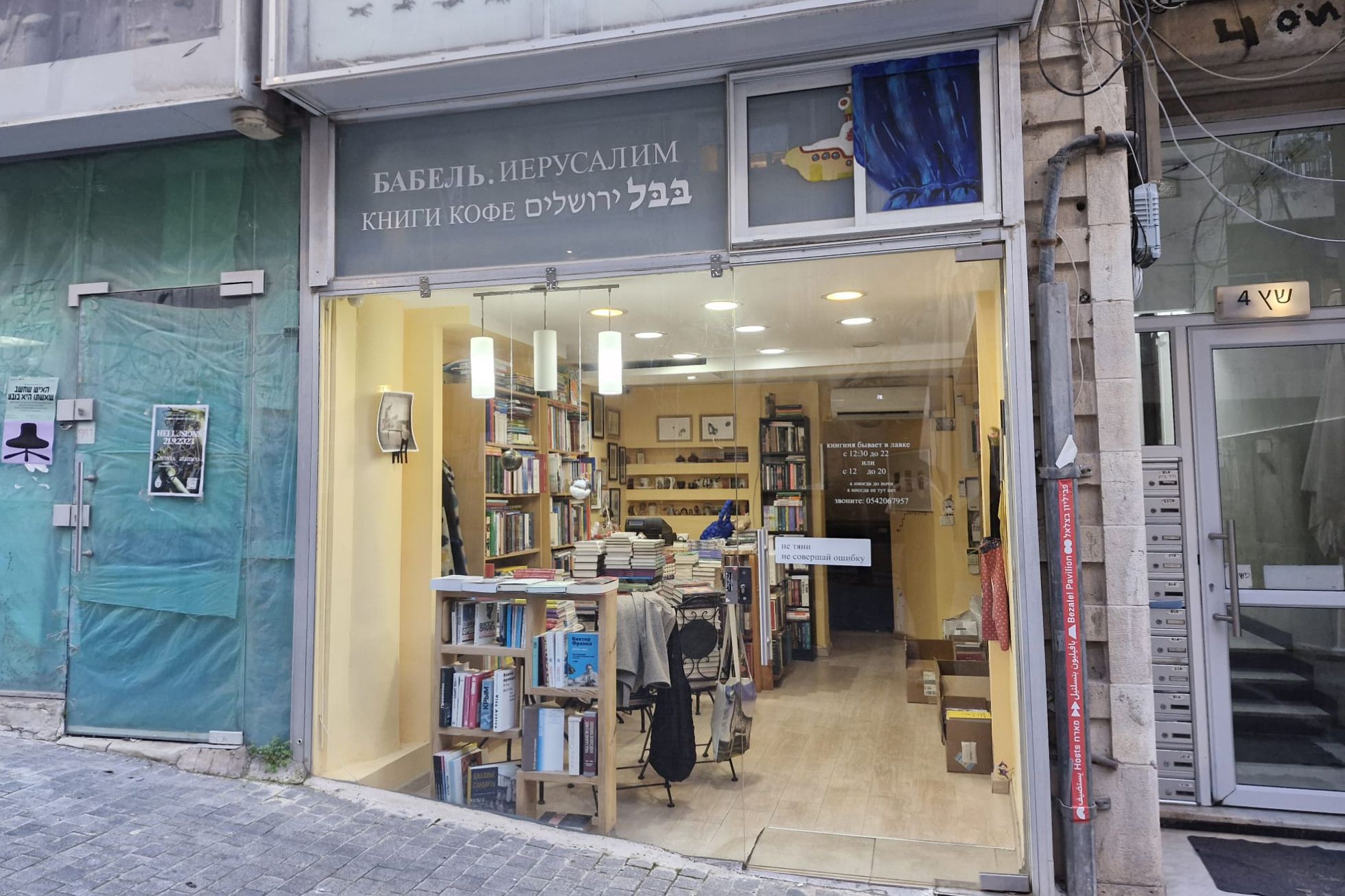
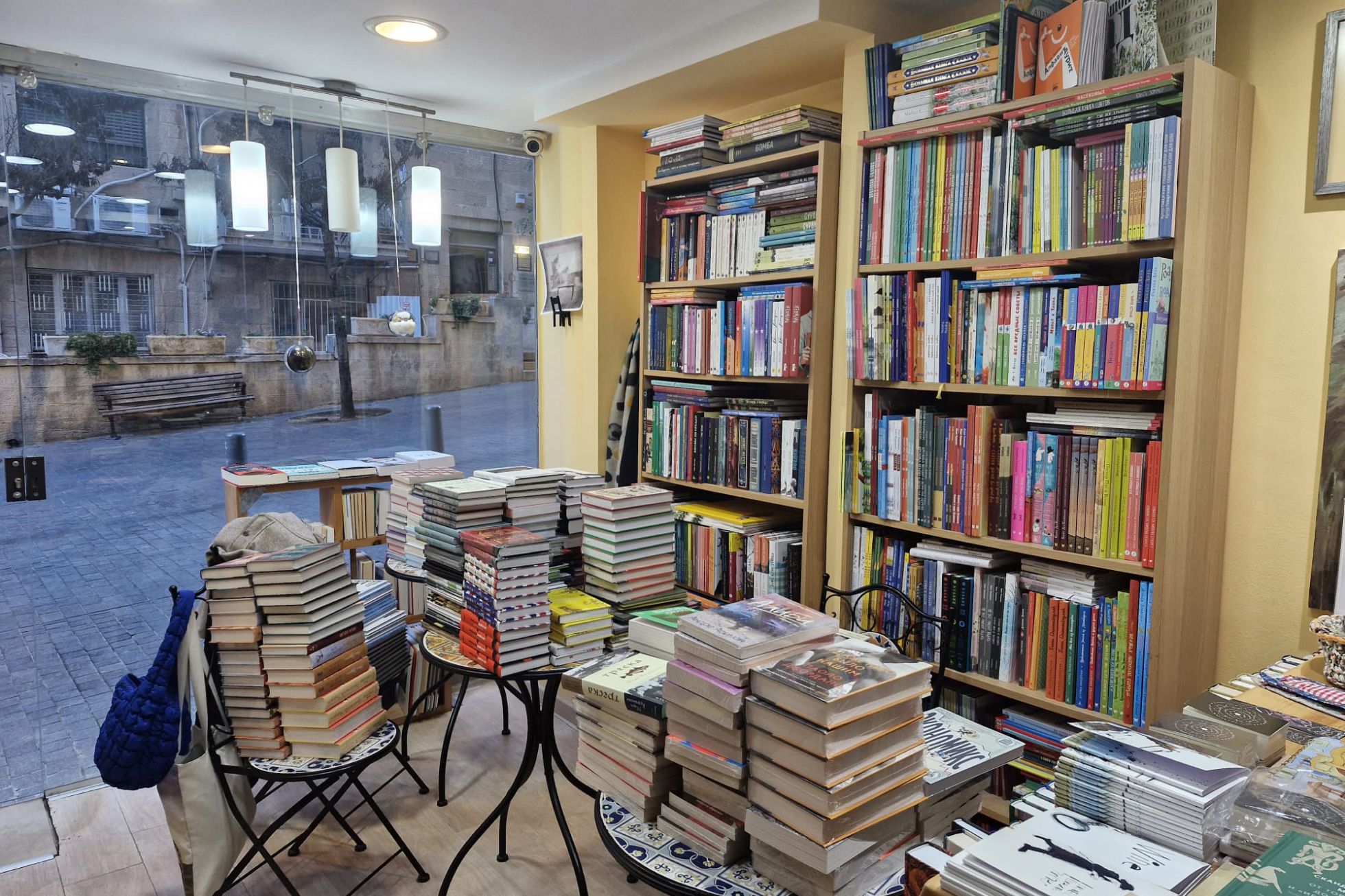
Lena: She succeeded very cool! We went to the opening, and there [in the Jerusalem "Babel"] there was some crazy number of people, so she certainly had the whole street was blocked. Yana opened the store on November 7, 2019, when in China it has already begun [Pandemia of Coronavirus]. And then they closed us all. And she survived. She, in fact, calls herself - "The store that survived." And she got a completely different store. It is very cool that all the "women" are so different.
- And what is the difference between the store in Jerusalem?
Lena: Yana has much more children's books. More Russian -speaking modern prose, more graphic novels. And the best, it seems to me, in general in Israel of the regiment of teenage literature. She talks great about this, she understands this perfectly.
Evgeny: And no one else knows how to do exhibitions like her: they go with her without ceasing, almost one after another, and all commercially successful.
- Then there was Babel in Haifa.
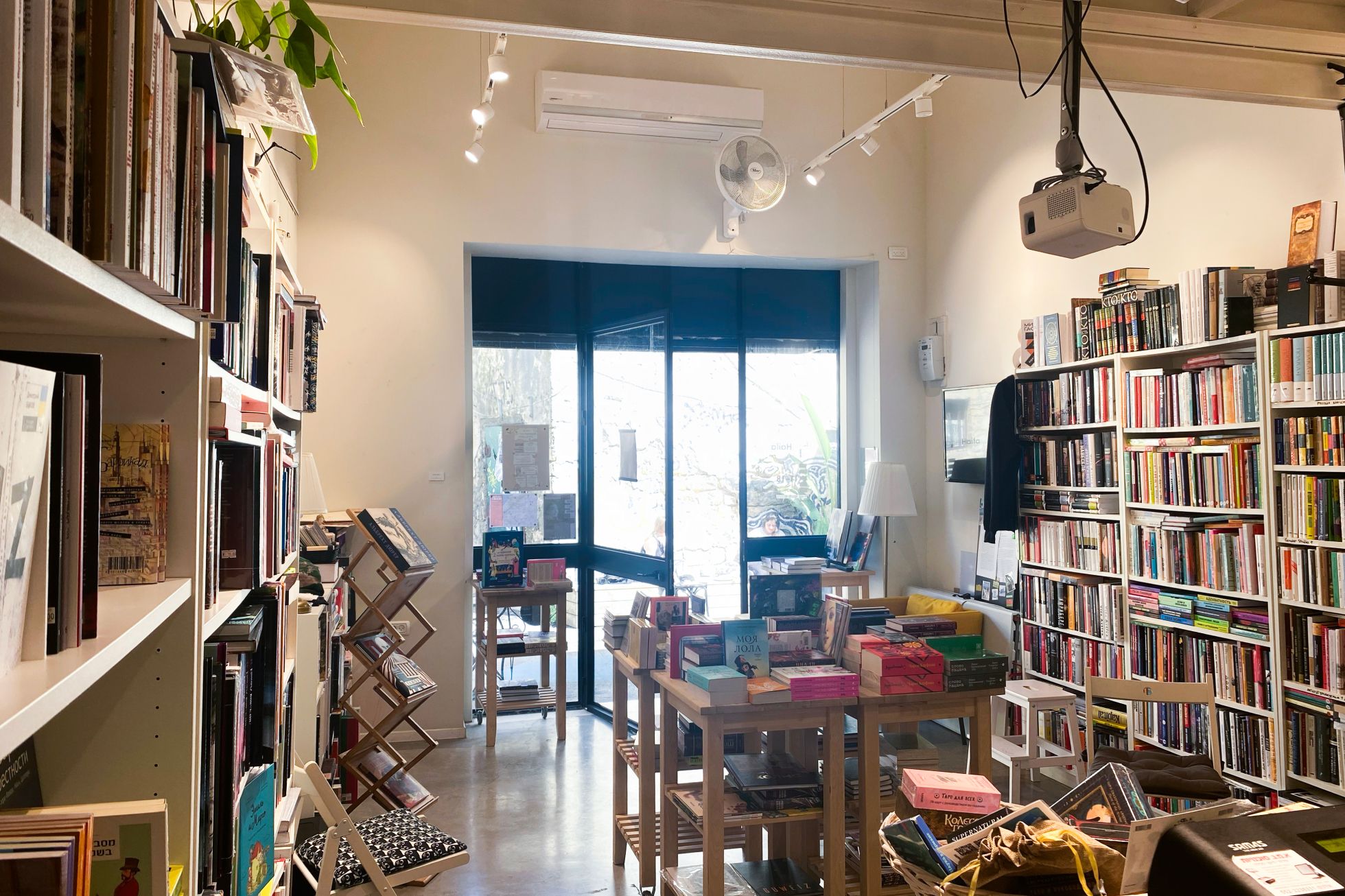
Evgeny: Then our friends and Anya came to us. They are new retains, arrived with the beginning of the [full-scale Russian-Ukrainian] war. And they invited us to open another Babel in Haifa. They also got another store. They have the most art books. He is very small, but amazingly comfortable. They were the first of our franchises to make a measure: bags, stickers on refrigerators, bookmarks.
- How did the Berlin store appear?
Evgeny: With the [founder of the Babel store in Berlin] Natasha Smirnova and her husband Maxim, we have been friends for twenty years. They live in Germany, left us before for a year. Natasha is also a book person - she worked in the publishing house, was a translator; She is a co-founder of the first Russian literary agency “Gumen and Smirnov”-and she probably understands the books better than anyone. And she came to visit us, and then returned and wrote: “Guys, and let's stir up this whole story in Berlin.” In general, they did it, and they also have a completely different store. The most beautiful, probably. They themselves designed all the shelves, racks in it, with great attention to the little things.
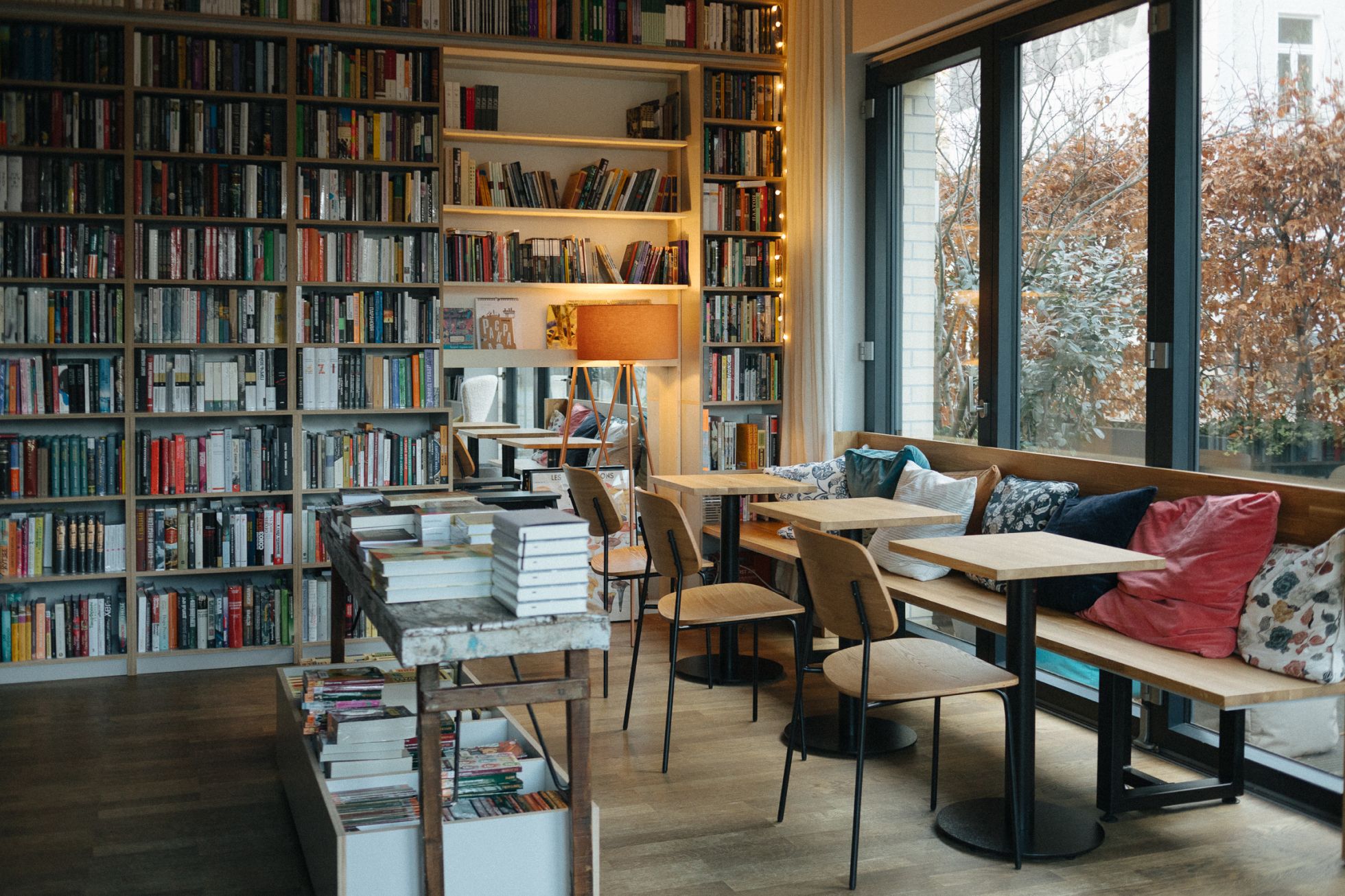
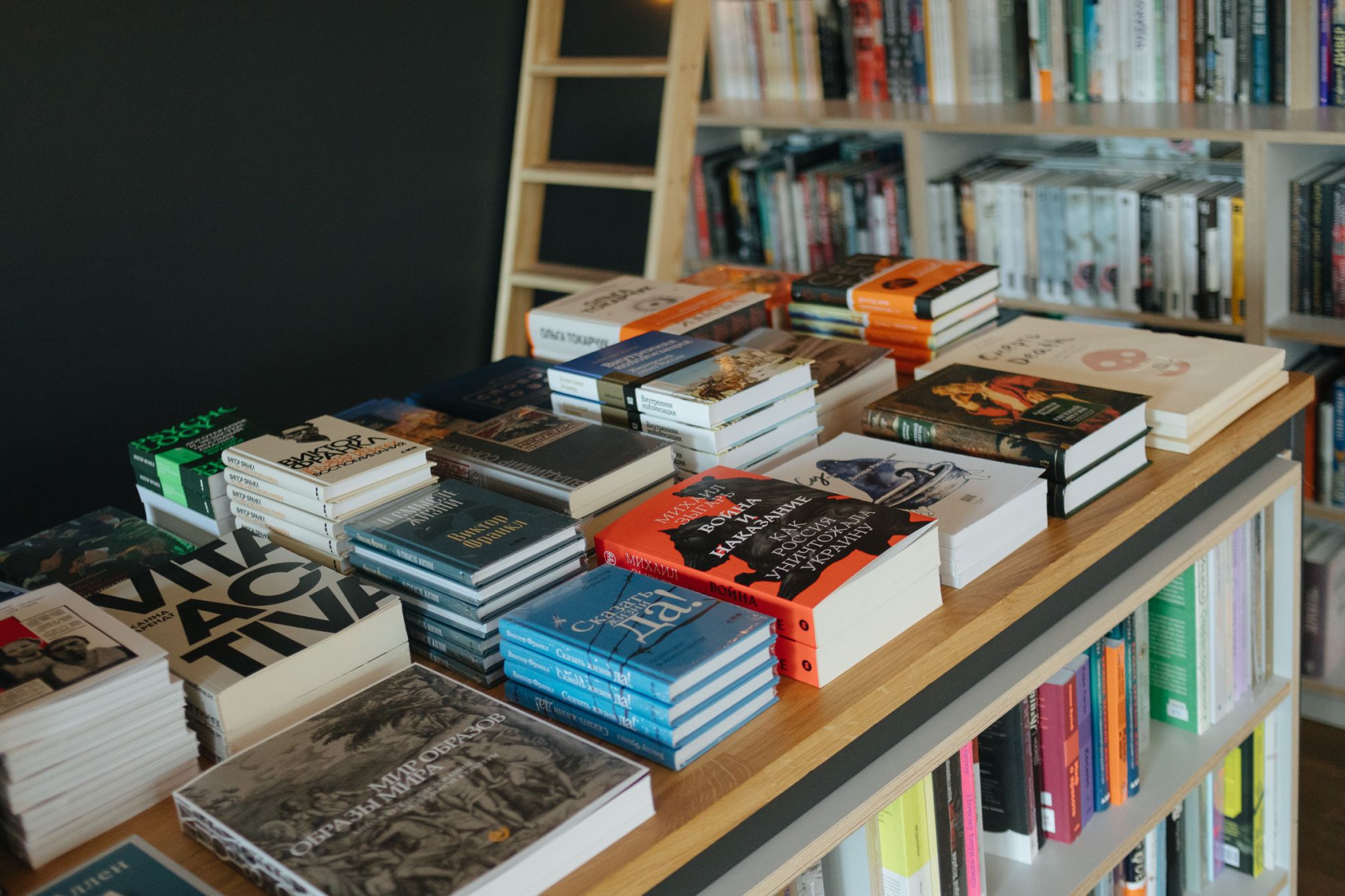
- On what conditions are these franchises open?
Evgeny: I will not voice numbers. They are very small. For us, a franchise is rather a pleasant image story. I recently learned the phrase “brand capitalization” and realized that this is not very applied to us yet. There are some financial obligations in this story, but, for example, a single style of the logo, design, and so on. Our only requirement is that our store is called “Babel”, and the rest we ask to put the name of the city: “Babel. Jerusalem ”,“ Babel. Haifa ”,“ Babel. Berlin ”, and so in all advertising, in all articles and interviews. And there is another item that we do not prescribe, but since we are all like-minded people, this is understandable and so: we do not sell and do not give the word not only to the zubtors, but to all the sympathetic [war]-including those who are not so unambiguous.
Lena: Unfortunately, we had to abandon some publishers who used to be very sweet and made good books.
Evgeny: We don’t dictate anything, but we have a common chat with all the franchises, and I periodically write there: “Guys, you know, this publishing house has been crap.”
- It seems to me that so sooner or later there will be no one to sell ... What to do with Eksmo, for example? There are now published by Zubtors.
Evgeny: “Eksmo” is a holding, not just a publisher. This holding includes, among other things, good publishers, for example, the same Corpus. But, of course, this is generally a very painful question for us - that we buy books in Russia. If we had the opportunity to abandon this, we would, of course, refuse. But we cannot just take and bury the business that we have been doing for many years. In addition, we support anti -war, honest publishers, which are still in Russia and which are becoming less. I think soon they will disappear at all, like everything good in this country.
As for Eksmo, how any corporation is, of course, an absolute evil. But under the wing of these monsters - monsters in the sense of size, and not malice - there are quite a lot of honest and decent publishers who try to do their job. Of course, the story with Akunin [and the AST Publishing House], with Ulitskaya [and the AST Publishing House], when they recalled the payments of fees-this is absolute lead, nonsense, it was not human ... But people who remain in Russia have two ways: they can follow the letter of the law and remain at large, trying to do something good, or they can go to jail. And it seems to me that if all of them are in prison, no one will be better from this. Because in Russia there are many honest, sane, decent people who ended up in hell. And they must somehow live, not everyone can leave, because leaving is a privilege.
Lena: This is certainly a very difficult choice for us. We literally examine each book on each book from all sides so as not to be blown up on the nonsense.
- You also opened your publishing house. Tell us about him.
Lena: It all started with Leonid Prevychina . We have loved him very much, but his books have not been reprinted since 2006. And when the desire to read it on paper became unbearable, we thought why not publish it ourselves. Polina Barskova wrote to us a brilliant preface, we prepared text, comments. And then Covid began, and we temporarily covered this story. And then they continued in the same, conditionally modernist direction. From a distance the musicology of Solletinsky , published “Flight Herr Dumkopf” - the first story of the almost forgotten Oberiut of Doivber Levin, born from the story, which they, along with Harms, wrote for the Hedgehog magazine. Еще у нас была фольклористика гениальная, «Покойнишный вой по Ленине».
Евгений: Эта маленькая книжечка 1925 года [«Покойнишный вой по Ленине»] о том, как какие-то комсомольцы поехали в село под Иркутском и заказали там плакальщицам плач по Ленину. А фольклорист Николай Хандзинский все это записал, нотировал и издал. Потом их всех расстреляли, и с 1925 года все это не переиздавалось. Мы нашли эту книгу, прочитали, пришли в восторг и издали.
Предисловие для нас написала Лета Югай — блестящая поэтесса и главный специалист по такому явлению, как плач. А послесловие написал Сергей Мохов , исследователь смерти.
— Что вы думаете о других независимых издательствах, открывшихся за рубежом за последние два года? Freedom Letters Георгия Урушадзе, «Видим» Александра Гаврилова,издательство «Медузы» , издательство «Папье-Маше». Считаете ли вы их своими конкурентами?
Евгений: Чем больше неподцензурных российскому режиму издательств, тем лучше. Как владельцев книжного магазина, нас их появление только радует, поскольку наш ассортимент расширяется за счет книг, изданных вне России.
Как издателей нас это тоже радует: между нами нет конкуренции — во всяком случае, пока нет. Того, что хочется и нужно издать, хватит на всех. Мы делаем общее дело — по-разному, и тем это интереснее. Мы внимательно следим за тем, что происходит, что-то стараемся читать и надеемся, что издательств, как, к слову, и независимых книжных, за пределами России будет только больше.
— На чем вы собираетесь зарабатывать?
Евгений: Мы бы очень хотели развиваться именно как издательство, но прямо сейчас непонятно, как это делать. Пока не выработана логистика распространения этих книг. Часть книг мы печатаем в Израиле, часть — в Риге, Берлине, Тбилиси. У нас нет тиражей, так как это цифра: мы печатаем только 100–150 экземпляров, продаем, допечатываем еще. Мне кажется, еще полгода, и эта логистика будет выработана не только для нас, но и для других маленьких издательств за рубежом. Вот мы сейчас напечатаем шесть книг для распространения в Европе — Серенко, Кобрина и так далее, там тиражи будут уже побольше.
— Но пока вы издаете не только модернизм?
Евгений: Сначала мы стали издавать современную поэзию. Оказалось, что у нашего любимого поэта Феди Сваровского много лет не было книг. И мы сказали: как же, такой великий поэт, а книг нет. И сделали его книжку. Потом мы издали «Квинсские идиллии» Алексея Цветкова — цикл, в который я совершенно влюбился, когда он читал его у нас в магазине, и который оказался его последним прижизненным изданием.
Лена: А потом началась [российско-украинская] война, и мы поняли, что придется меняться. Мы сделали двухтомный сборник «Понятые и свидетели », сборник антивоенных стихов авторов из разных мест, причем особенно важно для нас, что в обоих томах было много авторов из Украины. Издали повесть Акунина «Адвокат беса», едкую и жесткую сатиру на происходящее сегодня в России. Эти книги не могут выйти в России — и таких у нас становится все больше и больше.
Евгений: Нашим главным хитом остается «Я желаю пепла своему дому» Дарьи Серенко, которая уже вошла в лонг-лист премии «Политпросвет» ( цифровой релиз книги вышел в издательстве «Медузы», книгу можно прочитать в нашем приложении совершенно бесплатно, — прим. «Медузы» ). Прямо сейчас у нас вышла пьеса Аси Волошиной Crime, которую мы уже упоминали, — важнейшее документальное свидетельство [войны]. Мы купили права на издание книги украинского историка Сергия Плохия про русско-украинскую войну, а переводит ее Сергей Лунин, сидя под обстрелами в Харькове. Но при этом мы не хотим превращаться в издательство только актуальных книг — и не бросаем модернистское направление.
— Почему для вас так важен модернизм?
Евгений: Он не столько важен, сколько мы его просто любим. Вообще это все — магазин, издательство, лекции — по любви. А мы любим модернизм. Может, Лена чуть меньше, а я все это читаю, и будь моя воля, ничего бы, кроме Вагинова и Добычина, и не читал бы. И есть огромное количество книг, о которых мы хотим рассказать как можно большему количеству людей. Мы стараемся по возможности эти книги людям дать. Мне кажется, что по этому принципу, «если не мы, то кто», работают все независимые издательства. И иногда оказывается, что именно это людям и нужно.
Talked Lisa Birger