
Translated material
A kilometer flooded with blood
55 years ago, battles on the island of Damansky took place - it was one of the few armed conflicts of the USSR and China in the entire history of observations
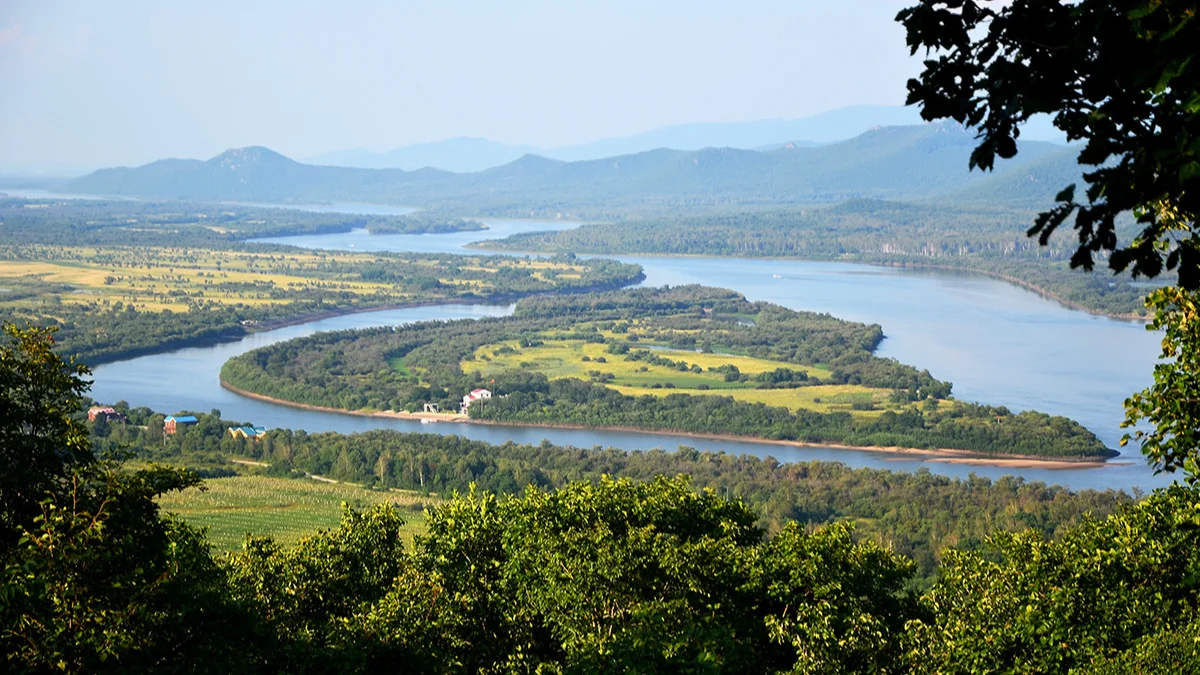
The island of Damansky (Zhenbao), August 17, 2011. Photo: TowerCard / Wikimedia (CC by-SA 3.0)
On March 2, 1969, the first combat clash was held between the countries of the socialist camp. In the dispute for the island of Damansky, with an area of less than a square kilometer, communist China and the Soviet Union almost unleashed a full -scale war. Common sense triumphed - and the war did not happen, and the political consequences and their influence on the current reality have not yet been evaluated.
Who is the eldest
Until the beginning of the twentieth century, the border between the Russian Empire and China was rather a schematic character. The first time the border was determined in 1689 by the Nerchinsky agreement, and in the future the details were only clarified. According to the practice that existed in those days, if the border passed along the river, then the distinction itself took place along the chief fairway, thus providing equal access to water resources to both sides. In 1911, the Russian side, buried in the construction of the Trans -Siberian Railway and already a little imaging where the changeable Siberian relief could once again send the railway, offered Beijing a “contractual act”. According to the document, the border along the Ussuri River is now passing not along the fairway, but along the ureza of water from the Chinese side, thus securing not only the river itself behind Russia, but all the islands on it.
After the formation of the People’s Republic of China in 1949, the Soviet Union supported the communist fellow in every possible way, and the question of borders did not stand at all. That is, the territories were delimited, but this did not interfere with both the Chinese and the Russians to move freely in both directions. Everything changed after the death of Stalin in 1953.
Mao Zedong considered Stalin the standard of the communist leader and respected him very much. After the death of the “leader of all the peoples”, and especially after the XX Congress of the CPSU, at which the cult of the personality of Stalin was debunked, the “great helmsman” (as Mao Zedong was called in China) began to accuse the USSR of the retreat from the teachings of Marx - Engels. But until 1960, good-neighborly relations were still preserved, and the Chinese moved quite freely to the controversial border territories. In 1960, Moscow began to massively recall Soviet experts from China. In response, China began to defiantly violate the border from the USSR for conducting economic activities in the disputed areas (bias in the area of the Buz-Aigyr Pass in Kyrgyzstan, collecting brushwood, swamp and grass on the islands of the Ussuri River). Moreover, the number of Chinese who crossed the border was constantly growing. If in 1960 there were 100 people, then in 1963 there are already one hundred thousand people .
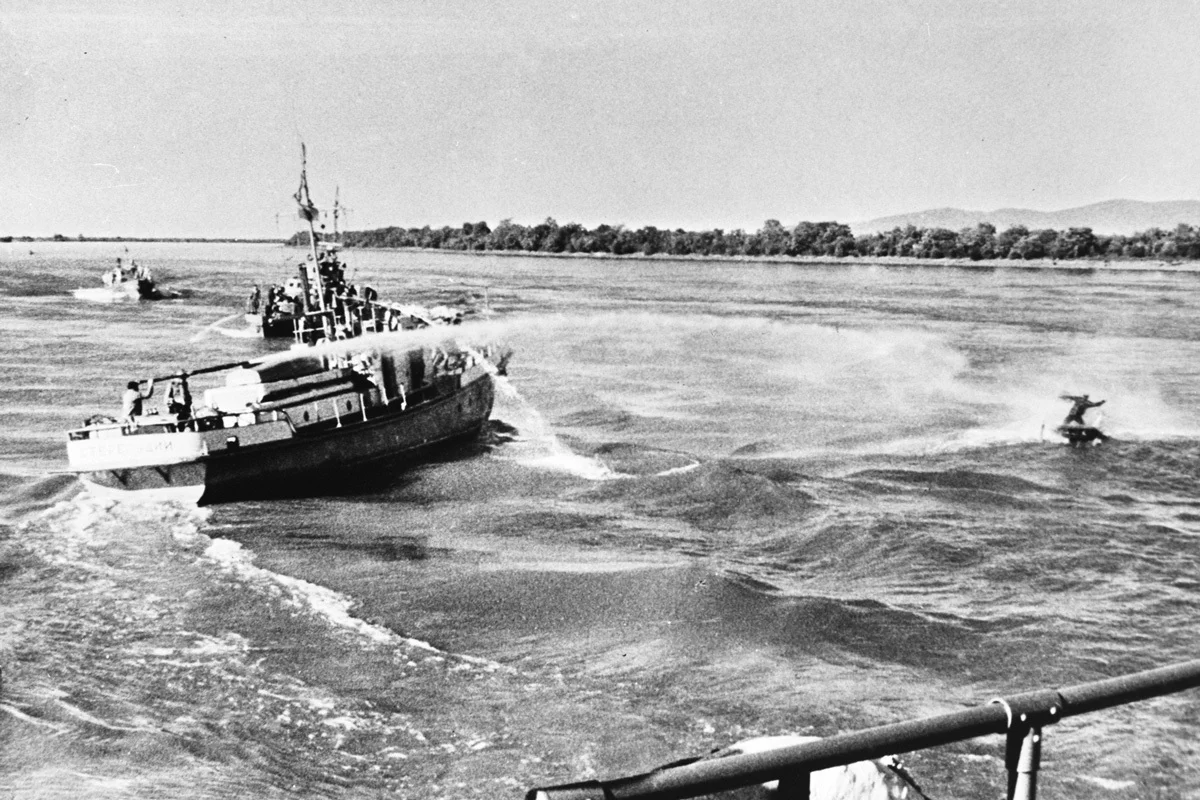
In 1963, the Soviet leadership invited China to somehow resolve controversial border issues. On February 25, 1964, the two commissions (Sovetskaya was headed by Colonel General Pavel Zyryanov, the head of the Main Directorate of the Border Cranks of the USSR, Chinese-Deputy Minister of Foreign Affairs of the PRC Zen Yuntsyuan) began work. By August, the delegations actually agreed on all controversial issues, in particular that the line of the border should still pass along the line of circumcision of the Ussuri River, but along its fairway. This meant the transfer of all disputed islands in China.
But in the fall of 1964, Leonid Brezhnev Sajorishchi shifted from the post of First Secretary of the CPSU and the head of government of the USSR Nikita Khrushchev, and the signing of the agreement on the borders with China stalled.
Why Brezhnev took a very strict position in relation to China, is still one of the unsolved “Kremlin secrets”. One of the versions is that in the first telegram in the name of Brezhnev as the head of the USSR, Mao Zedong allowed himself a patronizing and learning tone as the eldest (and Mao was 13 years older than Brezhnev) to the youngest. And this allegedly did not like Brezhnev so much that he refused to make any concessions in relation to China in border issues. Moreover,
Border guards were instructed to prevent the penetration of Chinese citizens on the Soviet territory. But firearms were not allowed to use.
According to another version, Khrushchev finally ruined relations with China, who declared in August 1964 that "China takes too much for itself, he will not receive Russian territories." Well, Brezhnev simply did not plunge into this problem, but pulled the "Khrushchev line of behavior."
"Merry outpost"
The clashes by the island of Damansky (the Chinese name is Zhen Bao Dao, the “precious”, also in the course of the translation - “Treasure Island”) between Chinese and Soviet border guards began in 1967.
“All provocations, and there were hundreds from 1967 to 1969, took place on the site of my border post“ Kulebyakin Sopka ”,” recalled the future commander of the Anti -Terrorism Group Alpha, Hero of the Soviet Union Vitaly Bubenin. -They began in November 1967 and took place until December 68. As the head of the outpost, I had to participate in the elimination of all the provocative actions of the Chinese side. From 15 to one and a half thousand people took part in them. At first, the border guards lined up along the border with a chain, a dispute flashed - who owns the island? Small, swearing ... The Chinese were literally physically replaced home. Then these "concerts" grew into hand -to -hand fights. Moreover, the Chinese were stocked with sticks that fought off our fighters.
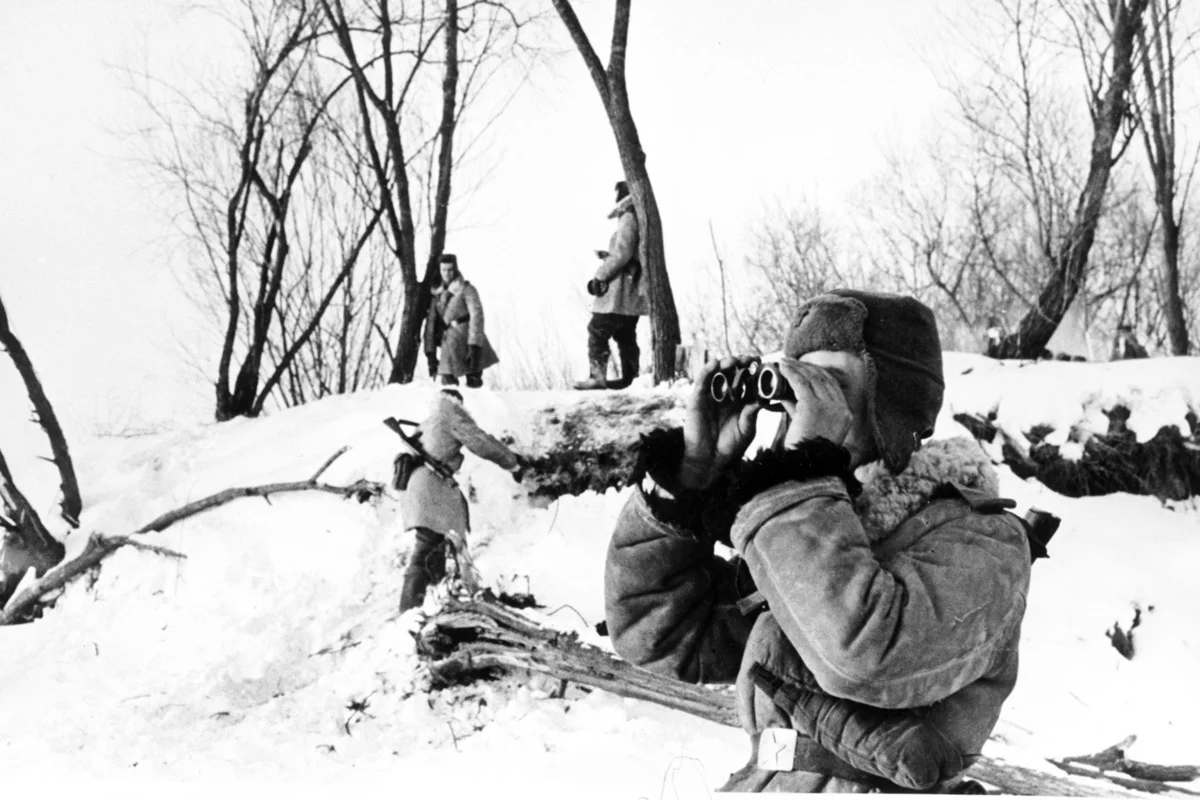
Despite the constant reports of skirmishes on the border, the leadership in Moscow was inexorable: "Do not give in to provocations, do not open fire!" Faces on the border became commonplace, and the service turned into endless showdowns with violators. Hero of the Soviet Union Yuri Baban, who came to the Outpost of Nizhne-Mikhailovskaya, who was adjacent to the “Kulebyakin hills”, describes his arrival to the place of service:
- I got to the outpost almost on the eve of the clashes, although I served in the border worships for a year and a half. I was a sports guy, and therefore constantly visited competitions, then at sports training. And only in February of the 69th he unexpectedly received an appointment to the post of commander of the departure department, the head of which was the senior lieutenant Strelnikov. I come to the outpost, and there, except for the cook, there is nobody. “That's it,” he says, “on the shore, they fight with the Chinese.” Of course, I am a machine gun on my shoulder - and to Ussuri. And there is really a fight. The Chinese border guards crossed Ussuri on the ice and invaded our territory. Strelnikov raised the outpost "in the gun." Our guys were both higher and more later.
But the Chinese are not sewn - clever, confusing; They do not climb onto the fist, they are trying in every possible way to dodge our blows. While everyone was stolen, an hour and a half has passed.
But without a single shot. Only in the face. I even thought then: "Fungal outpost."
By the fall of 1968, the nature of the skirmishes, according to Bubenin’s memoirs, changed somewhat. Russian border guards several times received a serious thrashing from the Chinese, who had a well -handed battle. Almost immediately it turned out that, tired of constantly losing with more tall and strong Russians and unable to use weapons, the Chinese attracted the border of special forces fighters. In response, the commander of the 57th Iman border detachment, Democrat Leonov, transferred two plates of a quick response company to Damansky (there were no special forces in the border troops, just such companies performed its functions). The company commander was known for being a real fan of boxing and in his company preferred to take away the same boxers. In the direct clash of boxing and kung fu, Soviet soldiers won the victory, and mass fights increasingly ended with broken jaws and concussions.
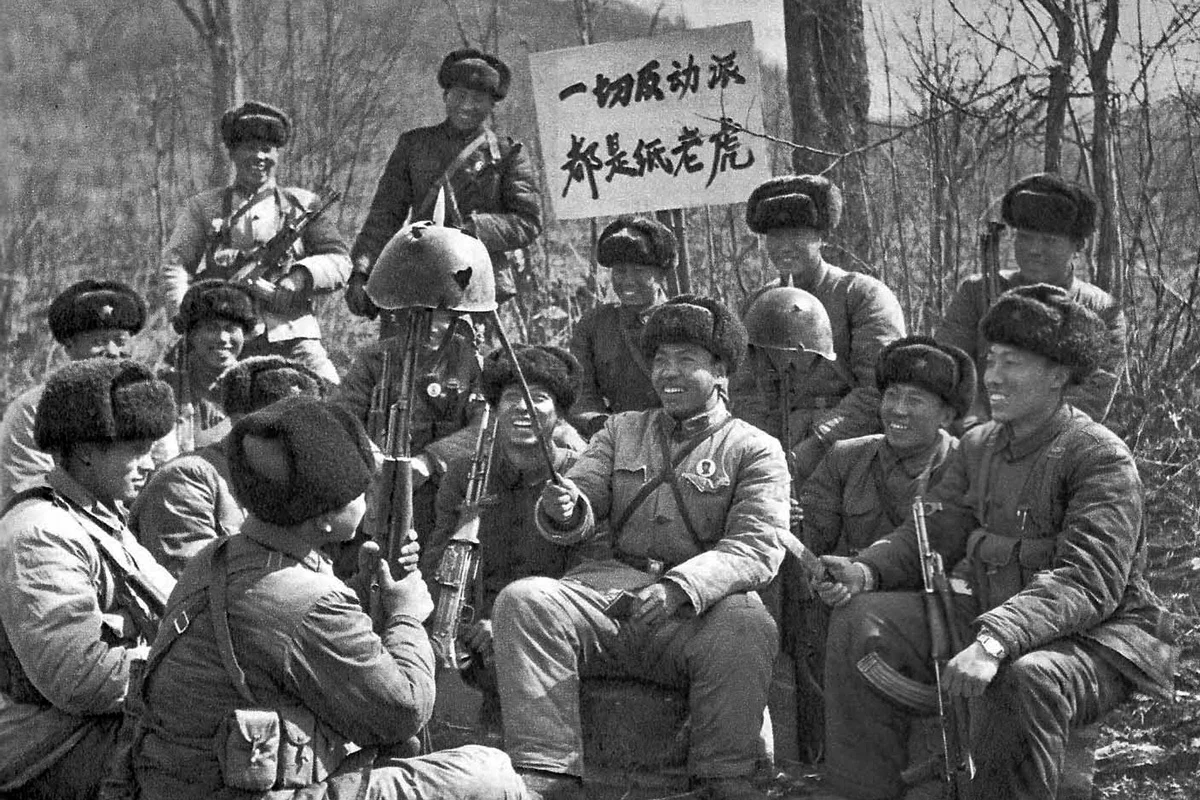
Chinese propaganda for the entire period of “mass fights” (67–68) presented as provocations from the Soviet border guards, who for no reason attacked the Chinese peasants who tried to conduct economic activities where it took place from ancient times. But the fact that the combat clash was planned by the Chinese side is not denied even Chinese historians. In particular, the professor of Beijing University Lee Danhui writes about the events of the beginning of 1969:
“An adequate response to the provocations of Soviet border guards on the Ussuri River in the 60s prevented the numerous directives of the CPC Central Committee, prohibiting to amaze and not panic. Only on January 25, 1969 was it allowed to plan the response military operations - the operation “Retribution”. On February 18, 1969, the General Staff and the Ministry of Foreign Affairs of the PRC gave permission. ”
On the night of March 1 to 2, 1969, a detachment of Chinese military (according to various sources, from 77 to 300 people) secretly switched to Damansky Island and began to prepare firing positions. Everyone was dressed in white camouflage, weapons were wrapped in white matter, thick sheepskin short fur coats and sweaters on top, which allowed to lie in the snow for a long time without freezing. By the morning of March 2, “Lyozhi” (hidden firing points and trenches) were ready and even covered with a camouflage net. Everything was done very professionally. Neither the night patrol, exposed at night near the island, did not notice the morning patrol and did not hear anything unusual.
On March 2, at 10:20 local time, a report from the post of observation was received by the Lower Mikhailovka outpost that an armed group of people was moving to the island of Damansky from the Chinese side of up to 30 people. The head of the outpost, senior lieutenant Ivan Strelnikov raised the personnel “in the gun”, plunged people into two trucks (GAZ-63 and GAZ-66) and armored personnel carrier and moved to the island.
During the movement of the GAZ-63, in which there were 12 border guards led by Babansky, he stated. Strelnikov did not wait for him and moved on. Having reached the river and unloading from the cars, Starley ordered to divide: he led one group directly to meet the Chinese, the second, led by senior sergeant Vladimir Slavovich, moved bypassing the island.
Approaching the Chinese, Strelnikov demanded to leave the territory of the USSR and ... received an automatic queue at point blank range. The soldiers of his group were shot in a matter of moments. The group of Tslovich, who managed to reach the island hills, managed to lie down and open a response fire. But the density of the Chinese fire was much higher, the border guards died one after another. At this moment, the Baban group finally arrived in the battlefield. They took a position in the reeds, a little behind the Trindic group, and opened a fluid fire.
“A few minutes later I realized that with such a fire we would soon be left without ammunition, and ordered to protect the cartridges,” Babansky later recalled. - The Chinese, at first stunned by an unexpected attack, quickly realized that Russians were nothing; And, hiding behind reeds, they began to slowly surround us. After 20 minutes of battle, out of 12 guys, eight remained alive, after another 15 to five. Of course, more
You could move away, return to the outpost, wait for reinforcements from the detachment. But such fierce malice covered us that in those minutes only one wanted to: put them as much as possible. For the guys, for themselves, for this span, no one needs, but still our land.
The cartridges were already running out when we suddenly heard a completely wild mat and a rolled -up “Hurray!” - It was on the other side of the island to the rescue of us the guys rushed from the neighboring outpost of senior lieutenant Bubenin. The Chinese, having thrown the dead, rushed to their shore, and for a long time I could not believe that death passed by. ("Truth about the events on the island of Damansky", the Far Eastern Publishing House, 1969, p. 70.)
"Yes, what the hell!"
While the Medes of the PRC and the USSR exchanged notes, accusing each other of inciting the conflict, the military on both sides prepared for the continuation. The Chinese transferred about 5 thousand soldiers to Damansky, several artillery batteries and mortar divisions. In the Soviet rear, the 135th motorized rifle division was deployed, additional forces were given to the Iman border detachment, completely equipping the states of the border station and preparing reserves, as well as seconding the tank company for border guards. In addition, the artillery and battery of the Grad salivary fire systems were transferred to the border.
“I was called up for an urgent in 1968, when I was already hit 20,” the author told the author of the events in Damansky Vyacheslav Semenov in 1999. -In the "training" I was preparing in spacecraft and thought that I would serve in some wilderness, at the radio station. And suddenly at the end - distribution into artillery. Yes, not somewhere, but in a terribly secret part with a completely new weapon. The political instructions to us all the ears of the ears about secrecy and about the fact that no one else has analogues of “degrees”. And suddenly - the rise in alarm on March 4, urgent loading on cars and armored personnel carriers and a transfer to the border itself. The officers were then very surprised: it is too dangerous to unfold "hails" literally two km from the border. There is a danger that the enemy’s troops, having received information about the presence of the latest equipment, will try to capture it.
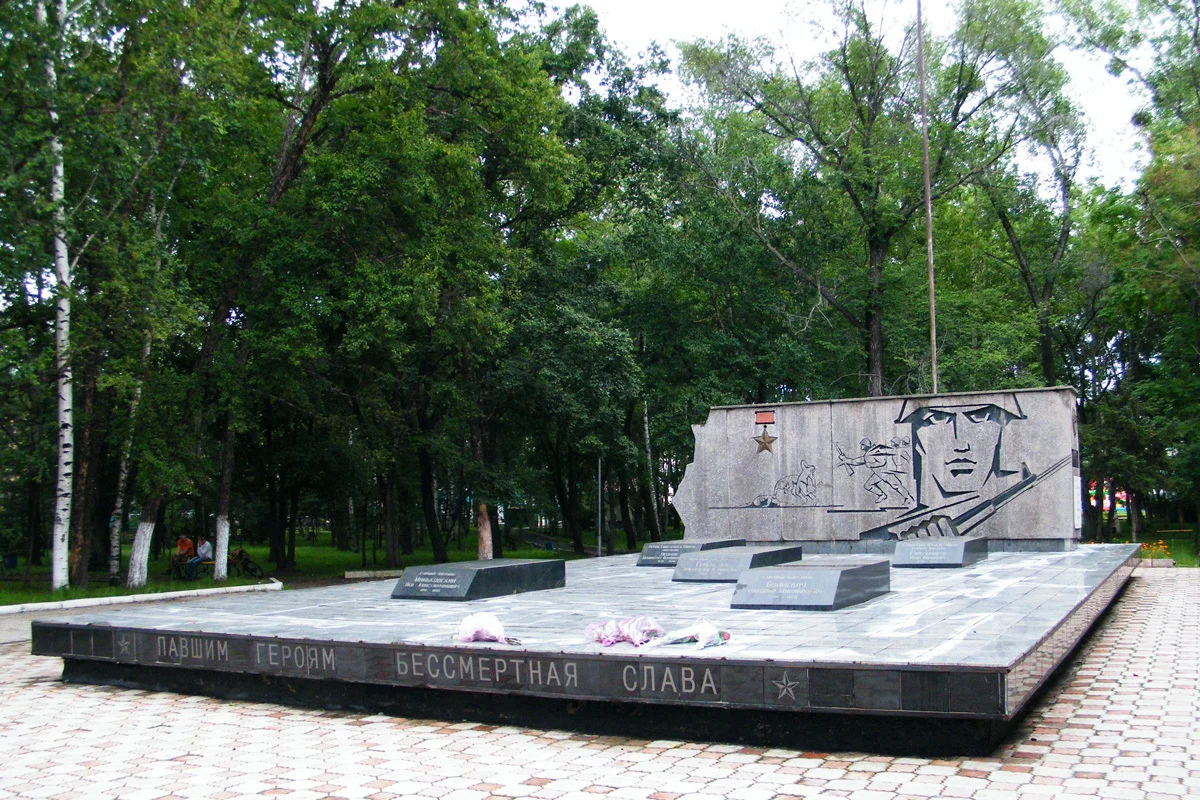
According to Semenov, part of them participated in the funeral of border guards held in Iman on March 8, 1969.
“At the funeral, we learned about what happened on March 2, and approved the decision of the command to transfer“ grades ”to the border,” recalled Semenov.
- After all, we perfectly imagined the firing power of our cars and understood that even one of our salvos could put an end to any claims of the Chinese not only to the island, but also the nearby territory.
There was simply no one living would have left.
The second act of the incident on the island of Damansky began on March 14, 1969. Around 15:00 on March 14, 1969, the Iman border detachment received an order from a higher instance: to remove Soviet border outfits from the island. After almost 30 years, General Vadim Matrosov will say at a meeting with military historians: “It was necessary to put forward the reserves of the army, but no one put forward. There was trade: to get involved, not to get involved ... The thesis was used for this thorough: they say, if we send the troops - it will already be a military conflict or war, while the border guards are fighting - this is the incident. Casuistry!"
The border guards moved from Damansky, revival began on the adjacent side. The Chinese military in small groups of 10-15 people began to extend to the island, others began to occupy combat positions opposite the island, on the Chinese coast of Ussuri.
In response to these actions, the Soviet border guards on eight armored personnel carriers under the command of Lieutenant Colonel Evgeny Yanshin unfolded in battle order and began to move towards the island. The Chinese instantly moved to their shore.
At about 20:00 hours on March 14, another order received: go ahead! After 00:00 on March 15, a detachment of Lieutenant Colonel Yanshin consisting of 45 border guards on four armored personnel carriers went to the island. The fighters are located in four groups - at a distance of 100 meters from each other, weaved trenches for shooting lying down. Armored vehicles constantly moved around the island, changing the fire positions. On our shore, Ussuri positions took up the reserves of a border detachment - 80 people on seven armored personnel carriers.
At 9:00 on March 15, the Chinese turned on the loudspeakers, persuading the Russians to move away. At 10:00, Chinese artillery and mortars (from 60 to 90 trunks) began to shell the islands. At the same time, three companies of the Chinese infantry went on the attack.
Within an hour and a half, ours repelled several furious attacks. At the end of the ammunition. Yanshin shouted into the pipe of the field phone: "Give fire, we die!" But army artillery was silent.
The border guards bleeding did not yet know that parts of the army strengthening were withdrawn from the subordination of the command of the border worship.
By noon, the Yanshin group was forced to leave the island under cruel fire. The commander of the Iman border detachment, Colonel Democrat Leonov, reported to the higher authorities about superior enemy forces and the need to use artillery, but to no avail.
Around 12:00 the enemy was hit the first armored personnel carrier, after twenty minutes - the second. Nevertheless, the detachment of Yanshin held his position even in the face of the threat of the environment.
Moving back, the Chinese began to group on their shore opposite the southern tip of the island. From 400 to 500 soldiers clearly intended to hit the rear of the Soviet border guards. The situation was aggravated by the fact that the connection between Yanshin and Leonov was lost: the antennas on the armored personnel carriers were cut off by machine gun fire. Then Colonel Leonov decided to make a raid on tanks. The tank company was promised to Leonov on March 13, but nine cars only fit in the midst of the battle.
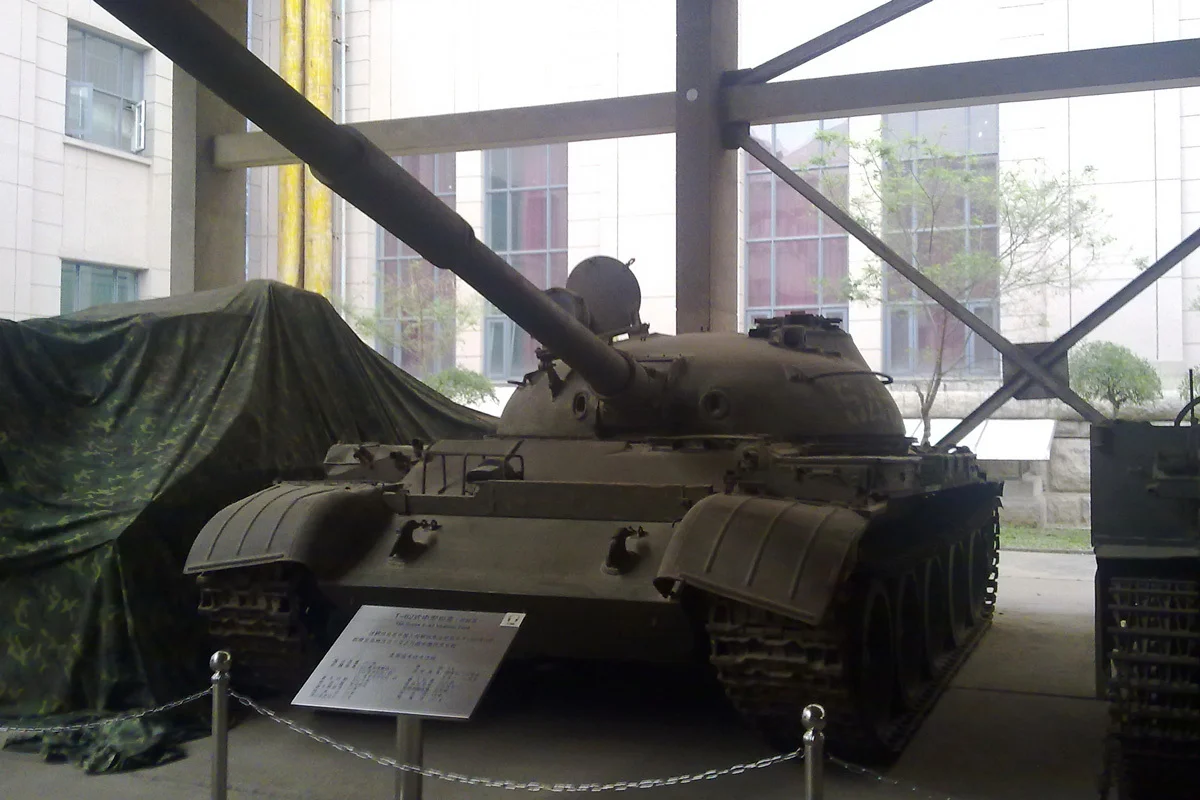
The colonel took a place in the head car, and the four T-62 moved in the direction of the southern tip of Damansky. Leonov hoped to go around the island, attack the enemy into the rear and from the flank. But the Chinese were ready for such a maneuver. In addition, on even ice, Ussuri combat vehicles turned out to be an excellent target.
Unfortunately, Leonov overestimated the combat qualities of tanks and underestimated the saturation of the anti -tank defense of the Chinese. Примерно на том месте, где погиб Стрельников, командирская машина Леонова была подбита выстрелом из РПГ. Полковник и несколько членов экипажа получили ранения. Покинув танк, они направились к своему берегу. Здесь в Леонова попала пуля — прямо в сердце. По другой версии, он погиб, выбираясь из машины через люк. Ночью его тело нашли и вынесли разведчики под командованием Бабанского.
— 15 марта я как раз заступил на дежурство в ПКП (передвижной командный пункт) дивизии, — рассказывал бывший связист Семёнов. — Около 12 часов дня на КП прибыл командующий ДВО генерал-полковник Олег Лосик. Он постоянно пытался дозвониться до Москвы, но там отвечали лишь: «Выполняйте приказ!» И мы сидели и слушали (радио было включено на волну погранцов), как наши ребята гибнут под артиллерийским огнем противника. Когда около 17:00 пришло сообщение о смерти полковника Леонова, наш комдив, генерал-майор Мельников, с силой ударил кулаком по столу и прямо спросил у Лосика: «Долго мы еще терпеть будем?» Лосик уже и сам был на грани, он снял фуражку, вытер пот и рявкнул: «Да какого хрена! Наводчикам — дать наведение на цели на Уссури. «Градам» — тройной залп из всех стволов! Второму полку приготовиться на выдвижение к острову для зачистки территории!» Ну мы и дали! Когда грохот смолк и снежно-грязевая пыль слегка расселась, в районе Даманского была оглушающая тишина. Несмотря на то, что мы били по позициям не на острове, а на берегу реки, стрелять прекратили везде. Мне потом погранцы рассказывали, что там, где китайцы накапливали живую силу и технику, было одно сплошное месиво из обломков военного снаряжения и кусков человеческих тел. А в 17:30 из Москвы наконец пришел приказ вмешаться в конфликт.
Гораздо позже выяснится, что пока на Дальнем Востоке разворачивались боевые действия, в Москве не могли найти никого, кто готов был взять на себя ответственность за решение дать армии приказ вмешаться. Министр обороны Андрей Гречко был в заграпоездке, Леонид Брежнев спал в поезде, направляясь в Венгрию на встречу с Яношем Кадаром. Проснулся он в Виннице, и ему сразу доложили про Даманский. Узнав, что конфликт складывается в пользу китайцев, Брежнев спросил:
— А где же наша армия?
Ответом ему было напряженное молчание. Брежнев немного подумал и заявил:
— Армии — нанести удар всеми имеющимися средствами. Вышвырнуть оккупантов с советской земли к чертям собачьим!
После расстрела китайских позиций «Градами» (по советским оценкам, тогда погибло от 800 до 1000 китайских солдат и офицеров, но китайцы эти цифры не подтверждают) китайцы были полностью деморализованы. 16 марта 1969 года к месту конфликта прибыл министр обороны КНР Линь Бяо. Ознакомившись с итогами боя, он заявил : «Хватит испытывать терпение русских», и приказал прекратить провокации на границе.
Последствия тех событий еще долго будут влиять не только на отношения России и Китая, но и на мировые события. Впрочем, самым главным итогом того конфликта стало то, что Китай стал искать союзника в возможной борьбе против СССР. И нашел его — в лице США. Остров Даманский в 1991 году был наконец передан Китаю, сейчас там расположен мемориал, посвященный героическим китайским пограничникам.