
Translated material
The empire is replaced
Bulgaria is completely dotted with the memorials of the Glory of Russian Weapons. But Russia managed to quarrel with potential allies here
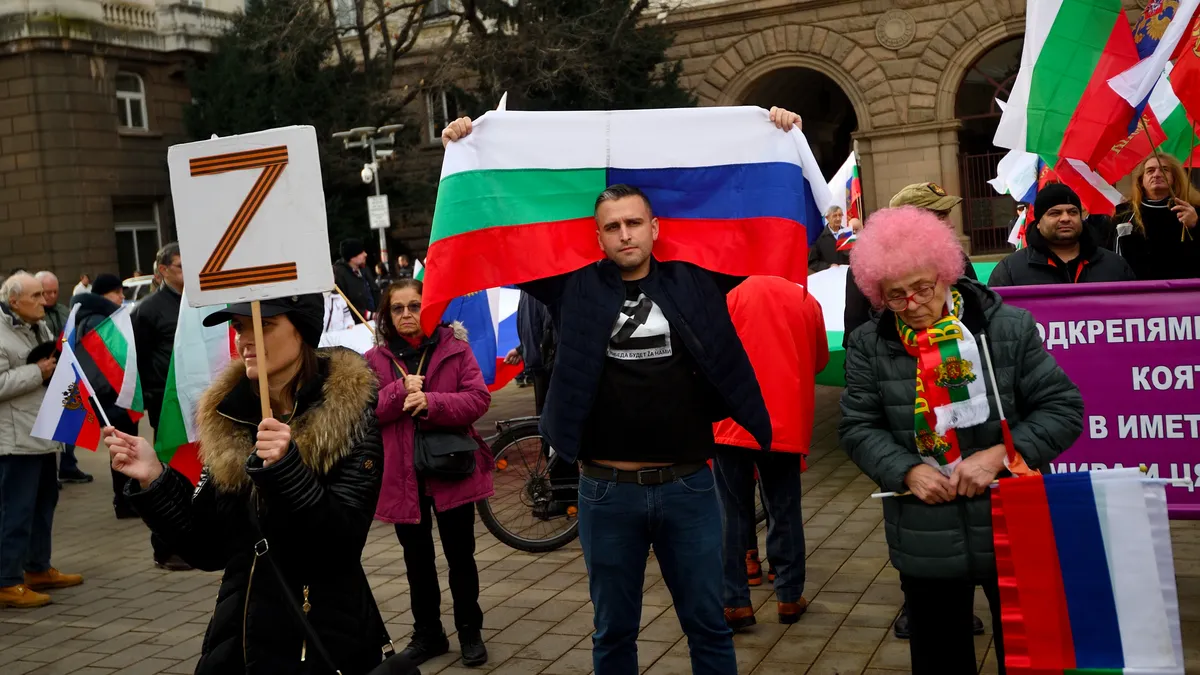
The demonstrator holds the Russian and Bulgarian flags during the pro -Russian rally in Sofia, Bulgaria, December 10, 2022. The rally was attended by a hundred pro -Russian supporters. Photo: Vassil Donev / EPA-EFE
March 3 is the main national holiday of Bulgaria. It is dedicated to the liberation from Ottoman domination and is inextricably linked with the Russian-Turkish war of 1877-1878. After February 24, 2022, the authorities faced the question: how to express the traditional words of gratitude to the country that has now become an aggressor?
This discussion is one of the manifestations of the internal split within the ruling coalition between the pro -Russian oriented Bulgarian Socialist Party and those who advocate strengthening European integration. And although the attack on Ukraine sharply reduced the number of supporters of Russia in Bulgarian society, even in March 2022 there were more than 30%of them.
On the other hand, cases of acts of vandalism against monuments related to Russia have become more frequent. In March 2023, the City Council of Sofia decided to remove a large -scale monument to Soviet soldiers from the city center. Then they emphasized : we are not against the memory of the role of Russia in liberation from the Ottoman yoke, but the Soviet soldiers did not die in battles either for Bulgaria or in Bulgaria. The traditional response of official Russia is the organization of all sorts of pro -Russian historical actions from among local social activists (such as the movement of “Russophiles”) and “tough” public rhetoric, exposing “Russophobia”.
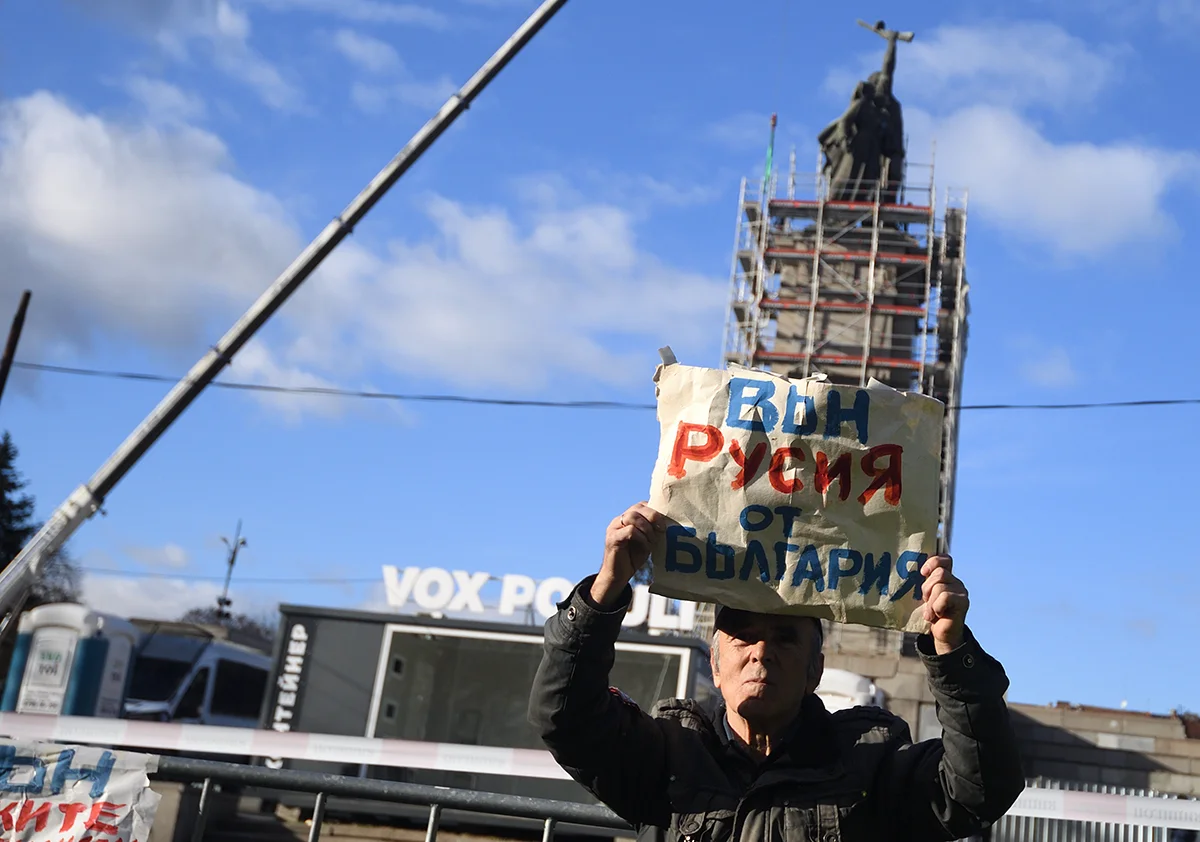
But if earlier the Second World War was a stumbling block, now the Russo-Turkish was added. In August 2023, the Russian Ambassador to Bulgaria Eleanor Mitrofanov said that the Bulgarian authorities allegedly want to delete the history of the Russo-Turkish war of 1877-1878 and generally forget about the role of Russia in the formation of Bulgarian independence (of course, without evidence). In September, Professor Professor Rumyan Mikhnev in an interview with Rossiy Gazeta talked about the deployment of “Russophobic propaganda” in Bulgaria, and in February on Russian state television she said:
“We recently have the Minister of Defense <...> said that we must erase the memory of Russia in all our textbooks. <...> Russians did not die here for the liberation of Bulgaria. All this is not.
And you have an example at your side, as you could do it for 20-30 years in Ukraine. ”
A brief history of relations
The Russian-Turkish war of 1877-1878, indeed, became liberation for the Bulgarian people, although the struggle for sovereignty began long before that. Despite all subsequent political perturbations, the memory of this war and a good attitude towards Russia in Bulgaria were preserved. It was Bulgarian social activists at the beginning of the 20th century that initiators of the large -scale program for perpetuating the exploits of the Russian army. During the First World Bulgaria, it was on the side of Germany, which is not surprising: after all, Serbia was an ally of Russia, and the territorial conflict with Serbia pushed Sofia as the opposite military bloc.
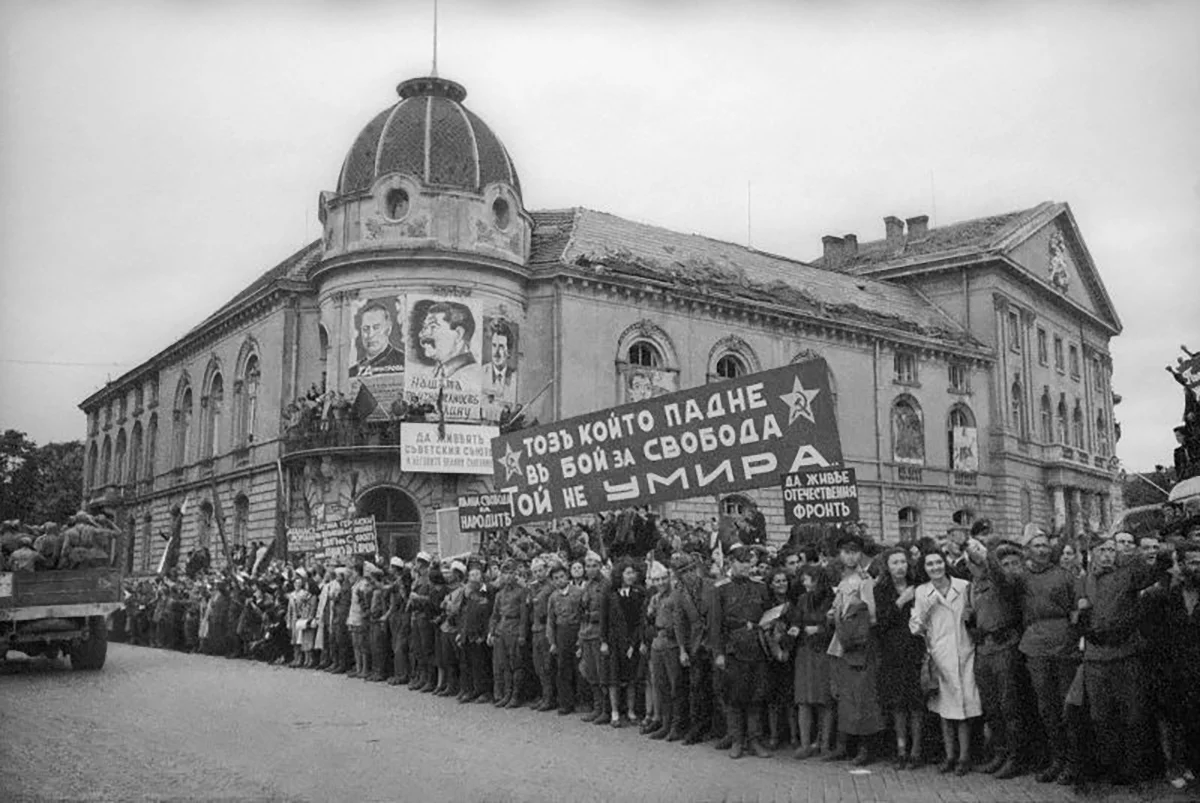
During the years of World War II, he refrained from complicity in the war against the USSR, and until the fall of 1944, the Soviet embassy worked in Sofia. However, Tsar Boris III succumbed to the persuasion of Berlin and in December 1941 declared the war of Great Britain and the USA, which after almost two years began to turn the capital of Bulgaria into ruins with air bombing. In 1944, after the surrender of Romania, the Red Army entered the borders of Bulgaria on the heels of the Germans. The USSR declared an ultimatum to the government, and after it - a war. But I did not have to fight. The Red Army was met with flowers.
Bulgaria was not under the Nazi occupation, and its "liberation" in practice turned out to be imposed by the communist regime. By the way, the transition from socialism to democracy at the end of the century passed quite smoothly - without revolutions, but almost without lustration. Unlike Poland or the Czech Republic, there was no such widespread rejection of socialist experience either in the elites or in society.
Too much memory
Modern Russia always wanted to be remembered about the exploits of the past abroad and honor them. And perhaps no other country could satisfy this request as Bulgaria.
Throughout the country - more than 400 monuments referring to the events of 1877-1878 or the Second World War. It is difficult to find a city or village where nothing reminded of the former merits of Russia.
At the beginning of the 20th century, opposite the parliament, the Bulgarians established the equestrian statue of the Russian emperor Alexander II-as a memorial to the king-liberator. During the First World War, it was draped, but not removed. The Communists did not touch her either. The city of Pleven (known to us as a Plevna) is a continuous monument to the Glory of the Russian Empire, which stretched for several kilometers-from the House-Museum of Alexander II through the monument to Skobelev and the Sectoral Temple to the Skobelevsky Park and the large-scale panorama of the assault on the Plevna. If you arrive in one of the ancient capitals of Bulgaria, Veliky Tarnovo, then here you will find a large museum dedicated to the war of 1877-1878 and the Ternovo constitution.
Against this background, claims against the Bulgarians looked completely wildly that, they say, they “forgot” the story and the “liberation mission of Russia”. No, these are representatives of the Russian state and the “patriotic community” with arrogance looked at the small but proud Balkan people and, with their stupid statements, caused irritation among that . Then Zakharova will be attributed to the Red Army the salvation of the Sophia Jews from the Nazis (although this story of salvation is the subject of pride of Bulgaria). For some reason, Putin will blurt out that St. Cyril, the founder of Slavic writing, was from Albania. Then Patriarch Kirill will begin to publicly count the pro -Russian president Ruman Radev for the fact that he allegedly thanked other peoples at commemorative events on March 3. Either some blogger or journalist will repeat the accusations again, they say, "we saved you from the Turks, and you were fighting two world wars against us."
But in 2024, the Russian diplomatic representatives were not invited to Shipka at all, although Radev noted the merits of the “Army of Alexander II” in the speech. The Russians laid wreaths the day before, speaking to loyal compatriots. The Russian Mir Foundation, however, decided to smooth out the situation in his message to present it so that the Russian ambassador performed with the Bulgarian president.
Another colonial war
But even after February 24, in Bulgaria, we can say that the exploits of the past is not the merit of modern Russia. And Russia in 2024 is not equal to Russia of the 1877th. And then the Romanian army also fought in the fields, and the Serbs provided assistance. This approach does not belittle Russia in any way.
However, even such a seemingly bright historical plot can be dangerous, if two things are lowered: that war was part of a bad imperial policy, and it was possible thanks to the right of the state to unlimitedly dispose of the lives of its subjects.
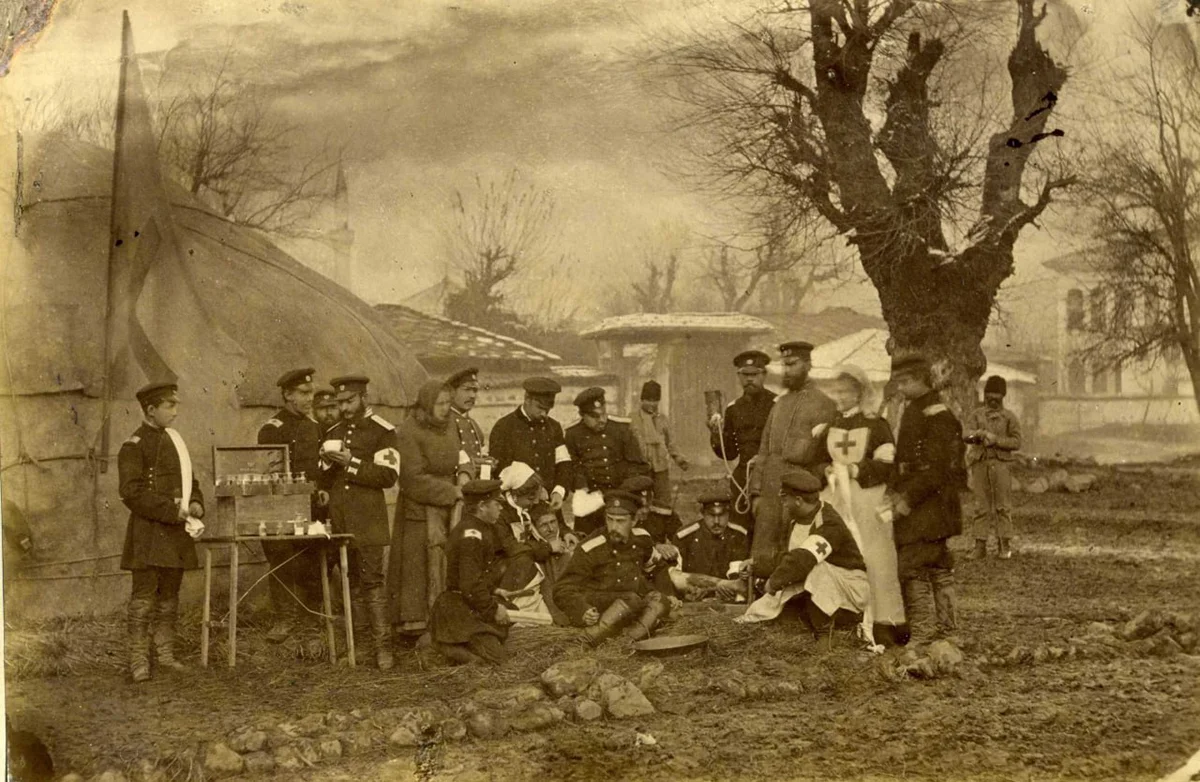
After all, Russia began a war against the Ottoman Empire and came to Bulgaria not out of noble motives, but for quite pragmatical reasons: to use separatism on the outskirts of the Ottoman Empire to create a friendly Orthodox monarchy, through which the Bosphorus Strait can be controlled. True, imperial illusions soon crashed: the Bulgarians are not Russian peasants, they wanted the Constitution and such a political life that was in Western Europe, and not in Russia. National liberation meant a breakdown of economic relations with the markets of the Ottoman Empire, but the Russian business did not rush to replace it. As a result, Bulgaria unfolded west, not east. Imperial administrators who showed neglect and arrogance, referring to the Bulgarians as unreasonable natives, have done even more harm to relations.
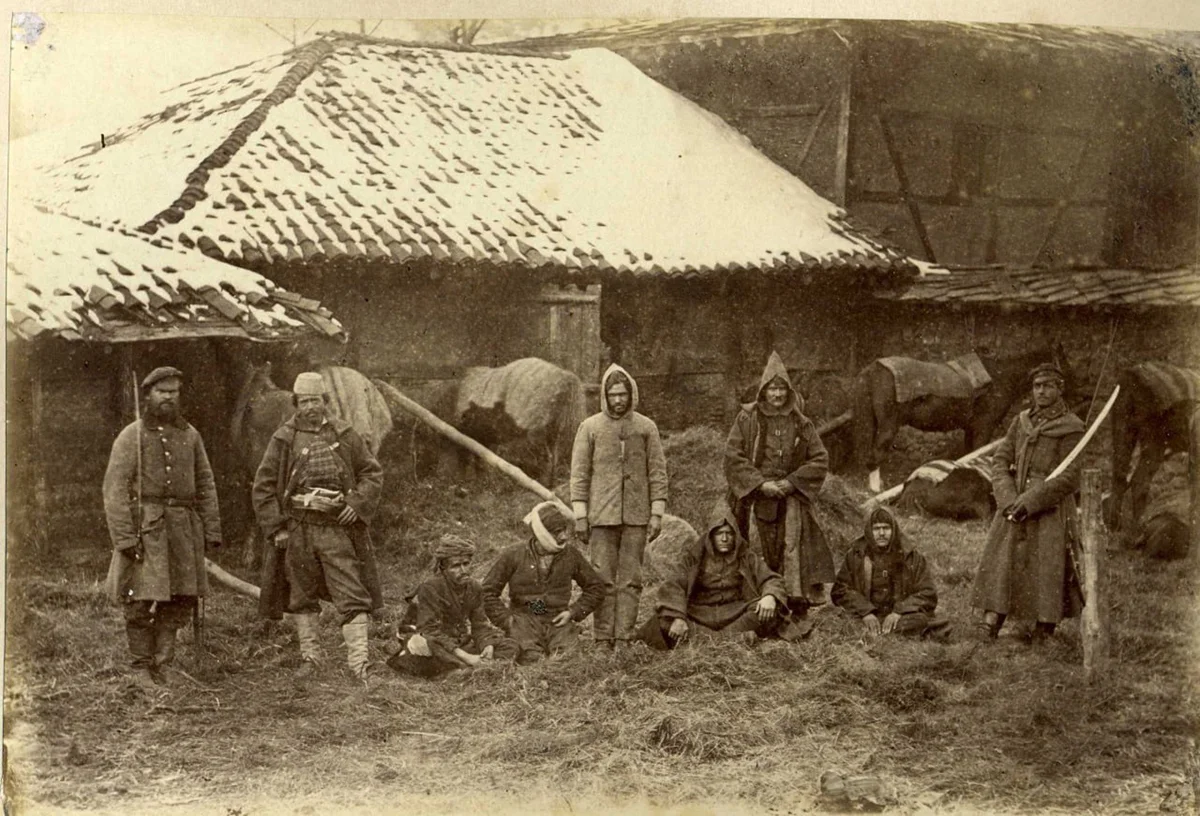
But there is another dimension. For personnel officers, it was a time of ranks, orders and large salaries. For the Russian public, which experienced Slavicophyl ecstasy, this war embodied claims to the central role in the Slavic world. But who was dying? Simple soldier. Due to the universal military service, he was sent to serve, and then, by coercion, he was thrown into battle.
The status of a “liberator warrior” ennobles death, but can hardly be considered fair retribution for those given to life and destroyed families.
Look at the picture of the artist-realist Konstantin Savitsky “to the war”: the mobilized has a whole range of emotions, except for one-conscious readiness to save the Bulgarians. In the future, some eyewitnesses preserved even the surprise of the soldiers: why free the Bulgarians if they live better than us?
In that distant era, the Russian Empire behaved in accordance with the norms of that time. But if the norms have changed, then the memory should react to this.
Please note that the ideas about the mass army, the draft army, the armed people are built exclusively on the ideas of defense. There is no real external threat - the state does not have the right to demand from ordinary citizens of self -sacrifice, even to “defend national interests”. The experience of the Russian-Japanese, First World War, Soviet-Finnish and Afghan wars demonstrates that serious problems begin in the Russian army if the soldier is not sure that he is defending his country. Ultimately, the heroic myth of 1877-1878 itself directly left the side of the Russian army in the next major war - with Japan.
Controversial gratitude
No matter how sad it sounds, but every time gratitude to the “Russian people” is addressed to the empire and the state, she ignores the fact that the sentence soldier gave his life on orders in the war, which was not defensive and forced.
This is not a reproach for the Bulgarians: those decisions have already been made, the war took place, the dead are dead. The sacrifices made deserve monuments, reverence and good memory. But this reproach to all of us who, after more than 140 years, is again not ready to see thousands of small human tragedies, turning away from them either in imperial ecstasy, or in gratitude to the "Empire-Rescue".
It is annoying that the Balgarian social activists and the “Russophiles” professors today have become participants in the propaganda machine, the ultimate goal of which is to kill Ukrainians and turn Russians into killers. Different motives can lie behind such complicity: search for support, the struggle for the good image of Bulgaria or following geopolitical fantasies, according to which, despite all the horror of the Russian-Ukrainian war, the main evil is the “world hegemon” in the form of the United States. But the motives here are not as important as the result.
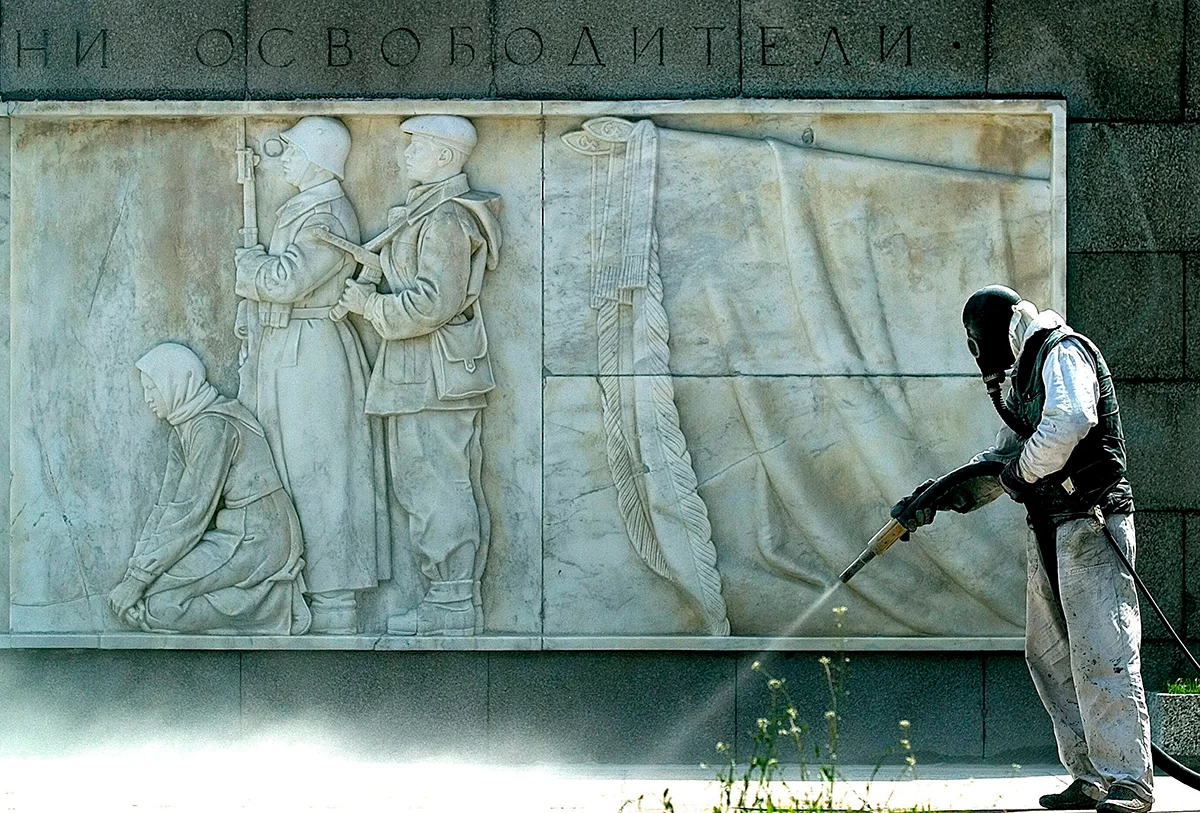
It turned out doubly a paradoxical situation: for many years, it was Bulgaria from all European countries that most carefully kept the memory of the “glory of Russian weapons”, but official Russia looked at the Bulgarian with arrogance. Politing the monuments to the Russians, the Putin state itself pushed the opponents of its policy to raise the question of their demolition. But another paradox is hidden behind this: the “Russophiles” Bulgarians are today ready to sing along with the regime, adding their voices to the choir of those who send Russians to death and crime. A hitch formed between imperial dreamers and those who are ready to clean other people's imperial boots.
The output is simple: to leave the story to historians and not to pull from it to the present, those principles by which we do not want to live. The Russian state (in the current form) cannot be allowed to it. And to all of us to learn that memory is not for the dead, but for us, and therefore there can be nothing in it that justifies the state’s right to manage the lives of subjects.