
Translated material
Not humanly
The court in the United States equated the rights of a frozen embryo to the rights of a living child. Doctors fear that this will discard the achievements of science back
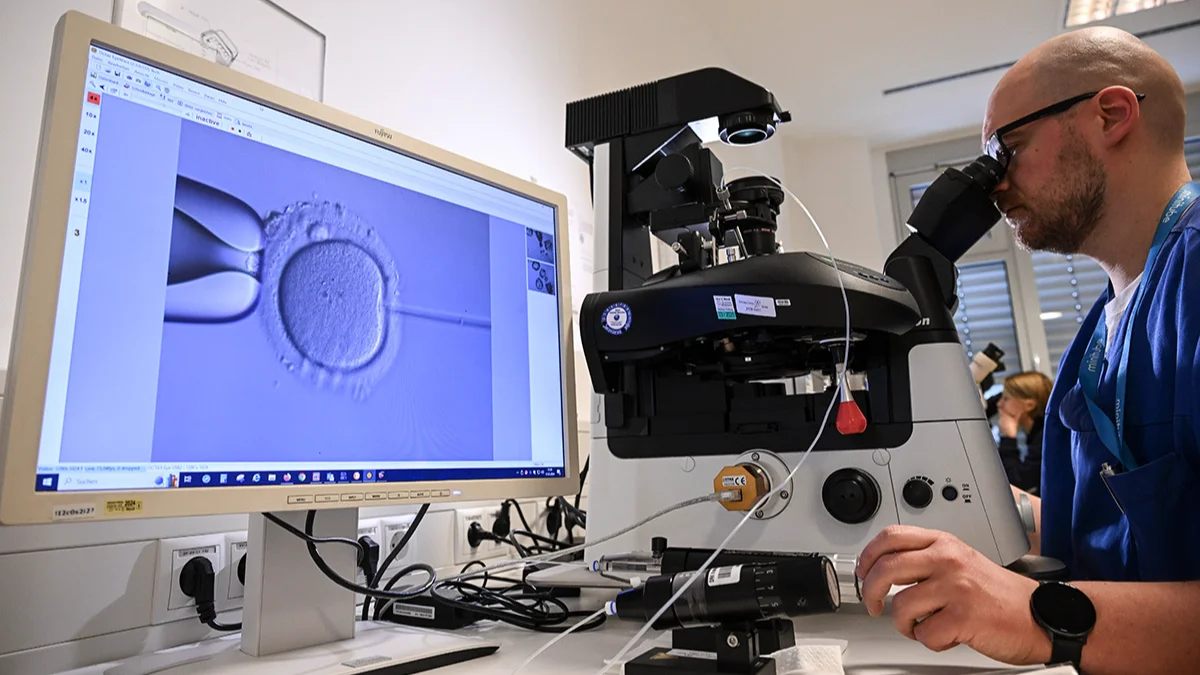
Photo: Jens Kalaene / Picture Alliance / Getty images
At the end of February, the American state of Alabama made an unprecedented decision, according to which a frozen embryo is now considered a person and is endowed with all rights, and his death falls under the law on illegal actions in relation to a minor. Supporters of this decision believe that human life is considered life since conception and is as sacred as the life of an already born person. Opponents are afraid that the recognition of eight -cell microscopic embryos with children will move back all the achievements of reproductive technologies and in the future can deprive hundreds of thousands of people to become parents.
Embrion of a minor
The reason for the adoption of this decision was banal indiscretion and negligence.
In December 2020, one of the patients of the clinic of reproductive medicine in Alabama entered the cryoconsection department and took out a capacity with frozen (cryoconced) embryos stored in it. Since the embryos are stored at ultraminus temperatures, the patient expectedly burned on the ice, pulled her hand away and dropped the container with embryos, which were destroyed and died.
The embryos belonged to a married couple, who, several years ago, with the help of IVF already gave birth to a healthy child, and placed unused embryos in the cryo -storage for a possible future pregnancy.
As a result of someone else's oversight, the couple lost potential children, and therefore filed claims. One - to the clinic of reproductive medicine in connection with the negligence in relation to the storage of embryos. The second was directly presented to the hospital conducting the IVF procedure, on the basis of the Law on the Law on the Law on the Unlawful Death of a minor, allowing parents to demand penalties in the event of the death of their child.
The court of first instance rejected the lawsuit due to the fact that the embryos are not children, and therefore this law does not apply to them. Then the couple appealed this decision in the Supreme Court of Alabama, which issued a verdict that the law on unlawful death of minors should be applied to all children, including in vitro embryos. This decision was the first case when the definition of a “minor” applies to an embryo, not even in the uterus of a woman, but in the laboratory.
Children from the Petri cup
The event that gave hope for hundreds of thousands of childless couples occurred almost half a century ago. In 1977, for the first time, the procedure of extraperational fertilization (IVF) was carried out, as a result of which the first “child from a test tube” - Louise Brown was born.
The essence of the technology is that the fertilization of the egg does not occur in the woman’s body, but in the laboratory conditions, which are created with particular care to achieve the desired effect if it is impossible to naturally.
This is schematical as follows. A woman is performed by hormonal ovarian hypermostation to ensure that several eggs are ripened at once. They are removed using a puncture, selected the most viable and placed in a Petri cup - a special container containing a suspension of sperm, in which the process of fertilization occurs. During the day, two cell nuclei are formed in the egg - unoucles - male and female. As soon as they are formed, it can be stated that the fertilization took place, and the fertilized egg “turns” into an embryo.
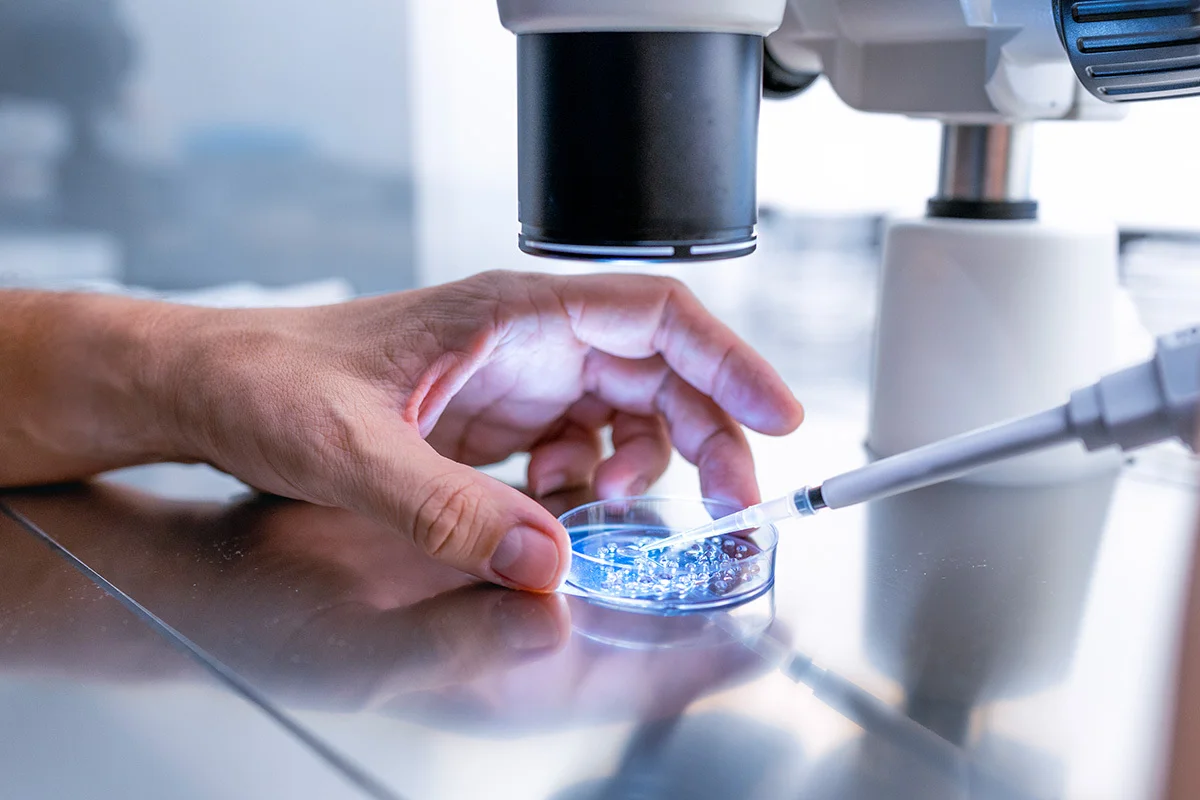
For several days, a cultural cup with embryo is stored in an incubator, in which the same conditions are recreated as in the maternal body: the same temperature and level of carbon dioxide and oxygen are maintained. And it is here, in Petri's cup, that a new life begins to develop.
First, a single cell containing a complete dual set of chromosomes is formed-a zygote that begins to quickly share. Already two days later, the embryo consists of four cells, after three days-out of eight, on the fifth to sixth day of its development, the embryo has a complex structure consisting of almost 200 cells of two types: some “responsible” for the formation of the fetus, others for the formation of the placenta. From this moment on, cell division is accompanied by the growth of the embryo.
As a rule, on the third and fifth day after fertilization, the embryo is transferred to the uterine cavity. Within two weeks, he must “get used to it”, attach to the wall of the uterus and take root. If this happened, pregnancy occurs.
Miracle technology
Conception, at least in a test tube, has long ceased to be a miracle, and turned into a well -functioning modern technology, which helps to realize a person’s desire to become a parent.
Modern methods allow you to get several eggs at once, select the highest quality among them, check them for the presence of genetic defects and only then subject to fertilization.
“As a rule, we fertilize six to eight eggs, we freeze the rest,” says the embryologist of one of the Moscow clinics. - But we plant one - maximum two. Actually, the order of the Ministry of Health of the Russian Federation requires no more than two. This is done in order to reduce the risks of health of both mom and the unborn child.
After all, even this single embryo transplanted into the uterus, cells can begin to share so that two fruits are formed as a result. But the multiple pregnancy is difficult to bear, so only one embryo is usually left.
But what is happening with embryos who were not lucky to be selected for implantation? They often die themselves due to the presence of genetic defects in them.
“With a natural pregnancy, up to 90 percent of embryos, if they have genetic breakdowns, stop in development, and are unusual,” says the embryologist. -And healthy women can freeze to use them after some time or sacrifice them another childless couple.
Embrya’s unclaimed or defects can serve as science:
The legislation of almost all countries resolves various studies of the embryo until the 15th day of its development. The remaining embryos are reduced - speaking by the philistine language, destroyed.
“This is not a child, this is his project,” says the embryologist. -Nobody is worried about blood cells? The embryo at this stage is exactly the same cells.
“These are children who, if desired, are created in Petri's cups, and then, if desired, they are destroyed and used for experiments,” said Lyla Rose, president of the National Organization for Combating Abortion. - This is unacceptable, they are not raw materials.
Status: everything is complicated
On the question of what to consider the beginning of human life is arguing for more than one hundred years.
At one pole - a church and a number of bioetics that adhere to the position that human life begins from the moment of conception: as soon as the fertilization of the egg occurs - there is a person who has the right to life. On the other - liberal views, according to which the newborn is not yet quite a person, has not yet gained consciousness.
Somewhere between these poles there is a doctrine about the status of an embryo, formulated by Aristotle and based on a degree of degree. It suggests that the embryo of the embryo and the acquisition of personal properties occurs gradually, and its development is divided into three stages, which correspond to the trimesters of pregnancy. In the first, the fetus is considered not as a person, but as a part of the body of a woman who has the right to make an abortion. The second stage is an intermediate, in which the fruit is still unusual for, but is already quite developed. Therefore, abortion is allowed only with certain medical indications and pathologies. At the third stage, the fetus becomes viable, at these terms abortion are almost prohibited everywhere.
It is on this approach that the legal attitude towards embryo in many countries is based. Russia, Spain, France, Switzerland, Ireland - the legislation of these countries and some others establishes that the legal capacity of a citizen arises at the time of his birth and ceases with death.

Interestingly, once the Orthodox Church adhered to a similar point of view, and even the division of pregnancy into periods corresponded to today's ideas.
“The first period of pregnancy, when a woman began to feel the tremors of the fetus, was called a revival,” says a bioetik philosopher on anonymity. - This moment testified that the soul from plant became an animal. Arbitrary subporting during this period was not considered a murder, and punishment - Epitimya - was softer for the death of the fetus than in the second period. A full -fledged person, from a Christian point of view, arose only after baptism. The unbaptized child could not even be buried in the cemetery. So the modern Orthodox point of view that life arises already at the time of conception, in fact, is not quite traditional. It appeared only in the 19th century along with successes in embryology, when the scientists found eggs and sperm.
It would seem that new scientific knowledge and the further development of reproductive technologies would have to put an end to these disputes. Indeed, today, scientists in the smallest details know how the development of the cell goes, what and at what stage is happening to it. But paradoxically, new knowledge gives rise to only new issues and launch a new round of disputes about the moral status of embryos.
“I do not accept the argument that embryos have any moral status, and even more complete and equal rights of people, ” says J. Lawrence, professor of the Center for Applied Ethics. Markkula. “If this were true, then the Petri cup, who is replete with living human cells, grown from someone’s cancer tumor, would be full of people.” But this is absurd!
In his opinion, embryos outside the female body do not have the potential in the true sense of the word - just like the seed in packaging from the store does not have the same potential as the seed in fertile, well -groomed soil.
My interlocutor, a specialist in the field of bioethics and medical law, is also talking about a special status:
- The embryo is not just a group of cells - primarily due to the attitude of future parents to it. Respect their feelings is a completely justified reason for strict punishment, if we talk about the situation in Alabama.
But, obviously, to recognize these embryos with unborn children who are outside the womb, to determine their legal status outside the context of social relations is absurd practice.
The consequences of such a decision, if it is adopted in other countries, can be radical and threatening the current level of development of reproductive medicine.
Science vs ethics
Today, science can do a lot.
For example, allowing to become parents not only barren couples, but also to those who, from the point of view of biology, cannot have children - these are same -sex couples, lonely men and women.
Or avoid the birth of a sick child. To do this, the resulting embryos before implantation is carried out genetic testing to select the embryo without pathologies.
For the same purpose, gene editing tools develop - the so -called “scissors” for CRISPR DNA. With their help, you can “cut” a defective gene and replace it with a healthy copy.
A year ago, the first child created using DNA three people was born in the UK. For this, the methodology of mitochondrial donation was used, which is aimed at preventing children inheritable diseases by children. For conception, not only the egg and spermatozoa of biological parents were used, but also the donor mitochondria, which were supposed to replace defective maternal ones.
The day when it will be possible to determine the physical characteristics of the unborn child on request - the color of the eyes or hair, as well as his floor, opponents of such progress are worried. They consider the very fact of selection of embryos immoral and remind that the desire to have a child is not equal to the right to have a child. According to the professor of the Department of Health and Human Rights University of the University of Monash (Australia) Lisa Bishop, the right to create a family, the right to use the results of scientific progress in international law, is recognized in international law, but the right to create a child in an artificial way is the right in its genuine sense, this is only a claim to the right, the desire, which in itself does not create legal relations.
- For years, we have been “playing God” with medicine, prolonging life and eliminating various causes of death. And we, of course, are already accustomed to the fact that after almost fifty years after the birth of Louise Brown, we can help people give birth to healthy children with the help of reproductive technologies, ” Dave Archard, an invited researcher at the school of history, anthropology, philosophy and politics of the royal university of the Belfast.
If this decision - to recognize embryos by children - will go beyond the limits of the state, then in some cases reproductive technologies will become unavailable.
Doctors fear that they will only be created by a limited number of embryos in order not to freeze them, but immediately transfer them to the uterus. And in case of failure, additional procedures for stimulating the ovaries and implantation of embryos will be necessary. These are not only certain risks for the health of a woman, but also a serious blow to her budget. The inability to freeze embryos will make it impossible to conduct preimplanting genetic testing. This means that the genetic analysis of the fetus will be done already during pregnancy and in the case of severe pathology, a woman will have to abort or give birth to a obviously ill child.
However, a big question is whether clinics will want to carry out such manipulations. After all, they can be held accountable whenever the embryo was unsuitable for implantation. Parents who freeze embryos will also be in a difficult situation. They will have to pay for the cryo storage even if they no longer plan to have children, or be ready to be responsible for the death of potential children.
According to my philosopher's interlocutor, it is responsibility that is the basis on which biotechnology should develop.
“I believe that society is still following the path of humanization,” says the philosopher. -Look, once the embryos were disposed of as biofacers-along with the corpses of animals. Now in some countries, practice appears when an unborn fruit can be buried. And this, of course, is a step towards humanity. Bioetics does not limit biotechnological progress, but it should be civilized. Developing reproductive biotechnologies, you need to be prepared to bear responsibility for risks. And by the way, in those countries where these technologies are well developed, rather strict legislation. The law should not be aimed at restricting technologies, but at their responsible use.