
Translated material
Political regimes and transformations
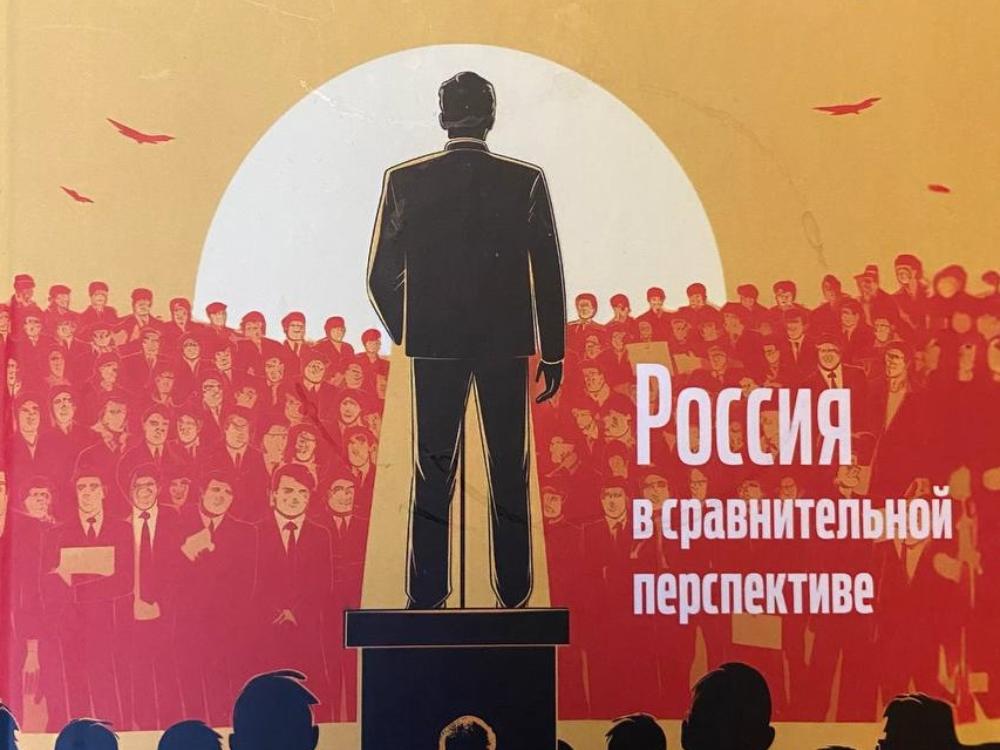
Ruthenia Publishing House presents Grigory Golosov’s book “Political Regimes and Transformations. Russia in comparative perspective".
The book presents a classification of political regimes that allows us to introduce the analysis of modern Russian politics into a broad comparative context. Based on studying the experience of a number of foreign countries, the problems of transformation of political regimes are considered, which allows us to substantiate some conclusions about the prospects for Russian political development. Institutional solutions are proposed that would allow optimizing political transition processes and the functioning of democratic statehood.
We suggest you read one of the sections of the book.
3.1.3. Case study: the case of Spain
The case of Spain is important as a model of the transition to democracy carried out at the hands of the successor of a personalist dictator after his death. The transition to democracy was preceded by a transition period, but it was fleeting and relatively painless. I find this model extremely atypical and unlikely. To understand why this is so, let us examine the case of Spain in more detail. Dictator Francisco Franco Bahamonde ruled Spain from 1939 until his death in November 1975. He came to power as a result of a long and bloody Civil War (1936-1939), which the supporters of the republic then ruling in Spain waged against the monarchists.
The Spanish left - socialists and communists - played a prominent role in the republican camp. Many Spanish right-wing politicians were monarchists, as well as the military led by Franco who took part in the rebellion against the Republican government. They were joined by the then quite influential Spanish fascists (the so-called “national syndicalists”). Franco himself was not a fascist. Many observers believed that a split in the right-wing camp was inevitable. However, Franco was lucky: at the very beginning of the civil war, the popular leader of the fascist party, Marquis Primo de Rivera, was shot by the Republicans. As a result, Franco became the sole leader of the right camp.
Franco won the civil war largely thanks to the military support of Nazi Germany and Fascist Italy. And the Franco regime itself in the first two decades of its existence was in many ways similar to a fascist dictatorship. It was a brutal, repressive regime. Hundreds of thousands of Spaniards who supported the republic were killed or went through concentration camps. The only party was declared to be the “Spanish Phalanx” created by Primo de Rivera, the name of which included the word “traditionalist” as a sign of reconciliation with the monarchists.
Franco remained officially neutral in World War II, but helped Germany and Italy in many ways, including sending a Spanish expeditionary force to the eastern (Soviet) front. In essence, however, the Franco regime from the very beginning was structured differently, or even completely differently, from the party regimes of Hitler and Mussolini. The Generalissimo was deeply alien to the ideological radicalism of the European right. He was simply a nationalist and conservative. Franco's primary concern was the preservation of "traditional values", which for him centered on the unity of the Spanish state, the monarchy and the Catholic faith.
With the defense of faith, the situation was simple: in Francoist Spain, everything that could in any way offend the feelings of believers, including divorce and abortion, was prohibited. It was more difficult with the monarchy. Franco's ideas about royal power assumed its absolute nature. However, he did not want to cede power to the king at all. An intermediate solution was found: in 1947, the monarchy was officially restored in Spain, but no monarch was identified. Instead, Franco was declared regent for life with royal powers. His title was minted on Spanish coins: “By the grace of God, leader of Spain.”
All power was concentrated in the hands of Franco. The “Spanish Traditionalist Falange,” which at the last stage more often used the name “National Movement,” was officially considered responsible for developing the ideology of the regime and remained the only legal party, but did not have much influence on Franco—and, therefore, on the decisions he made. Only in 1967 did Franco go so far as to give at least some - albeit insignificant - real powers to the Spanish parliament, the Cortes, for the formation of which the Phalanx was responsible. In addition, in 1969, Franco designated Prince Juan Carlos of Bourbon as his heir. He was to become a full-fledged king after the death of the lifelong regent and the virtual restoration of the monarchy.
Since the 1950s, the main role among Franco's closest advisers, and especially in the economic bloc of the government, was played by members of the Catholic order Opus Dei. Sharing a commitment to conservative values with Franco, senior members pursued very liberal economic policies. In the late 1960s and early 1970s, these policies bore fruit, generating an economic boom known as the “Spanish economic miracle.”
However, the scale of this miracle, compared with the then East Asian and Latin American breakthroughs, was modest. Life in the country remained quite poor. Labor migration from Spain to Western European countries, especially Germany, has acquired a massive scale. This played a big role in shaping the worldview of the Spaniards, who could see how “godless” - as Spanish propaganda persistently insisted - Europe was more prosperous than God-saved Spain. In addition, life under Franco's rule, with its endless prohibitions and restrictions, was incredibly boring.
By the end of the 1960s, the “economic miracle” had finally run out of steam. Discontent gradually grew in the country, which in 1968 led to mass protests by students. Political terrorism has become a serious problem. However, there was also a growing understanding in ruling circles that change was inevitable. There were several reasons for this. Although in the context of the Cold War Spain was seen as an integral part of the Western bloc, the Franco regime with its semi-fascist past never became completely its own for Europe. And this was painfully perceived by Spanish politicians. They just wanted to be “like everyone else” and enjoy the usual respect that comes with being recognized as normal.
Career prospects were not very clear either. The Phalanx certainly did not become a mechanism for political growth, but an administrative career depended mainly on the favor of the dictator. And no one knew who the next dictator would be. Franco's official successor was Juan Carlos Bourbon. However, he was devoid of any desire for real power, and I believe that only in this capacity was he acceptable as the formal heir of Franco.
The most likely successor to Franco's policies was Luis Carrero Blanco, who served as prime minister for several months in 1973. He was a staunch Francoist who advocated economic modernization, but strictly within the political framework of the old system, which excluded any kind of democratization or liberalization. However, in December 1973, Carrero Blanco was killed by Basque terrorists.
After Carrero Blanco, the Falange and the government were headed by more or less colorless bureaucrats, devoid of political ambitions. In November 1975, Franco passed away. In July of the following year, King Juan Carlos appointed Adolfo Suarez as the country's new prime minister, who did not hide his desire for change, although he did not advertise it too much. Suarez had a very successful career under the old regime, rising from a humble functionary of the Falange to its general secretary, that is, its chief administrative manager. Since the role of the Phalanx in Spanish politics was rather modest, this did not bring Suarez much personal fame. And this, perhaps, did him good, because the king might not have decided to appoint a prime minister with a national reputation as a reformer. He would have been afraid of the military, among whom the idea of political reform was not popular. The military’s connections with the far-right Francoists were no secret. But Suarez was an acceptable candidate.
Suarez's leadership in the Phalanx largely determined the success of the democratization course, which he pursued with the full support of the king. After all, this course had to be enshrined in law, and this could only be done by the Cortes formed by the “Phalanx”. It is clear that if Suarez’s relationship with the Phalanx had been difficult, then things would hardly have gone smoothly. But for the phalangists, he was, firstly, their own, and secondly, their boss. And since they themselves, for the most part, accepted the need for change, they did not offer strong resistance.
Already in 1976, Suarez managed to begin political reform without major problems, during which a new electoral law was adopted that provided for multi-party elections. Opposition parties were legalized, the main ones then being the left-wing heirs of the republican tradition - socialists and communists.
In 1977, Suarez announced the dissolution of the Falange and created a new party, the Union of Democratic Center. Ideologically, this party was moderate-right, liberal, that is, it had nothing in common with the Phalanx. However, a significant part of its members were former Phalangists. This allowed them to continue the political careers begun under Franco, and even remain in power, because the Union of the Democratic Center won the first free elections, held in June 1977 (as well as the next one in 1979).
The 1977 elections largely completed Spain's rapid democratization. However, unresolved problems remained. First, since the Civil War, there has been a deep, painful split in Spanish society between the right-wing monarchists and the left-wing republicans. Having lost the first free elections, the left experienced a strong temptation to radicalize, to go beyond the framework of the new political order. But this danger did not materialize.
On the one hand, the left showed considerable political responsibility by refusing to actively fight against the new regime. They chose to become part of it. On the other hand, Suarez also showed flexibility in relations with the left when, in 1978, he agreed to conclude the so-called “Moncloa Pact”, within which the left and the government agreed on the main parameters of economic policy. Although the Pact of Moncloa settled primarily economic issues, it also had a serious political dimension, since it allowed the left to be fully included in the new political structure.
Secondly, the military, with its traditional sympathies towards the far right, remained a serious threat to democratization. Indeed, in February 1981, part of the Spanish military attempted a coup d'etat, declaring their goal to establish an absolute monarchy. However, Juan Carlos, after some hesitation, rejected this gift and condemned the putschists. This rendered the coup attempt meaningless and it failed.
Thirdly, Spain's party system remained undeveloped. While the left flank was firmly occupied by rising socialists and declining communists, there was a gaping hole on the right flank, because the Democratic Center Union was not a stable party. It was based on the personal authority of Suarez, but the contradiction between the leading role that the Union played in democratization and its predominantly Falangist assets could not pass without leaving a trace. In the early 1980s, the Union collapsed. A significant part of its members moved to the party, which was led by another prominent Falangist and long-time opponent of Suarez - Manuel Fraga Iribarne. This party is now called the People's Party. So Spain became a normal democracy, with two main political forces alternating in power - left and right. From 1982 to 1996 the socialists ruled, then the People's Party, from 2004 to 2011 the socialists again, then the People's Party again, and so on.
Let me return to why I find the Spanish model of regime change not particularly likely in Russia. If you look at the specific situation, Spain was simply lucky. The assassination of Carrero Blanco left the country without an energetic politician willing to take on the burden of a personalist dictatorship with all its trappings. But this, of course, leaves open the question of why a bench of this kind was reduced to one person.
There were structural reasons for this. From a political point of view, decades of personalist dictatorship and the resulting negative selection of political personnel led to the fact that all possible successors were administrators rather than politicians. And whoever was lucky enough to lead the country had every reason to expect to continue a successful career in a democracy. Absolute power was of no use to him. His numerous subordinates in lower positions in the administrative apparatus adhered to the same attitudes. And of course, the decisive role was played by the lack of interest in dictatorial rule among the formal head of state, the king. The role of a constitutional monarch under a normal parliamentary system of government suited him much more.
There is little in Russia that even remotely resembles this configuration of power favorable for the transition to democracy. However, the main structural reason behind the smooth democratization in Spain is simply that it offered a clear prospect of entry into Europe for both the Spanish people and the ruling class. A dictatorship would simply not be accepted into the European Community, and the benefits of integration were obvious both to Spanish potential European bureaucrats and to ordinary Spaniards, who had long ago, thanks to labor migration, become clearly familiar with the benefits of a united Europe. Later, the entry of the EU played the same role as a prize for democratization in the history of Eastern Europe. But Russia will not receive this prize under any circumstances.
3.1.4. Case study: the case of Portugal
António de Oliveira Salazar ruled Portugal for more than forty years. At the beginning of his journey, nothing foreshadowed not only his remarkable political longevity, but even his political career. In the twenties of the last century, the bright politicians who ruled the so-called First Republic dominated the Portuguese political scene. This failed democratic experiment, which lasted a decade and a half, was marked by an almost continuous government crisis, a rapid decline in the standard of living of the population and monstrous corruption.
In 1926, the Portuguese military seized power with the firm intention of putting an end to this outrage. However, they were unable to specify their intentions by offering the Portuguese people some kind of program for overcoming the crisis. It was then that Salazar appeared on the scene.
At the time of coming to power, Salazar headed the department of political economy and finance at the same university from which he once graduated with honors. It was Salazar's recognized competence in economic matters that prompted military leaders to invite the professor to the government, offering him the post of Minister of Finance. Salazar did it: he successfully reorganized the tax and financial system and brought Portugal out of the economic crisis. In 1932, when the actual levers of governing the country were already in the hands of Salazar, he was appointed prime minister and began building a political system called the “New State.”
From a formal point of view, the “New State” was a presidential republic. Portugal held presidential and parliamentary elections, although at first opposition parties and candidates were not allowed to participate. In 1945, the activities of the regime-controlled opposition were allowed. She had no chance of winning the election. Actually, the legal oppositionists did not strive for this. But if they had such a desire, nothing would have happened: Salazar, with his passion for order and control, paid great attention to ensuring that elections did not bring surprises. Simply put, he preferred to falsify results even in conditions where there was no real competition. All seats in parliament were always won by Salazar’s National Union party, and the presidential elections were won by honored generals who accepted the highest position from the hands of the dictator on the condition that they would not lay claim to real power. Salazar ruled Portugal while remaining as prime minister.
At the stage of building the “New State”, Salazar borrowed quite a lot from the practice of contemporary fascist regimes. However, like his neighbor on the Iberian Peninsula, Franco, Salazar was not a fascist. The two dictators were related by nationalism and commitment to traditional values, which was reflected in the main slogan of the Salazar regime: “God, Motherland, Family.” But on a personal level, Salazar was not at all like Franco with his vanity and love of artistic gestures. He was invisible. He rarely appeared in public. No one knew anything about the dictator’s personal life, but even political opponents recognized his modesty and complete lack of interest in the material attributes of power. Salazar did not care about palaces, yachts and pompous entertainment. Only power as such. To protect her, he was ready for repression and political assassinations. In many ways, Portuguese authoritarianism was even harsher than Spanish. The political police, the so-called PIDE, carefully monitored and suppressed any threat.
In addition to Salazar's personal selflessness, his critics were forced to admit that he pursued sound economic policies throughout his long reign. At the time of his rise to power, Portugal was the poorest country in Europe. This has not changed under Salazar, but they managed to close the gap, and quite noticeably. The liberal economic policy that the dictator always followed gave rise to high rates of economic development. From 1950 to 1970, average annual GDP growth in Portugal was 5.7%. This is quite a lot by the standards of Europe at that time.
However, for Salazar himself, the main goal and measure of all achievements was the preservation of the Portuguese colonial empire, which was not very large compared to the possessions of Great Britain or France, but still included large, populous African countries such as Angola and Mozambique. For Salazar, the fight to preserve the "Portuguese Peace" (the name of the pompous exhibition held in Lisbon in 1940) was part of the fight for the country's national unity. But black residents of the African colonies had every reason to see the situation very differently. They supported independence movements, the largest of which, having come under communist control in the sixties, with the support of the USSR, waged an armed struggle against Portugal.
Paradoxically, it was the rigidity of the regime that largely contributed to the spread of communist ideas in the Portuguese colonies. PIDE managed to suppress almost all the opposition in Portugal, but could not cope with the communists operating deep underground. Coming to Lisbon to study, many young Africans looked for enemies of the regime, for which they had no sympathy, and found only communists.
During Salazar's lifetime, the colonial wars in Africa were just beginning and did not pose a great danger to the regime. And when in 1968 the eighty-year-old dictator suffered a stroke and lost the ability to lead the state, he had every reason to be satisfied with the results of his rule. But he didn’t have to sum it up. Although the powerless president of Portugal was forced, in line with reality, to actually remove Salazar from power, no one told the dictator himself about this. He died in blissful ignorance in 1970, still believing himself to be the country's leader.
Despite this turn of events, the Portuguese regime did not have any particular problems with a successor. Salazar took care of this too. The dictator's loyal comrade-in-arms, Marcelo Caetano, became the new prime minister. With him, it was as if everything remained the same. However, the regime's successes ended, and the accumulated problems were fully revealed. Salazar's model of economic development failed in the difficult situation that befell the global economy in the first half of the 70s. But the main problem was the war.
The costs of maintaining the “Portuguese peace” by force accounted for more than 30% of Portugal’s budget expenditures. The population, of course, tightened their belts, but endured. Salazar's officials were happy with everything. The blow to the regime was unexpected, and it was inflicted by the very people who once brought Salazar to power - the military.
Why did this happen? A warring army poses a threat to any dictator. Of course, this threat is realized only if the war drags on and becomes inconclusive, but this was the case with Portugal’s African wars. Then it begins to show that in combat conditions the main factor in a military career becomes not loyalty, as is usually the case in non-combatant armies, but military valor itself. This opens the door to young, enterprising people, often from poor backgrounds, for whom the army was the only career option. Of course, for these officers to intervene in politics, will alone is not enough; ideas are needed. However, one of the regularities of counterinsurgency operations is that the officers participating in them become imbued with the ideas of the enemy. Leftist sentiments spread within the Portuguese army. Many officers were associated with the underground Communist Party.
In April 1974, a military coup took place in Portugal, which went down in history as the Carnation Revolution. Already during the coup, it became clear to what extent ordinary Portuguese were tired of the previous regime. They greeted the military who seized power with flowers. Once in power, the military created a new supreme authority, the Junta of National Salvation, and eliminated the main apparatus of the regime, including Salazar's party and PIDE. The war ended with all African colonies gaining independence.
The April Revolution was bloodless. This is because the army presented a united front against the dictatorship. Soon, however, ideological differences in the leadership of the coup participants made themselves felt. By the fall of 1974, the leaders of the coup, who held conservative views, were removed from power. The role of the left, on the contrary, has increased. The Communist Party began to play a fairly prominent role in the military-appointed government of Portugal. Under the influence of the communists, reforms were carried out in the country, some of which were timely (for example, agrarian reform), while others did not lead to anything good (for example, the nationalization of certain sectors of the economy). Of course, the Portuguese communists, who adhered to views quite traditional for this ideological movement, wanted more. They sought to establish a communist regime in the country. In 1975-1976, Portugal went through turbulent times with attempts at new military coups (both on the left and on the right), “premonitions of civil war” and other delights of the revolutionary period.
However, Portugal managed to avoid this disaster. For all their leftist sympathies, the Portuguese military was not ready to replace the nationalist dictatorship with a communist one without asking the opinion of the people. In April 1975, the first free multi-party elections to the Constituent Assembly in the country's modern history took place. In these elections, the Communists received only 12% of the votes. The majority of Portuguese voted for parties that advocated a democratic path of development - the Socialists, who have since occupied the main place on the left flank of Portuguese politics, and two right-wing ones - the Social Democrats and the Union of Democratic Center.
With this composition, the Constituent Assembly adopted a new constitution, which paid symbolic tribute to revolutionary ideas (for example, recognizing the ultimate goal of development as a “socialist society”), but in general was a completely normal basic law that laid the foundation for democracy in Portugal. This foundation has proven to be strong. The country's further development took place without serious political upheavals, and even the Portuguese party system, in which socialists alternate in power with the right, and communists usually remain in opposition, has remained almost unchanged since the seventies.
Unlike the Spanish one, the Portuguese model of the outcome of a personalist regime after the death of a dictator is quite typical. In such situations, military or other security officials turn out to be the first contenders for power, and a military coup is a very likely event. Sometimes the time interval between the death of a dictator and a coup is not even years, but days. Let's say Ahmed Sekou Toure, who led Guinea for more than 25 years, died on March 26, 1984, and on April 3 there was already a military coup that put an end to the regime and all its institutions. However, over the decades of personalist dictatorship, these institutions have largely become fiction. For example, in Guinea there was formally a ruling party, but its apparatus completely merged with the state bureaucracy, and party cards were issued to all citizens of the country without exception. The death of Sekou Toure not only decapitated the regime, but literally destroyed it.
Where the Portuguese case is atypical is that the transition to democracy occurred quite quickly, although not without problems. In this regard, Guinea is more indicative, which, after the death of Sekou Toure, entered a long period of crisis development, which included military dictatorships, unsuccessful attempts at democratization and even a bloody civil war. There is still a military regime in Guinea. However, such modes will be discussed below.