
Translated material
"Others are fighting evil." Book of Interview Radio Liberty
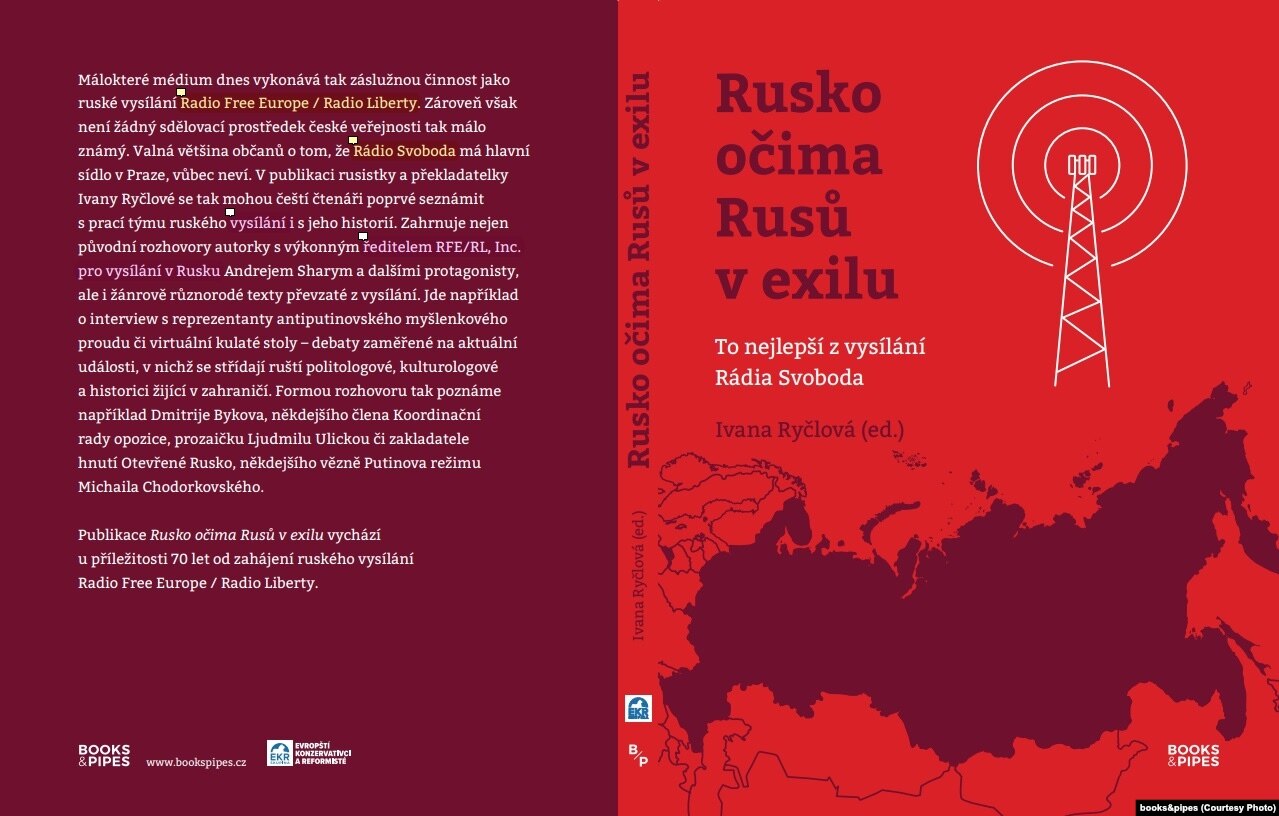
In the Czech Republic at Books & Pipes The book “Russia through the eyes of Russians in exile. The best of the Radio Liberty broadcasting” was published. This Czech-speaking publication includes a story about the history of the Russian service, which celebrated its 70th anniversary last year, as well as translations of conversations published on our website and sounded on the air of Freedom.
This collection is a palette of views and evaluating the situation on the eve of the day and after the outbreak of war in Ukraine, data from political scientists, culturalists, writers, public figures and historians who were abroad for various reasons. The book was a continuation of the joint project of the Brnensky intellectual magazine Kontexty and Radio Liberty, dedicated to the anniversary of the editorial office. The headquarters of the American media corporation, we remind, since 1995 has been in Prague.
Some of the characters of this book, like Mikhail Khodorkovsky, left due to the unprecedented persecution, who had begun by the Kremlin, others, as the writer Lyudmila Ulitskaya or the poet Dmitry Bykov, left Russia after Moscow began aggression in relation to the neighboring state - Ukraine. Translations of these interviews in the Czech language are collected in a book on the occasion of the 70th anniversary of Radio Liberty.
“The fact that when choosing materials for the book was motivated most of all, the key that helped to choose from a huge number of texts is a human story,” says the compiler of the book, the Czech Russianman Ivan Rychlova . - This story does not necessarily lies on the surface, but it is noticeable. The interviews are filled with emotions, and they are not only related to how the Russians see their homeland in exile, but also with what metamorphoses their life undergoes. This gives an understanding that these people are worried about the current terrible situation. As a literary critic, after the war began, I thought that all the values that are in my view are related to classical Russian literature. And I decided that from now on I would try to make attention to the other side of Russian culture, which exists in parallel to official, and, in fact, to do what I did in the past.
Russian culture has never been monolithic. There was always official, unofficial, in exile. Therefore, the place where you can continue to conduct a dialogue with Russia, exists outside Russia. And the collection presents the voices of the exiles: this is the writer Lyudmila Ulitskaya, and Dmitry Bykov, not only the poet and writer, but also the opposition, who was poisoned by the same substance as Alexey Navalny. In other words, these are people who are open to the dialogue. According to Dmitry Bykov, it is necessary to give a little time to Russian culture so that it again gains the ability to speak, because now she does not have sufficient forces for this.
“Everyone who is presented in the collection under your editorship is people who have gone abroad.” Why was it important for you that these are exiles, emigrants?
Not all Russians for Putin, there is another Russia outside Russia
- I had several levels of motivation. Firstly, I wanted to introduce Czech readers not only with the names that they are well aware of, but also with those who are not so familiar with the Czech public. For me, such a person, for example, is a very interesting poet Ilya Kukulin, a literary critic, a critic living in America. I also wanted the list of names to be quite motley. Since Mikhail Khodorkovsky is a well -known oppositionist, of course, I chose his interview for the book. His views on the future future of Russia, I think, is not as familiar to the Czech reader as you can read, for example, in the local press. Khodorkovsky has a book “How to kill a dragon”, where he sets out his views on development, believing that the democratic path of Russia is possible if the country becomes a parliamentary republic, or with such a political structure where there will be more than one ruler, not one sovereign, but several real centers of power.
Our collection continues a series of publications about Russia. The previous one, the book " Curse of the Empire and Russian Lies ", examined Russia through the eyes of Western historians and political scientists. The idea of the new collection was that the reader looked at Russia through the eyes of those who left, but at the same time know the country from the inside, as a person who was born there is connected with the country. The perception of these people, as it seemed to me, will differ from Western theorists or historians who look at Russia from the outside.
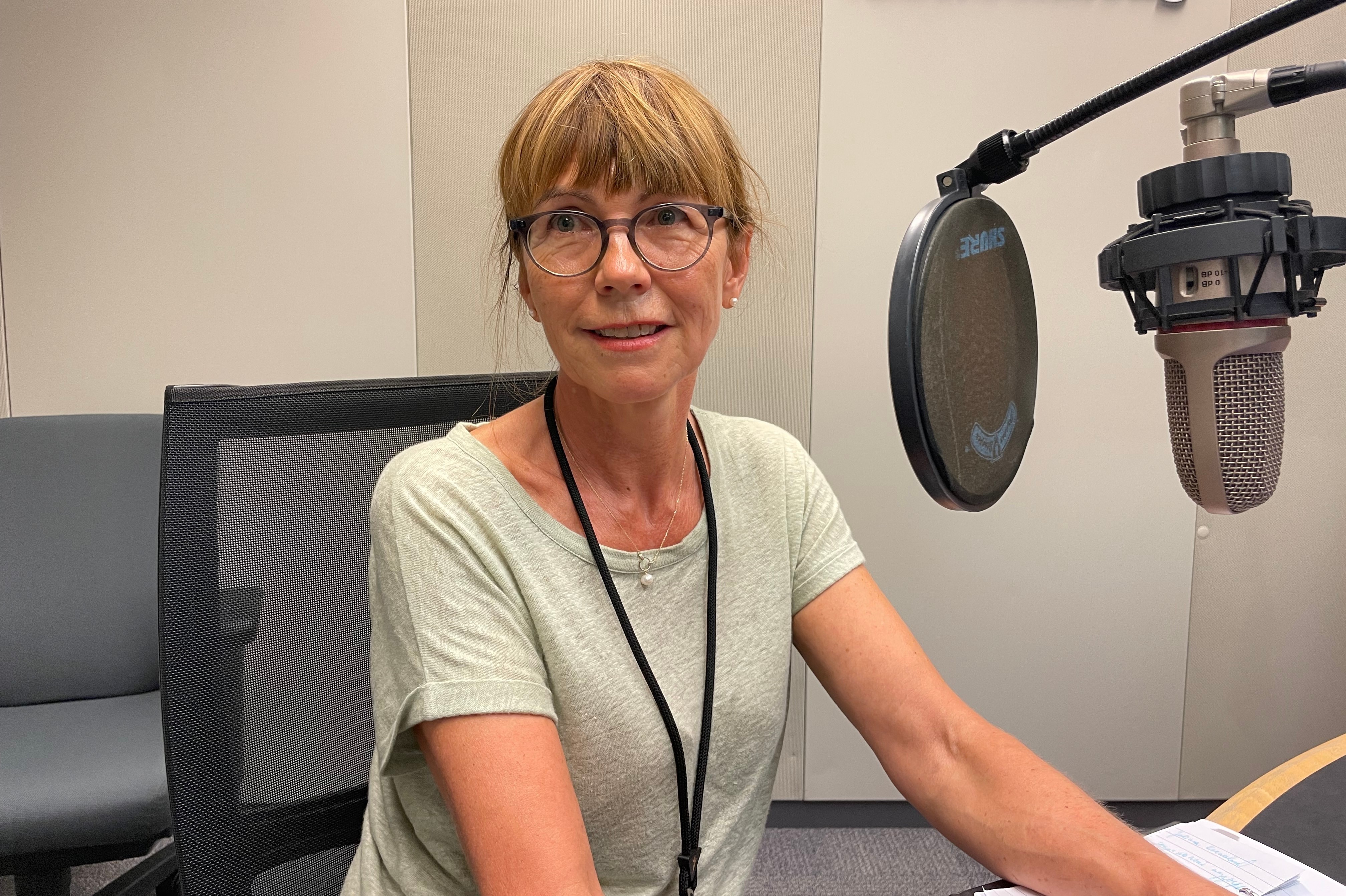
It was also important that all the heroes of the book are against the war, because one of the goals of the project is to show that not all Russians for Putin, that there is another Russia outside Russia, and it is these people who help us understand that not all Russians support Putin’s policy. We can say that in the Czech Republic many Russians do not share, but perceive as one, since we have negative experience after 1968. I wanted to show that there are other Russians who are fighting evil. When Putin invaded Ukraine, I remembered the play by Grigory Gorin "Forget Herostrata!" Her main idea is that unpunished evil begins to grow. Since the late 1980s, I have been writing and reading books in which public evil is considered, taking into account its influence on both creative and ordinary people. It seems to me that the whole world has understood the meaning of social evil and generally evil as such. In the finale of the play, Gorina enters the game Deus Ex Machina , because in reality there is no power that would have stopped evil. I have been observing the last two years what has been happening ... And I don’t know where the Deus Ex Machina will come from, but it is necessary because it seems to me that the sanctions do not help, and evil continues to creep, ”says Ivan Rychlova, Ivan Rychlova.
The publication in the Czech of the collection "Russia through the eyes of Russians in exile" was supported by the former Minister of Defense of the Czech Republic and a many -year -old friend Vaclav Gavel, dissident Alexander Vondra , now a deputy of the European parliament. He talks about why he considers it important that the voice of Russians who do not support the Kremlin’s aggression against Ukraine is heard:
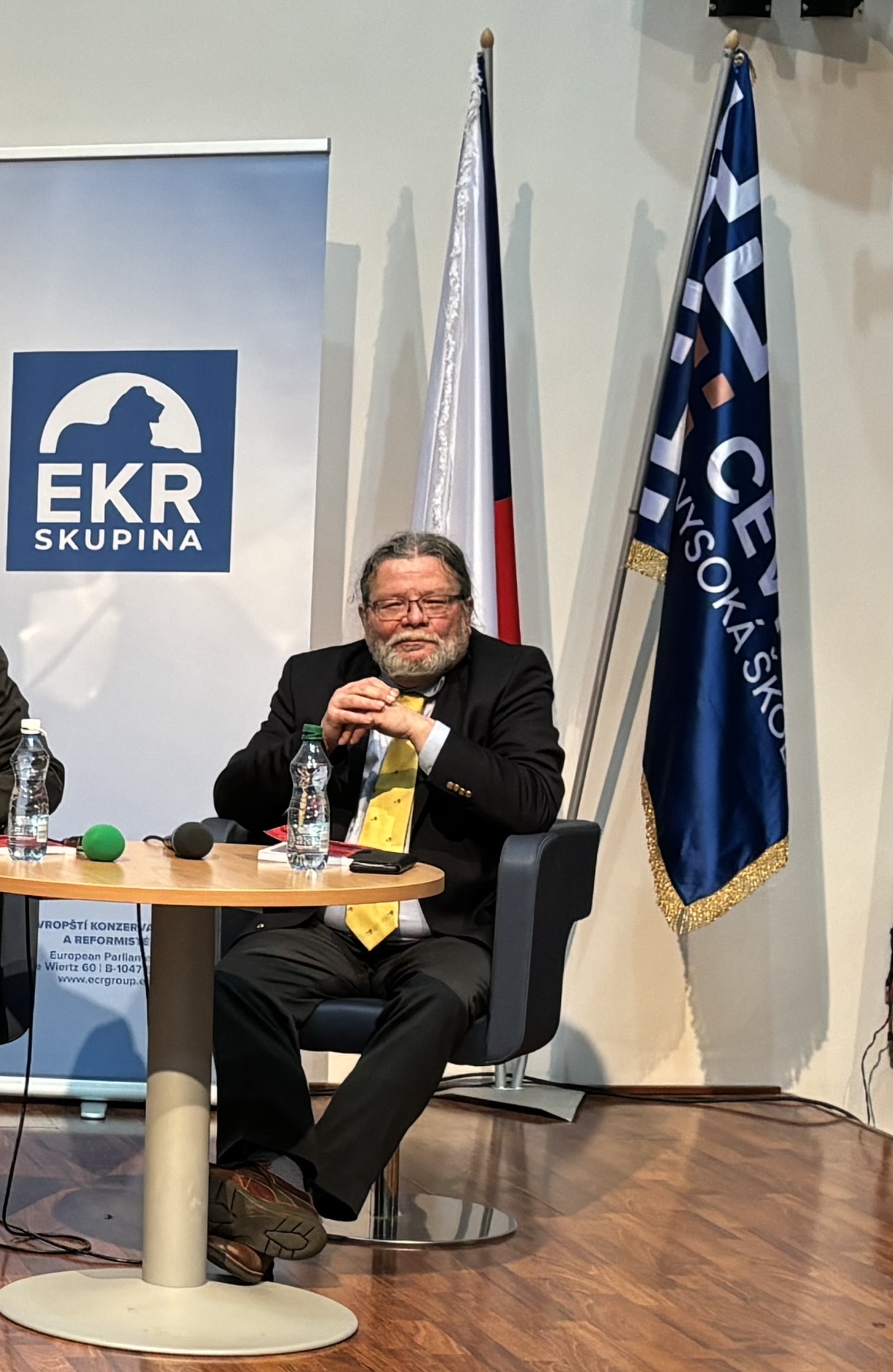
- We are in the European parliament as a faction we have funds for cultural and educational projects. Our national delegation is guided by idealistic ideas that this money should not be spent on advertising, but on specific cases - in this case on publishing, which has value. So this book arose. Although the project began with another collection, there are central European authors in it, and Czech, and Polish, and other countries, and I, who wrote an essay for him, sought to describe the imperial nature of Russia. We then made the English version, I handed this book at meetings and received a lot of positive responses. Therefore, we decided to continue this project and pay attention to the view of Russia of Russians. Now, it seems to us that the most suitable time is for this, because it is a memory of the sad two -year anniversary of the beginning of Russia's aggression against Ukraine, as well as a reminder of the Russian presidential elections, the result of which, as we know, is predetermined. Therefore, the question arises: where to look for the alternative opinions of Russians about Russia?
I would not want us to dump all the Russians into one imperial pile
On the eve of the Russian presidential elections, there were two players who personify an alternative opinion. One of them is Alexei Navalny, which I sincerely admire, because he returned to Russia, knowing that he was risking. It ended as you could expect: he was killed. It was the hero’s act, and I hope that one day he will play his role. But this has no influence on the elections that take place at the end of the week. Boris Nadezhdin had an attempt - and it ended as one might expect: he was not allowed to the elections, although he, according to Russian law, collected the necessary number of signatures. For this reason, we came to the conclusion that it was time to look at the eyes of Russians in exile. I would not want us to dump all the Russians into one imperial pile. Russia is a huge state, it was like that, is and will be. Therefore, we need to conduct a dialogue with the Russians. In addition, once I had the honor to promote the move from Munich to Prague Radio Free Europe/Radio Liberty. It was a time when it was often said: “It is pointless, it is melancholy of the Cold War ...” But in the end it was found that this was not melancholy, that history is repeated and the imperial Russian appetite has borders.
- Now, when the war in Ukraine continues and so much talk about the need to hear Ukrainian voices, is it important, from your point of view, to hear independent voices from Russia?
- It seems to me that this is important not only during the war. It is stupid to reflect “about them without them” ( this is the paraphrase of the Czech expression “about us without us”, which refers to the 1938 Munich agreement. - approx. RS ). We also do not like it when they talk about us without us. In Russia, any project of disagreements is brutally suppressed, and those who strive to somehow prove themselves, such as Alexei Navalny, mercilessly kill themselves. Who else can we turn to, if not to those Russians who were in exile? There are many of them now in Prague. Therefore, I think that this is a more natural desire, especially since we do not publish censored texts.
- You saw what happened in Russia at the time when the Soviet Union existed, you took part in negotiations on the withdrawal of Soviet troops from Czechoslovakia. Then you were active in Czech politics, met with Russian politicians. How, from your point of view, Russia has changed and did you see before the start of the current war that there are changes for the worst?
Now you need to think about how to prevent Russia from gobbing Ukraine as a whole
- In the communist years, I did not go anywhere. They didn’t even give me a passport. The first time I visited Moscow with Vaclav Gavel in 1990, in the Gorbachev era. But at that time, I must say, the dialogue was quite constructive both with Gorbachev and Shevardnadze. Of course, we wanted the troops to withdraw, because they were an instrument of oppression and dominance since 1968. They understood this and were able to agree with us quite quickly. And in the era of Boris Yeltsin, our cooperation was quite successful. Of course, we always showed caution, because we have our own experience with Russian expansion. But in general, the relationship was good. I talked with many Russians, even with those who are today Putin's Rupor, for example, Sergey Karaganov and the like. But in those days it was still possible to talk to him. It’s just that at some point Russia began to return to its imperial appetites, and this complicated the discussion and cooperation between our countries. As a result, we came to a situation where communication became almost impossible. As for the hints that would help to see what is happening with Russia in reality, it seems to me that historians will be analyzed in the coming decades until this conflict is resolved. Now there is no time for this, because Ukraine is in danger. From my point of view, our moral duty and in our political interests to help Ukraine both at the military and economic and humanitarian levels. Because this is an internationally recognized state, and what do we see? Russia's aggression, contrary to all norms of international law and the rules of the game, adopted in Europe from the time of World War II. Of course, we can talk about some mistakes or misses, but today there is no time for this. Now you need to think about how to prevent Russia from gobbling Ukraine.
- It seems to you that the Russians who are in exile can also help in this?
- Russia was, is and will be. This is not a state at the other end of the world, it is here in Europe. Therefore, it seems to me that it is necessary to conduct a dialogue with Russia. The fact that we rejected Putin's aggression does not mean that we are not ready to consider Russians as partners. Bulgakov, Dostoevsky, Tolstoy are the giants who influenced all of us, and we will not stop reading them. We do not boycott and do not impose against this sanction. We will also be happy to talk with Russian democrats and people who respect certain rules and wish Russia a better future than the current reality, ”says the Czech politician Alexander Vondra.
Kontexty magazine introduces its audience to the work of Radio Liberty since November 2022. A joint project continues after the release of the book "Russia through the eyes of Russians in exile." In the newly published book of the magazine , an archive interview with “Freedom” with the poet Leo Rubinstein, who died a few months ago, and the first translation into the Czech language of the cycle of his poems “six-winged Seraphim”.