How a break with Western countries influenced the state of Russian forests Illustration: Anna Ivantsova
Changes in the trade relations of Russia with the rest of the world, which began after February 24, 2022, could not but affect the forest industry. Only by the beginning of the combat operations in Ukraine there were 14% of Russian wood exports to the beginning of the countries of the European Union. Another 4.5% Russia sold Japan, and 2.5% - the USA. All these markets were lost.
In addition, companies engaged in international forest certification left the Russian Federation. They made sure that the wood intended for sale to developed countries was obtained responsibly: the cabins were carried out legally, not depleting forests, and industrialists were engaged in their restoration.
All this caused fears that in Russia uncontrolled cutting for the sale of wood to developing countries that do not care about the state of forests in the world. In part, it happened.
“Smola” understood how the breakdown of economic ties with Western countries was reflected in the nature of the forest procurement in Russia, how the markets for Russian wood were rebuilt and with what prospects the country's forest industry remained.
Great closure
The forest industry was one of the first. Already in July 2022, in the fifth month of hostilities in Ukraine, the European Union banned the import of Russian and Belarusian wood and products from it. The United States did not introduce a similar ban, but applied point restrictions. In March of 2022, the duties of Russian plywood were raised from 0 to 50%, and since July, Russian paper and other products of wood installed a barrier fee of 35%. Various restrictive measures were also appointed by Australia and New Zealand.
Another tool that impedes the supply of Russian wood to Western countries was the cessation of the main certification systems of las-user companies on the territory of the Russian Federation for compliance with the principles of sustainable forest use that does not damage forest reproduction and does not affect valuable ecosystems.
In March 2022, the International NPO Forest Stewardship Council International (FSC), responsible for creating and supporting one of the most common forest management systems in Russia, announced the decision to withdraw its own certificates from Russia and Belarusian enterprises.
Since December 2022, an alternative system for sustainable forest management certification has indefinitely in Russia - Programme for the Endorsement of Forest Certification (PEFC). This system is less common, but is also used by some companies - first of all, working with the markets of the EU countries.
Since for many importers from Western countries the presence of sustainable forest use certificates for purchased products is a mandatory requirement, the supply of wood to these markets has become simply impossible.
By recalling trading certificates, FSC International originally made an exception for forest tenants: companies supporting the principles of sustainable forest use in the leased areas have retained their certificates. Since the lease of forests is several decades, this gave some hope that after the hypothetical settlement of the Russian-Ukrainian conflict and the return of FSC trade certificates to Russia, wood for such certificates can be prepared in leased areas. However, already in the spring of 2023, the organization announced the termination of all FSC certificates in Russia, explaining this by the inability to ensure in the current conditions the safe access of auditors for certified forest plots in the country.
In a sense, the forest sector survived the same blow that some other raw material sectors of Russian industry experienced, being cut off from many traditional profitable markets, having lost some of the trusted trade and technological partners, as well as having lost a significant international certification.
Unlike fossil hydrocarbons extracted from the land, a forest is a living ecosystem. Russia accounts for about 20% of the forest squares of the world. At the same time, 800 million hectares of Russian boreal forests (that is, tayzheyzh -type forests - approx. ), Located from the Pacific coast to Karelia, are considered the largest single forest in the world. A sharp impact on the traditional supply schemes for Russian wood raw materials and its processing products to foreign markets on February 24, 2022 cannot but affect the general situation in Russian forests and not affect the prospects of their preservation and reproduction.
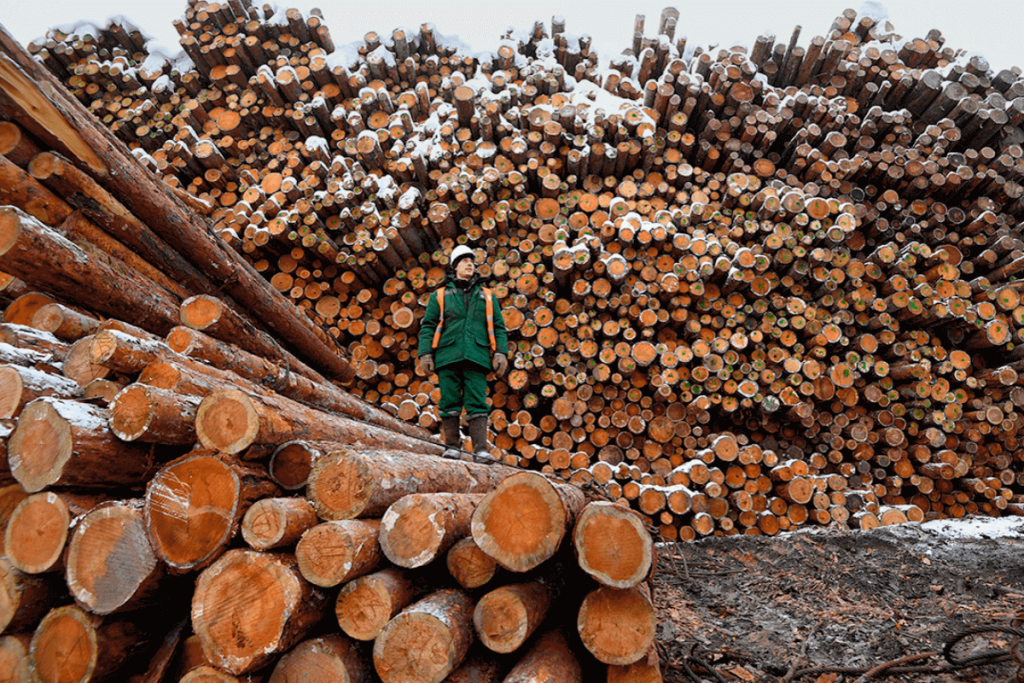
Photo: Alexander Kryazhev / RIA Novosti
The power of inertia
The breakdown of relations with traditional trading partners from Western countries led to the demand for the Russian forest. This is evidenced by a decrease in the volume of logging. The TADVISER resource provides an assessment of the Director of the Forestry Complex Consulting Company Strategy Partners Valentina Gavrilov about the 15 percent drop of blanks in 2023 in comparison with the volume of 2022. However, Roslesinfordreported the gradual restoration of logging in the fall of 2023.
“The forest industry is very inertial,” explains Alexei Yaroshenko, head of the Forest Program of the Association “Nature Protection”. “Even if some companies begin to experience difficulties with trading partners, then this will begin to influence what is happening directly in the forest, this will not begin in a year or in two.”
Yaroshenko considers the current reduction of blanks, as well as the possible restoration of their level, only the beginning of the long -term processes of the restructuring of the industry.
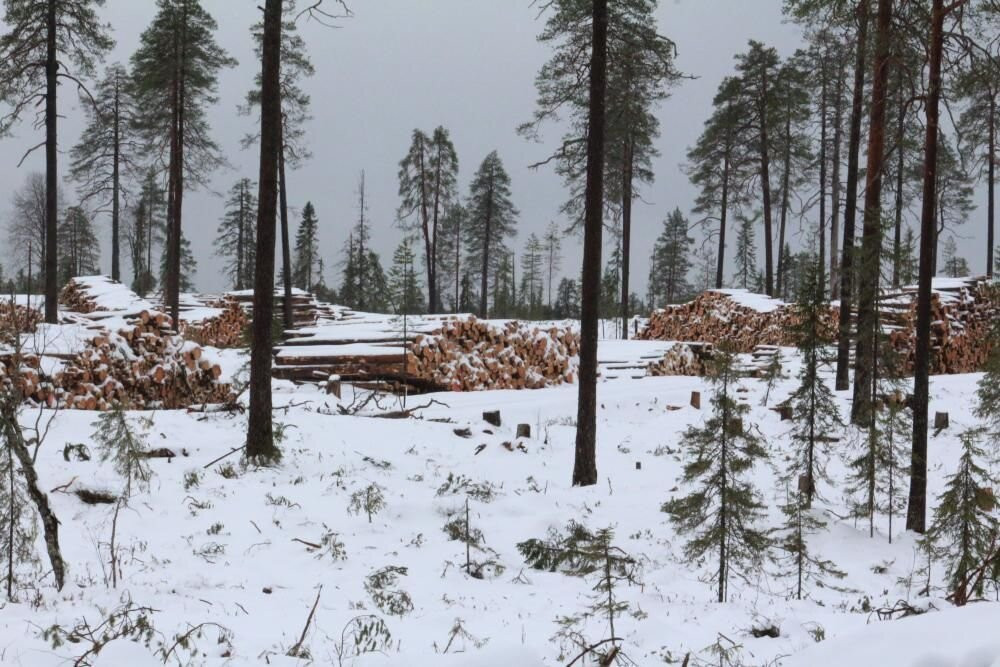
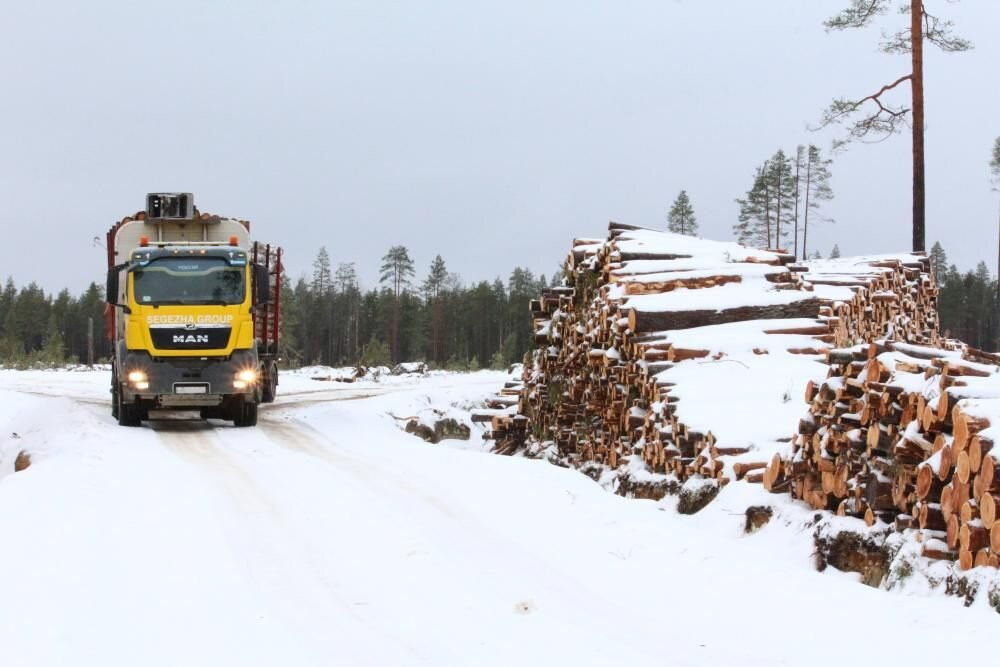
According to him, the review of international certificates of sustainable forest use has not yet led to dramatic changes: “At the moment, companies that have holding certificates are generally trying to comply with their previous norms, hoping that sooner or later the current situation will be resolved and they will be able to work with Western markets again.” Vivid exceptions, says Yaroshenko, is the SEGEZH GROUP company, which, after the decision of the FSC International, defiantly refused to comply with previous obligations and began to cut down the values of valuable forest in Karelia - in the territory where the Maksimyarvi reserve is planned to be created by eco -activists and the Karelian authorities.
Except for the hope of favorable changes for the industry in the future, there are not so many left -the -layers for further compliance with the principles of sustainable forest productivity among tenants. In addition to the ban on the export of Russian products to environmental Western markets, the demand for certified products in the domestic market also decreased, which has become another consequence of the gap of numerous business relations with Western companies after February 24, 2022.
The main consumers of certified products from Russian wood were Western corporations working in Russia: Leroy Merlin, Ikea, Tetra Pak and others, explains Nikolai Shmatkov, former director of the FSC office in Russia. Most of these companies officially left the country, transferred the Office of Russian Management or changed the owners. According to Shmatkov, receiving environmental certificates for products is usually not a priority for the new management.
- Few people know that the most massive ecologically certified wood product in Russia and Belarus was paper bags for the McDonald's network. As far as I remember, they were made about a million pieces per month.
Now the leadership of the McDonald's chain “Tasty - and point” quite frankly suggests that it is concerned primarily by food security, standardization of the final product and much more, and environmental certificates can wait,
- notes Shmatkov.
Forest deforestation in the Maximyvy reserve. Photo: Petrozavodsk news / Zen
In the world of new certificates
The departure from Russia of international certification programs, however, does not mean a complete refusal of business of voluntary obligations to sustainable management. In addition to the readiness of many companies to adhere to the previous rules, as Yaroshenko said, we are talking about “import -substituting” instruments.
After 2022, several new forest certificates appeared, which are used or planned to be used within Russia. For example, the Forest Referee program, created by part of the Russian management FSC and reproducing the requirements of the international certification program. The Certification program “Sustainable Forest” appeared, organized with the participation of the audit company “Forest Certification” , which until recently was engaged in the preparation of clients for international certification. According to experts, this program contains a number of copyright developments. However, at present, it has not received much distribution (one certificate has been issued together with the “forest standard” - approx. Ed. ). Finally, the SFM 38200 certification system is valid, which largely includes the previous PEFC certification requirements.
To date, the most common program is the “forest standard”. If you believe the program site, in accordance with the principles of the “forest standard” (largely repeating the requirements of the FSC - approx. Ed .) Certified more than 8 million hectares of forest. Evgeny Schwartz, the head of the Center for Responsible Natural Management of the Institute of Geography of the Russian Academy of Sciences, provides data that in September 2023, the SFM 38200 certification program covered about 3 million hectares of forest.
It is worth noting that the FSC International statement about leaving Russia separately talks about new systems of voluntary forest certification arising in the country. The organization notes that it will not confirm them, but will not interfere with the emergence of such systems committed to the “equally strict requirements for maintaining sustainable forest use”, expressing the hope that the principles of sustainable forest management in Russia will be preserved.
Nevertheless, the total number of forest plots covered by new systems is still incomparable with the previous indicators. Until 2022, according to FSC standards, more than 62 million hectares of Russian forest were certified, which, according to expert Nikolai Shmatkov, amounted to a third of the total volume of forest plots leased by logging by logging.
However, the very readiness of forest producers to receive certificates indicates the preservation of market niches in Russia, where certified products remains in demand. According to Shmatkov, this is primarily due to the fact that large western companies, where the requirement of certificates is part of the standard procedure for working with suppliers, still retain the presence in the Russian market.
“The remaining Leroy Merlin remains to demand environmental certificates for wood products,” says Nikolai Shmatkov. “Moreover, it requires them quite hard: in fact, the manufacturer cannot put anything in the retail network if he does not enter the certificate number into a separate window.”
According to Shmatkov, until recently, the retail chain recognized only the trade certificate of the “forest standard”, which has already led to a conflict with one manufacturer. In November 2023, the Green Zmiy Telegram channel reported that Segezha Group, which has SFM 38200 certificates for part of its products, turned to the FAS and the Ministry of Industry and Trade to oblige the retail chain to accept such certificates.
Photo: RIA Novosti
Shmatkov notes that on the part of domestic retailers, attention to the availability of certificates is minimal: “Recently,“ Tasteville ”and X5 Group have been a certain interest in the subject, but they are just beginning to recommend their suppliers to use the raw materials with certificates. As we relate to what is only recommended, it is easy to understand. ”
Some Russian companies still show interest in products made of certified wood. For example, they want to use a package with a certificate. However, according to Shmatkov, the offer of such products in Russia is limited, since pulp and paper plants have not yet shown desire to be certified again according to strict standards. To date, a large forest business has expressed interest only in the alternative national system of forest certification - another program of voluntary certificates, not yet valid. According to Nikolai Shmatkov, the requirements of this system are similar to forest certification standards used in other mentioned programs, however
They remove a strict ban on deforestation in sparsely warned forests (although they retain certain restrictions) and make consultations with public organizations and indigenous peoples not mandatory, but only recommended.
According to Yevgeny Schwartz, in the framework of this program it is planned to certify 25 million hectares of the forest, which should turn it into the most massive in Russia. However, this will still amount to only 40% of the area of forests certified earlier according to FSC standards.
Turn to the east with an eye to the west
The complete closure of the European market and restrictions on the access of Russian wood to the markets of other Western countries have become a noticeable factor for the forest industry of Russia. In 2021, Russia exported wood products from the EU for a total of $ 3 billion. The forest complex in some regions of the country-primarily in the north-west-has historically focused on export to European countries. Now he actually had to change the specialization.
According to experts, the industry as a whole managed to cope with this task. The output, as with the export of other types of raw materials, turned out to be a "U -turn to the east."
“It is no secret that China has long been one of the main buyers of Russian cellulose. Cellulose itself is a light cargo, its transportation is profitable and justified, ”says Yaroshenko. Therefore, even those pulp and paper plants that are located in the northwest of the European part of the country were affected by moderately. Although with wood is more complicated. Her export went along the same path, says Yaroshenko: “Now in Russia railway transportation of wood is actively subsidized. Therefore, what went west is transported east. ”
However, some segments of production -oriented production have suffered much more than others.
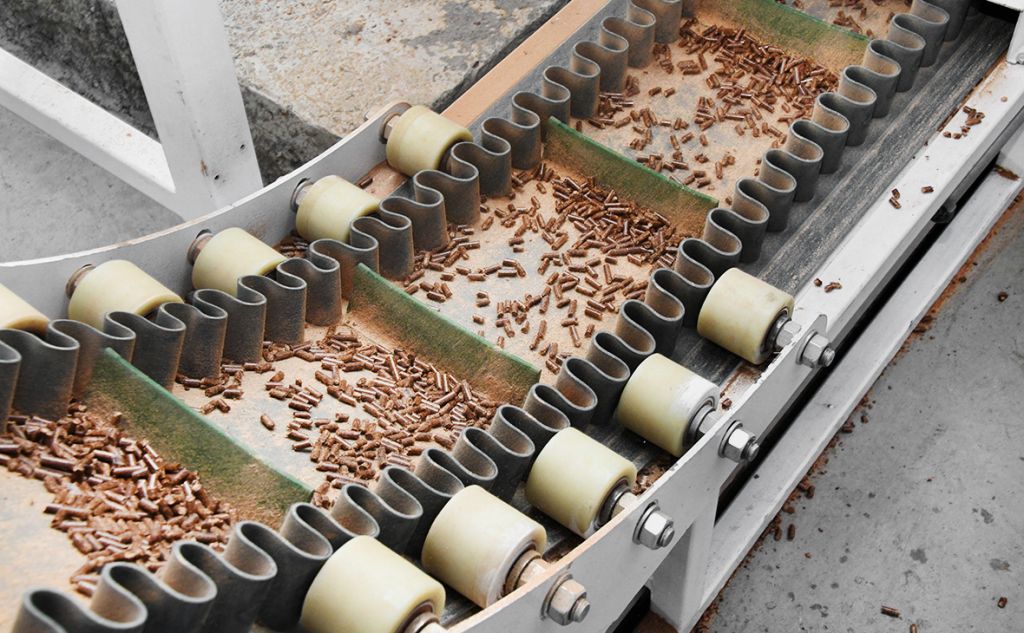
“The situation was the worst of all among manufacturers of wood pellets and plates. This production was guided by Western Europe and some other, now “unfriendly” countries. In addition, these are very voluminous products, for which logistics issues are extremely important, and the departure from the Russian market of Western container carriers affected its export quite painfully, ”says Shmatkov. At the same time, he notes that the producers of cellulose practically did not suffer from the sanctions imposed. Furniture manufacturers also demonstrate a confident situation, for whom the departure from the market of large Western companies like IKEA has even played a stimulating role.
Pellet production. Photo: RIA Novosti
According to Roslesinford for November, in 2023 92% of Russian wood of varying degrees of processing was delivered to the Asian countries. According to the same data, out of 22.5 million cubic meters of lumber and raw wood, 14 million was in China. At the same time, Russian exporters increased wood sales to Turkey (growth is 2.3 times compared to 2022 and a total volume of 290 thousand cubic meters), the UAE (an increase of 64% to 490 thousand cubic meters) and Kyrgyzstan (40% to 418 thousand cubic meters). The second export market for Russian wood and round forest was the second after China (2 million cubic meters).
According to Nikolai Shmatkov, we can talk about a noticeable risk associated with the fact that Russian wood entering some of these countries is already with falsified certificates to Western markets. Indeed, for the domestic market of the same China, where the lion's share of Russian export of wood is now directed, it practically does not matter the presence of any environmental certificates in the incoming raw materials.
“Chinese buyers are primarily interested in the price and quality of products. Everything else is not so significant, ”says Nikolai Shmatkov.
Russian business is really looking for bypass paths for penetration into the Western markets. According to Washington Post for October 2022, Russia has increased the supply of birch wood to China used for plywood.
From China, Russian wood enters Vietnam, where a plywood is made from it, which is then exported in the United States. The country of the origin of wood is considered China, so the products are not subject to a prohibitive tariff introduced for plywood from Russian wood.
The publication gives data according to which from March to April 2022 (that is, after Washington introducing barriers to the Russian plywood - approx. Ed. ) Export plywood from Vietnam to the United States grew by 206%.
In August 2023, the European Commission initiated an investigation into the origin of the raw materials for birch plywood supplied to the EU from Turkey and Kazakhstan - these countries also exported such products in the EU after the imposition of sanctions against Russia. In March 2024, it became known that the EU was ready to introduce anti -dumping duties against Turkey and Kazakhstan.
Дрова и хлеб нужны всегда
Расследование ЕС показывает лишь один из возможных рисков для продолжения поставок российской древесины, но не единственный.
«Сейчас перевозки леса в направлении нашего главного потребителя, Китая, субсидируются. Но я не уверен, что государство согласится вечно оплачивать перевозки древесины из Европейской России в Китай и вообще работать с лесным комплексом, который надо постоянно поддерживать», — говорит Алексей Ярошенко.
Кроме того, по его словам, перспективы экспорта в Китай тоже не выглядят надежными:
«Последние 30 лет Китай вкладывал огромные средства в лесоразведение. Уже сейчас объем заготовок там вдвое превышает российские показатели.
Экспорт из России составляет лишь несколько процентов от общего потребления древесины промышленностью Китая. Когда заложенные 30 лет назад обширные посадки начнут давать новую древесину, необходимость закупать что-то в РФ отпадет».
О том, как может выглядеть будущее российской лесной индустрии в случае введения более жестких ограничений на экспорт и других неблагоприятных факторов, пока можно рассуждать лишь теоретически.
«Внутри России, безусловно, всегда будет сохраняться неснижаемый спрос на древесину, — говорит Ярошенко. — У нас ежегодно заготавливается около 40 млн кубометров древесины лишь на дрова. А дрова, как и хлеб, будут нужны всегда. Также сохранится рынок стройматериалов и определенный объем поставок в Китай».
По мнению Ярошенко, при любом развитии ситуации в России все равно ежегодно будут заготавливать 125–150 млн кубометров леса. То есть максимальное падение может составить от 20 до 33% от объемов 2023 года.
Последствия сложившейся ситуации оказываются двоякими и имеют негативные последствия для состояния лесов как в России, так и в Европе.
«До 2022 года почти треть мировых лесных массивов, сертифицированных по стандарту FSC, приходилась на Россию, — говорит Николай Шматков. — Заменить их не так просто. Фактически это приводит к более интенсивным рубкам в Европе. Получается, что, с одной стороны, ценные леса в России лишаются прежней защиты. С другой — возрастает нагрузка на леса в Швеции или Финляндии. В этом смысле все на планете по-прежнему взаимосвязано».