
Translated material
"Our Volan de Morte is in the palace"
How Alexei Navalny used pop culture to talk about his values-and why he himself is compared with superheroes and Harry Potter
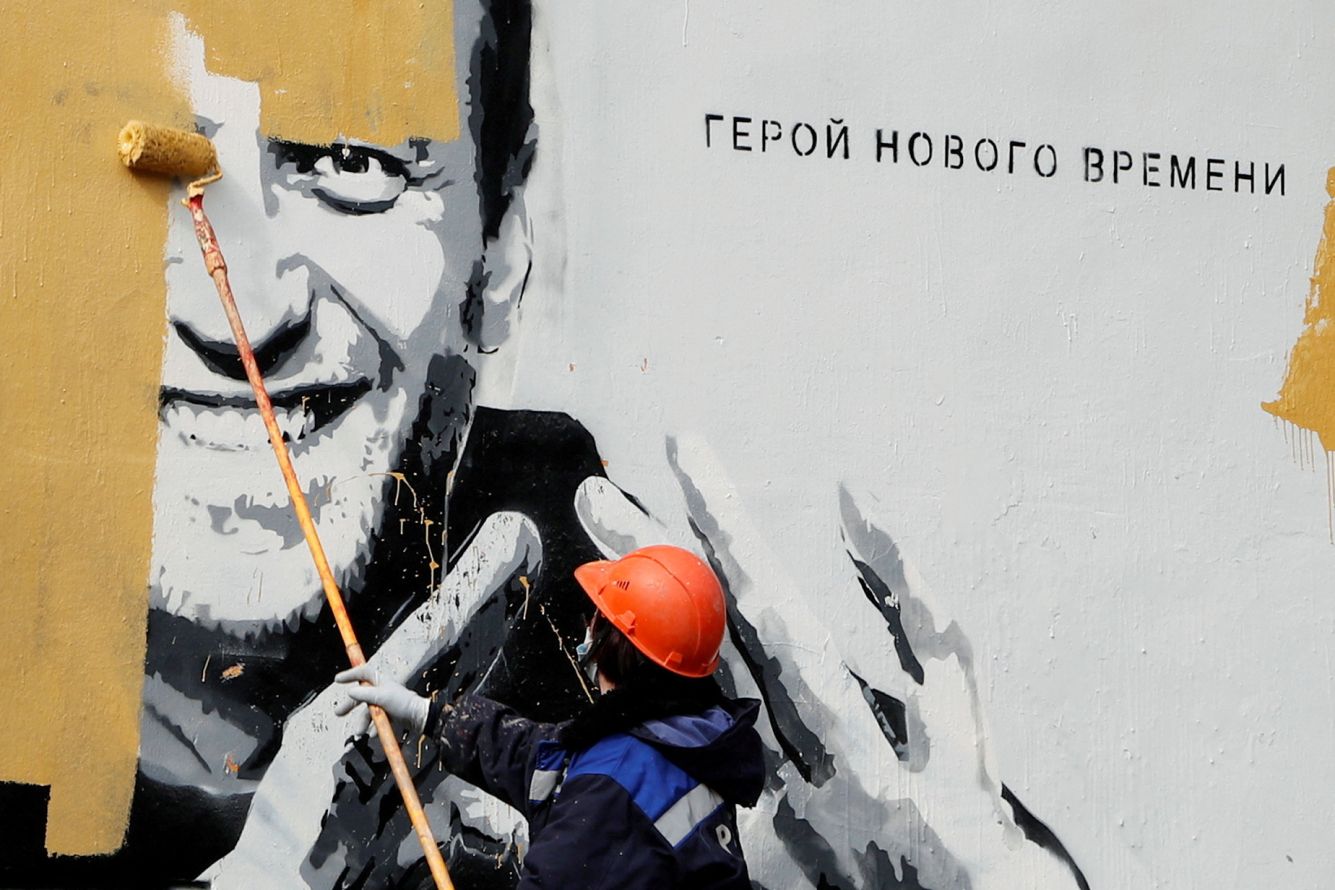
In his speeches, Alexei Navalny quoted the Gospel , Leo Tolstoy and culturologist Yuri Lotman , but even more often he referred to mass culture - for example, Joan Rowling or the animated series “Rick and Morty” . In fact, it was Navalny who made pop culture part of the political language in Russia. At the same time, in recent years, he himself is described as a character in mass culture - and after his death on February 16, they say this more and more often. We understand how pop culture helps to understand the political heritage of Navalny.
Navalny, John Snow, Rick Sanchez and Thmna Lovegud
“To join the revolution when she is about to win, the matter is simple. <...> to remain true to yourself, to know that the truth is on your side, at the moment when it seems that everything is to no avail, much more difficult. Harry Potter did not ask why. Frodo Baggins did not ask why. Luke Skywalker did not ask why, ”journalist Ilya Klishin wrote to the WOS publication in September 2012. Its text was released the day before the “Million Marsh” -the third procession with that name and one of the last large protest actions of the early 2010s.
At that time, few described the Russian opposition movement in terms of popular culture - and not just a popular culture, but of the part that is addressed primarily to adolescents and young adults, such as fantasy and cosmo -opera . The Klimsin column with the subtitle “Harry Potter goes to the rally” looked unusual, the author was one of the first to use this rhetorical technique. In subsequent years, he is popularized by Alexei Navalny - the main political leader, whom Russia gave the failed “snowy revolution” .
In the zero and early tenths of the most important site of Navalny, there was a “living magazine”. His blog on the site was called "The final battle between good and neutrality." Not all readers knew that this was a quote from Futurama-the animated sai-fi-ceremony of the creator of the Simpsons Matt Graining. True, the quote is rethought: the character of Futurama, the cruel and narcissistic space officer Zepp Brannigan, said these words, about to attack the neutral planet - and Navalny with their help agitated against civil passivity. At the same time, referring to Brannigan-a fool and a loser under the mask of a hero warrior-a novice politician could ironize over the pathos of the struggle against the regime and over himself.
For the 2000s, such an irony is natural: a protest into this relatively prosperous-and far from any pathetic-the era was perceived as something marginal. But in the 2020s, Navalny will rely on pop culture for another purpose-in order, on the contrary, to strengthen pathos. The most famous example is from a policy of politician in the Moscow City Court on February 20, 2021.
Navalny has just returned to Russia after six months of treatment in Berlin - despite the threats of Russian authorities, which were immediately carried out. Politics was detained at the airport, accusing him of “multiple violations” of the probationary period in the Yves Rocher case . The court replaced him with a suspended term with the real one.
At the appeal, the politician made a speech in which there were two bright pop cultural images at once. Firstly, Navalny quoted the twin replica of Lovegud-the ally of Harry Potter-addressed to the main character of the book series: "It is important not to feel lonely, because, of course, in the place of the Vollan de Mortia, I would really want you to feel lonely." “Our Volan de Morte in the palace -he also wants it,” Navalny added. Another quote belonged to Rick Sanchez, a brilliant scientist from the animated series “Rick and Morty”: “Life is a risk. And if you do not risk, then you are just a sluggish bunch of molecules collected randomly and floating along the universe. ” Navalny called both characters in court "outstanding philosophers of our time."
The politician chose heroes in which those around see Friciks and Mad people - and who, nevertheless, are capable of great things. Thus, he, perhaps, tried to explain his own - reckless, as it seemed to many and still seems to be a return to Russia. It is interesting that in the same speech, Navalny quoted the naked sermon of Christ, namely one of the commandments of the bliss: "Blessed are thirsty and hungry truths, for they will be saturated." That is, the politician addressed two audiences at once, the one that would rather respond to the biblical quote, and the one that is more familiar with modern mass culture - or maybe both sources were simply close to him.
By 2021, Navalny's supporters were already accustomed to regularly referring to popular culture, primarily to science fiction and fantasy. In 2017, the unknown doused the politician with a greenhouse mixed with another caustic substance -he almost lost his eyes and a few days later appeared in public with a “pirate” bandage. After the attack, the politician jokingly compared himself to Shrek (due to green skin), captain Jack Sparrow (because of the bandage, which, however, the character of Johnny Depp) and the T-800 terminator (due to the burnt eye). The sequel to the Terminator was Navalny's favorite film. Eight years later, at the funeral of politics, his coffin will be dropped into the ground to the music from “Terminator-2”: in the picture of James Cameron, she plays when the T-800 is immersed in molten metal, sacrificing itself to save humanity.

Navalny not only quoted mass culture, but also commented on it: he admired the rap battles of Oximiron and the purulent, admitted the love of Simpsons and several times gave an interview to the Kanobu site , which writes about video games, film comics and other things popular among geeks.
In the same 2017, a few months after the policy was doused with green, the journalist of Kanobu Maxim Ivanov asked him who should take the iron throne of the seven kingdoms in the series “Game of Thrones”. Navalny chose John Snow - one of the few characters in the show who tries to observe the Code of Honor: “My belief - the highest posts should occupy not the most cunning, not the most organizationally correct, not the best builders of coalitions. The main quality of the person who occupies the highest post is still to distinguish good from bad. ”
Putin, Surkov and jokes about grandmother
Communication is a policy with a young audience through references to a popular culture - an effective and to a certain extent an effective strategy, the philosopher Ilya Inishev argues in a conversation with Medusa. So you can establish an emotional connection with many people even before you moved to discussing substantial issues. On the other hand, when you rely on the patterns of popular culture, you control the political part of communication worse-it is replaced by the associations of the audience with a pop-cultural way that can carry its own political meanings or not carry any.
Political opponents of Navalny also appealed to culture - but fundamentally different. Putin, for example, regularly tells jokes , including scabbling (a classic example is a joke about grandmother ). Inishev notes: these are archaic forms of mass culture, which were formed in the dociff era - and it was non -plastic and did not know how to embed familiar images into a new context. Therefore, Putin’s jokes are “a very limited radius of action,” the philosopher believes.
The interlocutor of Medusa also includes the approach of Vladislav Surkov, the main ideologist of the Kremlin in the 2000s, as an archaic approach. He did not turn to folklore, but flirted with the “high culture”: he supported contemporary art , and called the abstractionist Jackson Pollock and the Bittle Poet of Allen Ginzberg with his idols. Achieving the sympathy of the cultural establishment, Surkov created the image of an enlightened manager who is interested, for example, by modern art. But this approach implies vertical relations with culture: in them the consumer looks at it as if from the bottom up.
The alternative approach is this: there is no more hierarchy, culture does not divide into “high” and “low”. It doesn’t matter what you consume is abstract painting or movie comics. It is important how you yourself rethink and use it. “Cultural communication is no longer a single -sided street, when we dealt with a small community of qualified content creators and huge masses of passive consumers,” says Inishev. “The border between the manufacturer and the consumer disappears rapidly.”
In this paradigm, the audience is able to appropriate any work by endowing it, for example, by a protest meaning, even if the creators, persecuting only a commercial success, did not lay this meaning (for example, when Navalny quotes the rather apolitical series “Rick and Morty”).
Inishev believes that the authorities in Russia use the prestige of the “high” culture to support the myth of Russian exclusivity. Therefore, an archaic view of culture as a set of unconditional masterpieces is harmful. The support on the popular, “low” culture, which neglects hierarchies and gravitates to “horizontal practices”, is politically productive in itself, says the philosopher, because it can adjust the established ideas about culture.
Magic elixir
“His main feat was, of course, in that he sold it to all - to us, to them, to all - this idea, that he is Superman and stupidly cannot be killed,” wrote film director Roman Volobuev on his Facebook on the day of Navalny’s death.
DC comics are not the only franchise that the politician is remembered by the death of the politician: many-as the author of the “noon against Putin” by Maxim Reznik- turn to the same Potterian, in particular, to the episode from the film adaptation, when Neville Long-Pups, classmate Harry Potter, sees his friend dead (more precisely, everyone thinks that he is dead). “It doesn’t matter that Harry has died,” says Neville Volan de Mort, who brought Potter's body to the defenders of Hogwarts to break their fighting spirit. “Harry’s heart was beating for us, for all of us!” Nothing is over yet! ”
Harry Potter and Navalny superheroes were compared during his lifetime - especially after the story of poisoning. When the politician returned home from Germany, journalist Kirill Fokin published a column of Captain Russia in Novaya Gazeta, where he compared Navalny with the characters of the Marvel film outfield. And users of social networks began to look for roll calls between the policy of politician and books by Joan Rowling. It turned out that today it is a suitable language to speak of heroism - as Navalny himself demonstrated in his speeches.
How did it happen that the leader who made pop culture part of the political language in Russia, in the eyes of the supporters, himself turned into a pop cultural character? The Russian screenwriter, who chose to remain anonymous, said in a conversation with Medusa that Alexei Navalny’s life surprisingly coincides with the archetypal path of the hero. This concept, proposed by the researcher of mythology, Joseph Campbell, is used by writers, playwrights and screenwriters to create exciting stories.
The hero passes the tests, dies, but returns from the afterlife with a conditional magical elixir to give it to people. The central figures of religions, such as Jesus Christ, and the characters of pop culture like John Snow, and some political leaders (Nelson Mandela, Martin Luther King), answer this archetype. “In such a story, a message is always laid: your life does not end with death, you are a part of huge humanity, your ideas, or deeds, or children will survive you,” the expert says.
The hero’s path is a metaphor for a life trajectory that any person passes in reality. At the same time, the screenwriter argues, only some biographies literally contain material for a good story that will inspire people. For this, it is necessary that the potential hero confirms his life the rules by which society should live. If the qualities of the hero are scarce (for example, he is honest when everyone is lying, dare, when everyone is afraid, sincere, when everyone is cynical) and if the “elixir” he received is really magical, that is, a rare and saving, great chance that such a figure will take its place in mythology.
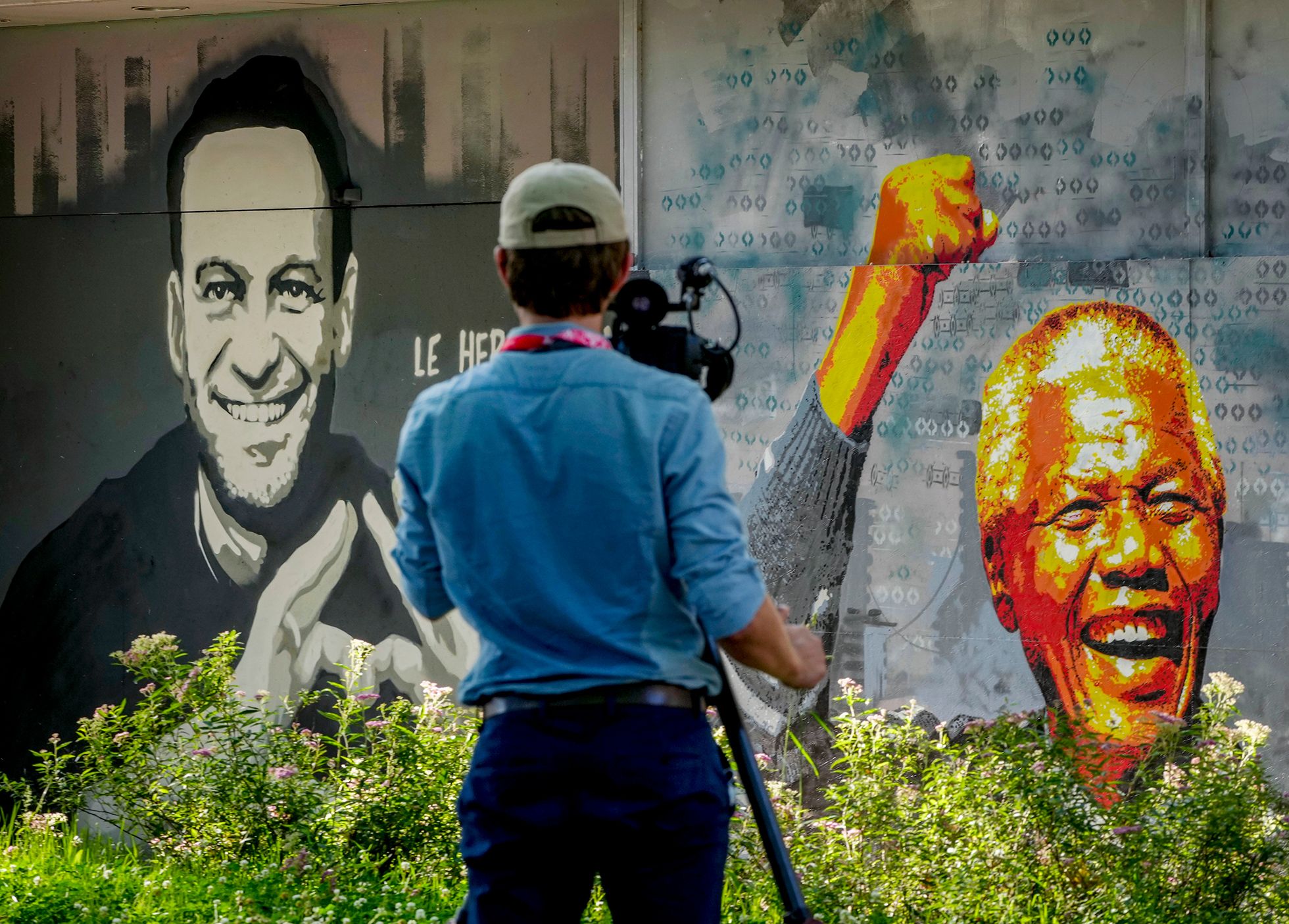
The fate of Navalny coincided with the archetype of the hero, when the politician survived poisoning and acquired "prohibitive experience," the expert believes. “There is such a moment on the hero’s path - a magical flight. This is a return home with an elixir. When Navalny flew from Germany to Russia, he literally realized this image - just like, for example, Frodo, who flies out of Mordor on Orel. "
The “magic elixir” of Navalny was his message . The screenwriter interprets him like this: “I looked beyond the edge, and neither prison nor death are more terrible for me. Freedom, courage and honesty are more important to me than life. And most importantly - you can also be free, like me. " In some stories, he says, the hero who returned from the other side dies again, and already completely - but still wins, because it remains a lively and inspiring symbol for people.
The expert is convinced that in Russian culture there are not enough heroes today. During the Soviet regime, religious and folklore characters disappeared from mass consciousness (although the current cinema is trying hard to return them ), giving way to the new Pantheon, led by Lenin. When Soviet heroes became irrelevant, culture could not offer anyone in return: only anti-heroes became really successful-Danila Bagrov from the films of Alexei Balabanov and Sasha Bely from the series “Brigade”.
“How does the antihero differ from the hero? Antherler is charming, but represents a system of values that is not suitable for the whole society as a whole. Therefore, culture cannot exist with only anti -heroes. ” Navalny, the expert says, over time, can take the hero’s niche in Russian mythology, but Vladimir Putin-no: “He never risked himself, did not prove that there is something more expensive than his own safety and comfort for him.”
Anton Khitrov