
Translated material
Light, sun! Artemy Troitsky - about optimistic music
In the 318th issue of the podcast "Music at Free", Artemy Troitsky offers to listen to the cheerful songs of the long time past times.
It is not surprising that in the cold and dark winter of the 2024th my attention was attracted by boxing-and my hands involuntarily reached for an elegant box called What A Groovy Day! The British Sunshine Pop Sound 1967–1972 (“What a glorious day! British sunny pop 1967–1972”). Inside the box there are three discs with almost a hundred songs performed by many English artists - famous, little -known and hopelessly forgotten. Most of them, as the compilation title promises, are cute, joyful and "sunny" in mood. I immediately wanted to share - especially since musically, many of these optimism charges are quite good. There was such a time ...
Dale Stevens and his Group Five gathered in North London in 1960 and became famous for something: he played at one time on the drums of Charlie Watts (later one of the founders of Rolling Stones ), and in 1963 the group warmed the audience before the performances of The Beatles . Then the guys changed their name to The Spectrum and tried to position themselves as an English answer on the overhead American The Monkees. The single with the song "Saturday Child" was released in April 1967, but had no success.
The Episode Six group published several unsuccessful singles, after which it recorded the graceful song "Gentlemen in the Park" for the little-known movie "Twisted Nerves" (1968), which became their only "album" release. Soon after which she ceased to exist. However, in all rock encyclopedias this team is mentioned. Why? And because the participants of the Episode Six vocalist Jan Gillan and the bass player Roger Glover entered the "classic" composition of the notorious Deep Purple group. Agree that it is very difficult to identify the singer by this entry ...
Unfortunately, there are very few female votes on the "sunny" anthology. One of them belongs to Jane Hag from the Portusmut trio Weavers Green. The humorous song “Mr. Pseudo -Melicoply” was published in the spring of 1971 - both on the single and on the only album of the group.
The SPARROW group was created by musicians and vocalists who represented the famous Hair Rock-Musical in London West End. When the production was removed from the repertoire, the artists were reformatted into the pop group, toured a lot, released several single and one album. The pretty song “I Return”, the first side of their debut forty -five, saw the light in April 1971.
The next group was initially called The CastaWays and accompanied the once popular singer Tony Rivers . But at some point they undertook to help them himself ... John Lennon ! It was he who invented the group for the new name - Graphfruit - and brought it to useful people. The new frontman was the native of Australia George Alexander . The group released several hit singles, including C'Mon Marianne (July 1968), a cover version of the Americans Four Seasons. The song took 31st place in British charts, but this did not go further. Yes, and Lennon had other important things to do.
How the following song got into the bright poppy row, I do not understand. But she is beautiful, although she is knocked out of the row. It is called “mythological Sunday”, lasts 4 minutes (the rest of the songs - on average two and a half) and is attributed to a group with a simple name Friends. In fact, this is the disguised psychedelic team The Flower Pot Men with the soloist Tony Barrose . A strange song came out on the second side (not surprisingly) in July 1968 and may well be considered a classic of British-Psikhodeliki. Why suddenly Friends - I don't know.
And under the curtain - a surprise! For all lovers of progressive rock: the first record of the Genesis group in history !! At the school of the city of Year, in the County of Sarray, there were two groups: Anon, in which the guitarist Anthony Phillips and Basist Mike Rutherford , and Garden Wall with vocalist Peter Gabriel and Tony Banksu , played. It is easy to notice that they are all participants in the first composition of Genesis. In 1966, both school groups broke up, and their participants united in The New Anon and at the end of 1967 made the first demonstration notes, including the songs of Try A Little Sadness . The records were handed over to the departed producer (and the graduate of the same school) to Jonathan King , he proposed the name Genesis, and the further, as they say, history.
Playlist "Free music" No. 318
1. "Center" (RF). "Voluntary disconnection of critical thinking." LP "Founded in 1980"
2. Grace cummings (Australia). Storm Queen. LP Storm Queen (ATO)
3. Dawda Jobarteh (Gambia/Denmark). Moccahouse. LP Do You Know a Place Called FlekkerØy? (Ajabu)
4. Vero (Sweden). Cupid. LP Unsoothing Interior (PNKSLM)
5. The Spectrum (UK). Saturday's Child. LP What A Groovy Day: The British Sunshine Pop Sound 1967–1972 (Grapetfruit)
6. Episode six (UK). Gentlemen of the Park. LP IBID
7. Weavers Green (UK). Mr. Pseudo-Fabulous. LP IBID
8. Sparrow (UK). I'M COMING BACK. LP IBID
9. Graphfruit (UK). C'Mon Marianne. LP IBID
10. Friends (UK). Mythological Sunday. LP IBID
11. Genesis (UK). Try A Little Sadness. LP IBID
12. Lyra Pramuk (USA/Iceland). Kaca Bulan Baru. LP Delta (Bedroom Community)
13. Postižena Oblast (czechia). Počkej Si. LP angelus novus (Poli5)
-
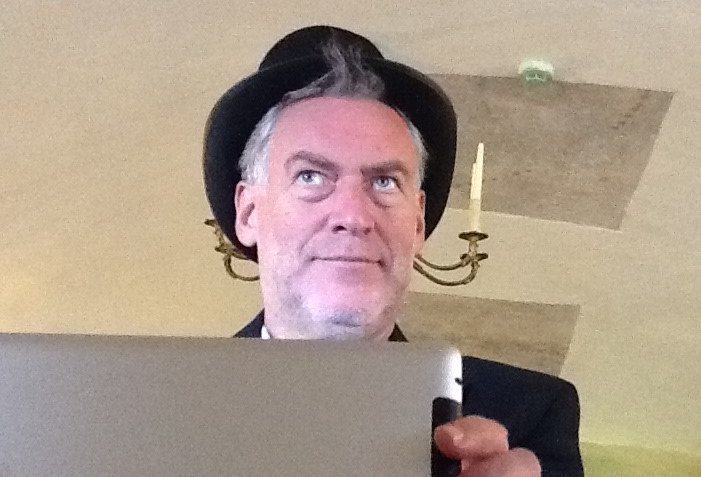

Artemy Troitsky
Musical critic, author and leading podcast and radio program "Music at" Freedom ".
Musicatliberty@gmail.com